DD
MM
YYYY

PAGES

DD
MM
YYYY

spot_img

PAGES

Home Blog Page 6633

Taxing ICT Utilities like Facebook, Google in Africa

2
Google-Headquarters
Google-Headquarters

How do you tax Facebook, Google and other ICT utilities which are used around the world where they make money, by selling adverts, but in some cases do not have physical locations that can be hammered by tax agencies? The old industrial age tax ordinances have relied on the physical domains of entities. So, provided Twitter does not have a physical location (i.e. not registered) in Nigeria, it can afford NOT to pay taxes to Nigeria even though it makes money in Nigeria as Nigerian users click adverts it shows, and Nigerian companies buy its adverts.

GE cannot easily avoid paying tax in Nigeria because its products are “physical” which typically require a local presence with a local team. But for Twitter, for example, it has a product that can be distributed through the web, making having a local subsidiary in Nigeria largely unnecessary. Simply, Twitter can operate and serve Nigerian customers without having to be registered in Nigeria. (Sure, it can register and run operations in Nigeria for deeper connections with the community.)

That redesign is a big challenge as these digital ICT utilities disrupt and accumulate more market positions, distorting the frameworks of the old empires which have been paying taxes to governments. Yes, if Facebook and Google advance, and local newspapers which typically pay taxes fade, governments will not have money to hire teachers in places like Gambia and Mali where I do think Facebook and Google may not be registered, and consequently do not send the governments cheques for taxes.

To deal with this issue, many ideas have been proposed. I think they have now gotten something that makes sense. Yes, the answer is to tax ICT utilities where customers consume their products and services irrespective of whether they are there (physically operating or legally registered) or not. Just set a minimum number that must be served to activate the tax payment.

The search for a new agreement on how countries should tax multinational corporations advanced Wednesday, as international negotiators proposed rules that would force tech giants such as Facebook Inc., Amazon.com Inc. and Alphabet Inc.’s Google to pay more tax in countries where customers consume their products and services.

This will bring fairness, but I do not see this happening anytime soon since the country that creates most of these utilities will fight back! I do not blame America because no one will like to disarm without fighting. If Facebook and Google spread money all over Africa where they are used, U.S. Treasury may see that as a loss. Possibly, the Treasury may engineer something that would make it nearly impossible for Facebook and Google to wire the payments. Alternatively, it can allow the companies to wire the payments but recover same via penalties and tariffs (import or export) on the small countries.

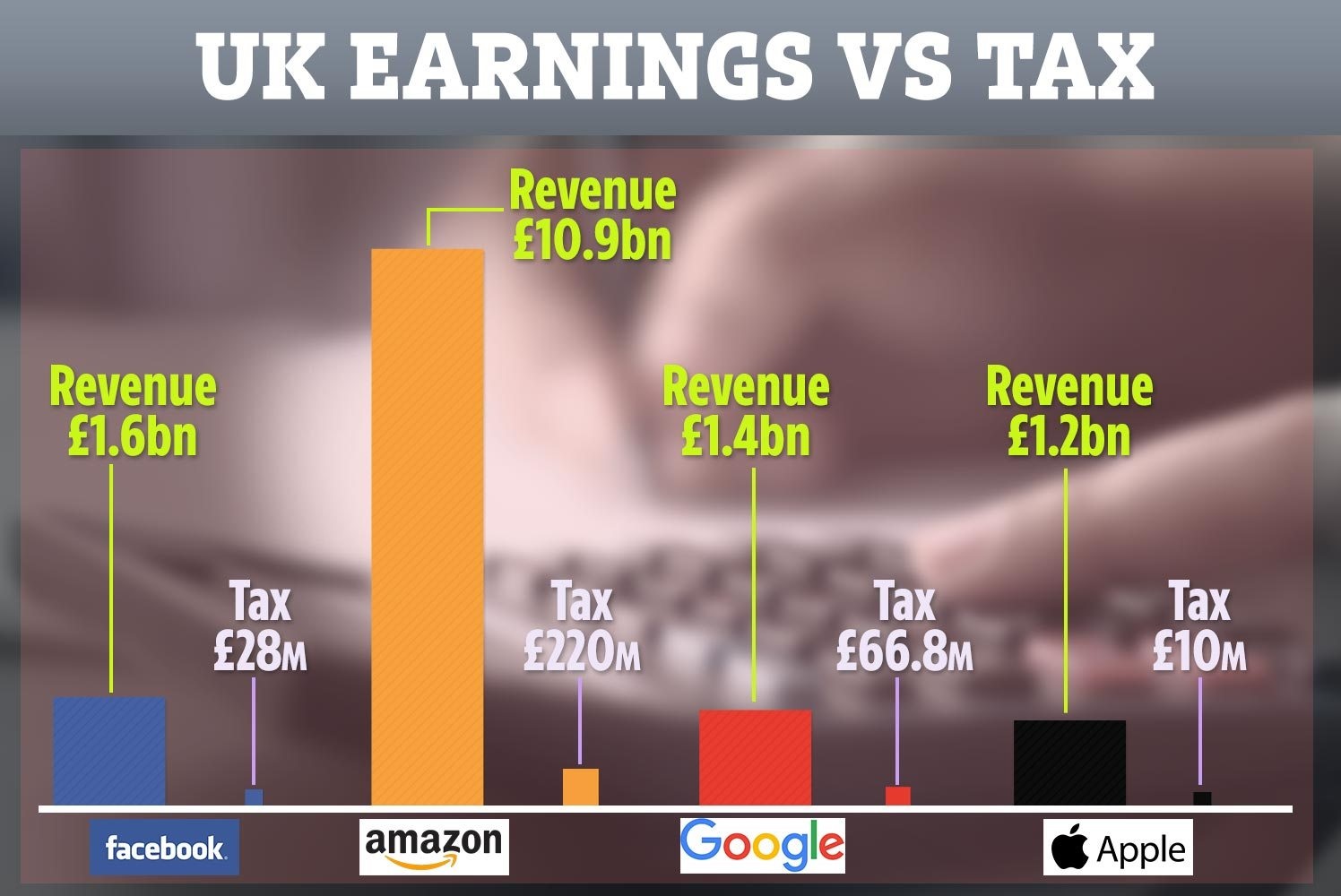
The United Kingdom  is lucky that Facebook sent it 28 million pounds on 1.6 billion pounds revenue, Mali got zero irrespective of the revenue Facebook generated therein. A unification of global tax system on the ICT utilities will surely help Mali and other smaller countries in this age.

Facebook’s UK operations paid £28m in corporation tax last year despite achieving a record £1.6bn in British sales.

The social media company’s latest UK accounts show that gross income from advertisers rose almost 30% last year to £1.65bn, and pretax profits surged by more than 50% from £63m to £97m.

Steve Hatch, the Facebook vice-president for Northern Europe, said: “Businesses across the country use our platforms to grow and revenue from customers supported by our UK teams is now recorded here so that any taxable profit is subject to UK corporation tax.”

But John McDonnell MP, Labour’s shadow chancellor, criticised the relatively small amount of corporation tax the US tech giant paid last year.
Nigerian Government Should Scrap NYSC

4

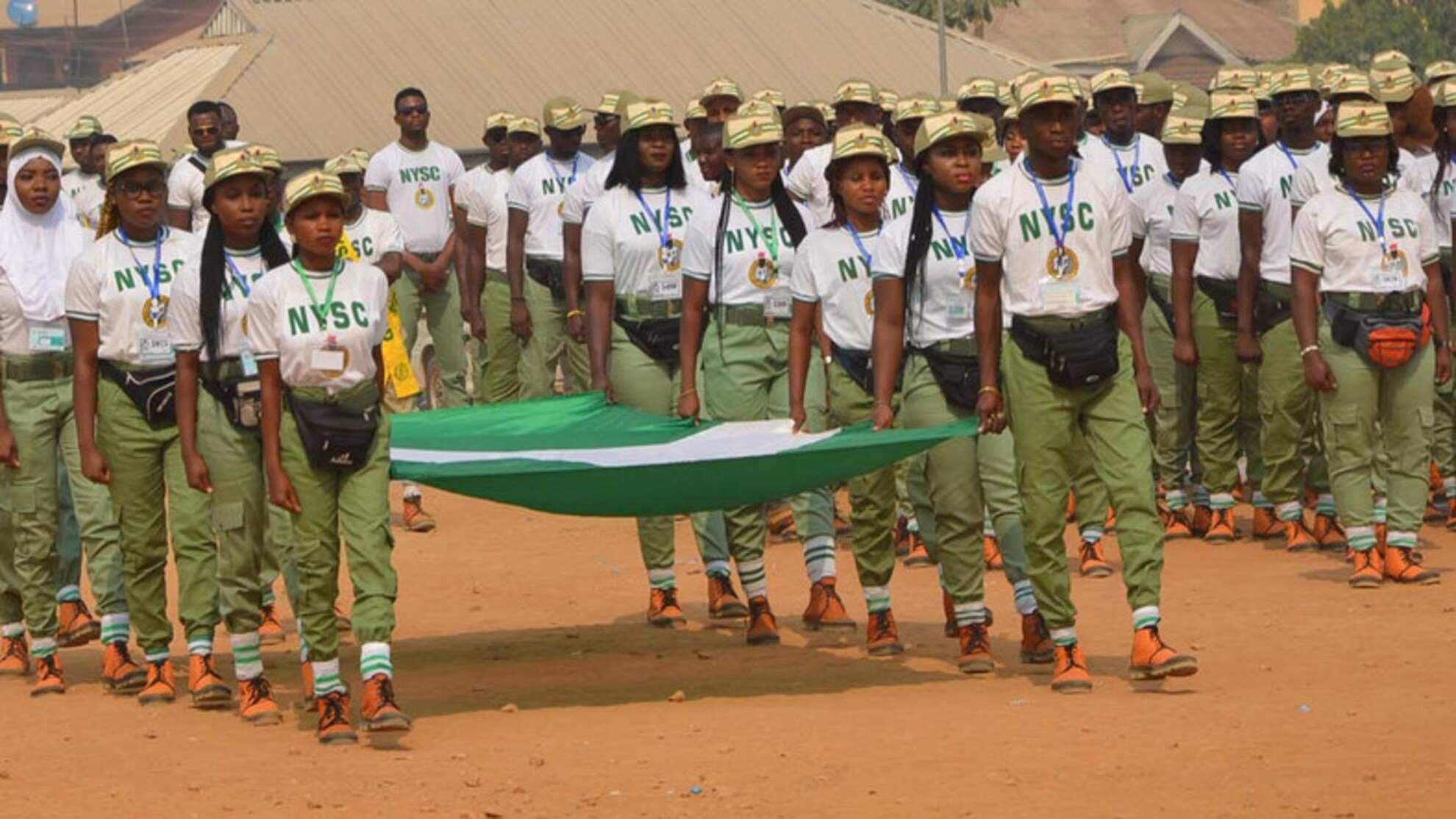
Nigerian government should scrap off the National Youth Service Corps Program – NYSC.

I made contact with some corp members who served in Akure, to enquire about their service year and how they had fared in the environment but I was ashamed of what they told me.

According to the first respondent, she said; ”This is the worst moment of my life. I was posted to a hospital for my primary place of assignments even though I did not study anything related to medicine. I studied sociologist. Initially, I found it unacceptable but after several efforts to change my primary place of assignments which turned futile, I decided to stay and spend the eleven months I had left.”

”It turned out to be the worst decision I ever made. My job description wasn’t specified. I would stay in the hospital all day doing nothing meaningful. I am as good as a messenger because that’s what I did all through my service year. I wished I never served because there was really nothing new that I learned other than running errands.” She concluded.

That was really unacceptable. I could imagine an environment like that. If a graduate spends 4 – 5 years in the university to be a messenger during NYSC, then I don’t think the program is doing anything to impact our fresh graduate. When you think about the labour market, the rate of unemployment, then NYSC is actually not helping fresh graduates in such situations.

I tried to broaden my research. I spoke to another corp member in Oyo state. I asked after his service year and what impact the program had on him. His response knocked me off my feet.

He said, ”NYSC na scam (meaning NYSC is a scam). I was posted to a church. When I met with the pastor to discuss my role, he told me I would act as an usher in his church on Sundays. He asked if I could play musical instruments, so I can join his choir band. I was really disappointed. This is not the life that I want. He even insisted that I must attend his church and come for weekly programs and vigils.”

I asked if he complained and asked for a change in the primary place of assignments. His response once again was really shocking. In fact, it was his response that made me draw this conclusion that – NYSC should be scrapped.

He told me, ”I met with my LI, that is, Local Government Inspector, and asked for a change. He told me to endure that the program is almost over. I tried to let him know what I studied is nowhere related to what I am doing over there. How do you expect a Chemical Engineering graduate to be working in a church as an usher and choir? I’d even clean the chairs and mop the floor of the church auditorium. Then get 5000 naira at the end of the month. This is really unbelievable and ridiculous. I later discovered that the pastor is somehow close to LI and he settles him to get corp members posted to his church. NYSC na scam!” He concluded.

I was really sad for the country. The youths are the future but what are we doing to raise them? We are too spiritual.

We do little or nothing when it comes to developing our youths which are the future, how do you expect them to be productive? How will the rate of unemployment be reduced?

It’s a shame when things like this happen. I was in the labour market for one year, looking for a job but I never got any. It was actually my talent that made way for me. If not, I would definitely still be unemployed hoping that my certificate would help me find a job one day.

Is it not a big disgrace to the nation when an LI says, ”use your service year to serve God by working in a church cleaning the floors and running errands for pastors.”

Common on! We all need to do better. There are better programs our fresh graduates can learn and become self-employed. Our government needs to start investing in this type of program.

Why not scrapped off NYSC totally and give them the one year allawee?

That seems better to me than to deploy fresh graduates into an environment that’s not helping them grow or adding valuable skill sets to their lives.

As much as I know that working for God pays well, but it’s not by doing useless works in churches. There are many ways to serve God without having to make anyone feel compelled to do so. The problem we have in the country is – ”We pray when we ought to use the brain and use the brain when we ought to pray.”

Remember, we are in the 21st century and it is only those who can think creatively that will survive the global economic crisis.

SexForGrades: Lecturers, Stop ‘Praying’ on Female Students

0

Sex is unbearably delicious, sweet and pleasant. The climax is heavenlyGod has wired the human body to desire, have and enjoy sex. But there is a caveat, you should only have sex with your legally married partner. Shior…God has said His own…haq…haq…haq…

Our own is whether we are married or not, we are allowed to have sex indiscriminately notwithstanding the age, and if it is consensual or not. This is why a 40-60-year-old man would rape a toddler, this is why a father sleeps with his daughters and this is why lecturers demand sex from female students. Men like this need to go see a shrink!

There is another set of individuals who are worse off-those who camouflage their indiscriminate sexual escapades and inordinate acts by adorning the religious toga.

This is the case of PASTOR Dr Boniface Igbeneghu, a now-suspended pastor of Foursquare Church and a senior lecturer at one of Nigeria’s prestigious University, University of Lagos “UNILAG”. But his unbridled libido, his sheer disrespect for women, his religious deception, and his disregard for university rules and regulations has landed him in hot water.

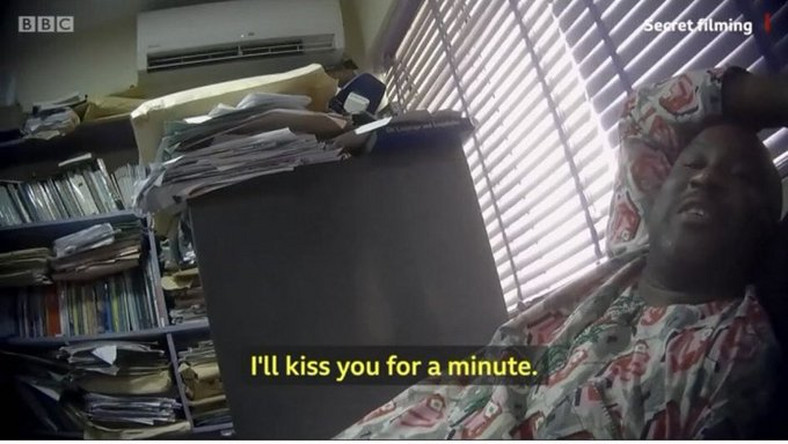
Dr Igbeneghu, who has now been suspended by UNILAG, was caught on camera explicitly and uncouthly soliciting for sex from a 17-year-old posing as a student and seeking his help for securing admission into the university.

His downfall was as a result of an investigation carried out by BBC Africa Eye and was tagged Sex for Grades. In it, reporter Kiki Mordiand a team of undercover female reporters used hidden cameras to document how top lecturers at the University of Lagos conduct themselves with female students. Dr Igbeneghu who had become notorious for demanding to sleep with female students in exchange for grades was one of them.

Dr Igbeneghu is not alone in this #SexForGrades scandal. Across all faculties and departments in Nigeria’s higher institutions; lecturers leverage on their privileged position to pray on female students.

Unfortunately for these students, they have only two choices: it is either they grant the lecturer’s wishes or fail to graduate with fellow course mates. Many choose the former while others drop out like Mordi. There is no system or structure for students to report sexual harassment safely and anonymously. So, the act continues unchecked despite the damning revelations by the BBC Africa Eye team.

Recall Professor Richard Akindele of Obafemi Awolowo University who demanded to have sex five times to pass female student? The Professor was dismissed and charged to court. Nigeria’s snail wheel of justice means we are nowhere near a logical conclusion of that case.

Despite this, the lecturers are becoming more daring and are unrelenting in their female student’s harassment.

Lecturers are supposed to have impeccable ethical and moral standards. This appears to have been jettisoned in Nigeria’s high institutions.

Hence, the management of these institutions as a matter of priority must set up an impregnable reporting system so that any female student that is being harassed by a lecturer can report without fear of being victimised.

Perhaps, establishing a sexual harassment office under the Department of Student Affairs will go a long way and also the University management should send all their lecturers for a mental check-up to determine their state of mind and also train them on how to manage female students.

Sexual harassment of female students is embedded in Nigeria’s educational system and it will take years to be resolved.  However, with everyone watching (online and offline) the lecturers who pray on students and take them to cold rooms, it is a matter of time before they will be exposed.

What if China Mobile Wants to Buy Nigeria’s 9Mobile?

5

The world’s largest telecom firm is China Mobile. It has more than 800 million internet users in its network. But as “typical China”, that number is not even big enough for this telecom giant: it wants to grow. And that means going outside China to find new customers. Africa will be a key destination.

Yes, the massively debt-ridden #3 telecom operator in South Africa, Cell C, is in the market with some of its assets. It has close to $600 million debts to settle. MTN, Vodacom and others are jockeying. The rumour is that China Mobile is coming with a big cheque. Of course, unlike the Americans and Europeans, fixated on espionage, Africa has welcomed Huawei and other Chinese heavyweights because they indeed deliver value for money, and we have no other credible alternative.  I do not see anyone blocking China Mobile in South Africa if it indeed wants to make a play.

A report on Tuesday suggested China Mobile may be about to swoop to the rescue of embattled mobile operator Cell C. Telkom is also rumoured to be circling.

ITWeb, an online technology publication — citing an unnamed source who it said has “knowledge of the matter” — said that talks are taking place between Cell C and China Mobile and that a “deal is imminent”.

TechCentral could not immediately independently determine the veracity of the report, but has heard from several sources in recent weeks that Telkom may again showing some sort of interest in Cell C. Telkom CEO Sipho Maseko had said earlier this year that company was no longer interested in buying the mobile operator.

If the ITWeb report is correct, and China Mobile does buy a stake in the operator — and especially a controlling stake — it could have a significant impact on the South African mobile market, particularly in light of the Chinese company’s deep pockets, technical expertise and buying power.

But forget what happens in South Africa,  I have a question: what if China Mobile comes into Nigeria to acquire 9Mobile? With its massive pockets, the game could change. That is a possibility if indeed Cell C interest turns out to be real. Yes, if that happens, we can say that China Mobile has an African playbook.

This was a risk factor we pointed to an investment boutique whose CEO belongs to my CEO Direct [interested? email here]; they pay an annual subscription fee for an opportunity to speak with me anytime on business matters. We do think, if Cell C indeed goes to China Mobile, MTN Group value will drop because China Mobile will reshape the telecom sector in South Africa. 

Also, we extrapolate that the appetite that takes China Mobile to South Africa will bring it to Nigeria to find better jollof rice (yes, telecom assets). If that happens, publicly traded telecom companies in the Nigerian Stock Exchange  will see massive value erosion. If you are in the investing space, pay attention to what is happening with Cell C and China Mobile. It could signal a major trajectory that China wants to run telecom operations in Africa.

UberBOAT Launches in Lagos

6
Uber trialed Uber Boat in Lagos

UberBOAT launches in Lagos in partnership with Lagos State Waterways Authority (LASWA). Users will be charged a flat amount of N500 ($1.39) per trip. This is encouraging but it needs scale to have an impact. 

One of the most exciting things in Zurich, Switzerland, is entering a public bus, in some areas, with no requirement to pay any fee. Come out from the central station, enter a bus, and go anywhere you want. The government has figured out that by waiving the fees, more people will use the public buses, triggering more productivity via no traffic on the roads, and good things follow. At the end, it will recover all expenses from better tax receipts.

Sure – one cannot compare Nigeria and Switzerland but getting people to drive less and use public transportation systems which must be adequately provided should be a game plan. Waterways, trains and more buses, priced competitively, would save Lagos from itself. As that happens, Lagos needs neighboring states to disperse its traffic under a better tax structure as I have noted.

Global ride-hailing firm Uber Technologies Inc [UBER.UL] on Friday launched a pilot test of a boat service in Nigeria’s commercial capital Lagos to attract commuters seeking to avoid the megacity’s notoriously congested roads.

[…]

The waterway service, UberBOAT, is operated in partnership with local boat operator Texas Connection Ferries and the Lagos State Waterways Authority (LASWA), said the ride-hailing firm.

[…]

Passengers will be charged a flat fare of 500 naira ($1.39) per trip, compared with about 300 naira by minibus for a similar journey in the commercial hub of the West African country where most people live on less than $2 a day.

Recently, Gokada, a motorbike e-hailing operator, went into the space with GBoat.

Gokada launches GBoat, a boat service in Lagos: “After raising USD 5.3  million from the Rise Capital, bike-hailing firm GoKada is launching a water-borne service, GBoat, to beat Lagos traffic”. Meanwhile Uber unveils Uber Copter in New York. Yes, you can take a helicopter from Manhattan heliport to JFK Airport for $200. Two poles – interesting moments in global transportation.