DD
MM
YYYY

PAGES

DD
MM
YYYY

spot_img

PAGES

Home Blog Page 665

What is GEO? And How Is It Different from SEO?

0

SEO (Search Engine Optimization) optimizes web pages to rank on traditional search engine results pages (SERPs) using keywords and structured data. GEO (Generative Engine Optimization) focuses on optimizing content for generative AI search engines to be included in AI-generated answers and summaries by prioritizing clarity, authoritative sources, structured formatting, and context. While SEO aims for page rankings, GEO aims for content to be extracted, cited, and synthesized by AI, with both strategies working to improve online visibility in different search environments. 

SEO (Search Engine Optimization)

  • Goal: To improve a web page’s ranking in traditional search engine results (e.g., Google, Bing). 
  •  
    Method: Uses keywords, meta tags, technical analysis, and other tactics to make content relevant to specific search queries. 
  • Outcome: A list of links (SERP) for users to click on.
     
  • Focus: Keyword matching to drive traffic and improve page visibility.

GEO (Generative Engine Optimization)

  • Goal: To ensure a brand’s content is visible and cited by AI-powered answer engines and generative AI models.
  • Method: Focuses on content clarity, structured data, authoritative sources, and contextual relevance for AI to interpret and synthesize information. 
  • Outcome: Content being included in AI-generated summaries or direct answers, rather than just ranking pages. 
  • Focus: How AI systems extract, interpret, and generate responses from content, prioritizing citeability and structured formats. 

Key Differences Summarized

  • Target Environment:
    SEO targets traditional search engines; GEO targets generative AI and answer engines. 
  • Primary Mechanism:
    SEO uses keyword matching; GEO uses AI interpretation of intent and context. 
  • Result:
    SEO produces a ranked list of pages; GEO generates direct, summarized answers. 
  • Strategy:
    SEO optimizes for page ranking; GEO optimizes for the AI’s ability to understand, extract, and cite content. 

Google Gemini Veo Brings a New Basis of Competition in AI Race [video]

0

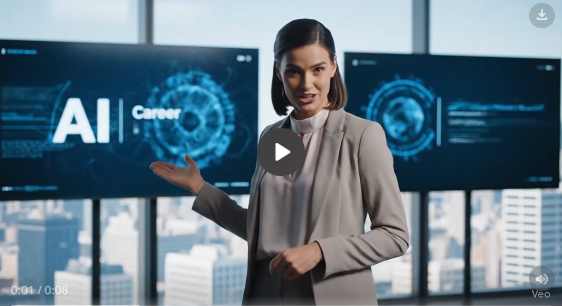
Today, I used Google Gemini Veo which can create videos with simple natural language prompts. At the moment, the length of the video is limited to about 8 seconds, but I expect things to improve in months.

My prompt: “A Tekedia Institute is introducing a new course on AI and is introducing the course to new college students. This is a marketing video designed to get people to understand the importance of AI on careers and impacts in the market. The video also challenges them to take AI courses to advance their careers” with this image attached

Response: this video

Comment: the 8 second limit is a huge limitation but as I said, this will improve. Also, they can clone voices and simulate images. Watch out for career dislocations as AI companies scale the mission. This is not hype…Again, this AI era is real.

TRM Labs in Partnerships with Coinbase, Binance, PayPal, Ripple and Kraken Launches ‘Beacon Network’

0

TRM Labs has launched the Beacon Network, a real-time crypto crime response system, in collaboration with major exchanges like Coinbase and Binance, as well as other industry players such as PayPal, Ripple, Kraken, and Robinhood, alongside global law enforcement agencies.

The initiative aims to prevent illicit funds from leaving the blockchain by enabling rapid detection, tracking, and freezing of suspicious transactions. The network connects verified investigators, exchanges, and stablecoin issuers to flag high-risk wallet addresses, automatically trace funds across blockchains, and trigger instant alerts when flagged funds reach participating platforms, allowing for swift action to freeze assets.

The Beacon Network addresses the growing issue of crypto-related crime, with TRM Labs estimating that over $47 billion has been sent to fraud-linked addresses since 2023, including $2.3 billion stolen in 2025 alone, highlighted by major incidents like the $1.5 billion Bybit hack. The system has already shown success, with cases like the freezing of $1.5 million tied to a multinational scam and $800,000 in scam-related deposits intercepted.

Founding members, including Coinbase, Binance, and Ripple, emphasize the network’s role in enhancing transparency, trust, and security in the crypto ecosystem through real-time intelligence and cross-sector collaboration.

Notably, stablecoin issuers like Tether and Circle were not mentioned as members. The network is accessible at no cost to verified exchanges and law enforcement, with strict vetting to prevent misuse, ensuring only credible flags are acted upon.

By enabling real-time detection and freezing of illicit funds, the network deters crypto-related crimes like scams, hacks, and money laundering. This could boost user confidence, encouraging wider adoption of cryptocurrencies by reducing risks associated with fraud, as seen in the $2.3 billion stolen in 2025.

The partnership between major exchanges (Coinbase, Binance, Kraken, etc.), law enforcement, and blockchain analytics firms like TRM Labs sets a precedent for cross-sector cooperation. This unified approach could pressure non-participating platforms, like Tether or Circle, to join or face reputational risks.

The network’s ability to trace and freeze funds aligns with global anti-money laundering (AML) and counter-terrorism financing (CTF) regulations. It may accelerate compliance by exchanges, potentially influencing stricter regulations or encouraging regulators to view crypto as a more controlled and transparent space.

With $47 billion sent to fraud-linked addresses since 2023, the network’s real-time alerts and fund-freezing capabilities could significantly disrupt criminals’ ability to cash out or launder funds. Successful cases, like freezing $1.5 million in scam proceeds, demonstrate its potential to shrink the profitability of crypto crime.

The system’s ability to flag and track wallet addresses raises potential privacy issues for legitimate users. While TRM emphasizes strict vetting to prevent misuse, overreach or false positives could lead to unwarranted freezes, sparking debates over surveillance versus security.

Exchanges participating in the Beacon Network may gain a competitive edge by being perceived as safer, potentially attracting more users. Conversely, non-participants could face scrutiny or lose market share, reshaping the competitive landscape.

Free access for verified law enforcement agencies strengthens their ability to combat crypto crime across jurisdictions, potentially reducing the safe havens for illicit activities and fostering international cooperation.

The network’s blockchain-agnostic tracing and automated alerts could inspire similar real-time systems in traditional finance or other digital asset classes, setting a model for combating financial crime beyond crypto.

Overall, the Beacon Network could transform the crypto industry into a safer, more regulated space while raising questions about privacy and centralized control, impacting how users, platforms, and regulators navigate the evolving landscape.

A Manhattan Judge, Rochon, Unfroze $57.6M USDC Tied to LIBRA Rugpull

0

A Manhattan federal judge, Jennifer L. Rochon, unfroze $57.6 million in USDC stablecoins tied to the Libra meme coin scandal, allowing promoters Hayden Davis and Ben Chow to regain access.

The decision was based on the defendants’ cooperation and the judge’s skepticism about the plaintiffs’ likelihood of success in their class-action lawsuit seeking over $100 million in damages. The Libra token, launched in February 2025 and promoted by Argentine President Javier Milei, crashed 97% within 24 hours, sparking allegations of a $107 million rug pull.

The unfreezing led to a temporary spike in Libra’s price, with reports of a 103% to nearly 400% surge, though it later cooled. The lawsuit, filed by Burwick Law, alleges Davis and Chow misled investors by leveraging Milei’s promotion to falsely suggest legitimacy. The case remains ongoing, with no resolution on substantive claims.

The unfreezing of $57.6 million in USDC stablecoins, previously locked due to a class-action lawsuit, led to a temporary price surge for Libra, with reports of a 103% to nearly 400% increase shortly after the August 20, 2025, court ruling.

This spike reflects speculative trading driven by the news, as investors may have anticipated renewed liquidity or project developments. However, the price later stabilized, indicating the surge was likely driven by short-term sentiment rather than fundamental value.

Promoters Hayden Davis and Ben Chow regaining access to these assets could enable them to reinvest in liquidity pools or marketing efforts, potentially stabilizing Libra’s market presence temporarily. However, their involvement in the alleged $107 million rug pull and subsequent legal scrutiny raises concerns about their credibility, which could deter long-term investor confidence.

The unfreezing does not resolve the ongoing federal criminal probe or class-action lawsuit alleging fraud and market manipulation. Regulatory bodies, including the SEC and DOJ, are investigating potential securities violations and money laundering, which could lead to further restrictions or penalties.

This uncertainty hampers Libra’s ability to regain institutional or retail investor trust. The scandal, dubbed “Cryptogate,” has severely damaged Libra’s reputation, with 86% of traders losing $251 million and allegations of insider trading. The concentration of 82%-84% of the token supply in the hands of a few insiders further fuels distrust, making it difficult to attract new capital.

The unfreeze and ongoing investigations could exacerbate Argentina’s economic instability, as the scandal has already contributed to a 5% drop in the country’s stock market and eroded public trust in President Javier Milei, who promoted the token. This political fallout may limit Libra’s ability to secure legitimate partnerships or government-backed initiatives.

Why Libra Is Unlikely to Reach Its ATH

Libra was marketed as a tool to fund Argentine businesses, but its meme coin structure lacks intrinsic utility or a sustainable economic model. Unlike stablecoins backed by real assets or projects with clear use cases, Libra’s value was driven by hype and Milei’s endorsement, which has since been retracted.

Blockchain data revealed that 82%-84% of Libra’s supply was held by a small group of insiders who cashed out $87-$107 million during the initial crash. This centralization and the perception of a pump-and-dump scheme make it unlikely for retail investors to return in significant numbers, limiting upward price momentum.

The Libra collapse drained $251-$286 million in liquidity from the altcoin market without bringing in fresh capital, as it merely shifted funds from other assets. Memecoins like Libra often fail to recover after such crashes due to their reliance on speculative trading rather than organic growth. The broader crypto market’s focus on more established assets like Bitcoin and Ethereum further reduces Libra’s appeal.

The SEC’s investigation into whether Libra violated securities laws, combined with potential money laundering probes, could lead to delistings from exchanges or stricter regulations. The lack of transparency in the token’s launch and the absence of liquidity locks or fair launch mechanisms deter institutional investment.

Memecoins like $TRUMP and $MELANIA, which followed similar playbooks, lost 71%-90% of their value post-launch and failed to recover due to insider profiteering and lack of utility. Libra’s 89.4%-96% crash mirrors this pattern, and the market’s increasing skepticism toward politically endorsed tokens reduces its recovery potential.

Libra’s current trading price (around $0.12-$0.32 as of February 2025) is significantly below its ATH, with low trading volume ($62.45-$158 million daily) indicating weak market interest. Technical indicators, such as a neutral RSI and declining holder count (from 50,000 to 35,770), suggest limited momentum for a sustained rally.

Analysts predict a potential bull run in 2025, but this is likely to favor established cryptocurrencies like Bitcoin, which could reach $200,000, rather than speculative memecoins. Libra’s lack of unique features or partnerships, combined with competition from other altcoins, makes it unlikely to capture significant market share.

Some analysts, like DigitalCoinPrice, project Libra could reach $0.50-$0.70 by the end of 2025, driven by a potential crypto bull market. However, these predictions are speculative and based on historical bull market trends, not Libra-specific developments. If Milei or other high-profile figures re-endorse Libra, it could spark another speculative surge.

However, Milei’s deletion of his initial endorsement and ongoing investigations make this unlikely. The unfrozen $57.6 million could be used to restore liquidity or fund development, but the promoters’ track record of alleged misconduct reduces the likelihood of this restoring investor confidence.

While the unfreezing of $57.6 million in assets triggered short-term price volatility, Libra’s path to its ATH of $0.75-$4.61 or a $4.5 billion market cap is obstructed by its lack of fundamental value, insider trading allegations, regulatory scrutiny, and a damaged reputation.

OpenAI Seeks Record of Meta’s Involvement in Musk’s $97B Bid to Acquire the ChatGPT Maker

0

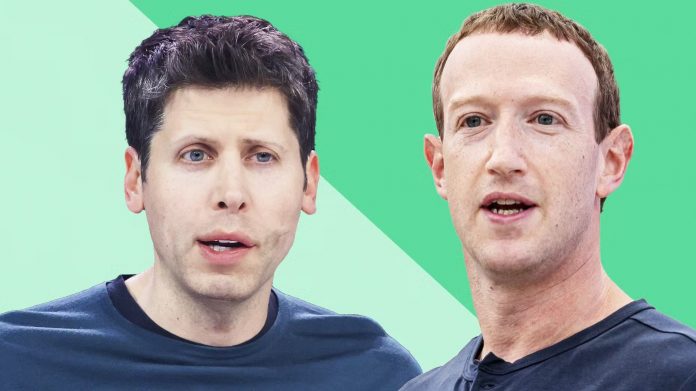
What began as a bruising corporate feud between Elon Musk and OpenAI is now pulling Meta into the legal storm, as the ChatGPT-maker asks the court to force Mark Zuckerberg’s company to hand over documents linked to Musk’s attempted takeover.

In a court filing made public Thursday, OpenAI revealed that it subpoenaed Meta back in June for records that could shed light on whether Zuckerberg or his company coordinated with Musk and his AI startup, xAI, during Musk’s unsolicited $97 billion bid to buy OpenAI earlier this year. The filing states that OpenAI’s legal team had learned Musk communicated with Zuckerberg about xAI’s interest in purchasing the company, including “potential financing arrangements or investments.” It remains unclear whether any such documents exist, and OpenAI ultimately rejected Musk’s approach.

Meta objected to the initial subpoena in July, prompting OpenAI’s lawyers to now seek a court order that would compel Meta to turn over the evidence. In addition to documents on Musk’s takeover attempt, OpenAI also wants access to Meta’s communications on “any actual or potential restructuring or recapitalization of OpenAI” — an issue at the heart of Musk’s lawsuit against the company.

Responding to inquiries, Meta spokesperson Andy Stone pointed to a section of the filing where OpenAI itself acknowledges that neither Meta nor Zuckerberg signed Musk’s letter of intent to acquire the firm. Beyond that, Meta declined further comment.

This legal tug-of-war comes against the backdrop of intensifying rivalry between OpenAI and Meta. In 2023, Meta poured resources into building a frontier AI model capable of outperforming OpenAI’s GPT-4, filings in a separate case revealed. But by early 2025, Meta’s AI projects were lagging the industry standard — reportedly infuriating Zuckerberg, who has since doubled down.

That spending spree means a court-ordered disclosure could carry significant financial implications for Meta. If Zuckerberg’s discussions with Musk touched on potential joint ventures or financing, the documents could reveal how seriously Meta weighed investing in or even acquiring pieces of OpenAI at a time when it was already funneling vast sums into AI. Any evidence showing overlap between Meta’s hiring strategy and Musk’s xAI ambitions could also raise questions among investors about whether the social media giant was hedging its bets or considering partnerships in the escalating AI arms race.

In recent months, the Facebook parent has escalated efforts by raiding talent from OpenAI itself. Among the biggest hires was Shengjia Zhao, a co-creator of ChatGPT, who now leads Meta Superintelligence Labs. Meta has also invested heavily in outside ventures, including a $14 billion stake in Scale AI, and has reportedly held talks with other AI companies about potential acquisitions.

That backdrop makes any possible coordination between Musk and Zuckerberg even more intriguing. Less than two years ago, the two billionaires exchanged barbs about fighting in a physical cage match — a spectacle that never materialized. Yet, the escalating arms race in AI may have pushed them closer to pragmatic cooperation, at least on paper.

The briefing made public on Thursday forms part of Musk’s wider lawsuit with OpenAI. The Tesla and SpaceX chief, who co-founded OpenAI in 2015, is challenging its restructuring into a for-profit entity with a public-benefit arm — a shift designed to attract deep-pocketed investors and pave the way for a potential IPO. Musk contends the move betrayed OpenAI’s founding mission and is seeking to derail it.

Meta’s lawyers, however, want the court to shut down OpenAI’s request for evidence, arguing that Musk and xAI themselves are better placed to provide the information. They also claim Meta’s internal discussions about OpenAI’s restructuring or recapitalization are irrelevant to Musk’s case.