DD
MM
YYYY

PAGES

DD
MM
YYYY

spot_img

PAGES

Home Blog Page 6656

Sales Lessons from Nigeria’s Highway Hawkers

0

We all enjoy their services. They seem to show up when we need them most. They station themselves at strategic areas and try to make life easier for us. To be honest, we look out for them and when we don’t see them, we feel uncomfortable and disappointed.

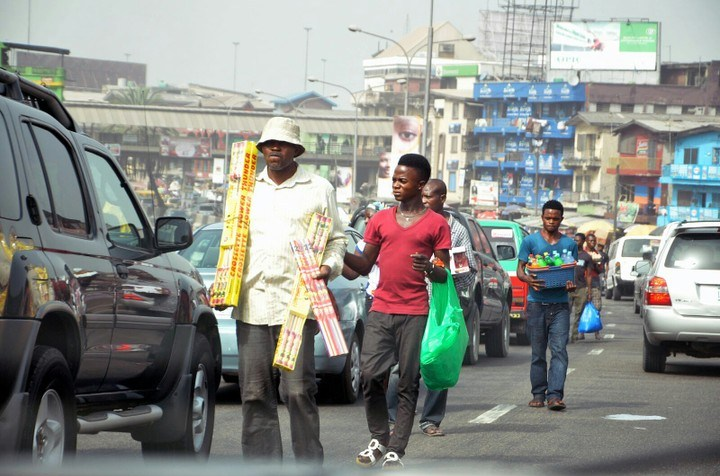
These are the highway hawkers. They are there to make travellers feel less troubled by our bad roads. We see them at popular road junctions, traffic lights, police and army checkpoints and at sites where roads are so bad. They sell things like snacks, portable water, handkerchiefs, drinks (both alcoholic and non-alcoholic), books, auto parts (especially windscreen wipers), toiletries, house cleaning equipment, bush meat, and so many others.

I don’t really like this business because of the risks involved. I mean, this is highway, even though they station themselves in places vehicles have to slow down. But anything can happen. I know the rate may be low, but accidents can still happen and claim the lives of some of these hawkers. Besides, some drivers and their passengers are mean enough to run off with these people’s wares without paying them. Anyway, that is a story for another day.

A lot of people see these hawkers as nuisance on the highways and I don’t really blame them for that. This is because most of those that pose as hawkers are actually robbers – those living in Lagos can tell this story better. In fact, when they come close to your car’s window, keep your bag out of their reach so they don’t pick-pocket you. If you are not mindful of them, your phones, money and other valuables can just disappear without your permission.

But we still have so much to learn from these hawkers. The other day I was wondering why start-ups don’t recruit these people as sales agents instead of employing those that don’t really understand aggressive sales and marketing. These hawkers have some qualities that make them survive in the business and be able to generate enough income to solve their financial needs. There is no way anyone that doesn’t possess these qualities can go into the business.

Below are some qualities of highway hawkers every salesperson should learn and imbibe:

  1. Agility: Of course if you are not agile you can’t be in that business. I haven’t seen a sluggish person selling on the highway. Make out time to observe these people when you see them. You will notice that they are always ready for actions. It always seems as if their antennas are up all the time. Their whole bodies are up and actively listening and searching for potential customers. Once they sight one, they move as fast as anything towards him. As they are selling to that customer, they are listening and looking for another one. They are ready to sell to several customers at the same time and collect their money the same way. If a vehicle they are selling to drives off, they run like Usain Bolt to collect their money and hand over balance. Like Nigerians will say, “these people are sharp”; every salesperson needs to be like that.
  2. Resilience: Most Nigerians can’t stand under the sun or the rain for 30 minutes, but these hawkers do that the whole day. The bad weather or climate doesn’t deter them. If they stay under the shade when traffic is light, they immediately jump back into the road once they see a prospect. And after a tiring day’s work, they come back tomorrow to continue.
  3. Passion: I strongly believe that these people are driven by their passion for the business. They have this zeal to get the job done. I don’t know if their passion is with the type of business or with the income they generate through it – all I know is that there is passion.
  4. Attitude: You know, so long as you have a positive attitude towards whatsoever you do, you are bound to excel in it. I believe these hawkers have positive attitude towards their business. I haven’t heard any of them complain about how they suffer to make a living. I haven’t seen anyone of them ask for pity. All they do is try to convince travellers to buy their products, which most people do.
  5. Forceful Marketing: This attitude may annoy some people, but it is a strategy that helps the business. Have you ever been thirsty as you were travelling and all of a sudden, one of these hawkers thrust a cold sweating bottle of Fanta before you? Lol. Let’s be honest, what was your first reaction? Let me guess, you asked how much the drink was? Well, the only reason you won’t buy that drink is because your pocket says so or your doctor kicked against it. If not, you won’t rest until you settle your appetite. This is forceful marketing – appetising dangling what you need before you.
  6. Team Spirit: I think this is part of what makes these people survive on the highway and in the business – they work as a team. If you don’t know, you may think they all come from one family. Take for instance the women that sell okpa at 9th Mile Enugu, they stand together to gist and move together to vehicles to sell their wares. All of them will be shouting “aunty/brother buy this okpa” at the same time that you won’t know who to buy from again. If you finally choose one person, the others will shift back and look for other prospects. If the person you patronised needs to give you balance but doesn’t have the ‘change’, any other seller can easily help her out. If you decide you don’t want to buy okpa but plantain chips, the okpa sell will happily call the plantain chips seller for you (you will be left to wonder if the okpa seller also owns the plantain chips business). Honestly, these people don’t compete among themselves, at least as far as I can see.
  7. Strategic Citing of Business: These people knew the right places to cite their businesses. They first try out places where cars usually stop to drop off or pick-up passengers. Next they check up areas where there are checkpoints or traffic lights because the probability of vehicles slowing down there is high. Another place they try out is where roads are so bad that there is every possibility of hold-ups. This quality may sound trivial until you consider that a lot of salespersons don’t know where to locate their customers.

One more thing about these hawkers, they move in groups, thereby making it possible to watch each other’s back. I think this is the major reason they are hardly robbed or knocked down by moving vehicles.

But all in all, I think business owners should consider recruiting their salespersons from among these highway hawkers. If they are not comfortable with that, they should encourage their marketers and salespersons to pick up their (the highway hawkers’) qualities.
What Your First Degree Does Not Get You, A Higher Degree May Not.

0

I have noticed a trend. It is not a recent trend among graduates. When they are done with first degrees and could not secure immediate employment, the next bet would be to get a Master’s Degree.

It is so common that for every ten graduates you come across, six of them would be ready to go for further study not out of genuine interest or a clear picture of where it could take them, but simply because they have found it hard to get a job.

Many of them erroneously believe that an advanced degree would land them their dream jobs. Most, if not all the time, this belief is not true. Further academic degrees are meant to prepare not for the industry but for teaching. Most entry level jobs require a first degree. Any time a higher degree is sought, there must be required requisite experience.

This is where a lot of graduates get it wrong. A class to class transition does not take you to the workplace. Rather such movement lands you in the classroom if you are lucky.

Experience is what you need to get a job, not a higher degree! Skills and certifications are what you must focus not an MSc or MA. A clearly planned path is what takes you to your job not more academic qualifications. Even if you are considering a higher degree, why not pick up a professional degree?

Please do not misunderstand this. This is because with a Master’s degree, you are qualified to teach in a university. Nevertheless, what the industry requires from you is the skills you possess and the value you are ready to offer. Those two give you the job.

Many graduates today in Nigeria are not competitive! A lot do not understand what they have spent four or five years of their lifetime in the university. Apart from the theories, Nigerian graduates are not clear on which value their degrees should ordinarily bring to the table. If you find it difficult, after having spent four years in the university, to define exactly what value should your qualification offer you and the society, then you are a candidate destined to stay long in the job market. You may eventually end up going for a higher degree which would not take you anywhere.

The only way to build your career and get a job is to be clear about what you intend to do and discover skills you can garner to position you well ahead of others. In doing this, you must have a clear vision of where you are heading. This would guide you in picking the right skills and certifications. It would also assist you to know the right place to secure the needed work portfolio and some experience. Good enough, it is easier to pick up skills online these days. They are free.

Always have it at the back of your mind: your first degree, supported with other certifications and skills plus experience, should be enough to open the door for you. And not a further academic qualification.

The Biggest Illusion in Nigeria

7

I read comments on the reintroduction of toll gates article with many people recommending for Nigeria to reduce expenses to avert fees and taxes. Simply, many Nigerians do think that the Nigerian government is spending a lot of money, and could be cut into shape.

People, nothing like that. This is one area our successive governments have failed Nigerians: no one has told us that we are relatively “severely” poor, and exceedingly underperforming as a nation. Nigeria does not have excess spending problem – the fact remains that Nigeria does not even have enough to spend (note that I am not arguing on the efficiency of the “little” spending).

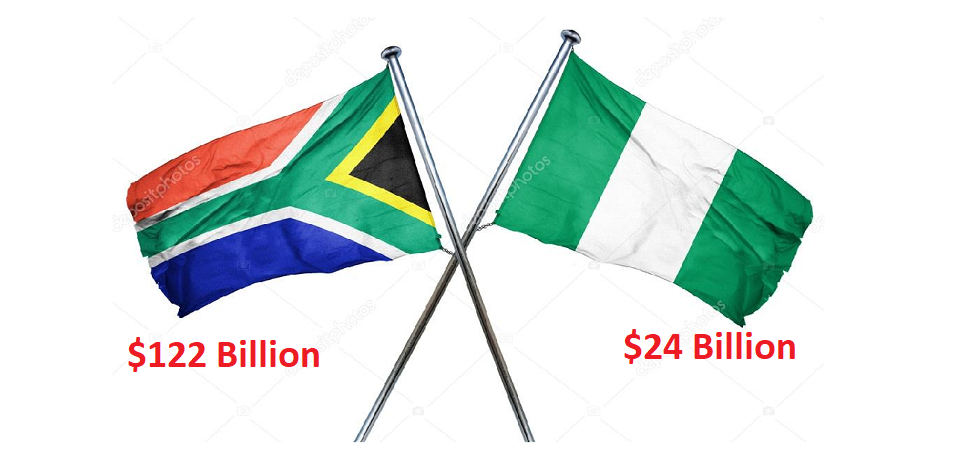
Nigeria’s national budget is $24 billion for 2019. South Africa budgeted $122 billion. South Africa spends 50% of our national budget on healthcare alone! Yet, Nigeria’s population is more than 3 times South Africa’s. I do not share this without the consciousness that I carry the Nigerian passport.

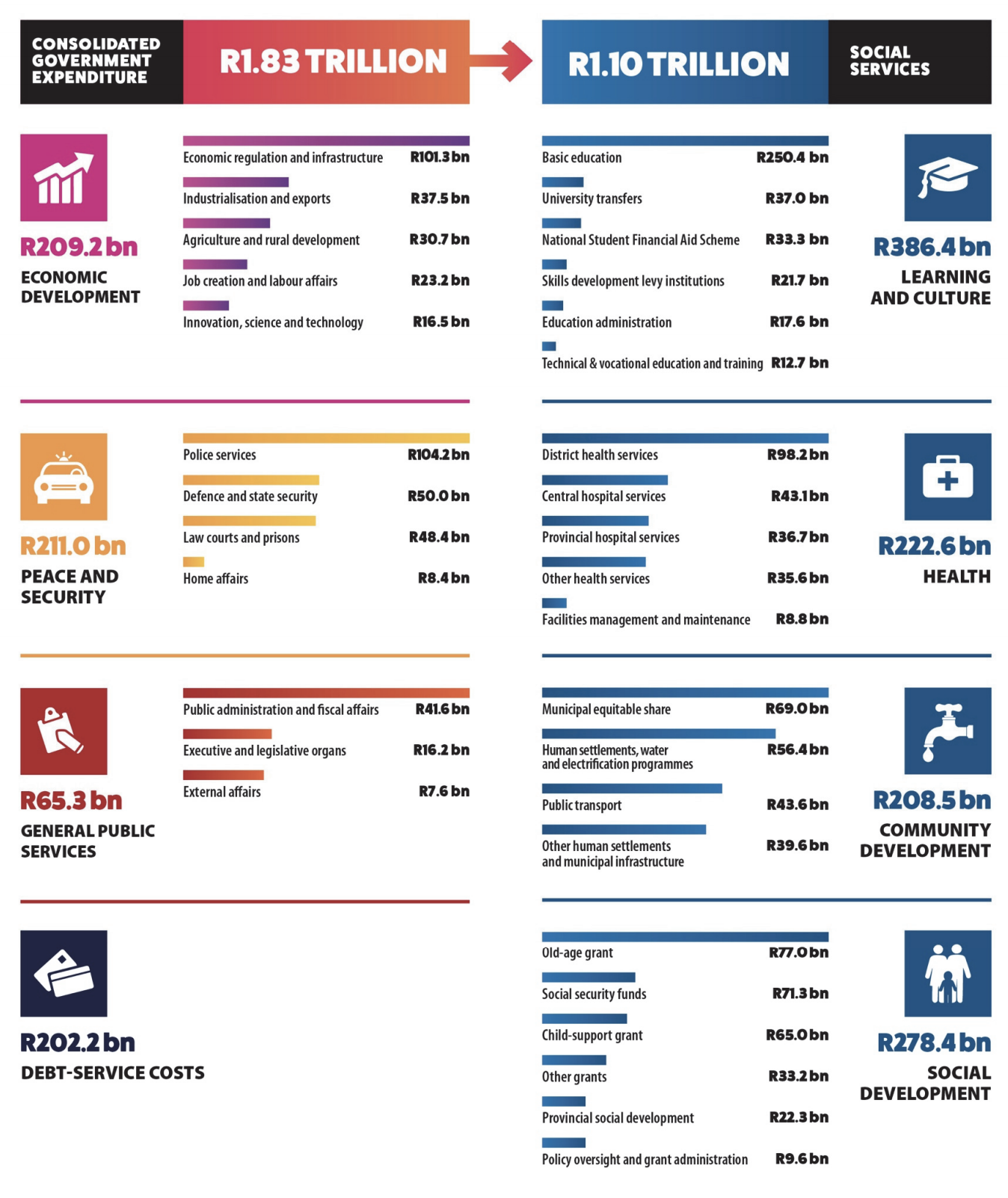
Expenditure in 2019 is expected at R1.83 trillion, with the bulk (R1.1 trillion) going to social services.

State wages and compensation remains the largest category of spending, accounting for 34.4% of consolidated expenditure – a level which the finance minister described as “unsustainable”. Measures are in place to realise a R27 billion reduction in spending here, he said.

Yes, we need to stop the argument that government has tons of money that can be cut. If you go through 2,000 years of economic history, nations rise when companies evolve and pay taxes so that government will have money to spend and improve institutions. This is the fact: Nigerian public institutions will not advance until the private sector does, because the resources to improve them are in the taxes. Even if you remove corruption and save $24 billion in Nigeria, we are still not there!

Nigerian Budget Source: Deloitte Nigeria


2019 South Africa budget (source: Businsstech)

As Carnegie pioneered U.S. steel sector, he wrote the ordinances, made money before government came to regulate it to avoid it from destroying itself! As Mellon, JP Morgan and other financial titans shaped U.S. banking, government waited, and then went in later to regulate the sector at scale. As Amazon devoured retail, U.S. waited until it moved with ecommerce regulations by requesting local tax collection.

As Rockefeller changed oil business, he provided the money government used to regulate Standard Oil. He was an oil man, and paid the poison pill. Across markets and domains, the private sector has always funded the public sector. Regulation, taxes and those fees are how governments monetize those moments.

Nigeria does not have a dynamic private sector and Nigeria does not have money – do not think government needs to be cut into shape. The fact is this: the government has no money to spend. 

Time is Scarce Even in its Limitless Form; Master Your Time.

1

One of the most important elements for success is the mastery of time. If you master your time, you will WIN your future. There is no greater liberation than  owning your time, and no great success has been achieved without knowing that time is scarce even in its limitless form. But managing time does not mean spending lesser time on something; it’s simply knowing what to spend time on, to advance your mission. Do not be like the lifeless feather which when tossed into the stream wanders wherever the stream current moves it. Be like the dragonfly which even though enjoying the mild current defines its path. 

Have a process and see how that process aligns with your goals in life. Students, look carefully, the bests in your classes are not necessarily the smartest but those smart enough to manage their clocks. Because the world is bounded by time, defined within 24 hours a day, companies and schools look for those “bests” as they have overcome by managing time. The best companies, the best universities, and the best leaders want them because if they continue on those paths, they will add values.

I wish you a great purposeful weekend. My teams are playing this weekend – Baltimore Ravens has to win (Steelers) in the NFL (U.S football, not soccer!) while Sevilla has to help Barcelona FC make points in La Liga. We need your support.

The Biggest Failure is NOT Fixing Things that Lead to Failures

Stop Waiting for the Perfect Time

1

They always say, ”no one is perfect”, true! Perfection can never be attained but if we try to get better at every level that we are, maybe we can be excellent.

All my life, I waited too long for perfection. So I never tried anything because I feel it wasn’t perfect enough for me to start. The fear of being criticized left me in a spot for many years. Until I had to break out from the thoughts. Common! Stop waiting for perfection.

I have never seen anyone out there who is perfect. Not even those referred to as the Greatest Of All Time (G.O.A.T.).

They make mistakes, they fumble and even perform below par. But their ability to overlook the flaws and get better at every level is what makes people see them as the greatest.

If experts also have their flaws, why would you wait till you are perfect?

Waiting for perfection is like waiting forever. You’ll never get there. No matter how long you wait. But if you decide to improve on what you know, who you are, the level you are, that would make a whole lot of sense.

I know you demand too much from yourself, yes, it is good. Being hungry pushes you to do more, which is fine. However, you need to be fair on yourself. Be fair on the assessment and judgment of yourself. Sometimes, you need to pat yourself on the back. You are doing better.

There’s an adage that says, ”Rome wasn’t built in a day.” The experts you see today were once amateur. The only difference is – they strive to improve daily.

Perfection only comes to those who try every day. If you want to be good at something, do it every day.

At first, you will struggle. It will not even make sense to many people. They’ll tear you down. Some will advise you to quit.

But if you listen to them, then you are not ready.

Shut your ears to the noise around you. Breathe. Only you know what you want, so go for it. Do it every day, do it till the nonsense makes sense.

At the end of it all, those who told you to stop will ask you to teach them. But till then, are you doing enough to win over their doubts.

Ask yourself!