DD
MM
YYYY

PAGES

DD
MM
YYYY

spot_img

PAGES

Home Blog Page 6670

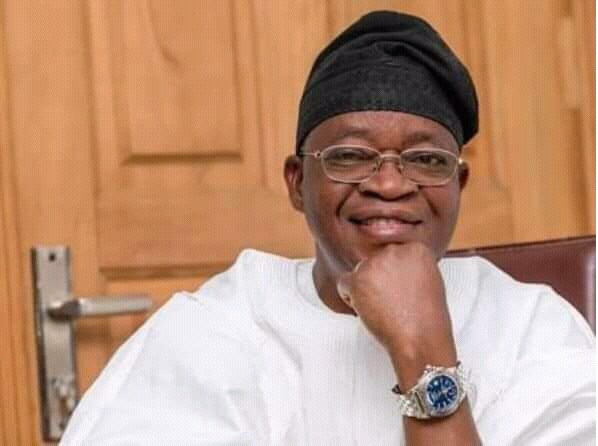
Governor Gboyega Oyetola’s Cabinet List in Osun: It is not yet Uhuru

0

After close to a year that Governor Gboyega Oyetola has been in the saddle of affairs in Osun State, he released the list of nominees for commissioners and special advisers on Tuesday 24 September, 2019. The much awaited list read on the floor of the State House of Assembly and which has flooded the social media and online news platforms has attracted a lot of attention from politicians, analysts, residents and indigenes of the state. The governor was listed among the nineteen governors in Nigeria who have failed to constitute a cabinet after months in office. As expected, there were complaints and compliments that accompanied the release of the list.

While some bemoaned the absence of some purported names which were part of the different lists hitherto flying around before the final one was let out of the bag, others rued the perceived lopsidedness in the cabinet of the governor. Politicians and analysts have questioned why the two local councils in Osogbo metropolis was not given its rightful number of slots despite the huge votes that have continuously been coming from the State Capital over the years to ensure the ruling party had its hold on power in the state. Others are challenging why some local governments such as Egbedore and Orolu did not even get a slot at all in the list.

While the furore that accompanied the release of the list seems not out of place in the Nigerian context of democratic governance. Here people see appointment of politicians into public offices as their own way of being represented on the table where resources are allocated among competing demands. Yet, for very discerning minds, the questions being raised are far from being the right ones.

For a state whose books are precariously hanging in the balance, the list should have been more of a concern in terms of the number of appointees and the value to be brought to the table of governance in Osun. The first question should have been to query whether the state has the resources to cater for those appointed to assist the governor in directing the affairs of the state. This question is germane for obvious reasons. Sources have said the state’s purse is in the red. Having inherited a state whose debts are said to be humongous and capable of putting the state to a standstill as far as developmental strides are concerned, one wonders how the governor would pay the salaries and other entitlement of the 35 cabinet nominees. This is not the only source of worry. Recently, the Federal Government of Nigeria has also asked owing states to start paying back the bailout earlier given out in 2015. This is in billions of naira.

If that question is in the affirmative, people should also probe what is the value these new appointees would bring to the table to ensure the looming financial disaster does not make the state go under. The debt issue is one part of the problem. The other part is the signing into law of the new minimum wage by the federal government. The labour unions, who have been itching to kick-start the process of implementing the new salary structure in the state, would go into full action. This is on the heels of the state’s inability to pay the arrears of the modulated salary inherited from the immediate past administration. How would the governor convince the labour force that the state’s purse is lean?

It is my opinion that the people of the state should have also looked at other metrics for the choice of cabinet nominees. What is the intellectual and professional value the new appointees are going to add to governance in the state? For a list that is full of politicians sparsely mixed with very few core technocrats, the state’s return on investment in terms of emoluments and other entitlements of the prospective cabinet members may not yield much. But time will tell.

For years in this democracy, people have consistently used the same yardsticks to determine inclusion in government whether at the national or sub national levels. Other important factors are set side. In democracies where political patronage, zonal considerations and familial attachment to prominent politicians occupy the front seat in determining who gets what in a government, there may not be much to be expected in terms of  real service delivery to the people who bear the most painful part of the democratic experiment. For Osun, despite the fact that the constitution of cabinet indicates readiness for real governance, the coast is not yet clear for impactful governance.

Blame the Lecturers and not Education

0

The impact of Education on Nigerians and the country as a whole can’t be denied. It is something that has really helped a lot.

However, I am worried about people who think education is a scam. Should I call them illiterates?

How could they have forgotten so fast that without a basic education, you are a nobody in our society? You can’t even stand amongst your equals.

This belief is kind of rampant amongst the youths these days that I always ask myself, ”how can I convince my friends to reason with me that education isn’t actually a scam?

So I came up with solutions. But before I share it, I need to change the youths mindset towards education.

Nigerians should see school as a scam but not education.

Here’s my reason –  There are many universities out there that the number of students that write carryover exams every year is more than the students in the school.

I had an experience last year, February, during an examination on political science, the students that wrote carryover in my department were actually more than the Year One students. When I saw them, I was actually amazed and furious. I made findings and realized that it was actually the lecturers that caused all the problems we are having in so many universities today especially in the state universities.

I was in a lecture room after our quiz, a political science lecturer came into the class and said, “I don’t care if you have written everything you know, if you don’t bring your money for sorting into my office, you have failed”.

I was astonished. Lecturers like this are the reason why Nigerian students often see education as a scam. But I believe the problem can be solved because there is a solution to every known problem. There are some lecturers that don’t even come to classes.

However, I can recommend two solutions  to tackle these corrupt lecturers.

Lecturers attending class regularly: The vice-chancellor should try as much as possible to create a monitoring sheet for all lecturers. In order to fish out the lazy ones that miss classes and as well punish them by suspending such lecturers.

Better still, students should be able to report the lecturer in question just like the one that happened in my school. A female lecturer that came only came once to teach us. The worst part, she covered all the syllabus in that same day. That was five topics in 45 minutes.

You can imagine. She even threatened to fail us if we try to report her but we did and she was suspended for her actions. That acted as a lesson for others.

Lecturers should be paid: I often discovered that some of these lecturers are being owed for months. This could lead anyone to indulge in corrupt practices. They also have bills and families to cater for. If we must tackle corruption in the institution, both parties must be responsible, I mean, the government and lecturers.

Lessons from Mozambique in Scaling Rural Electricity

0

Nigeria’s electricity paralysis has seen over 80 million of Nigerian citizens in 8,000 villages live without access to electricity. Only one out of every five Nigerians, has access to energy from the national grid, according to PWC.

Consider Mozambique, where Fenix International, a subsidiary of energy conglomerate ENGIE, which recently launched operations to unlock access to 200,000 households with affordable solar energy and financial inclusion through a pay as you go mode,l within three years, after successfully connecting 500,000 customers in Nigeria, Benin Republic, Côte D’ Ivoire, Uganda and Zambia.

It has established strategic partnerships with Vodacom and Vodafone MPesa to fix frictions associated with distribution, connectivity and mobile payments which left rural Mozambicans without electricity access despite sitting on one of the world’s largest deposits of natural gas.

Mozambique currently has only 27 percent of households connected to electricity and has set a target to reach 100 percent of its citizens with electricity by 2030 through its Pro Energia initiative.

Fenix will focus on those in the northern part of the country and those who utilize expensive, dangerous and non-environmentally friendly means to generate electricity.  The latest offering of Fenix Power is a mobile telephone solution which allows the provider to know product usage and potential technical issues remotely in real time, utilizing the Internet of Things, to reduce costs by delivering affordable energy to rural customers.

Nigerian solar power providers such as Arnergy whose OEM products have allowed it to deepen electricity provision for individual homes, mini grids, commercial and industrial users, onboarding 20 hospitals and is scaling to reach 35,000 businesses within the next five years with about 20 percent of this from the health sector. The firm offers energy as a service which gives its customers access to electricity on a subscription basis, a lease to own model which has a moratorium of 12 to 48 months, and outright acquisition. It should learn from Fenix to disrupt its competition, and scale up, by collaborating with Airtel, MTN or Glo, to offer energy as a service and  financial inclusion too.

Nigeria at 59 – There’s nothing to celebrate

0

Nigeria at 59 but there’s nothing to show for it. Sorrow, tears and blood. The cost of living for an average Nigerian is unbearable. I still can’t believe that the Boko Haram insurgency has not been put to bed.

There’s no future for the youths. The future is scary. With the fragile security in the nation, you have to live every day of your life like is the last day. For how long do we continue to live like this?

Workers earning basic salaries that can not provide a basic meal. Border restrictions yet we have no alternative. Mr. President, you can’t close down the border when there are no other means of getting these goods. The last time I asked for a bag of rice, I learned its 17,000 naira. Does it really make sense? We bought it cheaper when the border was still open. Ridiculous!

Who is deceiving who?

We see your cabinet salaries. It’s incomparable to the civil servants. We don’t want much. We only want equal rights. Give us what you owe us – basic amenities.

I still can’t believe that we don’t have a constant electric power supply, clean water, good roads, reliable security system, and affordable health services.

Is that too much for Mr. President?

Is it too much for our politicians?

Independence means freedom from oppression, poverty, sickness, and everything that appears like a threat to human life and existence. But the question is – are we free indeed?

It’s obvious that the country is still living in bondage. I am ashamed to wish my fellow Nigerians, a ”Happy Independence Day,” because we all know the truth. There’s nothing independent about the whole country and the continent.

Imagine a 59-year-old man that can’t walk or talk. What do we say about a 59-year-old man that still crawls on his knees? Our leadership has failed us.

African leaders have failed. Africa is not where it should be. My fear is – when are we ever going to get there? With the youths giving up on the country and continent, with Africans finding comfort overseas, who will build Africa?

I weep for Africa.

Nigeria @ 59: The Sun Will Rise Again

1

Oh! Finally it’s Sunrise?
The much awaited new day is here.
The leaves are awaken, covered in moist
The Grasses are green again
The rivers are now flowing again
The animals are looking lively, hale and hearty
And the people are all full of smiles

Oh! Wait
Something is wrong
It seems everything has been an illusion

My vision has become crystal clear
It’s still the thick complete darkness of the night
With no moonlight
Or twinkling stars

The people are in complete darkness
Struggling to grapple with what’s happening
It seems they’ve now been left to their fate

The darkness increases
Still no beacon of hope
The heat has also intensify
Everyone sweating profusely

Agitation, Frustration, Anger, Intolerance everywhere.
Everyone asking
Will we ever see the dawn again?
Will we ever see the sun rise again?
When shall it be?

O Fellow Compatriots
Let’s not despair or become despondent
Let’s have some faith, say a little prayer
And keep the beacon of hope alive

For, someday, with our very eyes
We shall see the break of dawn again
We shall see the sun rise again

Someday
The leaves will come alive again, moistened
The grasses will be green again
The rivers will flow again.
The animals will be back to live, healthier
And we the people will all be full of smiles again.

GOD BLESS NIGERIA