DD
MM
YYYY

PAGES

DD
MM
YYYY

spot_img

PAGES

Home Blog Page 668

Credit Repair Meets Technology: The Rise of Digital Credit-Building Tools

0

For a long time, credit repair meant slow, tedious processes filled with letters, endless phone calls, and mountains of paperwork. But technology is flipping that script. Today’s digital credit-building tools deliver faster results, greater transparency, and more control, making financial recovery easier and cutting through the old red tape.

This shift couldn’t come at a better time, as credit scores now impact nearly every big financial decision, from loans and rentals to job prospects. Modern platforms don’t just track your score; they actively guide you with strategies to boost your credit health.

In this article, you’ll discover five ways technology is transforming credit rebuilding and empowering people to take charge of their financial futures.

Use Digital Platforms for Better Credit-Building Options

Many borrowers turn to searches like “bad-credit loans” when they need quick financial relief but face challenges qualifying through traditional lenders. Unlike conventional lenders who place heavy emphasis on credit scores, these specialized loans often consider alternative factors such as your income level, employment stability, and overall financial situation.

This broader evaluation opens the door for individuals with poor or limited credit history to access funds when urgent expenses arise or to take the first step toward rebuilding their financial health. By focusing on more than just credit scores, these lenders offer a valuable lifeline to those who might otherwise be shut out of the borrowing market.

Lenders like CreditNinja.com offer such options through their online installment loans. These loans provide qualified borrowers with fixed monthly payments and clear payoff dates, making repayment easier to plan and manage. This structure also helps build a consistent payment history, which is one of the most important factors in strengthening or restoring a credit score.

Track Credit Changes with Real-Time Monitoring Tools

Real-time tracking tools show borrowers exactly how their credit scores respond to financial choices. A user can see within days if a payment improves their score or if a new debt lowers it. This immediate feedback makes the connection between behavior and results much clearer than waiting for monthly or quarterly updates.

Many services break down the score into categories such as payment history, credit utilization, account age, and types of credit used. This breakdown explains why a score changes and points directly to areas needing attention. For example, a high credit utilization rate might be the key reason your score drops, signaling you to focus on paying down balances before moving on to other steps.

Automate Payments to Avoid Costly Mistakes

Missing a single payment can cause a credit score to fall quickly. Automation tools built into apps and banking platforms remove the risk of forgetting due dates. Once a bill is linked to an account, the system processes the payment automatically on the scheduled day. This keeps the payment record consistent without relying solely on memory or manual reminders.

Some systems go further by sending alerts a few days before funds are withdrawn or before payments are processed. This allows users to transfer money if needed and avoid overdraft fees. The combination of automation and reminders ensures both timeliness and account readiness, which supports steady improvement in payment history over time.

Learn Credit Skills through Interactive Education

Educational content in credit-building tools can guide people through concepts that often seem complicated. Lessons explain how credit scores are calculated, what actions can harm them, and what strategies can improve them. This information is presented through gamification, interactive quizzes, short videos, and personalized tips that match the user’s specific financial situation.

Engaging education helps users remember the information and apply it in daily decisions. For instance, someone may learn that applying for multiple credit cards in a short period can lower their score. They can then avoid that action and instead focus on paying existing accounts on time. Over time, these small informed choices create long-term positive results.

Add Alternative Data to Strengthen Credit Profiles

Alternative data sources give people with little or no credit history a chance to be evaluated fairly. These sources include spending patterns, bill payments, rental payments, alternative loan types, bank account assets, income data, and even charitable donations. Recording these payments in credit files shows a borrower’s ability to meet financial obligations beyond traditional loans and credit cards.

Some platforms connect directly to your bank accounts to verify your payment history in real time. When lenders have access to this verified data, they gain a fuller, more accurate picture of your reliability beyond just traditional credit scores. This broader view enables more borrowers to qualify for credit products with fairer terms and reasonable rates. Ultimately, it supports greater financial stability and opens doors to healthier credit growth over time.

A Smarter Way to Rebuild Credit

Technology has transformed credit repair into a clearer, more manageable process. With smart platforms, tracking tools, automation, and alternative data, improving credit is now within reach for many. While it still takes steady effort, these solutions provide practical, confidence-boosting steps to rebuild credit and build a stronger financial future.


Google Unveils Smartphone Pixel 10 Series, Making Gemini AI the Centerpiece

0

Google on Wednesday introduced its latest family of Pixel smartphones, placing its Gemini assistant at the heart of the devices as artificial intelligence increasingly becomes the new battleground for hardware makers.

The Alphabet-owned company announced the Pixel 10 series, which includes several models and features new AI-powered tools alongside upgraded cameras. The baseline Pixel 10 starts at $799 and comes in multiple colors. A more powerful Pixel 10 Pro starts at $999, while the Pixel 10 Pro XL, which offers a larger screen and 256GB of base storage, retails at $1,199. Google is also releasing an updated foldable device, the Pixel 10 Pro Fold, starting at $1,799.

The Pixel launch comes weeks before Apple is expected to announce new iPhones in September. While Google’s smartphone market share remains in the single digits, far behind Apple, Samsung, and Motorola, the Pixel line plays an important strategic role. It allows Google to push out cutting-edge Android features directly to consumers and showcase how it believes its software stacks up against Apple’s iOS.

Google is also using the devices as a gateway to its expanding portfolio of AI services. DeepMind CEO Demis Hassabis has previously described the company’s long-term vision for a universal assistant that “can seamlessly operate over any domain, any modality or any device.” At an all-hands meeting last year, Hassabis told employees that Google products would “evolve massively over the next year or two,” signaling that the Pixel line would be central to this shift.

Among the new features, Google is highlighting “Magic Cue,” a tool designed to anticipate user needs. For instance, if a user dials an airline, Magic Cue automatically pulls up flight details and suggests relevant actions. The Pixel 10 series also integrates “Gemini Live,” an AI feature that enables real-time back-and-forth conversations about what appears on the phone’s screen. It is built on Project Astra, an image recognition system Google first revealed last year.

For photography, Google introduced “Camera Coach,” an AI tool that can describe a scene, recommend angles and lighting, and even merge similar photos into a composite where “everyone looks their best.”

The Pixel 10 Pro Fold features an 8-inch internal display, the largest among foldable smartphones, with two layers of anti-impact film and a new high-strength hinge designed to last over a decade of use. Google also touted its multitasking capabilities, including split-screen functionality for running different apps side by side, such as comparing flight details and hotel availability while planning a trip.

The devices also come with a one-year subscription to Google’s “AI Pro” plan, which typically costs $19 a month. The subscription offers extra Gemini features, early access to products like NotebookLM and Veo 3, and expanded cloud storage.

Google is betting that its AI edge can give it momentum against rivals. The company has mocked Apple’s delays in rolling out its “Apple Intelligence” suite, noting that Siri’s major upgrade has been pushed back until 2026. A recent Pixel 10 advertisement poked fun at Apple, saying: “If you buy a new phone because of a feature that’s coming soon, but it’s coming soon for a full year, you could change your definition of soon, or change your phone.”

Google unveiled its upgraded Pixel 10 smartphones Wednesday, including a dustproof and water-resistant foldable phone. It also debuted a refreshed smartwatch, Pixel Watch 4, as well as budget-friendlier Pixel Buds 2A, while also teasing fall updates to the Pixel Buds Pro 2. But AI was the through line across devices, with a proactive help tool called Magic Cue and camera-related AI tools added to phones. Meanwhile, Pixel Watch 4 added an AI-powered health coach — with NBA superstar Steph Curry now serving as Google’s wearables performance adviser.

Critics generally consider Google’s Gemini models more advanced than the AI underpinning Apple Intelligence, but it remains unclear whether AI alone can sway consumers. Despite rapid advances in generative AI, there is little evidence so far that artificial intelligence features are driving mass smartphone adoption or prompting large numbers of users to switch ecosystems.

Still, analysts say the potential is significant. If Google can produce a breakthrough feature that resonates with mainstream users, it could start to chip away at Apple’s dominant customer base. With Samsung already making strides with its Galaxy Z Fold 7 line and Apple reportedly preparing a foldable iPhone by 2026, Google’s push reflects how device makers are racing not just on hardware, but on the AI assistants that will define how people interact with their phones in the years ahead.

Meta Undertakes Sweeping AI Shake-Up to Achieve Superintelligence Push

0

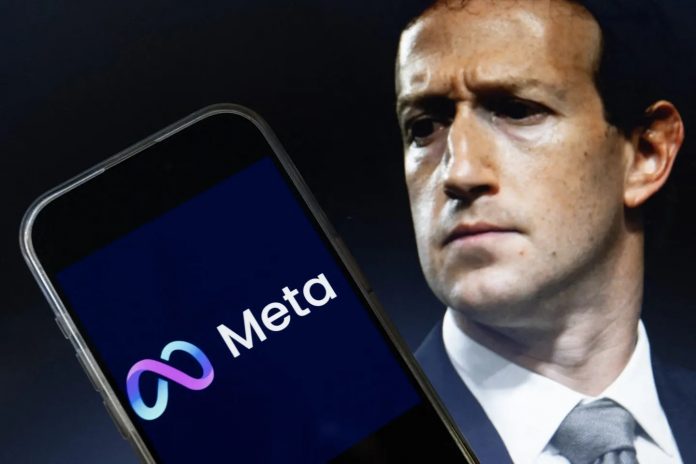
Meta has carried out its most sweeping reorganization of artificial intelligence operations to date, signaling a deeper commitment to its race toward building “personal superintelligence.”

According to the full email that 28-year-old Alexandr Wang, the leader of Meta Superintelligence Labs (MSL), sent to all Meta employees working on AI, which was obtained by Business Insider, Wang said “superintelligence is coming,” and insisted that for Meta to take the challenge seriously, “major changes” were needed.

The restructuring creates four distinct teams focused on research, training, products, and infrastructure. The move represents Meta’s most aggressive attempt yet to centralize its fragmented AI projects and speed up progress.

A Star-Studded Team, But Rising Tensions

Meta has been aggressively recruiting top AI researchers with lucrative offers in recent months, hoping to rival OpenAI, Google DeepMind, and Anthropic. But the lavish pay packages for new recruits have fueled tensions within MSL, with some existing researchers threatening to quit.

Wang’s email confirmed that most of MSL’s division heads now report directly to him — including investor and former GitHub CEO Nat Friedman, who leads MSL’s product team. Friedman was announced as co-leader of MSL in June, but, according to Wang’s email, reports to him.

The company has dissolved two major AI groups in less than six months. The latest casualty is the AGI Foundations team, created in May and now being broken apart. Its staff will be redistributed across product, infrastructure, and FAIR, but not to TBD Lab, raising questions about the future of Meta’s long-term research bets.

Centralizing Research: TBD and FAIR

MSL is consolidating its research into two hubs: TBD Lab, a small elite unit tasked with training large AI models, and FAIR, Meta’s long-standing AI research group.

TBD will explore “new directions,” including a mysterious “omni” model. Wang’s email provided no details about what “omni” entails, but sources told Business Insider that Meta had previously run “Project Omni,” which aimed to train chatbots to be more engaging by proactively messaging users and remembering past conversations.

Shengjia Zhao, co-creator of ChatGPT, was named MSL’s new chief scientist, leading research but notably not reporting directly to Wang. Meanwhile, FAIR — which historically operated with academic independence and little overlap with product divisions — will now play a more active role, feeding its work directly into TBD’s model training. FAIR will remain led by Rob Fergus, with Yann LeCun continuing as chief scientist. Both now report to Wang, confirming earlier Bloomberg reporting that LeCun had been moved under MSL’s command.

Products and Infrastructure Get Priority

Meta is also sharpening its focus on bringing AI to products. Nat Friedman’s product team will oversee efforts to integrate superintelligence into Meta’s consumer platforms, including long-running projects like AI glasses and the Quest headset. Despite strong reviews, those products have yet to contribute significantly to revenue.

Infrastructure — the backbone of advanced AI — is another pillar of the new structure. MSL’s infra division will be led by Aparna Ramani, a longtime Meta engineering VP. She will oversee the massive data centers and fleets of Nvidia chips required to train large-scale models. The unit also includes Joel Pobar, a former Anthropic infrastructure lead.

The Growing Criticism

The changes come as scrutiny grows over Meta’s frequent restructuring. In response to a New York Times article about the shake-up, Meta communications director Andy Stone dismissed the coverage as “navel-gazing.”

“Meta: We’re bringing in talent to focus on building superintelligence. Media: BUT HOW WILL THESE TEAMS BE STRUCTURED?! … Media: LOOK, LOOK, ANOTHER SHAKEUP AT META!” Stone wrote on X on August 19, 2025.

Raising Questions About Meta’s Direction

While Wang acknowledged in his email that organizational changes can be “disruptive,” he said they are essential to speed up progress toward superintelligence — defined as AI surpassing humans in nearly every intellectual task.

But analysts note that Meta’s constant reshuffling contrasts sharply with rivals like OpenAI, Google, and Anthropic, which have managed to maintain more stable structures as they scale up.

With two major teams dissolved in half a year and overlapping leadership roles between Zhao and LeCun, it remains unclear whether Meta’s latest reorganization will streamline its AI ambitions or deepen internal uncertainty.

What is clear is that Meta is betting heavily on its new structure to close the gap with competitors and re-establish itself as a serious contender in the global AI race.

Read Alexandr Wang’s full memo below:

Superintelligence is coming, and in order to take it seriously, we need to organize around the key areas that will be critical to reach it — research, product and infra. We are building a world-class organization around these areas, and have brought in some incredible leaders to drive the work forward. As we previously announced, Shengjia Zhao will direct our research efforts as Chief Scientist for MSL, Nat Friedman will lead our product effort and Rob Fergus will continue to lead FAIR. Today, I’m pleased to announce that Aparna Ramani will be moving over to MSL to lead the infrastructure necessary to support our ambitious research and product bets.As part of this, we are dissolving the AGI Foundations organization and moving the talent from that team into the right areas.

Teams whose work naturally aligns with and serves our products will move to Nat’s team. Some of the researchers will move to FAIR to double down on our long term research while teams working on infra will transition into Aparna’s org. Anyone who is changing teams will get an update from their manager or HRBP today, if you haven’t already. We’re making three key changes to our organizational design that will help us to accelerate our efforts. Centralizing core, fundamental research efforts in TBD Lab and FAIR.

Bolstering our product efforts with applied research that will work on product-focused models. Establishing a unified, core infrastructure team to support our research bets.The work will map to four teams:TBD Lab will be a small team focused on training and scaling large models to achieve superintelligence across pre-training, reasoning, and post-training, and explore new directions such as an omni model.FAIR will be an innovation engine for MSL and we will aim to integrate and scale many of the research ideas and projects from FAIR into the larger model runs conducted by TBD Lab. Rob will continue to lead FAIR and Yann will continue to serve as Chief Scientist for FAIR, with both reporting to me.

Products & Applied Research will bring our product-focused research efforts closer to product development. This will include teams previously working on Assistant, Voice, Media, Trust, Embodiment and Developer pillars in AI Tech. Nat will continue to lead this work reporting to me.MSL Infra team will unify elements of Infra and MSL’s infrastructure teams into one. This team will focus on accelerating AI research and production by building advanced infrastructure, optimized GPU clusters, comprehensive environments, data infrastructure, and developer tools to support state-of-the-art research, products and AI development across Meta. Aparna will lead this team reporting to me.

Ahmad and Amir will continue reporting to me focusing on strategic MSL initiatives they will share more about later.I recognize that org changes can be disruptive, but I truly believe that taking the time to get this structure right now will allow us to reach superintelligence with more velocity over the long term. We’re still working through updated rhythms and our collaboration model across teams, including when we’ll come together as a full MSL org. Thank you all for your flexibility as we adapt to this new structure. Every team in MSL plays a critical role and I’m excited to get to work with all of you.”

Monad Introduces ‘Monad Cards’ Aimed at X Users, as Solana’s 100K TPS Test Showcases Potential

0

Monad has introduced “Monad Cards,” a community engagement initiative aimed at Crypto Twitter users.

As of August 20, 2025, 5,000 active accounts are eligible to claim unique Monad Cards, with each able to nominate up to three friends, expanding to 10,000 total slots on a first-come, first-served basis. These cards assign handpicked roles within the Monad ecosystem and are accessible by linking an X account to check eligibility.

While there’s speculation about potential token airdrop rewards tied to holding these cards, no official confirmation has been provided. The initiative reflects Monad’s strategy to boost community interaction, leveraging its high-performance, EVM-compatible Layer 1 blockchain with 10,000 transactions per second and low-cost transactions.

Each card assigns handpicked roles within the Monad ecosystem, such as “Monadian” or “Monvangelist,” which may signal eligibility for future rewards. This gamifies participation, encouraging users to contribute meaningfully to the ecosystem through content creation, discussions, or testnet activities.

By leveraging social media platforms like X and Discord, Monad Cards tap into existing crypto communities, amplifying awareness. The nomination system encourages peer-to-peer promotion, potentially increasing network effects and user retention.

Monad’s focus on active, verified X users and community roles (e.g., “Nads” or “OG” roles on Discord) suggests an intent to filter out bots and Sybil attacks, where users create multiple accounts to farm airdrops. This aligns with posts on X indicating proof-of-stake mechanisms to deter Sybil behavior, ensuring rewards go to genuine contributors.

By limiting initial cards to 5,000 accounts and requiring active participation, Monad prioritizes high-quality engagement, potentially reducing the dilution of rewards compared to traditional airdrops that attract low-value users.

Monad Cards may serve as a gateway to deeper ecosystem involvement, such as testnet participation, NFT minting (e.g., “1 Million Nads” NFT), or staking with partner projects like Wormhole or Pyth Network. These activities could enhance airdrop eligibility, creating a layered reward system that ties engagement to ecosystem growth.

Monad’s integration with projects like LayerZero, Wormhole, and Pyth suggests that cardholders might benefit from airdrops across the ecosystem, as seen in past examples where staking partner tokens increased reward chances.

Distributing tokens via airdrops, especially if tied to Monad Cards, could lead to token value dilution if not carefully managed, as noted in broader airdrop analyses. However, Monad’s targeted approach may mitigate this by focusing on committed users rather than broad distribution.

The hype around Monad Cards could attract speculative behavior, with users trading roles or NFTs (e.g., OG roles valued at $2,000–$3,000 OTC) for perceived airdrop benefits, potentially leading to artificial price pumps. Historically, airdrops like Uniswap’s 2020 distribution ($6.43 billion at peak) rewarded users based on simple criteria like wallet activity or holding specific tokens.

Cards introduce a curated, community-driven model, where eligibility is tied to social engagement, role acquisition, and ecosystem contributions. This aligns with evolving airdrop designs that prioritize quality interactions over broad token giveaways, as seen in projects using point systems or Layer3 quests.

The nomination system gamifies distribution, encouraging users to recruit others, which contrasts with standard airdrops that rely on automated snapshots or task completion. This social layer adds complexity and engagement, potentially setting a precedent for future airdrops.

Unlike traditional airdrops with uniform criteria (e.g., holding tokens or completing tasks), Monad Cards introduce tiered roles and activities (e.g., testnet interactions, NFT minting, staking partner tokens). This multi-faceted approach mirrors trends in airdrop evolution, where projects use layered criteria to reward diverse contributions, reducing bot-driven farming.

Monad Cards act as a pre-airdrop engagement mechanism, building a committed user base before any token launch. This contrasts with retroactive airdrops (e.g., Uniswap, rewarding past activity) by fostering proactive participation, aligning with trends toward multi-round airdrops that facilitate learning and adaptation.

By distributing NFTs and roles first, Monad can track user activity and refine airdrop criteria, potentially using snapshots to reward cardholders or active testnet users, as speculated in community discussions. Monad’s focus on community roles and transparent criteria (e.g., X activity, Discord engagement) addresses past criticisms of airdrop favoritism, as seen in the Aptos NFT drop.

Monad Cards reflect a coevolutionary approach to airdrop design, where projects and users adapt strategically over time. As noted in academic analyses, airdrops are becoming more complex, with criteria evolving to include social, on-chain, and ecosystem-specific tasks. Monad’s model could accelerate this trend, encouraging projects to integrate gamified, community-driven mechanisms.

Monad Cards redefine airdrop distribution by prioritizing targeted, merit-based engagement over mass token giveaways, leveraging social media, NFT minting, and ecosystem roles to build a committed community. This approach enhances fairness, reduces Sybil attacks, and fosters organic growth but introduces complexities like speculative trading and dilution risks.

Solana’s 100K TPS Test Showcases Its Potential to Redefine Blockchain Scalability

Solana briefly hit over 100,000 transactions per second (TPS) in a mainnet stress test on August 17, 2025, peaking at 107,540 TPS, as reported by validator “Cavey Cool” and Helius co-founder Mert Mumtaz.

This was driven by “no-op” transactions—lightweight, non-computational calls used to test network capacity—rather than real-world activity like token swaps. While this demonstrates Solana’s potential to scale far beyond its typical 3,600 TPS (or ~1,000 TPS for user transactions, per Solscan), critics note these tests don’t reflect organic usage.

Developers estimate Solana could handle 80,000–100,000 TPS for practical operations like transfers with further optimizations. This milestone outpaces Visa’s 65,000 TPS and other blockchains like Ethereum, reinforcing Solana’s scalability for high-frequency applications.

Achieving 107,540 TPS, even in a controlled test, positions Solana as a leader in blockchain scalability. This far surpasses Visa’s 65,000 TPS and competitors like Ethereum (~15–30 TPS for layer-1, higher with rollups). It signals Solana’s capacity to handle enterprise-level or global-scale applications, such as decentralized finance (DeFi), gaming, or payment systems.

High TPS makes Solana attractive for developers building high-frequency applications (e.g., NFT marketplaces, DeFi exchanges, or real-time data platforms). Institutional players, like payment processors or financial firms, may view Solana as a viable infrastructure for cost-efficient, high-speed transaction processing.

Solana’s architecture, leveraging Proof of History (PoH) and parallel transaction processing, keeps transaction costs low (often less than $0.01). High TPS could further reduce per-transaction costs by distributing network fees across more transactions, making it competitive with traditional payment systems.

The test suggests Solana can handle significantly more load than its current ~3,600 TPS average (or ~1,000 TPS for user transactions). Developers estimate 80,000–100,000 TPS for practical operations with upgrades like Firedancer (a new validator client). This could enable Solana to support global-scale applications without relying heavily on layer-2 solutions.

Solana’s performance pressures competitors like Ethereum, Aptos, and Sui to accelerate their scaling efforts. It could also challenge centralized payment systems by offering decentralized alternatives with comparable speed and lower costs.

Why No-Op Transactions Enable Faster Settlement

No-op transactions are essentially “empty” instructions that don’t require significant processing, such as executing smart contract logic, updating state, or performing cryptographic operations beyond basic validation.

In Solana’s architecture, transactions are processed in parallel using its Proof of History (PoH) and Gulf Stream mechanisms. No-ops bypass resource-intensive steps, allowing validators to bundle and process them rapidly. Solana’s PoH creates a verifiable time sequence for transactions, reducing consensus overhead. No-ops, with their simplicity, maximize the efficiency of this process, enabling validators to handle thousands of transactions in a single block (produced every ~400ms).

The test’s 107,540 TPS reflects Solana’s ability to pack many no-op transactions into blocks, as they require minimal state updates or disk I/O compared to complex transactions like DeFi swaps. No-ops have smaller data footprints, reducing the time needed for validators to propagate and verify transactions across the network.

Solana’s Tower BFT consensus ensures rapid finality (~1–2 seconds), and no-ops accelerate this by minimizing validation delays. In contrast, real-world transactions (e.g., token transfers or AMM trades) involve state changes, storage updates, and computational checks, which slow settlement.

No-op transactions are used in stress tests to simulate maximum throughput, isolating network performance from computational bottlenecks. By flooding the network with no-ops, developers can measure how many transactions Solana can handle under ideal conditions, revealing the upper bound of its capacity (e.g., 100K+ TPS).

While no-ops settle faster, they don’t reflect typical user activity. Real-world transactions (e.g., DeFi trades, NFT mints) require more processing, reducing TPS to an estimated 80,000–100,000 for simple transfers, per developer estimates.

Faster settlement of no-ops demonstrates Solana’s potential for applications requiring near-instant finality, like high-frequency trading or micropayments. However, achieving similar speeds for complex transactions requires further optimizations, such as Firedancer or improved state management.

No-op transactions enable faster settlement by minimizing computational and storage demands, allowing Solana to maximize its parallel processing and PoH advantages. While real-world transactions won’t yet reach 100K TPS, ongoing optimizations could close the gap, positioning Solana as a high-speed, low-cost alternative to traditional financial systems and competing blockchains.