DD
MM
YYYY

PAGES

DD
MM
YYYY

spot_img

PAGES

Home Blog Page 6680

Why the Nigerian Government Should Stop Encouraging Loans for Small Scale Business

0

The loan has been received after numerous application for the meager loan that would soon destroy the lives of the founders. They are thinking it will be sweet experience, they just like other SMEs (startups) don’t realize that they have become prey to the most dangerous mindset that kills even the most successful business. . .

Small and medium-sized enterprises or small and medium-sized businesses are businesses whose personnel numbers fall below certain limits. According to the Central Bank of Nigeria, a SME is a company that employs from 11 to 100 people and has assets between ?5 and ?500 million. There are a lot of SMEs in Nigeria.

Yes, SMEs are cut across the entire nation. Many of this SMEs are Startups. You might ask, what is a Startup? A startup or start up is a company or project initiated by an entrepreneur to seek, effectively develop, and validate a scalable business model. Hence, the concepts of startups and entrepreneurship are similar.

A startup is a business structure powered by disruptive innovation, created to solve a problem by delivering a new product or service under conditions of extreme uncertainty.

Many entrepreneurs and renowned business magnates define startup as a culture and a mentality of building a business upon an innovative idea to solve critical pain points.

Paul Graham, the founder of Y Combinator, has further simplified the definition of the startup and associated it with growth. According to him-

A startup is a company designed to grow fast. Being newly founded does not in itself make a company a startup. Nor is it necessary for a startup to work on technology, or take venture funding, or have some sort of “exit.” The only essential thing is growth. Everything else we associate with startups follows from growth.

As Startups and SMEs grow in their services and scale, there comes the need to boost the revenue of the SME. During this phase, it becomes a critical factor and time for SME owners, they begin to source for funding like workers in a bee hive. While this moment might not be the best time for any business, it is very important to take note as to why seeking a loan for your business at it’s early growth stage could leave you in critical conditions.

What is a Business Loan?

A business loan is a loan specifically intended for business purposes. As with all loans, it involves the creation of a debt, which will be repaid with added interest. Businesses require an adequate amount of capital to fund startup expenses or pay for expansions. As such, companies take out business loans to gain the financial assistance they need. A business loan is debt that the company is obligated to repay according to the loan’s terms and conditions.

Fun Fact: Trader Moni is an Empowerment Scheme of the Federal Government created specifically for petty traders and artisans across Nigeria.

How does a Business Loan Work?

Business loans are offered by lenders. And in exchange for the money, they’ll charge interest on top of the loan amount?—?in the most basic loan structure, interest is charged as a percentage of the loan’s principal. … While business loans work with this basic structure, they do vary by the type of business loan they are.

Small-business owners often need financial help to turn their entrepreneurial dreams into reality or keep an existing company afloat. If you need cash to purchase business equipment, fund your marketing campaign or cover your payroll, it may be necessary to take out a small-business loan. A small-business loan is different from other types of loans, and it’s beneficial to understand how the loans work before you apply for one.

Why You Should Avoid Business Loans!

They say a difference between a good loan and a bad loan can go a long way in defining the outcomes of business. Here are top reasons not to embark on this route that has even taken the heads of big companies.

  1. The Rush to Payback Fast: Many business owners want to pay back their loans as quickly as possible in an effort to become debt free. Again, it’s important to reduce debt, but doing so too quickly can cost your business. That’s because you may leave yourself short of cash. Or the extra money you’re devoting to debt reduction might be better spent on profitable growth projects.
  2. It Put You on Impulse: Perhaps there is a new technology or machinery you think would benefit your business, or maybe you want to remodel or upgrade your facilities. While all of these things may prove advantageous to your business, you won’t be able to reap the rewards if you have leveraged all of your assets and the extra profits you make go toward repaying the loan. If the idea doesn’t bring in extra revenue, you are still responsible for paying back the loan. If you used assets to secure the loan, you may end up without a business at all.
  3. There is Always Interest: Interest, in finance and economics, is payment from a borrower or deposit-taking financial institution to a lender or depositor of an amount above repayment of the principal sum, at a particular rate. It is distinct from a fee which the borrower may pay the lender or some third party. As it goes, you as the SME owner will foot the interest. As you know, interest will always go up and its not constant, so the vibe of if i don’t pay this month I’ll pay later, will lead to your business accumulating a very nice junk of debt which if left unchecked will put you in the rubble.
  4. Your Lines of Credit are Maxed Out: If you have exhausted all other available credit, maybe taking on more debt is a bad idea. When lenders see that you are overextended, you will likely be required to secure the loan with assets. If you are having difficulty paying your existing financial obligations, you are entering risky territory by gambling with your facilities, inventory, equipment, or even worse, your own house.
  5. The Thought of Paying Back: Hmm, it’s no funny when the business is not giving you ROI as expected when projected and then you have debts to pay. The next thing you’ll ask yourself is if you even invested the money well or you are dreaming. Wait, wait, wait. . . Oga/Madam, you’re not dreaming! You’re owing the bank, or that agency that gave you loan oh. This is a reactive stage, and it is mixed with harsh emotions. Nigerian SMEs can tell you the stories of other business owners who allowed loan to put them in the box.

What Should the Government Do?

It’s not funny anymore that the Trader Moni scheme is a joke from glance. But then you come to think of it. What is the Trader Moni? According to the offical website of Trader Moni, TraderMoni is a loan programme of the Federal Government, created specifically for petty traders and artisans across Nigeria. It is a part of the Government Enterprise and Empowerment Programme (GEEP) scheme of the Federal Government, being executed by the Bank of Industry.

While this is just for roadside traders and petty business vendors, there is still much to be done in maxing the credit potential of the financial sector industry. The less loans given out by the Government through Commercial banks and Bank of Industry will pave way for emerging SME’s to grow admist the chaos. Let’s face it, many SMEs can’t bare to withstand the harsh times of initial setup. It’s not really funny. So where do we go from here?

There should more credit maxing systems in place to put things in scope. The need and urgent call for giving out “Grants” to business owners and SMEs cannot be under-emphasized! One major thing to denote is that Grants are free money which does not require repayment. Conversely, repayment of the loan is a must, in equal monthly payments or lump sum or on demand. Grants are non-interest bearing in nature, whereas Loans carry an interest rate, which varies from loan to loan.

How can this be made possible? How can the Government checkmate the activities to deduce the effectiveness of the grants received? Who should receive this grants? These and more will be considered in the next article.
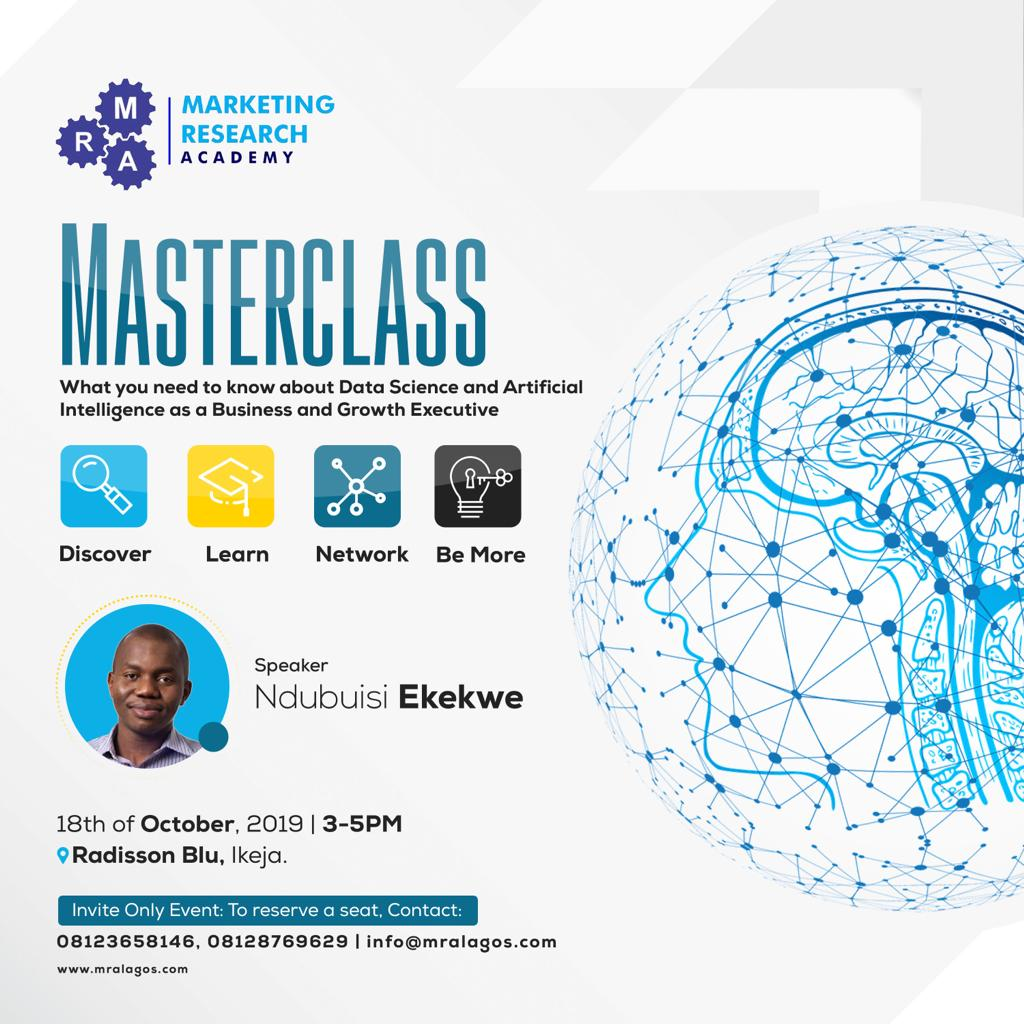
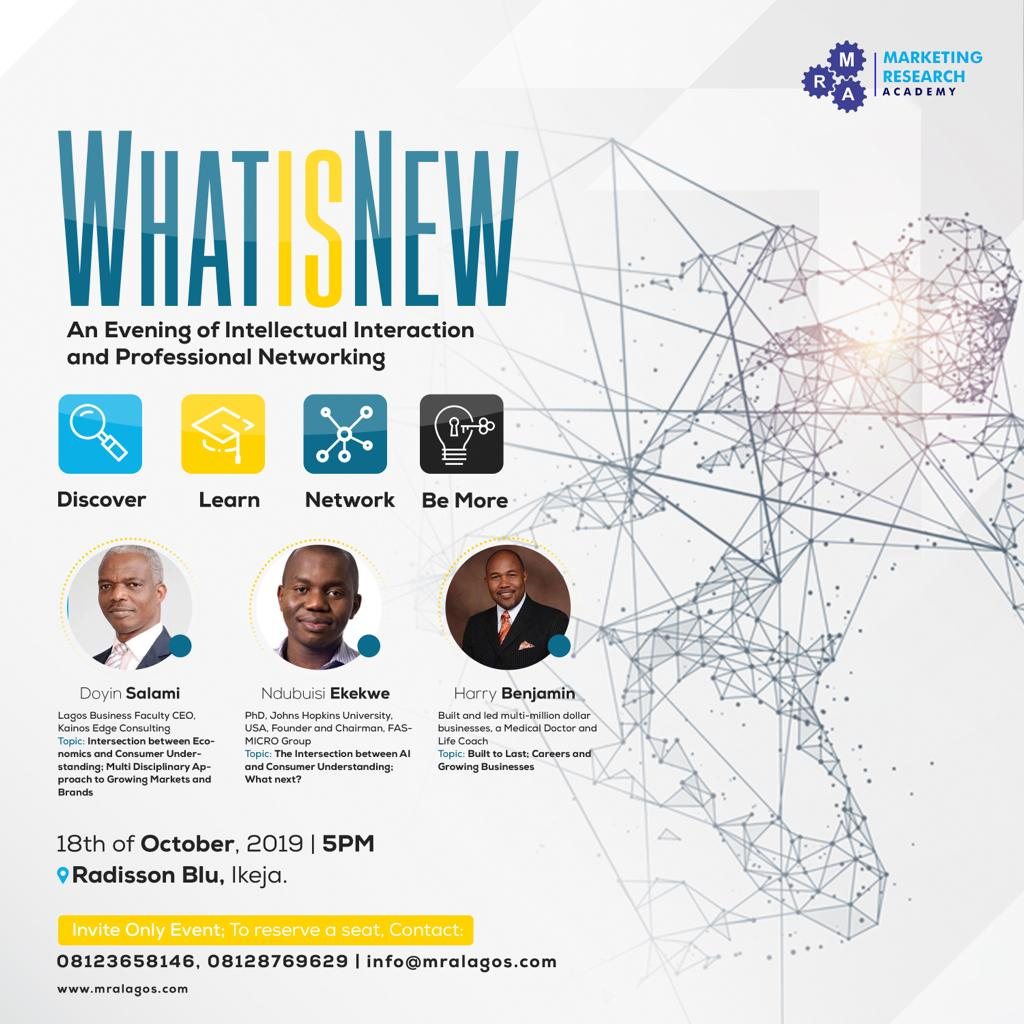
A Masterclass on AI in Business – Oct 18, Lagos

3

Through Marketing Research Academy, I will hold a Masterclass on the mechanics of data science and AI in business, for business executives, on Oct 18 in Radisson Blu, Ikeja, Lagos. It is a free event, but by invitation only. 

The evening will be divided into two phases: I will deliver a presentation in the first two hours, then, other professionals will join me for another two hours. 

My presentation will explain how technologies, specifically AI and data science, are enabling new business models and solutions, anchoring improved efficiencies in the utilization of factors of production in fixing market frictions across industrial sectors. I have written how these modern business enablers are redesigning markets in recent articles in the Harvard Business Review.

To request an invitation, click here.


Bank CEOs’ Challenge in Nigeria: Collapse of Regulatory Moat

2

Last week, I did a two-hour Q/A in an invitation-only event organized by a Fund. At the end, from my perspective, the biggest challenge to Nigerian banks is the collapse of the regulatory moat. In my session, we discussed many things – these three are just a few I want to share.

The term economic moat refers to a business’ ability to maintain competitive advantages over its competitors in order to protect its long-term profits and market share from competing firms. Just like a medieval castle, the moat serves to protect those inside the fortress and their riches from outsiders.In most ancestral African communities, the king would live at the summit of hills or areas surrounded by water bodies or geographic bodies that convey territorial advantages over enemies. 

(If you visit Ovim in Abia State, my clan Ugwunta is the custodian of the Nkwo (a deity), providing the high priest Obi Ovum. If war breaks out, they would beat the ikoro (big gong), alerting the community that war had broken out. Immediately, young men will activate a war dance Anwuriwu which on hearing it young men are transfigured to be in war spirit. Common men can climb palm trees with bar hands (no strappers) and do things unimaginable. As the young men go to war, some stay with rocks which are in abundance to ensure no enemy can make it to Ugwunta. Ugwunta is on a hill, providing a strategic moat. Small history which exists  largely orally these days )

  1. Collapse of Regulatory Moat: Most banks in Nigeria will continue to see erosion of market cap as investors look beyond them as institutions to create leverageable value. Unlike in the past few years where regulatory moat protected banks, we are now seeing the Central Bank of Nigeria (CBN) opening them to new competition. Fintech startups, specialized independent advisors, neobanks, etc will further pick the banks apart. By 2025, more than 60% of “bank incomes” will be destroyed by these new competitors. Yet, the new competitors will capture only a small portion. (If you use a fintech on a transaction and pays $10 instead of $100 with a bank, $90 has been dissipated which the customer keeps).
  2. The Lost Decade: Nigerian banks have shown they cannot create great value for investors. The largest bank in Nigeria by market cap (GTBank) is worth less than $3 billion. The banks have just completed a lost decade where from 2009 to 2019, investors did not see any significant value in the stock market, even in a time when global bank equities performed fairly well.
  3. By 2025: A digital-only-bank will become the preferred bank in Nigeria for young people between 18-30 years. That bank will be fee-less and have superb-service. With no agile business model to match these fintechs, banks will continue to have erosion of value. 

I began the Q/A with a 30-min presentation that examined the bank sector and the fintech world in Nigeria. I will be unable to share more here, unfortunately.

Creating The Sustainable Tripod – Technology, Trade and Tourism

0
Financing trade

The 2016 global fall in crude oil prices made economies like Brunei which though not a major global producer like the OPEC countries suffer an economic recession. Despite Brunei’s small size and population with her competitive advantages such as her location, 2nd highest human development in the South East Asian region along with other factors, she can build a smart sustainable economic future beyond oil for her citizens to prosper in the current Fourth Industrial Revolution. I propose a road map to make this possible anchored on technology and tourism below:

Masa Depan Brunei programme should include Future Ready Skills: Just like neighboring Singapore which has launched Skills Future Programme to prepare its citizens to become globally competitive by investing in their capabilities with skills for the current technological era, Masa Depan Brunei initiative for the youths should include trainings in critical thinking, design thinking, emotional intelligence, agility, adaptability and collaboration. Other areas include negotiation, data science, business intelligence, machine learning, deep learning, computer vision, blockchain, robotics, embedded systems development, industrial design, product development, and additive manufacturing. These will make Bruneian youths compete with their ASEAN peers, rest of Asia and the world as an outsourcing hub for global technology giants like Apple, Amazon, Alibaba, Tencent, Microsoft, SAS, SAP, Sales Force, Facebook, Microsoft, Google, and IBM that will employ them to work on their projects and pay them higher wages than the oil industry which most of them crave to work in will.

Establishment of Brunei Young Entrepreneurs Fund and Scheme to boost startups: His Royal Majesty, Sir Haji Hassanal Bolkiah(Yang Di Pertuan Agong) who is also the Honourable Minister Of Finance should establish a $100million Brunei Young Entrepreneurship Fund and scheme. This initiative will groom 2,000 youths in a bootcamp partnership with Microsoft for Entrepreneurs, Alibaba Academy, Google and IBM on how to build and scale sustainable businesses for this digital era. Upon completion of this programme, they will have to come up with innovative ideas to solve the problems of ASEAN, Asia and other key global Islamic markets like Turkey, etc to sell their products. About 8,000 jobs will be created since each of the 2,000 entrepreneurs will be mandated to create 4 jobs.

Brunei Investment Agency should Invest in global Technology companies and startups to increase its Assets: The state sovereign investment vehicle, Brunei Investment Agency should redesign its investment areas and acquire equity in technology companies like Alibaba,Tencent, Microsoft, Google, I-Flytek which develops speech recognition technology for most Chinese tech brands like China Mobile, Sensetime and China’s No 1 Insurance brand Ping An as well as fast rising global startups. With their market value growing exponentially due to their category king status, acquiring equity in these brands will increase BIA’s assets under management to about a $100billion in a few years to come.

Establishment of a Free Trade Zone: Brunei should establish an Industrial Park cum Free Trade Zone which will target investments worth $100billion in oil and gas based industries, light manufacturing, agro allied, industrial equipment, etc. About 20,000 direct and 100,000 indirect jobs can be generated through this project. Their target market will be the ASEAN sub region and Asia Pacific markets.

Partnership with Emirates Airlines or Singapore Airlines to promote Brunei Tourism: The Tourism Promotion Agency of Brunei should seal a partnership with leading airlines like Emirates Airlines or Singapore Airlines to promote Brunei as a global tourism destination which is ready to welcome tourists.

Partnership with Alibaba to attract Chinese tourists: The Brunei Tourism Development Agency should seal a strategic partnership with Chinese E-Commerce giant to promote the sultanate as a destination for tourists from the Middle Kingdom. The Jerudong Resort should be resuscitated while IstanNurulIman Palace which is the world’s biggest and most luxurious can be made an attraction which will attract over 1 million visitors like the Queen of England’s Buckingham Palace.

Marketing Brunei Tourism through Soccer Sponsorship in England: Considering Brunei’s ties with England, its tourism promotion agency should sponsor a top football club in the English Premier League like Manchester United, which is the biggest with a massive global fan base beyond England of over 100million. Rwanda which is now Africa’s destination for tourism related events marketed herself by her partnership with Arsenal Football Club. Brunei Tourism should do the same.

Organize the Brunei UEFA Champions Cup: A Cup tournament sponsored by the Sultan Of Brunei which will involve the leading teams from the top soccer leagues in Europe as pre-season competition will boost tourist influx as fans from these clubs will visit the sultanate to support their teams contributing to boost in GDP.

Organize The Brunei Grand Prix: As a lover of cars and the world’s largest collector, The Sultan Of Brunei should in partnership with Formula One organize an annual Brunei Grand Prix. This will attract the world’s best racers like Lewis Hamilton, Sebastian Vettel etc. boosting its tourism and economic GDP.

Organize The Brunei Marathon: A gold label International Marathon in conjunction with the International Amateur Athletics Federation should be organized in Brunei annually which will feature not less than 100,000 participants from across the globe including elite athletes will also increase its tourism receipts and make it a destination for sports and fitness.

Organize The Brunei Open: As a tennis player, His Majesty should seal a partnership with the International Tennis Federation to organize the annual Brunei Tennis Open which will attract leading stars like Novak Djokovic, Rafael Nadal, Roger Federer, Serena Williams and Naomi Osaka amongst others competing for the prize money which will also be an attraction for tennis lovers across the world.

Brunei needs this economic redesign which has transformed the Emirate of Dubai from being previously oil dependent to a sustainable tripod anchored on technology, trade and tourism.

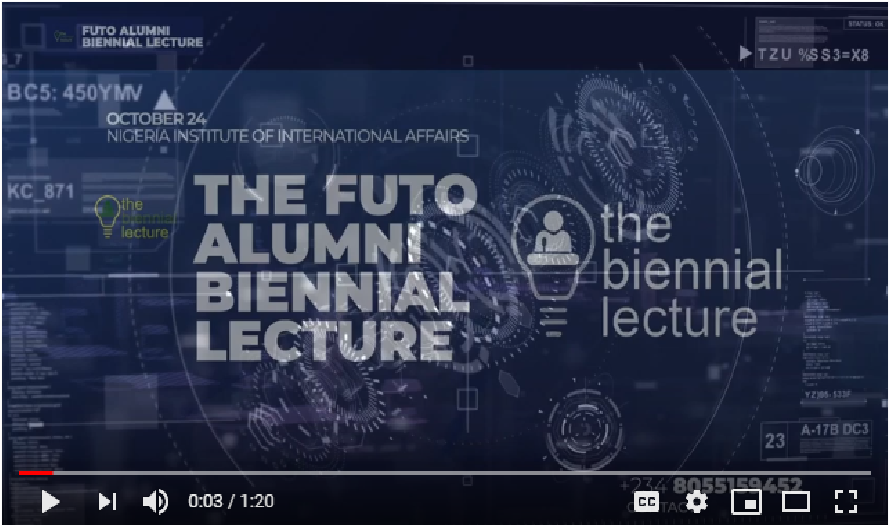
Attend FUTO Alumni Biennial Lecture – Oct 24th, Lagos [Video]

0

There is nothing FUTO (Federal University of Technology Owerri) has not given me. I was on the mountaintop few years ago when the University asked me to deliver the University Public Lecture, becoming the 15th person in the school history. As a student in FUTO, I listened to  one of those lecturers delivered by Obi Prof. Joseph Chike Edozien, the Asagba of Asaba, a former professor in MIT.

On Oct 24th, I will have the honour to deliver the 2019 FUTO Alumni Biennial Lecture, speaking on a topic The Pursuit of Exponential Development.

This video (below) will be on air across Nigerian TVs. My alma mater, FUTO, has been raising a generation of technical leaders for the world. You will meet Dr Kingsley Fregene:

“Kingsley Fregene is the Group Leader for Robotics & Intelligent Systems at Lockheed Martin, Advanced Technology Laboratories (LM ATL). His team develops advanced Robotics, Autonomy and Unmanned Systems technologies for missions in aerial, ground and maritime environments.”

He is one of the most important men in U.S. defence! He was my mentor in school, two years ahead of me, and simply “peerless”. When I graduated, I followed his path. He is a Nigerian.

Details and how to register free on click.