DD
MM
YYYY

PAGES

DD
MM
YYYY

spot_img

PAGES

Home Blog Page 6707

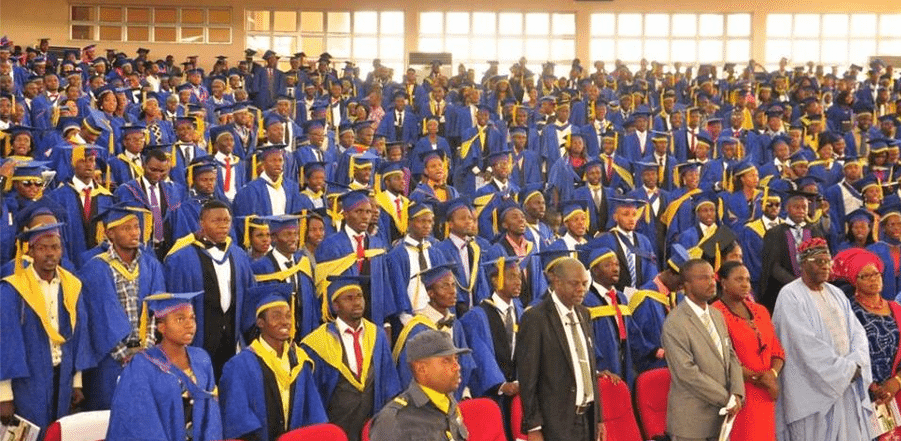
First-Class Graduates – What Can You do?

3

It hurts anytime I see First Class graduates reach out to me, in search of a job, and I can’t help them. Here are the questions I ask myself:

  • ”What else does a graduate need to succeed?”
  • ”Are certificates not enough?”

My former colleague in school, Ajewole Samson, told me, ”Forget First Class. In fact, some of them are just bookish. They actually cram to pass in school. Only a few could actually defend their certificates.”

He continued, ”The First Class on paper is different from First Class in the brain. Interview some of these so-called First Class graduates, they have nothing meaningful to offer. This is the 21st century, the future belongs to those who can use their brains.”

 I paused and reflected on this. Indeed, the future belongs to those who can solve problems. Those who can replicate their academic success in real life. But here is the question – as a First Class graduate, what can you do?

You have excelled academically, but how can you navigate your way through?

 You can sit at home and brag about your academic achievement, it still boils down to what you can do with your head.

 Finding a job takes the grace of God in a country like Nigeria. While you sit and lament about life not being fair, be intentional about your life. Take actions. Learn something new. You never know what lies in store for you. If you can excel in school, you should be able to replicate that in real life.

The similarity between life and school is – both require hard work and dedication to be successful. Your success in school shows that you are hardworking and dedicated.

Now, get up and show the world you can do it. Don’t give up! Fight for what is yours. The world is ready for you, but are you ready for the world?

 Think about it.

Tribunal Dismisses Atiku, PDP’s Petitions

0

It was a sad and a good day for PDP and APC and their supporters on Wednesday, as the Presidential Election Petition Tribunal (PEPT), delivered its judgement on the petition brought to it by the PDP and its presidential aspirant in the past presidential election, Atiku Abubakar, against the reelection of president Muhammadu Buhari, and the general conduct of the presidential election.

The PEPT in its ruling, dismissed the petition of the PDP and Atiku Abubakar, and upheld the election that brought President Buhari to power in February. The five-man panel led by Justice Garba Muhammad, in a unanimous decision dismissed the petition on the ground that the petitioners were unable to prove their petition beyond reasonable doubt.

The petition dwells mainly on the qualification of Muhammadu Buhari to contest the election due to his lack of secondary school certificate. There are other issues bordering on election malpractice, disenfranchisement, the use of the military to rig in favor of the APC, etc.

Delivering judgement on the bone of contention (certificate), the Tribunal ruled that the certificate from the Nigerian military is higher than the secondary school certificate which is recognized as the minimum academic requirement for election in the Nigerian constitution.

“Mr. Buhari is not only qualified but is eminently qualified for the election.” He said.

The former vice president Atiku Abubakar, and the PDP had in their petition alleged that Buhari filed false information about his education qualification in the affidavit contained in his INEC form CF001. Therefore, they prayed the court to disqualify him for under-qualification and lying to the Nigerian people.

However, the Appellant Court ruled that certificate is not required for anyone to contest a public office. And considering Buhari’s Cambridge certificate, which the Court considered higher than a WAEC certificate, he is more than qualified to run for the highest office in the land.

“A candidate is not required under the Electoral Act to attach his certificate to his form CF001 before a candidate is adjudged to have the requisite qualification to contest the election.” PEPT says.

The petition involving INEC’s server was also dismissed on the ground that Nigerian electoral laws don’t have provisions for electronic transmission of results. And the petitioner’s witness failed to prove beyond reasonable doubt that there was an electronic transmission of results to INEC servers via card readers.

However, the PDP has rejected the judgement and vowed to reclaim what they called “their stolen mandate” in supreme court. The PDP’s lawyers pointed out many loopholes in the judgement that will increase their chances of winning in the Supreme Court.

They mentioned the dismissal of the Nigerian Army’s “denial of being in possession of Buhari’s certificate” as an evidence. But then the use of some parts of the same statement to support the ruling against the PDP.

Nonetheless, President Buhari has expressed his satisfaction over the judgement, saying that it reflects people’s wish. In appreciation message sent through his Twitter handle he said:

“Today’s ruling is a well-deserved victory for Nigerians who trooped out overwhelmingly to elect us for a second term in office. I was unperturbed all along, because I knew Nigerians freely gave us the mandate. We are now vindicated.”

While some are celebrating with the president, others are expressing their disappointment over the ruling, saying that it only shows that the Judiciary has been compromised. They have also urged Atiku and the PDP not to proceed to the Supreme Court because it is clear that they will never get justice.

The Nigeria’s New 7.5% VAT

1

The Nigerian government has approved the increase of VAT (value added tax) from the current 5% to 7.5%. This has been expected as we have noted in many articles in Tekedia. Our thesis remains that Nigeria will equilibrate at 10% VAT within the next seven years. Please read this piece where we noted that the Government’s only way to fund the national budget would be increasing tax! With the recurrent expenditure exceeding tax receipt, the key roadmap is tax since debt funding may not evidently come easily with our current debt profile.

One positive takeaway was how much work Nigeria is doing in the ease of doing business. While we are yet to get there, a lot of progress has been made; targets top 100 in Global Ease of Doing Business Index.

But I was so worried listening to the two ministers, especially as it relates to the Budget and how to close the Funding.

Gap. Put mildly, “the government is unable to figure out any other way to fund the budget, so be ready to come to their aid”. In other words, expect more taxes!!!

This 7.5% position still needs to be approved according to the nation’s TAX Act. Everyone expects this approval to go through.

The federal executive council (FEC) has approved an increase in value added tax (VAT) rate from 5 percent to 7.5% percent

Zainab Ahmed, minister of finance, budget and national planning, disclosed this to state house correspondents at the end of the cabinet meeting on Wednesday.

However, this is subject to an amendment of the VAT act of 1994 by the national assembly.

If approved by the federal lawmakers, the new rate will take effect in 2020.

Expect some demonstrations because the little increase on salaries for public workers has been cancelled by this tax increase. VAT affects poor people more as it is a consumption tax: things will cost more since producers will add the VAT on the prices of items which the buyers will pay. Simply, I expect the Nigerian Labour Congress to begin another agitation of minimum wage increase since the yet-to-be fully implemented minimum wage has already been knocked out by this VAT increase. Yes, the vicious circle continues in Nigeria!

She [Minister of Finance] said: “We also reported to council and council has agreed that we start the process towards the increase of the VAT rate. We are proposing and council has agreed increase the VAT rate from five percent to  7.5 percent. This is important because the federal government only retains 15 percent of the VAT — 85 percent is actually for the states and local governments and the states need additional revenue to be able to meet the obligations of the minimum wage.

“This process involves extensive consultations that need to be made across the country at various levels and also it will involve the review of the VAT act. So, it is not going to be implemented immediately until the act is reviewed.”

“Following these assumptions, the total revenue estimate is the sum of N7.5 trillion for the year 2020 and N2.09 trillion that will be accruing to the federation account and VAT respectively,” she said.

“There will, of course, be the distribution to the three tiers of government based on the statutorily revenue sharing formula as defined in the constitution and to this effect, it means the federal government will be receiving proposed aggregate of N4.26 trillion from the federal account and the VAT pool, while the states and the local governments are expected to receive N3.04 trillion and N2.27 trillion respectively.”

By 2025, Nigeria will be at 10% VAT. Whenever you have population growing faster than economic opportunities, governments will resort to tax to normalize disequilibrium in the economy. Nigeria has tough decisions ahead.

Updated – the VAT updated to 7.5%

The proposed increase of the Value-Added Tax (VAT) rate from 5 to 7.5 per cent by the federal government is subject to the review and approval of the National Assembly, the Minister of Finance, Budget and National Planning, Zainab Ahmed, has said.

Also, the minister clarified that the increment will be to 7.5 per cent and not 7.2 per cent she announced on Wednesday at the end of the meeting of the Executive Council of the Federation in Abuja

The New iPhone 11 Series

2
iPhone 11

The much anticipated annual Apple event took place on Tuesday as the tech giant unveiled its 2019 products – iPhone, Apple watch, and iPad made the unveiling.

iPhone 11, iPhone 11 pro and iPhone 11 pro max came as the phone newbies of the year.

The new products are not quite different from the ones introduced last year, though there is camera system upgrade to allow for wide-angle photos. There is also an upgrade in battery capacity, such that it could last a few hours more than the predecessors.

Speed is also another new feature that differentiates the new from the old. A bit of it makes the trio faster than the predecessors.

Then they came with ridiculous prices that beat the expectation of users. iPhone 11 at $699 (N244, 000) is $50 cheaper than its predecessor, the iPhone XR. iPhone 11 pro costs $999 (N364, 000) while iPhone 11 pro max sells for $1, 099 (N 401, 000).

The trio will be available for pre-order starting from September 13, while shipping will commence by September 20. While the three devices appear similar to their predecessors, they possess amazing differences that will make things worthwhile for users.

The iPhone 11 pro and iPhone 11 pro max came on 5.8-inch and 6.5-inch OLED displays. And their colors are green, space gray, silver and gold. The iPhone 11 came with more colors: purple, green, yellow, white, red and black, making it the most multi-colored among them.

And then came the triple lens camera system that features a telephoto camera, wide angle camera that accommodates more lights, up to 40 percent, and the ultra-wide with a 120-degree field of view. These 3 cameras have the ability to shoot 4k resolution videos at 30 frames per second.

The most exciting spec upgrades came with iPhone 11 pro and iPhone 11 pro max. ‘The more speed and less energy” give them an edge that users would toss their predecessors for.

The iPhone 11 features a dual-camera system on the rear panel which contains new lens with wide angles and double optical zoom out. It also features multiscale tone mapping for improved highlights and night vision, enabling photo-brightness in dark environments.

The additional feature that distinguished the iPhone 11 from others is a 12–megapixel TrueDepth camera on the front. That enables the recording of slow motion videos and wide angle selfies.

The new iPhones are amazing.

A Path To Corporate Credit Card Business in Nigeria

1

I noted a few days ago that Stripe, a U.S. fintech company, has gone into lending, mainly to companies in its ecosystem. It will use data it has on the companies to make the loans. Data-based lending is the future of lending across all nexus of modern financial services.

Stripe is looking for growth and to drive that it wants to fund companies in its ecosystem. So, the U.S. paytech firm will be making loans to companies that use Stripe. I think this is an easy matter since Stripe has data to drive this lending. Companies like Flutterwave and Paystack in Nigeria must take note of this model and see how they can enable disintermediation of the banking institution by providing capital to their more promising platform companies. You wager where you eat.

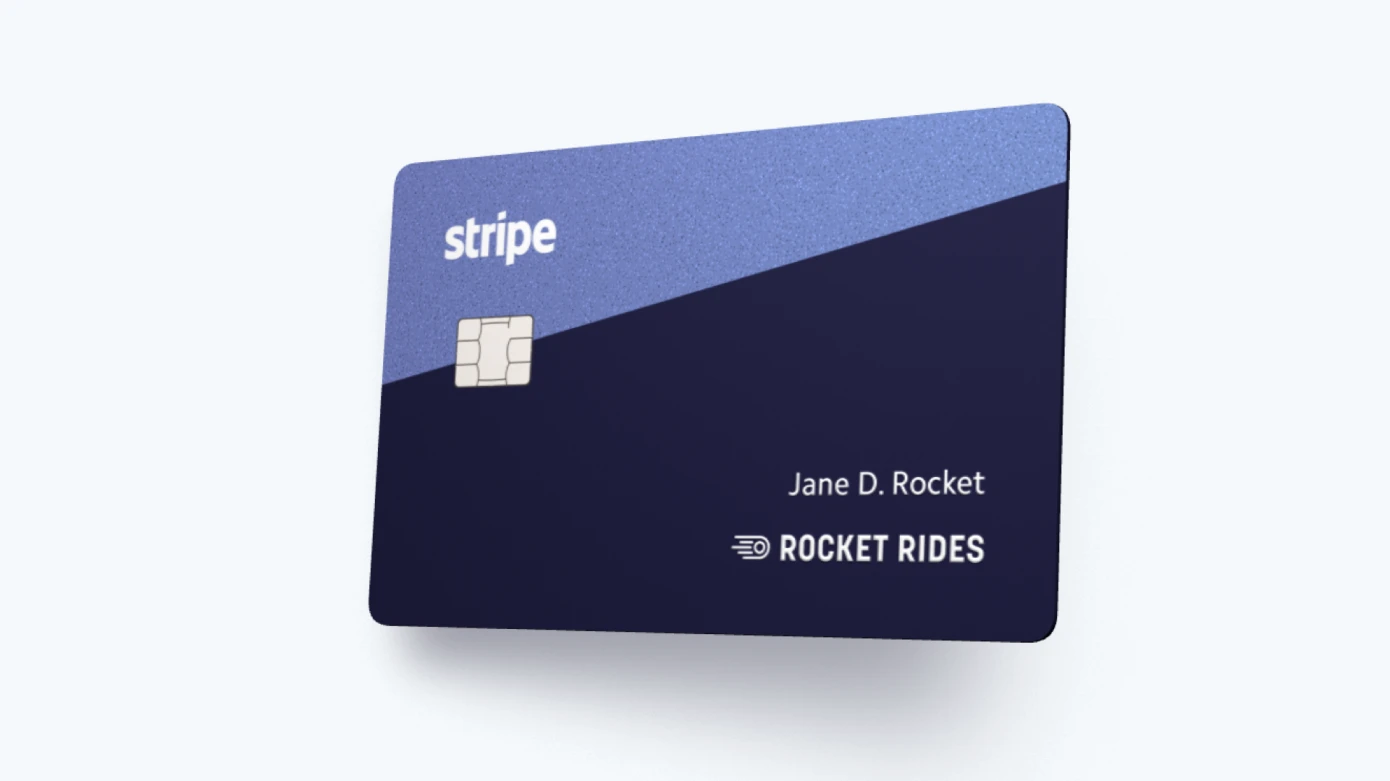
But it seems that the company is not stopping there – it is now offering credit card services with no interest or fees because the corporate clients must pay the balance in full at month end. It could be read that Stripe will simply debit the company account with it for the balance at month end! Interest earning is not the main motivation for this product; Stripe wants to grow its interchange fee and its ecosystem transaction volume by helping its customers to grow.

Notably, users are expected to pay their balance in full each month, so for now there is no interest rate, or fee, to use the card, with Stripe making its money by way of the interchange fee that comes with every transaction using the card.

“We’re not freezing cards based on late or no payments,” Cristina Cordova, the business lead overseeing the launch, said in an interview. “A pretty common reason for non-payment is that a person switched bank accounts and forgot to update the information. But we think we’ll have fewer problems because we have banking information for accepting revenue, by way of our payments business.”

This is an evolution – if Stripe processes your payment and gives you credit card, your bank has lost another business from you. Credit card is a short-term lending!

I do think Nigerian fintechs like Flutterwave and Paystack could have a path into corporate credit card business in Nigeria by exploring a similar model. Of course credit card business is monthly lending where if you do not pay off the balance at month end, interest will kick in. With data on the companies in their ecosystems (they handle their transactions), these Nigerian fintechs can manage the associated risks more effectively. 

Largely, I do think Nigeria will see corporate credit card evolution before personal credit card since getting comprehensive data on companies remain easier than people. Fintechs with better data will take the lead. Yes, the debit cards will begin to show credit cards.

The credit card business in Nigeria is still at infancy