DD
MM
YYYY

PAGES

DD
MM
YYYY

spot_img

PAGES

Home Blog Page 6711

Ondo State’s LG Chairman Commissioned Four Vehicle Tyres

0

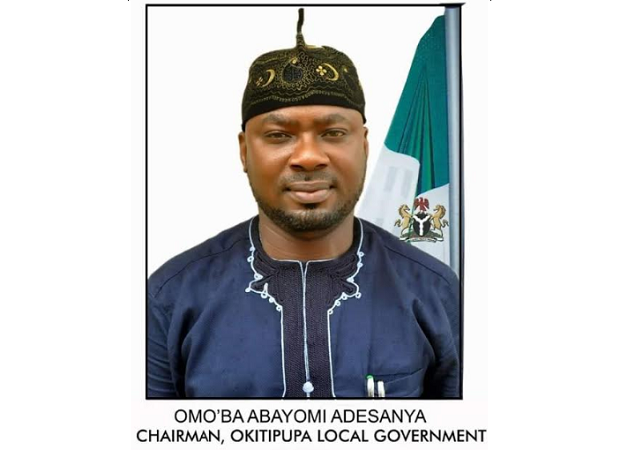
The chairman of Okitipupa Local Government Area, Omoba Abayomi Adesanya, has commissioned the four tyres he bought for a refurbished vehicle belonging to Okitipupa Local Government.

The pictures came live on his Facebook page with the explanation that the vehicle, a Hummer bus, has been abandoned for 7 years. So it’s a great feat that the bus was refurbished under his leadership, especially with brand new tyres.

Although he has taken the post down, but not before he came under heavy criticism for what many considered as a show of shame, questioning how buying brand new tyres translates to an act of leadership.

At a time when the Federal Government is set to separate LGs from States in the Federation Account Allocation Committee (FAAC), Nigerians are concerned that LG Chairpersons cannot be trusted with the huge sums that will remitted into LGs accounts.

Before now, LGs’ share of FAAC use to pass through the states. And in most cases, the states do withhold the fund, and disbursement, if there will be any at all, happens at the discretion of the Governors.

There have been clamour to separate the funds accordingly so that the three tiers of government can operate independently, as enshrined in the constitution. It is also believed that the coveted grassroots development lies on the ability of LGs to function as a tier of the government, by breaking free from the shackles of intimidating governors.

The only argument was that LG chairpersons need to be watched closely, otherwise, there will be little or nothing to show for the allocations they receive from FAAC.

The leadership newspaper has a week ago, reported that Abayomi Adesanya made appointment of 15 aides for the office of Okitipupa Local Government Chairman. A decision that was also criticized.

The Ganduje’s Best Governor Award

0

In the midst of corruption allegations, Kano State governor, Abdullahi Ganduje has been awarded the best governor in Nigeria for the first hundred days in office. The award was given to him by the African Democracy Assessment Network (ADAN), a pro-democracy group based in Senegal.

The regional coordinator of ADAN, Mr. Samson Theodore, said in a letter to the Kano State Government, that the group has decided to be rating governors at intervals based on their performances.

The group said after assessing how the governors have administered their stewardship, Abdullahi Ganduje has stood out in many sectors to be selected as the best.

“We carefully selected these areas, education, health, agriculture, security, economy, infrastructural development and politics, with concentration on supremacy of political party or parties as the case may be.” The group said.

In the area of education, Ganduje was highly rated as one of, if not the only Governor who has fast-tracked government policies to spur education through state owned schools. It could be recalled that Ganduje has earlier declared basic education, (primary and secondary schools) free and compulsory in Kano State.

And there is a plan by the Kano State Government to establish technical college of education for women, which is considered a very bold step in encouraging girl child education, especially in the education disadvantaged North.

ADAN also rated Ganduje by his effort to integrate Almajiri system of education to be curriculum based, with the inclusion of English and Mathematics. And the state has been working hard to find the best way to push children away from the streets to schools. In a country where over 13 million children are out of school, such efforts have been keenly observed and commended by many countries who were in the summit where the ratings were conducted.

“This strategy will definitely create more rooms for checkmating street begging and over dependence of Almajiri child on hopelessness and carelessness from the parents or guardians of Almajiri children. But with this integration, that also allows for improving their quality of life, many things will change for better.” The group added.

Ganduje was also rated high in the health sector for his effort in providing medical facilities for the state. His commitment to establish 400-bed medical centers in each headquarter of the newly created 4 emirates was a yardstick to rate him high in the health category. There is also the world class cancer center that has attracted a lot of encomiums, and further efforts by Kano State Government to curtail maternal morbidity through the expansion of health facilities to rural areas in the state.

The group also noticed the efforts of the Governor in combating insecurity in the state. They noted that cases of insecurity have drastically been minimized as Kano is recording low cases of kidnapping and banditry among other criminal threats prevalent in the North.

ADAN also gave Ganduje thump up in food security, noting that his agricultural policies will yield positive results that will quell hunger crisis in the state. The same goes to his fiscal policies that were termed friendly and open for all. In infrastructural development, the group noted the Dangi Interchange flyover, as a focal point of development that will ease movement in the state when completed.

“Ganduje is taking the state to greater heights of growth and development, in the areas of education, health, security, agriculture, environmental sanitation, provision of social amenities, among others.” ADAN applauded.

It was based on these achievements that he was awarded the best governor for the first 100 days in office.

What Early Investors Look for in Companies

3

In our contemporary time, there is one fundamental element that early stage investors look for as they evaluate companies: leverageable growth. Leverageable growth, unlike linear growth, is a type of growth that is largely infinite because the nexus upon which it happens is unbounded and unconstrained by marginal cost. In other words, this is the type of growth that when it begins nothing can stop it because the cost of growth is practically and marginally zero. It is the type of growth that can reach any part of the world!

For that environment to happen, the company needs to operate in a largely big sector with a lot of upscale which will allow the company to scale and grow. If the market is not big, even if the company has the necessary mechanics for growth, it cannot, because a ceiling exists which limits it. For example, making electric bulbs that can last for ten years but cost N200,000 per unit in Nigeria may be a great product but the size of the market for that type of bulb will limit its demand in Nigeria.

Yet growth goes beyond just selling products. It is about the way that product can sell after the initial fixed cost. Fixed cost is the core cost invested to create the product. After that, what matters is the marginal cost [yes, the variable cost is muted here] when growth models are developed. Marginal cost is the cost of producing an additional unit of a product. When that is close to near zero, it means the product can scale massively and can attract leverageable growth.

Interestingly, it is technology companies that exhibit this nature of having close to near zero marginal cost, and that is why they can grow exceedingly fast. Take some examples:

  • Once Uber app was created and the infrastructure running, the core fixed cost has been spent. What follows is marginal cost (i.e. distribution and transaction cost). That marginal cost is very low as Uber begins to add new customers to its ecosystems. Because that cost is very low, Uber can scale provided the market has room for it to scale.
  • Facebook connects people across the globe. The cost of this connection is close to zero at marginal cost level. The transaction cost is close to zero and because this connection happens on the web, the distribution cost is zero. Yes, Facebook marginal cost is zero and that means it is exceedingly scalable. I have put the scalable advantage of Facebook to be close to perfect because its product makes it unbounded by anything for growth.

It is important to understand that it is not only software companies that can exhibit this inherent scalability of near zero marginal cost. A company that makes very great microchips can indeed have a different domain of marginal cost. NVIDIA which makes exceedingly high-grade graphic processing microprocessors that power gaming, AI processing units and high-intense processing systems is a scalable company. Once the R&D on the chip has been done, the additional cost of making additional unit of the chip is practically zero. Silicon is largely free – it is sand. The real deal is building the intellectual property of that design. Mass producing it is not a problem.

The Basis of this Thinking

When Naspers, a South African company, made one of the most successful venture investments ever, it took a clear risk: invest in Tencent and hope it works out. And it did work out, generating billions of dollars for about $34 million the company had invested. Broadly, investors are looking at massive return and not linear return because the risk they are taking is also huge. These are people that know they can get linear returns in Treasury Bills or real estate but yet go ahead  to seek leverageable growth that can bring in multiples if things work out.

So when South Africa’s Naspers invested in China-based Tencent $34 million, it was making a huge call, in 2001. Today, that $34m berth is now worth $170 billion (with b), based on Tencent’s current market capitalization. Magically, Naspers is the 65th most valuable company in the world. That berth is perhaps the greatest investment in Africa.

All Together

So when you meet early stage investors, here are two questions you need to be ready to answer:

  • Do I have a business model that can generate leverageable growth? In other words, do I have a company that can scale with near-zero marginal cost?
  • Do I have a market that is big enough to enable that growth and scale to happen without a ceiling?

If your answers are YES and you can demonstrate that you can have the capabilities to execute the playbook, you will likely get the funding. Capabilities include technical, operational and other necessary skills required to run a business. Those capabilities do not need to be only you – here, investors will be looking at your team.

How Big Data Will Change Nigerian Facilities Management Industry

0

Every second a significant number of data is being churned out by man and machine. The data are either released vertically or horizontally from one object to another object. In the last decade, this has been more pronounced as big data. With the high level of leveraging big data in the last 5 years throughout the world, the revolution of processes, people and decision making remain unabated.

From manufacturing to service industries, insights from big data are being explored to improve human and infrastructure performance in the matured Facilities Management markets. The emerged big data from facilities and occupant behaviour are being used for short, medium and long term plans development for quality and sustainable experience that do not left attainment of productivity objectives and targets behind.

There is no doubt the emergence of big data through the network of devices that collect, share data as well as talk to each other is a “golden egg” for Facilities Management providers and practitioners to be more proactive rather than reactive in their processes towards the efficient management of short and hard facilities, and workforce management.

From 2006, the narrative has been that the Nigerian Facilities Management is in the infant stage, growing slowly due to many factors such as low recognition by the public sector and poor maintenance culture across the country. Despite these issues, this article believes that the industry cannot continue to play second fiddle in the midst of big data mantra within the global FM industry.

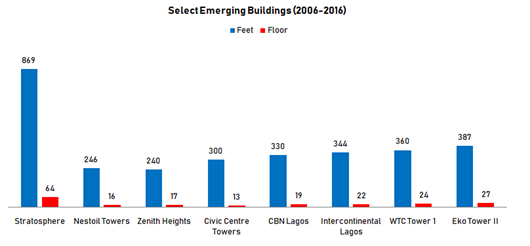
This position has been reinforced by the emergence of the new buildings and infrastructure since 2006 in cities such as Lagos, Port-Harcourt, Abuja and Kano. These main cities have experienced rapid growth. Available statistics indicate that Lagos has over 150 million buildings with the average age of 40. The figure is not expected to dip soon as there are plans to add more building. Oban, Orun and Zuna Towers are expected to come up by 2020. Like what would happen in the Lagos Smart Cities, these Towers would largely be equipped with sensors and other real time monitoring systems, making consistent maintenance of critical and non-critical facilities a must.

Already, there are uncertainties among the professionals in the built environment. Fears are being exhibited on the basis that a city such as Lagos, which constantly undergoes rapid and dynamic transformation needs new approaches to real estate development and management, particularly the high density high-rise buildings. Failure to build effective big data structure within Marketing and Communications, and Information Technology Departments will make decisions making on the buildings more difficult.  In these buildings and existing ones with the Internet of Things devices, energy cost cannot be reduced without collecting data in real time. Answering questions such as what is being wasted will remain entangle in the absence of data metrics pertaining to it.
Source, Multiple, Infoprations Analysis, 2019

How More Big Data Will Be Generated by 2020?

The changes in demographics, psychographics and lifestyle would largely force building owners to incorporate IoT devices in their buildings to enable quality experience. By 2020, Lagos and other cities are expected to receive more ‘net-generation’ Nigerians. This generation is expected to increase their prioritisation of seeking information through the Internet-Enabled devices such as Google Map, Body Exercise Tracking among others by 2020.

Apart from this generation, the growing public interest in the big data through hyper-personalised searched is a pointer that FM companies and professionals cannot do without leveraging big data for maintenance. With the current consideration of specific building characteristics that align with their needs, they are most likely to create real time data at a microscopic level which must be tapped by FM providers.

For instance, analysis shows 80.5% connection of public interest in big data and facilities maintenance between 2014 and 2019. During the period, the interest in facilities maintenance was mainly facilitated by the interest in big data, analysis reveals. Analysis further reveals 88.7% linkage of big data and building maintenance. This indicates that building as a whole has a high possibility of generating big data than individual facility. Like the facilities maintenance, analysis equally suggests big data as a factor for the interest in building maintenance. Whether in facilities or building, “The goal is to turn data into information, and information into insight,” that makes preventive maintenance much more effective, Carly Fiorina, former chief executive of Hewlett-Packard said.

Unlocking Big Data Potential for FM Practice in Nigeria

How can Nigerian FM companies benefit from the big data? Abdullah Oladipo, former Operations Manager, Savvy Capire, appears to have provided the right answers during a recent interview.  According to him, “to achieve this, FM companies in Nigeria must move beyond appropriating analogue technologies and conventional processes to smart devices and processes that linked with people on-site and off-site digitally.”

In addition to smart technologies adoption, employees within FM companies need to change the culture and attitude towards sharing structured data. The idea of hoarding vital data when the business value has been established would continue to make the integration of big data with the solution delivery processes difficult.  To make the data sharing easy, companies need to provide talents capable of working with large datasets and explore significant insights for the employees at the business and functional levels.

Nigerian companies and practitioners need to learn from the developed markets such as the United Kingdom, where Computer-Aided Facilities Management (CAFM), Building Management System (BMS), Environmental Management System (EMS) and Building Information Modeling (BIM) have been confirmed as the key sources of big data. Most big players in the industry are the early adopters of these operational systems. Deriving full benefits from big data will remain myths if players continue struggling with the digitalisation of operations and failed to utilize emerging data for any evaluation or real time analysis.


Chipper Cash, Raising $2.4M, Plots Zero-Free Remittance To Nigeria

0

It began in London with Circle which was backed by Goldman Sachs. Yes, Circle had made it possible for people to wire money from U.S. to England at zero fee and without erosion on exchange rate. Circle symbolized my near-zero marginal cost redesign where transaction and distribution costs become ZERO. When that happens, products can be offered for free. Here, it was international remittance.

But while we were thinking, it seems Nigerians could begin to enjoy that also. U.S.-based Chipper Cash, a startup which offers instant cross-border mobile money transfers in Africa via text messaging, is coming to town, to make zero-free cross border payment in Nigeria possible. Yes, you read it right; TC daily summarizes below.

US-based Chipper Cash has expanded to Nigeria. Chipper Cash is a zero-fee cross border payment solution with offices in Ghana and Kenya. It was founded by Uganda’s Ham Serunjogi and Ghana’s Maijid Moujaled and fully kicked off operations in October 2018. According to TechCrunch, the startup now has 70,000 users and operates in six African countries. For its expansion to Nigeria, Chipper Cash has secured a partnership with Paystack. Also, the startup has hired former Gokada co-founder, Abiodun Animashuan, as its country manager for the West African country. (TC Daily)

According to TechCrunch, Chipper Cash has raised a $2.4 million seed round led by Deciens Capital this May.