DD
MM
YYYY

PAGES

DD
MM
YYYY

spot_img

PAGES

Home Blog Page 6732

How To Answer A Cheap But Technical Interview Question

1

Picture yourself in an interview that has over 1000 applicants. You definitely know you must be on top of your game to stand a chance of getting through to the next stage. 

Let’s agree you have prepared well enough and you are standing in front of the Recruiter/Hiring Manager, then here comes the big question for you: “Can you tell me about your weaknesses.”

The next thing that runs through your mind is – ”How do you tell someone that you want to impress about the areas that you really are crap at?”

Most people (job seekers especially) often make up something that honestly sounds really fake.

Typical examples: “I work too hard”, “I care too much ”, “I can work under pressure.”

So how do you answer this question and impress the interviewer?

Well for starters – don’t say  “weaknesses”, rather call them your “development needs”. It is much more positive – don’t you think?

And then talk about your development needs.

 Your development needs could be:

  • The need to learn how to communicate more effectively
  • To learn how to say no more often
  • Or to learn how to influence upwards
     

Whatever your development needs are – write them down and then write out what you are doing to develop them.

So here is a little text that could work:

“I prefer to call weaknesses – development needs.”

“One of the areas that I am working on developing is my management skills and helping my team to be more productive. I am doing this by reading books (mention some of the books you are reading) and I have commenced a course (mention as well) in developing myself in this area.”

Isn’t this better than saying, “A weakness I have is that – I am a bad manager”?

An interview is always a place to show your ability and convince the Hiring Manager that you are the right fit for the available role. Don’t be blown away by the cheap question. You only need to be smart while answering some cheap but technical questions.

The Myth of Starting Small

0
Digital Startups

You are always told to start small. You are also told not to stay small. But we need to face the reality of Starting small. Does everyone has the capability of starting small? How will starting small help me become big? What are the things that need to be put in place before I can start small?

The fact is, not everyone that started small and ended up big, some are still small and may still remain small, some failed while starting small and they gave up while some started small and ended up big.

If you were to ask me whether starting small is meant for everyone, my answer would me be an ambiguous one, Yes and No. Before giving my reason for this ambiguous answer, let’s take a look at what it means to start small.

To an average Nigerian, starting small means to start from scratch, starting from nothing or little, starting when you had no recognition from anyone, starting when no one believes in you, that is starting small. Which is correct.

But I would like to define starting small as starting with the basics with the mindset to develop a strong foundation to be big from the basics. An understanding of the basic gives you a clear focus on how to become big.

For instance, a solid foundation in mathematics would help you to understand further mathematics, so you have to understand mathematics very well which is the perquisite before you can perform well in further mathematics.

So back to my ambiguous answer on starting small.

Is starting small is not meant for everyone?

No- because without a basic understanding of what is required of you to start small you might find it difficult to end up big. And for the other answer, Yes- because you need to learn how to start small before you can become big. So what are the myth we need to address for starting small.

  • Just start anyhow.

The issue about this myth is,it is not complete. Don’t just start anyhow, start with a learning mindset because you will encounter challenges that you will need to go back to learn some new skills, read to gain some insight and also you might need to be mentored. So don’t just start anyhow, start anyhow to learn.

  • 2.Start small so that you can start making money.

A lot lot people start a business just to make profit. Hello, nobody is saying that making a profit is bad, infant it is actually important to make a profit. But that should not be your focus. Your focus should be to bring and add value, so from the value you are adding you would make profit. So, instead of starting to make profit why not start to add value.

  • You don’t need to have some basic knowledge /skills to start.

Starting without an idea of the skill or knowledge about the business is disastrous. Some business might require no skill at all to start but you might need to have some fundamental basic knowledge such as understanding the marketplace, know your target audience, the needs of the customers and so on. Even if started small without any of these (skills or knowledge),You might need to acquire some knowledge or skill when you are making it big. You can see you need to have some basics.

  • Start by doing what you love.

Yes, it is a good idea to start a business or go into something you love. But the problem with this statement is not all what you love would bring value to the customers.

For example, I love to read. Yes it a good thing to be a bookworm but what value is it bringing to the market, potential customers, etc. The only way it can be valuable is to make what I love valuable. Therefore, I have to develop myself more by reading more,then make it valuable by teaching, public speaking, writing(blogs,articles,etc), becoming an author, etc, which would bring value to my target customers.

So don’t start with what you love doing, make what you love valuable.

Whatever business you doing or career you are into, you need to start small before you can be big. But don’t start small without having all the basic requirements or you might end up small.

Nigeria’s Bike Hailing Service I Would Pay For

3

The news of Gokada’s sudden (but not unforeseen) shutdown due to ‘Increased competition, regulatory hurdles, and operational issues’ is quite profound. It really got me thinking, who is Gokada’s competition? Almost everyone would say ORide and Max Okada but I beg to differ.

I believe the biggest challenge and competition to Gokada and indeed the bike hailing business is the traditional commercial motorcycle system that they are trying to disrupt. While these are still early days, it is important that the key players evaluate and re-evaluate their value proposition. Simply put, bike hailing is not yet a ‘must have’ but still ‘nice to have solution.’ While ORide is recording impressive numbers which are driven through its aggressive marketing campaigns, its sight seems a full logistics enabler with the launch of its Obus and OTrike business. But on its own, ORide and indeed the others might not be the next big thing a lot of people are making them out to be. My reasons are as follows:

  • Size of The Commercial Motorcycle Market: Assuming Lagos has a total of 10,000 commercial motorcycles (which is a very conservative figure) and each makes say N3000 per day. That translates to N30million per day and over 10 billion naira a year commercial motorcycles make in Lagos. This dwarfs the revenue and funds the bike hailing companies currently have. When you also factor the low barrier to entry to get a commercial motorcycle, you realize that the number can only increase. Though the barrier to entry for becoming a driver for bike hailing is lower than getting a commercial motorcycle, it does not offer the same level of freedom and control the commercial drivers have. 
  • No Clear Advantage over Existing Model: Uber, Taxify and Kobo360 have very clear advantages over the existing systems they met. With Uber, you could finally get air conditioned high grade cars to ride at a price that was cheaper than the old rickety Kabu Kabu and Yellow Taxis.

It is a no-brainer; those who use the cab hailing services for the 1st time can see the clear advantages. The same cannot be said for bike hailing. What real advantages do they bring to the table? Affordability? Not so much without promos. Comfort? I would say no, most normal Okadas are actually more comfortable than the ones Gokada and co-provide. Access? Bike hailing companies are still mostly limited to the same routes regular Okadas ply. Speed of service? They are actually worse off than commercial motorcycles in this. Courtesy of drivers? Perhaps, but a lot of regular Okada riders are ok in courtesy. Safety? This is their biggest selling point, but do we have data to back their claims up? If the difference is not astronomical, it would not matter much to their market, the average working class Nigerian.

In summary, I do not think what the bike hailing companies are offering is really solving a hard problem for people. What I believe they have now is a novelty (with the 3 competing for the very small albeit growing market that buys into it) but it can evolve into something much more. For instance, there are 2 features I am craving for which would make bike hailing a must use for me.  

The first is access to restricted areas. One of the ironies of Lagos state is that a lot of properties in high brow residential estates are being used for commercial purposes. From Dolphin estate, to Lekki phase 1, the number of offices and workers therein is remarkable. However, these estates do not allow traditional commercial motorcycles and buses. This presents a blue ocean market for the bike hailing business: serving the workers in such estates. If they can strike a deal with each estate (which should not be too difficult if they pay a sizable fee and have some guarantees on safety and security) they can run a service irresistible to those workers where they pick them up from their houses and drop them off in front of their offices inside the estate and vice versa thereby avoiding the early morning and evening traffic Lagos is notorious for. A person staying in Ketu could wake up at 6:30am and still make it to work before 8:00am in Lekki. There are thousands of workers in Lagos that want this!!!

The 2nd is a subscription based service model. Imagine a subscription service where users pay, let’s say, N3000 to enjoy benefits such as month long discounts, free rides, increased access to routes such as estates, Etc. This would be a viable path to sustained profitability as it ensures a steady source of income, helping segment the user base into regular and premium customers. The company can then focus on growing the customer base for each category of users. 

A monthly subscription would be a great way to build brand loyalty by ensuring that bike hailing companies don’t need to resort to crazy timed promos to get people to use their app for a season. The users can be at ease knowing they would be paying, for example, N500 as against say N2000 from Ikeja to Victoria Island every day for the foreseeable future. This would in turn increased daily engagement for the app. 

These are just some of the new features that would win me and a lot of people over because they address a pressing problem I cannot solve otherwise. That I think should be what Bike hailing should be all about.  

Contribute Your 10 Kobo, Nigeria Has N3.2T ($8.9B) Bill in London

2

It was clearly evident that a black swan ruling was coming. But as typical, Nigeria did not bother. In this part of the world, time is always frozen: “The U.S. arbitral court handed an initial award of $6.6 billion as damages in favour of P&ID. But, following Nigeria’s refusal to enter an appeal for over five years, the award attracted an additional $2.3 billion in accumulated interest at 7 per cent rate per annum”.

However, in most parts of the world, time continues to tick. Nigeria was at the risk of more than 33% of its national budget, and yet, nothing happened. But the ruling has happened, and now the government is in panic mode [this mess began 2010, so do not throw wailers to Buhari].

EFCC has gone nuclear to now examine the contract. And the finance minister is informing everyone that it would be “unpleasant for every Nigerian”in a briefing. In short. It was a high level conversation with three ministers – Ministers of Justice, Abubakar Malami; Finance, Mrs Ahmed; and Information and Culture, Lai Mohammed – in attendance.

The recent ruling by a UK court asking Nigeria to pay a hefty N3.2 trillion to a British company, or have its asset seized, will have profund implication for all Nigerians if executed, the finance minister, Zainab Ahmed, said Tuesday.

The government said it was rejecting the $8.9 billion arbitral award because the foundation of the contract, in terms of conception and execution, was flawed.

The case is thus, in brief, from Premium Times.

A fortnight ago, the United Kingdom, Business & Property Courts (the Commercial Court), presided by Justice Butcher granted a British gas firm, Process & Industrial Development Limited (P&ID) request to enforce a March 20, 2013 award by a District Circuit Court in Washington DC against Nigeria.

The company had accused the Nigerian government of breaching a 2010 gas supply contract agreement for the construction of a gas processing plant.

In August 2012, the company said it served notice of arbitration after attempts to settle the matter out of court failed.

Nigeria’s argument now is that the contract is voidable because it was “fundamentally flawed”. And the Central Bank of Nigeria has challenged this foreign to show evidence that it invested $40 million in Nigeria: “If they (P&ID) have proof of their investment, we are calling on them to please come forward and provide us evidence of how they invested $40 million in this country”. Yes, you “invested” $40 million and you went to your country judge to get a judgment of $8.9 billion. Can a judge in Nigeria return fire?

But meanwhile while they sort this mess that began in 2010, your 10 kobo may be needed!

Living Dangerously? “Accommodating” the Student Experience in British Universities

0

What’s this ‘hoopla’ about ‘student experience’ in “British” higher education? How is it defined? How should it be? Whose responsibility is it?

Too many questions, and yet too little answers. Be that as it may, it is the ‘new black’ in marketing terms – a buzz, hype, fad or cliché, take your pick. But that is the problem.

Following an exploration of the experiences of rival European university study destinations such as France, Germany, and even the Netherlands, the student accommodation attribute remains one unresolved question. In this article, I argue that the topic should be of strategic importance in the marketing of study destinations, and especially for international students seeking places in British universities. Yes, this applies to African students choosing British Universities – and yes, the places are currently being filled.

As reported in the UK The Guardian, 6 October 2015, “once students went to university for education, now it’s an experience.”

Considering the current higher education climate, where students’ needs are ever-changing, and universities always playing catch-up with these changing needs, the matter needs to be addressed, and stakeholder groups need to pay some attention. I would share four initial points in this post.

First, for potential (and sometimes even returning/ continuing) students, they may become better informed of the perceived lack of accommodation as an important attribute for their study choice. As Peter Scott, Professor of higher education studies at the Institute of Education, points out in a recent Universities UK report:

“All students are different, and are becoming increasingly more so. The categorisation of students into part-time, full-time, undergraduate and postgraduate – or any mix of these, does highlight the differing needs, perceptions and/ or attitudes of each.”

While the quality of teaching (and learning from their peers) might mean a lot for part-time postgraduates attending classes on wet winter evenings, what matters most for full-time young undergraduates may well be the quality of ‘student life’, in which formal academic work may rank alarmingly low.

Second, many universities pride themselves with top student experience rankings without fully understanding and/ or explaining what the term actually means, and more importantly, from whose perspective?

Universities need to be more proactive in either providing affordable housing for students or partnering with landlords and assisting students with signing contracts for accommodation.

With this in place, students would have one less worry, and productivity/ engagement levels would increase, thus enabling better academic performance, and ultimately preparedness for the real world of work following graduation.

Third, and from a managerial angle, the consumer behaviour literature suggests that one of several ways of compensating for low rankings, may derive from the “importance weights” students assign to these attributes, and how universities capitalise on their relative advantage under these circumstances.

Perhaps universities that have invested in student housing may be better positioned to communicating this more forcefully, if for nothing else, to compensate for their proximity disadvantage – this is especially important for those universities whose student body are predominantly made up of international students – which is all.

Indeed, most student prospectuses, as well as job advertisements, especially on the higher education job platforms such as www.jobs.ac.uk tend to highlight the campus environment (e.g. beautiful setting) before prospective applicants even get on to the main job descriptions, person specifications and course contents (for prospective students). This, in my view, is targeted at international students – as funders of these positions.

Fourth, and from a theoretical perspective, the attribute of housing, as far as the student experience is concerned, leads me to weave in the multiattribute model (Martin Fishbein) as a theoretical backdrop, the study proposes a rather understated element of the total student experience – i.e.  accommodation. This attribute arguably impacts upon a range of stakeholders – notably universities; students; private investors; and even the government. Furthermore, research on university selection shows that what might appeal to:

Part-time postgraduates attending classes on wet winter evenings, would be different from those of full-time young undergraduates, who seek quality of ‘student life’, and for whom formal academic work may rank alarmingly low.

It is imperative for scholars, and especially those involved in education research, therefore, to rethink the need for further exploration of student accommodation as part of the “proximity to home” attribute that has appeared widely in studies spanning decades, as one of the lesser ranked attributes for students’ university choice.

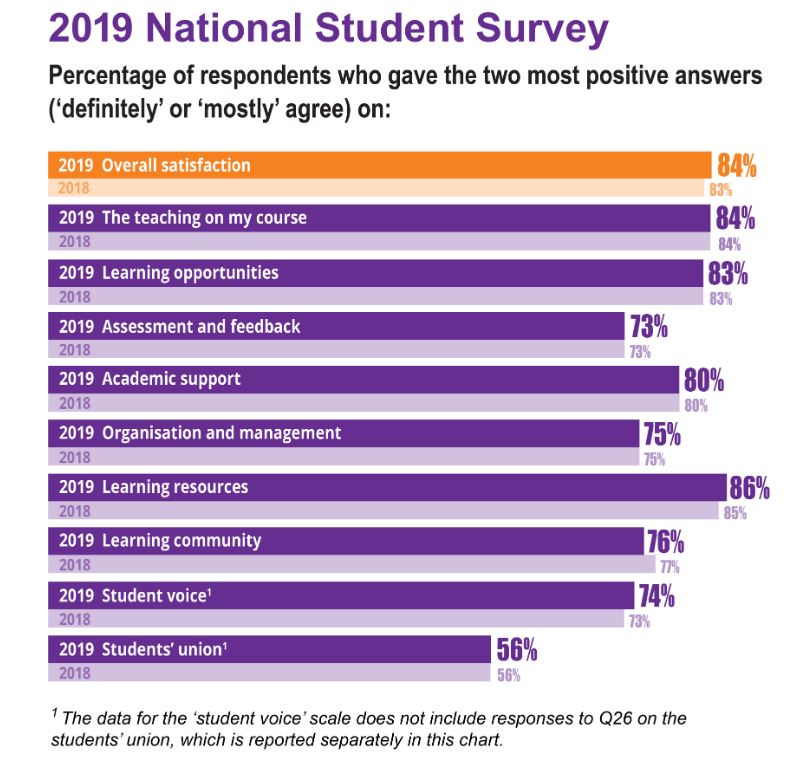
It is a ‘no brainer’ that the availability of on-campus living or recommended student accommodation serves as a counterpoint to the ‘proximity to home’ disadvantage. Needless to add that ‘availability’ and ‘affordability’ of (student) housing might well serve as a compensatory attribute to other lower-ranked attributes such as reputation, learning resources, community etc., as indicated in the questionnaire of the National Student Survey.

Yes, in the next week most British Universities would be welcoming new students – whether home or international – is there any room in the Inn?


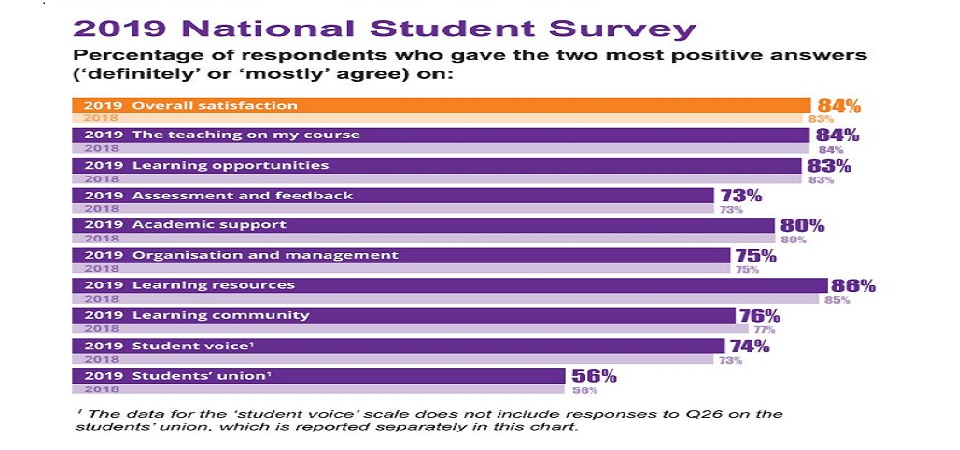
Image credit here (clearer version below)