DD
MM
YYYY

PAGES

DD
MM
YYYY

spot_img

PAGES

Home Blog Page 6734

Don’t Give Up, Keep Believing!

2

I totally understand how the system of things are at the moment in the country and even in Africa at large. If we all pay a closer look at how things are structured, we will all come to a conclusion that the current structure is built to keep us back and hold dreams down.

I don’t like writing motivational pieces but I have seen the need this time to write it seeing the depression that hovers across the minds of people seeking for jobs, trying to break free from the status quo, facing setbacks in establishing their dream companies, trying to be sane in the workplace.

The country has reached the point of saturation and we will only deceive ourselves to say things are not more difficult this time. The more difficult process of getting visas, the more difficult it is to win the trust of foreign investors, the lack of trust between freelancers and clients due to the fraudulent practices some folks have dabbled into thereby soiling our name.

Should we talk about how the educational system is failing young ones daily and how we have been expecting solutions from the government for so long, yet none seem to be genuine. If this doesn’t get to you, it does to me.

If you’re an observant person and very analytical just like myself, you will want to say we don’t have an economy standing anymore. The social media is filled with so much bitterness, deceit, and oozing with mental decadence. I have had my fair share of being defrauded online myself and even though such amount doesn’t seem to be really huge, it meant that we have more people going through this on a daily basis who might have their life dependency on such amount.

All these are enough to push people, I mean push you to the brink of depression. In an economy that is filled with skilled people, power supply should be made a priority and the security of the young ones should be of utmost importance but it is not so. We have youths whose rights have been abused by the police times without number.

I have had friends who have lost jobs just because they couldn’t meet deadlines due to poor internet connection, due to poor power supply which eventually returns them to the state of being unemployed, broke and frustrated. This alone should make you quit and I really do not throw quick blames at people for quitting, people have been strong for a long, people have been holding on for so long. You have tried.

However, I want to remind you that you have survived this far, you have been strong till this point, you have faced the hurdles times without number and you were able to overcome at different times. The night has been dark for so long yet you have been through till you saw the dawn of the day. I am writing this to you because I don’t want you to give up. Not at this stage. Not at this phase. Don’t throw in the towel, you can give yourself a break, you can ask for help, seek counsel but don’t let all that this current state pushes at you get to you.

There is uncertainty in building

A farmer will go to till the ground, plant a seed. He will come daily to water it and take away weeds. He will nourish the seed till it becomes a small plant.

Not yet seen the fruit, he doesn’t stop watering, he doesn’t stop weeding. He builds a fence for it even though he’s not sure of the result.

He’s not sure because he knows the success of the seed doesn’t lie in his power. A wind could come and blow it away, a fire could gut the whole city. A beast could feast on it. He is aware of this but he plays his part. He does what he needs to do. Puts all the measures needed to be taken. Yet he knows it’s success is not totally within his power.

He only sows in hope. He plants with faith. He nourishes with patience.

As much as you’re skeptical about the success of your ideas, you need to keep pushing with faith and hope as your watchword. You need to go around with a placard of patience. You need all these as a support to keep holding on.

No matter what happens, keep holding on.

Social Media Illusion

1

Social Media is a blessing, likewise, it is also a curse. Although I have made many friends, build a profitable personal brand and generate business leads for myself and clients, I won’t shy away from the truth – ”The Social Media Illusion”.

Many have fallen for the cheap hypes and unproven facts about life on Social Media, therefore, applying everything they see online to their lives. Only to discover that there’s a lot to making things work. Words are not enough. Likewise, social media is not all.

In fact, Social Media is just a tool for connecting with different people, growing business or building a personal brand. One of the advantages of using social media – it opens the door of opportunities. Meaning, you can be anywhere in the world and offering your services without having to leave your couch.

As much as this has brought ease in working with clients overseas, it has also brought unnecessary ego amongst users. Many had replaced the key purpose of social media – ”collaboration”, with ”competition”. Chasing millions of followers just to flaunt their ego and live the one-minute celebrity lifestyle.

The annoying part of social media is – fake titles. The ”fake it till you make it” group. Everyone is a coach, entrepreneur, expert, mentor, influencer, strategist. It makes me wonder if those titles were achieved overnight by just having a social media handle or has social media become a tertiary institution that offers such titles.

Many innocent people are falling for the social media illusion. Most especially, on LinkedIn. There’s this belief that you can be anything in life by just having a LinkedIn account.


  • Where is this advice coming from?
  • Who’s giving this advice?


Amanda Olowoniyi said: ”a lot of people join LinkedIn with the assurance of getting a job but soon are disillusioned.”

They go about chasing metrics (likes, comments, followers).”Having a LinkedIn account with 500,1000000 or more followers does not guarantee anyone a job.

What works for an individual with 10, 15, 20 years experience might not work for a fresh graduate. So know the ideologies that work for you.” – Amanda.

It’s easier for people to replace human effort by social media. I mean, doing everything about their professional career only online. They stay behind keyboards chasing fantasies and building castles in the air. They go about reading motivational stories and quotes but forgetting the key point in life – ”use your brain”.

Don’t be wooed by the big titles and positions. Don’t invest all your time searching for a job on social media, try other channels too. Nothing beats the human touch.

Why reduce your chances?

Knowledge and Experience is not the same. Remember that opportunities out there aren’t for you alone, you are competing with others. Go out there and meet people in person. Do the work behind the scene. All social media requires COMMONSENSE.

We are all learning; isn’t life itself a teacher?

Some content on social media are far from reality. Although, there’s a lot to learn on social media, don’t let it swallow up your life.

If you sit back consuming only the success-content on Social Media and judging your life based on them, you are living in the world of the – ”Social Media Illusion”.

For he who is tied to the living has Hope.

Lessons for Jumia and Konga from India-Based Flipkart’s PhonePe

3

Last year, Walmart spent $16 billion for a controlling stake in Indian e-commerce company Flipkart.

With the completion of the investment, Walmart now holds approximately 77 percent of Flipkart. The remainder of the business is held by other shareholders, including Flipkart co-founder Binny Bansal, Tencent, Tiger Global and Microsoft Corp. Moving forward, Flipkart’s financials will be reported as part of Walmart’s International business segment.

Bloomberg reports that PhonePe, a payments startup inside Flipkart, plans to raise capital at a valuation of as much as $10 billion.

When Walmart Inc. paid $16 billion for control of India’s e-commerce pioneer Flipkart Online Services Pvt. last year, the American retail giant got a little-noticed digital payments subsidiary as part of the deal. Now the business is emerging as one of the country’s top startups, a surprise benefit for Walmart from its largest-ever acquisition.

Flipkart’s board recently authorized the PhonePe Pvt Ltd. unit to become a new entity and explore raising $1 billion from outside investors at a valuation of as much as $10 billion, according to people familiar with the matter, asking not to be named because the discussions are private. The funding may close in the next couple of months, although the talks are not finalized and terms could still change, they said. The unit would then become independent with a distinct investor base, although Walmart-owned Flipkart would remain a shareholder. Walmart and Flipkart didn’t respond to emails seeking comment.

Did you notice a pattern? The PhonePe is the double play for FlipKart. Yes, no matter what is happening in the ecommerce space, the payment arm will be doing just fine [commissions on transactions are assured]. Also, it turns out that successful ecommerce companies like Alibaba (with Alipay) in emerging markets have always have payment units. 

Anything for Jumia to learn here? JumiaPay needs to up its game plan! The same goes for Konga on KongaPay. It seems there is a clear correlation between running an ecommerce marketplace and paytech in emerging economies.

NYSC 2.0: Scaling Youth Interventions in Nigeria

3

Under the sun and in the rain. Another batch posting is here again and one can easily figure the many thoughts, expectations, and plans running through those young minds as they obey the clarion call away from their comfort zone.

In a bid to reconcile, rehabilitate and rebuild the country after the travails of the Nigerian Civil War from 1969-1972, the National Youth Service Corps (NYSC), which was established in May 1973 remains one of the most enduring public institutions ever created in Nigeria with commendable attainments. A close look at the objectives of the scheme, conceived some 46 years ago, shows a deliberate effort at encouraging and inculcating in Nigerian youth the spirit of selfless service to the community, and to emphasize the spirit of oneness among Nigerians, irrespective of cultural or social background.

But what happens after removing hair dress one last time as a corps member? Each year, the NYSC enlists about 180,000 graduates to serve the nation at different capacities. However, the end of the mandatory program is usually the beginning of the Nigerian graduates’ struggle to get a decent job and start a life. While there has been intensified efforts by some calling for the scrapping of NYSC, others believe that the scheme should rather be optimized and be put into a more beneficial use as a means to effectively empower the Nigerian youth. Of the differing views, one thing holds true – NYSC needs reforming.

As a nation, we are currently facing a war different from that of 1969 – unemployment and underdevelopment are eating deep into our national fabric. Though various programmes have been implemented over the years with slight statistically significant impacts recorded. Intensity and scale are key in ensuring real systemic growth. However, most programmes are too small to show changes. We need to increase the intensity and scale of youth empowerment programmes and the NYSC provides a huge opportunity for scale as no other institution can match the spread.

The Proposed NYSC 2.0 Format

What if the NYSC program is redesigned to serve as an incubator to prepare the teeming youth population to take on present and future challenges? How about running the program in this format:

Three-Week Orientation Program: This is important to take Potential Corps Members (PCMs) through the various stages of the year-long program.

Two-Month Workplace Readiness: Owing to the wide skill gap that exists in the Nigerian talent pool, it is imperative to upgrade the Skills Acquisition and Entrepreneurship Development (SAED) program of the NYSC. Beyond learning shoemaking and catering, Nigerian graduates need to develop skills such as cognitive flexibility, presentation, analytical and problem solving, negotiation, and creativity in order to stay relevant in the workplace. As new jobs are created, the repertoire of soft and hard skills required in the workplace will change. While technical skills such as software development, and data analytics will remain highly sought after, multiple research outcomes show that soft skills top the list of those most important for employees of the future.

Six-Month Workplace Traineeship: To be undertaken at establishments and sectors that are pivotal to actualizing the strategic and economic growth plan of the government at federal, state and local level.

Three-Month Community Development Service: Serving corps members engage on group basis, on social impact projects that are in line with the Sustainable Development Goals (SDGs) in their various communities of primary assignment. Afterwards, they will present a report at the local government level through the Local Government Inspector (LGI).

Moving Forward

The potential opportunities for economic prosperity, national progress and individual flourishing in the future world of work are enormous. Yet, these depend crucially on the ability of all concerned stakeholders to fully understand the implications or changes that are already underway in Nigerian workplaces, and to be proactive in ensuring that the benefits and opportunities that arise from these changes are available to all citizens. If the promise of a better Nigeria is to be realised, it is important to build the critical skills and competencies to meet the demands of a growing and evolving economy. My hope is that this proposition creates a basis for discussion among policymakers, non-governmental organizations, businesses, academic institutions and individuals and to support preparation for the anticipated changes in the future of work.

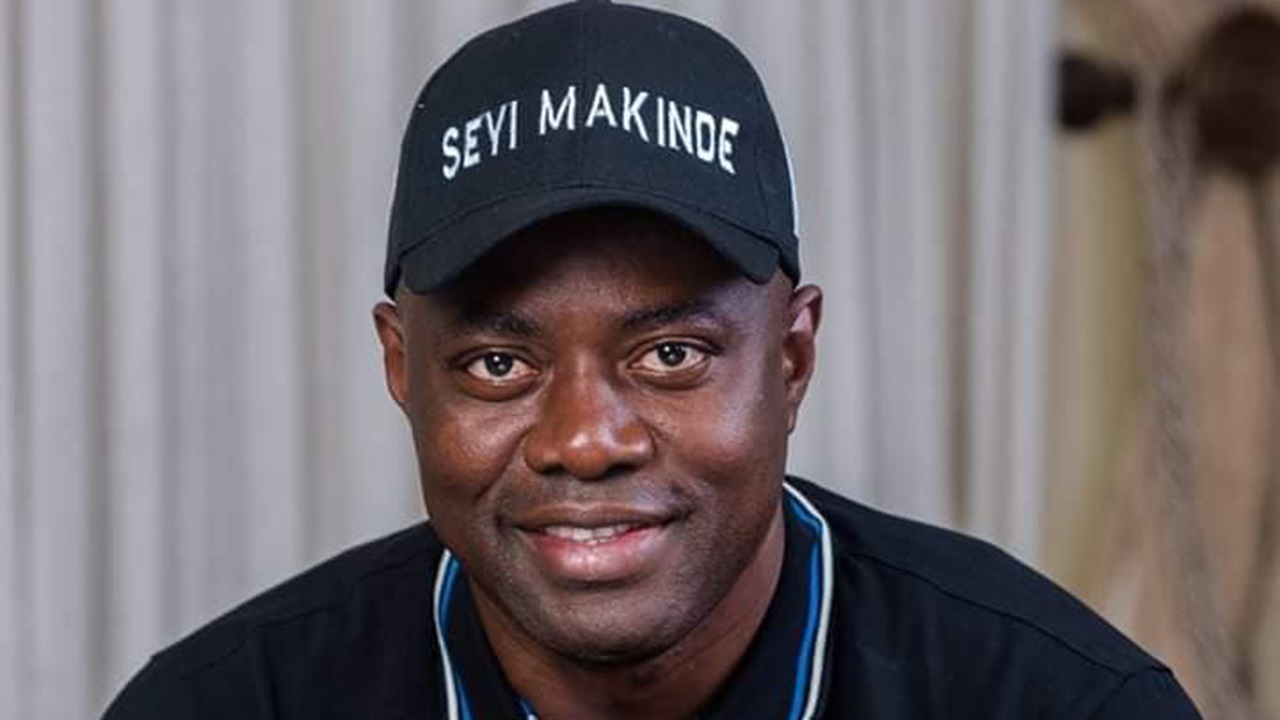
How Oyo State Governor Seyi Makinde Is Using Social Media To Connect With People

0

Despite the recent noise and chaos in Nigeria politics and government for the past few months, there seems to be a growing new trend of political leaders using social media to connect with people. Unlike the past decade where people don’t have access to top government officials or leaders (except you are a journalist), social media is now making it convenient for both the government and the governed to interact easily.

In the past, the conventional method for political leaders to interact with the people have been through community meetings, town hall discussions and community representatives. The leaders believe that they can understand the needs and wants of the people through this indirect method. Many times most of the said approaches are not effectively used or not used at all due to a number of factors ranging from tight schedules of the leaders, lack of awareness to the people and political beliefs. 

The year 2019 has been amazing, as it witnessed the growth of the online community in Nigeria and even the government and it stakeholders have not been left out. Looking at the just concluded election, political leaders interacted with the Nigeria populace using mediums such as Facebook and Twitter greatly. The social media space was the perfect platform to spread their messages since half of the Nation are currently in the online community. 

Arguably, The Youths are considered to be the active users of the Internet for social interaction. These group of people are the ones who cannot do without the Internet. Many of the youth are constantly looking for a way to connect or interact with everyone in different part of the Globe. With the youth having the highest percentage in the population of Nigeria, they are the ones with frequent conversation on social media, and the one to be in the future (Future Generation)

This article is focused on how Seyi Makinde, Oyo state governor is using social media to connect with people. The young governor, who has just begun his term few months ago achieved a mountable feat by dethroning a political party in his state. Deploying many approach to his political campaign, Makinde leverage on social media to win the hearts of the people. He was able to create forums and discussion with his people easily and reach out to them gaining many followers and loyalist all-round the state. 

This approach allowed him to understand the issues that mattered to the people, instead of working with deliberations and innuendo, like most leaders. Makinde understood what the people really needed and build his entire administration to tackle these problems. The ability to interact and create discussions with his people has allowed the governor to solve the problems of the state and position them well in the world map. Indeed connecting on social media should be an important action of every political leader that want to remain relevant in the future. 

Indeed, one outstanding social media step of the governor is having a LinkedIn Account. Most leaders I know make use of Twitter to communicate with people (While they don’t use this well). Makinde uses his LinkedIn page to provide information about his administration, and highlights key developments happening in the state. The platform has also allowed him to engage and interact with professional stakeholders that can one way or the other add value to his state. 

As a concerned citizen, I can say much about him because of my interaction with his regular post on LinkedIn. His social media presence has not gone unnoticed as he gains more followers both internationally and locally. Seyi Makinde is a true example of how government has connected with many people through social media making governance more productive and relevant.

This article is not intended to celebrate the governor but to show what his doing right and how this can be adopted by other leaders in Nigeria. Although, many of the leaders may claim to have an active presence on social media, realistically this is not true.

If we have our leaders actively engage in social media, the Nigeria society can truly and really develop. The people would be able to reach out to their leaders, therefore giving room for better policy formulation, actions and decisions by the leaders. The harm that interacting on social media could pose is very minimal. In fact there seems to be no clear damage that government interaction on social media can cause currently. 

With this, I call on Nigeria Leaders to try and emulate what the Oyo state governor is doing and improve on it. Social media can be an interesting and new way to facilitate governance since people can be easily reached and influenced making a better society.