DD
MM
YYYY

PAGES

DD
MM
YYYY

spot_img

PAGES

Home Blog Page 6734

Petrolex Is A Smart Alternative To Apapa Oil Logistics Paralysis

0

Apapa, Nigeria’s premier port city, has lost its glory. A destination which was created to serve only 1500 trucks now grapples with about 6,000 which convey cargo to and fro its two ports (Apapa, Tin Can), and petroleum products from the tank farms of crude oil marketing companies daily. This congestion paralysis causes a nuisance to Apapa residents and the organizations located there. The traffic gridlock  has caused the collapse of the roads, leading to deaths from tanker fires and armed robbery. The impact has been closure of and relocation of several enterprises including hospitality and entertainment.

Petrolex Oil and Gas founded by a patriotic Nigerian, Segun Adebutu, to fix the friction in Nigeria’s oil and gas logistics in order to help petroleum marketers with a viable alternative to the Apapa congestion, plans to reduce Nigeria’s dependence on crude oil as well as petrochemical imports. It has built a state of the art mega oil city at Ibefun, Ogun State which will play host to the biggest tank farm in Sub Saharan Africa at 300 million litres with 30 loading gantries, a scheduled truck loading and fuel management system, marshaling yard with 4000 truck capacity park. 

Also, it will have a jetty to supply the hub as well as ensure operational efficiency in distribution of petroleum products and vessels. Its fleet consists of 10 barges, 2 tug boats and a daughter vessel to boost the distribution of petroleum products.

To make Nigeria a petroleum and petrochemical product consumption nation which will preserve our imports of about $10 billion which consumes the bulk of our foreign exchange, this project will play host to 250,000 barrels per day petroleum refinery which will be the second biggest in the country and Sub Saharan Africa upon completion, a petrochemical plant expected to serve Nigeria’s manufacturing firms with critical raw materials for their competitiveness, a lubricant plant whose products will power the nation’s automotive, and a gas processing plant which will manufacture 50,000 Liquefied Petroleum Gas cylinders for affordable LPG Gas consumption by consumers.

Petrolex’s Oil and Gas City is expected to create over 10,000 direct and indirect jobs for Nigerians with an economic impact on the lives of over two million Nigerians and will help to decongest Apapa and Ibafo tanker traffic gridlock as well as eliminating potential associated hazards.

Considering the strategic location of Ogun State which plays host to the highest concentration of manufacturers in Nigeria and borders Lagos State as well as the gateway to other parts of the federation, Petrolex’s intervention is a patriotic and strategic gesture which will help solve a major paralysis which has plagued the nation causing daily erosion of capital that could have boosted our national GDP.

Nigerian petroleum marketers should utilize this hub to solve their logistics needs so that Apapa residents can smile once again and restore the lost glory of their beautiful city.
The State of the Nation for the Youths

0

The State of Education in Nigeria

The world is changing. It seems what students study in school, and grades scored is no longer a big deal. The certificate seems irrelevant after graduation. It’s disheartening to spend your large chunk of hard-earned money on school and employer offering you a bizarre salary package that doesn’t compliment your effort. It’s easy to understand why employers would pay you more if you learned some useful stuff, but why would they pay you so much extra for stuff you’re never going to use?

Most of the things we learn in school is not needed in the labour market. 

We see education as the only way of solving our problems, yet graduates are roaming the streets doing nothing after going through a lot of stress to become a graduate.

I love education but the state of education in this country is not encouraging. Why would I spend 4 – 7 years in school and there is nothing to show for it. 

They said Education is the process of facilitating learning, or the acquisition of knowledge, skills, values, beliefs, and habits but the reverse is the case in a country like Nigeria. 

My question – Is Education a Waste?

Education is the best legacy parents can give to their children. Seeing graduates turn Okada rider, Bet9ja vendor, Cyber fraud – Yahoo Yahoo, and many more, grieves my heart.

Often times I do ask myself, what does the future hold for the youths in this country?

They said – we are the “leaders of tomorrow”, but as far as I can see, there is no sign. The leaders of tomorrow are yet to be born. 

The strength of every country is in the hands of the youths. Likewise, I would say – the downfall of a country is in the hands of the youth.

I stumbled on a friend of mine who struggled to finish school. When I asked him about work, I was shocked when he told me he’s into buying and selling foodstuffs. 

He said he regretted going to school. Perhaps, if he had known then, he wouldn’t have gone to school. He would have invested the money into business. After all, what he learned in school wasn’t needed in the labour market. I don’t blame him. Many youths out there believe in getting a lucrative job after completing their NYSC Program. The wise ones will follow a different path. 

I think it’s time for every Nigerian to wake up. I’m not disputing the fact that education is bad, but what’s the essence of going through the stress of learning, and at the end of it all, you can’t practice what you’ve learned. 

More than 70 percent of the nation’s graduates said their certificates are not relevant to their jobs. I don’t blame them for this.

Job hunting these days is now down to connection.

If you are well connected, it’s easier to get a job. Must I be connected before I get a job? It says a lot about our educational system. 

I do tell my friends that I don’t think education is more important, but in our country, you must just try to lay your hands on at least a certificate should in case the future calls for it. 

Why am I saying all this?

I’m not against education and I’d never be against it. In fact, I am also the academician type. To me, the only advantage of a degree is – it shows you have undergone a formal education. Anything else, it is either luck or connection. Also employers value formal education. So it has a value in the job market. 

Conclusion

I want youths to realize that they should lay their hands on something else while they are still studying. Learn some digital skills as the world is running at the fastest pace. We are getting to the era of certificates becoming less effective. All that matters now is – “what can you do”. 

Youths, it’s time to discover yourself but my question is – “What can you do?

A Call to Rebrand Nigeria

0

The internet has been buzzing lately with the news of Nigerian scammers and drug dealers caught by the law enforcement agents in different parts of the world. The peak of it came with the arrest of Obinwanne Okeke aka ‘Invictus Obi’, who featured in Forbes 30 under 30 list in 2016. More heat came when a few days after Obinwanne’s arrest, 80 more Nigerians were arrested by the FBI in relation to internet scam.

This development didn’t go down well with a lot of Nigerians as there were mixed reactions from different quarters. A lot of Nigerians felt that these arrests were given unnecessary air, some felt that the country was dragged to the mud by these suspects, and then there are those pointing accusing fingers at every corner they face. But the truth still remains that Nigeria and Nigerians are encountering challenges with the world out there because of the negative attitudes they receive from Non-Nigerians as a result of the illegal actions of people of this kind. As Igbos say, “Ofu aka ruta mmanu, o zuo ora onu,” meaning that when one finger gets soiled with palm oil, it stains every other thing that comes in contact with it. In other words, the illegal actions of a few Nigerians are affecting the rest of the populace.

I know that because Nigeria has been given a bad name, every black man that wants to commit an offence can readily assume the Nigerian identity. I know of this because earlier this year, one of my contacts sent me a viral video clip where a hidden camera was used to record the meeting of a Briton and a supposed Nigerian fraudster. I watched this video and immediately voiced out my objections because the black man there wasn’t a Nigeria. I could tell this because his English wasn’t Nigerian English. But as far as the world knows, he is a Nigerian.

But that notwithstanding, honest Nigerians are suffering because of the actions of a few. A lot of job opportunities are being denied us out there. Foreign immigration officials watch us with eagle and hawk eyes. Foreign investors are sceptical about us. This is just to mention but a few. Even within Nigeria we know what we are passing through. We don’t even trust ourselves here. We don’t trust our institutions anymore, not to talk of trusting fellow humans. A lot of things are going wrong with the country.

But whatever happens, we need to rebrand Nigeria. We need to take away the face of shame placed on the country by fraudsters, terrorists, kidnappers, armed robbers, corrupt officials and the likes.

But before looking at ways we can change the face of this country, let us first look at some of the causes of what we are facing today.

  1. A Shift in our Ideology: In a typical African society, some virtues are highly celebrated and honoured. Then, much regards were given to people who are hardworking, brave, wise, honest and have good family background. Wealth then was seen as a result of hard-work and diligence, and of course blessings from the gods. Besides, the source of everybody’s wealth was known by every member of the community.

But things began to change in Nigeria when the colonialists came and made a lot of changes to the African ideology. We don’t have to lament about their coming because we also benefited much from it. All that is needed now is to bring back the African ideology into our system.

  1. Change of Attitude towards Vices: I could remember when I was young, if my siblings and I do something considered unfounded by my father, he will tell us that we are lucky because if it was in the olden days, he will be negotiating with the slave traders to buy us (lol.). I never found this statement funny but it really shows that vices were not tolerated in Igbo communities in those days.

I could also remember that before you are given a title in Igbo land you must be a respectable member of the community. In fact, you must not even owe anybody a dime before you collect a title. I heard the story of one man who applied for Ozo title taking and had spent so much preparing for it. But on the D-day, he wasn’t called out because he owed one widow a stipend. That was our society in those days. So what happened now?

Our people are beginning to celebrate vices. People no longer see fraud as something bad. They even gave it a wonderful nickname, “Guy”. Today, ‘thieves’ that have no integrity, are welcomed into the most prestigious fraternity in our societies. We sure are the cause of our problems.

Our religious organisations are not left out too. Nobody questions that man that willingly gives so much how he makes his money because they don’t want to lose his patronage, or should I say ‘customership’.

  1. Corruption: Of course this is the grandfather of all crimes. Like my people say, “Onye nna ya ziri ori na-eji ukwu agbawa uzo” (the person that was sent by his father to steal breaks down the door with his foot). There is no way we can stop any of these vices eating deep into our society if we don’t first handle corruption. In fact, corruption is the umbrella that shields all sorts of crimes. I could remember when someone said on Facebook that the judiciary only wakes up when it sees ‘Yahoo Boys’ but remains fast asleep when corrupt political office holders pass by. Anyway, I don’t have much to say. But, if corrupt officials are not brought to book, then meting out sentences on any other type of social vices becomes injustice.

Now, let’s look at some of the ways through which we can rebrand the face of Nigeria.

  • Media Houses: I know that a lot of people will debate on this but I think it’s high time our media houses helped to paint good pictures of Nigeria. I’m not saying that they should cover up crimes, there’s no way I would say that. What I’m suggesting is that they should also show the good side of the country. I mean, enough talks and shows about how bad things are. They should find ways to show how good things could be, in addition to the things that are already good. Nigeria can’t be that bad, is it? Let our media houses not just focus on what will sell, they should also build up the nation.
  • Literary Artists: I remember vividly the mixed reactions I got from a paper I wrote and presented on how Nigerian literary writers are sending our youths out of the country. Yes, some of the literary works out there only paint pictures of pains and sufferings in Nigeria. We need them to also show that there is hope for us. Besides, literary works can be used to pass on morals to our young souls. They can also be used as a means of teaching ways of earning an honest living in the country. Everything about Nigeria shouldn’t be about corruption, kidnapping and other vices.
  • Religious Houses: When I was in Ibadan, the church I was attending then (The Church of Ascension, Bodija) decided to collect a bio-data of all the parishioners. It sent out forms to every member and asked us to fill, individually, and submit. One of the information to be provided was our source or sources of income. Some people kicked against it, but the parish priest then insisted saying that he doesn’t want to encourage illegal dealings among his parishioners. I think every religious house should do that. If possible, let it be put as a prerequisite before the church is registered.

There is need for religious leaders to know their parishioners’ source of income. One reason for this is that Nigerians respect their religious leaders a lot. When a religious leader decides to find out how honest his fellow worshippers are, a lot of crime will be curbed because nobody will want to be tagged a ‘sinner’.

Of course I know of and have heard of some religious houses that are more interested in what the worshippers bring to the house than in how they got it. That’s a big shame on them.

  • Our Community Leaders: Our community leaders used to be uncompromising leaders. I can’t say that for now because some of them have been found to have questionable characters. But I know that there are still some among them that are still incorruptible. I can only say that our community leaders should be careful with selecting the people that are given titles in their different communities. Let titles be given based on the person’s integrity and honest achievements, not because of the money he could spray around, the cars he drives and the mansions he built.
  • Political Institution: This is one incorrigible part of the Nigerian society. This institution is like a cancer eating deep into the heart of the country. It is the chief host of corruption and other vices. The only way this institution can be repaired is if other social institutions – education, religion, community (family) and economy – have been worked on and fixed.
  • Nigerian Immigration Service: Nigerian immigration needs to buckle up. I don’t know how one person can have different passports that bear different names and different tribes. It says a lot about our NIS. Besides, that man I saw in the video clip that claimed to be a Nigerian obviously has a Nigerian passport. Whether it is genuine or not doesn’t matter here because he has already been termed a Nigerian since he had a document that said so.
  • Cyber Security: More awareness should be created on cyber security for Nigerians. The truth is that even Nigerians living within Nigerian are also victims of fraud. And a lot of fraudulent activities happen everyday. There is a need for more energy to be thrown into teaching people how to protect themselves from cybercrimes.

As for the rest of us, let us not say, “Wetin concern me? Are my going abroad?” You never can tell when it will hit and who it will hit on. You can be the next victim. That you weren’t affected by these acts today doesn’t mean it won’t be your turn tomorrow. Anybody can be a victim, directly or indirectly. Do your own bit to rebrand the face of Nigeria.

Economic Diversification and Return on Investment

0
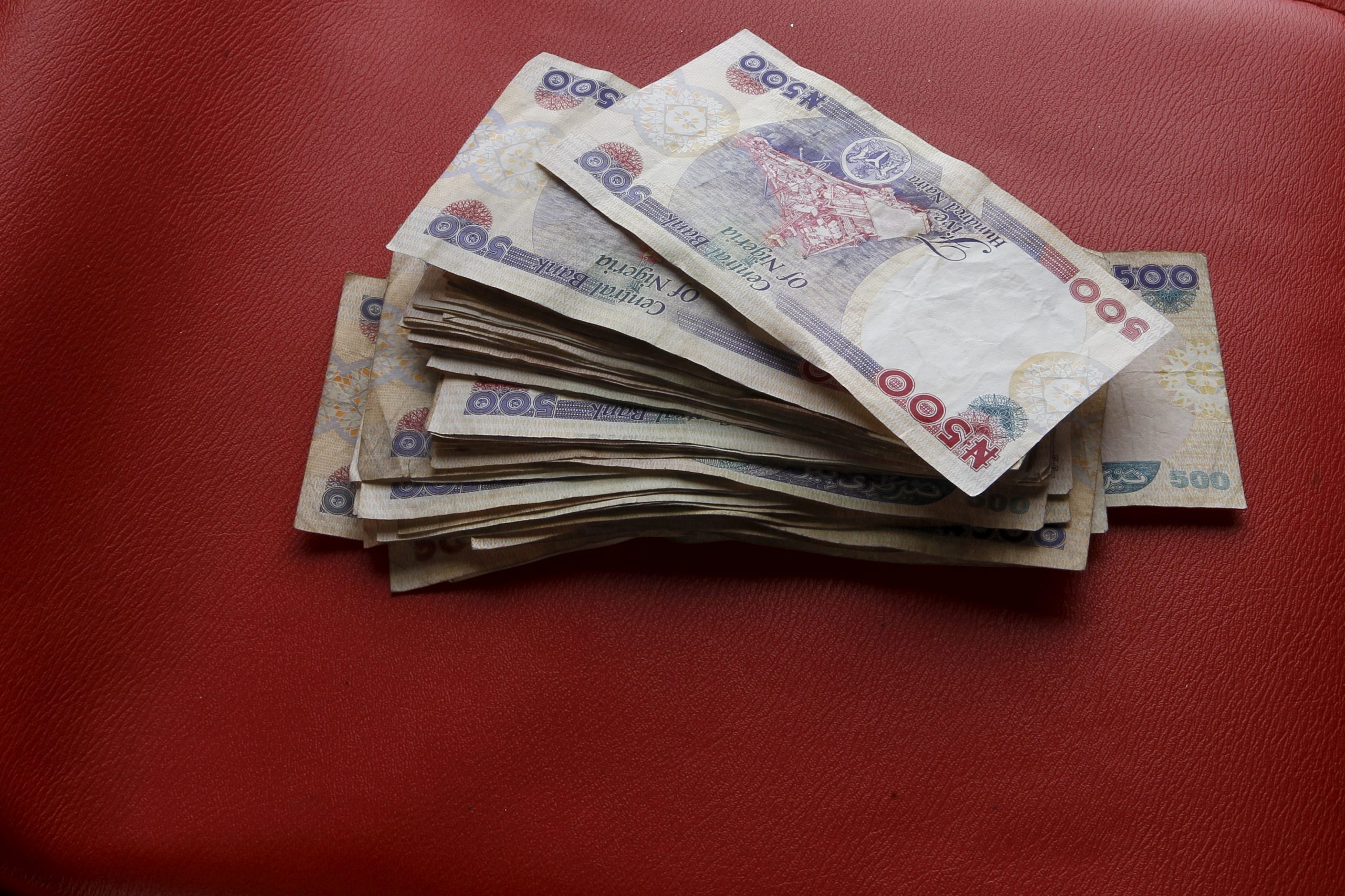
Nigerian naira notes are seen in this picture illustration March 15, 2016. REUTERS/Afolabi Sotunde/Illustration/File Photo - RTSFNNR

There are so many generalizations we make every day, some without even thinking about the implications of doing so. For instance, “There are three major tribes in Nigeria”. This is one of such broad categorizations we see happening on a daily basis. This may or may not be hinged on the idea that population matters more than anything else.  Is it wrong then to make such assertions? It’s difficult to say but one thing that stands out is the fact that those generalizations are based on approximations or rounding offs, and these approximations are mostly based on population. In reality, there are over 400 different ethnic nationalities within Nigeria.

So, some of these rough approximations are swallowing up a significant portion of the populace by merely looking at just the ones with the highest numbers.

I would like to have a look at how some of these generalised approximations have been done, and then contemplate further on how truly it should be done.

Economic Approximations

If the economy of a state or locality is been looked upon from the population point of view, what happens to the minorities?

Of course we all want the living standards of the majority of the people in the population to improve, still we need to find out how best to do that .

Many would argue that taking care of the business engagements of those in the majority benefits the whole population better than the few. But this isn’t always the case in economic matters, as there are cases where this could even be detrimental to the progress of those with more numbers.

The Critical Questions

The real question to be asked should be this – which economic engagement yields most of the revenue and has more return on investment (ROI) to the state? There is no guarantee that what the majority of the population are currently engaged in will yield more revenue when compared with what a more productive segment might achieve .

Another important question that needs to be asked is this –  will investing in the current economic activities of the majority benefit them more than investment in something else, perhaps done by the minority?

If 90% of the revenue of a state or cooperation comes from 10% of the population or department, which deserves more investment?

If the survival of the whole population is hinged on the economic activities of the few,  say that the monies invested in healthcare, education, provision of basic amenities are all derived from the activities of the minority, then for continued improved existence, the activities of the minority should be taken as a priority.

In order words, for the economic survival of the whole, the fiscal majority is more important than the  majority by population, and this is where investment should be focused on .

If for instance a farmer who owns 10 tractors with 9 of them having a combined output less than the 10th, Which of the machines should more money be spent on for maintenance?  If the farmer is interested in improved productivity, he should invest his energy and resources on the tractor with the highest output.

It’s difficult to argue about the efficacy of this using semantics, but in numbers the results are obvious.

A typical example is this. If the ratio of the productivities of activities A and B is 1:9, investing equal resources will result in activity B yielding 9times the result of activity A.  As the ratio of the resources invested in them shifts and increases towards B, the more the return on investment increases. In fact, it increases more when the more productive activity is invested in more, than when they are invested in equally.  It’s almost like the biblical story where talents were taken away from the one who has few and given to the one who has more.

Despite the efforts of the Federal Government to diversify the economy away from oil, oil still accounts for about 92% of our national earnings as at 2017. The figures may be shrinking now considering recent investments in the non oil sector,  still this calls for critical examination .

Considering the limited availability of resources, would it be more profitable to invest more national resources in oil related ventures or agriculture?

Which has more return on investment?

The answer is simple!  It would benefit Nigeria more if they invest in oil and gas related businesses than in agriculture. This is not trying to and will not downplay the relevance of agriculture and food sufficiency in our economy.  It is only stating the obvious based on measurable return on investment.

Put Your Money Where Your Mouth Is

There is nothing wrong in being a mono economy. We have seen the gulf Arab nations do it effectively.  It will benefit the country more if they invest in building refineries or legalizing modular refining than spending the same amount of resources on say, tourism or agriculture. This doesn’t attempt to reduce the value of these ventures mentioned , rather it is a mere comparison based on numbers.

If most of the revenue generated by a government, say Lagos State, is from the sea port, why can’t the Apapa road be fixed once and for all. Why can’t policies  that can increase port traffic be made?

If it is from the taxation of firms and individuals, why can’t an enabling environment be created for more taxable firms and individuals to come in by say providing localized power supply for industrial clusters? 

In summary, investment should be directed to ventures with the highest return on investment. 

Nigeria to start Transport University, Daura – Rotimi Amaechi

1

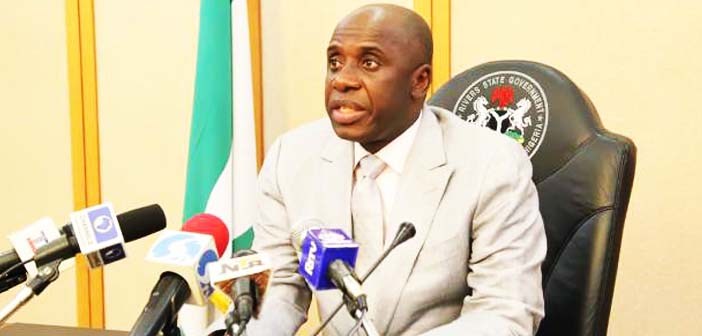
Nigeria to start Transport University, Daura this September, according to the Minister of Transportation, Rotimi Amaechi.  How I wish they would stop this escalating bureaucracy and put that money in the departments of Transport Management in FUT Minna, FUT Yola (MAUT), FUT Bauchi (ATBU), FUTO, and FUTA. These five universities have solid transportation management programs that can be expanded. A new university means new VC, bursar, etc and just colossal inefficiency.

The Minister of Transportation, Rotimi Amaechi, on Friday, said the groundbreaking of the Transport University, Daura, would take place in Septemeber.

Mr Amaechi disclosed this while inspecting Lagos -Ibadan rail line construction.

The minister said the ministry would also establish a factory in Kajola, Ogun, to produce materials for the rail project.

What is wrong with Nigeria?