“Remove your mattress from my space or I ‘ll throw it out!” Fumed Chidi. “If you are the son of your father try it,” retorted Elo. With flared temper, Chidi picked up the mattress, opened the door and flung it. And before he could make his way back into the room, Elo had caught him by the waist, lifted and slammed him on the reading table that immediately collapsed under their weight.
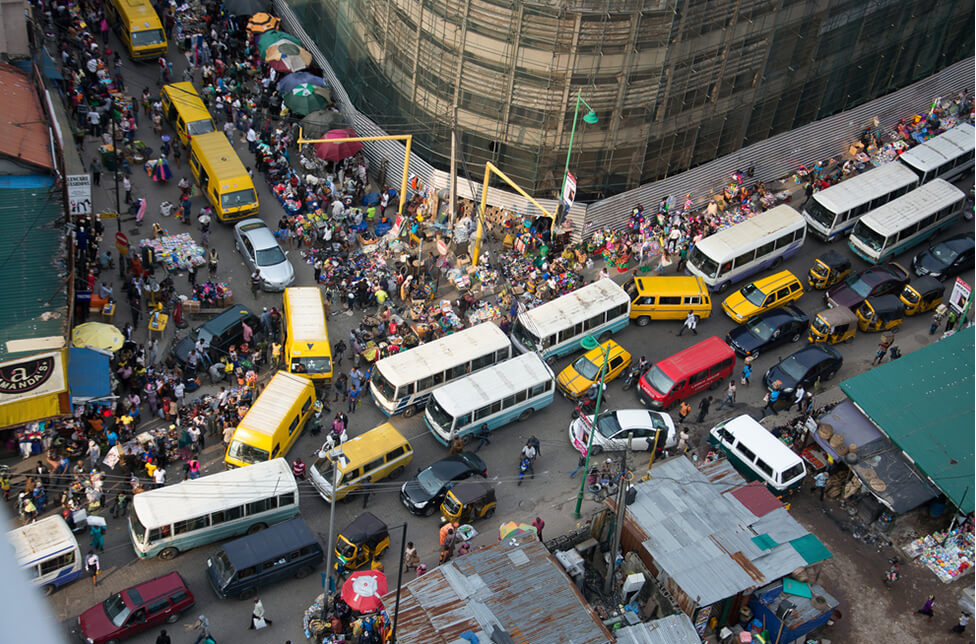
Those were my roommates ten years ago in the university. The hostels were originally built to accommodate two students in a room but during our days, the school authority was allocating bed spaces for eight. When we add squatter students, we get an average of ten per room. There was always strife for the use of facilities in the hostels like bathrooms, pews in the reading rooms, bed spaces, water, etc. This deplorable condition exists because the school was over populated and accommodation in the male hostels was not expanded since 1960 when the school was established.
The reason for this historical narrative is because I have been pensive for two weeks now as a result of the latest xenophobic attack on my compatriot in South Africa, SA. – more on this in concluding paragraphs. As I ruminate on the issue, my dominant thought was not the denial, the injustice, the culprits, the triggers…But how to end the hate on black African immigrants, especially Nigerians by black South Africans.
According to Pastor Fred Odekhian, “No man can touch the means of survival of another man and expect him not to react.” Studies abound to corroborate this quote from Charles Darwin’s ‘Survival of the Fittest’, Abraham Maslow’s ‘Hierarchy of Needs’, and/or Thomas Homer Dixon’s ‘Environmental Scarcity and the Outbreak of Conflict’. In all, the same human behavior is exhibited. And, funny, all living things conform to this reality.
Maslow’s Theory on Human Motivation states that, “Humans are compelled to fulfil their most basic needs(food, shelter, employment, etc) first in order to pursue intrinsic satisfaction (security, belongingness, esteem, and self actualisation) on a higher level. If these needs are not achieved, it leads to an increase in displeasure within an individual. This explains the mass hysteria in South Africa.
Thomas Homer Dixon identified three basic ways in which environmental (and by extension, economic) scarcity can lead to social conflict. The most appropriate in this discourse is Demand-induced scarcity, which says, “population growth or increase in consumption levels increase the amount of limited resources available to each individual”. According to the United Nations estimates, the number of African immigrants in South Africa is between 1.5 million to 3.5 million out of which Nigerians are believed to represent 27,326. The ANC Government never planned for this magnitude of influx when the economy demanded for skilled immigrants a little over two decades ago. The number also includes refugees and asylum seekers.
In my opinion, hate, regardless of the form it assumes, has the same destructive capacity in any circumstances. Under apartheid, it adorned the toga of grand racism by the minority whites against the majority blacks who were indigenous. In Rwanda, hate manifested in the attire of tribal war leading to the 1994 Genocide. In Central African Republic, hate engulfed people in religious conflict between the Seleka Rebels, and the Anti-Balaka in 2013; and ethno-religious crisis divided the largest country in Africa into Sudan and South Sudan in 2011. Hate is notorious for turning kindreds and friends into foes by distorting emotions, obliterating reason, and drowning memories of kindness.
In modern South Africa, hate has reawakened like the legendary Phoenix in the form of xenophobia. Since 2008, the population of both legal and illegal African Negros is willfully being decimated with the ANC Government looking the other way. Foreign intervention, Nigeria inclusive, was instrumental for liberating black South Africans from their white oppressors, restoring peace in Rwanda, Central African Republic and Sudan. The same foreign intervention is needed to end xenophobia. Injustice is always the root cause of most conflicts.
128 is the number of Nigerians killed by South Africans this year alone, the highest of foreign nationals. I need to be convinced that it is not a consensus. 128 might be statistics to you until the next digit knocks on your door or a neighbor’s door(God forbid); and unfortunately, it knocked on my friends door when on the twenty-second of August two xenophobic bullets were shot at Benjamin Simeon Okoronkow, the immediate elder brother to Emmanuel Okoronkwo.
I paid a condolence visit to Emmanuel in Mowe, Ogun State where he holds up with his elder sister.An excerpt of my visit: “Gani, I am very happy to see you. You cannot imagine the pain I feel. My brother had been the breadwinner for the family and since he left Nigeria, this December would have been the first time we will see him and his family. He paid for my attempts at securing American visas. In the Month of April he asked me to wait until the Month of August to enable him make conclusive arrangement for me to emigrate to Isreal which is safer than South Africa. He was going to arrange for a job, accommodation and the rest so that immediately I get there I will start working. Now that he is gone, how can I take care of his wife and children?” “Since God permitted it, it will turnout for good,” I assured him.
Emmanuel and I have been friends for eleven years now. His late brother sponsored his university education. Seven years after graduation, the government has failed to provide him with a job like millions of others. In a country with unequal access to opportunities, mass exodus of the youth to places of perceived green pasture is the only hope for self preservation. Many youths have lost confidence in the present and future of the country. They take their chances like the four leprous men in 2Kings 7v4, who said, “If we say, ‘We will enter the city, ‘the famine is in the city, and we shall die there. And if we sit here, we will die also. Therefore, come, let us surrender to the army of the Syrians. If they keep us alive, we shall live; and if they kill us, we shall die.”
Honestly, the end of xenophobia in South Africa is not in sight as long as socioeconomic conditions are worsening in the former apartheid state. Unemployment rate rose from 27.6% in Q1 to 29% in Q2. Another reason is the populist rhetoric from S.A’s political leaders that serves as fuel and match for xenophobia. Let us consider some of these volatile utterances. Thabo Mbeki, 2008: “My people are not diseased by the terrible affliction of xenophobia, what is happening are acts of criminality.” Cyril Ramaphosa: “Everybody just arrives in our township and rural areas and set up businesses without licenses and permits. We are going to bring this to an end.” The Zulu King, Goodwill Zwelithini: “…We can not even recognize which shop is which, there are foreigners everywhere… We ask foreign nationals to pack their bags and go back to their countries.”
The elite in SA are following in the footsteps of the apartheid government in notoriety against a different race. For instance, in 1948, during the national election, the National Party of Daniel F. Malan, argued that whites are being “swamped” and called for a forceful restoration of the old order. Malan dubbed his policy “apartheid”. This was the stroke that consolidated the racist regime for an additional period of 46 years led by the National Party.
The way foreigners are being made scapegoats reminds one of George Orwell’s Animal Farm, where Snowball, a former outstanding hero was made a perpetual enemy and blamed for the failures of the current government of Napoleon. An excerpt: ” Suddenly, early in the spring, an alarming thing was discovered. Snowball was secretly frequenting the farm at night! The animals were so disturbed that they could hardly sleep in their stalls. Every night, it was said, he came creeping in under the cover of darkness and performed all kinds of mischief. He stole the corn, he upset the milk-pails, he broke the eggs, he trampled the seedbeds, he gnawed the bark of the fruit trees. Whenever anything went wrong it became usual to attribute it to Snowball. If a window is broken or a drain was blocked up, someone was certain to say that Snowball had come in the night and done it, and when the key of the store-shed was lost, the whole farm was convinced that Snowball had thrown it down the well. Curiously enough, they went on believing this even after the mislaid key was found under a sack of meal. The cows declared unanimously that Snowball crept into their stalls and milked them in their sleep. The rats which had been troublesome this winter, were also said to be in league with Snowball .”
From the foregoing, we can conclude that the life of every black immigrant in SA is at risk everyday. People ask, ‘Why are only black immigrants the targets of xenophobia and other races are not touched?’ The answer is found in Maslow’s Hierarchy of Needs. At the bottom of the five level hierarchy is domiciled most black SAs and black immigrants. Here population is larger than the available resources to support it and there is much strife. Non black immigrants are high above the reach of the frustrated black SAs comfortably at the level of Esteem and Self-Actualisation. Their inability to reach those responsible for their deprivation, makes them vent their anger on the defenceless aliens. In Nigeria, there are some Chinese, Indians, and Lebanese committing crimes they won’t dare in their countries but we don’t resort to jungle justice, we allow the law to deal with it.
With much said, I am convinced the only solution to xenophobia is complete repatriation of foreign nationals. This is what sensible countries do instead of resorting to senseless attacks. For instance, in 1969, Ghana forcefully repatriated thousands of Nigerians. Also, in 1983, though not retaliatory, Nigeria expelled over a million Ghanaians from the country in what is known as the ‘Ghana Must Go” revolution. Both repatriations were due to economic burst and the need to prevent xenophobia. Of course, there was global condemnation of these acts, but the truth is, it is better than xenophobia. Despite these, today, Nigeria and Ghana are in healthy bilateral relations. Nigeria sincerely appreciates the activities of the ‘anti-xenophobic’ activists; your voices and actions premised on Pan-Africanism has immensely minimised the menace of xenophobia.
In sum, and in the words of the late reggae iconoclast, Peter Tosh in his hit song, Mystery Babylon:
“Send my sons and daughters back home
All them who are call out jah jah name”
I call on Cyril Ramaphosa, the president of SA, and the ANC government to send our sons and daughters back home, all who are called Nigerians! Asthe Holy Book said in Ecclesiastes 9v4,
“But for him who is joined to the living there is hope
For a living dog is better than a dead lion.”
This is just saying, a living poor man in Nigeria is better than a dead rich man in SA.
Rest in peace Mr. Benjamin Simeon Okoronkwo.