DD
MM
YYYY

PAGES

DD
MM
YYYY

spot_img

PAGES

Home Blog Page 6746

A Guide Towards Economic Transformation by Engaging and Investing in the Human Resources of the State

0

Nigeria is blessed with great natural resources across the nation. However, its true wealth that can never run dry are its people. A people that can function in the hardest of situations and still come out incredible. This is the character of the Nigerian spirit. Over the years since independence, Nigeria has tried to grow and though the civil war it had to bear left indelible scars on its history, her growing  population and infrastructure has been on the rise, although the level of infrastructure doesn’t meet the expected level by many if not most.

The country’s growth has been the effect of various programs by the government at the Federal, State and Local levels all trying their best to see the betterment of the country and improving lives. In spite of these various programs, the state we’re in today is somewhat confounding when the budgetary expenditure is compared with the results we all see today. 

Severally within past years, engaging in my usual exercise of going through the dailies whether as newspapers or via the Internet, I keep coming across the government talking of Public-Private Partnership driven programmes to boost a certain sector. As the years have gone by, I have come to realize a truly impactful way to achieve radical economic transformation in the State.

Steps Towards Radical Economic Transformation

  1. Organization of Business Conferences/Seminars.

One of the best ways to get people engaged and talking is to make an announcement. With the government of a state organizing economic and business seminars or conferences yearly or bi-annually aimed at telling the world the vast potential of the indigenious entrepreneurs or businesses, this will undoubtedly draw attention from various quarters which would include but not limited to aspiring entrepreneurs, investors (firms & individuals), press community, business owners, experts in various fields etc. With these calibre of people in attendance, government will have innovatively created a medium for various actors of the business world to network and connect with one another. Connecting is not enough. More can and should be done.

  1. Establishment of Business Incubators

For those who desire to be entrepreneurs, having an idea is not enough even if there is money. The skills to successfully turn a business idea into a profitable business is not something that can be easily acquired from reading textbooks. Experience and practical training from experienced businessmen and business coaches is vital.

Having an idea to disrupt the telecom industry without the necessary skills and expertise to pull it off will end up in utter frustration. For the government to help boost economic activity in the state, as it organizes business and economic conferences, it can also take aspiring entrepreneurs and have them go through a prepared business education programs aimed at exposing them to the necessities of being successful business persons from ideation stage to running corporations.

Though not limited to these, universities and polytechnics presents a starting point for these programmes which will empower students to gain practical skills and be ready to take the world on at the time of graduation.

  1. Creation of a Business Funding Commission/Agency

Education is not enough to ensure a radical change in the economic position of our society. No matter the idea or knowledge an individual possesses, without money, there will be no meaningful result.

Although we have lots of commissions or agencies of government, however, from personal experience in my usual criss cross around the country, I have seen several government agency properties over ran by bushes or with private individuals living in them not officially placed. Definitely not a palatable experience, but the need for establishment and proper running of these agencies cannot be overemphasized. For the government to fund a business, there has to be a special unit designated for that purpose. This is to ensure accountability and efficiency. The government must be ready to fund startups after it has trained the founders or entrepreneurs. Anyone could express their disagreement on the viability of such an enterprise, but if the agency is entirely or mostly kept out of politics, transparency, accountability, fairness, independence etc, will be enshrined in the review and funding of start-ups therefore completing the needed aspects of getting businesses standing.

Government through various interventions including but not limited to the BOI has given loans to businesses. This is not the type of financing I am talking about here. In this arrangement, the Government through its agency after initial business funding or subsequent funding could take a certain percentage of the equity of these startups.

This financing arrangement will allow startups to access funds to launch out while giving the government opportunities to invest in the enterprises in its state and gain from the growing economy it is helping to create without having to rely only on Tax from businesses. 

There may be concerns about government interference in the activity of the Startups, but then government will suffer by losing invested funds. Still via the funding arrangement, Startups and Financiers could come to an arrangement on management of the businesses.

Entrepreneurs in Nigeria have continually advocate for business friendly regulations that do not stifle innovation, while government especially during elections and irs usual poluticking promise the business community its unflinching support to business growth, the participation of government via it’s agencies in these type of funding mechanism I propose above could significantly influence the regulatory agencies to provide business enhancing regulations thus promoting a business friendly environment for radical economic growth and transformation.

  1. Provision of Post Funding Support After sales services is known to boost sales

In this public private business arrangement, offering of business supports to startups after initial funding, will incredibly help to increase the statistics of successful startups. 

I believe if the government can do these, there will be a significant change in the economic position and activities in the state. This can be implemented anywhere across the Federation but, I wish Delta will be one of the first considering its position as one of the leading tax collecting and oil producing states in Nigeria.

Plantain Farming Business: The Low Profile Money Maker

3

Agriculture is a money maker. Agriculture is the cultivation of the soil for the growing of crops and the rearing of animals to provide food, wool, and other products. We all are conversant with this definition, but only a few understand the implication of this.

Food is a necessity for man, while we wake up with the troubles of the day, the craving for food cannot be killed. Which better way is there to provide food if not farming?

With more than 60% of Sub- Saharan Africa’s population in small scale Agriculture and only 23% of its GDP coming from the Agricultural sector, this simply shows its not exploited well. Be bold to see that food can be exported to other countries of the world. Anambra State in Nigeria exports Vegetable.

Ethiopia, Nigeria, and Tanzania are countries where we have seen the effects of Government intervention in the Agricultural sector. The coming to power of President M. Buhari of Nigeria, promised increased funding to the Agricultural sector to boost its production and change the Narrative of depending on oil. Whether this has been achieved is a question for another day.

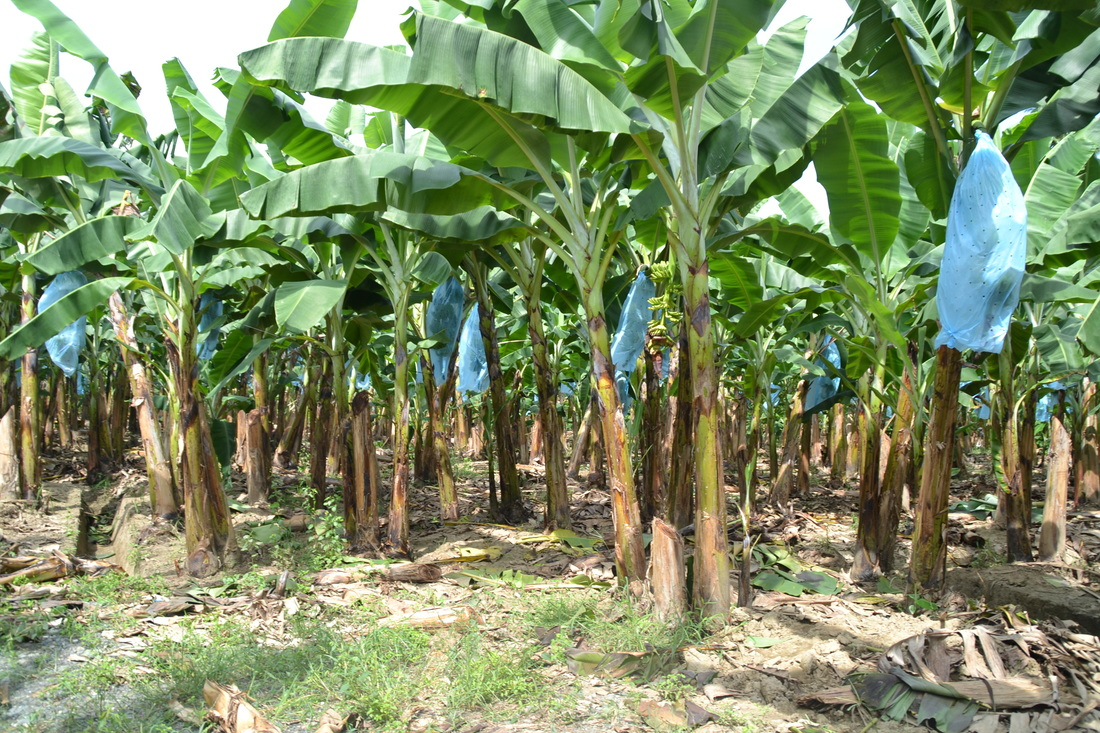
Plantain Farming Business

Plantain, otherwise called “cooking bananas” are starchy fruits with a relatively neutral flavor and has a soft texture when cooked. They produce fruit all year round and this makes them a staple food for most families.

The possibilities of making it big in Plantain Farming are much.

As an entrepreneur, you should see it as the most common crop in the country, this spot is shared with cassava. Plantains develop in clusters, while each mature sucker brings forth another sucker, making for easy propagation.

Plantain Farming Business is that agri-business that anybody can try their hands on and smile home with cash. Plantain starts producing fruits from 7-9 months after planting, so you can be assured that if you do it right, your first yield will be enough to cover initial expenses.

How To Start Plantain Farming Business

  • LAND 

You need a piece of land to plant on. Else, you are from the year 3030 when plants will be grown on thin air (Lol). While selecting land for this crop, do bear this in mind

Plantains love rich loam soil, avoiding steep slopes and places with a bad water drainage system. In all, if the soil is rich in loam content, not marshy but moderate in holding just the right amount of water, that’s the land you need.

While preparing the land, please avoid compaction of earth, employ manual labor as opposed to mechanical work. Do using organic manure is very welcome.

  •  PLANTING RANGE/INTERVALS

According to Alabi Isreal’s Article On Medium,

The recommended spacing is 3 m between the plantain rows and 2 m within the row (in other words. 3 m x 2 m). An alternative is 2.5 m x 2.5 m. If spaced 3 m x 2 m, 1 hectare should contain 1667 plants, but with a spacing of 2.5 m x 2.5 m, it should contain 1600 plants.

This arrangement makes for good spacing, adequate sunlight and air circulation. Also, note that if your land is on a slope, the arrangement should be done in a way that ensures little erosion. This can be done by following the contour lines.

Planting should be done with about “30–60 cm (11.8 in –23.6 in)” deep in the soil.

  • SUCKER SELECTION

A good breed of the plantain fruit will better your chances at making the best of it.  While choosing your suckers, it is advised to choose from vigorous plants, they should have small spear-shaped leaves and are about 4ft high.

  • PLANTING SEASONS AND CONDITIONS

Plantains develop best during the rainy season, although they produce all year round, do not plant towards the end of the rainy season. The best period to plant is the beginning of the rainy season, these periods give it about 4-5 months of constant water while ensuring you reap the fruits in the 7th/8th  month. Extreme weather conditions can damage your crops.

  • FERTILIZING, MULCHING, WEDDING AND PEST CONTROL

Sufficient manure is necessary for proper development. The combined use of Organic and Inorganic manure gives the best result. A month after planting is enough time to add additional nutrients to the plantation.

Mulching should be done around the base of the plant to help the plant conserve nutrients and reduce erosion at the base of the plant.

weeding should be done regularly so that plants don’t compete for nutrients. Schedule for weeding in about 6-8 weeks.

The known pest for Banana and Plantain are bats, monkeys and humans. You should find ways to ensure that plants are adequately protected.

  • HARVESTING 

The moment we all have been waiting for, once you see your fruits, harvesting should come in   3 months. Fruits normally appear within 90 to 120 days after the tree flowers. Upon fruiting, plantains are typically ready for harvest within 6 to 8 months.

Tesla’s Solar Panel Is Failing – And There’s Little Hope

0
Elon Musk, Founder of Tesla

In 2016, when Tesla delved into solar panels, it was in a bid to promote cleaner energy using the best technology. Tesla is well known for its sophisticated and intelligent electric cars until a swipe in “business drive” took effect, so that they started providing companies who needed cheap alternative electricity with solar power batteries. A business aimed at reducing their electricity bills and carbon footprints.

Tesla’s CEO, Elon Musk, had acquired residential solar installer, SolarCity, from his cousin back in 2016, at the cost of $2.6 billion. Offering rentals to cities, companies and individuals who find the innovative idea attractive for economic or environmental reasons.

It was in this faith that companies started subscribing to the rooftop solar innovation, and Walmart was early enough on the list. Walmart has a target to source 35% of its electricity supply from renewable energy by 2020. A push that has inspired 350 on-site solar installations and hope for another 120, next year.

Tesla was responsible for the installation of solar panels on 200 out of 5000 stores own by Walmart, and it was fulfilling their cleaner energy objective until smoke started rising from the roofs. In march 2018, Walmart’s store in Beavercreek, Ohio, gutted fire, and about a month later, two other stores in Maryland and California recorded fire incidents.

The instances were satisfying enough that Walmart didn’t need further incident, they had had enough. So Tesla was ordered to disconnect the Solar panels to prevent regular visits of fire fighters to Walmart stores. In November, another store in Yuba City, California, (although disconnected) joined the blaze record, prompting Walmart to file a suit against Tesla.

According to the complaint, Tesla failed to live up to industrial standards in installing, operating and maintaining its solar systems. And the systemic negligence has resulted in the incessant fires. The complaint also claimed that Tesla has been operating on deficient inspection procedures or had not been inspecting the sites at all.

Walmart’s inspectors saw dangerous connections, including loose and hanging wires at various places. Having other solar panel companies at their service, Walmart seems to know exactly where the problem is coming from. The comaplaint said:

“Many of the problems stemmed from a rushed, negligent approach to the systems’ installation.

To state the obvious, properly designed, installed, inspected and maintained solar systems do not spontaneously combust, and the occurrence of multiple fires involving Tesla’s solar systems is but one unmistakable sign of negligence by Tesla.”

The complaint continues:

“To this day, Tesla has not provided Walmart with the complete set of final ‘root cause’ analyses needed to identify the precise defects in its systems that caused all the fires described above.”

Tesla’s share of the solar market has been in decline since last year, losing its lead in the residential solar market to another company in San Francisco, named Sunrun. Tesla’s revenue also fell by 12 percent, from $784 million in the second quarter of 2018, to $693 million in the same period in 2019.

The recent fallout with Walmart means that Tesla’s future in the solar energy business is uncertain. The biggest challenge so far is their inability to figure out where the fire problem is coming from. However, Tesla has devised some other means of recovery: although its primary target was residential areas, it is now offering services to whoever cares.

The electric car giants are now offering a short term solar panel rentals without contracts, Elon Musk announced. An idea aimed to propel the interest of potential subscribers and lovers of cleaner energy.

However, consumers believe that the deterrent question is: what causes the fire in the solar panels? An answer to this question may cushion the effects of Walmart’s fire incidents, if consumers see it as a problem with a solution. There is also the tendency that Walmart vs Tesla case in New York, may decide the future of Tesla in the solar panel industry.

The Hearts in HR

0

“When HR fails with outdated views, it doesn’t get respect from “jobseekers.” – Anonymous

An overwhelming hiring process can leave a wrong impression on HR and a company’s overall brand. Because HR demands so much from job seekers, and all they are asking for in return is respect. But a wrong impression of HR is formed by jobseekers over three phases during the hiring process: Application, Recruitment, and Interview.

A jobseeker’s first introduction with a company is through a job posting — some with the mile-long job requirements and unrealistic workloads that would require more than one person to do. Job seekers are left shaking their heads in disbelief as the job posting doesn’t describe a “real” person and the underwhelming compensation package it comes with.

In a survey at the Harvard Business Review, jobseekers felt they were unqualified for reasons that had to do more with intimidating job postings taken at face value. The job seeker would instead liken options to “nice to have” rather than having nonessential requirements.   

The application itself can be pretty agnostic to the things that don’t matter but become compulsory before moving on. The other biggest roadblock the jobseeker has to contend with is the hiring company’s Applicant Tracking System (ATS).

An ATS is not a one size fits as they vary among companies; therefore, a jobseeker must try to beat every system. Unfortunately, for a job seeker, these systems are designed to make recruiting more efficient and indispensable for the hiring company. Not necessarily easy for the job seeker. Applying always takes some judgment, and some skills are required. It excludes candidates, who may have mismatched keywords, word tense, among other factors making highly qualified job seekers slipped through the cracks and are not found.

The way forward – it really takes the Heart in the HR to get a good hire from the unrealistic hiring protocol.

If Rejection Happens

It’s tough to be rejected or to get a no response from hiring companies.

HR can be considered as the corporate mouthpiece to job seekers, and both internal and external recruiters are perceived as messengers for HR and their brands. While Recruiters don’t make any hiring decisions, they are expected to enforce those that are built above them.

However, it should not be their mere job to insert keywords into their profiles/resumes and cherry-pick candidates but rather to dig deeper into the pool of candidates. Nothing more, nothing less.

Among the most frequent reasons for the frustration of candidates in the hiring process is the lack of communication. There are a lot of unhappy job seekers who are frustrated from not receiving a response from prospective employers. Sadly, due to a lukewarm hiring environment, job posting still appears without no intentions of hiring or any regard to potential employee/employer relationships.

98% of Fortune 500 companies use ATS while a Kelly OCG survey estimated that 66% of large companies and 35% of small organizations rely on recruitment software.

Hopefully, a job seeker gets past the ATS and starts preparing for an interview. They spent hours pressing clothes to wear, role-playing with themselves about what to say and what not to say. But at the interview, they realize the conversation is centred around the gap in employment and not whether they’re a good fit for the company.

HR forgets that a job seeker has many legitimate reasons why he or she may be unemployed for a period of time, some at no fault of their own or why worked outside their core training.

Then after the interview, there is barely any definitive answer as to “when” there will be a followed-up.

The hiring process can be overwhelming – a frustrating application process, and a complicated interview process with multiple hoops to jump through. All of this frustration builds resentment and a loss of respect for the hiring process.

All Together

Candidates have now begun to exercise control over the recruitment process, one in which recruiters have always had the upper hand in the hiring process. Many recruiters and hiring managers have been ghosting candidates for years, and jobseekers are living out the phrase “what goes around, comes around.” Jobseekers are now ghosting – failing to show up for job interviews or even the first day of employment, and cutting off all communication abruptly.

If HR does not respect that relationship, then the “Human” thing is at least, minimize the frustration. Be it in the formulation of policies and procedures for hiring practices and employee selection to building a culture of getting past the “usual” role of “paper pushing” for legal and compliance reasons.

Overall, job seekers expect a simple and straightforward process — one with an insight into the employee experience and a sense of connection with the overall brand.

Credit: Gaile Sweeney (Resume Writer and LinkedIn Optimization)

African Impact Initiative Canada To Use Medcera On Its Healthcare Projects Across Africa

0

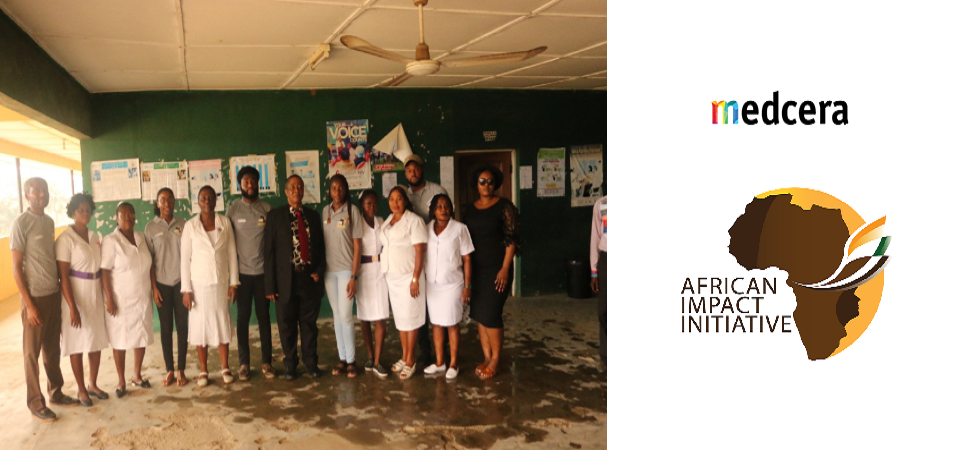
August 22, 2019 (Lagos, Nigeria) – African Impact Initiative ( www.africanimpact.ca), a non-profit organization founded by Africans in Toronto, Canada, has entered into a partnership to use Medcera  (www.medcera.com) to anchor the delivery of healthcare services it offers across Africa.  African Impact Initiative delivers healthcare innovation in rural communities by working with local healthcare professionals to provide basic care to citizens. Their recent project in Akwa Ibom State, Nigeria, focused on improving antenatal care, family planning, hypertension management, stress management, among others.

Medcera is a web-based EHR (electronic health record) system with patient portal that supports clinics, hospitals, pharmacies, health insurers, labs, and imaging centers across Africa. It offers physicians and medical professionals with practice management technology that includes charting, scheduling, e-prescribing, medical billing, and more. With Medcera, a patient manages his or her healthcare records from one single location irrespective of location. The following are core modules in Medcera:

Medcera Fusion: web-based electronic health record (EHR) software for physicians and medical professionals.

Medcera Connect: non-EHR designed for non-physicians structured for labs, imaging centers, pharmacies, dentist practices, etc making it possible for these entities to connect with Medcera Fusion.

Medcera Patient: Personal health record (PHR) system that gives patients access to their prescriptions, diagnoses and test results. Consumers can search physicians by location and specialty, and request an appointment online.

Medcera Insights: An analytic AI tool based on Medcera Fusion dataset. Real-time data provides perspective on clinical trends and helps with population health management and clinical decision support.

African Impact Initiative will use Medcera in its activities across Africa to improve healthcare delivery efficiency, reliability and positive outcome for patients.

The Founder of African Impact Initiative, Efosa KC Obano, said on this partnership, “Our team is very excited about working with Medcera to provide EHR solutions at no cost, to hospitals that can’t afford this normally. We’ll be starting off with the Cottage Community Hospital in the coming weeks. There are so many other hospitals/communities that need this across Africa, and it aligns with our mission of impacting our African community positively.”

Commenting, Medcera General Manager, Timothy Egwemi said, “We are excited on the promise of working with African Impact Initiative. We are a very innovative company with a unique technology. We remain the only EHR in the world that has harmonized patient records without risks to privacy and security. With Medcera, a patient’s health record is delocalized which means irrespective of his or her current location, care will always be delivered by healthcare professionals having access to the current pertinent health data. With AII, we are confident that we will touch more lives as our solution serves doctors, labs, imaging centers, pharmacies and indeed all key players in the healthcare sector”.

About African Impact Initiative

A non-profit organization with the mission of positively impacting the African community, through projects focused on community impact and professional development. For more, click https://www.africanimpact.ca/.

About Medcera

Medcera is a cloud-based EHR with nodes for all critical players in the healthcare sector. For more, click https://www.medcera.com/.