DD
MM
YYYY

PAGES

DD
MM
YYYY

spot_img

PAGES

Home Blog Page 6753

NGOs and Missions of Driving Socioeconomic Change

0

Value creation and influencing economic and socio-political issues are no longer the exclusive reserve of organizations involved in international profit-making business. Non-governmental organizations’  impact in creating channels for political and economic empowerment can be traced to before the founding of the internet. Contrary to popular belief, for instance, some of the first internet service providers was created by a global electronic NGO network: International Coalition for Development Action (ICDA).

NGOs (non-governmental organizations) have multiplied in number and in capacity to influence political and economic decision-making process within countries, as well as on a global scale. Many economic and political shifts the world has seen in the last decade can be traced to the activities of NGOs working in those regions in collaboration with a young generation of disaffected, educated, and sometimes unemployed individuals willing to see socioeconomic changes in their communities and their nation. As NGOs influence and impact on global socioeconomic and political policies continue to grow, so will the challenges NGOs need to overcome in breaking the ‘glass ceiling’ which governments seek to impose on NGOs. 

Sociopolitics and NGO Impacts

National and international sociopolitical movements have often placed a demand on governments and businesses to respond to unsatisfied economic and political interests of the populace. While governments have sometimes addressed these interests fully or partially in some cases, these interests have gone largely unattended to by businesses and governments in others, leading to violent reactions. Where local reactions have not been backed by NGO activities or ‘characteristics’, the agitations and interests of the people have been suppressed by force or threat. According to Peter Willetts in his article on NGO’s unique role in global governance, citizens’ growing loss of trust in institutions they rely on to protect the interests of social import has fanned a need for new mechanisms to foster social capital formation.

Many of these agitations have transformed the movements themselves to formal NGOs which present a more organized and recognized platform for the advancement of their interests before businesses and the government. More organized NGOs are able to advocate their interests and those of the communities they represent by conducting research and enriching existing databases, serving in the role of ad hoc advisory experts to policymakers, holding conferences, staging citizen tribunals, monitoring and recognizing the service of public office holders, and lobbying. At the UN, NGOs have the greatest influence on environmental policy, women’s issues, development and human rights, and can use the media and lobbying efforts on individual governments to set UN agenda, obtain UN endorsement of their policy goals, and contribute text to international treaties. 

Challenges NGOs face

NGOs are seen as the logical purveyors of norms central to the decision-making process in matters where conflicts emerge between market-driven economic efficiency and ethically bound social efficiency considerations. However, indigenous NGOs within developing countries are less likely to have the resources to act independently at national and international levels and are therefore more relevant in pushing their agenda as members of an international NGO or transnational network. When governments like those of Zimbabwe, Singapore, Russia and Malaysia criticize NGOs as ‘meddling foreigners’ their aim is to limit the activities of indigenous NGOs and global NGOs operating within the state. Also, though NGOs have permanent formal participation rights in the UN General Assembly and at special UN conferences, receiving UN documentation and debate their own agenda before the UN, they as yet have no formal rights in the strategic policy-making bodies of global economic institutions such as the World Bank, the WTO and the IMF. Furthermore, the inability of NGOs to exercise their influence in a vote at the UN can be seen as a drawback and as an advantage: their lack of democratic legitimacy as a body which advocates its own interests does not detract from NGOs’ relevance as a major player in advocating and promoting democracy and global political processes in government. 

Recommendations

Based on the foregoing, the following are recommendations for NGOs engaged in issues pertaining to global governance:

  •     NGOs must understand that they cannot effectively represent all the diverse interests of all their members and therefore cannot form an efficient collective assembly or policy-making and advisory body similar to the UN; NGOs must recognize their limitations.
  •     NGOs can improve on their efforts to enhance the free flow of information or political education among populations on local and national political issues, and economic policy making processes through new media. NGOs can organize political debates and events which bring political representatives closer to their constituents. This will stimulate a better understanding of the specific needs of communities, and illuminate the impact of policies, thereby promoting the effectiveness of government.
  •     Similar to the activities of the Commission on Presidential Debates in the US, NGOs can play an important role in giving voice to a broad constituency of people by ensuring that political debates cover all issues within a wider context and political aspirants address important economic policy issues vital to the interests of the populace prior to elections.
  •     While seeking global relevance, NGOs must remember to also focus on addressing the needs of the grassroots for development packages in the areas of formal education, food, and healthcare by providing the necessary funding and directed program assistance in rural communities.

NGOs have been known to not recognize challenges as barriers to how far their influence can reach. The elimination of the ‘sovereignty barrier’ under the 1987 agreement for the Convention against Torture reached by Amnesty International only goes to show that with time NGOs will overcome barriers to their influence and continue to champion sociopolitical and economic issues on national and international levels.

Pricing Strategy And Middle Class Numbers

0
Nigerian customers

Can we say malls make profits? Perhaps shopping plazas, what about them?

Well, they do. However, it depends on the location. This piece is particularly for those who want to start consumer businesses. I will first advise you to read my piece on the need economy. By doing that, you will have no issues flowing with this post, although I will be making reference of a lot of points I made there to establish some points here as well.

Four days ago, I went on a date with a female friend of mine. Got there about thirty minutes earlier because it was my first time meeting with her, and it is better earlier than giving excuses for coming late. It was at Chicken Republic. Got a bottle of coke, my favourite drink, and sat down. As usual, when I get to locations, malls, eateries, I look around and begin to observe what structure was put in place that make such a business established therein to succeed. It is already part of me to critically analyse strategies and structures put in place, and this has helped me become vast in my business strategy approach.

While sipping my coke, I noticed there were so many people coming in and going out. It was on a Sunday and it’s quite understandable. Yet, I tell you within my two-hours entire stay, the number of persons that must have walked will be about two hundred persons. Both single persons and families. My amazement was that I never expected that amount of people in a town like Akure. Now this is not to speak low of places, but Akure is a city full of middle class citizens. I have always complained that businesses don’t thrive in this location but I was getting a big discovery of my life.

My friend and I crossed to the other side to get to a Plaza and do some shopping as well only to realize that it was almost filled as well. I have been going to the mall but never paid attention to this but it struck me as well that the mall is always busy as well. Now, that’s another eye opener.

Immediately, I began to wonder why in spite of the fact that I assumed businesses don’t thrive, people still visit these places. It boils down to one very key factor: The middle class hold the biggest percentage in the country.

If your business is structured around the middle class, chances are that you will scale if it is a need and like I explained in my aforementioned post that a need is want that meets three basic requirements;

  1. Satisfaction
  2. Affordability
  3. Urgency.

If a product doesn’t meet these three qualities, it becomes a want. Like I said earlier, this post is directed to those people who have some amount of money and want to start businesses, you can consider delving into this line if the money is tangible and if there are limited competitors in such location. However, customers will always come. I wouldn’t dispute the fact that in a country like Nigeria, service companies make more money than product companies on the larger observation, however when it comes to consumer goods, product companies still thrive because of the fact that we have the middle class.

Entrepreneurs – Build, Thrive/Fail, Learn

0

Dear entrepreneurs,

I’m sorry to break your heart this time but you really need to hear the truth. If you have been following me well, you’d realize that I don’t do motivations. I have gone beyond that stage so if you’re new to this space, you might as well not need this piece of advice. I wrote a piece sometimes that there are three stages in entrepreneurship.

  1. Motivation
  2. Process
  3. Scaling

So, if you’re just starting as an entrepreneur, I’d recommend you listen to a lot of motivation and you can go learn from motivational speakers. However, this is for those in the next phase and I believe I already have a lot of students here which is fine. Besides, this does not only apply to entrepreneurs but employees and other professions. However, it is more specific to entrepreneurs because those are who I have chosen to lead.

I want to make your heart ready with reality about what you need to know in order not to burn out, get frustrated and probably quit. You know, burn out is like a common language in the entrepreneurial circle and people burn out for many reasons one of which is because they feel they are not getting the results they put all their efforts into. While that is true in the literal sense, it might not be true if we inspect the level of growth from the inside, and this is why this piece is to let you know that for whatever you hope to achieve within a month, have your mind ready that you will achieve it in ten months.

Before I explain my story to cement that fact, I will quickly chip in one very popular instance which is very common on social media. It’s the fact that there are any coaches all over the net claiming you can make a certain amount of money in a short time if you follow the steps they will give to you. Most times, the bait is that you will see results if you follow such actions  within weeks. While some people get lucky following those steps, I really want to lay the emphasis that an important ingredient is missing in such information which is simply the fact that the knowledge to achieve such result was not acquired overnight. Well, this is Africa, anything that sounds like getting results in a shorter time always excites us. We however neglect the fact that the mentor actually spent some reasonable amount of time to amass such knowledge that produced such results.

Here’s my point; once you subscribe for such, chances are you will fail than succeed because what you paid for was the knowledge to get the result. You actually didn’t pay for the knowledge to know what led to the knowledge that produced the result. To make it simpler, those mentors got to a point that they realized what really worked – the best knowledge to pay for. But we don’t because it is not part of the bait knowing that people wouldn’t come for it since it takes a longer time of self experiment.

Now back to my story and how it concerns you entrepreneurs. It is very wise to read books as an entrepreneur. Matter of fact, if you do not read books, chances are you will likely not succeed. What books do to you is that it gives you an eye opening of what you do not know and what you need to know. As much as books give you informative knowledge, it is entirely different from experiential knowledge.

Experiential knowledge lies in the fact that you understand what leads to the knowledge that was the right one. It’s more like you understand the whole structure of the knowledge of application which is quite good. However, it doesn’t just happen in a day. It happens overtime which is why you should not get overly excited when your idea has been put down into paper and a business model. It is different from applying. Which is why I recommend the 1 time 10 rule of business. Here’s how it simply works;

You have an idea, you have put it into paper, you have drawn all the strategies and you’re excited that in two months, you will get it done since all is set. Personally, from experience, I will set a 20 month time to achieve it and this is because despite the fact that I now have the strategies, I will still go through three core phases which are;

  1. Build
  2. Thrive/Fail
  3. Learn

You will never skip any of them and this is not me being pessimistic. You will need to repeat this over and over again till you get it right. Hopefully, within twenty months from idea documentation, you can achieve this.

If you stick with this model, you might understand what patience is as an entrepreneur, and also not pressure yourself as well as giving yourself a burn out.

How To Face and Subdue Fear

0

You remembered that time you were younger, when your friend did something bad and managed to rope you in so that you got more punishment than he received? I think that’s what fear has been doing all along. When Fear causes a problem, we blame it on greed, laziness, inhumanity and so on. Fear is a coward that hides behind other emotions to cause harm.

Fear, in my own definition, is the anticipation that something negative or bad will happen. It is an emotion, and a very powerful one at that. ‘Fear’ is a four-letter word that embodies a force that has done so many harms and has led to the death and demise of many. It is a force that can feed many other negative forces until they consume and destroy their victims. Fear is not something to toy with.

If we truly look at what is happening all over the world, we can see the roles that fear plays in them. However, I believe that to address societal problems, the problems of the individuals living within the society should be addressed first. In other words, I can only showcase ways through which fear can influence individuals living within the Nigerian society.

  1. Fear is the underlying cause of corruption. I mean, why else will those in authority steal from public coffers if not because they are afraid of poverty? And when they steal, they try to cover up their dishonesty through more corrupt practices because they are afraid of being caught, probed and punished.
  2. People go into terrorism because they are afraid of being subdued, marginalized, enslaved and annihilated. They believe that the only way their voices could be heard is by disturbing the peace of their ‘preys’. The worst thing here is that those that benefit from their actions encourage them by feeding their fears.
  3. People cheat and engage in different forms of malpractices because they are afraid of failure. Those in businesses are afraid that they may not make enough profit to keep their businesses going, so they cheat. Paid workers cheat because they are afraid of how to take care of themselves when they retire (and of course take care of their current expenses). This is the same thing with students who cheat because they are afraid they won’t get good jobs if they don’t make good grades.
  4. People hesitate to acquire more skills and improve on themselves because they are afraid of spending the little money they have on something they are not sure of. I know someone that wants to be a lecturer but isn’t willing to publish papers in journals, attend conferences and all. A question she once asked me was, “what if I spend my money on all these and still not get a lecturing job?” Honestly, I couldn’t reply to her.
  5. Fear encourages the increase in the level of unemployment and poverty in the country. A lot of people are afraid of starting their own businesses because they believe they will flop. They will rather look for paid work than struggle with their businesses. This is part of why we have a lot of unemployed youths in Nigeria.
  6. Most Nigerians migrating out of the country are doing so because they are afraid that the country can never provide good living conditions and job opportunities for them. Some of them are also leaving as a result of the fear of the security situation in the country. I know a lot of people that left the country shortly before the 2015 general elections because they were afraid that a war will break out.
  7. Fear discourages investments in Nigeria. Yes, both Nigerians and Non-Nigerians are sceptical about investing in Nigeria. Foreign investors are afraid of security, political and economic situations in the country, while local investors are uncomfortable with the ever changing government policies. Average Nigerians are also afraid of entrusting their hard-earnings to investment houses because they couldn’t envision their performance in the future. So, they would rather leave their money in the banks, where they can easily withdraw it should anything happen.
  8. From the confessions of alleged criminals that were caught by the law enforcers, one can find out that they went into crime out of fear of one thing or another. For example, robbers claimed that they went into crime because they needed the money to solve personal problems (which they were afraid they couldn’t get from any other source). It has also been discovered that people kill and maim others because they were afraid of competition.

The influence of fear on people can never be over-emphasized. There are so many of them. The ones listed above are just a few among the numerous.

Everybody experiences fear every now and then; some even see it as their drive to move higher. Though some people have learnt how to manage their fears, a lot are still struggling with theirs. It will be unwise to handle fear carelessly because it can create more problems. I believe experts should be contacted when a person feels an overwhelming sense of fear. However, the following methods are my ways of facing and subduing my fears:

  1. Meditation: This is quite a difficult task for someone who feels that he or she is in danger. Meditation, if done properly, has a way of quieting the mind and keeping the head clear. Meditation allows a person to look deep down and find out the cause of the fear and the possible solution. By the time the person comes out of it, he or she will no longer be afraid because the solution is already at hand. There are so many posts in the internet on how to meditate. Find what works for you.
  2. Vacation: Vacation here isn’t about spending so much money going to exotic places. Those that can afford that should do that anyway. You can have your vacation anywhere, so long as it gives you peace of mind. For me, anytime I feel so overwhelmed by a sense of fear that I couldn’t put a finger on its cause, I visit my hometown. Of course I face other challenges there, but it helps to keep my mind clear of whatever that was troubling me. Besides, facing other challenges from other places usually helps me handle the one that troubled me earlier.
  3. Counselling: Sometimes you don’t need to meet a professional counsellor to have your fear dissipated. This is one way electronic communication helps. I talk and chat with people who can help me send that fear away. They can be friends, relatives or acquaintances; it doesn’t really matter who they are so long as they listened to me. These people may not give me solutions to whatever problem I am facing, but listening to mine and maybe sharing theirs goes a long way to healing me. So, look for that confidante and talk that fear out of your mind. Trust me, talking does a lot of wonders.
  4. Meeting with Friends: The best thing that can ever happen to anyone is to have friends he can hang out with in times like this. These are the friends who help you to forget the pressure of life when you are with them. They are those friends who always let you know that they got your back. That is the type of friend everybody needs. I discovered this method while I was in a deep financial mess. These friends of mine have a way of finding out when I was feeling down and will invite me for one hangout or another. The good thing is that they knew my financial state and try not to hang out in places where money has to be spent. So, we targeted weddings, birthdays, housewarmings and other occasions where we have to sit, laugh and relax – at least for the moment. However, avoid ‘friends’ who will increase your problems.
  5. Networking: This is one reason why we shouldn’t lock ourselves in and wallow in the miseries created by our fears. There is a need to go out and meet people, the right type of people, that is. Meeting people help me to realise that everybody has one type of fear or another they are battling with. In other words, I will know that I am not alone in the battle. Besides, our contacts can help to give us the right information we need to help us send that fear out of the way. Most of the times, our fears are actually things that could easily be handled with the right information.
  6. Hiking: Over-thinking has its own problems – it makes the problem look so big and out of hand. But when there are physical activities, the mind seems to quieten down a bit. So, your mind just keeps reminding you of your problems, get up, dress up and go for a long walk. You will come back to thank me later (*smiles*).

In addition to all these, I’ll advise that those that have an overwhelming sense of danger should seek help immediately because delay could be deadly. Our country is not encouraging psychologists to practice their profession, yet they are released into the labour markets every year.

So, what are you afraid of? Look deep down and find out. Trust me, once a problem has been identified, its solution is already on the way. Remember, you are not alone; everyone has a battle they are fighting. Reach out to people and help will come to you.

The hustle is real.

The Feasibility of a Revolution: The Future of Nigeria is Clouded in Uncertainty

0
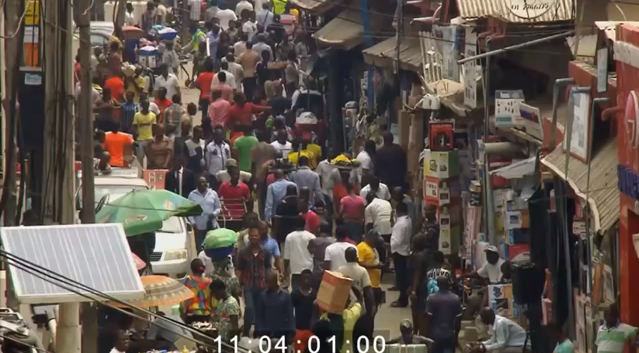
Alaba market (Lagos State, Nigeria)

On 1st October, 1960, Nigeria was granted independence by her colonial master, Great Britain. This was the time when civil rule was established in the country. However, that there were high hopes that the nation, at independence, and with civil rule and a population larger than that of the rest of Western and Equatorial Africa put together, would prove a modern experiment in Africa. Alas! This hope was dashed in 1966 following the military coup d’état of January, which led to the suspension of the Nigerian made constitution, disbandment of political parties and truncation of civil rule in the first republic. The military junta outlined corruption, poverty, political instability among others as reasons for intervening in politics. This implies that the felt the need for a fundamental change in the social structure of the country.

It is worrisome that these attempts to change the social structures of the country never ended in a rapid fundamental change in the social order of the country (revolution) but rather reformist type of change. Amidst the consciousness for a change in Nigeria, we ask why it is not forthcoming. Could it be that the factors that precipitated revolution in other continent is not in existence in Africa? If we should corroborate the view of V. I. Lenin that “revolutions are the festivals of the oppressed and the exploited………as creators of a new social order”, we still need to answer the question of whether the oppressed and the exploited are not in Nigeria or Africa. The work therefore seeks to investigate the possibility of an African revolution.

Conceptual Clarification

Samuel P. Huntington in his work “Political Order in Changing Societies” defines a revolution as: “A rapid fundamental and violent domestic change in the dominant values and myths of a society, in its political institutions, social structure, leadership and governmental activities and policies (Huntington, 1968)”. V. I. Lenin in his two tactics of Social Democracy in the democratic Revolution provides a complementary perspective, asserting that: “Revolutions are the festivals of the oppressed and the exploited. At no other time (than revolutionary periods) are the masses of the people in a position to come forward so actively as creators of a new social order.”

Both Huntington and Lenin have identified the distinctive features of social revolution, as Huntington reveals, social revolutions are rapid, fundamental and violent transformation of socio-economic and political institution. Lenin reminds us that social revolutions are accompanied by, and in part accomplished through class upheavals from below.

From the foregoing we can deduced that revolution implies the ultimate expression of the belief that is within the power of man to control and to change his environment and that he has not only the ability but the right to do so. It is this combination of thoroughgoing structural transformations and massive class upheavals that differentiates social revolutions from coups, rebellions, insurrections, revolts and even national independence movements. Huntington (1968) distinguishes among these other concepts thus:

A coup d’état changes only leadership and perhaps policies; a rebellion or insurrection may change policies, leadership and political institutions, but not social structure and values; a war of independence is a struggle of one (indigenous) community against rule by an alien community and does not necessarily involve changes in social structure of either community.

Underscoring the inevitable nature of this transformation and it characteristics, Hannah Arendt asserts that “….only where changes occurs in the sense of a new beginning, where violence is used to constitute an altogether different form of government, to bring about the formation of a new body politics…. Can we speak of revolution” (Arendt, 1963). 

Causal Factors of Revolution and The Possibility of A Nigerian Revolution

Political theorists have attempted to explain the fundamental factors that invoke revolutionary pressure. Among the factors is that: 


  • Misery breed revolution:  one commonsensical viewpoint about revolution is that “misery breeds revolution”, that when oppression and exploitation becomes unbearable, the masses will revolt against their oppressor. In the case of Nigeria in particular and Africa at large, the ruling class (the oppressor) is always bent at ensuring that they are not organized. Goldstone (1986) has aptly pointed out that “the downtrodden may be so divided and powerless that they may be unable to organize an effective revolt or they may simply hope for a better life in the hereafter. Oppression and misery have been widespread in history, revolutions have been rare.” This is so because members of the elite are united in preserving their advantages over the masses irrespective of their difference of tribe and religion. The ordinary Nigerians do not have the capacity to unite because they are burdened by poverty. The elite class has taken away from the masses their dignity, their self esteem, their pride and self worth, so that they cannot even organize”.
  • Unmanageable state difficulties: It is held that when a state faces “unmanageable accumulation of difficulties” (financial bankruptcy, famine, inter-elite conflict, war etc), the state collapses, opening the floodgate revolution. Financial breakdown whereby the state can no longer provide services yet the people pay taxes, yet provide services for themselves breeds revolution. In Nigeria the reverse has been the case, the country has and is currently experiencing state financial difficulties, yet no revolution. This is because the greater part of the citizenry are poor and as such lack the consciousness necessary for a revolution. The revolutions in France, Russia and Mexico began with severe state crisis.
  • Radical Ideas Breeds Revolution: it is held that revolutions arise when new, radical ideas shake people out of their cocoonery and accustomed lives. However, this is lacking in Nigeria. There is no revolutionary ideology that has been nationally accepted by the various nationalities and ethnic groupings in Nigeria. This hinders the possibilities of a revolution in Nigeria. One of the causes of the Bolshevik revolution in Russia was that there was an ideology, a new revolutionary movement that believed a worker-run government should replace czarist rule. The Bolsheviks had an ideology enmeshed in their slogan “peace, Bread, Land” and All power to the Soviets”
  • A Brilliant Leader:  for there to be revolution, there must be a visionary leader who is an embodiment of the revolutionary ideology. It must be noted that this leader must be from the bourgeoisie class and ready to commit “class Suicide”. A brilliant leader-a professional revolutionary with an iron will, ruthless, brilliant speaker, a good planner with one aim to overthrow the government is needed for the achievement of a successful revolution. However, it is worrisome that Nigeria has not produce such a visionary revolutionary to lead the Nigeria-African revolution. Chinua Achebe has corroborated this view when he stated that the problem with Nigeria is leadership. The Bolshevik revolution saw the like of V. I. Lenin, Chinese Revolution had Mao Tse Ton to lead, the Cuban revolution had such a visionary leader as Fidel Castro.

Problem Of Nation Building

Nigeria is a country where people support parties and candidates just because they are from their part of the country or their ethnic affinity. Issues that would generate revolution must be national in outlook accepted by the majority and conjure willingness towards action by the majority. Unfortunately this has not been the case. This may explain why all the moves by various pro-democracy groups to rebel against the military failed because the military leadership before 1999 was essentially Northern Nigeria in origin while the pro democracy groups were predominantly Southern in origin. On the other hand pro-democracy moves were against the military. But although many northerners also hated military rule joining pro-democracy movement would amount to shooting themselves in the foot. Therefore, the North did nothing, never supported any rallies in the north, while the majority of rallies were in the west particularly Lagos and the southern parts of Nigeria. The momentum generated was therefore not forceful enough to engender any major changes.

Other factors that have hindered the eruption of revolution in Nigeria (although the grounds are fertile for it), including the fact of Docility and lethargy among the population resulting from years of military dictatorship. From 1966 to 1999, several groups within the Nigerian army have forcefully seized state power and maintained same by brutal force until another move powerful overthrew the former. It means that for thirty-three years except for a brief spell in 1979, the Nigeria army has ruled supreme over the people. Their method was dictatorial and brutal. Several instances of opposition smashed by force abound, including jail sentences by military decrees kidnapping and murder of opposition and other vile and inhuman treatment of all that dared to raise a voice of opposition.

The resultant effect of these years of brutality was the mental and physical retreat of ordinary Nigerians from all acts that can be termed rebellions. In effect Nigerians are now used to tolerating all act of oppression and brutality with utmost submission. The fear of disappearing overnight have forced Nigerians to accept without resistance the acts of misrule, corruption and other vices perpetrated by the politically powerful. It is known that people of North Africa have gone on national rampage because the price of bread was slightly increased. But unlike North Africa, Nigerians can tolerate anything. Prices of food stuff and even petroleum products have gone up in price by over one hundred and fifty percent, yet Nigerians have continued to accept the burden with little resistance.

Recently, there have been signs of movement away from passivity, as was exemplified during fuel hike strike by Nigeria Labour Union in 2011. Also the crisis generated by the attempt to implementation of RUGA settlement is the most recent case. In the case of the fuel hike strike in 2011, for three days it appeared that Nigeria was going to be destroyed. But the Government read the handwriting on the wall correctly, and accepted the demands not to increase fuel prices and thus doused the inferno that was about to consume Nigeria. The government of president Buhari also suspended the implementation of RUGA settlement to douse the inferno the program was generating.  

This notwithstanding the fact that social forces will bark-up and easily bark-down is the mark of enduring lethargy. Nigerians are so afraid of the unknown that they do everything in order not to take risks. This does not mean that opposition is nonexistent, it only points to the limited organization of opposition. The fact remains that because of the exploitation, the ruling class has succeeded in wiping out the middle class who naturally would have been the brain of any revolution. Since, Nigerians now have to worry more about existential matters, revolutionary spirit has completely evaporated. The abuse that any group of people suffer is usually equal to their capacity to cushion the impact. So far, Nigeria and Nigerians seems to possess limitless capacity to absorb misrule and other political vices meted to them by their leaders, and this kept revolution at bay. The “mood” of Nigerians can best be described as subservient.

Summary and Conclusion

All said and done, the conditions for revolution are alive and well in Nigeria. It will not be easy to make predictions about possibilities of a revolution. But we can safely say that since the conditions are already determined, the Government must be careful not to ignite these by any acts of omission or commission. On the other hand, it may be foolhardy to assume that because of overriding factors inhibiting revolution that it will not occur. As we all know there are serious difficulties associated with predicting human activities.

The bottom line therefore is that Nigeria is unstable and can witness sudden revolution if correct combination of these factors rise to the fore namely: increasing Government refusal to listen to agitations, particularly from labour unions; ethnic militias and other vocal agitators, continued rise in the levels of unemployment; government’s unwillingness or inability to stamp corruption out of government business and in Nigeria generally, continued insincerity on the part of Government with regards to free and fair elections, refusal to embrace the full tenets of federalism in dealing with states in the federation, and finally, without fear or favour allow a national conference for Nigerians from all walks of life to meet and decide how they want to be ruled and indeed if they wish to remain as one country. All options must be on the table and the wishes of the majority must be upheld. Where nothing is done in line with the above, the prevailing peace will only remain temporary. The wishful thinking of one united, indivisible Nigeria will only remain an “utopia founded on myopia” (Soyinka, 2011).

On the other hand, the position that whereas, a revolution has not occurred, despite prevailing conditions, that it will not occur will be very difficult to defend. It is my belief that if nothing is done; sooner or later the unfortunate eventuality will come to pass. No matter the false sense of stability and unity demonstrated by Government and its supporters, the truth remains that Nigeria’s future is clouded in uncertainty.