DD
MM
YYYY

PAGES

DD
MM
YYYY

spot_img

PAGES

Home Blog Page 6761

How Emerging Technologies Are Transforming Logistics in Africa

4

African startups raised a cumulative $726 million last year, a 300% increase from 2017 number. Across sectors, investors are trusting entrepreneurs to redesign the architectures of African economies by using emerging technologies to improve productivity and in the process deliver huge returns. It is a Cambrian moment where startups are emerging in all forms and varieties, providing services and products, and in the process fixing market frictions even in impervious hitherto industries like logistics, healthcare and agriculture.

Indeed, across the continent, we are witnessing a transformation where ambitious and pragmatic young people, armed with digital skills and new business models, are unlocking the enormous opportunities mobile connectivity has unleashed. With barriers of entry, into most sectors, radically reduced, through cloud computing services, knowledge has assumed a premium position as a factor of production. So, from the lagoons of Lagos to the rainforests of Cape Town, from the beautiful hills of Cairo to the grasslands of Bamako, there is an entrepreneurial explosion in Africa, and it is unprecedented. Powered by microprocessors, accessed via the cloud, that knowledge is being transmuted by pieces of codes, into bold solutions, eating everything on its path.

Three decades ago (i.e. the 1990s), African entrepreneurs created most of the current new generation of banking institutions. Then mobile telephony arrived at scale in 2000s, being followed in 2010s by mobile internet. The decade of 2020s will be the digital utility decade as immersive connectivity and mobile devices will unlock new domains in commerce, across markets, as startups pursue transformation of industries. From energy to healthcare, agriculture to logistics and even financial services, Africa is being economically restructured by the combinatorial powers of digital technologies to arrange, re-arrange and make sense of atoms and bytes. I have written in Harvard Business Review the promises in agriculture and healthcare before.

Specifically, Africa’s logistics industry has been growing over the last few years, buoyed by massive urbanization, population growth, increased demand for imported finished goods, rising exports of agriculture commodities and other unfinished goods, and fledgling industrialization of most key markets. The industry, which we have estimated at $220 billion market size, is broadly divided into air, maritime, road and rail. The road logistics at $157 billion is the largest, and growing at 8% annually, with ecommerce a noticeable growth anchor.

In this sub-sector are startups like Kobo360, Lori Systems, Zido, and Copia, a Nairobi-based logistics-ecommerce combo, among others. Most of these new species of logistics companies do not own trucks, vans and the hard assets usually associated with logistics entities. Rather, they focus on building all-in-one logistics platforms that aggregate end-to-end haulage operations to help cargo owners, vehicle owners and drivers, and cargo recipients achieve an efficient supply chain framework. By doing that, they attain new logistics equilibrium, delivering higher operational efficiency and transparency while reducing overall costs. Asset-light, highly technology-enabled, from data analytics for pricing and scheduling, to GPS navigation systems for tracking, they are winning customers across the continent.

The business model is based on aggregation which Uber had pioneered for city taxies. Unlike many years ago where millions of dollars would have been required to build datacenters, today, young people with visions simply find new territories, orchestrating demand and supply, via platforms, engineered on codes, hosted in the cloud. For merchants, manufacturers, and producers, supply chain frictions are reduced as disparate systems, devoid of order, are transformed into ones fully integrated with deep visibility and transparency. Amazon AWS, Microsoft Azure and local players like Layer3Cloud make ideas to markets to happen within weeks.
Before these digital logistics startups, cargo owners like agribusiness, FMCGs, manufacturers and distributors would call agents and street urchins to look for trucks on the streets for them. With digital tools, cargo owners can now schedule trips ahead of truck positioning for loading within few hours, and from the pickup to final delivery, a cargo owner will have visibility on the trip status of their goods. And being end-to-end logistics, the platforms ensure that trucks have goods to pick on reverse trips, boosting the vehicle utilization rates which drive higher returns for truck owners and more incomes for drivers. That ability to make sure trucks do not return empty, but carry things on reverse, is why truck owners, drivers, and shippers have become fans.

These improvements, anchored on emerging digital tools, have resulted to the evolution of new industrial systems, facilitating the process of socio-economic developments. We are witnessing new domains on information exchange, and business transactions which are largely cheaper and more efficient, seeding efficiency in production and business processes at unprecedented productivity gains. It is changing supply chain which is at the heart of commerce, even as major African cities become knowledge-based economic structures and information societies, comprising networks of people, organizations and state agencies that are linked electronically, and in interdependent relationships.

As these digital logistics companies expand into rural areas, century-old agribusiness friction will go. Before now, the overriding thesis is that Africa must build local storage facilities to eliminate harvest wastes – a challenge in rural areas with no grid power. But pilots we have run in Kobo360 have shown that warehouses are unnecessary if produce can be morphed into hubs and transported to cities or factories for processing within days. With micro-aggregation connecting people, bikes and vans, linked to the macro-platform with big trucks, farmers harvest within a specific time-window, and all produce are paid and shipped out. We have removed the stress of finding new markets, empowering farmers to focus on farming, knowing that no waste is possible under Kurfman (Kobo Urban Rural Feeders Micro Aggregation Network) which also supports SMEs in urban areas to reach new markets and territories.

Yet, despite the optimistic exuberance across Africa on the promise of digital technologies, critical enablers remain sub-optimal. In the logistics sector, the number of available trucks is severely inadequate, implying that even when there is demand-supply matching, lack of trucks injects shocks at the equilibrium. It is a challenge these companies cannot fix with codes or apps, and which will require involving governments to offer incentives for more truck assembly plants in Africa towards advancing supply chain. If trucks are readily available, logistics costs will drop, especially in the rural areas, and that means welfare of many citizens will improve. Yet, the entrepreneurs are not waiting, using digital tools to pool investors together in funding new trucks to improve their businesses.  They see a positive continuum where new challenges will meet ubiquitous and intelligent digital systems as they sojourn in this 21st century Cambrian moment which is changing African economies.


People’s Bank of China Unveils A Cryptocurrency; Facebook Libra Gets A Challenger

2

The People’s Bank of China has noted that it will release its own cryptocurrency, structured to replace cash in circulation, over just generating credit: “PBOC’s intention that the digital currency would replace M0, or cash in circulation, rather than M2, which would generate credit and impact monetary policy. The digital currency would also support the yuan’s circulation and internationalization”.

The People’s Bank of China is “close” to issuing its own cryptocurrency, according to a senior official.

The bank’s researchers have been working intensively since last year to develop systems, and the cryptocurrency is “close to being out,” Mu Changchun, deputy director of the PBOC’s payments department, said at an event held by China Finance 40 Forum over the weekend in Yichun, Heilongjiang. He didn’t give specifics on the timing.

Mu repeated the PBOC’s intention that the digital currency would replace M0, or cash in circulation, rather than M2, which would generate credit and impact monetary policy. The digital currency would also support the yuan’s circulation and internationalization, he said.

In 2017, I posited that Nigeria should do this, explaining how NairaCoin would be an extension of the paper Naira under the full control and supervision of the Central Bank of Nigeria. I expect this to be the convergence for nations when it comes to cryptocurrency.

Rwanda has executed a very fascinating vision and in line with my proposal for Nigeria to have a digital currency (NairaCoin or any other name) that is tied to the Naira and under the supervision of the Central Bank of Nigeria.  In Rwanda, I&M Bank has partnered with a Norwegian fintech company, Blockbonds, to launch a blockchain-based banking application called SPENN. SPENN does digitize national currencies and makes it possible for bank customers to perform different types of cost-free transactions. It has digitized the Rwanda currency, making the Rwandan Franc the first national currency to be digitized. It also means that mobile money may fade and being replaced with blockchain digitized currency depending on how this evolves.

With this news, the U.S. Government will flash green light to Facebook Libra. Notice that China wants to take its coin international and use it as a basis for global transfer and remittance.  Facebook Libra will be laughing at U.S. Congress, understanding that U.S. Congress is hurting America by delaying its mission!

Have Accepted Invitation from Nnamdi Azikiwe University Awka for a Major Speech

5

I will be in Awka in October. Yes, I have accepted the invitation of the Vice Chancellor of Nnamdi Azikiwe University, Awka,  Prof. Charles O. Esimone, to deliver a university-wide lecture in that institution named after the Zik of Africa, a Founding Father of modern Nigeria. The podium I will mount for this specific event has been graced by Prof Barth Nnaji, Senator David Mark, Dr Kalu Idika Kalu, Prof Chukwuma Soludo, Chief Emeka Anyaoku, Bishop Mathew Hassan Kuka, among others. To have my name is that league is simply amazing.

From Awka, I will touch base in Onitsha to challenge the OMATA members who continue to thrive, creating Africa’s largest market, despite institutional challenges across Nigeria. My message to them:  band together, join efforts, push for scale to improve unit economics, and move upstream. We must create conglomerates and dominant category-king companies out of Onitsha. To do that, we must unleash entrepreneurial capitalism with the mindset of scaling capabilities over the rituals of “cultural trading”.

I like containers and am a proud member of this tradition, but we have to upgrade.

Insyt Helps Brands Make Informed Decisions By Aggregating Public Perception Online

0

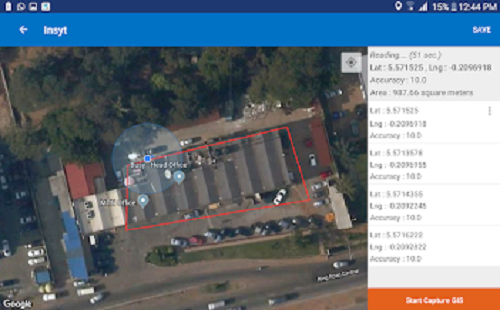
Insyt is a platform which collects data in real time from social media channels to help organizations know the public perception of their brands and allows them to keep track of conversations about them and their products in English and Pidgin languages.

No matter how small or complex your data needs are, Insyt helps you convert from inefficient paper-based systems to a simple, fast and flexible mobile & web-based platform for data collection, paper form digitization, agent management and data analysis. Reduce cost, time and errors in targeting customers and gaining visibility into your operations. Go paperless with Insyt!

Insyt helps in measuring the impact of marketing campaigns so that enterprises can know if they are truly getting value for their ad spend and interact with customers in a conversational manner to gather valuable insights.

The platform helps brands to take the guesswork out of influencer marketing and easily measure the impact of influencers on their brand online as well as connecting them with the most relevant and engaging influencers in their industry of operations. It saves marketing communications teams time to engage in further productive activities on their jobs by utilizing Keyhole to aggregate metrics, monitoring, analyzing and creating reports. 

Using artificial intelligence, it helps brands to predict how their campaigns will go in order for them to take action based on the insights.

Reputation management is very essential for organizations in this age of social media and Insyt helps them to understand the feelings of their target audience concerning their brand as well their competition online.

As enterprises organize events to promote their products or services, Insyt helps them to capture every moment and gain access to data from their guests which they can leverage in amplifying their reach during the duration of the event. Through social media monitoring, it helps them gain insights on key conversations on any subject online in order for them to understand trends and audiences in providing solutions targeted at their customers.

Increasing Nigeria’s Oil & Gas Reserves with AI and AR

0
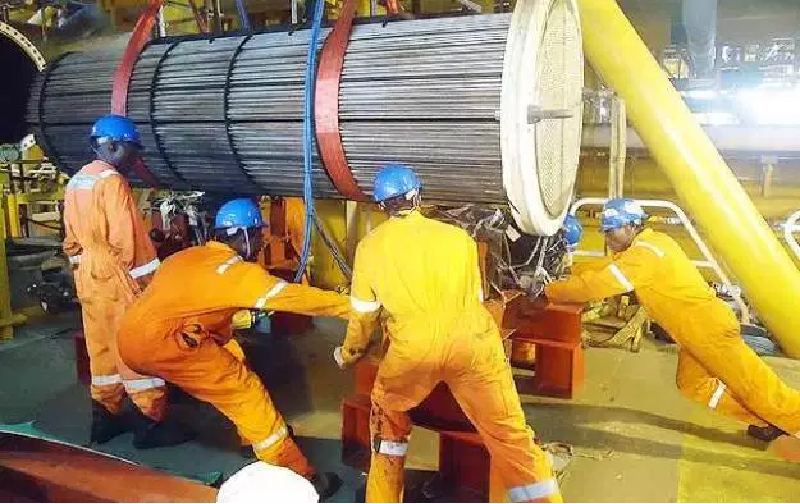
Oil workers

According to OPEC data, Nigeria currently  has the second biggest oil reserves on the African continent with 36.97 billion barrels of crude oil which is about 2.2 percent of the global total. That number is low due to a fall in rig count from 46 to 29,  and the failure of passage of Petroleum Industry Governance Bill which will help unlock more investment aimed at increasing reserves. Nigeria’s gas reserves are spread over 5,300 km3 at 188 trillion cubic feet which is three times more than  her crude oil reserves.

There are several basins within the country which have oil and gas reserves. They include Niger Delta Basin, Anambra Basin, Dahomey Basin, Sokoto Basin, Chad Basin, Bida Basin, Gongola Basin and the Benue Trough.

The Niger Delta basin has a subaerial area of 75,000 square kilometres, a total area of 300,000 square kilometres and a sediment fill of 500,000km3 with a dept of between 9-12km. It produces about 2million barrels per day, the majority of Nigeria’s oil and gas reserves at 34.5 billion barrels of oil and 94 trillion cubic feet of gas.

The Anambra Basin is a hydrocarbon rich inland sedimentary basin which covers about 3,000 square kilometres and has a sedimentary thickness of about 9km with estimated gas reserves of 10 trillion cubic feet and 1 billion or more barrels of crude oil. At Ugwuoba and Igboariam  gas fields successful exploration of gas was conducted with positive results.

The Nigerian National Petroleum Corporation has spent billions of naira in search of  fresh reserves of crude oil in the inland basins such as Chad Basin but no commercial success.  Its recent Kolmani River II Well in the Gongola Basin whose spud in was flagged of by President Muhammadu Buhari is  yet to meet its dept target of 14,200 ft sixty days after. These costs could have been less if state of the art technologies like Artificial Intelligence and Augmented Reality are deployed.

By deploying sensors and smart robots to optimize reservoir yields, Artificial Intelligence will help in identifying changes in geological formations in the basins with deep learning and computer vision, as well as predict the possibilities of them having reserves of crude oil or gas in order for operators to make fresh discoveries. It will enable reservoir modelling, well design optimization, downhole monitoring, artificial lift optimization and predictive maintenance  while Augmented Reality will showcase real time field operations in a digitized 3D format from the Remote Operations Centres to the confines of their smart mobile devices so that they understand the scenarios and take action based on the insights they have.

These two technologies and the deployment of the Blockchain by the NNPC and its joint venture partners will help in operations optimization, to achieve efficiency in meeting the 40 billion barrels reserves, as well as increasing daily crude oil production to 3 million barrels per day target by 2025. Also, it will ensure transparency since all the activities from field production to point of sale or product exports will be tracked and the data stored on a secured distributed ledger which will be accessible by only the players in the upstream value chain.