DD
MM
YYYY

PAGES

DD
MM
YYYY

spot_img

PAGES

Home Blog Page 6784

Ways to Conquer Your Fear

0

In this piece, I’m going to be sharing few tips with you on how to face your fears and surmount same. 

Typical of my approach when making such piece as this, much as I find it quite discomforting, often try to leverage on my personal realities and experiences to give effect to my message. 

I’m a very shy fellow. But that’s not the problem. I dread phone calls; easily get freaked out and uncomfortable with phone calls, especially when the conversations are taking longer than normal. Maybe until lately, were I to be subjected to serious job interviews via phone calls, would possibly fail to secure the job, on this account. Interestingly, I used to think it was a problem peculiar to me but I have come across few other people who suffer from the same ‘disorder’. I’m not alone after all (smiles). 

So back to my issue. There was this awkward event that happened sometime back. My mother in-law being so nice and amazing, always wanted to talk to me for long, but perhaps she observed that each time she called, I’ve always sounded agitated and kind of wanting her off the phone too soon on each occasion. She read me right! She would later jokingly raise it with someone close asking, “Is it that this dude is afraid of me, or just a phone-call shy fellow?” It was that bad for me. 

Now here is how I’m facing my fear in this regard and surmounting same. I call people close to me more often than I used to. Even in the face of discomfort, I intentionally drag my conversations longer in order to train my mind to take the pain. Like it’s often said, you either take the pain of discipline or the pain of regret. There are no two ways about it. And trust me, I’m getting better at this. I think, no longer get as much freaked out with calls as before. Though, I still prefer text or whatsapp messages to phone calls. 

Petty and small as this personal story might be sound, I should believe you now have an idea of the direction of my today’s piece. 

Putting things in clearer, what is fear? In my view, fear is any feeling of emotional discomfort or agitation in response to a threat of pain, danger, failure or harm. We all know how painful and agonizing it is to fail at something dear to our hearts. The pain that comes with disappointment. The pain that comes with ridicule and public ignominy associated with failure. The pain that comes with not living up to public expectations, misplaced and unnecessary notwithstanding. The pain of business failure. The pain of electoral loss. Fear does arises not out of an activity nor our incapacity to do same, but largely, out of consequential pain. We dread the pain that comes with taking a line of action.

We are not afraid of marriage per se, but the loss of absolute freedom and privacy that ‘singlehood’ avails us; the fear of the several unknowns associated with that union of two distinct personalities. We do not really fear going for an exam, but for the pain of negative outcome of such exercise. We do not really fear pulling the job plug and starting our own business, but for the pain of business failure. We do not really fear taking up that new job, but for the pain of getting to the new work environment, only realize that it’s a terrible place to work. We get agitated not out of fear in itself, but the pain, danger and the harm we could suffer if we take a wrong course of action. Beyond the aforementioned, we all have fear for petty something too. It could be fear of death, flying, driving, public speaking, or phone calls like myself (smiles). 

Frankly speaking, fear is nothing but that beautiful prison we carefully put together right in our heads. If we can master the pain of failure, frontally face the danger and harm associated with a course of action, fear becomes meaningless. We all often get to certain stages in our lives when we need to take decisions. Critical decisions. But then, we hold back for fear of the unknown. Fear of dealing with pain of public judgements. Fear of failure. As a risk management professional, I think am at vantage point to say that comfortable inaction or indecision, on many accounts, is riskier than doing what needs to be done per unit of time, even if the outcome turns out negative. 

Now let’s be clear. I’m not saying, we should blindly delve into risky adventure without having a full clarity about the rewards and consequences of failure thereof. No, the point is, your fear is nothing but your self-built prison. Or what do you say of someone who for every misfortune, s/he believes some village people or step-mother somewhere is after him/her? I’m by no means saying there are evil eyes, though. 

Now how do we overcome our fears? I will suggest few points here: 

One. Get a Grip of Your Life Purpose

Many of us are existing, and not living. Life isn’t about those basic life functions that animals themselves are privileged to enjoy anyway. Every living being eats, sleeps, works, and have fun, somehow. We all do all that. A life not driven by purpose will always be in fear of nothingness. Since you have no clarity around your life purpose, there’s tendency that you have difficulties trusting anyone. You will likely build your life around societal hearsays and superstitions. Go to remote villages and see amazingly brilliant minds, but held down by societal limitations, lack of education and superstitions.

Two. Stop Letting Your Past Control You

Most things we dread so much are products of our past experiences, and justifiably so. But past failures, disappointments and let-downs are meant to serve as lessons and a watershed for future actions that produce better outcomes. We just need to let go of the pain of the past in order to forge ahead for a better future. Many years ago, I almost got drowned while swimming. That experience still hunts me till today. I dread taking ferries. I dread swimming. I need to let go of my past hurt too. Not letting go of past experiences have ways of negatively shaping one’s risk appetite.

Three. Always Look at the Bigger Picture

When you have tendencies of shortermism (i.e. always looking for immediate benefits), fear will often and most likely hold you back in many critical decisions. When we are self-seeking, we tend to be short-sighted. Short term benefits might look tempting, but they often come with long-term benefit loss. Same applies to fear of temporary failures. Temporary failures might sometimes just be the launching pad we need unto greater things, but fear of going through the pain again, selfish as it might be, often time derail our thought process from seeing the bigger picture. Ever heard of Deferred Gratification? Do not allow failure at early stage of your academics, career or business hold you back. Bad decision (earlier informed by facts) is far less costly than comfortable inaction. Look at the bigger picture.

Four. Get a Grip of the Situation

When you’re caught between two terrible choices or you’re caught in crisis (be it career, academic, business or even marital), that’s the exact time to never lose yourself to fear. At that point, you are perhaps vulnerable and most unlikely to think straight, and yet you might have limited time to take certain decisions. On many occasions, uninformed fear contributes largely to the pain and discomfort we feel when in trouble. When in crisis, many of us get drenched in fear and endless lamentations and hopelessness. Take an instance of someone diagnosed with a terminal, but manageable ailment. Having hopeless thought driven by fear could easily worsen his/her case. However, with positive spirit and right frame of mind not driven by fear and lamentations, s/he is likely to live a longer and healthier life. When in fear-some fix, get a grip of your situation and take the plunge. Face your fears, frontally. Learn to live with your troubles. Face them like a boss!

Five. Take the Plunge

We all have those petty fears we possibly laugh over. I earlier gave you an example of my deep-seated fear for swimming or any form of water transportation. I’m personally encouraged by this piece, to go out there, take the plunge and eliminate this fear forever. You see, we become bolder and more determined at dealing with more critical life issues when we make deliberate effort to tackle little fears, we often take for granted. And now that’s my challenge to you. Take on that little fear you joke about; take the plunge and get over it with.

Rapidly Changing Form of Learning and How Africa is Being Left Behind

0
Never stop learning, business owners

Few years ago…

ME: Excuse me sir, why are we still trying to memorize conversions in this course. We have Google to help us do that anytime any day.

If I travel to China today and I needed to buy a kilogram of meat there and I have Naira, all I have to do is check Google to know the conversion rate to Yen.

So why is the major part of this course about how to convert from one unit to another and another?

{the whole class laughs}

PROFESSOR: He asked a good question everyone. However, young man, it is essential you know all these in your head as a physicist, should in case someone asks you in an important interview in the future.

Well, this happened in my final year in school, and I’m still trying to wrap my head around the answer I was given to see if it was tenable enough to have a course in order to memorize conversion units.

While I might understand that it is important to know the conversion units by heart, it is however a better approach if we had a lot of practicals which lead to calculations where these conversions will be done. That is a more effective approach.

But you see, this is Africa where we are just so used to the status quo and also conventional way of things that we do not see a need to change and evolve. If you ever suggest this in Africa, you are termed a rebel.

Now, let’s talk about the internet and see its bright side because we have gotten accustomed to the negative use, and it has been the language on the lips of our African parents that they discourage people from using the internet.

They are not happy when their kids or children say he or she works online, spend all day with a laptop.

Like I said, that is Africa for you. A quick hint about myself and how I was able to totally build myself to a reasonable level in self business strategy, content marketing, social media strategy, content writing. I built myself professionally thanks to the blessing of the internet.

While I might not want to talk about the fact that I didn’t learn anything in my undergraduate days despite the fact that my grades were speaking of being a second class upper, I feel I could have learnt something better if I sat at home to learn physics (a specialized part) in the space of five years online.

Now, before you jump on the comment section to educate me on how you learn better in school, I will say it doesn’t apply to everyone; so my case is just one in 3 real life scenarios anyways.

Now, that a lot of you are done with school and probable working, are you aware that the internet is the fastest place to get very relevant information and even very quality education?

If you are not, I really don’t know how you check for country time zones if you have an online meeting with someone in another country with different time zones of which I have countless times.

This is Nigeria and Nigeria is in Africa, a lot of us spend so much on internet monthly despite it’s expensive rate.

I spend at least N5,000 (five thousand Naira on internet subscription monthly) and I spend it on YouTube, LinkedIn, Facebook, Medium and Whats-app.

I learn a lot and network on all these platforms. A lot of you also do the same. It keeps you up to date with the knowledge of the real world and makes you stay relevant with the world of work and mind you, you can only be relevant in the world of work if you have updated knowledge.

The question I have been asking myself for 1 year and 5 months now is that; why hasn’t the African educational system incorporated it yet? Why?

There are some things that are better learned online, seen online than sitting in a classroom for hours to learn.

Conversion rates are better googled than made a course, the 20 elements are better made assignments to be googled than made a course to write an exam for.

We are spending so many years in school in Africa and the result is poor. Thanks to a lot of information that can be easily learnt online or even irrelevant ones that are still made courses.

Universities in other parts of the world now have online platform for distant learners and also as a medium for students to update themselves with the knowledge, and remind themselves what they were taught.

I think that is a pretty good idea.

If Africa wants to develop, it needs to implement technology in the educational system, and we can see the continent has not chosen that development path. Quite sad anyways. Do we wait on the government to build it for us?

Well, yes! However, with the type of government we have, that will take decades; so someone else has to build it.

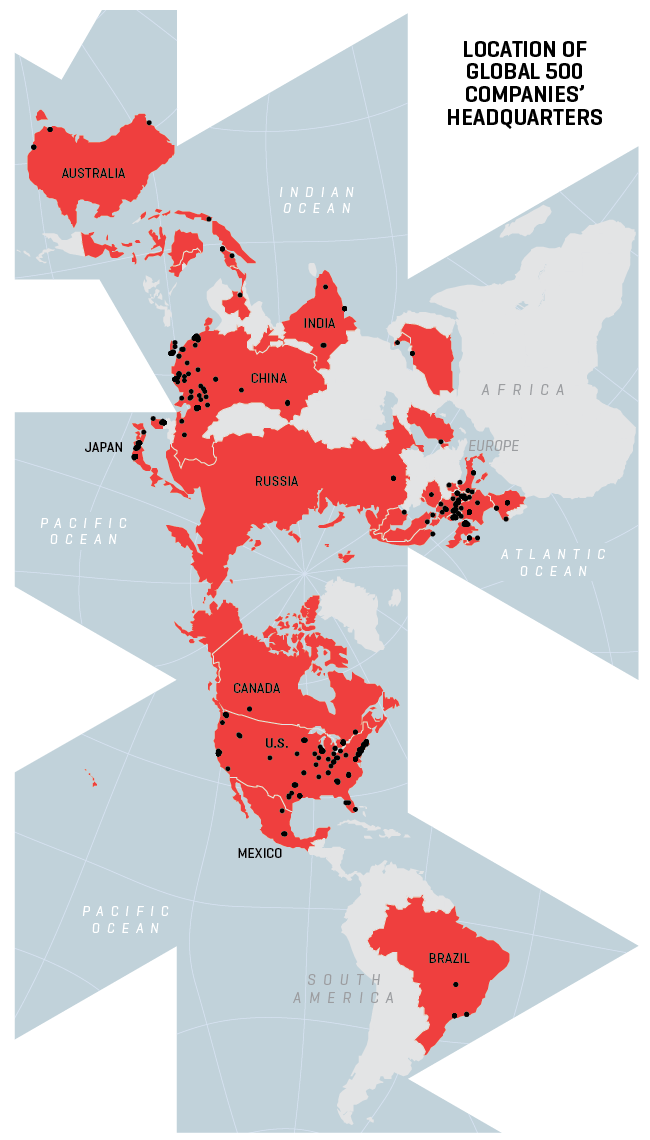
China Takes The Baton, Overtakes U.S. in Fortune Global 500

2

This is how Fortune magazine introduced its latest Fortune Global 500, the largest companies in the world by revenue:

“As the Chinese Century nears its third decade, Fortune’s Global 500 shows how profoundly the world’s balance of power is shifting. American companies account for 121 of the world’s largest corporations by revenue. Chinese companies account for 129 (including 10 Taiwanese companies). For the first time since the debut of the Global 500 in 1990, and arguably for the first time since World War II, a nation other than the U.S. is at the top of the ranks of global big business….It’s true that Chinese companies’ revenues account for only 25.6% of the Global 500 total, well behind America’s 28.8%. But that’s to be expected. China is the rising power, economically smaller but growing much faster.”

Yes, there are more Chinese companies than U.S. firms in the 2019 Fortune Global 500. Also notice that Fortune has called it the “Chinese Century”. As I always write, it is all China from here:”China now accounts for a whooping 42% of global commerce – more than France, Japan, the U.K. and the U.S. combined.”


The Challenge as Nigeria Restricts Sale of Forex for Importation of Milk

0

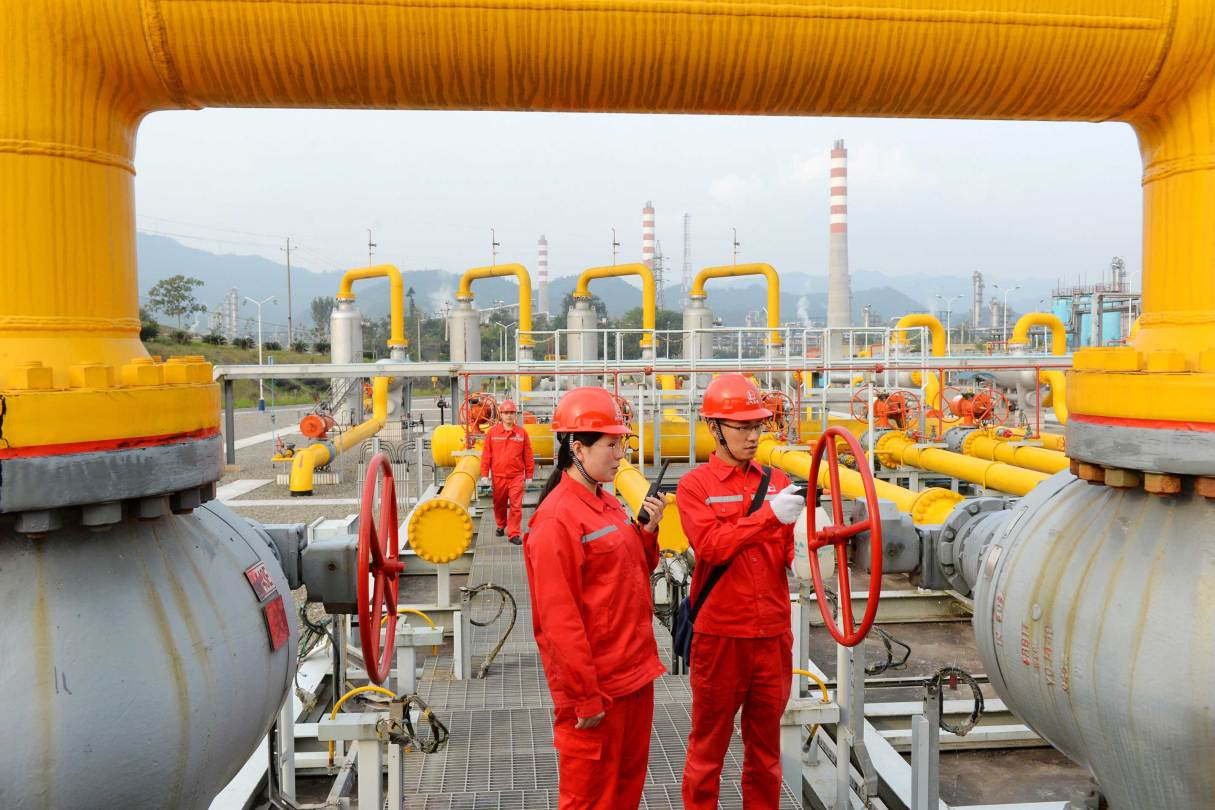
The Central Bank of Nigeria (CBN) has added milk to the list of items that their importers have been restricted from accessing Forex. It was a decision that did not go down well with many. The development was so unwelcomed especially in the social media that CBN has to issue a statement to clarify and defend its decision.

“For the avoidance of doubt, milk importation is not banned. Indeed, the CBN has no such power. All we do is to restrict sale of forex for the importation of milk from the Nigerian Foreign Exchange.” A statement issued by the Director of Corporate Communications, Isaac Okoroafor, said.

But the Nigerian people did not buy the message, their reaction is that milk is an essential food item that most people can’t do without, restricting access to forex for its importation is tantamount to a ban. A decision that will only increase the chances of malnutrition in a country where poverty reigns supreme.

Although the CBN stated that the decision dated back to 3 years ago, when the policy to encourage backward integration to conserve foreign exchange and create jobs for people were formulated. The policy which has seen some 43 imported items blacklisted on the Nigerian forex was aimed at fostering local production of the imported goods. And there has been provision for soft loans by the Apex Bank to encourage that. It doesn’t matter, people are skeptical about the timing, some saying the CBN is looking for an idea that will justify RUGA.

There are also claims that Nigeria doesn’t have the capacity to produce sufficient milk that will bridge the gap emanating from the restriction. First of all, Nigeria has little of the kind of cattle that produce milk, secondly, the NLTP that will create the enabling environment for milk production has not been implemented yet. Nigeria produces about 600, 000 tonnes of milk yearly, but the consumption rate is at 1.7 million tonnes which leaves a deficit gap of 1.1 million, which importers are filling with over $500 million in forex yearly.

So the conflict of interest that has been created by this policy cannot be ignored, and the alternative to businesses affected is farfetched. A fact that the CBN acknowledged in its statement.

“While we are aware that some of our policies may hurt some business interests, we are thankful to Nigerians for the buy-in and intense interest in the policies of the CBN.”

There have been only a handful of companies who took interest in this policy, the existing ones are struggling due to infrastructural issues. So the issue doesn’t depend on soft loans alone, the enabling environment that will facilitate the success of this policy is lacking, and cannot be provided by the investors who need more than they have for milk production. They include:

  • Difficulty in land acquisition.
  • Climatic variations – high temperature and irregular rainfall.
  • High cost of power generation.
  • High cost of processing equipment.
  • Limited storage facilities.
  • Poor road network.
  • Low cost of imported products.

It certainly appears that the CBN focused on the last on the list and decided to eliminate it without giving consideration to other hurdles on the list. A study conducted by PwC on Nigerian Dairy value chain in 2017, noted that Pastoralists account for an estimated 95% of the total dairy output, but only a small percentage (around 15%) of these small farm producer’s milk is collected by formal processors, limiting the amount of milk available for processing.

This is a result of open grazing that has, in most cases kept Pastoralists on their feet. Moving from one place to the other has minimized the collection of milk products by processors, which in turn has resulted in high importation of powder. It has also become cheaper to import powdered products from Australia, India, New Zealand, Ukraine, South America and Europe, due to infrastructural deficiencies in Nigeria.

The report also outlined some steps to be taken to achieve adequate production of milk in Nigeria. One of them is ‘breed improvement’ that has so much to do with the kind of cattle that yield milk, which are not common in Nigeria. The steps outlined by PwC, (which includes addressing the above mentioned concerns) if implemented will take about ten years to yield results. And the Nigeria’s booming population will likely widen the demand gap before then. So the government’s partnership with companies like FrieslandCampina WAMCO and Arla Foods will likely help, but not to the extent of bridging the speedily widening gap.

The culture of banning goods and services as a way to encourage local production has done more than hindered competitive market. It has become a source of sorrow and smuggling without providing the needed alternative.

The recent decision by the CBN to add milk to the list of “No Access” to the Nigerian Foreign Exchange has reasons to give Nigerians concern. The 43 other items on the list have not made convincing difference to win the people’s trust that it’s going to work out fine for everyone. And the over 100 on the list of banned products have not resulted in improved local production to the satisfaction of the needs.

Milk is a daily household food item that its scarcity may result in nutritional deficiencies. Especially, in a time of food crisis when basic meals are luxury. And being a perishable product, the concern that whatever plan the government has to develop a sustainable value chain for milk production will never be attainable without stable power supply. So the focus should have been on facilitation of amenities that will enable local production of milk, not the easy decision to remove it off the list of Nigerian Forex.

Business of The Future and The Future of Business in Africa

0

The business of the future will be markedly different from the business of the past.

It will be an evolutionary hybrid of economic socialism and idealistic capitalism.

The business of the future will combine new technologies with humanness and spirituality, almost making it look like a sacred pursuit, which actually it is.This is already happening. 

I’m just bringing some bit of attention to the aspiring innovator and entrepreneur and also to the government of the day to help them redesign their strategies and policies.

From time immemorial, work has always been the major defining factor of a man’s sense of worth and wellbeing. Where else do people seek and  find self-esteem, self value, regard, sense of fulfillment except in their work?

How else are people’s values measured except by what they do?

As we advance into a higher universal consciousness fired by individual awakening and the advent and deepening of innovations in communication and transportation technology, coupled with knowledge-economy, changes in how we do business are sweeping across the world and affecting most areas of human life, including our concept of social culture and governance.

Africa cannot risk being left behind.

Nations are beginning to look less like geographical entities and more like apps that are upgrade-able and if they refuse to upgrade, one day they might stop working!

Same for businesses too!

Below are a few of my thoughts about the future of business and the business of the future:

  1. The business of the future will not see workforce as employees but as strategic partners.
  2. It will not see market as customers but as community.
  3. It will not see other businesses as competitors but as strategic co-creators and coaches in the journey to business success and innovation.
  4. The business of the future will seek to empower partners and communities not through salaries and corporate social responsibilities but through sharing and collaborations.

The Sharing economy will come into a balance with a new Caring economy and people will corporately and professionally seek the objective good of their local, immediate, and larger partnerships and communities, not just to provide market platforms for the sharing economy.

Let us just say we might begin to see an objective combination of Sharing economy and Caring economy in businesses to give us what we might coin as a SCharing Economy!

Already the new technologies such as artificial intelligence, cloud computing, block chain technology, cyber security, quantum computing, internet of things, nano-factories, etc are giving possibilities to a world that seemed impossible until now.

The concept of financial prosperity has been shifting with every radical innovation that comes on the scene. We have seen company growth trajectory drastically reducing in time due to these technological innovations and innovations in social and business practices.

The growth level that usually took companies 10 to 20 years to arrive at in the past is now taking less than five years to happen.

Well, on the downside, the failure speed also increased!

We are coming to the end of the concept of scarcity and poverty with each new discovery and innovation.

Cryptocurrency might not have fully matured yet, but the possibilities inherent in the innovation can single handedly change the idea of creating money as a means of exchange by lifting it out of the hands of the governments and cartels of this world, into the hands of every individual!

We might be returning to the future day of everyone being his own goldsmith!

Innovators such as Alex Machinksy, CEO Celsius Network, one of the developers of VOIP (Voice Over Internet Protocol) technology have already begun daunting projects of using cryptocurrency to disrupt the conservative and sartorial banking industry and open the way for technology (not government) to bridge the gap between the rich and the poor. 

He plans to achieve this by harnessing the  decentralization feature of the blockchain technology in cryptocurrencies to free up capital and get monetary power out of the hands of those at the ‘top’.

We are in the age of possibilities raised to the power of infinity with technology and mind-power as the only limiting factors!

Government cannot afford to remain stolid, stuck in the old model and continue with how they run, especially the governments of Africa.

Each waking day more people have interactions in their virtual internet communities than with their immediate and geographical environment.

From business to social activities, software is taking over territories in the minds of people and we know the power of mental psychology with regard to this cyber warfare.

These are strange concepts whose time might seem unripe for many in African countries but they are worth paying serious attention to.

The fact is that the world is entering or has entered a new phase of human consciousness. That phase is such that the intrinsic human qualities such as care, empathy, intuition, sense of limitlessness, sense of brotherhood, value for life, etc are heightened and are seeking expressions in the daily lives of people.

People desire that their individuality be recognized. They no longer want to be identified with the nondescript crowd. Rather they want to be felt, regarded, treated as an individual and given a bit of autonomy to perform and be appraised.

The workplace organizational system is agitating for a change from hierarchical to relational-functional structures. Structures that will give much room for exponential productivity and win-win reward systems.

While resistance from the old and established circle is strong, change is the only constant thing in the world of man.

The age has shifted.

It is an age of rich and diverse creativity in human activities including entrepreneurship, investment, ownership and interaction.

Cost of education is getting far cheaper everyday with many MOOC (massive open online course) platforms springing up daily, billions of downloads go on nearly each day of free information.

Business designed only to get people to pay for just a service rendered are fast losing their competitive advantage. People are asking communities that give them social value first.

With many innovators, creators, producers and entrepreneurs giving away for free their informational products and services, the model for business revenue and profit is being revisited.

With companies such as Xiaomi,  the Chinese smartphone maker, making product innovations  possible through crowdsourcing by leveraging its community of about 100 million fans, the game of business is decidedly transformed as we write.

What many aspiring creators should be doing is to be playing catch-ups.If you must survive it, you have to flow with it.Learn to think sharing, caring, connecting and collaborating from new perspectives as the radical business concepts that might help you in the coming economy.

In summary, the future of business and the business of the future is being shaped by new technologies and techniques on one side, and a new level of awakened human consciousness signified by heightened sense of self worthiness, and connectedness with others and the global environment.

Therefore governments, policy makers and entrepreneurs especially in Nigeria and Africa should borrow a lesson from the dinosaur which went extinct because it refused to change.

Things will never remain the same for all times.

The last word is: go-with-the-flow or go extinct!

The future is here and now.