DD
MM
YYYY

PAGES

DD
MM
YYYY

spot_img

PAGES

Home Blog Page 6789

The Triple Burden of Food Security in Africa

0

A critical look at many developing countries and emerging economies reveals that we are currently experiencing what Food and Agricultural Organisation calls Nutrition Transition. 

Over 60% of the population are youths. That means lifestyles are becoming more urban, disposable income is increasing with foods and drinks becoming more instant, and  energy-dense and diets containing more instant processed foods, sugar, fats and animal products. 

The result is a triple burden of food security. While a part of the population does not have enough of what to eat, another part is either malnourished, undernourished and deficient of essential nutrients, while others are overweight.

The current approach of focusing on the primary production, especially at the farm level, may not sufficiently curb food insecurity in Africa. About 2 of every 5 foods produced from the farm never make their way to the dining table, as they are little or no value-addition to the produced food.

What are my recommendations?

Equal attention should be given to post Harvest Technology as much as the production technology. Investment should be made on the standard storage, transportation and logistics systems. Value addition should also be encouraged and greatly regulated to ensure that processed foods are not completely deficient of the essential micro nutrients.  

Fresh food consumption should be encouraged and made readily available, accessible and affordable by developing our cold chain systems to ensure quality food from the point of harvest to the retail outlets. 

This is a massive opportunity for private sector investment. If we must achieve zero hunger by 2030, the role of private sectors cannot be over emphasized.

Recruiters Should focus More on the Adaptability Quotient (AQ)

0

”The truth of every Job Seekers is in the Adaptability Quotient (AQ).” – Gaile Sweeney.

Take it or leave it. Been a job seeker, I realized that, the résumé doesn’t represent everything about the job seekers. That is, only information like accomplishments and successes are mostly found on it leaving out some interesting information about job seekers’ rollercoaster ride during the job search journey that is highly commendable.

The next application or subsequent interview with no real commitments can never be overlooked. The trials, their lows or challenges that no one knows about.

Note: The trials to land a job is equally important as much as the accomplishments on the résumé.

During hiring exercise, recruiters or hiring managers always place their emphasis on schools attended, the accomplishments attained at a particular place or time, the intellectual ability to handle situational and organizational problems and how past-behaviours can predict future-behaviours for the job.

Remember that, Hiring Managers, no matter how brilliant or intelligent, name it, can never know the Adaptability Quotient (AQ) of job seekers. Not even a résumé will tell you about it.
Yet the Adaptability Quotient (AQ) remains one of the key factors in determining how a job applicant can fit into a dynamic work environment. It also shows how capable they are able to adjust to changes and embrace more forward-thinking ways of working in technological innovations.

The fact that a job seeker can cope with weeks, months or years of unemployment, is down to having a strong ”Adaptability Quotient” (AQ). The Harvard Business Review described it as, ”the new competitive advantage.”

During the interviews, recruiters are more interested in the past of a job seeker in order to determine or forecast if he/she can be an asset to them in the future.
The real past includes: a career gap, accepting a lower position or title, or taking a lower pay.

Adaptability Quotient can be cultivated to reap significant rewards. A job seeker should use the period of unemployment as the time to take a risk and build courageously. According to a Clinical Psychologist, Meg Jay, she refers to this as creating “Identity Capital.”

She defines “Identity Capital” as a collection of personal assets—a repertoire of individual resources that are assembled over time, basically, how we build ourselves—bit by bit, over time.

The fact remains, some identity capital goes well on a résumé – while others are more personal. For example, where a job seeker comes from, how he solves problems, how he redefines the kind of work he does to make ends meet, or taking on a lower paid job and the lowering of self-worth.

“Job searching is not where you lose yourself but rather where you find yourself.” – Gaile Sweeney.

A quick question for hiring companies;
Does the job seeker have the adaptability nature to fit into your organization?

Remember, employers change, new employees come on board, and some work activities will shift in a continually evolving work environment, but an organizational AQ remains a natural by-product of individual AQ.

A quick question for job seekers also – Are you willing to redefine your current career path for what is essential for your future career?

Learning to adjust to life without work may be one of the most crucial phases of your life.

Let’s face the truth without mincing words. Jobseekers, your real story is your AQ.
How far are you going with the trend?

It’s time the hiring managers put more value in the adaptability quotient above every other thing.

Get your CV well written and structured at www.gailesweeney.com


*Drawn from a post by Gaile Sweeney

Brain-Computer Interface (BCI) Technology and its prospects for Nigerian Entrepreneurs

0

Have you watched the movie Robocop? It’s about a half-machine half-police man enforcing the law. He was built via the implantation of artificial limbs in his body controlled by his brain. Other examples of this technology include Dr. Octopus in the movie “Spiderman”. There is also “Iron Man”, “Edge of Tomorrow”, and “The Matrix”. These movies clearly explain (motion pictures) how humans can make use of artificial exoskeleton basically controlled by the brain.

This technology is called a brain-computer interface (BCI). Its also called other names including a direct neural interface (DNI), mind-machine interface (MNI), etc. It is a pathway of direct communication between the human brain (slightly enhanced) and external devices. In a dummy’s explanation, it is that technology that is connected to and controlled with your brain.

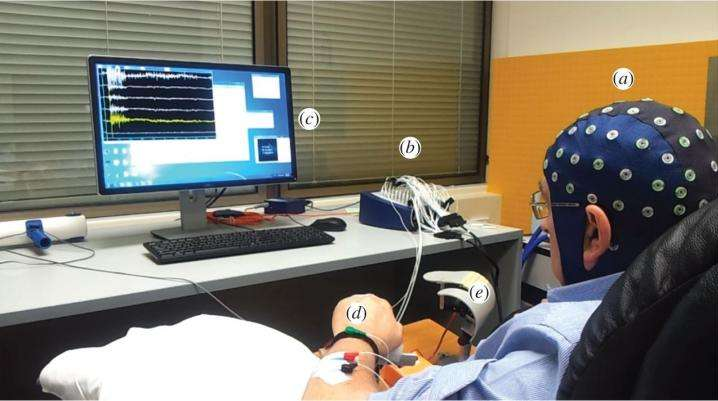
BCI technology started with Hans Berger’s discovery of what is called Electroencephalography often called EEG in 1924. EEG is all about the recording of the human brain activities. Further research was done by other scientists with a focus on brain potential and control directly connected with the EEG discovery which has now transformed into BCI. Imagine the possibility of the ability to control computer functions or machines with your brain.

Now the simple concept of BCI and why it works is because of how our brains are wired. The human brain is filled with neurons and nerve cells connected to each other via dendrites. So whenever an action is performed like walking, talking, remembering, it means the neurons in the brain are working. They are small signals, electric signals, that move from neuron to neuron. All these signals are usually backed by ions in each neuron.

Over the years, scientists have done a series of research to be able to identify these signals and interpret their functions. Afterward, these signals can be directed to an external device. However, this technology is far from being perfect as there is still a serious challenge in the mechanics of the interface and how to ensure its safety for application towards humans. Though it has already been tested successfully on rats.

How Nigerian entrepreneurs can key into this technology

It is no doubt that Nigeria has fallen off the tracks when it comes to economic advancements and wealth resource management (crude oil). However, just like every “age”, we are at the doorstep to the technological age where everyone has a chance to dominate. Build the right technology and you are a winner. Thank goodness for Data Science Nigeria (DSN) and the Artificial Intelligence Hub in Lagos. This means we are on the right track to breeding the next generation of data scientists and AI experts.

Our entrepreneurs have failed to take advantage of the smartphone emergence (China did) but we can take advantage of the distant future – BCI. The immediate future of smartphones is holograms and VR. Our entrepreneurs (tech founders/scientists) aren’t ready for these yet. But with proper funding and commitment, we can be ready for BCI.

When the time comes, Nigeria can successfully turn the table from being a developing nation to a developed nation by planning towards a distant future tech. I see a future in this path as a moment of rebirth for Nigeria.

How to Raise Entrepreneurial Giants of the Future in Africa

0

In this piece, I will be sharing with you a few tips on how to raise financially savvy and entrepreneurial kids. Before going deeply into this subject of discourse, let me admit to few points.

Entrepreneurship isn’t meant for everyone. There should be no pretense about that. We do not all need to be entrepreneurs or business owners to be successful in life. Entrepreneurship involves some brutal psychological price or pains that not many people were raised or genetically made up to bear. 

Much as I admit to these points, need to also state that the future of jobs (given current skill-sets we all have) doesn’t look really bright. In not so distant future, Artificial Intelligence (AI) and robotics are going to render a whole lot of people jobless. This is even when the world population growth rate doesn’t seem to be slowing down.

Preparing our kids towards this future through entrepreneurship training from an early stage of their growth is the best pathway forward, I think. Also we must broaden their minds beyond the limit of our aging national curricula. Many things we currently teach our kids at schools today are perhaps not relevant to their future. Jack Ma, the founder of Alibaba shares similar sentiments.

I do believe that entrepreneurship, to a large extent, is not a DNA thing. Neither is it a preserve of any tribe or race. The skills, the values and the mindset underlying it are teachable, especially from early stage of one’s growth. In my view, overprotective parents are less likely to raise kids with independent and entrepreneurial mindsets. 

In view of the aforesaid, below are some of the ways, as suggested by Peter T. Mayer on Quora, to raising new entrepreneurial giants for the future:

First. Teach them the value of money at the very early stage of their growth

Try to hold back on some of your kids’ demands. Buying everything your they demand of you doesn’t make you more caring than other parents who try to help the kids manage their expectations. Sometime make them earn what they want. You can achieve this by giving them certain deliverable target as a precondition to buying them the requested gifts.

Second. Teach them responsibilities

Teach them that they are responsible for their own things and certain things need to be done by them, each with own actionable results. Let them see that for every wrong judgement, there’s a consequence. More importantly, teach them the virtue of taking responsibility for their actions. This is the only way to breed children that don’t grow up to become buck-passers and blame-game addicts. Entrepreneurs don’t blame ‘village people’ or witches for their woes. They boldly face the consequences of their wrong judgement in business decisions.

Third. Teach them independence

Let them do things alone. Dad and mum, calm down. You were not with them in the womb, yet they survived. Let your kids grow on their own terms. Don’t be overprotective. If a kid is not in the mood to smile, don’t force it. If s/he’s not willing to crawl before walking, don’t force it. There is no rule that says every child must crawl before walking. This is one beautiful lesson I learnt from my daughter.

Dear parent, it makes no sense if your son/ daughter has to call you for concurrence or validation before taking every single decision. Let’s stop breeding weaklings. One key virtue of entrepreneurship is independence of mind and thought.

Fourth. Teach them the virtues of hard work

Sometimes, get your kids to help you out on your office work or certain business commitments (provided no confidential data breach is involved), and reward them. Let your kids have a feel of what you do and the stress you go through, to give them the comfort they are enjoying. Let them see how hard work pays. If they help you fix some business or work-related issues, reward them with some token. With that, the subtle message you’ve passed is “Entrepreneurship comes with pain of hardwork and ultimately huge reward”.

Fifth. Teach them the concept of sacrifice

Let your kids know that to reach a goal in life, they might have to give up some comfort and make certain sacrifices. Let them experience it first-hand that nothing comes easy. Make them give out some of their own things (money, clothes etc.) to the needy. Teach them the habit of letting go what has been lost. Get them to give out something to get what they want. Let’s stop breeding self-entitled and the-world-owes-me brigands. Entrepreneurs don’t have entitlement mentality. They give to get.

Sixth. Teach them virtues of perseverance and competitiveness 

Engaging your kids sports and martial arts is one important way to bringing the virtues perseverance and competitiveness out of your kids. Now let’s get this straight. Getting your kids to learn these sports wouldn’t rob them of their career desires (that’s even if you’re not the one imposing a career choice on them). Not every kid will turn out to be C. Ronaldo or Serena Williams. Getting kids involved in sporting activities helps them appreciate the pain of perseverance and the turf of competition involved in life pursuits. 

Entrepreneurs are resolute people in times of pain and troubles. They don’t fear competition either.

Seventh. Help your kids grow their creativity

Let your kids create things with little or no influence from you. Help your kids provoke their creative thoughts. Give them some make-believe life problems to solve, without interrupting with their thought process. Get them to do some seemingly impossible tasks at their own pace and freewill. Only provide them a guide. Allow your kids to explore the works of arts in a way that would help trigger their creativity at the early stage.

Eighth. Get your kids to learn the habits of saving and investing

Teach them basic investment options. Let them know that great people don’t spend an income they’ve not received. Let them know that great people don’t borrow to fund bogus life style. Get them to learn the habit of deferred gratification. Instant gratification mentality breeds greed and lack of vision. Teach your kids how to dream and see beyond the periphery.

Finally, let your kids know failure is normal

I do understand the need to sometimes pressure our kids to get the best scores and come first in exams and competitions etc; but to be a successful entrepreneur, a kid need to be taught how to handle failure and not be let down by it. Let them know that failure doesn’t mean an end of the world. Don’t treat your kid like prisoner because s/he fails in school test or job interviews. Don’t call them failures, or good-for-nothing entities. Don’t undermine or emotionally run your kids down on account of failure.

However, much as it is very normal to make mistakes and encounter failure in life pursuits, let your kids know that mediocrity is never an option. Entrepreneurs are prepared to make mistakes, but they don’t intentionally make stupid decisions. They don’t sit by and watch things happen. They make things happen.

Let us raise a new set of entrepreneurial giants for the future. 

How To Start a Profitable Business With $0

2

Financial constraints have always been the reason for many to transform business ideas into reality. Many business ideas have become dead or imaginary due to the lack of funds.

They say half a loaf of bread is better than none. But in a country like Nigeria, half a loaf of bread is not even available. With the rate of unemployment on the rise, and a crippled economy in a developing country like Nigeria, it has become a mission impossible to raise capital for business. Sourcing for funds in the bank has always been the alternative but today, it is becoming a big ask.

Banks ask for collateral that becomes difficult for a young entrepreneur to meet and therefore killing his entrepreneurship passion. Some entrepreneurs who managed to source for funds in the banks find it difficult to pay back due to the high interest placed on the acquired loans. Research shows that most businesses run by loans from banks hardly survive past the first two years.

Entrepreneurship has always been the only recommended solution for a crippled economy in any nation. Developed nations like America, Germany, England, and France are great examples of this fact. Most successful entrepreneurs come from these nations.

However, there are many businesses that do not really require a huge sum of money. In fact, there are some do not even require any capital.

”Yes, you can start a business with $0”, said the CEO of Zido, Samuel Akinniyi Ajiboyede.

He further said, ”most of our franchise partners started with no money and they make over $3000 per month (over 1,000,000 Naira).”

How is that possible in an underdeveloped country like Nigeria that has a price for almost everything?

”It is simple. Become a Zido Franchise Partner.” – Samuel Akinniyi Ajiboyede.

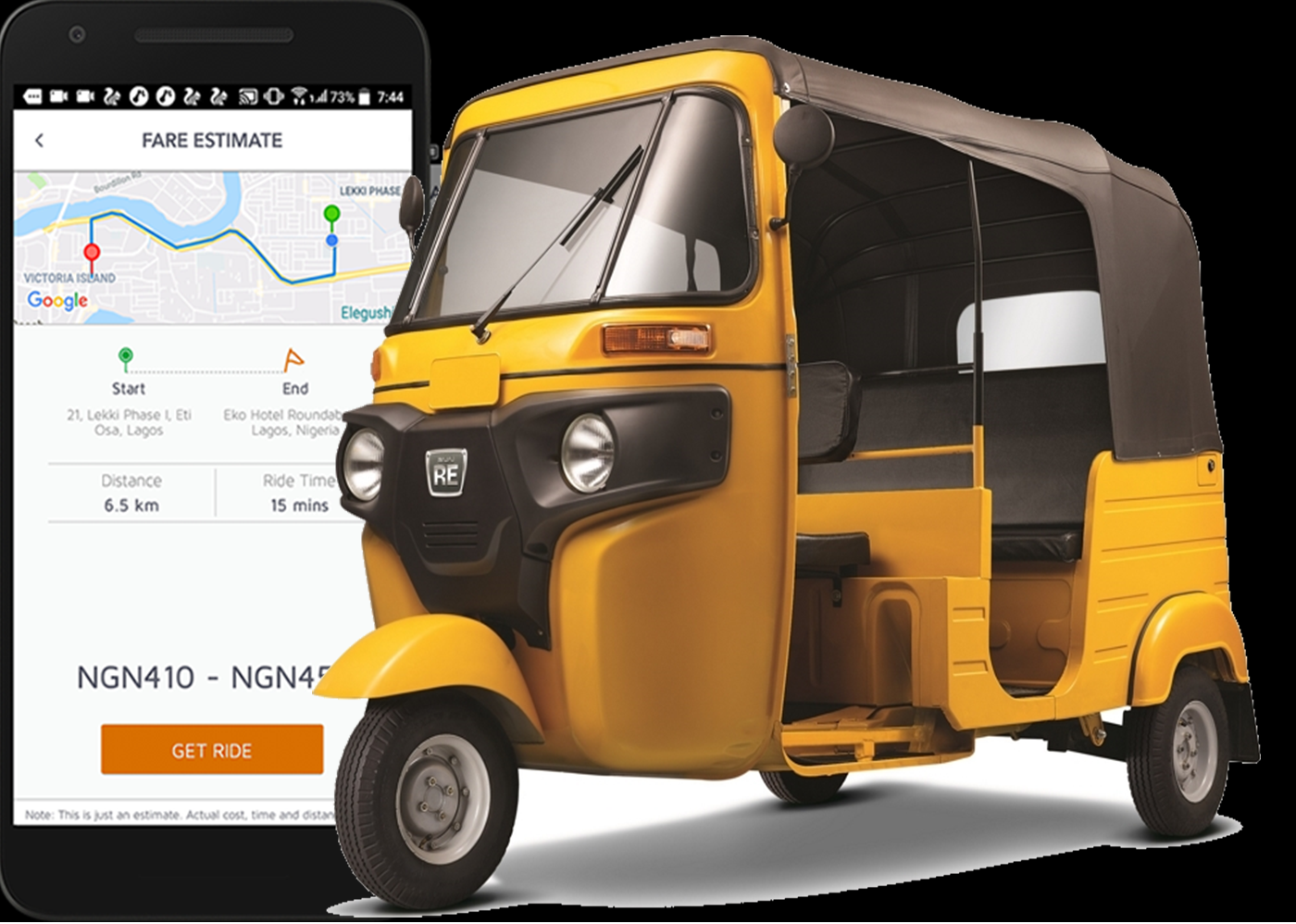
Zido offers you the opportunity to earn money per trip as a franchise partner.

Join the Zido Community and run your own Keke Taxi Rides business in your city. You don’t even need to own a Keke. Zido has recorded a huge success rate from its franchise partners in Lagos, Kano, Enugu and other states across Nigeria.

How can you become a Zido franchise partner?

Follow the four steps below:

  1. Get a fleet of tricycles, at least 20 tricycles
  2. Register them on the Zido platform as riders.
  3. Ensure that these drivers are always online and they receive requests from customers.
  4. Every driver is to make a minimum of 10 trips per day.

Benefits of being a Zido Franchise Partner:

  1. Earn extra income on every trip made by drivers under your fleet.
  2. Enjoy free adverts on activities in your location as a franchise partner.
  3. Get support and access to free mechanical services at our service centres in your location.

Log on to www.zido.co and register to start enjoying these benefits.

Indeed, ignorance is not an excuse in a court of law. Likewise, it should not be a reason for being poor.

Let us all go Zido as Keke go digital.