DD
MM
YYYY

PAGES

DD
MM
YYYY

spot_img

PAGES

Home Blog Page 68

Eurozone Inflation Surges to 3.3% As Energy Shock Raises Pressure on ECB to Hike Rates

0

Eurozone inflation accelerated sharply in August, driven by a renewed surge in energy costs linked to the war in Iran and disruptions around the Strait of Hormuz, putting the European Central Bank in a difficult position as it weighs another interest-rate increase.

Headline inflation rose to 3.3% in August from 2.9% in July, reaching its highest level since September 2024, according to a flash estimate from Eurostat on Tuesday. The increase was largely driven by energy, with energy inflation accelerating to 14.3% from 10.3%.

The data mark a significant reversal for the euro area’s inflation trajectory. Europe, a net importer of energy, has been particularly exposed to the disruption in global oil and gas markets since the Iran conflict intensified and shipping through the Strait of Hormuz became constrained.

The increase in headline inflation came even as underlying price pressures showed some moderation. Core inflation, which excludes energy, food, alcohol and tobacco, eased to 2.4% from 2.5%.

That gap could give the ECB some room to argue that the latest inflation spike is primarily an energy shock rather than evidence of a broad-based acceleration in domestic prices. The risk for policymakers, however, is that prolonged energy costs begin feeding into wages, transportation, services and consumer prices more broadly.

Financial markets were already heavily pricing an ECB rate increase at the central bank’s September 10 meeting. LSEG data showed traders assigning a 98.9% probability to a 25-basis-point increase, which would take the policy rate to 2.5%.

The ECB raised its key rate to 2.25% in June, its first increase since 2023, as policymakers responded to renewed global inflationary pressures associated with the Iran conflict.

The latest inflation figures could strengthen the case for further tightening, but they also expose the central bank to a difficult policy trade-off. Raising rates to contain an externally driven energy shock risks weakening demand at a time when higher financing costs are already weighing on households and businesses.

“The ECB faces a dilemma: a trade-off between higher interest rates and economic cost,” Joe Nellis, head of economic research at MHA, said. “Higher borrowing costs will continue to squeeze heavily indebted households, weaken housing markets and make investment more expensive for businesses.”

For companies, particularly smaller firms, the combination of higher energy bills and more expensive credit could create a double squeeze. Businesses that are already absorbing elevated operating costs may have less capacity to invest, hire or expand if borrowing costs rise further.

“For SMEs in particular, another increase in financing costs could mean investment plans being indefinitely postponed or abandoned altogether,” Nellis said.

The energy component is likely to remain the critical variable for the ECB. The Strait of Hormuz is a major transit route for global oil and liquefied natural gas supplies, meaning any prolonged restrictions could keep Europe’s energy costs elevated even if underlying inflation continues to moderate.

That creates a particularly difficult policy environment for the ECB. Monetary policy can weaken demand and prevent temporary price shocks from becoming entrenched, but it cannot directly increase the supply of oil or natural gas or reopen disrupted shipping routes.

The key question for investors will therefore be whether the August increase proves temporary or begins to broaden into the wider economy. If energy prices remain elevated long enough to push up services and wage growth, the ECB could face pressure to maintain or extend its tightening cycle. If the energy shock fades while core inflation continues to decline, policymakers may have greater scope to limit further rate increases.

For now, the August data have shifted the inflation debate back toward the ECB’s familiar problem: how to contain renewed price pressures without imposing additional damage on an economy already facing higher energy costs and tighter financial conditions.

OpenAI Denies Apple Trade Secret Claims, Says iPhone maker Is Attempting to Use Litigation to Slow Its Expansion into Consumer Devices

0

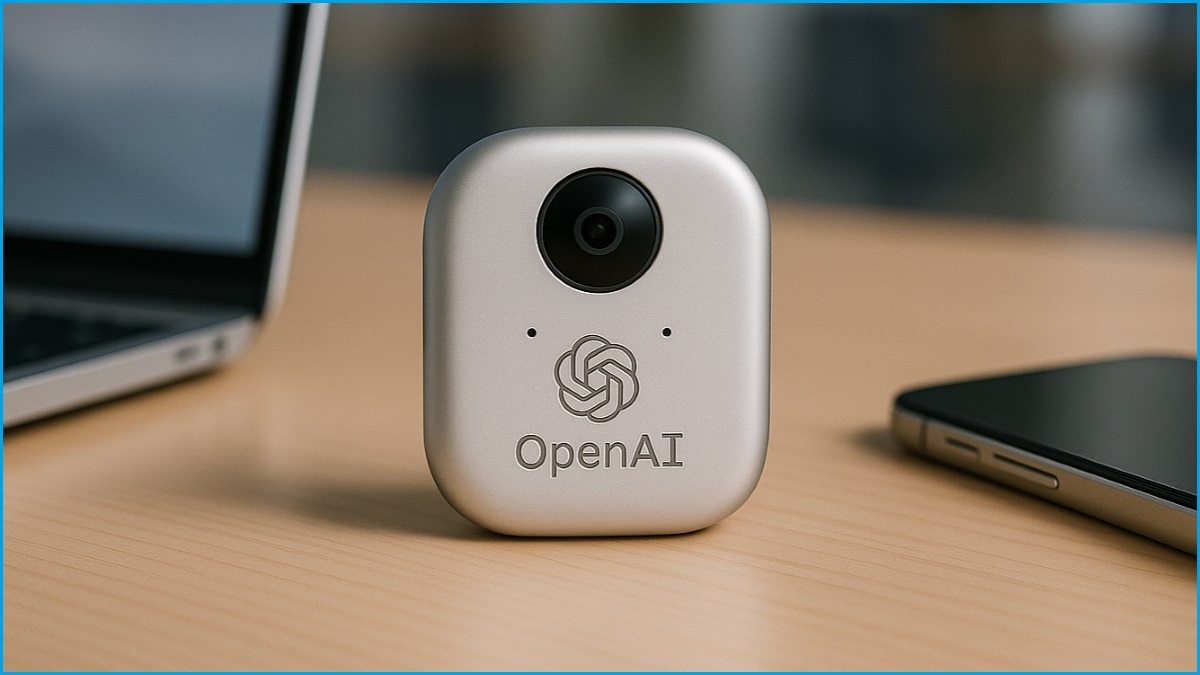
OpenAI has rejected Apple’s allegations that it stole the iPhone maker’s trade secrets,, arguing that Apple has failed to identify confidential information that was misappropriated by former employees who joined the ChatGPT developer.

In a filing late Monday in U.S. District Court in San Jose, California, OpenAI described Apple’s lawsuit as the product of the company’s own internal procedures and accused it of trying to discourage employees from joining a growing competitor.

“This dispute is a mess of Apple’s own making, and it is trying to blame everyone else,” OpenAI said in the filing.

Apple sued OpenAI and former Apple employees Tang Tan and Chang Liu in July, alleging that they misappropriated trade secrets involving hardware design, manufacturing and supply-chain operations as OpenAI expands into consumer devices.

The case has opened a new front in the rivalry between the two technology companies, whose relationship has deteriorated sharply since they announced a partnership two years ago. Apple had integrated ChatGPT into parts of its ecosystem as it sought to strengthen its artificial intelligence capabilities, while OpenAI has increasingly moved toward developing its own consumer hardware.

OpenAI said Apple is now attempting to use litigation to slow that expansion and discourage its employees from leaving for a potential competitor. The companies have disclosed in court filings that OpenAI has hired roughly 400 former Apple employees for its hardware initiative.

At the center of the dispute is whether former Apple employees improperly retained or used confidential information after joining OpenAI.

Apple has alleged that Tan and Liu accessed internal company files after leaving Apple. The company has also presented new evidence concerning Liu, alleging that he accessed a power-converter circuit schematic while working at OpenAI and used proprietary Apple information to train an AI agent in March 2026.

Apple said the evidence emerged from a MacBook that OpenAI provided to the company on August 21 as part of the litigation. Apple is seeking to accelerate discovery, which would allow the parties to obtain and examine additional documents and other evidence.

OpenAI, however, disputes Apple’s characterization of the conduct.

The company said California law permits employees to move between competing companies and argued that Apple’s own procedures made it difficult for departing workers to separate personal information from company documents clearly.

According to OpenAI, Apple encourages employees to use personal iCloud accounts to access work documents and perform their duties. It also argued that Apple’s practice of immediately escorting departing employees from its premises can leave little time for them to return devices, transfer files, or complete the handover of responsibilities.

Liu said in the filing that any access to Apple documents after his departure was intended to help former colleagues locate files or answer questions relating to Apple’s work. He said Apple employees continued contacting him for assistance after he left.

Tan, who worked at Apple for 24 years, said he returned Apple prototypes before departing and retained only materials that were not confidential, including an employee departure checklist.

OpenAI said Apple’s objections to employee departures do not establish that trade secrets were stolen.

“Employees can leave a company like Apple that has struggled to adopt AI and move to an exciting startup that builds innovative products,” OpenAI wrote. “Apple may not like those choices. But it cannot claim those choices are unlawful.”

The dispute has drawn significant attention because OpenAI’s hardware ambitions could eventually place it in more direct competition with Apple. OpenAI has been assembling a substantial hardware team and pursuing consumer devices designed around its AI systems, potentially challenging Apple’s position at the intersection of hardware, software and consumer technology.

The hiring of hundreds of Apple employees has also given the dispute a broader competitive dimension. OpenAI recruiting engineers and executives with experience in Apple’s highly integrated hardware operation can accelerate its effort to build devices. For Apple, the departure of personnel with knowledge of its hardware development processes raises concerns over the protection of proprietary information.

Apple has sought to frame the issue as more than ordinary employee mobility. Its latest allegations focus on whether confidential technical information was accessed or used after an employee moved to OpenAI.

OpenAI, meanwhile, has sought to distinguish lawful recruitment from unlawful use of trade secrets and has argued that Apple’s internal document-management practices complicate its claims.

The court will ultimately have to determine whether Apple can substantiate its allegations and establish that protected information was improperly acquired, retained or used. OpenAI has separately asked the court to dismiss Apple’s lawsuit, arguing that the products it is developing are “entirely new.”

Foreign Investment Returns to Germany as UK Capital Surges

0

Germany’s investment landscape changed dramatically in 2025, as foreign investments into Europe’s largest economy increased by around 50% year-on-year, according to the German Economic Institute (IW).

Behind the headline growth, lies a more complicated story: Britain is becoming an increasingly important source of capital, while American companies are showing signs of retreat. The flow of money into Germany may be rising, but its direction is changing.

For years, the United States has been one of Germany’s most important foreign investors. American corporations have built manufacturing plants, technology operations, financial businesses and research facilities across the country.

Reinforcing the economic relationship between Berlin and Washington. Yet in 2025, that commitment weakened. US investment declined at a time when Germany was already confronting slower industrial growth, elevated energy costs, geopolitical uncertainty and intensifying competition from China.

Into that changing landscape came the United Kingdom. According to IW, the surge in British investment helped compensate for the decline in American corporate commitment.

UK investment in Germany skyrocketed, turning Britain into a particularly important contributor to the country’s foreign-investment revival. The shift is significant because it demonstrates how capital can redraw economic relationships even when political and commercial circumstances are unsettled.

Money, after all, rarely moves without a reason. For British companies, Germany remains an enormous industrial marketplace at the heart of continental Europe. Its advanced manufacturing base, highly skilled workforce.

Infrastructure and access to the European single market continue to offer strategic advantages. Although Brexit transformed the UK’s relationship with the European Union, British businesses still have powerful incentives to maintain a presence within Europe’s largest economy.

For Germany, the arrival of foreign capital offers something more valuable than a number on an investment chart. It represents confidence. Foreign investment can bring factories, jobs, technology, research capacity and new supply chains.

It can strengthen regional economies and help companies finance expansion at a moment when domestic conditions remain challenging.

Germany has faced difficult questions about its industrial competitiveness, particularly in sectors such as automobiles, chemicals and energy-intensive manufacturing. Fresh international capital could therefore become part of the answer.

Yet the changing composition of investment also carries a warning. A 50% increase in foreign investment sounds unequivocally positive, but aggregate numbers can conceal structural weaknesses.

If rising British investment primarily compensates for declining American participation, Germany may be experiencing not simply an investment boom but a redistribution of investor confidence. The question is whether this new capital represents a durable transformation or a temporary response to changing global conditions.

The answer will matter greatly. Germany is attempting to reinvent its economic model while navigating an era defined by geopolitical fragmentation, technological competition and the energy transition.

Attracting foreign capital will be essential, but so will creating the conditions that encourage investors to stay. Regulatory certainty, competitive energy prices, efficient infrastructure, skilled labour and faster permitting processes will increasingly determine where international companies choose to place their money.

The 2025 figures therefore tell a story larger than Germany alone. Capital is searching for stability, opportunity and strategic access. As American investment cools and British investment accelerates, the map of corporate commitment is being quietly redrawn.

Germany remains a powerful economic destination, but the investors arriving at its gates are changing. In that movement of capital lies both a vote of confidence and a reminder: in the global economy, investment follows opportunity—and opportunity follows the countries willing to create it.

Nvidia Invests $3.5 Billion in MediaTek as Chip Giant Opens AI Infrastructure to Custom Silicon

0

Nvidia is investing $3.5 billion in Taiwan’s MediaTek as the chip giant deepens a strategy of embracing custom artificial intelligence processors that could otherwise threaten its dominance of the data center market.

The investment will give MediaTek access to Nvidia’s NVLink Fusion technology, enabling chips developed by MediaTek and its customers to connect directly with Nvidia-powered AI infrastructure. The partnership is designed to allow cloud providers and AI companies to deploy their own custom processors alongside Nvidia GPUs within the same data center systems.

The deal comes as some of Nvidia’s largest customers, including Amazon, Google, Microsoft, OpenAI and Anthropic, are developing proprietary AI chips to reduce their dependence on Nvidia’s expensive and highly sought-after GPUs. Rather than resisting that shift, Nvidia is positioning itself as the infrastructure layer that connects different types of processors.

The strategy allows customers to develop specialized chips for particular AI workloads while continuing to rely on Nvidia’s networking, software, and rack-scale systems.

“Nvidia is an AI infrastructure company,” Dion Harris, Nvidia’s senior director of HPC and AI hyperscaler infrastructure solutions, told reporters on Monday. “We expanded beyond pure computing chips years ago.”

The partnership therefore matters beyond the size of Nvidia’s investment. It represents an attempt to make Nvidia’s technology the common platform around which competing processors operate.

NVLink Fusion allows non-Nvidia chips to communicate at high speed with Nvidia processors. That could give hyperscalers greater flexibility to introduce custom accelerators without having to abandon Nvidia’s broader data center architecture.

“Basically, every cloud, every model builder is deploying our platform in some shape, form, or fashion,” Harris said. “So by MediaTek being able to offer this extension to its customers, it allows them to standardize on the rack-scale infrastructure across their AI factories.”

For Nvidia, that is an important distinction. The company may lose some of the computing workload to custom ASICs, or application-specific integrated circuits, but it can still capture value from the surrounding infrastructure.

The approach also helps explain Nvidia’s expanding investment activity across the AI ecosystem. The company has increasingly backed businesses that could become customers, partners or complementary suppliers within its platform, creating a model in which Nvidia’s capital helps expand demand for the infrastructure it sells.

The MediaTek investment comes shortly after Nvidia announced a similar expansion of its relationship with Amazon Web Services. AWS plans to deploy an additional 2 million Nvidia GPUs and integrate NVLink Fusion into its infrastructure, although that agreement does not include a direct Nvidia investment in AWS.

MediaTek brings a different advantage to the relationship. The Taiwanese company has extensive experience designing specialized chips for smartphones, automobiles, wireless communications and consumer electronics, and has been expanding into custom data center silicon.

MediaTek said in June that it expects its custom data center ASIC business to generate $2 billion in revenue in 2026. Nvidia’s technology could help the company compete for a larger share of the rapidly expanding market for custom AI accelerators, particularly as hyperscalers seek processors tailored to their own workloads.

The opportunity is growing because AI companies increasingly need different types of computing for training, inference, and specialized applications. Instead of relying entirely on a single general-purpose accelerator, large technology companies can combine GPUs with custom silicon designed for specific workloads.

That creates a potential opening for MediaTek while also giving Nvidia a way to remain central to systems in which its own chips are no longer the only processors.

“This is really about opening up this ecosystem to the entire MediaTek customer base,” Harris said.

The partnership extends beyond data centers. Nvidia and MediaTek will continue working together on DGX Spark, Nvidia’s developer-focused desktop AI computer, as well as the RTX Spark initiative aimed at consumer AI PCs.

The companies are also collaborating on software-defined vehicles and automotive AI. MediaTek’s automotive platforms use Nvidia RTX graphics technology for intelligent vehicle cockpits and work alongside Nvidia’s Drive AGX platform for autonomous-driving workloads.

The broader strategy reflects Nvidia CEO Jensen Huang’s effort to turn the company from a supplier of high-performance GPUs into a much broader computing platform spanning data centers, PCs and vehicles.

“AI is transforming every computing platform, from the world’s largest AI factories to the PC and the car,” Huang said. “Together, we’re building platforms that bring NVIDIA accelerated computing to new markets and give customers the freedom to create differentiated AI systems at enormous scale.”

The challenge for Nvidia is that the same strategy designed to preserve its dominance could also accelerate the development of alternatives to its GPUs. If custom silicon becomes more capable and widely adopted, Nvidia will need to ensure that its networking, software and rack-scale architecture remain indispensable even when customers use processors supplied by competitors.

Industry analysts see the MediaTek deal as an indication that Nvidia is betting that controlling the architecture around AI computing could ultimately prove as important as controlling the processors themselves.

OpenAI Says ChatGPT Ad Business Reaches $1bn Annualized Revenue Run Rate As IPO Plans Take Shape

0

OpenAI said Monday that advertising on ChatGPT has reached a $1 billion annualized revenue run rate less than 200 days after launch, giving the artificial intelligence company a rapidly expanding source of income as it prepares investors for a potential initial public offering.

The milestone highlights the speed at which OpenAI is attempting to diversify its business beyond subscriptions, enterprise contracts and usage-based API revenue. The company said advertising now represents a “material share of the business,” although it did not disclose the actual revenue generated by the ad operation over the period.

“Advertising is one pillar of OpenAI’s diversified business model, alongside consumer subscriptions, enterprise offerings, and usage-based APIs,” the company said.

An annualized revenue run rate is based on current or recent revenue levels projected over a full year. It does not mean OpenAI has already generated $1 billion in advertising revenue since launching the service.

The rapid expansion of advertising could become an important part of OpenAI’s investment story as it prepares for a possible IPO. The company is facing enormous computing and infrastructure costs as it expands its AI models and services, making the development of multiple high-margin revenue streams increasingly important to its long-term financial model.

OpenAI’s move into advertising was once viewed as unlikely. Chief Executive Sam Altman had previously expressed reservations about introducing ads into AI products, arguing that the model could create incentives that undermine the user experience.

“Ads plus AI is sort of uniquely unsettling to me,” Altman said at an event at Harvard University in May 2024. “I kind of think of ads as a last resort for us for a business model.”

The company has since moved ahead with advertising as it seeks to turn ChatGPT’s enormous consumer audience into a larger commercial opportunity.

The expansion puts OpenAI in competition with an established digital advertising industry dominated by companies such as Alphabet and Meta Platforms. ChatGPT, however, gives OpenAI access to a different type of consumer interaction, with users directly communicating their needs, interests, and intentions to an AI system.

That creates significant potential value for advertisers, but it also raises questions about how commercial messages can be integrated without undermining user trust.

Anthropic, OpenAI’s rival, has repeatedly attacked the advertising model. Its Super Bowl campaign mocked OpenAI’s decision by depicting an AI assistant turning user conversations into opportunities to deliver emotionally targeted advertisements.

Altman described the campaign as “funny” but “clearly dishonest.”

The controversy illustrates the central challenge OpenAI faces as it commercializes ChatGPT: advertising could provide a substantial new revenue stream, but poorly designed ads could weaken the trust that has helped make the chatbot one of the world’s most widely used AI products.

OpenAI said ChatGPT advertising is now available in more than 40 countries. On Monday, it is also launching a self-service advertising platform across India, Europe, the Middle East and North Africa, allowing businesses to participate in the system without relying entirely on direct sales arrangements.

The company said its next phase will include more markets, advertising formats, campaign objectives, purchasing options and measurement tools. It also plans to explore ways for businesses to interact with consumers more directly within ChatGPT.

IPO Puts Pressure on Growth And Monetization

The advertising milestone comes as OpenAI weighs a public listing that could take place as early as this year, although the company has indicated that an IPO is not imminent.

The company is under increasing pressure to demonstrate that its extraordinary user growth can translate into sustainable revenue and eventually profits. AI development requires substantial spending on computing infrastructure, chips, data centers and model training, making revenue diversification a central part of the business case for investors.

OpenAI has also been narrowing its product focus. In recent months, the company has shut down or scaled back ventures including Sora, its short-lived short-video-style AI application, as it concentrates resources on its core AI business. At the same time, OpenAI has experienced senior executive departures, including Chief Operating Officer Brad Lightcap, adding another layer of scrutiny as the company moves toward its next stage of growth.

The $1 billion advertising run rate therefore represents more than a milestone for a new business line. It provides OpenAI with evidence that ChatGPT can generate commercial value from its massive consumer audience without relying exclusively on subscription payments.

However, analysts consider OpenAI’s ability to expand advertising while preserving user trust and maintaining strong growth across its other businesses as the bigger test. If it succeeds, some believe that advertising could become a significant financial pillar alongside subscriptions, enterprise software and APIs, strengthening the company’s revenue profile ahead of a potential public-market debut.