DD
MM
YYYY

PAGES

DD
MM
YYYY

spot_img

PAGES

Home Blog Page 680

Top 3 Explosive Presales Poised for 200x ROI—Ozak AI’s Near-$2M Presale Shows It Could Outperform Solana & Shiba Inu

0

Early-stage presales present one of the most lucrative opportunities for investors looking for massive returns. With some projects already showing signs of explosive growth, here’s a look at three presales currently capturing investor attention, each with the potential for 200x ROI or more. The most promising of them is Ozak AI ($OZ), which will outperform even such industry leaders as Solana (SOL) and Shiba Inu (SHIB).

1. Ozak AI: The AI Meets Blockchain With Real-World Benefits

Ozak AI is a new blockchain project merging predictive artificial intelligence with decentralized infrastructure to deliver real-time financial insight—tailored for both everyday investors and institutions. It uses advanced forecasting models—like ARIMA, neural networks, and linear regression—paired with a secure data pipeline (the Ozak Stream Network, or OSN) to feed these predictions.

At its core are Prediction Agents—AI-powered tools you can configure to monitor market trends, trigger alerts, and generate forecasts that fit your strategy. The platform also features decentralized physical infrastructure (DePIN), encrypted data vaults, and integration with Ethereum Layer-2 (Arbitrum Orbit). These components work together to ensure data reliability, scalability, and smart-contract efficiency.

The $OZ token powers the ecosystem, with a total supply capped at 10 billion. It has already been audited by CertiK, earning credibility among investors, and is listed on major trackers like CoinMarketCap and CoinGecko.

The ongoing $OZ token presale has been gaining strong traction, structured across multiple stages with rising prices. In Stage 4, tokens are priced at $0.005 (up 400% from the initial price of $0.001), with nearly $2 million already raised and more than 158 million tokens sold. Analysts suggest Ozak AI could launch around $1 and potentially climb to $2.80 by 2026, which would represent life-changing returns for early participants.

2. Little Pepe ($LILPEPE)—Meme Coin that has Real Utility

For meme coin enthusiasts, Little Pepe is making waves with its Layer-2 blockchain and real utility. The presale is soon ending but is at the stage of 96.99% of the tokens sold and 19.57 million dollars raised of a $22.32 million aim at a current price of 0.0020. The post-Marketplace price will be triggered once the presale has completed, and the price will rise to 0.0021 since the project will set further price hikes.

The Ethereum-compatible Layer-2 infrastructure used by Little Pepe is what makes the platform stand out from other meme coins since they are cheaper and faster. Being a meme coin that has a sound technical background, Little Pepe is attracting the attention of both developers and investors. Its Meme Launchpad, staking, and DAO governance capabilities are features that offer a growth prospect in the long term, which is lacking in the general meme tokens, benefiting solely from hype.

3. Snaky Way ($AKE): A Multi-chain Meme Coin that has Gaming Utility

Snaky Way is offering a new angle to the meme coin sector and has built staking and gaming utility in. At the current price of $0.0001025, the presale has already attracted $229,438 out of a target of 367,009, and a rise in price is impending as the presale goes into its latter days.

The Snaky Way is differentiated by these mechanics driven by AI that provide stable growth and encourage long-term holding. The token is also coupled to the gaming platforms, providing a differentiation similar to other meme coins by introducing gaming and staking capabilities. Snaky Way can be an ideal meme coin when one wants additional functionality with it.

Final Thought

Ozak AI, Little Pepe, and Snaky Way presales are each promising names in the realm of meme tokens, as well as blockchain technology. Though Ozak AI spearheads with its AI-based solutions and impressive presale rates, Little Pepe and Snaky Way take their positions within the meme coin and gaming utility niche.

Each of these projects has a potential of 200x ROI, which is the reason why they are an attractive venture to investors. These presales offer the best way of diversifying a portfolio. Ozak AI has the potential to become a serious competitor in the AI-powered blockchain industry, and Little Pepe and Snaky Way have their unique approaches in regard to the concept of the meme coin as real-life marketable assets.


For more information about Ozak AI, visit the links below:

Website: https://ozak.ai/

Twitter/X: https://x.com/OzakAGI

Telegram: https://t.me/OzakAGI

6 Reasons Ozak AI Could Outperform Shiba Inu, Cardano, and XRP as the Top AI Crypto in 2026

0

Shiba Inu, Cardano, and XRP have been 100% active in the digital asset space for years. However, many investors have not seen the returns they anticipated. Shiba Inu faces oversupply challenges, Cardano has security concerns, and XRP continues to deal with legal uncertainty. Ozak AI is gaining attention for taking a different routine with clear progress, strong tokenomics, and real-world utility.

What Is Ozak AI?

Ozak AI is an artificial intelligence built on the blockchain system. It provides real-time data processing and enterprise analytics and modeling of predictions.

Core technologies include:

DePIN (Decentralized Physical Infrastructure Network) that enables secure, distributed data handling using blockchain and IPFS. Through OSN (Ozak Stream Network), Ozak AI feeds real-time, verified data from multiple sources.

Additionally, there is the Prediction Agent (PA), which analyzes internal and external datasets to support financial and business decision-making. The project positions itself in the AI and crypto sectors with a long-term goal of solving data transparency, reliability, and autonomous financial operations.

Presale Overview

The $OZ token presale began at $0.001. It progressed through:

  • Stage 2 at $0.002
  • Stage 3 at $0.003
  • Current Stage 4 at $0.005

The next stage (Stage 5) will see the token priced at $0.01. From $0.001 to $0.01, that’s a 900% price increase. If the $OZ token reaches $1 at listing, that would mean a 99,900% return from the first stage.

Tokenomics Breakdown

  • Total Supply: 10 billion $OZ
  • Presale Allocation: 3 billion
  • Community/Ecosystem: 3 billion
  • Reserve: 2 billion
  • Liquidity: 1 billion
  • Team and Advisors: 1 billion

To date, 160,850,431.729 $OZ tokens have been sold, raising more than $2,004,252.068 in funding.

6 Reasons Why Ozak AI Could Outperform ADA, XRP and SHIB Combined

  1. Limited Supply Model

Shiba Inu has a supply of more than 589 trillion tokens, with 410 trillion burned. Nevertheless, more than 584 trillion is still circulating. Ozak AI will cap its total supply to only 10 billion, generating scarcity and enhanced price uptick capacity since less supply can pinpoint the pressure on a price to boost inflation.

  1. Clear Legal Path

The legality of XRP has been a persistent problem that has caused doubt in investor confidence. Ozak AI is transparent when it comes to regulation laws, and it is not restricted in any way that is known of. This removes uncertainty and supports long-term participation.

  1. Real-World Use Cases 

The application of Ozak AI spans the sphere of real-time financial decision-making, enterprise-level analytics, predictive modeling, and support of IoT infrastructures. DePIN provides fault resilience and fault tolerance amongst distributed nodes, and OSN provides reliable market data. All of these functions expand the usage beyond speculative trading, and it has a direct connection to the demand of tokens.

  1. Strong Security Measures

The Cardano Foundation’s X (Twitter) account was compromised in mid-2024, exposing weaknesses in project security. Ozak AI completed a Certik audit, which adds an additional layer of smart contract verification and blockchain protection.

  1. Price Movement and ROI

The $OZ token price has grown from $0.001 to $0.005. At $0.01 in the next stage, early participants could see a 900% ROI. If the token lists at $1, a $100 investment at the start would grow to $100,000. None of the compared tokens, Shiba Inu, Cardano, or XRP, have shown similar returns in the same timeframe.

  1. Active Community Incentives

Ozak AI is currently running a $1 million giveaway where 100 winners will share the allocated grants. A holding of at least $100 worth of OZ tokens is required in order to join the giveaway. This approach encourages wider token holding and community engagement while supporting long-term growth.

Conclusion:

Ozak AI is also progressively going through the presale phases that lead to an increase in price and market engagement. In comparison to the oversupply of Shiba Inu, the recent breakthrough of Cardano security and the unsettled legal issues of XRP, the picture of Ozak AI is a well-organized initiative with evident development.

Ozak AI is unique due to 10 billion tokens, done security audits, real-life applications, and a clear roadmap. It already exists on CoinMarketCap and CoinGecko, and it is being directed towards a dollar listing price. When trends continue, then by 2026 Ozak AI may emerge as the top AI crypto asset.


For more information about Ozak AI, visit the links below:

Website: https://ozak.ai/

Twitter/X: https://x.com/OzakAGI

Telegram: https://t.me/OzakAGI
Document Processing Gets Smarter: Why IDP Is Replacing Traditional OCR

0

Document Processing Gets Smarter: Why IDP Is Replacing Traditional OCR

The Shift from Basic OCR to Intelligent Automation

For decades, organizations have relied on traditional Optical Character Recognition (OCR) to digitize printed documents. While revolutionary at its inception, OCR is now being overshadowed by more advanced technologies. The new frontier? Intelligent Document Processing (IDP). As businesses seek smarter, faster, and more accurate ways to extract data from documents, IDP is leading the transformation.

Traditional OCR: What It Can and Can’t Do

OCR technology scans printed or handwritten text and converts it into machine-encoded data. It is particularly useful for converting scanned invoices, contracts, or forms into searchable, editable formats. But OCR comes with major limitations:

  • Lack of context: OCR can read characters but doesn’t understand them.
  • Poor accuracy with unstructured documents: Layout changes or handwritten notes can confuse the system.
  • Manual validation required: OCR often needs human review for accuracy.
  • Limited scalability: It is not suitable for high-volume, real-time processing.

In short, while OCR laid the groundwork, it no longer meets the needs of modern businesses. That’s where Intelligent Document Processing steps in.

What Is Intelligent Document Processing (IDP)?

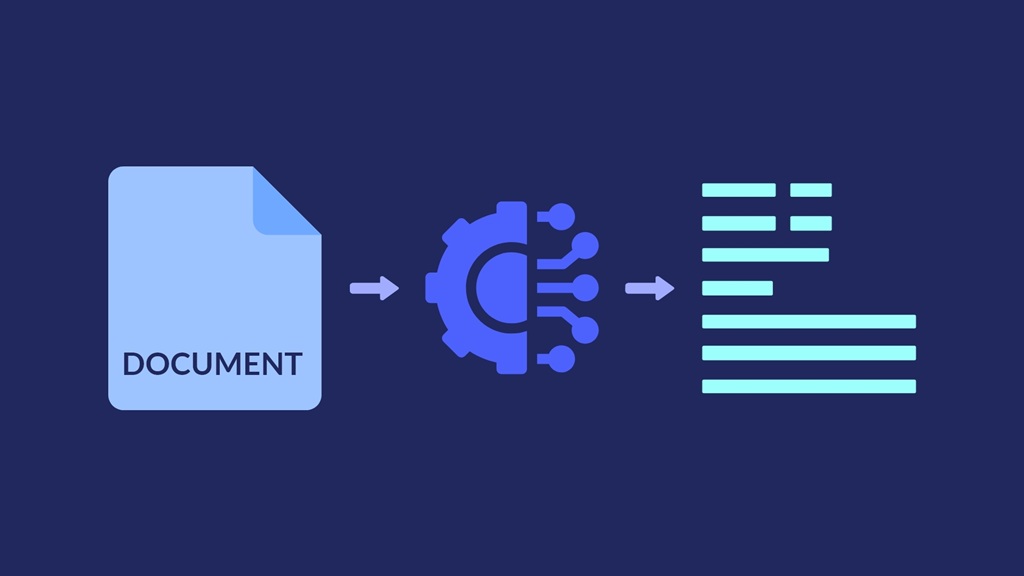
Intelligent Document Processing combines advanced technologies like Artificial Intelligence (AI), Machine Learning (ML), and Natural Language Processing (NLP) to read, understand, and extract data from documents—structured and unstructured alike. Unlike traditional OCR, IDP not only recognizes text, but also understands its meaning and context.

Core components of IDP include:

  • AI/ML models for learning from data over time
  • Computer vision for identifying document structures
  • NLP for understanding human language
  • Workflow automation to streamline processing and approvals

In essence, IDP is a cognitive leap forward in document automation.

Key Advantages of IDP Over Traditional OCR

Why is Intelligent Document Processing quickly becoming the preferred method for document automation? As we’ll see below, the advantages are clear.

1. Higher Accuracy

IDP systems learn and adapt over time, resulting in fewer errors and less manual intervention. By analyzing document content in real-time and incorporating human feedback loops, these systems achieve higher precision, especially with varied formats and languages.

2. End-to-End Automation

From data capture to validation and integration, IDP automates the entire document lifecycle. This holistic approach drastically reduces time spent on repetitive tasks, enabling staff to focus on more strategic work.

3. Handles Unstructured Data

Emails, handwritten notes, and even multimedia content can be analyzed with Intelligent Document Processing. Unlike OCR, which is mostly effective for structured text blocks, IDP can pull meaning from narrative text, irregular layouts, and even tone.

4. Scalability

Whether you’re processing 100 documents or 100,000, IDP systems scale effortlessly. Cloud-based solutions make it easy to scale up without large infrastructure investments.

5. Compliance and Audit Trails

IDP provides traceable data pathways for meeting regulatory requirements. With built-in logging and timestamping, companies can demonstrate accountability and meet strict industry standards like HIPAA, GDPR, or SOX.

6. Language Versatility

Thanks to NLP, IDP can handle multilingual content involving various alphabets, a feature increasingly vital in globalized industries.

Real-World Use Cases: How IDP Is Changing Industries

The application of Intelligent Document Processing is vast and industry-agnostic. Here’s how various sectors are benefiting:

Financial Services

Banks and insurers use IDP to process loan applications, claims, and KYC documents automatically. It improves turnaround time while ensuring compliance.

Healthcare

Hospitals leverage IDP to extract patient data from handwritten records, lab reports, and discharge summaries. This supports the integration of  Electronic Health Records (EHR) and faster care coordination.

Logistics

Shipping companies use IDP to scan and process bills of lading, shipping labels, and customs documents. It minimizes errors in international shipping and customs clearance.

Government

Government agencies employ Intelligent Document Processing to handle tax filings, permits, and citizen requests. Automated workflows reduce bureaucratic delays.

Legal

Law firms streamline contract analysis and litigation support using IDP tools. Legal teams can extract clauses, detect anomalies, and ensure document completeness without manual line-by-line reviews.

Manufacturing

Manufacturers use IDP to digitize safety audits, compliance forms, and equipment logs, ensuring real-time access and fewer compliance failures.

When Is It Time to Move Beyond OCR?

If your organization is struggling with:

  • High volumes of unstructured or semi-structured documents
  • Inconsistent data extraction results
  • Long manual validation cycles
  • Regulatory compliance issues
  • A lack of real-time document processing

…then it’s time to explore Intelligent Document Processing.

Key indicators include rising labor costs, increasing regulatory pressure, and bottlenecks in customer onboarding or invoice processing. The return on investment with IDP is often realized within months.

Challenges and Considerations When Implementing IDP

While the benefits are clear, implementing IDP comes with its own set of challenges:

1. Data Privacy and Security

Handling sensitive documents requires strong compliance with data protection regulations. Encrypting data at rest and in transit is non-negotiable, and you’ll also need role-based access controls.

2. Integration Complexities

IDP must integrate smoothly with existing systems like ERP, CRM, or legacy databases. API compatibility and middleware tools may be needed for successful integration.

3. Training and Adoption

Teams need training to understand and trust IDP systems. Clear documentation and support from vendors will ease the transition and reduce resistance.

4. Initial Costs

Though long-term ROI is high, initial investments can be significant. Budget for software, implementation, and internal resources are needed to deploy and fine-tune the system.

5. Vendor Selection

Selecting a provider with proven experience and a platform that supports future scalability is key. Request a proof of concept and examine their data handling policies before signing contracts.

6. Data Quality Issues

Garbage in, garbage out. Poor document quality can derail automation. Organizations must invest in preprocessing tools and adopt document standards to maximize IDP effectiveness.

OCR Was the Start — IDP Is the Future

Traditional OCR was revolutionary for its time, but the future lies with Intelligent Document Processing. By leveraging AI and ML, IDP offers greater accuracy, speed, and scalability. Businesses looking to stay competitive and compliant must consider moving beyond OCR to embrace the power of IDP.

The next decade will be shaped by automation and intelligent systems. Organizations that adopt Intelligent Document Processing early will enjoy better operational control, higher customer satisfaction, and reduced costs. Don’t just digitize—intelligently automate.

How Local Government Autonomy Became Nigeria’s Loudest Political Debate

0

In Nigeria, politics often revolves around who controls power at the center. Governors, ministers, and federal lawmakers dominate headlines while the tier of government closest to the people, the local government, has often been treated as an afterthought. Yet, in recent years, the debate over local government autonomy has moved from the margins to the mainstream. By 2024, it had become one of the loudest political conversations in the country, stirring emotions across regions and drawing the attention of citizens, activists, and policymakers alike.

Between 2010 and 2015, conversations around local government autonomy were scarce. A handful of states such as Lagos, Adamawa, and Kano hinted at the problem of councils being financially dependent on governors, but the issue lacked national traction. At the time, the central debate in Nigerian politics centered on federal allocation and resource sharing. Local councils, though important for basic services like education, sanitation, and rural roads, were overshadowed.

That silence began to break after 2016. Civil society organizations, journalists, and some state legislators started to demand a stronger voice for councils. By 2017, the issue was no longer confined to a few states. From Lagos in the South West to Benue in the North Central and Delta in the South South, stakeholders began openly challenging the practice of joint state–local government accounts, which often left councils powerless. The tone of the debate shifted from quiet complaints to a coordinated push for reform.

Momentum built through 2018 and 2019 as more states such as Anambra, Bauchi, and Kwara joined the conversation. What made these years significant was not just the growing number of voices but the diversity of perspectives. In some states, unions representing council workers took the lead. In others, community groups and traditional leaders raised concerns about the decline in local service delivery. The debate was becoming less about political elites and more about ordinary citizens demanding functional governance.

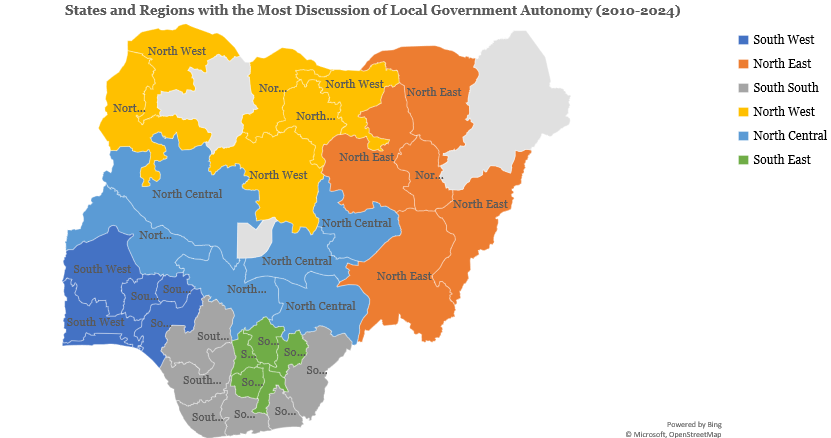
The turning point came in 2022. Oyo State emerged as the loudest single voice, with its lawmakers and civic groups challenging the status quo. Benue and Kogi in the North Central also made autonomy a frontline issue. These were not isolated protests but visible confrontations between governors and local councils over who should control grassroots governance. The conversation reached a tipping point where Nigerians began asking not whether councils deserved autonomy, but why the matter had been delayed for so long.

Source: Nigerian Newspapers, 2010-2025; Infoprations Analysis, 2025

Then came 2024, the year autonomy became impossible to ignore. Discussions about local government independence spread across nearly every region, with 191 separate mentions recorded nationwide. Oyo, Lagos, Delta, Rivers, Anambra, and Ogun became hotspots of advocacy. For the first time in more than a decade, local government autonomy outpaced many other policy debates in both intensity and reach. It was no longer a side conversation. It had become a national demand.

Why did autonomy rise to the top of Nigeria’s political agenda? The answer lies in its direct impact on everyday life. Local governments manage primary schools, markets, rural roads, and community health centers. When councils are financially crippled, these services suffer. Citizens increasingly recognized that the failure of local governments was not simply administrative, but a matter of governance being held hostage by state-level politics. Autonomy was no longer framed as a technical reform, but as a solution to the frustrations of communities across Nigeria.

The regional spread of the debate also tells an important story. In the South West, especially in Oyo and Lagos, strong media institutions and active civic groups kept the conversation alive. In the North Central, where rural communities often feel neglected, states like Benue and Kogi took bold positions. In the South South, the link between revenue control and autonomy shaped the discussion. Even in the North, where the conversation has been quieter, Kaduna and Kano played their part in voicing concerns.

The rise of local government autonomy as Nigeria’s loudest political debate shows that citizens are connecting governance to their daily realities in ways that cannot be ignored. From whispers in 2010 to a nationwide outcry in 2024, Nigerians have made one thing clear: strengthening councils is not a matter of politics between governors and chairmen. It is a matter of dignity, accountability, and service at the grassroots.

If the federal and state governments are serious about improving governance, they must stop treating autonomy as a bargaining chip. The loud voices from across the country are not asking for charity. They are asking for a system where governance begins where people actually live.

Ethereum and XRP Could Rise 5x, But This Low-Cap Token Is Being Touted for a 100x Surge by Mid-2026

0

Ethereum and XRP are both positioned for strong gains heading into 2026, with analysts calling for 5x price growth. However, Remittix, a PayFi-focused DeFi project, is drawing even greater attention as it has hit its $20m milestone. With more than 608 million tokens sold, RTX is being touted as a potential 100x crypto with real-world payments utility.

Ethereum on Track for 5x Gains Amid ETF Strength

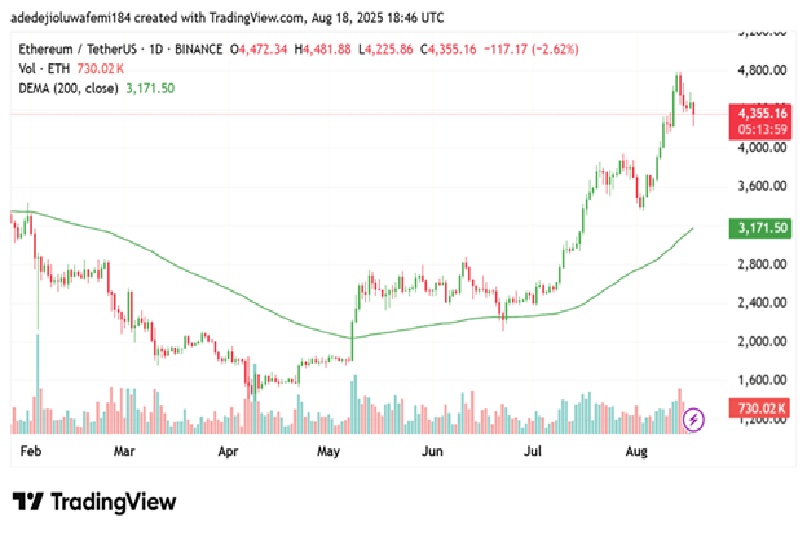
Ethereum’s price has been boosted by ETF inflows and rising activity across its DeFi ecosystem. Forecasts suggest ETH could rally between $6,500 and $8,800 by 2026 as staking demand and Layer 2 Ethereum alternatives expand the network’s reach.

Source: TradingView

Institutional investors are also treating Ethereum as a core part of the best long term crypto investment strategy, diversifying portfolios alongside Bitcoin. With continued upgrades improving scalability and lower gas fees, Ethereum remains a top crypto to buy now for traders betting on the next bull cycle.

XRP Price Outlook Targets $15 By 2026

XRP is also generating buzz, with analysts eyeing a move toward $15 within the next 18 months. This represents around a 5x jump from current levels, largely driven by adoption in payments and favorable developments in ongoing regulatory clarity.

Whales rotating capital into XRP highlight its appeal as both a cross-border settlement token and a crypto with real utility. With Ripple pushing deeper into global remittances, XRP remains one of the top crypto under $1 that investors continue to accumulate.

Why Remittix Is Leading the Pack as the Best Presale of 2025

Remittix has raised over $20 million, sold 608 million tokens, and is currently priced at $0.0969. The recent wallet reveal and planned Q3 beta launch promise instant crypto-to-bank transfers in more than 30 countries. The project has also announced its first CEX listing, on BitMart, a milestone expected to boost liquidity.

Highlights fueling RTX’s momentum:

  • Multi-currency wallet with real-time FX conversion
  • Audited by CertiK for transparency and security
  • Ideal for freelancers, remitters, and small businesses
  • Solving a $19T global payments problem
  • One of the fastest growing DeFi projects of 2025

Beyond speculation, Remittix is being used to streamline real-world payments, offering a bridge between crypto and traditional finance. Its design positions it as the next big altcoin 2025 and a high growth crypto that could transform cross-border transactions.

Final Take: Is Remittix the Top Crypto Presale of 2025?

Ethereum and XRP may deliver reliable 5x returns, but RTX is drawing attention as a low cap crypto gem with the potential for a 100x surge by mid-2026. From early-stage crypto investment momentum to upcoming exchange listings, Remittix is emerging as a standout. For those searching for the next big crypto launch, this could be the one that changes everything.

Discover the future of PayFi with Remittix by checking out their presale here:

Website: https://remittix.io/  Socials: https://linktr.ee/remittix
 $250K Giveaway: https://gleam.io/competitions/nz84L-250000-remittix-giveaway