DD
MM
YYYY

PAGES

DD
MM
YYYY

spot_img

PAGES

Home Blog Page 6812

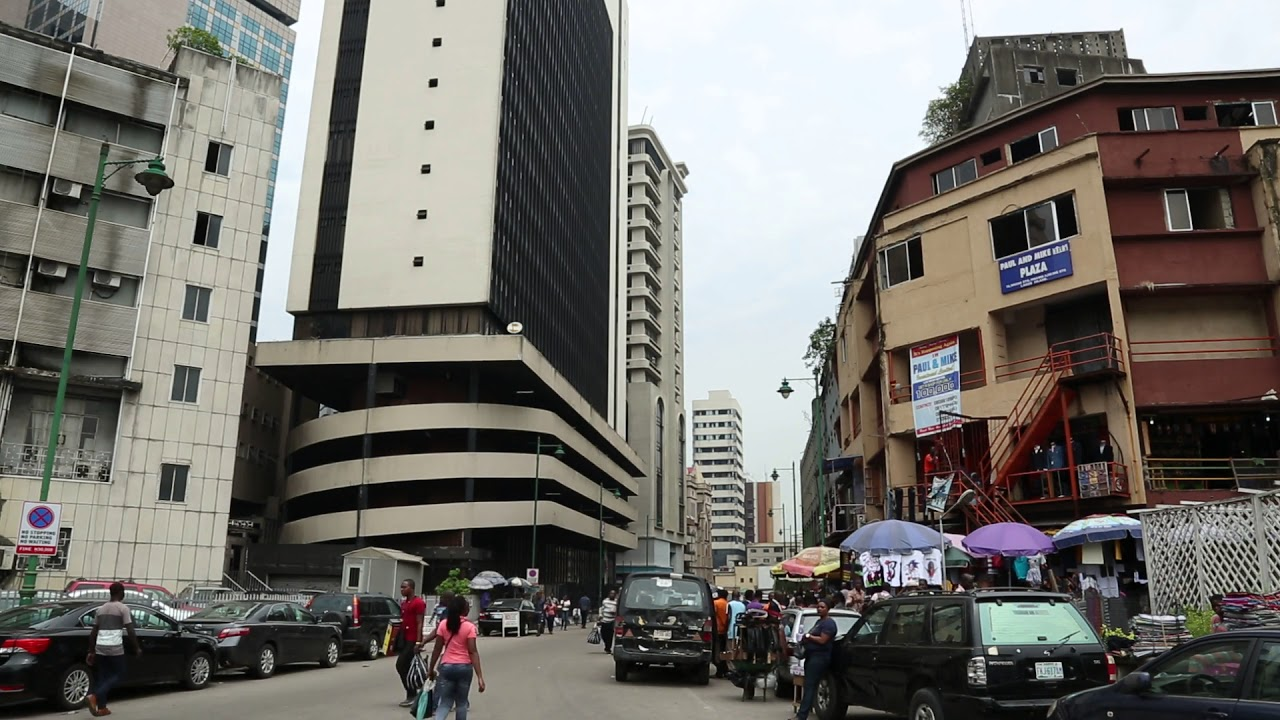
Rising Above Underdog, Nigerian Public Universities as a Case Study

0

By Ikwuka C. Franklin

The 2018 World Cup hosted in Russia saw many teams as underdogs, and others as the major contenders, even though it was difficult to predict the winners. Teams like Argentina with phenomenal Lionel Messi, Portugal with fans acclaimed GOAT (greatest of all time), Cristiano Ronaldo, Spain, Germany, and Brazil were the talk of the town but as the game progressed, these giant teams were seen crashing out by and before the round of 16.

While teams like Belgium with Eden Hazard, Romelu Lukaku, Kevin De Bruyne, and Croatia with Real Madrid’s Lukas Modric and Barcelona’s Ivan Rakitic and other wonderful performing teams rose up above the underdog team, and the unexpected France with the likes of N’golo Kante, Antoine Griezmann, and Paul Pogba, 20 years after their first and only triumph, made great strides towards the World Cup final after defeating Uruguay 2-0 in the quarterfinal, and finally won the trophy.

All these, took people in the team, personal and team efforts to achieve with determination to rise above underdog. But this is an aside to the story at hand.

In Nigerian Universities today, some schools are regarded the giants while others the underdogs. JAMB statistics on top first choice institutions yearly for the past 5 years has been almost the same with few or no changes.
In the eastern Nigeria, it is either University of Nigeria Nsukka generally, or FUTO once Engineering is the choice. While, University of Ilorin, Unilag, ABU Zaria, University of Ibadan, and OAU Ile-Ife are the giants outside the east.

These choices owe to capabilities, sizes, and past events which marked those universities as excellent. No one wants to be an underdog, no parents will love to see their children not excelling; hence, all wants to send their wards to the best institutions in order to bring out the best in them.

Personally, I chose University of Nigeria Nsukka (UNN) Medicine and Surgery, but behold JAMB, the almighty carrier changer as christened by we students, I scored 230. Of course it was not possible to secure admission in Medicine and Surgery with that score except you made over 350 in the post-UTME to secure a good average. Another year, I tried the same UNN with a JAMB score of 277; yet I was not admitted to study Electronic Engineering in the first list. I had to change my first choice of institution before the opportunity of changing choice of institution elapsed so as not to accuse my village people should my name fail to appear in the subsequent lists.

Glory be to God, I was admitted in the Electrical Electronic Engineering department of Chukwuemeka Odumegwu Ojukwu University(COOU) formerly known as Anambra State University (ANSU).

Before I started my studies in my present school, COOU, I have been on several lecture halls during my first post-UTME examination, and second trial at UNN; same with FUTO during visitations and as a student now. The lecturers are mostly the same, while some are dedicated, some are not, but generally, no lecturer breaks a student’s head to make him understand. The highest they could do is to attend to every question, issue lecture materials, invite you to office in case of further problems, while the rest lies on the student to read, reread, research on the topics treated.

I tend to wonder why students rush to these universities, afterwards loose admission that year, consistently trying with the belief that without that university nothing else stands. Some can stay for years, some gets at the next trial while some at the 5th and others may not get at all hence change or drop out for music, Yahoo Yahoo or other things out of frustration or lack of enthusiasm for education again.

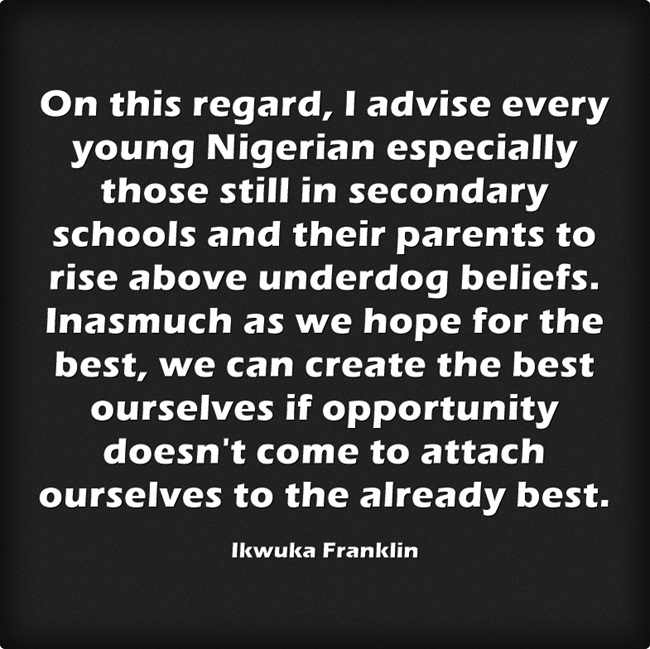
On this regard, I advise every young Nigerian especially those still in secondary schools and their parents to rise above underdog beliefs. Inasmuch as we hope for the best, we can create the best ourselves if opportunity doesn’t come to attach ourselves to the already best. Inasmuch as we want to be a LION/LIONESS, FUTOITE etc, we can create name for any higher institution we find ourselves just like the assumed World Cup underdogs went farther than expected. The lecturers of some believed low ranking institutions were students of these universities at least.

For example, in 2012, The Nigerian undergraduates (christened The NUTA_BOLTS Team) who were then studying for various engineering degrees at the Anambra State University were Nigeria’s sole representative at the annual event whose 2012 series took place in Silverstone Circuit, Northampton, UK. Six other African universities (five from Egypt and one from South Africa) also participated in the competition that drew contestants from 222 universities around the globe. They finally won, writing Nigeria’s name in gold. Yes, students of Chukwuemeka Odumegwu Ojukwu University.

Presently, Students of Engineering, Chukwuemeka Odumegwu Ojukwu University, won Southeast zone CODET competition, and will be representing Southeastern Universities in the national level at Abuja by August this year. The giants competed also, but out of every competition, there must be a winner. Other school has been making giant strides in Nigeria despite position, sought after or not.

Everyone is rising above underdog; in different offices, schools, and competitions to write off any downgrading name.
I encourage the already giants to also keep on improving the efforts of their forebears and never relax on past glory for the competition is not just within us but our counterparts overseas, though, not competition, but efforts to collectively better the world.

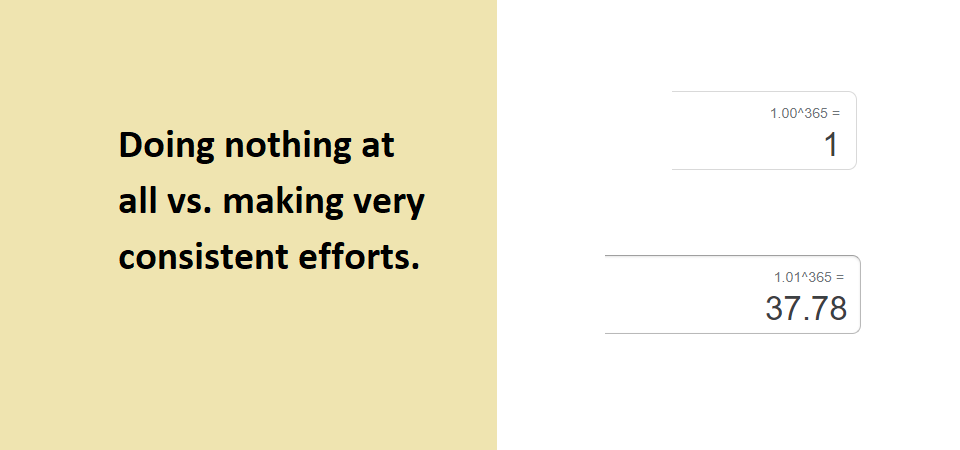
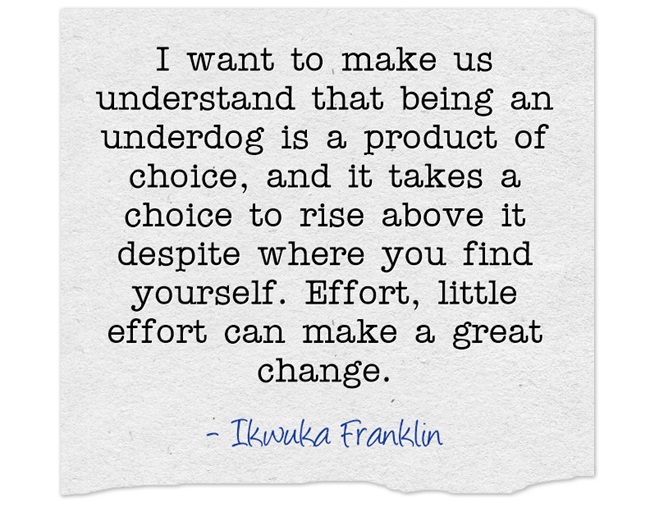
In this piece, I want to make us understand that being an underdog is a product of choice, and it takes a choice to rise above it despite where you find yourself. Effort, little effort can make a great change.

Make an effort.
Libra: What is the U.S. Government Scared of?

2

By Samuel Nwite

When Facebook announced its ambitious plan on June 18 to create Libra, an alternative crypto financial system that it has been secretly working on for more than two years, it was received with mixed reactions of concern and acceptance. The acceptance came with a force of financial backup from companies and individuals who can’t wait to see Libra become a reality. Uber, Mastercard, Visa, Paypal, Spotify and 22 others threw their weight on it with $10 million each. (73 more companies are expected to join before it kicks off in 2020.) The news and the excitement that it was commanding spread like virus, hitting even those with little or no idea what Libra is all about, or why it should matter to them.

But not for so long, the concerns soon took its turn. On the 3rd of July, the US congress asked Facebook to suspend the implementation of Libra until the ramifications are investigated. Maybe there is more to it than the details are telling. But what could be wrong in such digital alternative financial system? What is the US government scared of?

Facebook’s planned Libra cryptocurrency faced further opposition on Monday when the US treasury secretary warned about its potential criminal use.

Steven Mnuchin told a press conference it could be used by “money launderers and terrorist financiers” and said it was a national security issue.

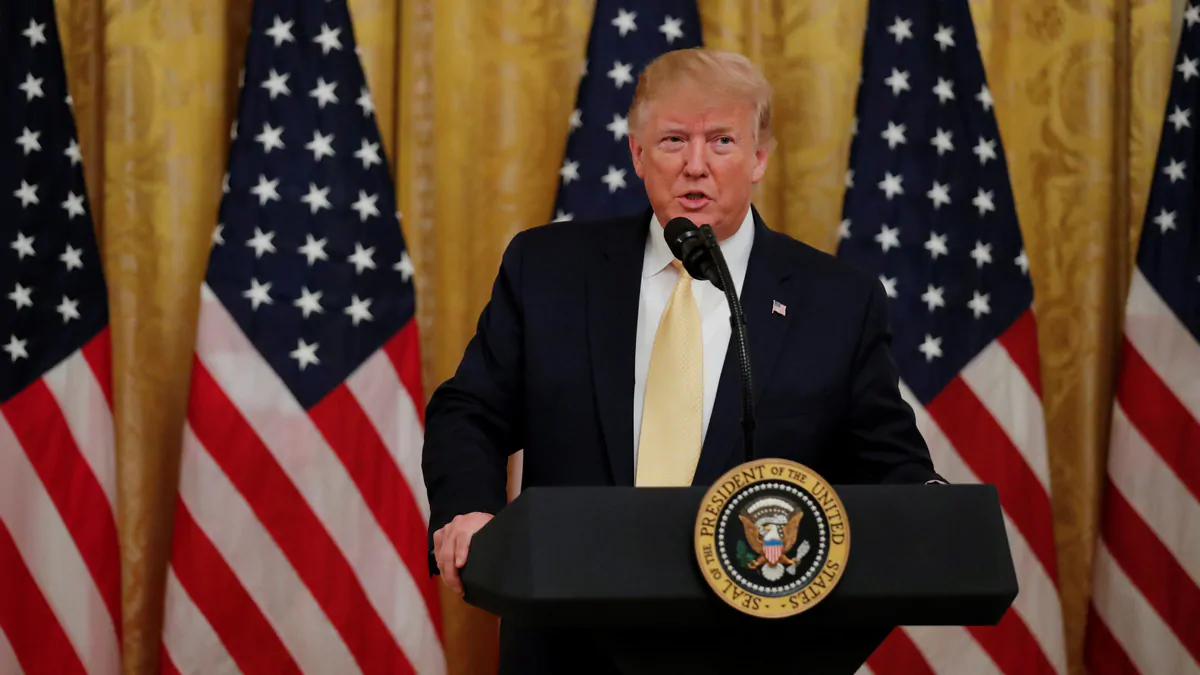
He was “not comfortable” about Libra, joining President Donald Trump and the US central bank in voicing concern.

Facebook executives will appear before a congressional committee on Tuesday.

David Marcus, who will oversee Libra, is expected to tell the Senate Banking Committee that Facebook will not launch the currency until regulatory concerns are addressed.

While there is high hope that Libra could become the future power house that Crypto currencies have ever needed, and the foundation for a new financial system not controlled by central Banks or power brokers on Wall Street, the government is seeing a potential threat.

On Friday July 12, the Federal Trade Commission (FTC) handed Facebook approximately $5 billion in fines over the Cambridge Analytica privacy breach that involved the private information of over 50 million Facebook users. That has been the highest sum levied against a tech company, and it set a ‘breach of trust’ precedent that will hunt future innovative initiatives of Facebook, and Libra is becoming such an example. To set the record straight, Facebook has kept a distance from the management of Libra, which is to be run by a nonprofit entity in Switzerland, called the Libra Association, which will be made up by the pioneer members of Libra. (Switzerland was chosen to host Libra because of her neutrality) Facebook’s involvement will be handled through the subsidiary called Calibra. And according to Facebook, Calibra would not be allowed to share users’ financial data with other divisions of Facebook unless there is a case of fraud or other specified instances like for research or adoption measurement. However, such personal data must be shared anonymously, and it’s not compulsory to have Facebook’s social media accounts for you to use Libra.  That means, you can easily sign up on Libra or calibra without Facebook or Whatsapp accounts.

This privacy plan should have toned down the volume of curiosity that Libra has generated so far if not that there are loopholes. For instance, while Libra appears to be independent, Facebook has plans for making money from it. Libra wallet is going to be released to the billions of people on Facebook’s platforms, Whatsapp and Facebook Messenger. If there is positive response from them, Facebook will offer financial services such as lending and investing. People are worried that it’s only a matter of time before the status quo is secretly compromised and their privacy will once again be sold or used without their consent.

Reacting to this concern, the head of Libra, David Marcus said in a statement: “we realize that people don’t want their social data and financial data commingled. The reality is, we will have plenty of wallets that will compete with us and many of them will not be in social, and if we want to successfully win people’s trust, we have to make sure the data will be separated.”

This is the reason Facebook created calibra, so that people’s financial data could be handled separately, and their financial information not used for target ads. The Libra currency structure is built on the Blockchain technology, just as Bitcoin. This means that any software Engineer can develop a wallet on the Libra structure that will work for currency transactions. So there will be competition and risk. Shady developers could built an app on the platform (in the guise of financial transactions) but solely to steal people’s information and probably fund.

Is Libra a threat to Fiat?

One of the factors that separate Libra from Bitcoin and other digital coins is that it will have Fiat backing. An idea that will foster the stability of the coin unlike the fluctuating Bitcoin and the rest of the Cryptocoins. But there is a disgruntling murmuring from Banks and other financial institution who stay in business by charging percentages off transactions, especially international transactions. Annually, these financial institutions rake in over $50 billion from charges on transactions. Libra is poised to change that system by creating a very low or no charges on transactions. Moreover, it’s designed to enable micro-transactions worth just a few cents, which is not practical with fiat.

That’s a perceived threat, and to make things worse, financial institutions like MasterCard, PayPal, Visa etc. have signed up to Libra Association. Peter Hazlehurst, head of payments and risks at Uber, said in a statement. “Libra has the potential to bridge the gap between traditional financial networks and new digital currency technology while reducing the costs for everyone, especially consumers.”

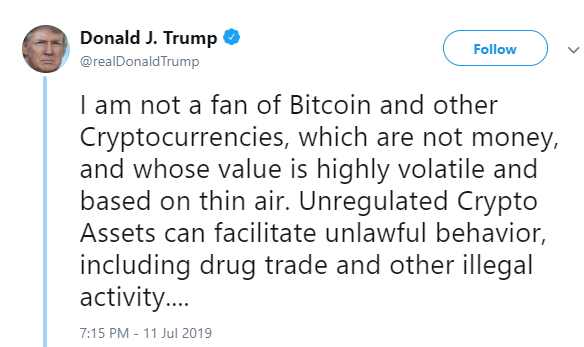
Members of Libra Association also released a statement explaining the aim of Libra, it said: “our hope is to create more access to better, cheaper and open financial services – no matter who you are, where you live, what you do or how much you have.” These statements are explanatory, and should clear some doubts if there is sustainable measure of trust. But there are other concerns, the FTC and other financial regulators are curious about the impact of Libra on money laundering, drugs and illegal arms sales. President Trump isn’t different on this. He tweeted on the 12th of July, “I am not a fan of Bitcoin and other Cryptocurrencies, which are not money, and whose value is highly volatile and based on thin air. Unregulated Crypto Assets can facilitate unlawful behavior, including drug trade and other illegal activities.”

That was a bold statement from a fan of the conventional system, and he echoed the sentiment of so many people who are yet to get even with the digital world, especially when it has to do with money. Although there are answers to these concerns, this people have known the traditional system for a long time to let Libra ruin their relationship. Not even when there is a rule to dismiss such sentiment. The criteria for carrying out a transaction with Libra is a government provided ID, that way, there is identity attached to every transaction, which will make it difficult for it to be used in black market for illegal activities.

Trump tweet on Libra

The Power Tussle

Another concern that has been expressed about Libra is government’s inability to regulate or control it. President trump added this to his tweet: “Facebook Libra’s ‘virtual currency’ will have little standing or dependability. If Facebook and other companies want to become a bank, they must seek a new banking charter and become subject to all banking regulations, just like other banks, both National and International.”

“We have only one real currency in the USA, and it is stronger than ever, both dependable and reliable. It is by far the most dominant currency anywhere in the world, and will always stay that way. It is called the United States Dollar.”

These tweets suggest two things:

  1. The President of the United States believes that Libra will usurp the US Dollar from its dominant position and have a far more reaching influence.
  2. People are concerned that Facebook is acquiring more power with every innovative step it takes. And that, if not curtailed, could pose a danger the US may not be able to contain in the near future.

The deliberation on the ramifications of Libra by the house committee on finance is billed to take place on the 17th of July. The approval of Libra may depend not on its reliability, dependability or privacy issues, but on the premonition of usurpation of power and the US Dollar dominance.

Our Anti-Productive System of Government, And The Doom of our Economy

0

By Ajayi Joel

Finally, I decided to push out this post. If you’re my friend on this space and you’re from another African country apart from Nigeria, please signify with your country.

Entrepreneurs, educationists, freelancers and all, there’s a whole lot to learn from this.

I have been pondering on this for weeks, so I decided to lay my back flat to write this. I tell you it will be an eight series post on different topics, and it is not in any way to throw insult at the government. Rather, it is poised to identify how our system of government is ruining our economy.

I will be using Nigeria as a case study and I already have five sub-topics documented which I will list and once I begin the series, it is open for discussion, debate and contribution. Matter of fact, I will love contributions from most of my friends outside Nigeria here, relating each post with the state of government in your country of residence.

I personally feel there are few conversations going on about this at our level which seem intellectual. I will not only talk about the problems but give possible solutions from my angle.

The sub-topic includes:

The Education Disgust

In this post, I’d identify the role of good education in the progress of the economy and relates it with why Africa is still slowly progressing because the governments are hitting the nails on the heads with a piece of paper.

We will examine how the development of teachers is more important than erecting classrooms in every nook and cranny of the society. And how the government needs to understand the role of technology in education and how they have not begun action. Lots of insights to share!

Infrastructural Rottenness

In this post, I will address how we have not prioritized the development of infrastructures. How our government is running after the wind. I will point out how internet and electricity are two major infrastructures that should be addressed.

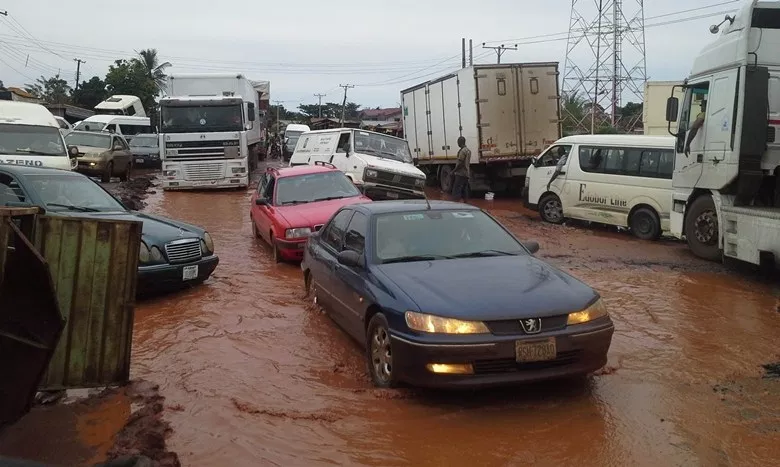
For our economy to thrive in the 21st century then those two must be prioritized as well as road networks. What drives economic growth is the success of small businesses which mostly depend on those.

Nigerian roads are very bad

Taxes and the Death of Dreams

No country can ever get rich on taxes. Fine, taxes are very important but exorbitant taxes ruin businesses and send them to bankruptcy.

I will give insights into how the governments of other African countries have placed taxes on the internet which is not a good move. That will reduce internet operations hence reducing cash flow for the country.

I will also explain how the government is amassing debts in the name of economic growth which is a death pill to the future of the continent. No government can ever get rich by amassing debts. Neither can they get rich through aids from world organizations.

We will examine how they need to pay attention to industrialization within the country and drive production.

Lack of Structural Ecosystems: Its Contribution to the Success of Un-scalable Business

It is hard to build an industry in Africa. There are so many disadvantages, and lack of structural ecosystems is a major cause. We have too many un-scalable businesses.

How businesses are built for survival and not scaling, and how those do not readily add a coin to the GDP. Why structures need to be put in place in order to help real businesses grow and stand.

Structures are needed in every sector to drive growth.

We Cannot Win Without the Government

Over my past 1 year of trying to found a company, I was optimistic that we could do a lot without the government. However, I have realized that there is so little we can do. There are so many policies that should be addressed, and we cannot do those except the government.

How the government needs to be economic-driven, and focus less on fighting corruption just like my president feels is the best approach but pay more attention to setting up structures which will drive economic growth.

A perfect case is focusing more on quality education and employment, and watch crime rate reduce. Fighting crimes by employing more police officers is a fire brigade approach, and it doesn’t work in the development of a country.

How TradeLens Will Transform Global Shipping

0

By Nnamdi Odumody

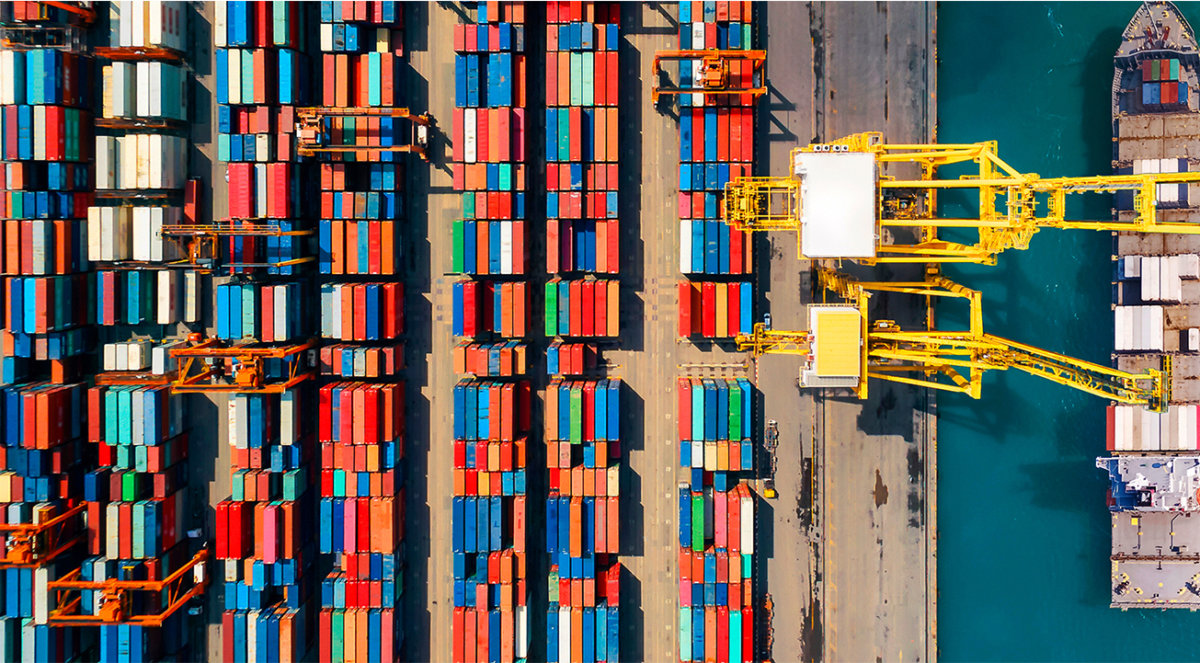
TradeLens is a blockchain platform by IBM and Maersk which empowers businesses and authorities along the supply chain with a single, secured source of shipping data for efficiency in operations. It tracks shipments in real time with greater precision via 120+ dynamic events published direct from source, improves data sharing and collaboration with shipping partners through blockchain encryption and powerful permission based sharing, as well setting up subscriptions to be notified when events occur which matches your subscriptions.

VISIBLE:Track shipments in real time with greater precision via 120+ dynamic events published direct from the source – without the back and forth.

SECURE:Improve data sharing and collaboration with shipping partners through blockchain encryption and powerful permission-based sharing.

FLEXIBLE:Leverage TradeLens on your own terms – integrate via API into primary transportation management systems or access by consumer-grade web UI.

TradeLens allows you to manage the documents involved with a consignment. Submitted documents generate events for your documents adding to the view of activities involved with your consignment or transport equipment. TradeLen’s document functions can be used as part of the process of submitting filings for the import and export of goods by enabling end users to securely submit, stamp and approve documents.

It can be utilized directly through REST APIs or through the Shipment Manager UI. The Shipment Manager(SM) component provides a web user interface to interact with the platform. Users can view the events relating to a consignment and perform operations on documents.

https://www.youtube.com/watch?v=-QgPQzwyrCA

TradeLens is committed to the promotion and adoption of industry standards and interoperability of platforms. It will work closely with the TradeLens Industry Advisory Board, TradeLens participants and standard bodies to help the industry coalesce around the use of widely adopted codes and data models. The TradeLens data model and access control scheme will align with the UN/CEFACT model. It is committed to openness with all functionality surfaced via non proprietary, publicly available APIs that are designed specifically for consumability and ease of integration. TradeLens will also increasingly offer standard integrations for ERP, TOS, TMS and WMS packages.

The Blockchain network topology will ensure segregation across carriers.

TECNO Wins Phone of the Year 2019

0

Congratulations to TECNO Spark 3. Your success in Africa inspires. You took down Samsung. You have made Apple iPhone irrelevant. And you continue to show everyone that cares how to win, even when small. Your understanding of the market is legendary. Yes, that dual sim and the obvious durability. Congratulations.

Press release sent via email to Tekedia


TECNO SPARK 3, www.Tecno-Mobile.com, a smartphone model by TECNO, a global premier mobile phone brand, has been awarded as the smartphone brand of the year at the 2019 edition of the Africa Information Technology & Telecoms Awards (AITTA).

AITTA recognises customer service, innovation and excellence in Africa Telecom and Information Technology industry. The reputable awards now in its third year and has been acclaimed as one of the most prestigious and biggest platform recognising excellence and innovation in the African telecoms and technology industry.

TECNO SPARK 3 was awarded as the phone of the year as a result of its cutting edge features as well as its outing market outing positive reception of the TECNO brand loyals and customers. This is the only smartphone recognized by AITTA this year. As one of the most remarkable devices to “light up” the photos, SPARK 3 have been upgraded by AI technology to furthermore advanced the camera features to be available in Africa, middle-east and Southeast Asia market.

Starting their business from the Africa market in 2006, TECNO has been Africa’s leading smartphone brand and was the first dual-SIM handset supplier to the African continent, which boosted an astonishing 53% of all Smartphone sales in Africa in the year 2011. Focusing on providing high performance and cutting edge smartphone that use the latest technology and at sweet price point, TECNO smartphones have become incredibly popular throughout Africa due to the exceptional value-for-money they offer.

TRANSSION, TECNO Mobile ’s parent company, its brand portfolio comprises leading mobile phone brands in emerging markets. In 2018, TRANSSION sold 124 million mobile phones globally. IDC figures for 2018 show that TRANSSION ranks 4th in global mobile phone brands and holds the largest market share in Africa. Their global sales network covers more than 70 countries in emerging markets including Nigeria, Tanzania, Kenya, Ethiopia, Egypt, India, Pakistan, Indonesia, Vietnam and Bangladesh to name a few.

Established in 2006, TECNO Mobile  is a premium smartphone brand from TRANSSION Holdings. Upholding the brand essence of “Expect More”, TECNO is committed to giving the masses access to latest technology at accessible prices, allowing the consumers to reach beyond their current limitations and uncover a world of possibilities. TECNO understands the needs of consumers from different markets and provides them with localized innovations across a product portfolio featuring smartphones, tablets, and feature phones. It is a major global player with presence in around 50 emerging markets across the world. In 2017, TECNO achieved a sales volume of more than 43 million units. TECNO Mobile is also the Official Tablet and Handset Partner of Manchester City Football Club

Source: copyright-free press release