DD
MM
YYYY

PAGES

DD
MM
YYYY

spot_img

PAGES

Home Blog Page 6817

Big Brother Naija’s Yesterday Episode and Challenge of Women Leadership

4

By John Beecroft

I’ not a fan of the BBNaija show – I would rather watch anime and movies instead. But for the sake of family bonding, I usually watch the annoying show with my babe for an hour or two daily. Typically, I just stare at the TV and say a few words, but yesterday (Friday 12th) was different.

‘Big Brother’ had given a task to the housemates to contribute 2,500 Bet9ja coins, the currency of the Big Brother House, among themselves – you can watch it here. Problem was that the housemates had amassed varying amount of coins over the two weeks they had spent in the house, with some having as low as 20 and others as much as 500. As can be imagined, the coins had become extremely valuable as they represented the line between staying in the house and eviction for some of the housemates.

I came home while the housemates were having a meeting discussing how to gather the required coins. While there are many ways the coins could have been gathered, the housemates had chosen a pragmatic approach: Every one was to give up 65% of their coins. (Total amount of coins in the house was about 3,800 and 65% of that amounted to about 2,500 coins.)

And so the debate started with some complaining and others encouraging. Perhaps as expected, the guys had no issues with contributing the required coins, but it was quite annoying to watch the ladies argue and complain. KimOprah and Tacha in particular gave a new definition to the word ‘selfish’. To ‘Jeff the banker’, fell the hard task of convincing everyone to give up their hard-earned coins and he went about it by mollifying the ladies.

Now let me ask a question: What was Jeff’s main goal? If your answer is ‘to collect 65% of everyone’s coins’, then you are a follower! But we will come back to that later.

While I was quiet but extremely curious about how things were going to end, my heavily invested babe was busy with the 2 Rs – ranting and raging – because of the way things were going and how the ladies were behaving. She got particularly angry at Jeff for being too gentle with the ladies. Finally, she asked me “What do you think?” Here’s what I told her: Jeff is a leader.

Of course, she flipped at that!

In life, everyone chooses to either be a leader or a follower. The choice is shown in the things they individually choose to focus on. Followers see a small picture, hence choose to focus on the mundane issues e.g. how many coins did Tacha drop? Leaders on the other hand see the big picture and focus on the goal: We need to gather 2,500 Bet9ja coins. While how the coins are gathered is very important, leaders realise that it is not nearly as important as the goal.

This tenet of leadership, I learnt many years ago as a young man. Whenever I got angry at work or was getting lost in details, my coach would ask me “But what is your goal?” Of course, that’s much easier said than done, but it does not change the truth of it. Losing sight of that goal is what makes many of us lose our tempers and our heads with it. And the moment you lose your head and the sight of the goal, the real task – that of leading – is lost. Yes, you might win some coins here and there, but you will remain a follower.

Some of the ladies especially could not accept Tacha refusing to give up 60% of her coins and were ready to make everything go bonkers. The guys on the other hand were busy making up for the deficits. At that point, the split in the house became painfully obvious: The Leaders and The Followers. Unfortunately, the leaders were almost all guys, while the followers were almost all females. And this is one of the tragedies of our society and the world at large.

Yes, we want women in positions of power/service, but more important than having women in power is having goal-focused people in service. Yet, if BBNaija is a microcosm of Nigeria, which I believe it is, then it shows why lots of females are not ready for those roles. Many all too easily allow their emotions becloud their judgement; they cannot focus on the goal. Mind you, the goal is not about ‘right’ or ‘wrong’ just as being right does not make you a leader. ‘Ella the presenter’ had given more than 60% of her coins and was ready to scatter everything when Tacha refused to contribute hers. Yes, she was very right to be upset, but in getting stuck on that minor detail of Tacha’s 60%, she had lost sight of the goal – the instruction to gather 2,500 coins.

But though this may be more prevalent with ladies, it’s not about them alone. As I tried explaining to my babe why Jeff was a leader and the righteously angry babes were followers, I realised that I was also losing focus of the goal. My goal in having that conversation with her was in helping her understand leadership. But as we argued, without realising, my focus shifted to proving that I was right. Still the same discussion and the same points, but the mood had changed because I – the leader of the Bee clan – had lost sight of the goal.

So really, this write-up is not just for our female-folk, it’s for everyone who chooses to be a leader. Remember, keep your very valid emotions in check and focus on the goal. There’s nothing more important than the goal. And as you go along, remember that you’re not alone on this journey into leadership; we’re all in it together.

Fixing Unemployment in Nigeria: Who Deserves To Be Held Responsible?

4

By Ajayi Joel

There are different parties of people who hurl complaints and insults when it comes to looking for the people or entities to blame for the cause of massive unemployment in Nigeria.

Most times, the blame goes to the government for not providing enough jobs for the citizens and the communities. Then next, the blame goes to the students for being lazy while in school, unready to learn, and afterwards unemployable. Simply, the graduates are unprepared for jobs.

Now, before I go too far or begin to select where my argument would be focused, I will first establish this which I feel it’s imperative so that you and I will be on the same flow.

Education is the acquisition of a certain knowledge that makes you relevant for society at a certain time.

If any of you agree to this definition of education, then you will have to agree further with me over some few points which are:

  1. The university is not the only place to acquire education.
  2. The definition of education has never changed for once; however, the world has changed the prescription of the institution that gives education.
  3. To a larger extent, the information gotten from the university (which many have construed as the only source of education) has now made many irrelevant in this present time.
  4. A young boy who sits in a tailor shop for 4 years to learn tailoring and learns it actively is being educated.
  5. What we call formal education may be learnt outside the four walls of a university.

I would stop on those five points for now. You will notice that I made some emphases that seem like I am bias towards some specific opinions.

Number one emphasis was: I referred education in my points as going to the university. The reason is simple: in the African society, a person who has not attended a university is not necessarily termed as educated which was why I represented education with university.

I have strayed away from the focus of the main point but I need to address this first which is very important before I move on to explain how unemployment is related to education.

From my first point (if my definition of education also holds true), then the university is not the only place to get education. The Igbo boys at Alaba market are also being educated, the Oyo girls learning tailoring are also being educated.

Provided the knowledge gotten makes them relevant in the society, i.e., in the world of work, then we should all agree that education is not gotten only from the university.

My second point states clearly that the definition of education never changed which means it has been this way since time memorial. What actually changed was the institution that gives education. We live in a totally different world from the 19th century when school was the major institution that gave education in some parts of the world.

Back then, if you didn’t go to school, information exited which were capable of making you relevant that you would not be able to get. However, God bless the internet, this information that you couldn’t get except you passed through the four walls of school are flying everywhere on the net.

This means now that it’s so obvious that the institution that gives education has expanded beyond the four walls of the university to other locations and boundaries.

The third point is quite controversial but in order for the argument not to even arise, I will simply refer you to statistics. The point simply stated that to an extent, the information gotten from the university is making a lot of people irrelevant in the society (quite a number).

The reason is not farfetched, lots of the knowledge given do not relate with the requirement of the real world and this is because the real world has advanced and the university curriculum has not. So we can say that those who gent through the university, yet become irrelevant, due to what they learnt, were not educated based on my definition of education.

I will skip the fourth point to move to the fifth. What we call formal education has changed. Prior to the internet age, formal education means being prepared for formal jobs and it has a process.

This same education can be gotten out of the university (limited however), and now we have more formal jobs whose requirements are not placed in the university curricula yet. Matter of fact – the definition of formal jobs has changed which means we have to adjust the definition of formal education.

With these points stated, we can now move to consider how unemployment is related to education. If you have your argument, you can state it and we discuss around it.

If there’s anybody to blame for unemployment in our country, then it shouldn’t be the government first. Yes, you heard me; I said not the government first. I am not saying the government has no blame nonetheless.

I want everyone who is unemployed to sit in this hall with me while I do some explaining before your eyes. I know a lot of you have your fingers pointed at the government but please drop those hands down and listen to me.

I would show you that we have a lot of people to blame for unemployment and not just the government alone. Pick up your phone, call your siblings, tell your parents to read these posts and follow this series or just share this post to save the stress.

Since we all have called education schooling which is obviously not, then I want to face the school system and I tell you, it is a bigger part of the reason why you are here unemployed or even underemployed. Yes, because if you were truly educated, in the real definition of education, there would be fewer people in this hall!

Yes, you are in a hall with me right now and there are millions of other youths outside. Trust me, just focus on what you’re seeing. Education gives you relevant knowledge that equips you for the world of work.

Now the first question to ask you is this: based on what you have up there, where do you see yourself working and how much do you think you deserve to be paid monthly?

Be sincere with yourself and me. Now, how much contribution do you think you would make to that company, or business or industry if you are employed based on what you know currently from what you learnt in school? How many percentage increase would the company experience within a year based on what you know?

Now raise your hand and point your fingers after I ask this question, point it to the direction of blame.

Who is responsible for this knowledge that you have that has made you less qualified for 200,000 naira monthly salary? Oh, is N200k too much for a graduate?

Are you joking right now? Oh, I’m the one day-dreaming, right? Oops, sorry, they have brainwashed you to believe it’s too much, more like a salary to earn after 5 years of working. That’s a big lie.

You already spent 4 of 5 years in the university or college, you should be able to make, okay let’s say, N150k monthly at least after 5 years of proper education. Nigeria is hard but I tell you, when we talk about education in the realest sense, then after 6 – 7 years of acquiring this knowledge, you should be worth more than this.

Now back to the pointing of finger, some of you pointed to your parents, some of you pointed to the lecturers, some of you pointed to yourself and the government.

The person to point those fingers at is the “School System”. You have been in the system as long as you can remember calling your dad; daddy. Now, you’re grown up and after all the decade plus few years you spent going through the system, you are still of low value.

The school system is supposed to be an educational system but based on the knowledge level of those being churned out, you would agree that school is now just school – a place where people gather, anyways.

At this point, is there a need to overhaul the system and make it right? I leave you to answer that. Well, I would answer for everyone in the room. Yes!!

Do parents have a part they play in unemployment? Yes!!

The world has truly advanced from where it was a decade ago. A whole lot has changed about the world of work, its requirements, its operations, etc; yet not so many know.

Remember I have been taking you on the journey on how we can revolutionize education. Like I said in previous posts, we cannot revolutionize education if we skip some major areas. Mind you, the solution doesn’t lie with the government alone.

There are other bodies related and yesterday I explained that the school system is one of the contributors to unemployment in the country.

However, for today, it is necessary you pay attention to how our parents also contribute towards unemployment in the country. Now, the intent of this post is aimed at informing you so that you will take your parents to school which simply means educating them.

You would agree with me that in Africa, our parents hold most of the decisions about our lives and careers. Not all parents though, but a larger percentage do. They give dictations on what a child will study in the university, and most times they have decided the fate all the way from when a child is young.

Just like my 8 years old sister, my mom has already been saying my sister would be a doctor right from when she was a baby. Is the intention good? Yes, very good, but could it be very harmful? It can… I mean really harmful.

A lot of our parents only have their minds revolved around some certain professions as being the definitions of success, and I am sure you all know what those are. Right from childhood, they keep influencing your decisions till you believe you are made for that profession.

The number one issue I have with parents is that they are not observant. African parents do not have the time to observe their children strength and weakness when they are young, and if they even do, how many parents act on what they observe?

So, here’s what happens: your parents do not know that deep within, you really wish to learn software development or even painting, because they do not observe . And then, they convince you to study medicine. Then you begin even plotting exit from medicine even as you got in.

There are many cases of folks who have gotten depressed and committed suicide in school because they do not derive joy in what they’re studying in school.  Simply, the point is that a lot of our parents don’t know that the world of work has changed, and expanded, and they are trying to play safe which is at our own expense. Why go to the University for 5 years only to come out not being able to prove anything? How many of them know about the latest skills and courses that are also powering people to success?

Those who know are still skeptical about it. Times without number, I correct my mom anytime she emphasizes that my sister would be a doctor. If my sister chooses to become a writer then support her. Let her spend her time wisely than suffering learning medicine and surgery.

The truth be told: as long as our parents do not know about how the world has changed, the consequences lie on us, because they, in most cases, still make decisions for us. I do not support that motion that they should make decisions for your courses.

It’s high time we take every parent to school to see how the world has changed. The question is, you as a youth, how much do you know about how the world has changed?
You do not know as well. So there’s little or nothing you can do to help your younger siblings from their influence. The point however is that if we want to revolutionize education, then we need to educate parents as well.

All together: fixing the unemployment issue in Nigeria will be fixed by linking all the above elements together.

Meeting the Sustainable Development Goals through Higher Education

0

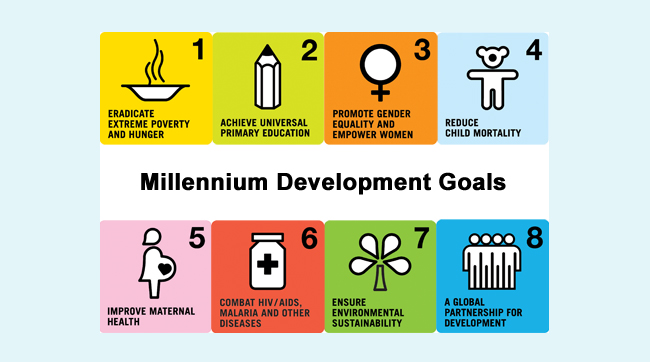
It is interesting that even before the millennium development goals (MDGs) deadline had elapsed, I had already thought of a fresh approach in the Sustainable Development Goals (SDGs).

In a paper entitled “Middle East – Sub-Saharan Africa (MESSA) Rising! Emerging Migratory Pipeline in Higher Education” which I presented at the Round Table Discussion Paper. World Investment Forum, UNCTAD Geneva, Switzerland, 13-16 October 2014, I highlighted the opportunities and challenges in the sustainability of business education relationships between the Middle East (ME) and Sub-Saharan Africa (SSA).

Drawing upon observations from sectors including retail, mobile telecoms, and sports, with a view to understanding developments in higher education in the MESSA (acronym), I argued for the need for education across all levels as contingent upon sustainable development – and notably so in the context of forging sustainable development through the prism of higher education in the MESSA and the rest of the developing world.

Obviously traditional student destination landscape has been shifting as students from sub-Saharan Africa have set sights on newer destinations in the Middle East for two main reasons.

First, is the “ease of doing business” which includes visa restrictions and related matters, which have become more of a thorny issues for the “old world” such as Australia, the United States and the United Kingdom.

Second, relates to the increasing quality of provision in the “new world” with comparable educational outcomes. You name it, most Western Universities have outposts in the Middle East – Carnegie Mellon, Georgetown, Heriot Watt, INSEAD, Northwestern, Paris Sorbonne, Strathclyde amongst others.

Read More Here:

Madichie, N. O., & Kolo, J. (2013). An exploratory enquiry into the internationalisation of higher education in the United Arab Emirates. The Marketing Review, 13(1), 83-99.

Madichie, N. O. (2015). An overview of higher education in the Arabian Gulf. International Journal of Business & Emerging Markets, 7(4), 326-335.

Madichie, N. O. (2013). Nigerian students and the” allure” of foreign (UK) education: a curious reflection, African Journal of Business and Economic Research8(2_3), 101-118.

African Fintech’s PAPSP Challenge as ACFTA Ramps Up

2

Are you a fintech? Things are changing very fast in Africa. From all the elements I have seen as the African Continental Free Trade Area (ACFTA) ramps up, the selling point of most fintechs will collapse on the day ACFTA begins operations. Simply, some ACFTA’s payment framework will disintermediate what most fintechs do, and eliminate the core necessity of their existence within the nexus of intra-African trade. If you check, most startups, at the continental level, are built on the premise that they can reduce frictions on cross-national transfer and payments, within Africa. Of course, I have maintained that none has done just that in this video.

What that video explains will be done but fintechs may not be the entities that will do it: ACFTA has some vehicles to do it, and one of those vehicles will be the Pan African Payment and Settlement Platform (PAPSP). Sure, any authorized entity can connect into a payment settlement system but if the settlement system is very efficient, the original friction will be significantly reduced. When you reduce the core friction, companies created to solve the friction will have lesser value to be created. Simply, your bank app can offer many great features that the idea of going to a fintech may not even be necessary.

In order to  solve the paralysis in intra African trade, the African Export Import Bank (AFREXIM) has launched a Pan African Payment and Settlement Platform (PAPSP) at the African Union Extraordinary Summit in Niamey, Niger.

This initiative is part of the African Continental Free Trade Area (ACFTA) which is designed to bring 1.3 billion Africans and create a $3.4 trillion single economic market. The initiative has the following operational instruments: Rules Of Origin Portal, Tariff Concession Portals, Portal On Monitoring and Elimination of Non Tariff Barriers, Digital Payments and Clearing System, and African Trade Observatory Dashboard.

See it this way: if Nigerian Naira and Ghanaian Cedi are settled and exchanged by PAPSP, directly, without going through London (Pounds) or New York (Dollars), transaction costs will go down. If that cost is very low even when efficient, there may not be a justification for many to look for fintechs when banks are just there with something very good. I do think banks will be strengthened as some critical infrastructures are built at continental level, eliminating any weak point they may have.

This does not mean that fintechs will not add value; it simply means they have to find new selling points at the continental level. The intra-African payment is about going soon.

The Necessity of Afrexim Bank’s Pan-African Payment and Settlement Platform in ACFTA

2

By Nnamdi Odumody

In order to  solve the paralysis in intra African trade, the African Export Import Bank (AFREXIM) has launched a Pan African Payment and Settlement Platform (PAPSP) at the African Union Extraordinary Summit in Niamey, Niger.

This initiative is part of the African Continental Free Trade Area (ACFTA) which is designed to bring 1.3 billion Africans and create a $3.4 trillion single economic market. The initiative has the following operational instruments: Rules Of Origin Portal, Tariff Concession Portals, Portal On Monitoring and Elimination of Non Tariff Barriers, Digital Payments and Clearing System, and African Trade Observatory Dashboard.

This is why the African Development Bank has supported similar initiatives across the continent, including the East African Payment System and the West African Monetary Zone’s project to link payment systems. Likewise, in support of the CFTA, Afreximbank is working on establishing a Pan-African Payment and Settlement Platform (PAPSP), which will not only lower transaction costs but also facilitate informal cross-border trade, currently estimated at $93 billion.

Another interesting trend is the rise of African multinationals investing into other African countries. At the forefront are African financial institutions. Today, Ecobank has a footprint in 24 countries while Moroccan banks are now present in 16 countries, up from just three in 2005. This is welcome news. Indeed, banks support about one-third of total intra- African trade.

According to Dr Benedict Oramah, President of Afreximbank, the PAPSP which will be available on mobile devices will facilitate the clearing and settlement of intra African trade transactions in African currencies and significantly reduce dependence on global currencies in settlements for regional trade.

The African Export Import Bank has partnered with the West African Monetary Institute to launch a pilot in six West African countries before the end of the year as the West African Monetary Zone is Africa’s only economic community which doesn’t have a settlement platform, hence the decision to pilot the initiative in the region.

PAPSP is one of the initiatives implemented by AFREXIMBank to facilitate greater volume of intra-African trade and formalize the continent’s volume of informal trade estimated at $40 billion.

Considering the fact that Africa has multiple local currencies, cross border payments has traditionally involved the use of a third currency like the US dollar, Euro, British Pound or Chinese Renminbi resulting in high cost  of intra-African payments which, PAPSP is a timely intervention to fix the friction.