DD
MM
YYYY

PAGES

DD
MM
YYYY

spot_img

PAGES

Home Blog Page 6835

Meeting the Sustainable Development Goals through Higher Education

0

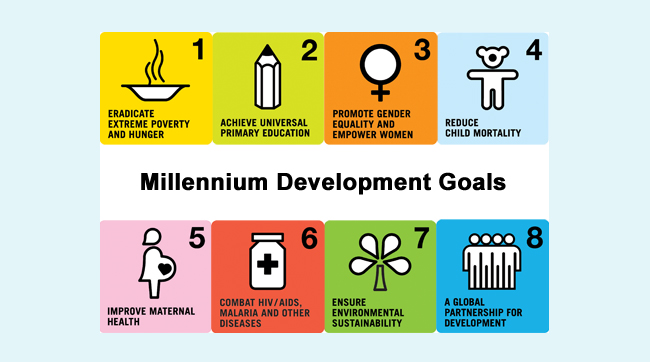
It is interesting that even before the millennium development goals (MDGs) deadline had elapsed, I had already thought of a fresh approach in the Sustainable Development Goals (SDGs).

In a paper entitled “Middle East – Sub-Saharan Africa (MESSA) Rising! Emerging Migratory Pipeline in Higher Education” which I presented at the Round Table Discussion Paper. World Investment Forum, UNCTAD Geneva, Switzerland, 13-16 October 2014, I highlighted the opportunities and challenges in the sustainability of business education relationships between the Middle East (ME) and Sub-Saharan Africa (SSA).

Drawing upon observations from sectors including retail, mobile telecoms, and sports, with a view to understanding developments in higher education in the MESSA (acronym), I argued for the need for education across all levels as contingent upon sustainable development – and notably so in the context of forging sustainable development through the prism of higher education in the MESSA and the rest of the developing world.

Obviously traditional student destination landscape has been shifting as students from sub-Saharan Africa have set sights on newer destinations in the Middle East for two main reasons.

First, is the “ease of doing business” which includes visa restrictions and related matters, which have become more of a thorny issues for the “old world” such as Australia, the United States and the United Kingdom.

Second, relates to the increasing quality of provision in the “new world” with comparable educational outcomes. You name it, most Western Universities have outposts in the Middle East – Carnegie Mellon, Georgetown, Heriot Watt, INSEAD, Northwestern, Paris Sorbonne, Strathclyde amongst others.

Read More Here:

Madichie, N. O., & Kolo, J. (2013). An exploratory enquiry into the internationalisation of higher education in the United Arab Emirates. The Marketing Review, 13(1), 83-99.

Madichie, N. O. (2015). An overview of higher education in the Arabian Gulf. International Journal of Business & Emerging Markets, 7(4), 326-335.

Madichie, N. O. (2013). Nigerian students and the” allure” of foreign (UK) education: a curious reflection, African Journal of Business and Economic Research8(2_3), 101-118.

African Fintech’s PAPSP Challenge as ACFTA Ramps Up

2

Are you a fintech? Things are changing very fast in Africa. From all the elements I have seen as the African Continental Free Trade Area (ACFTA) ramps up, the selling point of most fintechs will collapse on the day ACFTA begins operations. Simply, some ACFTA’s payment framework will disintermediate what most fintechs do, and eliminate the core necessity of their existence within the nexus of intra-African trade. If you check, most startups, at the continental level, are built on the premise that they can reduce frictions on cross-national transfer and payments, within Africa. Of course, I have maintained that none has done just that in this video.

What that video explains will be done but fintechs may not be the entities that will do it: ACFTA has some vehicles to do it, and one of those vehicles will be the Pan African Payment and Settlement Platform (PAPSP). Sure, any authorized entity can connect into a payment settlement system but if the settlement system is very efficient, the original friction will be significantly reduced. When you reduce the core friction, companies created to solve the friction will have lesser value to be created. Simply, your bank app can offer many great features that the idea of going to a fintech may not even be necessary.

In order to  solve the paralysis in intra African trade, the African Export Import Bank (AFREXIM) has launched a Pan African Payment and Settlement Platform (PAPSP) at the African Union Extraordinary Summit in Niamey, Niger.

This initiative is part of the African Continental Free Trade Area (ACFTA) which is designed to bring 1.3 billion Africans and create a $3.4 trillion single economic market. The initiative has the following operational instruments: Rules Of Origin Portal, Tariff Concession Portals, Portal On Monitoring and Elimination of Non Tariff Barriers, Digital Payments and Clearing System, and African Trade Observatory Dashboard.

See it this way: if Nigerian Naira and Ghanaian Cedi are settled and exchanged by PAPSP, directly, without going through London (Pounds) or New York (Dollars), transaction costs will go down. If that cost is very low even when efficient, there may not be a justification for many to look for fintechs when banks are just there with something very good. I do think banks will be strengthened as some critical infrastructures are built at continental level, eliminating any weak point they may have.

This does not mean that fintechs will not add value; it simply means they have to find new selling points at the continental level. The intra-African payment is about going soon.

The Necessity of Afrexim Bank’s Pan-African Payment and Settlement Platform in ACFTA

2

By Nnamdi Odumody

In order to  solve the paralysis in intra African trade, the African Export Import Bank (AFREXIM) has launched a Pan African Payment and Settlement Platform (PAPSP) at the African Union Extraordinary Summit in Niamey, Niger.

This initiative is part of the African Continental Free Trade Area (ACFTA) which is designed to bring 1.3 billion Africans and create a $3.4 trillion single economic market. The initiative has the following operational instruments: Rules Of Origin Portal, Tariff Concession Portals, Portal On Monitoring and Elimination of Non Tariff Barriers, Digital Payments and Clearing System, and African Trade Observatory Dashboard.

This is why the African Development Bank has supported similar initiatives across the continent, including the East African Payment System and the West African Monetary Zone’s project to link payment systems. Likewise, in support of the CFTA, Afreximbank is working on establishing a Pan-African Payment and Settlement Platform (PAPSP), which will not only lower transaction costs but also facilitate informal cross-border trade, currently estimated at $93 billion.

Another interesting trend is the rise of African multinationals investing into other African countries. At the forefront are African financial institutions. Today, Ecobank has a footprint in 24 countries while Moroccan banks are now present in 16 countries, up from just three in 2005. This is welcome news. Indeed, banks support about one-third of total intra- African trade.

According to Dr Benedict Oramah, President of Afreximbank, the PAPSP which will be available on mobile devices will facilitate the clearing and settlement of intra African trade transactions in African currencies and significantly reduce dependence on global currencies in settlements for regional trade.

The African Export Import Bank has partnered with the West African Monetary Institute to launch a pilot in six West African countries before the end of the year as the West African Monetary Zone is Africa’s only economic community which doesn’t have a settlement platform, hence the decision to pilot the initiative in the region.

PAPSP is one of the initiatives implemented by AFREXIMBank to facilitate greater volume of intra-African trade and formalize the continent’s volume of informal trade estimated at $40 billion.

Considering the fact that Africa has multiple local currencies, cross border payments has traditionally involved the use of a third currency like the US dollar, Euro, British Pound or Chinese Renminbi resulting in high cost  of intra-African payments which, PAPSP is a timely intervention to fix the friction.

Amazon Is Unveiling Broadband Satellite Operation

0

This is a big deal: Amazon is unveiling a satellite broadband venture. Watch out, very soon, Amazon Prime members may be getting internet services at home from Amazon.

Amazon is asking the Federal Communications Commission for approval of its Project Kuiper satellite broadband venture, and referring to potential synergies with Amazon Web Services as a strong selling point. …

That revelation was contained in documents that were filed with the International Telecommunication Union. On Thursday, Amazon’s wholly owned Kuiper Systems subsidiary followed up with a fresh set of FCC filings.

This is a massive one, from the FCC filing: “Amazon sells products and services to hundreds of millions of customers today via physical and online stores, entertainment content streaming, design and manufacturing of consumer electronics devices, and leading public cloud computing web services. Amazon also has global terrestrial networking and compute infrastructure required for the Kuiper System, including intercontinental fiber links, data centers, compute/edge compute capabilities and the tools, techniques, and know-how to securely and efficiently transport data.”

My prediction remains: we will have massive internet connectivity by 2022 even in Africa. These satellites will end up helping African customers.

2022 Will Usher The Era Of Wireless Nigeria, Africa

Beyond Websites And Apps: Creating Jobs In Nigeria

3

The idea looks great on paper with the massive unemployment rate where the youth unemployment rate is recording excess of 55%. Yes, I can start a website and help young people find jobs. But remember: the biggest challenge is finding jobs for people in a place with no jobs. Nigeria’s unemployment problems will not be solved with recruitment-focused apps or websites but by creating growing companies of the future. Tell those governors that having dedicated websites for employers to post jobs for the youth will not fix any issue. They just need to provide enabling environment to help companies do their things: put factors of production to work, and create jobs!

Nigeria is yet to recover FULLY from the Great Recession of 2008. While many continue to look at the stock market for signs, the sign that matters is evident – we are losing a generation of young people on acute sustained unemployment. Yes, ‘Youth unemployment and underemployment was 55.4% in third quarter of 2018, leaving more than half of the country’s largely youthful population idle most of the time.’ Look at the trajectory of the proportion of full-time youth employment – not a good pattern!

This Plot Explains Nigeria Since 2010 â?? Yet To Recover FULLY From 2008 Great Recession