DD
MM
YYYY

PAGES

DD
MM
YYYY

spot_img

PAGES

Home Blog Page 6837

Practical Approach To Starting A Business

0

By Ajayi Joel

If you are actually starting a business, then this article is a good piece for you and trust me, I will break it down step by step for you to understand. Most times, when we talk about business in Africa, the United States, or in the world generally, motivation is what is dished out and not the process, leaving people out there to figure it out and eventually give up or go bankrupt. This will be along read and I will want you to get your note, and pen to write down a lot of points. The approach can be applied in any business across Africa and the world only that you need to understand the context of location and all, and know how to be smart about the process.

Firstly, I will be debunking some myths of businesses and also give you a mind shift about running a business in Africa. The average approach to business in Africa is to have some substance to flip, to make some profit to feed the family, and send the kids to school. It’s high time you understand that as a business person, your business matters a lot to Africa and its development. There are so many un-scalable businesses around Africa and it is corrupting the business space. What you should know as a business person or someone who wants to start one is that you should have an industry mentality, an expansion mentality, and an empire mentality.

This article will point out the fact that it is not okay just to remain a small business, the fact that we need to change the conversation around the narrative of African businesses and also the step by step process. I will start a business from scratch with my analysis; break it down from idea stage to growth stage, then expansion stage. And I will recommend that you share with your friends and business partners. The example I want to use is starting a laundry in a small location.

Now, when the word laundry is mentioned, the picture that comes to mind is a wooden store with a faulty banner or an “okay” banner and a young man washing clothes with his hands, and then spends five years washing till he buys a washing machine. He then employs some folks and then maybe seven years later, he expands to a bigger location and continues like that. While that might sound really impressive, I want to change your mind about business and how you can think big even while being very small or even broke.

My name is Ajayi Joel, I want to start a laundry service business in a small location and I hope to have this business worth a million dollars in 7 years. Now, that definitely sounds stupid or crazy. Who makes 1 million dollars from a laundry business in Africa? How possible is it? Well, I want to paint the picture further to myself being a 23 year old young man who just graduated from the university, freelances, and makes fifty thousand Naira monthly.
I have loved laundry since when I was young, and I can do it all day without having to complain and even claim being tired. The first mistake young entrepreneurs or lots of people who want to start businesses make is the belief that they need huge amount of money to start. While it is good to have huge amount of money, it’s not always readily available at the point of starting and no investor will want to throw out funds into a business that isn’t running. It’s too risky as an investor to throw funds into a business that hasn’t even started yet. So quit thinking that your uncle needs to give you a million Naira to start.

Now, I must establish that nobody puts his hands into something without counting the cost. So the first recommendation is to sit down and draw out a business plan. Mind you, your business plan doesn’t need to be perfect but it is needed to help you navigate from where you are starting to where you want to get to. So what are the things to consider before you venture into this?

Do they need a laundry service in this location?

This is the first thing that should cross your mind. A lot of times, people build businesses as solutions to problems they feel exist. They develop the solution, then begin to look for where the problem is. That’s a quick way to fail in business and it is by building a business that has no customers. What you should rather do is to look for a need, a problem, a loophole, a fault, then work on creating a solution for it and building a business on it. So do they need a laundry service in this location of mine? If they don’t need a laundry service in my location, where is a laundry service needed.

For analysis sake, I will admit that I noticed that they need a laundry service in my location. So, I will mark it down that this needs to go to the next stage.

Are they ready to pay for this service?

Now, this is very crucial and as a business strategist, I have seen a lot of start-ups scattered across Africa make this mistake. That I need a medicine for my headache doesn’t mean I can automatically afford it. So if you notice that I have a headache then go spend a lot of money to develop a medicine for me, you will go bankrupt because while I desperately need your medicine, I cannot afford it. At this stage, I need to ask so many questions to come up with a unique selling point to be able to get to be their client. However, before you analyze that, I want you to be very practical, go around, and make inquiries on who in the street needs such service that can pay. Ask people in the street. You are a business person,; you cannot stay in your room! Go out!!!! Are they positive? Are they much? Tick it.

Count your cost

Now here’s the point. You had thirty people who said they needed your service in the street. Now sit down and begin to draw out a cost plan. Remember you have been able to figure out that you already have a market and that it is a go ahead. While it looks like a go ahead, you can make the worst mistake not counting the cost. Besides, you can be running in deficit for the next seven years feeding hand to mouth if you do not pay attention to this. While this part seems technical, it is simple logic and people run away from this a lot. I used to, but it is an interesting part in business and if you need me for all these, you can reach me.

Back to the point. You have 200 ready customers. How much are they willing to pay? They all agreed on N200 per cloth. Now, pay attention. Every stone must not be left unturned in this phase. How many clothes per day will I receive from each of them in a day? How often do they use their clothes and what are the chances of receiving a cloth from them in a day? While this sounds ridiculous, this is the best approach towards building a business that will scale. If each of them brings a cloth a day, and I charge 200 Naira daily to 200 people, then that means I have a revenue of 40,000 Naira daily.

Revenue is actually different from cost and you can be increasing in revenue while still running at a huge loss. So in order to make profit, the cost of operation must be lesser than the revenue made.

Who are your competitors?

While it sounds interesting that you will have 200 customers daily bringing at least a cloth a day, it is business-minded to understand that there will be competitors already on ground and if there are no competitors already on ground, there will be competitors pretty soon which means that your 200 customers will no longer be 200 customers and your daily forty thousand Naira will no longer be forty thousand since they will have a share in the ready customer. So the question you need to ask yourself is how do you still keep making forty thousand Naira in spite of the competitors? How do you play the game of chess with competitors and knock out their queen with your knight?

I have written a comprehensive article on that and I will want you to go read it so as not to make this article more bogus because there are so many things to still discuss here. Follow the link below to read on that.
The President Trump’s Tweet on Facebook Libra, Bitcoin and cryptocurrency

0
Trump tweet on Libra

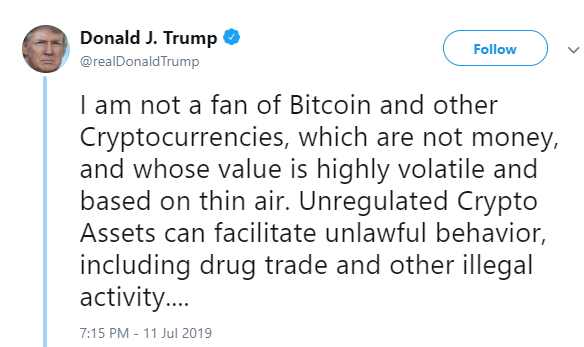
President Trump spoke (yes, wrote) on Facebook Libra, Bitcoin and broad cryptocurrency. His Fed Chairman dropped his “serious concerns” comment to U.S. Congress hours ago. If you are Facebook, you can read the minds for the challenges ahead. Already, Congress had partly frozen the Libra project pending review.  Can I ask you about your regulatory risk? Have you modelled it? Do not neglect that as you build.

I am not a fan of Bitcoin and other Cryptocurrencies, which are not money, and whose value is highly volatile and based on thin air. Unregulated Crypto Assets can facilitate unlawful behavior, including drug trade and other illegal activity. Similarly, Facebook Libra’s “virtual currency” will have little standing or dependability. If Facebook and other companies want to become a bank, they must seek a new Banking Charter and become subject to all Banking Regulations, just like other Banks, both National and International. We have only one real currency in the USA, and it is stronger than ever, both dependable and reliable. It is by far the most dominant currency anywhere in the World, and it will always stay that way. It is called the United States Dollar!

Selling Point, Business Growth and the Mystery of Numbers

2

By Ajayi Joel

What is your selling point?

What is your market size?

These questions happen to be a pain in the neck for most start-up founders or people who want to start businesses. Most times, the only focus is if the idea is a great one and if a great product can come from it. While those are very good, the truth is that what investors really want to know before investing their money is your market size.

In this article, I will help you analyze what a selling point is and how to develop a selling point for your product and at the same time link it to determining what your market size will be.

Myths: If I have a Great Product, I’d have to Smile Walking Down to the Bank

As a start-up founder or business person, you must be able to determine what your product or business stands for. What your product stands for (selling point) will be the road map that directs you right from the idea phase down to the sales phase. This doesn’t mean that selling point cannot change along the line. Your selling point can keep changing till you’re able to locate which one will help you penetrate the market and scale.

I will give two different analyses and break it down for you to understand it perfectly. The first begins with an incident I experienced last year when I needed to take a cab from one point to another. My final destination from where I stood was about five minutes walk if I decided to walk. However, I needed to board the cab to save time. There was another woman who also stood beside me headed for the same direction. A cab pulled right in front of us, and I wanted to board it, only to see the cab man come out to call a third passenger.

My reflex made me walk away from this first cab to another cab who just parked right in front of this first cab, and unknown to me, that was the same decision the woman made. So it turned out that this first cab man lost two passengers within the space of some seconds. The big question is what exactly happened and why did we both make the same decision to go for another cab whom the owner didn’t come out?

Now, here’s the analysis;

I will start by first saying the fault was from the taxi driver because he didn’t understand what his selling point was at the moment. What was the selling point?

TIME!!!

This was a distance we could cover by five minutes’ walk yet decided to board a taxi. That shows just one thing; we needed to save three minutes time. Was he aware of our destination before he came out? Yes!! That was the final bus stop on that route so we were his last customers.

Now, being fully aware of that, he was supposed to consider the fact that nothing else mattered to us than the fact that time needs to be saved but he made a wrong posture and that was by coming out of the car. Coming out of the car painted a picture to the both of us that some extra minutes was about to be wasted. At that moment, kind gesture couldn’t have been the selling point. Should a driver be kind and courteous? Well, yes!!

But does it matter more than saving our time in this scenario? Definitely not!!

It might be a secondary value but his first focus which is his selling point should be on how he can save our time.

So how do you come up with a unique selling point and how does it help you determine your market size?

While this may seem to be simple and a lot of people might just tell you to look for a need and solve, it requires proper analysis and once you’ve been able to get your unique selling point, you can smile down to investors that you know your market size and that your business is worth investing in.

Here’s another analysis to help you in understanding how to come up with a unique selling point. However, I must say that it might actually take different trials, different testing to actually determine your unique selling point.

A bottle of water in the town can have a different selling point to the desert. Here’s what I mean?

You’re in a town where the average person in the town has a water dispenser and also a very cool environment. Just producing a large quantity of the bottle water might not necessarily mean good sales if you don’t have a good selling point. If the environment is cool enough that there is hardly a feeling of thirst, then the selling point cannot be to quench thirst. The product is good but you need to change its selling point and that will require you trying a lot of approaches.

Firstly, you need to go back to your “great product” and look for what else you need to add to it or how else you can re-brand it and you can only do this if you ask your “customers” questions on what other reasons they need water for. Fine, it might not be quench thirst. It might be to stay hydrated and both are different. Besides, it might not be any of them but to stay healthy. Now, these still refer to the purchase of water but different reasons.

The next thing to do is to know how many people fall in this category? Is it just the woman walking across your street daily or the whole street itself? How do you know? Well, by making your findings!

This post isn’t about how to make your findings but I will just explain simple ways to get your data or make your inquiry.

  1. One-on-one discussions: Taking myself as a practical example, I built a product and I’m still building it. However, while in the idea stage, I had met with about dozens of perople to know how exactly my product will align to their needs. Right from the website design down to the marketing, it has been tailored to address the needs. Now, that’s not all, after the website was built again, I took the prototype to these same set of people and watched them try to test it and also kept taking notes.

This way, I will know how best to align the product and come up with the best selling point.

  1. Online Researches: I have figured out that a lot of founders and people do not know how to make researches online and where exactly they should get pieces of information from. While it’s true that the internet is wide and some pieces of information are not correct, you need to learn the habit of reading a lot. If you do not love reading, then you’ve got a long way to go. Make searches on Google, open as many links as possible, then learn. Check social media pages relating to what you want to understand. Pay attention and study them.
  2. Extraction of data: There are lots of publications on statistics of different trends, fields and on different data. Search for them using specific key words and you’d be able to locate them.

Now, I have explained how you can make your inquiries and researches. The piece of data you get after all these will determine your market size. Remember, selling point boils down to price consideration. Here’s another analysis.

You want to sell the bottled water in the desert. Well, from pure observation, I would say the selling point will be to quench thirst and stay hydrated. While that seems like it’s all, maybe we should go a little bit deeper. The bottle costs one hundred Naira. However, those in the desert can afford fifty Naira. It’s either you do not have a market there or you go look for another selling point and that will push you to look for ways to reduce your cost of production in order to sell at fifty Naira the target market can afford.

However, if that model will not guarantee your scaling due to losses you will incur, you will need to look for another selling point. Your selling point must always ensure that profit is made and that you can scale. If these two factors are not put into consideration, then you might as well need to review your business plan. If you haven’t developed a business plan, then you can reach out to me to get my professional service on board as well as helping you come up with a winning selling point.

What is your unique selling point? And do you know your numbers (market size)? If you do, then you need to proceed to execution and iterations.

Simply Brilliant – Zenvus Loci Max, Zenvus Loci Mini [Photos]

0

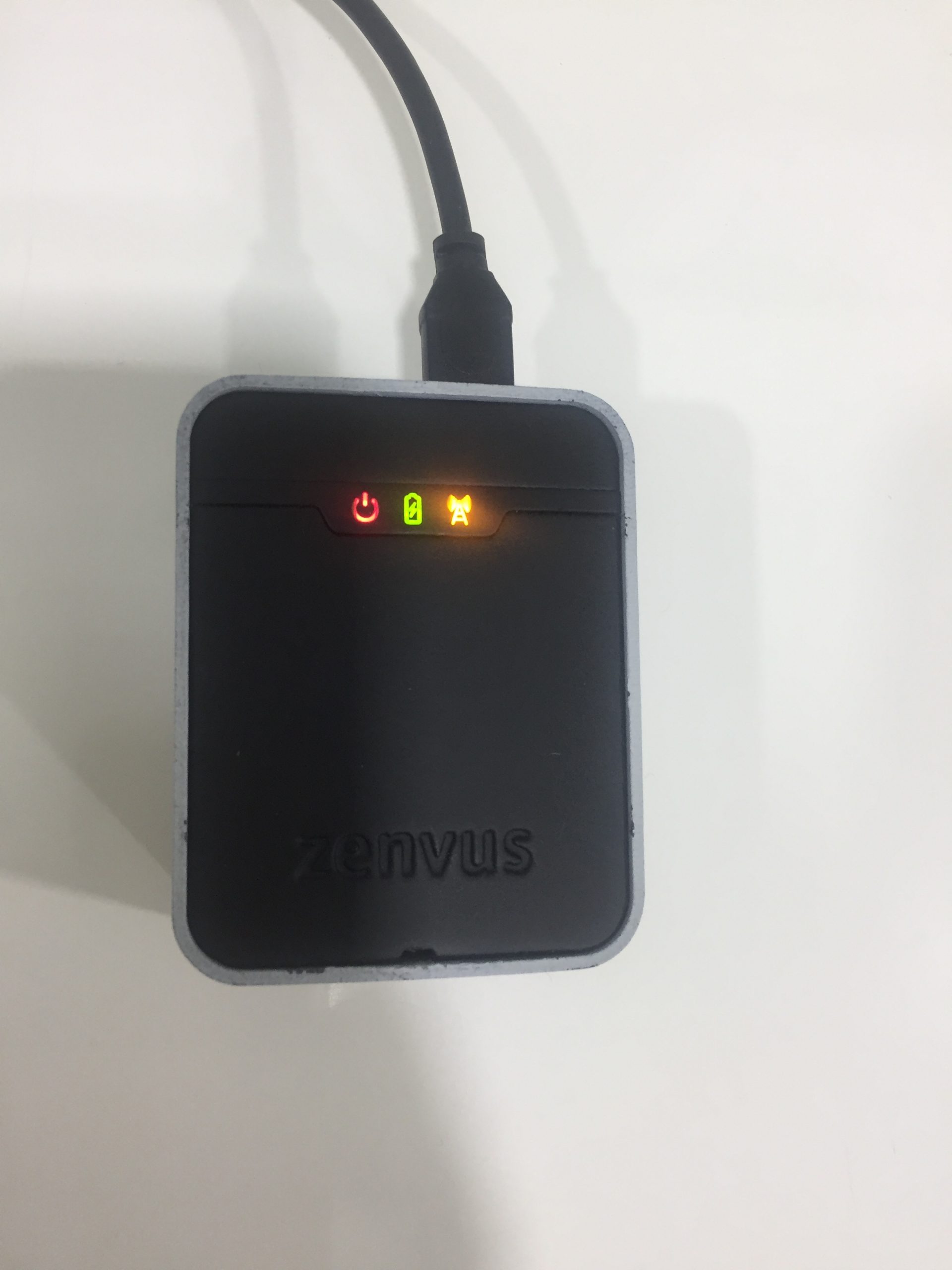
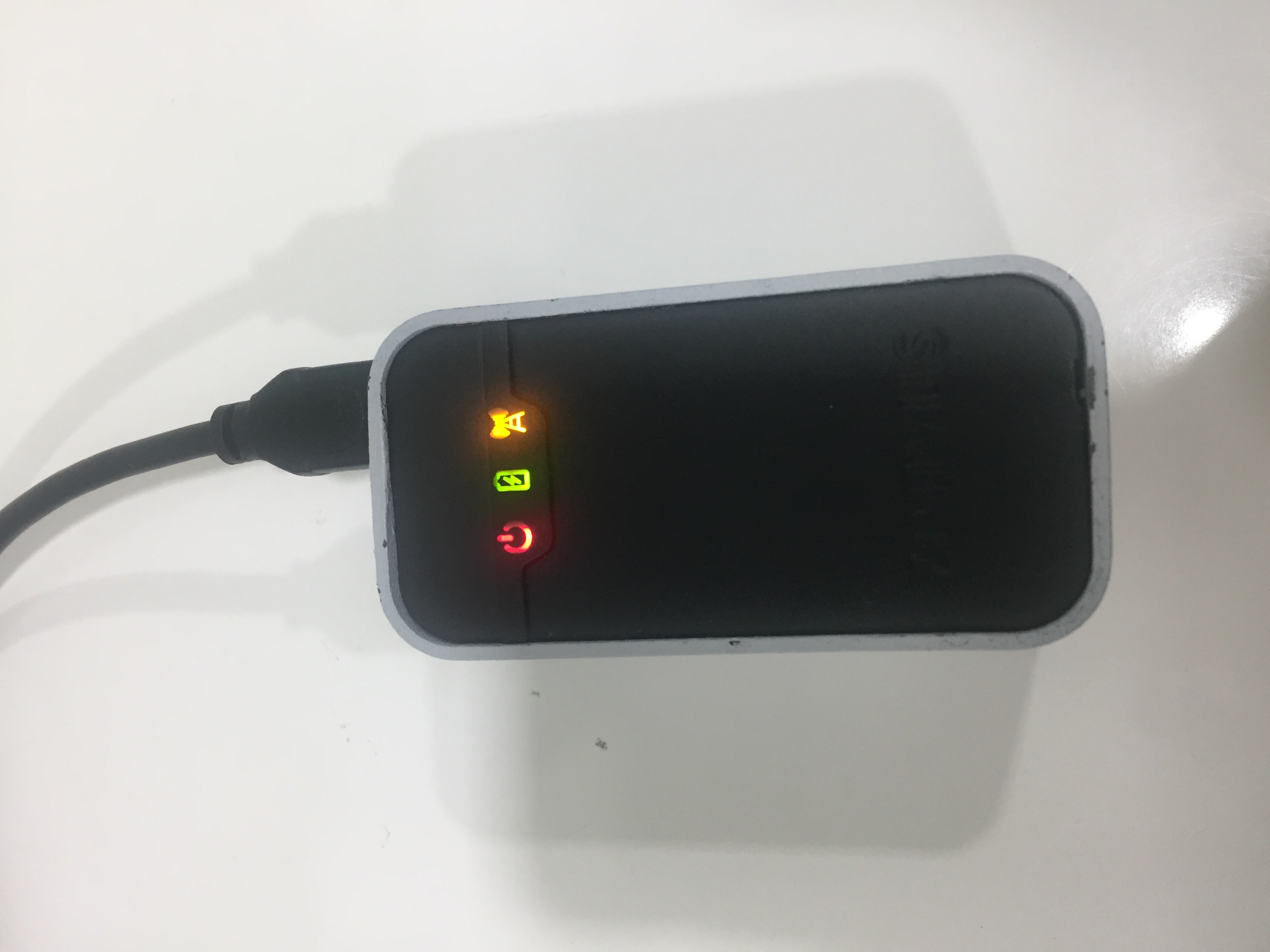
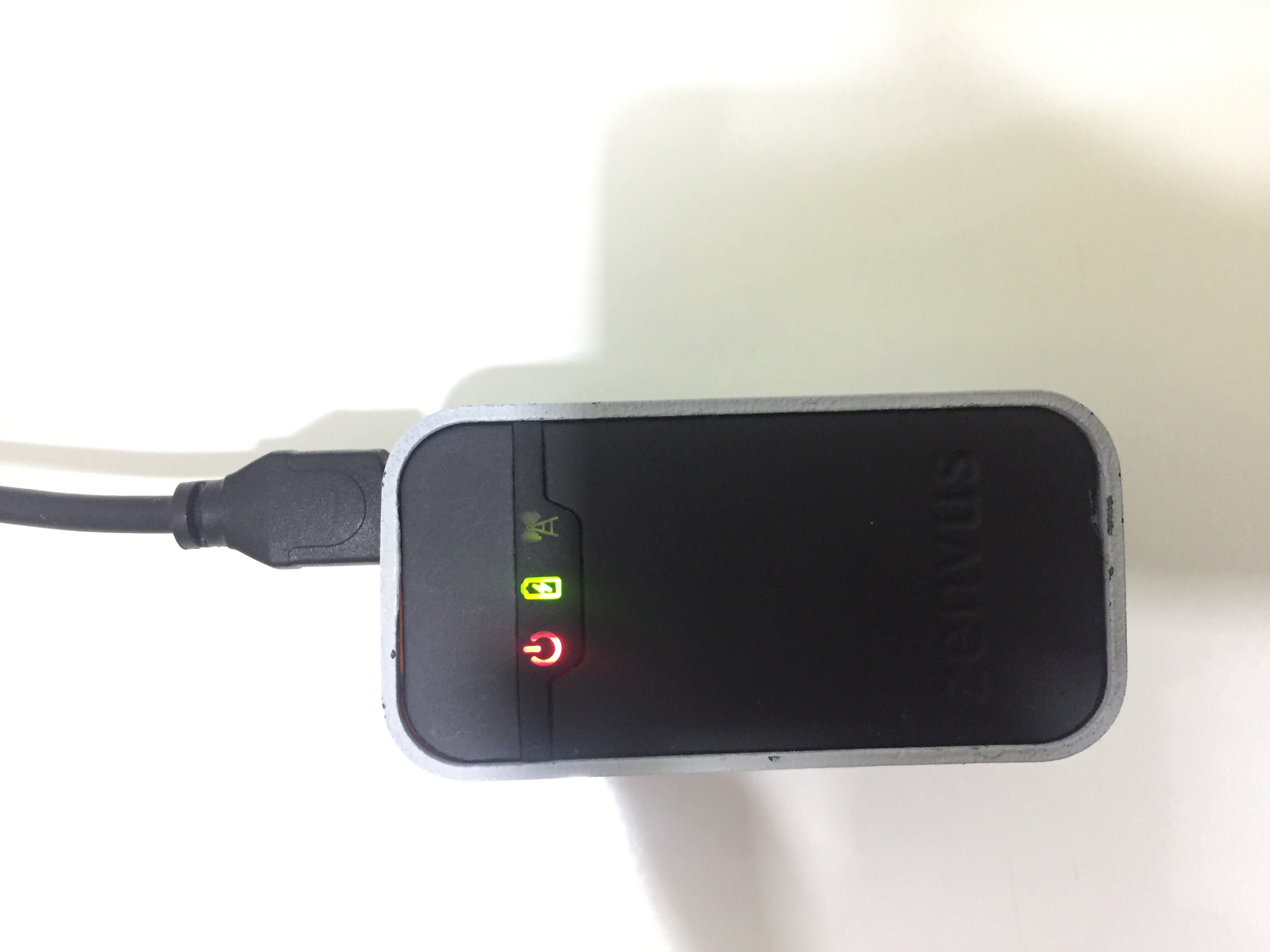
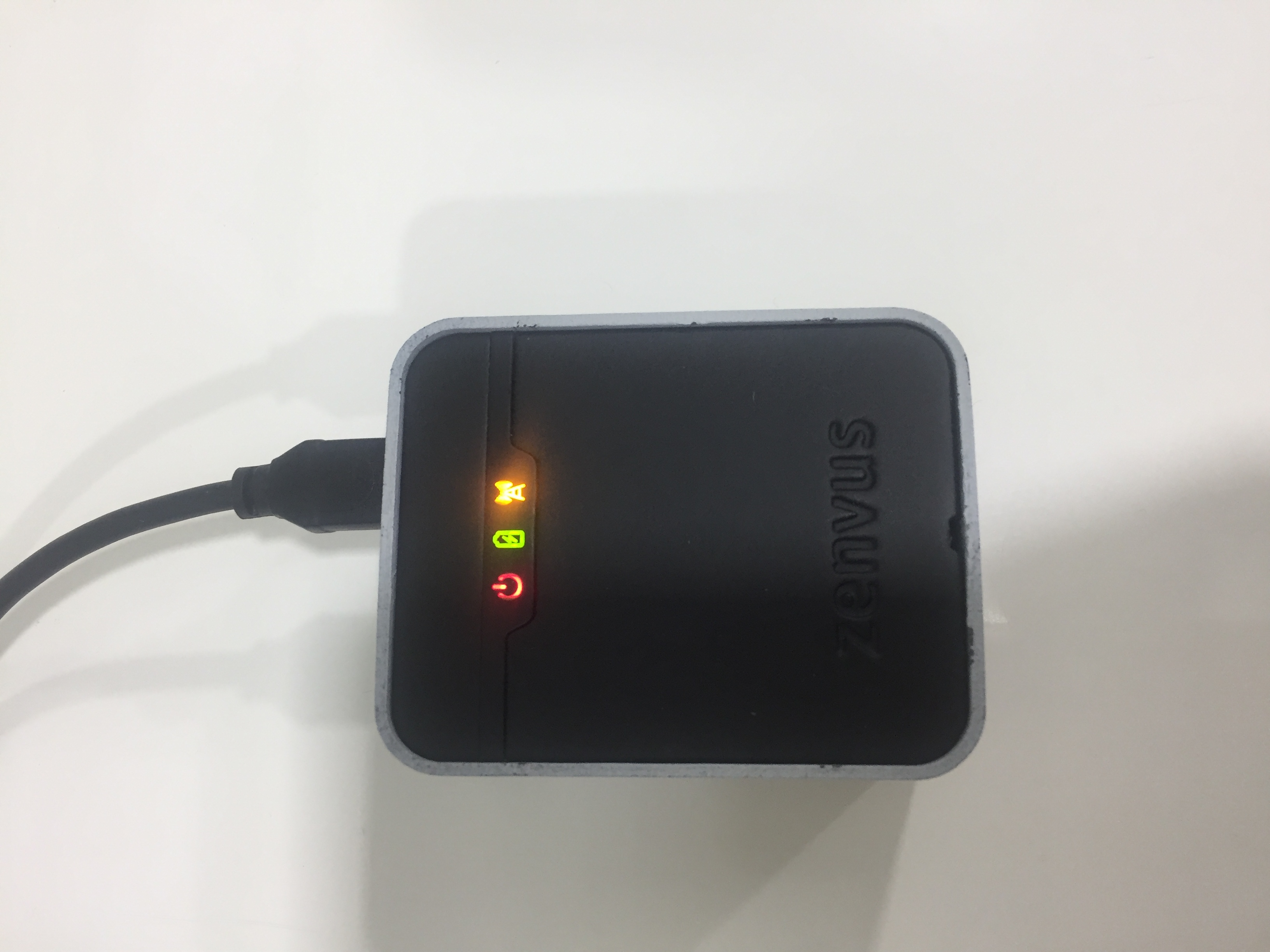
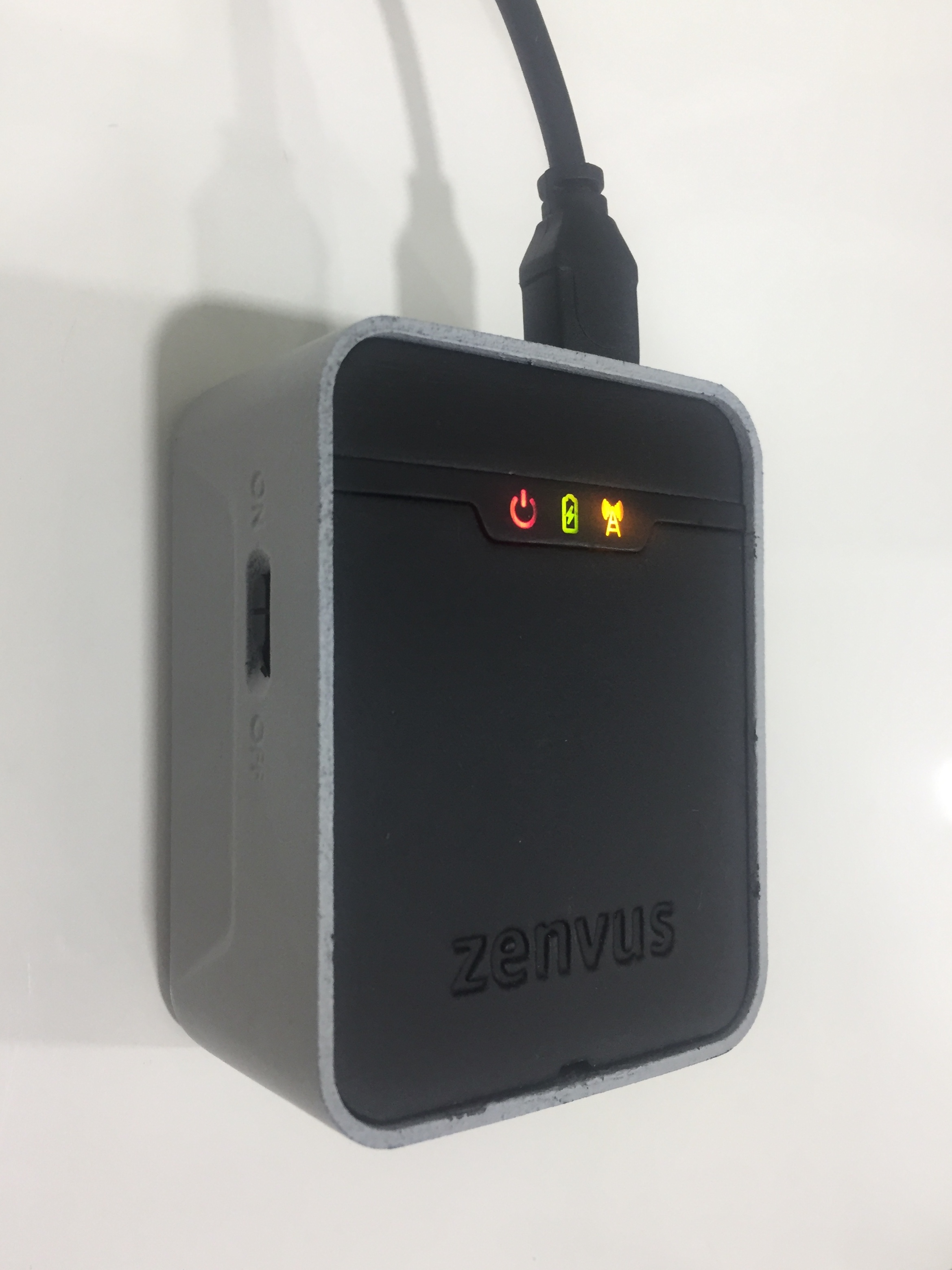
Yes, simply brilliant: my first consumer hardware product. We have always designed for enterprises. Through Zenvus Loci, we are coming. You have met Zenvus Loci Mini; we just unveiled Zenvus Loci Max. Electrons, we understand how you move! Zenvus >> intelligent systems

Zenvus Loci is a disposable or reusable package GPS that you can put in a briefcase, cargo, personnel, etc and monitor in real time its location. We see opportunities in tracking the specific cargoes (not just the trucks), ecommerce shipments, security guards, equipment on transit, law enforcement (police, army, etc), human (child, oil workers, etc), luggage (individuals shipping via buses, personal air travel luggage, etc), vehicles (no installation), etc. It is cheaper than anything in the market and it is rechargeable with USB. It has two versions: Zenvus Loci Mini and Zenvus Loci Max.

Please click here for slides and extensive description of Zenvus Loci. (These are 3D-printed, you can see the not-smooth edges. ABS factory production will super-awesome).

Zenvus Loci Mini
Zenvus Loci Mini
Zenvus Loci Max
Zenvus Loci Max


Pro and Cons of Third Party Logistics

0

By BHL Solutions

Meeting customer delivery demand should be the priority of any service or product company. Its shipping and fulfilment operations have to be tailored to convenience to suit the customer time and preferences. And this is why third party logistics comes in, to aid businesses in achieving customers’ delivery demands.

What is third party logistics?

Third party logistics (3PL) is a type of an outsourcing business which supports some or all aspects of a business’ shipping operations, the management and movement of their goods from manufacturers and distributors to end consumers. When a company outsources its shipping and fulfillment services, the services expected include:

  • Transportation
  • Warehousing
  • Inventory management
  • Customs brokerage
  • Freight audit
  • Payment
  • Shipping tracking

In short, third party logistics is an outsourcing service where your operational logistics from warehousing to delivery is being managed to save you time and fulfill customer delivery demands daily.

Functions of 3PL 

Warehousing is a type of third party logistics service provider that is integrated into a business warehouse and transportation procedures. It involves specialized storing and distributing of the goods. It is usually customized to handle storage, distribution, and product transportation.

Distribution: Distribution of large quantities of product can be a bit overwhelming, especially for small businesses. So, by outsourcing your distribution service to a third party logistics, you minimize your task and draw focus on other business core competencies. The services would include outbound order fulfillment, picking and packing, custom labeling, and manufacturing.

Shipping:  With a third party logistics, your shipping processes would be managed from start to finish, which  include management of carrier relations, and freight data and matrix reports for real-time visibility and increased transparency throughout the shipping process.

Transportation: When a company leverages on a third party logistics, what they expect is for the 3pl service provider to manage the inventory shipment between the company and its buyers. 

Pros 

Third party logistics has been designed to help businesses optimize their logistics operations. Whether a business owner or as an individual, here is how you can benefit from the services of a third party logistics.

It saves you cost:  Utilizing the warehouse services of a third party logistics saves you the cost of having to maintain your own warehouse and staff. You can now save money instead of spending it on stock levels and inventory storage fees.

Unlimited Access to Experts: A third party logistics company has a core specialization in certain areas of logistics, that’s to say expertise knowledge in those areas you might have no idea about. These areas often come with its own challenges, so by having an expert handle your logistics functions, you can have time to increase your business value. 

Simplified International Logistics: Third party logistics works for you when you sell products across countries whether between two or three countries, or if you are in the category of expanding your business internationally. Third party logistics companies handle the custom, documentation, and other international duties which may delay shipment. 

Cons

Everything has a disadvantage; here are some disadvantages of third party logistics:

No control of over delivery process:

Delivery is the most sensitive part of business, and issues arise during shipment, and are however impossible to get by, if you used a third party logistics company. And this will probably lead to series of back and forth, which would waste your company’s resources.

The initial cost of hiring a third party logistics company is high: At first, the cost of using a third party logistics company is expensive, and may have an effect on turnover. If your business doesn’t require substantial storage area, or have many orders, using a 3pl can weigh down on your business.

You can no longer monitor the quality of your products: This can be inconvenient if you have any quality control issues, or feel like you need to physically inspect your inventory for some reason.


Perspectives from BHL Solutions.