DD
MM
YYYY

PAGES

DD
MM
YYYY

spot_img

PAGES

Home Blog Page 6837

Comprehensive Explanation of RUGA Settlement Initiative in Nigeria

3

By Samuel Nwite

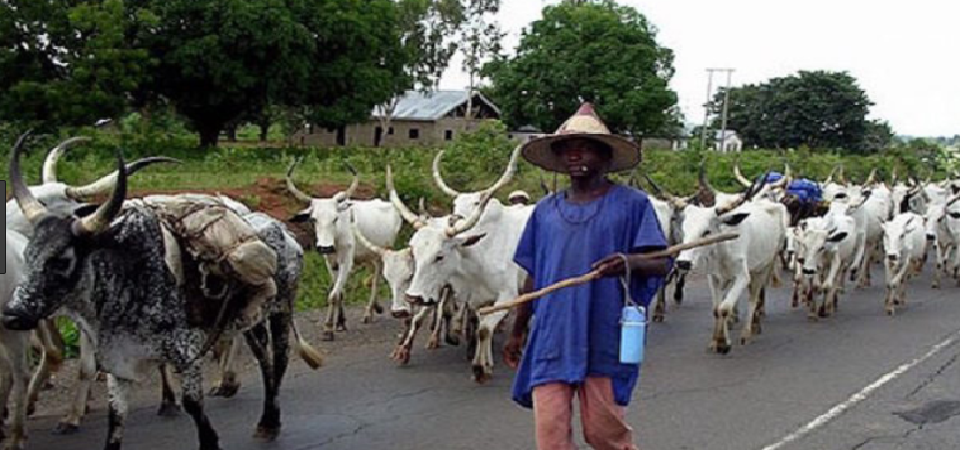
The Rural Grazing Area (Ruga) settlement initiative by the Federal Government of Nigeria (FGN) is bringing more chaos than the supposed tranquility. Many Nigerians have taken to social media to register their displeasure over the development with hashtags such as #SayNoToRuga and plan to take to the streets on Friday. There are so far three types of Nigerians involved in the sagacious development.

  1. Those in support of Ruga
  2. Those not in support
  3. Those who don’t know what Ruga is. Upon this triad, the Ruga row rests. But the third category beckons the responsibility to explain.

What is Ruga?

About a week before the Federal Executive Council (FEC) handed over, precisely on May 19th, it sat and discussed Ruga settlement for herdsmen in the 36 states across the federation. In the end of the meeting, multi-million naira contracts were approved in favor of the Ruga settlement. In defense of this decision, the ministry of agriculture issued a statement saying that Ruga is part of NLTP (National Livestock Transformation Plan).

In 2017, when the Nigerian vice president, Prof. Yomi Osinbajo was serving in the capacity of acting president, he used his office and position as the chairman of National Economic Council (NEC) to seek a solution for the incessant crisis between farmers and herdsmen that has resulted in loss of so many lives and property.

To achieve his aim of lasting peace, he started making wide consultations with service chiefs, governors, and whoever has something to offer. It lasted for about two years, and then in 2019, his efforts gave birth to a plan named National Livestock Transformation Plan (NLTP).

So when the ministry of agriculture attached Ruga to NLTP, that is evident of its headship by the vice president, it drew outrage and regional condemnations. The wobbling table holding the implementation of Ruga got messier when the association of cattle breeders, Miyetti Allah, added voice to the statement of the ministry of agriculture, that “Ruga is part of NLTP,” forcing the vice president to refute the claim, stating that Ruga is never part of NLTP.

(The NLTP has 5 pillars that clearly identifies what its plan and strategies of executing them are. The 5 pillars are:

  1. Conflict Resolution
  2. Justice and Peace
  3. Humanitarian Relief & early Recovery
  4. Human Capital Development
  5. Cross Cutting Issues.

Ruga is not in any way mentioned or attached to these pillars of priority areas. The main goal was to foster federal support in implementing the transformation of the livestock sector through the establishment of ranches, improved fodder production, economic investment into associated value chains, and importantly, compensating those affected by the violence for their losses.)

Unprecedented uproar ensued, with the South-East and South-South Governors vehemently refusing the Ruga settlement plan, those in the South West were divided, and so it is in the North. This is one of the reasons: According to the land use act of 1977, all land in a state is the custody of the Governor on behalf of the people. Apart from few areas where the FGN has exclusive jurisdiction over, areas like lands for rail line, seaport, airport etc. In view of this, the Ruga settlement seems more like a land grabbing invasion by the FG, which is instigating curious concerns.

The words on the streets and social media were that the FGN is on nepotistic land grabbing mission. A “misconception” that the FGN tried to clear through the issued statement that explained what Ruga is all about and how the governments plan to make it happen. According to the statement, ‘Ruga settlement’ is a provisional rural settlement for migrant pastoral families. Its aim is to provide them with basic amenities such as schools, hospitals, road networks, vet clinics, markets and manufacturing entities that will process and add value to meats and animal products.

In the light of the insecurity and threat posed by open grazing, the FGN sees it as a means to achieve peaceful coexistence between herders, farmers, and their host communities. The statement also added that participation by state governments is voluntary. So far, there have been 12 states that indicated interest in piloting Ruga through the Federal Ministry of Agriculture, and that’s enough to start with.

Although the statement explained so many things about Ruga, it didn’t calm the protests. There were suspicious loopholes, and it didn’t take a while to figure them out. For instance, Benue state has for long distanced itself from any programme that requires giving out land for cattle rearing, but to everyone’s surprise, it’s one of the 12 states said to have indicated interest. In fact, the FGN, through the Federal Ministry of Agriculture, has contracted Clear Sky Broad Band Ventures Limited to execute the Grazing Reserve Project at Otobi road, Oturkpo, before the Ministry of Agriculture wrote to the Benue state government seeking approval for the project.

source: provided by author

More to that, the opinion that has strongly opposed the Ruga development is that Cattle Rearing is a private venture just like every other privately owned business that runs in Nigeria. And it’s wrong for the FGN and states to spend taxpayers money funding private business, especially when there is no provision for that in the budget. The funding depends on the volunteered states and FGN. Each of the states is expected to provide N5billion and the FGN will match up the money. So for the 11 states that have volunteered so far (Benue excluded) N55 billion is expected. The more states indicate interest, the more funds the Ruga settlement plan will have.

What the presidency failed to explain in its statement is where Ruga emerged from. Since evidently it’s not part of NLTP that the vice president and NEC approved, or if the presidency is abandoning the well-articulated NLTP all of a sudden to embrace Ruga without consulting NEC. NLTP was developed through wide consultations involving all the 36 Governors and every stakeholder that matters. For about 2 years, the vice president, Prof. Osinbajo got everyone on board, discussed parts and parcel of it, and in the end, everyone nodded in agreement, prompting the Governors to make provisional budgetary allocation for NLTP in their respective states. This is the ranching deal that Nigerians know about and expected to be implemented. There is belief that the FG has reneged on NLTP, trying to play smart on NEC and the office of the vice president.

The sudden emergence of Ruga is stoking a lateral polity that may eventually set gloom precedents. Disorderliness in the presidency is one of them, lack of trust in the government is another, and more dangerously, the tendency of corporations or business associations constituting a menace just to get the government to dance to their tone.

The office of the president through FEC and the office of the vice president through NEC seem to be in disagreement regarding the best way to solve the farmer/herder crisis. And they are washing their dirty undies in the public.

The people are seeing more reasons to cling to their space of distrust in their relationship with the government. “Don’t believe anything they tell you” is a common sentence with a bitter meaning among Nigerians. It connotes the belief that there is a coated evil in every of government’s plans. Therefore, they should not be trusted even when there is an explanation to their actions.

Most Nigerians believe that the federal government is being economical in the way it’s handling the herder/farmer crisis to the favor of herdsmen. A few or no one has been brought to book, even though the crisis has taken thousands of lives. In 2018 alone, about 2000 deaths were attributed to Fulani herdsmen, and the number keeps counting even in 2019. While the government is yielding to the yearnings of the herdsmen, from funding to settlement, it appears that the government is negotiating its way out of a hostage situation: a predicament with a negative futuristic precedent. The premonition tendency that any other business group or association may violently force the government to bend to their wishes cannot be ignored. If the antecedents are not curtailed, it will become a detrimental norm that the future will hold against the present.
Before Naira and Cedi Retire, the Implications of ECOWAS’ New “ECO” Single Currency

2

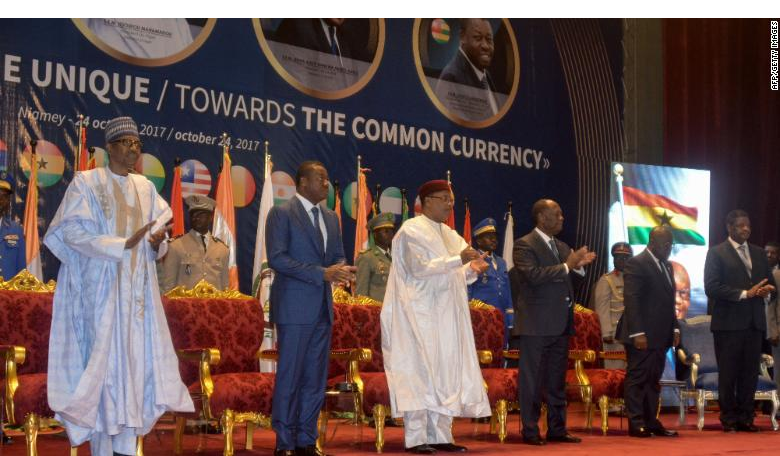
The Economic Community of West African States (ECOWAS) has adopted the name ‘ECO‘ for the planned West African single currency. The roadmap is after the integration of the regional economies (Wes, East, South, etc), they will merge at the continental level as one single African currency. If you want to understand the impacts, click to read  – I wrote a lead paper for the African Union during an African Union Congress on this topic.

The 15 member group announced at the end of an ECOWAS summit in Abuja, Nigeria’s capital on Saturday.
Six member countries, including Nigeria, Liberia, and Ghana, could be swapping their currencies for a new one – the ECO. Eight ECOWAS countries (Benin, Burkina Faso, Guinea-Bissau, Ivory Coast, Mali, Niger, Senegal, and Togo) currently jointly use the CFA franc.

Interestingly, the single currency is a regional or continental project that will favour Nigeria. Unlike the African Continental Free Trade Agreement (ACFTA) with its “rule of origin” risk to Nigeria, Nigeria is the risk factor in the single currency project. With our reckless spending and rambo-budgetary maneuvers, any currency union which Nigeria is a member, in West Africa, will see massive stress since all the other member states are inherently small, economically. Yes, Nigeria’s problems become everyone problems since everyone will be governed by a supranational bank which will be hedged to the Nigerian economy.

If you are part of a system where one guy controls 70% portion with the remaining 14 people sharing 30%, the big boy will be the key-main risk. Nigeria’s economy is largely West Africa’s economy as we are exceedingly dominant. The economy of Lagos is the second largest economy in West Africa after Nigeria!

In other words, no matter what Liberia does, if Nigeria is having problems with its economy, ECO will have challenges and Liberia will struggle. Why? The economy of Nigeria is what will influence the performance of ECO in West Africa. Magically, the small Liberian economy which is not up to the economy of Eti Osa local government area in Lagos state will be under the shadows of the big brother named Nigeria. There will be welfare losses to these smaller countries but none can rattle Nigeria because they are very small. All of them will hope Nigeria gets all right, otherwise ECO will cause havoc in their economies.

This is the deal: there will be huge welfare loses if Nigeria messes up and ECO fades. But where Nigeria acts well, West Africa will rise because single currency will boost trade and investment in the union while reducing frictions in commerce and industry. Yes, the exchange rate frictions among Naira, Cedi and other West African currencies (all will not exist by then) will disappear.

The Universe of Risk

0
Source: Risk Evolves

By Olowu Modebola Anne

Risk: It’s in the air you breathe,

In your drinking water, in your car, while you walk, while you sleep.

It’s at your backyard, even in your house, place of worship and your place of work.

There is risk everywhere.

It doesn’t matter you been risk averse, because that in itself is also a risk. Risk is just part of our existence, it’s an inherent necessary evil that one shouldn’t ignore but rather weaponize into a positive drive to yield beautiful results.

As, Esme Bianco simply put it ‘You can’t get anywhere in life without taking risks’. So, not only are human beings ‘Risk Takers’ but we are also ‘Risk tamers’.

In today’s modern society, folks are defied by risks from natural disasters, financial markets, man-made disasters, nuclear power plants, Cyber security and privacy issues, IT challenges and so many more. It’s a steep unending list of uncertainties and areas in which the risk of damage plays a diabolical role. It is therefore not surprising that organizations and enterprises spend a bulk of money in having resilient Risk management systems and individuals are also geared to hedge their risks through various means. It’s made us proactive enough to design frameworks on how to assemble the society in the perfect dealing order…

So, who is a Risk Taker?

Coombs’ theory postulates that each person has an idyllic risk level and that in choosing among lotteries with equal expectations the person will select the lottery that is closest to his/her ideal risk level. So, the subject of risk taking as not totally evaded from the act of decision making.

A risk taker is an individual who simply takes risk.

They are always very practical in their decision-making patterns, they usually leverage on facts and irrationally come to terms with their plans. They would rather play all the scenarios in their head before putting down a blue print of it.

They are born self-critics who try the path and road less travelled. They don’t care the consequences of their results in the first 5mins of thoughts conviction. They see a path, believe in it and give it a go, even despite failing at several attempts towards the same goal. They don’t give up and they always create solutions; because they always find new ways of doing the same thing but smarter and in many cases, faster and pleasing.

My favourite line from a risk taker is ‘I just went with my guts’

Just like Captain Joe Glass from the movie ‘Hunter Killer’ who never gave his US sub Navy Seals the authorization to fire back at the Russians. It was almost going to be a disaster if the Russian war ship had not defended them. But really, that was a major risk taker.

Some famous risk takers are: Bill gates, Warren Buffett, Donald Trump, Henry Ford, Richard Branson, Elon Musk, Jeff Bezos,Jack Ma etc

And what does it mean to be a Risk Tamer?

A risk tamer may either be a risk taker or not, this is just an individual that is confronted with an inherent or residual risk and finds an economic and effective way of analysing the risk, evaluating and controlling it; by transferring the risk, accepting it or mitigating it.

This is what life really is all about, either you are managing an active spare tyre on the road or you are trading just one at a time basket of volatility ETFs (exchange-traded fund). A risk tamer develops a methodological approach to dealing with their circumstances and soon moves from high risk points to low risk points.

They are also fast thinkers and would usually use the line.

‘I saw it coming and I just had to pull it down’.

They are strategic in every way and will always pass for making the wrong decisions at a go. Their businesses last longer, and they are usually employed by risk takers to help them manage their risks or organizations.

Some famous risk tamers are: Condoleezza Rice, Larry page, Hillary Clinton, Henry Ford, Larry Ellison, Jeff Bezos etc.

To sum it up, as an individual, you should evaluate yourself and proactively make yourself someone who knows how to manage the diverse existing risks, because it is really only then, you know when to take the ‘said’ risks and also know how to tame them, making you become the boss of Risk itself- what I love to call, becoming A risk manager.

So, either as an individual or an enterprise, when you know how to manage risk, you have successfully sieved your fears away from the power of innovation, by taking the risk or when you set your thresholds and actively check your risks against your productivity, positively then you understand that risk as only been a blessing.

Some famous risk managers are: Jeff Bezos, Howard Schultz, Mark Zuckerberg, Bre Pettis etc


Ref:

‘A Theory of Risk’ by Alexander Pollastek & Amos Tvers

Reasons for the Survival and Increase of Private Owned Schools in Nigeria

3

By Ozioma J. Okey-Kalu

I read a post on Facebook about two years ago, where the writer accused private school owners of killing the education system of Nigeria. I read another post, this time on WhatsApp, where the writer felt that there is a great discrimination in the education sector because of the presence of private schools. This last writer did not explain what he meant by this ‘discrimination’ and how private schools caused it. Complaints against private owned schools are so numerous, some of which are true while the others are so fictitious. Imagine someone saying that private schools recruit unqualified teachers. This last assertion made me laugh, because I know better.

Despite mumbles and outcries against private schools, especially by public school teachers and parents whose children are in public schools, these schools spring up every day and everywhere. Today, it is hard to find a street in Nigeria without a school located in it. Everyday, from 6am to about 8am, our roads are filled with school buses moving from house to house to pick up children and convey them to school. This same ritual is repeated from 3pm to 5pm, this time to return them back home. One could not help but notice that our education sector is being taken over by the private sector.

As a young school girl, back in the 80’s, all the schools I know are owned by the government, religious organisations or tertiary institutions. With time, private individuals began to open crèches (then known as daycare), which later graduated to nursery schools, then to primary schools, and finally to secondary schools. These days you can hardly find a private school that does not have crèche, nursery, primary and secondary sections (they usually add ‘group of schools’ to their names). Those that don’t have all of them are making plans for that. Honestly, the way private tertiary institutions are springing up these days, I am sure that very soon they will be included to the list of sections belonging to one ‘group of school’. But I believe you know that some private schools already have universities or polytechnics.

Having worked with private owned schools for more than ten years, and being a product of public schools, I think I am in a position to give some reasons why private schools are surviving and increasing in number in Nigeria despite their exorbitant fees and, in some cases, lack of outdoor recreational facilities. But before I do that, I will like to point out areas private schools need to improve on.

The Shortcomings of Private Schools

Yes, the complaints against private owned schools in Nigeria may be exaggerated but they are not too far from the truth. Some of their shortcomings are:

  1. Private owned schools are notorious for giving students and pupils tasks that are higher than their level of education (I am not talking about brain teasers here). A good example is when Primary 2 English and Mathematics textbooks are used for pupils in Primary 1, all in the name of maintaining high standard. And the fact that most of these children are under-aged for their classes is worrisome.
  2. It is only in private schools that foreign curriculums are used. I think Ministry of Education should look into this. Imagine a student in Nigeria being taught the British curriculum. And when he leaves that school, the next one he goes into will teach him the American curriculum. From there, he might go into the one that uses Australian curriculum, and the story continues. When this student reaches to gain admission into a Nigerian university, he will face JAMB that uses Nigerian curriculum. And a lot of parents are wondering why their children are not doing well academically despite all the money they spent on their education. In as much as I know that our Nigerian curriculum needs constant review and upgrade, all the schools in Nigeria should be made to use Nigerian education curriculum no matter who their owners are. Enough with this borrowing tradition of ours.
  3. Some private schools may think they are helping the students and their parents, but they need to consider the number of hours spent on academic works in the school (after which the child goes home to face a lot of school assignments and then, the private tutor). I was appalled when a friend told me that school bus picks her children around 5am and bring them back by 6pm. These are children in classes ranging from Nursery 2 to Primary 5. When I asked further, I discovered that normal school academic work ends by 3pm, by the which time the pupils go for 30 minutes short break before going back to class for the one hour thirty minutes compulsory tutorial. These schools are causing a lot of damages to these children. A law has to be enacted to discourage that. They can use most of these times spent on academic works on extra-curricular activities.
  4. Staff turnover in private schools are so high. This could be for different reasons – from low salaries to poor managerial skills of the management. Whatever the reasons might be, this high turnover rate could lead to learning instability in the pupils. They will have to keep adjusting and readjusting to different teachers and their teaching methods.
  5. Examination malpractice is high in private schools. This is because some of these schools want to retain their customers, so they do anything possible to keep records of good results for external examinations. Note that examination malpractice is also common in government schools, but that depends on who the head is.

Reasons for the Survival of Private Schools

Below are some of the strategies employed by private schools that kept them afloat:

  1. Constant Staff Trainings: Private schools continue to train and retrain their staff. The trainings given to these staff members are not only on teaching methods and techniques, but also on good customer relation. This is part of why teachers in private schools handle students better and are more polite to their students’ parents and visitors.
  2. Constant Supervision: The owners of the schools want to make profit. To them, their schools are business ventures and investments, which must grow. As a result, they ensure that there are thorough supervisions of works going on in their schools. With this, truancy by staff members is prevented.
  3. Openness to Innovation: These school owners understand that there are many competitors and that they need the patronage of many students to stay afloat. To retain their customers, and attract new ones, they constantly think of new ways to improve teaching and learning activities and how to make the environments conducive for the students.
  4. Staff Hard-Work and Self-Improvement: I laughed when someone said that private schools employ and use unqualified teachers. I laughed because a lot of teachers in government-owned schools have academic certificates but not qualifications. I laughed because a lot of teachers in government-owned schools are still recycling their old obsolete lesson notes, some of which may be more than ten years old, without adding any new knowledge to it. I also laughed because teachers in government owned schools rarely pay special attention to academically weak students. Yes, some private institutions may employ people with lower certificates at the initial stage because they want to reduce cost. But these people are fizzled out as time goes on, unless they were able to upgrade their qualifications and show some form of improvement. Teachers in private schools know that their jobs can go anytime so they keep improving on themselves to keep abreast of the latest discoveries in their areas and also to make themselves employable, in case they lose their current job.
  5. Working Facilities and Amenities: Most private schools do not engage in outdoor recreational activities for the want of space, yet they outsmart public schools that have much space by ensuring that they have facilities and amenities in their schools. In fact, one easy way of detecting which school is private and which is public is from their structure. Any school that has missing louvers, doors and roofs is likely a public school. Good toilet facilities, electricity, water and security are considered luxury in public schools. One cannot afford to expect the existence of modern facilities used in classroom management in these schools. Honestly speaking, most public schools in Nigeria today look unkempt and dilapidated. They always remind one of the proverbial public-owned goat that died of hunger.

Private schools, on the other hand, understand the importance of the aforementioned facilities and ensure that they are always available and working. Their maintenance culture is worth emulating.

From all that is happening, I can say that private owned schools have come to stay. No amount of complaints and mumbles against them can send them out of the education sector since our public schools are not working. So, our major concern now should be how to make the teachers and other staff members working in Nigerian public schools emulate their counterparts in the private sector to prevent these schools from disappearing from the face of the country in the nearest future. Calling on Ministry of Education to increase their rate of supervision may not yield enough fruits. So I will suggest that community leaders, members of the Upper and the Lower House and philanthropists should come together to find ways of boosting the public schools in their communities. If this is duly done, there will be equal, affordable and undiluted education for all.

You Need a Chief Experience Officer In Your Firm

2

By Nnamdi Odumody

The expected optimal focus of organizations in today’s rapidly changing world is how to deliver unique customer experiences while making sure that their employees are motivated as well. The customer and employee experiences should function interpedently to ensure great outcomes in line with organizational strategic goals.

Yet, in some firms while being fixated on ensuring wonderful customer experiences, they tend to neglect their employees even as digital transformation is implemented in the organization’s operations to drive efficiency. When employees of Foxconn, the Taiwanese contract manufacturer for leading consumer electronics technology brands, protested some few years ago over the harsh conditions of labour they were subjected to, its founder and then CEO, Terry Gou, stated that he would replace them with robots.

While robotics can enable his organization achieve partial efficiency, firing about a million employees wouldn’t solve the problem which he had failed to solve: making sure that his employees are always happy. Through effective management of the customer experience and the employee experience, organizations gain competitive advantage than their competitors. Anyone that overlooks that interplay will not build any durable competitive entity. To win this interface redesign, a Chief Experience Officer (CXO) may be needed.

A chief experience officer (CXO) is an executive who ensures positive interactions with an organization’s external customers. The job title “chief experience officer” is increasingly replacing that of Chief Customer Officer in retail and entertainment industries and Chief Activity Officer in healthcare and travel

The Chief Experience Officer is saddled with integrating the customer experience and employee experience to deliver successful outcomes for the enterprise. The separation of both the customer experience and employee experience leads in the enterprise breeding competitions for attention and resources. The implication is that the organization can derail on its core objectives.

The Chief Experience Officer will help in making the employees to understand the customers to serve them better. The incumbent will also make the organization’s leadership to understand their employees, creating an ecosystem to deliver wonderful experiences to both the customers and employees. This symbiotic relationship creates a connection between the customer experience and employee experience.

Largely, the grand roadmap for the CXO is to advocate for the integration and championing of customers and employees perspectives in the C-Suite, measure the impacts of the customer experience on employees, as well as the employee experience on customers. More so, the CXO examines how all the customer and employee satisfaction impacts the organization’s key performance indicators.

Nigerian organizations need to create the Chief Experience Officer roles to ensure that the organization’s responsibilities to its employees and customers are aligned to create positive outcomes.