DD
MM
YYYY

PAGES

DD
MM
YYYY

spot_img

PAGES

Home Blog Page 6846

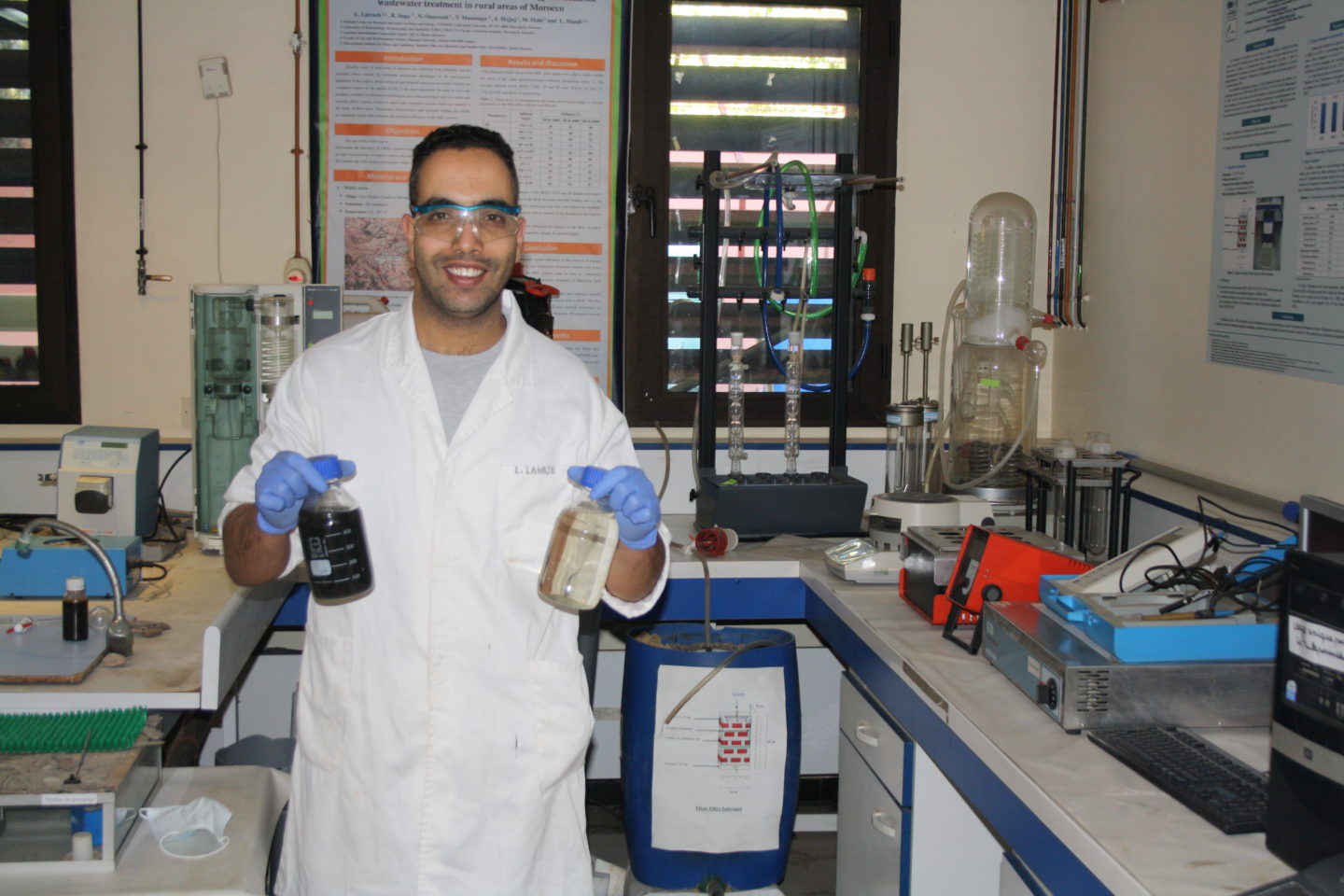
Morocco’s Green Watech Is Transforming Wastewater to Useful Cases

0

By Nnamdi Odumody

According to the World Health Organization, more than 2 billion people around the world do not have access to adequate and safe sanitation services. In developing countries, 800 children die every day due to diarrhea diseases mostly from poor sanitation.

In Morocco, 15 million residents in 32,000 villages suffer from environmental pollution caused by the direct rejection of wastewater without any treatment causing pollution and diseases from bad water.

Green Watech, a Moroccan startup, wants to fix this friction with an ecofriendly innovative solution called ‘’Multisoil layering technology’’ which is based on water filtration  using low cost and available materials such as soil, gravel and sawdust. Wastewater is collected from households and treated  with its  technology to produce high quality treated water that can be used in irrigation and other areas.

Its solution has a low investment cost, occupies a small area, is simple to operate by the local populace, and removes 90 percent of pollutants and pathogens. Also, it requires no energy for operation and has more than a 20-year lifespan.

Across the African continent, untreated wastewater is causing serious health risks for those who reside in slums and shanties. GreenWatech’s proprietary solution will help in transforming the untreated wastewater to usable cases.

On Ruga Suspension: Promoting National Cohesion through Consensus Approach in Driving Policies

0

By Kalu Ndukwe

We live in an era in which there is growing general feeling that things should not continue to be done the wrong way. This has led many to rise up and embrace the spirit of the time, by asking questions, speaking out and also writing to demand that whatever is worth doing, is worth doing well.

The level of mutual suspicion in Nigeria, growing day by day, is not helped, in any way, by how sensitive national issues are approached. Nigeria is a diverse society comprising of multicultural, multiethnic and multi-religious groups. Painfully, our ethnic, religious and political affiliations have done so much, in recent times, to make us see more of our differences. This awful reality is partly due to the practice of enforcing programs or policies that significantly affect people’s lives without consulting them to make their opinions, and partly because whenever a critical policy is initiated, one sees a situation in which the scrutiny being made on the policy raised, is to discover the insincerity of the originators and how they seek to use the policy to their best advantage, at the detriment of other groups in the country.

This leads to serious want of an unbiased examination of the advantages and disadvantages of national policies in this country. These two cases are interrelated in that it is the persistent exploitative tendencies of the former that lead to the biases expressed in the latter. The result is lingering dissenting voices and disunity.

This is the case with the RUGA initiative, which although it’s praised as a strategic move “that seeks to settle migrant pastoral families (in) rural settlement in which animal farmers, not just cattle herders, will be settled in an organized place with provision of necessary and adequate basic amenities such as schools, hospitals, road networks, vet clinics, markets and manufacturing entities that will process and add value to meats and animal products”, it has generated more controversy than is expected of a ‘supposed good’ policy initiated to address the critical national issue of “herders/farmers clashes that have claimed many lives and property worth several millions destroyed.”
The reason for the controversy is not far-fetched. In view of high level of mutual suspicion and how fragile peace has become in Nigeria, introducing a controversial policy without in-house consensus and wide consultations with critical stakeholders was always going to be a problem. The suddenness and haste with which the RUGA was brought into national limelight, by the Ministry of Agriculture and Rural Development, (even though approval had earlier been given for the comparatively better National Life stock transformation Plan (NLTP), spearheaded by the office of the Vice President), and the deceitful manner in which its (Ruga’s) implementation was being handled made it difficult to accept the argument that it was all good; that there was no sinister agenda behind it.

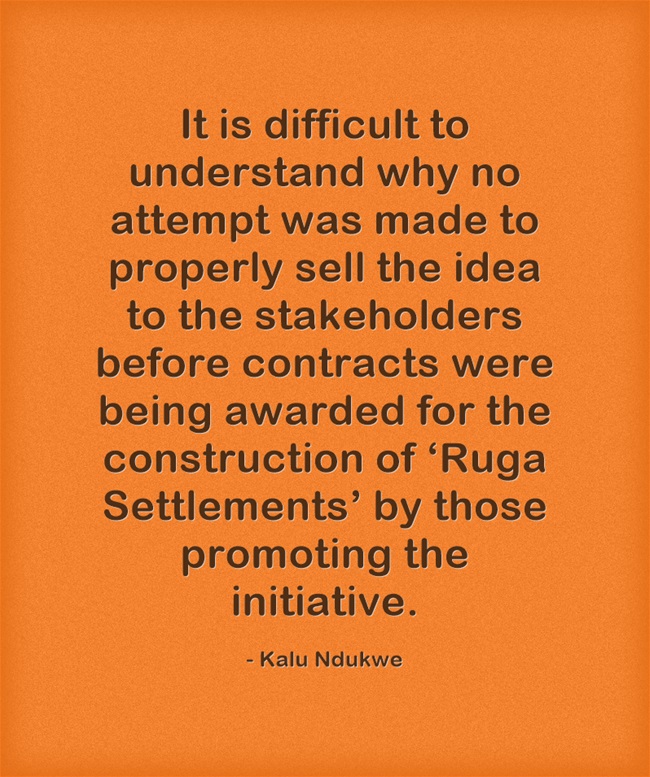
It is difficult to understand why no attempt was made to properly sell the idea to the stakeholders before contracts were being awarded for the construction of ‘Ruga Settlements’ by those promoting the initiative. There is also no evidence that the money being spent was appropriated by the National Assembly. This is aside the fact that the implementation was coming at a time the president is running the country with neither a cabinet in place nor officially announced aides.

“That we are faced with economic challenges that require modernization of old modes of production is not in doubt. But how we approach problems associated with the changing security and social integration challenges in our country is at the root of the current crisis. At a period when an atmosphere of ethno-religious suspicion has replaced the previous harmonious coexistence, somebody ought to have anticipated that whatever its merits, implementing a ‘Ruga Settlements’ scheme demands more than merely awarding contracts.”

The suspension of RUGA was highly predictable. Unlike the NLTP which promises that only willing States may join the scheme, the presidential spokesperson Garba Shehu, speaking of RUGA, had said “the federal government had “gazetted land” in all the states of the federation“. This didn’t go down well with the rest of Nigerians, that such a serious project which will significantly alter how things are done in their respective states, is being implemented without necessarily consultation.

The lesson here is very simple, every section of Nigeria wants to be responsible for what happens to them; are no more willing to, just, accept that things be imposed on them without letting them make necessary cross-check and give their views; and will appreciate that relevant stakeholders be consulted, to address critical concerns before policies that will impact on the lives of Nigerians are implemented. That the threat and ultimatum by a Northern Group has been met with strong condemnation by other stakeholders and even vehemently dismissed as empty, goes further to stress the growing unwillingness of majority of Nigerians to accept any policy short of a general consensus. It then makes sense to emphasize that joint effort should focus on promoting national cohesion through consensus approach in driving national policies.

Wave20 Is Solving Clean Water Problems in Developing Countries

0

About 1 billion people are affected by the water paralysis globally, and a vast majority of them live in coastal areas in developing countries. Sea water desalination is a common solution but it requires a connection to a strong and reliable electricity grid.  As a result of the fact that its target market typically lacks sufficient grid capacity, and cannot afford the capital or time required to build and deploy grid connected systems, Resolute Marine has devised a unique solution to this friction: Wave20. Wave20 is the world’s first wave driven desalination system that can be deployed quickly, operate completely off-grid, and supply’s large quantities of clean fresh water at competitive cost.

Our mission is to significantly improve access to water for coastal populations and industrial/agricultural operations in developing countries and small island developing states (SIDS) and to displace the diesel-electric desalination system that are currently in wide use worldwide.

Wave20 provides access to low carbon energy to millions of people living in rural and isolated communities. Each plant will produce 4,000m3 per day of fresh water enough to cover the needs of 40,000 people, and reduce C02 emissions by 4,346 ton per year ,which is equivalent to taking 436 cars off the road. Wave20 provides access to low carbon energy to millions of people living in rural and isolated communities. It won the MIT Solve Award in 2018.

Coastal states like Lagos, Rivers, Delta, Bayelsa, Akwa Ibom, and Cross River in Nigeria, and countries like the Gambia, and Cape Verde which are all located within the Western axis of the Atlantic Ocean in Africa can adopt this innovation to solve the clean water paralyses in their localities.

My Personal Reflections on the African Cup of Nations

0

By Nnamdi Madichie

It has been a long ten years ago since I first reflected upon the development of African football. In my 2009 paper entitled “Management implications of foreign players in the English Premiership League football,” I pointed out how globalisation has affected and reconfigured professional sports using the influx of foreign players into the English football league.

Just today, 6 July 2019, the holders, Cameroon were knocked out of the Africa Cup of Nations by Nigeria in what the BBC described as a five-goal last-16 thriller.

This is how today’s BBC commentary summarised the clash between Nigeria and Cameroon

“Goals from Stephane Bahoken and Clinton Njie saw Cameroon lead 2-1 at half-time after Odion Ighalo had put Nigeria ahead in Alexandria, Egypt. But two goals in three minutes swung the game back in Nigeria’s favour and set up a quarter-final with either hosts Egypt or South Africa.”

Odion Ighalo (Julius Berger, Watford and Changchun Yatai Football Club) equalised before the forward set up Alex Iwobi (Arsenal) to hit the winner. We must not, however, forget the role of maestro, Ahmed Musa (CSKA Moscow and Leicester FC) in the build up to the winner.

I have also talked about AFCON2010 in a paper entitled “Giving the Beautiful Game a “Pretty” Bad Name: A viewpoint on African Football,” where I outlined the massacres in Cabinda.

This year’s hosts of AFCON are an interesting case considering that while the country is clearly “African” it is also defined as part of the MENA (Middle East and North Africa) region. This speaks to my 2013 paper entitled “Ode to a ‘Million Dollar’ Question – Does the Future of Football Lie in the Middle East?

More recently in 2016, in a special issue of Marketing Intelligence & Planning which I co-guest edited, I highlighted the need for a league rebrand. This was articulated in an article entitled “Re-branding the Nigerian Professional Football League: open play or dead ball?” where I outlined he challenges of Nigerian Professional Football League teams at the club level, with a view to aligning this with developments at the country level, and especially so in the aftermath of the 2014 FIFA World Cup in Brazil.

I also pointed out that “in the long history of the FIFA Football World Cup, only three African teams have ever reached the quarter finals –notably Cameroon in 1990, Senegal in 2002 and Ghana in 2010.”

The FIFA World rankings are bound to change as the AFCON gets into the quarter finals stages with Nigeria awaiting tonight’s winners from the clash between Egypt and South Africa currently on.


Learning from the IBM Salesman

2

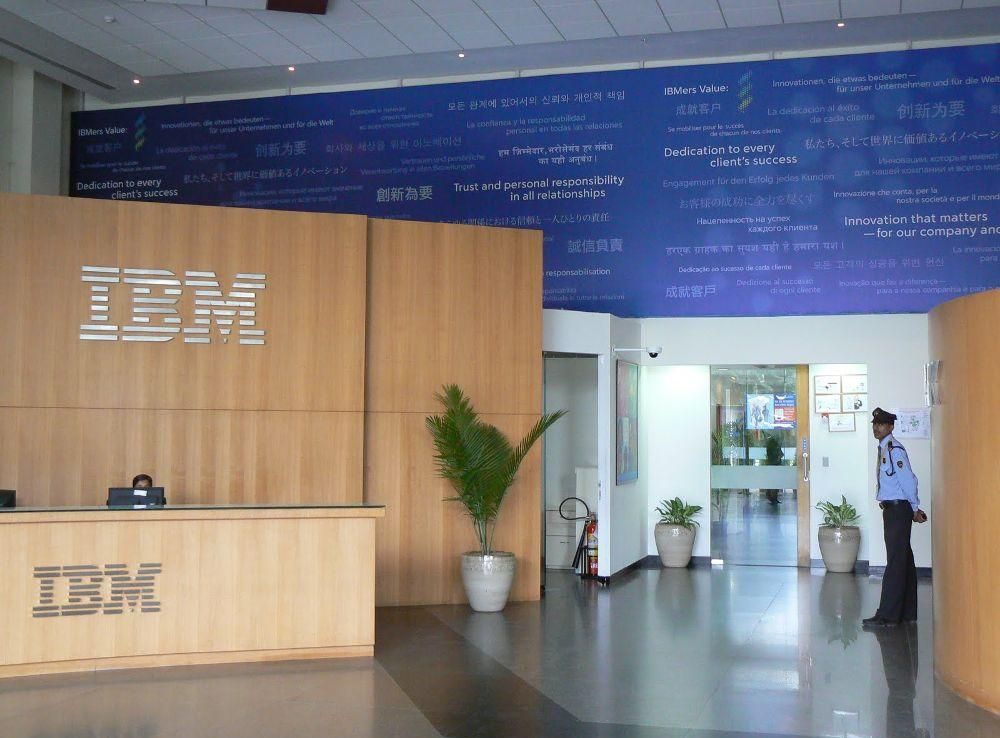
IBM had and continues to have a great history. But it is evident that IBM is not seen as one of the most innovative and dominant technology companies of this era. When you discuss great tech companies, you imagine the likes of Google, Apple and Samsung despite the fact that IBM is as great as them, if not technically greater, in some domains. Yes, this is not really about technology but customer perceptions and imaginations. For example, IBM has spent years working on AI for different applications but the AI solutions many of us experience in our homes and pockets are coming from Amazon Alexa, Google Assistant and Apple Siri. IBM may be doing great in the enterprise world, but its impact remains abstract to many people. Yet, there is something IBM has in abundance for us: technology history to learn.

Great companies tend to have alluring stories to explain their origins: a charismatic founder, an innovative idea, or a product or technology that goes on to become part of the culture of America itself. IBM’s story isn’t like that. As explained in a new history of the firm by former IBM executive James Cortada, the company’s beginnings trace to the financial ambitions of New York businessman Charles Flint. He had a talent for cobbling together companies to reap rewards through public stock offerings, and in 1911 he stitched several firms into a holding corporation called the Computing-Tabulating-Recording Company…

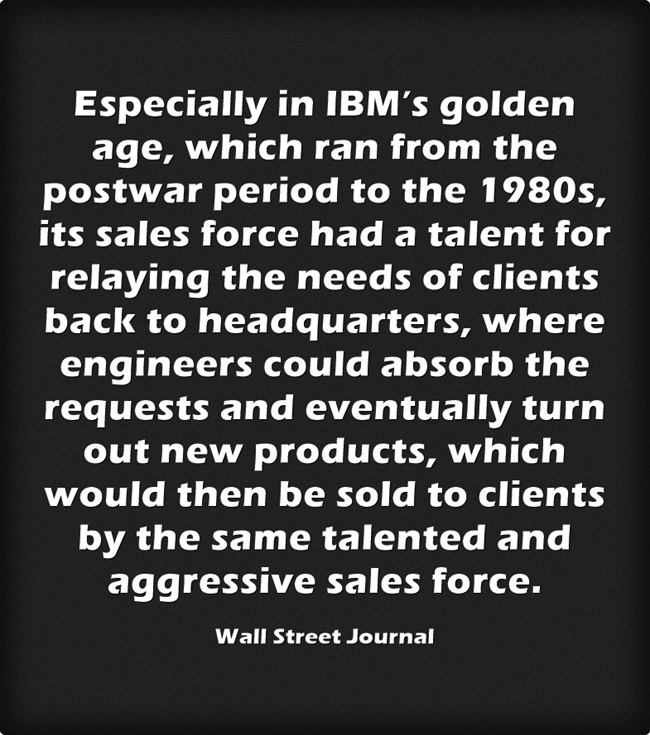
Simply, you can get into the mind of the IBM salesman, and how the salesman communicates the needs of the customers to the engineer. And the engineer meets those needs through products and solutions, and then returns back to the salesman for him to sell to the customers. It is an amazing part of IBM triumph for decades. This quote explains it cleverly.