
DD
MM
YYYY

PAGES

DD
MM
YYYY

spot_img

PAGES

Home Blog Page 6863

Nigeria Needs A Fourth Industrial Workforce To Compete Globally

2

By Nnamdi Odumody

In this Fourth Industrial Age, talent has become a highly sought after factor as it has emerged as the major determinant of where capital which is scarce is moving to. As innovation is a prerequisite for the global competitiveness of countries, it is the investment in human capital development that will position nations for leadership in this era.

The United States, which until recently, followed by Hong Kong, was the most globally competitive economy, is now third, exchanging positions with Singapore. Its Ivy League universities help it to attract global talent. The talent has been critical for America in creating innovative solutions. The talented people lead to the emergence of successful companies that boost America’s GDP. Of course, the new course on U.S. immigration could cause a dislocation as global talent moves to other nations where they can work freely.

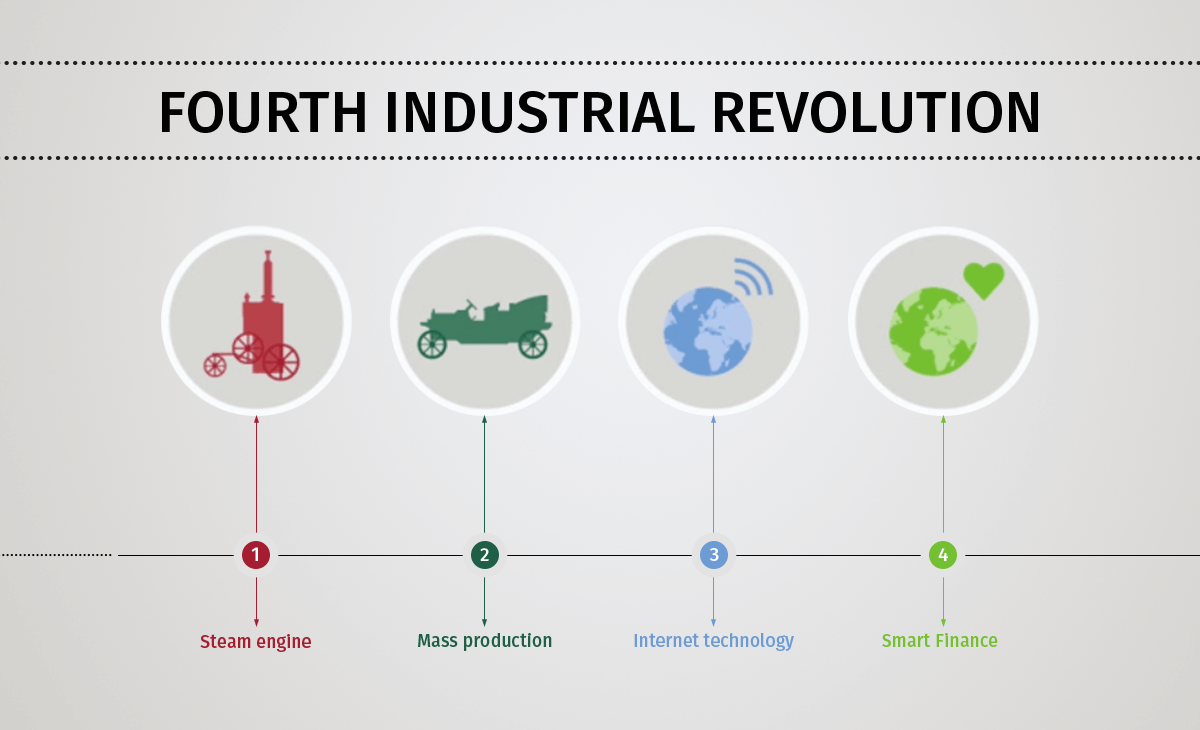
Singapore has a Skillsfuture Programme which is to prepare Singaporean citizens with future ready skills like Agility, Adaptability, Collaboration, Critical Thinking, Emotional Intelligence, Deep Learning and Machine Learning. Other skills included are Blockchain, Cybersecurity, Cloud, Robotics, Precision Engineering, Biotech skills, Additive Manufacturing, Embedded Systems and Mixed Reality. They have done this to position the nation as Asia’s Innovation and Talent Hub. It has Singapore University of Technology and Design (first of its kind) where students are taught how to apply design thinking in their programme of study, and area of specialization, to solve problems common to Asia and the rest of the world. Some of these problem include climate change, and environmental sustainability.
Singapore’s National University of Singapore is among the top-rated in Quantum Computing while the world’s most cited scientist in 3D Printing, Prof Chua Chee Kai, of the Singapore Centre for 3D Printing, Nanyang University, Singapore is a Singaporean. Also, the leading Polytechnic Nanyang Polytechnic is not left out of the talent breeding ecosystem for its Smart Nation Initiative with a Digital Convergence & Mobile Innovation Centre with Samsung, IOT Open Innovation Centre with Intel, Big Data & Analytics Innovation Centre with IBM, Games Solution Centre with MDA & Sony, Additive Manufacturing Innovation Centre, Centre For Digital and Precision Engineering, Centre of Innovation for Electronics.

Singapore also has an Institute of Manufacturing Technology which is to come up with innovative solutions, aimed at achieving efficiency and making its highly rated industrial sector globally competitive. More so, it has a Centre of Innovation for Supply Chain Management. Most of the leading biotechnology, consumer goods and enterprise technology companies have Research and Development Offices in Singapore. Singapore’s public sector is also integrated into its skills development programmes which is why they are ranked the best worldwide in performance. For a nation of 270 sqkm and population of 5.6 million, the effect of all these is a Per Capita income of $52,960.7 and GDP of $297billion.
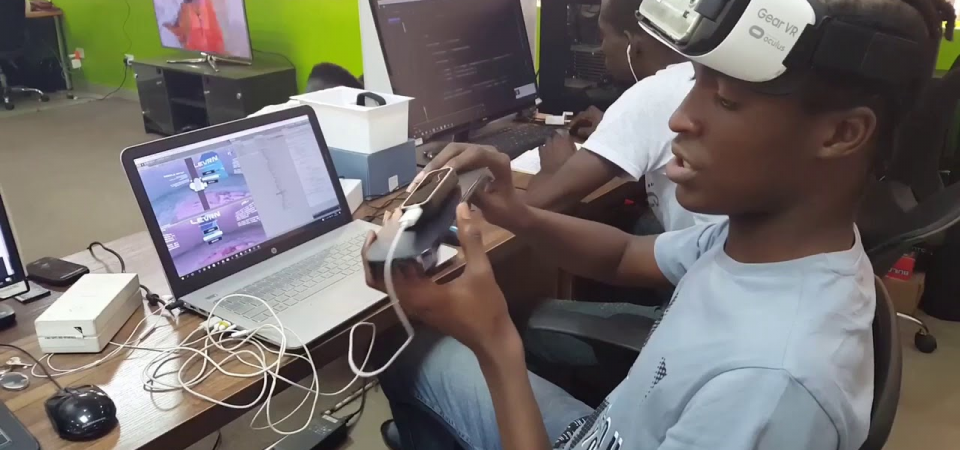
Nigerian AR/VR Startups Imisi 3D and StanLab Go to Fix The Education Sector
Source: Imisi 3D)

In Nigeria, some private initiatives are ongoing to prepare a Fourth Industrial Workforce which will help the country to compete globally. Data Science Nigeria is a nonprofit founded by Dr Bayo Adekambi which wants to raise 1 million talents with skills in Artificial intelligence and Data Science, after it was discovered that of the 300,000 Machine Learning Engineers globally, Africa hardly featured.

IBM’s Digital Nation initiative currently has a partnership with the Lagos State Government to train Lagos residents with Artificial Intelligence, Data Science and other skills which will make them competitive while Google is also running a similar initiative for Nigerians. Microsoft’s recent African Development Centre in Lagos will help develop talents with skills in Artificial Intelligence and Mixed Reality who will develop innovative solutions leveraging its Azure Platform for the country and rest of the world, while Curators University in conjunction with Edo Jobs is training Edo youths in future ready skills like AI, Cloud and Data Science. Also, Andela is helping to develop software engineers who will compete on the global stage while getting them jobs to practice their skills. Cisco has unveiled a programme to train young Nigerians to become Networking and IOT Experts similar to Huawei’s Open Innovation Centre for IOT which it established at University of Lagos.

Judith Okonkwo of Imisi 3D is developing a community of Mixed Reality developers who will create solutions to some of the common problems in the country. 3D Africa founded by Njideka Harry and GE’s Lagos Garage is training Nigerians with skills in 3D printing and how to build businesses using it. TDP4AI founded by Dr Agu Collins Agu is helping in developing skills in embedded systems.

The Federal Government can lift millions of Nigerians out of poverty by partnering with the private sector to up skill for future-ready skills, and create a smart workforce, which will make Nigeria globally competitive.


Safaricom Takes Flash Call Mainstream with “Reverse Call” Feature

0

Safaricom has won my innovation of half-year award with “Reverse Call” feature.  With reverse call feature, a caller can transfer the cost of a call to the receiver by adding ‘#’ before the number they are calling. For instance, to transfer the cost of the call to 0722000000, a customer will dial #0722000000. I think that is amazing.

Simply, you may not even need to load credits for some people knowing that they can reach you anytime they want provided you have credits. To avoid abuse, they even have a feature that ensures you know you are paying for the call as the receiver: “A customer receiving a reverse call request will see the caller’s details appear on the screen as normal, but once they pick the call, they will receive a voice prompt asking them to key in “1” to accept the reverse call. The cost of the call will be equivalent to the receiver’s normal call cost.”

 “At Safaricom, we maintain our commitment to always provide our customers with relevant products in line with their needs. This innovation is in line with this commitment and has been tailored to mirror the relationships between our customers with a goal of empowering them to always remain connected with their loved ones,” said Sylvia Mulinge, Chief Customer Officer, Safaricom….

The service is only available for on-net calls and will not be applicable for off-net, roaming and international calls.

The Reverse Call feature complements Safaricom’s existing “Please Call Me” service which enables a customer to send five free messages to other customers requesting for a call back. (press release)

Safaricom continues to innovate – I expect many African telcos to copy this. The manual version is Flash call (calling with no expectation to allow the receiver to pick it); the Flash call is now institutionalized with the reverse call feature.

Africa’s Fintech Startups Hit 491

0

Africa’s fintech sector is growing at a fast pace, with the number of startups operating in the space growing by more than 60 per cent in the last two years, while funding has hit new records.

Following a successful first edition in 2017, Disrupt Africa has released Finnovating for Africa 2019: Reimagining the African financial services landscape, which finds the number of active fintech ventures across the continent has grown to 491 from 301 in 2017.

South Africa, Nigeria and Kenya remain the main three markets, with 141, 101 and 78 active ventures respectively, accounting for 65.2 percent of Africa’s fintech startups. Yet the share of the overall total claimed by these three countries is in decline as the sector spreads across the continent, with fintech startups tracked in 28 African nations.

Though the big three markets are growing, the biggest developments are occurring in other markets, with countries like Uganda, Ghana and Egypt in particular seeing their local fintech spaces explode.

A similar trend can be seen in terms of the type of platforms being rolled out by fintech entrepreneurs. Though startups in the payments and lending spaces remain the most prevalent, the fastest growth is occurring elsewhere, with the number of startups active in areas such as investtech and insurtech, for example, more than doubling in the last few years.

Meanwhile, there is a marked increase in the amount of companies focusing on two or more distinct types of financial services, as African fintechs begin to “rebundle” and we see moves towards fully-fledged, all-service digital banks on the continent. This is a process that is quickening as the amount of funding coming into the sector grows. African fintech companies have raised just shy of US$320 million in funding since January 2015, and last year’s total of US$132.8 million was the best year yet.

Most of these firms need to come together – a lesson on what is happening in China could be necessary. Many of the fintech firms especially those on peer to peer are closing shops.

Approximately 5,700 platforms had already been suspended as of May, with 914 still in operation, according to industry data provider Wangdaizijia. Total P2P loans also shrank 30% on the year to around Rmb700 billion ($102 billion).

Some major platforms were closed including Dongguan-based Tuandai.com, which was accused of designing and selling fake financial products. Its bankruptcy in March prompted thousands of protesters to take to the streets and demand their life savings back. Tencent-backed social e-commerce platform Mogujie (often dubbed China’s Pinterest) also shut down its P2P platform Zhongdoubao in March due to the need to “ensure the security of funds”.

Press Release

Truecaller Evolving into a Superapp; WhatsApp Competitor

0

Truecaller, a mobile app that lets you see who’s calling and block unwanted calls, adds voice call. It is working hard to become a superapp and a possible WhatsApp competitor. It has recently integrated payment: “Truecaller currently offers a one-stop integrated communication platform that hosts a range of key features including Caller ID, Intelligent dialer, Smart SMS inbox, Mobile Payments and Flash messaging.” With Libra unveiling by Facebook, Truecaller will have to evolve more if it wants to win Africa.

In line with its vision to be a complete communication app, Truecaller, has announced the launch of its voice call feature, ‘Truecaller Voice’ globally.

The in-app voice over internet protocol (VoIP) based feature will allow users to make free high quality (HD), low latency and quick to connect audio calls through WiFi or mobile data connectivity. The launch is the newest addition to the recent stream of updates, that is aimed to provide a full-fledged communication experience to Truecaller’s over 140 million daily active users globally. The feature has been already been rolled out in a phased manner to all Android users from 10th June 2019 onwards.

On a daily basis, Truecaller users are making more than 180 million phone calls through its dialer, whereas half of the calls are to users-to-users. The Truecaller Voice shortcut has been strategically integrated at relevant touchpoints in the app such as call logs, SMS Inbox, contact profile and after call screen. This enables users to seamlessly access the VOIP based call anywhere within the Truecaller app without switching to other applications. (press release)


What does Linda Ikeji TV and Oil Money Have in Common?

4

By John Beecroft

A few days ago, I read in Forbes Africa about Linda Ikeji’s latest venture – Linda Ikeji TV (LITV), a subscription video on demand (SVOD) platform. Since the launch in June 2018, 80,000 subscribers paid for a one-month subscription of N1,000 per subscriber. And bam! that gives a total of eighty million naira (N80m) monthly if she manages to keep them faithful.

What about oil? Oil sells at about $60 per barrel. Now assuming a $20 profit per barrel, that’s only N7,200. What’s special about this? Well, pump two million barrels per day, and suddenly you have a daily profit of N14,400,000,000 (N14.4 billion for those having problems processing the figure). Do this 365 days in a row, and you have N5.3 trillion to run the Nigerian economy!

Are you getting my drift? The myriad real estate agents would have you believe that real estate is the new oil. That’s simply not true. Oil is small profits and high volumes. It’s about little products that can reach the masses.

There are two basic business models: You can either make large profits from a few sales or small profits from a lot of sales. For want of a better catch phrase, I call them BM1 and BM2. Let’s take a closer look at them.

Business Model 1 (BM1): Here, you make large profits from relatively few sales. Real estate, my own area of specialization, and automobiles for example fall into this category. We [Tetramanor] sell beautiful homes from N20m to N50m and typically make a profit of N3m to N8m per unit. However, due to the high price tag of the products, we can only sell a few units every year as the mass market simply cannot afford our products.

What about Brazilian hair for instance? Yes, you make large margins from each sale, but make no mistake, it’s BM1 you’re operating as your market is very limited – the number of slay queens that can afford N250k for common hair is just too small.

Business Model 2 (BM2): In this model, you sell low cost products to a very large market. Most of the richest people in Nigeria and the world at large operate this business model. Dangote has most of his money in cement. At N2,600 per 50kg bag of cement, he makes a paltry N640 per bag (from my calculations). Yet he was able to sell the equivalent of 470 million bags in 2018 to make N300 billion in profit (from sales) for the year! Incredible right? The same philosophy applies to his sugar business, pasta business and his new refinery. I doubt if he can get more than N20 per litre as profit. But when a nation of two hundred million people need your product, all you need is N1 profit per litre! Walmart, 50 cents here and 50 cents there, and voila, the richest family in the world. And the new Nigerian techstars? N50 per ride on this Okada and N10 per transaction on that app, and bam! we have a new generation of billionaires.

Let’s examine the differences between the business models in detail.

Target Market: For BM1 (low volumes, large profits), the target market are the elites for any specific category. For example, Mercedes Benz targets the elites for automobile buyers – perhaps those who earn above N30m per annum in Nigeria – while Brazilian Hair sellers target the elite of females – those who can spend N250k on hair without having neck pain. BM2 (high volumes, low profits) on the other hand targets the rest of the market not reached by BM1 e.g. the Hondas and Kias. In real estate, the Sujimoto’s operate BM1, while Adron Homes and co. who sell land at Ibeju Lekki operate BM2.

Volumes: For BM1, sale volumes are relatively low compared to the market at large. How many Nigerians really can afford N50m homes? If my company builds & sells about two homes a month, we would consider that a job well done. On the other hand, what population can afford to pay N1,000 monthly for LITV? Perhaps 199 million! And there’s your BM2 (large volumes).

Profit Margins: Profit margin refers to the percentage of the sale amount that’s left as profit. So if it costs me N15 to make a widget and I sell it for N20, my profit is N5 (N20-N15) and my profit margin is 25% (N5 / N20). Typically, I expect businesses operating BM2 to have smaller margins as they are very price sensitive than those operating BM1.

Profit Size: While BM1 has higher margins, the product price and profit size are also much higher. For instance, it’s easy for Sujimoto to make a profit of say N50m on a single duplex sale at Banana Island. On the other hand, Adron Homes operating BM2 and selling land at N1m might need to sell up to 100 or even 200 plots to get the same N50m.

Market Size and Competition: For BM1, because the customers are relatively few and elitist, the challenge is differentiating your product from that of the competition. As such, the war is being fought over quality and value. It’s all too easy to lose out completely in this market simply because the customers are so few. For those operating BM2 though, price is the differentiating factor. You’re selling a low-cost product to a lot of people who are very price sensitive. Competition is much fiercer in this market, but the potential rewards are also so much higher due to the almost unlimited size of the market.

Of course, you will find many businesses out there who toe the line between the two business models or who combine both models. Benefit of combining both models is that it allows you to make those large profits that come infrequently, with a constant stream of smaller inflows. Should there be a slowdown in sales of those big products, you would still be able to pay salaries using the smaller constant stream. My company for example builds & sells houses (BM1), but also rents out serviced apartments at very reasonable prices (BM2). A food seller can combine food sales (BM2) with event catering (BM1). Many other companies do the same successfully.

Finally, any business model you chose is perfectly okay. You just need to understand where you are, the limitations, and how you can take advantage of the opportunities therein. Personally though, I believe that if you want to be rich, BM1 is good. But if you’re looking for oil money, there’s no other way but BM2.

Back to Linda Ikeji; if she can scale to 200,000 subscribers monthly, that’s N200m per month. And should she be able to get to a million subscribers and maybe provide enough quality content to move the scale to N1,500 monthly, then bam! N1.5b in monthly receipts or N18b annually. Now, that’s black gold! I don’t know much about Linda Ikeji as a person nor can I be bothered. But as a business person, she has my respect and I’ll be glad to have a discussion with her over a glass of wine!

John Beecroft is the MD/CEO of Tetramanor

LinkedIn Comment on Feed

Comment #1: Good one there from John, it has always worked fine for any business that gets the models right. That’s why we always preach scalability, once that element is not there, your future is never assured.

I think Cowbell and its pricing regime actually forced all the big guys to have a rethink, else their struggles would have been unending.

But it does also appear that Apple scaled with its elitist model, they won in both volume and high cost; a very difficult thing to maintain for such a long time.

Of course if you sell car or homes, you need a second or third business, ordinary folks don’t buy these things; and you are likely to be accumulating debts…

Author’s Response: Thanks Francis. Your comment is particularly interesting because this article was born as I was cracking my brain on ways to scale our business. Apple indeed remains an enigma as they managed to achieve the impossible in an already crowded market. I won’t advise any other mortal to try that model – high volume, high profits – though. Simply too risky and in my opinion, not sustainable.

Comment #2: It’s really a lofty piece on business model classified into 2 categories based on the profit margins trajectories.

The BM1 consists luxurious or specialized products and services with very limited market size while the BM2 are products and services for mass market e.g sales of #Ferrari and #Bugatti with a possible profit of N50M(fifty million naira)per unit as against the sales of #Hyundai and #Kia with a profit margin of N1M. The market size for Hyundai is much more than that of Ferrari and Bugatti, but you will have to sell 50 units of the Hyundai to match the profit margin on the sales of Bugatti.

Moreso, the entrance bar in BM1 market is high only few players share the pie.
Whereas, the BM2 suffers high new entrants risk since the cost of entry is very low, many players share the pie in this space.

Meanwhile, I cannot really label the BM1 as the oil money as the BM2 markets has huge size (volumes though little profit margin ). There is as much money in the BM2 market just like in the BM1 market.

Thanks to Femi Beecroft for the write up and Prof. Ndubuisi Ekekwe for sharing it. Articulating this kind of thoughts ensures it’s conscious practical implementation, you cannot respond to or execute what you cannot remember.

Comment #3

Prof Ndubuisi Ekekwe, I don’t think Ms Ikeji’s business dealings are quite as simple as Femi Beecroft made it seem in that piece. She probably makes much more in endorsement income and spends a lot for content creation and workers’ wages.

However, the general principles he tried to illustrate with LITV are accurate and have been well noted. Every business model has its pros and cons, but the high-volume-low-margin model seems to be more attractive to people in general due to access to a much larger market and potentially lower startup costs.

However, many things need to work out well for both models to be successful, and that’s what’s more important in my opinion. While it’s very useful to understand your product, the frictions you want to tackle, your potential customer base, and the business model(s) you want to employ, understanding what makes either business model work and whether or not to employ a hybrid model is what separates the successful businesses from the not.

Timing, funding, decision making, and collaboration are important factors too. Unfortunately, I’m not a illustrator. It would’ve been a nice project to take on.