DD
MM
YYYY

PAGES

DD
MM
YYYY

spot_img

PAGES

Home Blog Page 6866

Yamaha Invests in Nigeria’s Motorcycle Ride Hailer MAX .ng Which Raised $7 Million

0

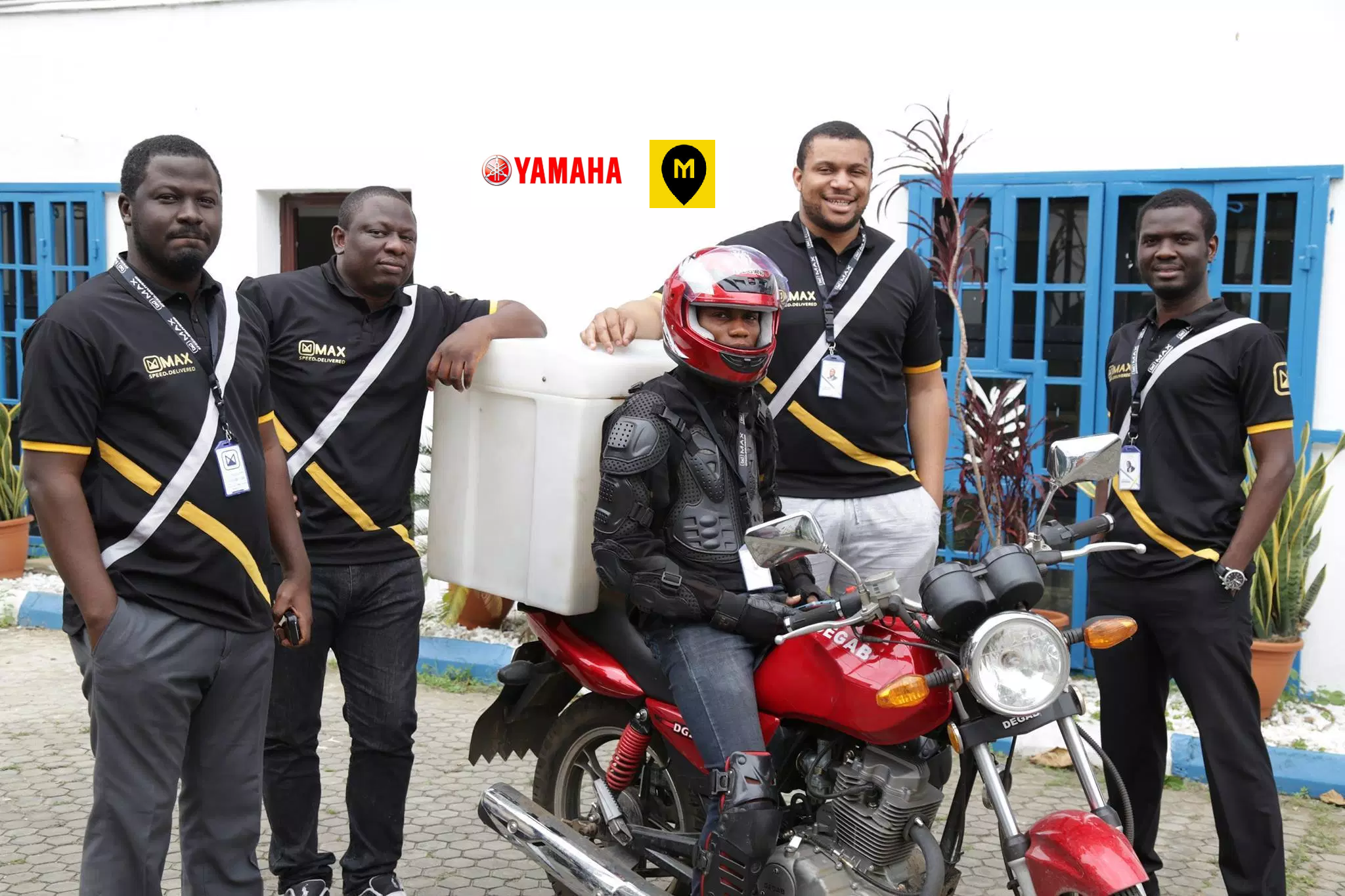
I have said it that transportation / logistics is the next big thing in Nigeria after fintech. The money rain is falling and many are wet. I am already in through Zido, West Africa’s largest keke aggregator.  Max .ng just confirmed what I wrote few days ago that it raised $7 million. The fascinating thing in the press statement which they just released is that Yamaha, the global motorcycle maker, invested in the round.

There is a major shift: transportation startups are raising tons of money right now in Africa. Gokada raised $5.3 million few weeks ago, and has now added boats in its business. Today, we are learning that Max .ng, a motorbike ride-hailing startup, has raised up to $7 million. As that happens, ORide from Opera, has $100 million to dip from as they work to fix the logistics friction in Nigeria. These companies are overlaying technology on what has been with us – informal motorcycle taxis  – and they hope to “win market share by offering trained, accountable drivers and the convenience of booking rides through a mobile app”, as Reuters notes.

Great numbers there: MAX. ng has completed over 1,000,000 trips and is one of Jumia’s largest delivery partners in West Africa. The logistics element is a big deal; in coming weeks, Zido will plug into the last mile delivery ecosystems across major Nigerian cities.

The Press Statement

MAX.ng, the pioneering Nigerian mobility startup, announced today that it has raised $7 million from an elite group of strategic and financial investors from the US, Europe, Asia and Africa.

The investor group includes Novastar Ventures, a Nairobi and Lagos-based VC firm, Yamaha Motor Co. Ltd, a world-leading Japanese motorcycle and marine hardware manufacturer, Breakthrough Energy Ventures, an investor-led fund backed by some of the world’s leading business executives, Africa-based Zrosk Investment Management, a regionally focused multi-asset investment management company, and Dutch investor Goodwell Investments’ uMunthu Fund, a €100mn inclusive growth fund for Sub Saharan Africa (via its West Africa co-manager Alitheia Capital).

This round brings MAX.ng’s total fundraising to $8.5m. Existing investors include Techstars, Olive Tree Capital, Venture Garden Group, RightSide Capital Management, Shell Foundation and angel investors such as Greg Schroy and Michael Lazerow.

Adetayo Bamiduro, MAX.ng CEO and Co-founder, said, “MAX is building technology infrastructure and financial services to make mobility safe, affordable and accessible to 1 billion Africans. This isn’t just about building mobile apps. It is about creating financial, technology and operating infrastructure where it never existed”

Yoshihiro Hidaka, President, Chief Executive Officer and Representative Director of Yamaha Motor Co. Ltd., spoke about his excitement at MAX.ng’s potential during a recent visit to MAX.ng’s HQ in Lagos.

MAX.ng plans to use the funding to expand to 10 cities across West Africa, scale its technology infrastructure, deploy mobile payments in partnership with Mastercard, introduce an electric fleet and deploy new vehicle categories, including 3-wheel tuk-tuks.

MAX.ng plans to scale its operations and engineering teams to accelerate growth in user adoption, said CFO Guy-Bertrand Njoya. He added: “This is where the adventure begins. We are excited by the opportunity to foster widespread financial inclusion for the unbanked and underbanked across the continent through the development of our transportation-finance platform.”

MAX.ng, which has a strong presence in South-West Nigeria, intends to grow its geographic footprint rapidly, adding customers across Nigeria, Ghana, and Ivory-Coast. “MAX.ng is uniquely positioned to revolutionize the way Africans move whilst also empowering thousands of motorcycle-taxi drivers. By innovating quickly, we are thrilled to transform Africa’s mobility space at an accelerated pace,” said Chinedu Azodoh, CGO and Co-founder.

About MAX.ng

Founded in 2015, MAX.ng is a mobility platform that connects users to vetted professional motorcycle-taxi drivers (known as MAX Champions) via a mobile app.

MAX.ng increased the amount of rides by 17x in 2018 and targets a $80 billion market across sub-Saharan Africa. It provides safe, affordable and accessible rides, helping its customers weave through Africa’s mostly unpaved and congested roads quickly and safely. MAX.ng has completed over 1,000,000 trips and is one of Jumia’s largest delivery partners in West Africa.

Connecting Airbnb Heritage Travel with 23andMe Genomics is Perception Demand

0

This is a new level – connecting DNA to sales dollars in America. Heritage travel is a type of travel where people visit villages, cities or countries with the intention of connecting to their ancestral homes. Interestingly, Airbnb, the asset-light room aggregator, is partnering with 23andMe, a biotech startup that does genomics for people, helping on health issues and family history, to make heritage travel happen. Simply, this is perception demand, creating something in the minds of customers to make sales happen. I cannot imagine a more stimulating way to get people to spend, and be on the road in order to rent that room. But it is all capitalism.

Ever heard of heritage travel? It’s when folks pilgrimage to uncover family histories in their forebears’ home cities, towns, and countries. According to a recent survey, about 89% of people in India and 69% of those in France and the U.S. have traveled to at least one country of their ancestry, and many travelers in Australia, India, the U.K., and Brazil say that visiting a place connected with their relatives will be the most important consideration when planning their next vacation.

To facilitate these types of trips, global hospitality marketplace and service company Airbnb … announced that it is teaming up with 23andMe, the biotech firm perhaps best known for its personalized genomics reports about family history and health, to incorporate heritage travel recommendations into their respective user experiences. Specifically, 23andMe customers will soon be able to click through to their ancestral populations to find Airbnb Homes and Experiences located in their ancestral countries, and Airbnb now has dedicated pages that correspond with 23andMe’s genetic populations in Sub-Saharan Africa, North Africa and West Asia, Central America and Mexico, South America, East and South Asia, and the Caribbean and Europe.

Yes, you do your DNA analysis via 23andMe, and notice you are from Nigeria, at any level of generational transition. You plan a trip through Airbnb to visit Nigeria from New York. For this trip, there is a higher purpose; you are not just visiting Nigeria, you are going to the land of your ancestors. That creates a new level in your mind that nothing can stop this trip from happening.

It is a new domain where your DNA can be used to activate sales at scale: Heritage Travel is now invented. Like the old Intel Inside campaign (read this my Harvard Business Review piece for insight), this new redesign can move markets if applied across sectors. Your ancestors were great wrestlers, visit Las Vegas to experience live the sports of your ancestors. Your grandparents lived near that great lake, a show is coming, and it will be fun if you finally splash that water body which supported their lives. In all these cases, DNA is used to customize your experiences through perception..

What Nigeria Can Learn From Successful University Innovation Ecosystems

0

By Nnamdi Odumody

There is an important linkage between town and gown i.e. the university and the development of the society. Every successful nation which has a thriving entrepreneurial culture has the ivory tower as the pillar through which this is achieved.

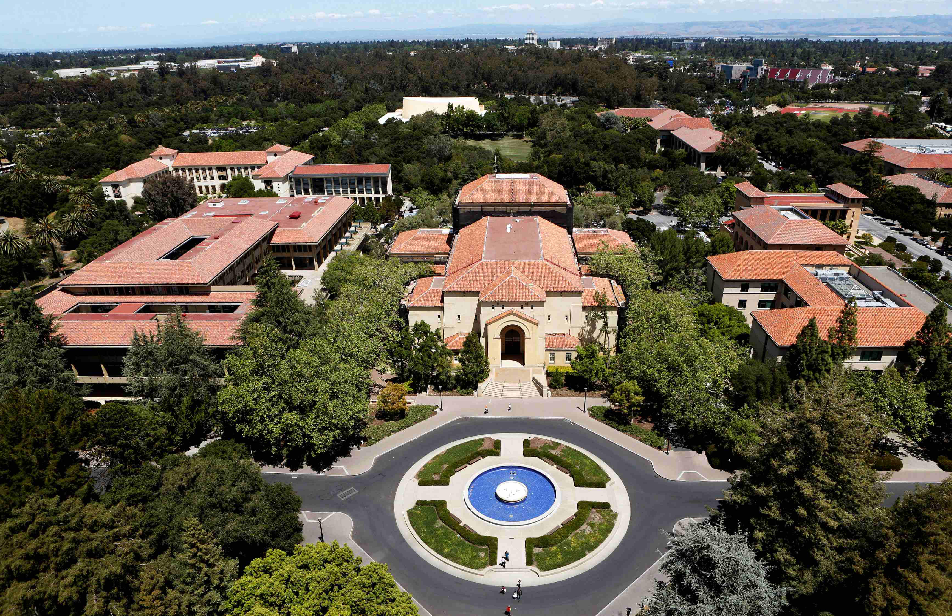
Silicon Valley which is the world’s most successful entrepreneurship and innovation ecosystem arose courtesy of a Stanford University Professor named Frederick Terman who inspired two students – William Hewlett and David Packard – who wanted to build an electronics business in 1939 with $538. They used that money to establish Hewlett Packard, now a multibillion dollar Fortune 500 business.

The success of HP encouraged Herman to get Stanford University to lease portions of its land in the Stanford Research Park which gave birth to what is now known as Silicon Valley, contributing not less than $2trillion to the U.S GDP annually. The Massachusetts University of Technology contributes not less than $1 trillion annually to the American economy through commercialization of invention as a result of companies which have sprung from its Research Park.

University of Arizona’s Technology Park contributes $2.33 billion annually to the regional economy. The University of Chicago’s Booth Business School’s Polsky Exchange has developed 100 companies including GrubHub some of which are now worth $10 billion.

China’s successful startup ecosystem can be traced to Chen Chunxian, a research fellow of the Chinese Academy Of Sciences, who went on a trip to Silicon Valley in 1980, and was inspired by what he saw, and decided to convert Zhongguancun, an area in Beijing which was close to the Chinese Academy of Sciences, and China’s Ivy League universities Peking University and Tsinghua University, to  science and technology Park. In 2014, it produced many new startups with revenues of  3.5 trillion renminbi($560billion).

The Weizmann Institute of Technology in Israel set up a technology transfer agency named YEDA (Knowledge) to commercialize its research which has anchored thousands of successful companies and products. It has amassed more than two billion shekels (about $400million).

Hebrew University of Jerusalem’s technology transfer company Yissum (implementation) earns over $1 billion annually from research commercialization and has registered not less than 6000 patents and 2000 inventions. Technion Israel Institute of Technology has graduated over 67,000 technology entrepreneurs and professionals who became the foundation of Israel’s successful high-tech industry, some of which include Dov Moran who invented the USB flash drive and Dr Kira Radinsky who invented event prediction software which was used by startup Sales Predict which eBay later acquired.

Nigerian universities should learn from these successful global examples to create successful entrepreneurship and innovation ecosystems which will increase their internally generated revenues and make them self-reliant, adding value to the local economy even when depending lesser on government for funding.

Seven Facts to Better Understand Facebook Libra

0

By David Alade

Libra is a cryptocurrency developed under the blockchain architecture; it was set up to solve a fundamental problem of other cryptocurrencies like Bitcoin and Ether. The fundamental problem being they are not backed by any underlying asset, hence they are only most suitable for speculation purposes. Libra will take care of this with its Libra Reserve which will serve as “Central Bank” of Libra.

To serve the purpose of a currency, stability is key, something the current cryptocurrencies lack. Bitcoin has recorded a year-to-date return of more than 150% while the Dollar year-to-date return is less than 0.5%, this begs the question of Bitcoin stability. Libra has been set up by world’s giants from the research lab of Facebook to answer the stability question.

The Facts:

  1. The foundation of creation was hinged on the believe that “the world needs a global, digitally native currency that brings together the attributes of the world’s best currencies: stability, low inflation, wide global acceptance and fungibility.”

Libra’s attempt at this means all things that ensure the purpose will be achieved have to be out in place including agreement with world regulators, basically as Ndubuisi Ekekwe Noted, it is in direct competition with the world’s currencies.

  1. Libra is different from Calibra

Calibra will be set up to provide financial services to individuals and businesses, including saving, spending and sending money, with goal of achieving financial inclusion among others. The first target point for Libra is the more than 1 billion users of Facebook platform.

Libra Association will be a nonprofit in Switzerland set up to design standards for the currency and will manage its central bank Libra Reserve Bank. Libra Reserve Bank will be chaired by a board of committee comprising of representatives from corporations that helped set it up.

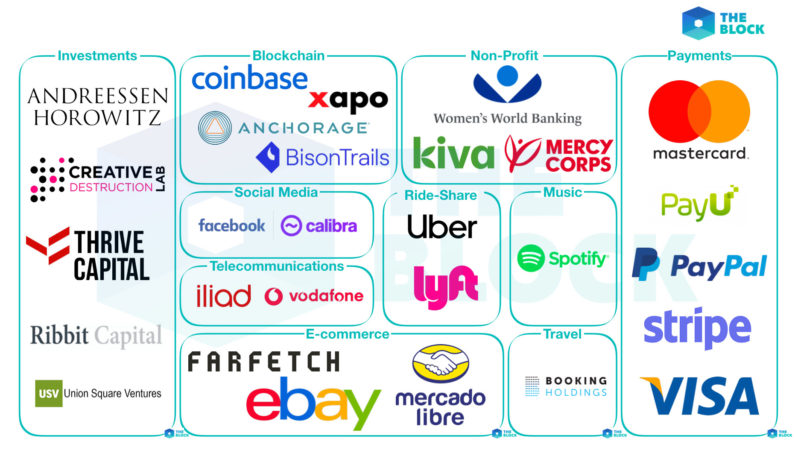
  1. Facebook does not intend to bear full responsibility for Libra and hence has sort partnership with the biggest names that be, including Uber, Spotify, PayPal and VISA.

An interesting thing about this large base partnership is that the major organizations to which Libra posit threats to are also partnering with it. These firms include Visa, Stripe and Paypal.

  1. Calibra will be integrated inon Facebook and WhatsApp architecture.

What this simply means is that when you view the Status of your connection who is advertising a product or service, you can make your payment directly without needing to sign-in on another app. Cross-border payment will become seamless and transaction cost greatly reduced.

On Data Management, Facebook has promised to “it will keep financial data from transactions on Libra separate from user ad profiles. The blockchain is ‘pseudonymous’, the company said and, like many crypto networks, will allow users to hold one or more addresses not linked to their real-life identities.” This is key as the Bank Holding Act 1970, amended, specifically prohibits such act.

  1. Libra is not in competition with Bitcoin.

“Many want to [put] Libra vs. Bitcoin. In my mind these two are not in the same category. BTC is a decorrelated (investment) asset. Libra is designed to be a stable medium-of-exchange. I have been, and remain a fan of BTC, but for very different purposes”, noted David Marcus (Co-creator Libra).

This reflects and reinforces the deeper purpose of Libra beyond bitcoin. It is designed to be a stable means of exchange. With Libra, if you bought a can of coke with 10 Libra yesterday, you can expect to get for same amount today and tomorrow, something Bitcoin historically struggles with.

  1. Another important part of Libra mission is the “additional lofty goal of the association to develop and promote an open identity standard. We believe that a decentralized and portable digital identity is a prerequisite to financial inclusion and competition”.

What is not clear here is what they meant by identity? Is it the creation of pseudo-identity, real-identity, digital-identity, and more questions? But you should understand that they intend to create “open identity for all” in a bid to achieve financial inclusion and competition.

Libra association menbers
  1. These are question we need to ponder on
  • Will Facebook end up controlling the two foundations (Communication and Transaction) of the world?
  • Is “open identity” really a prerequisite for financial inclusion?
  • What does this mean for all ecosystems that intersect with Libra, Central Banks, Payment gateways, Banks, and more?
  • Will regulations allow this to pass?
  • Libra promised to launch in 2020, when will ubiquity be attained?

Concluding thoughts

Libra is ambitious and I wouldn’t know what probability of success to accord it, and if I knew, it would probably be on the high (partnership that it has will be the reason for this). Libra has been initiated or say launched to be a success and if it does, the fundamentals of a lot of intersecting ecosystem will be poised for a fundamental shift; some will be disrupted, and some will just go to extinction. Whatever the case may be, I will like to say it is an interesting time, witnessing so much unprecedented change.

Follow this link to read the 10 important questions that Libra needs to answer; Tyler Cowen and Christian Catalini (Head Economists of Calibra) respond here.

Comment on LinkedIn Feed

Why MTN Nigeria Is Adding Users – 97.4% of All NEW Internet Users Last Month

0

Last year, two FUTO students [Great Futoites] published on Nairaland on how to get free airtime from MTN. The post was quickly taken down. Simply, they tried to reverse an algorithm which MTN uses for pricing. They noted that by not loading after a while or loading very small amount, MTN will offer higher rewards. But there was a pain point: you possibly would need two phones and you may be required to freeze usage to trick the MTN algorithm.

Nothing illegal – just young men using curiosity to get more airtime: think of them as SEO engineers exploring how to make websites discoverable by Google search engine. To be a good SEO engineer, you must have a clue what Google does by deducing many things. Here, they tried to understand how MTN bonus algorithm worked.

You know what – they are right. MTN is the most advanced telco in Nigeria on using big data analytics to serve customers especially on its bonus program. I have benefited from their algorithm; last year, they gave me N16,000 worth of credit after loading N1,000. But I have an advantage; I visit Nigeria and leave, tricking the bonus algorithm to maximum all deals to keep me.

In the engine, MTN might be thinking I was in Nigeria and maybe over 2 months did not load MTN. Then, I appeared, loaded, and the engine said “release the highest bonus to make this customer happy”. Unfortunately for the engine, I disappear again. That has been the game. Then, MTN got tired of my number and stopped giving me bonus, despite not loading after a long period. As it stands, the bonus is now typical – getting the normal double!

With its algorithm, MTN is creating perception demand in the minds of customers – and winning. MTN has used this construct to pick users from 9Mobile which has lost more than 6 million users since its paralysis began. And most new subscribers – 97.3% – are choosing MTN at large; its bonus system is smart! Out of 3,568,205 users added in May in Nigeria, MTN picked 3,474,208 (GSM users specifically).

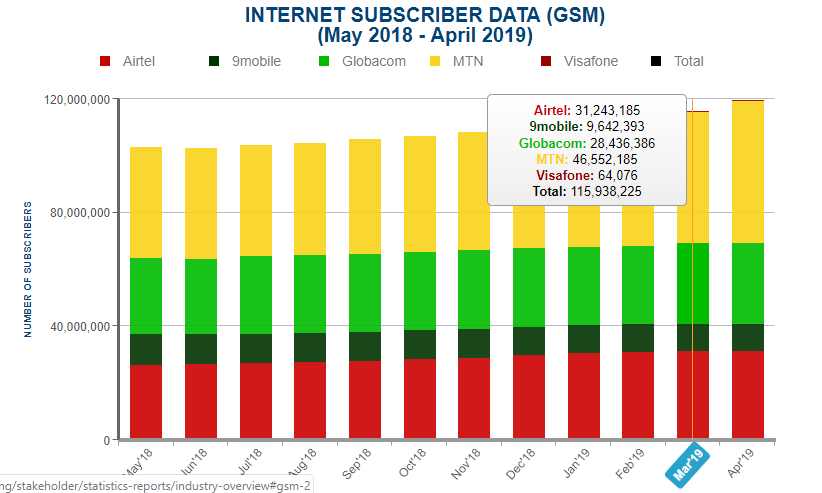
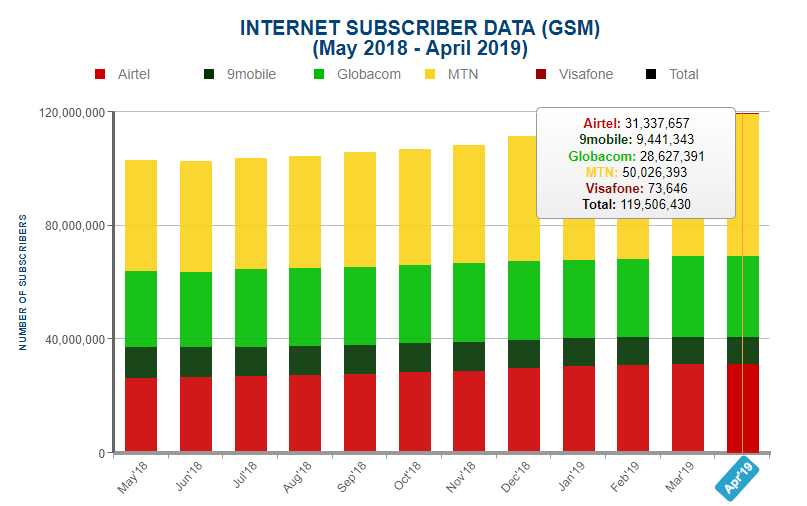
According to the latest industry statistics from the Nigerian Communications Commission (NCC), the number of GSM internet subscribers in Nigeria grew by 3,568,205 in the month of April. The stats show that the total number of GSM internet subscribers now stands at 119,506,430 – which indicates a massive growth from the 115,938,225 recorded in March.

Of this figure, leading telco, MTN took the lion’s share gaining 3,474,208. This takes its total number of subscribers from 46,552,185 in March to 50,026,393 in April – sealing its position as the market leader.

The second biggest gainer was Globacom with 191,005 new internet users, increasing its subscription from 28,436,386 in March to 28,627,391 in April. Glo was followed by Airtel with 94,412 new users and 31,337,657 total subscribers. Distraught 9mobile continues to trail behind losing over 201,050 subscribers. Its total number of subscribers now stands at 9,441,343. (Technext.ng)