DD
MM
YYYY

PAGES

DD
MM
YYYY

spot_img

PAGES

Home Blog Page 6869

Achieving Inclusive and Sustainable Industrial Development in Africa

0

By Abdullateef O. Abdul

Whilst Africa is perhaps the fastest growing region with an annual average growth rate of 5% in about the last decade, the growth has largely been based on commodity trading and extractive industries, and has therefore proven neither economically sustainable nor inclusive as a development strategy. We must therefore think anew and evolve novel solutions to existing challenges.

A key solution to most of the problems undermining our continent’s development potential consists in achieving inclusive and sustainable industrial development in Africa. Such inclusive and sustainable industrial development would create employments, reduce income inequality, generate dependable revenue to government, eradicate or at least alleviate hunger and poverty, reduce crimes, and pave the way towards robust economic development.

How then can Africa achieve inclusive and sustainable industrial development? In the first place, we must appreciate that creating a better Africa is not a task just for African Governments, the African Union or the African Development Bank. It is a collective task incumbent on all stakeholders.

In my view, the first step towards achieving inclusive and sustainable industrial development in Africa is through a widespread reorientation on the tested route to economic development. I say this because it is often that one hears analysts, Presidents, Ministers and other leaders declare or suggest that cocoa or other commodity or agriculture in general is the route to the economic prosperity of a nation. Some state governments in Nigeria, not long ago, even went so far as declaring work-free days for civil servants to work on the farm. But the time-tested reality is that it is industrialisation, not commodity trading and extractive industry, that drives economic boom. Hence, we should spend more time discussing, encouraging and strategizing on industrialisation. Rather than repeatedly telling Africans to go to the farm, we should instead focus on how Africa can use industrialisation to get the most value from our agriculture and extractive industries.

At the heart of industrialisation is infrastructure. Indeed, industrial and economic development cannot be attained without addressing the challenge of infrastructure deficit in the continent. Achieving inclusive and sustainable industrial development therefore requires investment in infrastructure, such as roads, airports, railways, waterways and energy, which is needed to boost commerce and link Africa to the global economy. While the need to revitalise the African economy through infrastructural development projects is recognised, the challenge remains financing such projects especially given the intensive cost requirement of infrastructure projects and industrialisation.

For this reason, the creation of easier access to finance for infrastructure projects and industrial development is another top priority. In this wise, African governments have an obligation to create conducive business climate in Africa in a way that enhances and optimises local investments and attracts foreign direct investments. To this end, African governments must first intensify in their efforts towards ensuring the safety and security of lives and properties in Africa. Also, African governments must project transparency, good governance, and political stability, and thereafter promote policies that facilitate infrastructure projects and access to finance for businesses.

However, the task of ensuring the provision of infrastructure and easier access to finance cannot rightly be left to the governments alone. Given the intensive capital and expertise requirements involved in these projects, African governments are unable to wholly fund and administer infrastructural development projects. It is therefore imperative for the private sector and government to leverage on other viable options, such as the Public Private Partnership arrangement. Further option for African entrepreneurs consists in African organisations, such as the African Development Bank, which are also advancing the cause of industrializing Africa by supporting businesses with requisite finance, an instance of which is the Ethiopian Derba Midroc Cement project.

Another pivot towards achieving inclusive and sustainable industrial development in Africa is embracing innovation and technology. Innovation is pivotal to all human progress and development, including creating a new Africa of our dreams. Technology is central to industrial development, diversification and upgrading, and is essential to pace and competitiveness in a fast and continually-evolving world.

Achieving inclusive and sustainable industrial development also requires investing in human capital since modern business is knowledge and skill intensive. This investment relates to education at the basic, secondary and tertiary level; formal trainings as well as facilitating research and development programmes.

Finally, Africa’s industrial planning and construction processes must take due cognisance of environmental considerations. This is because sustainable industrial development can only be achieved through the integration of all the pillars of sustainable development, including improvement in the environmental performance of industry.

In conclusion, Africa continues to experience economic growth. However, this growth has not delivered the much-needed development in the continent. The reason is not far-fetched. The growth is anchored on commodity trading and extractive industry. What Africa requires for effective economic development is inclusive and sustainable industrial development, the ultimate end of which is to realise a self-reliant Africa which harnesses its human and material resources for its prosperity and posterity.
Feedback from A Parent: He Heard A New Song of As

0

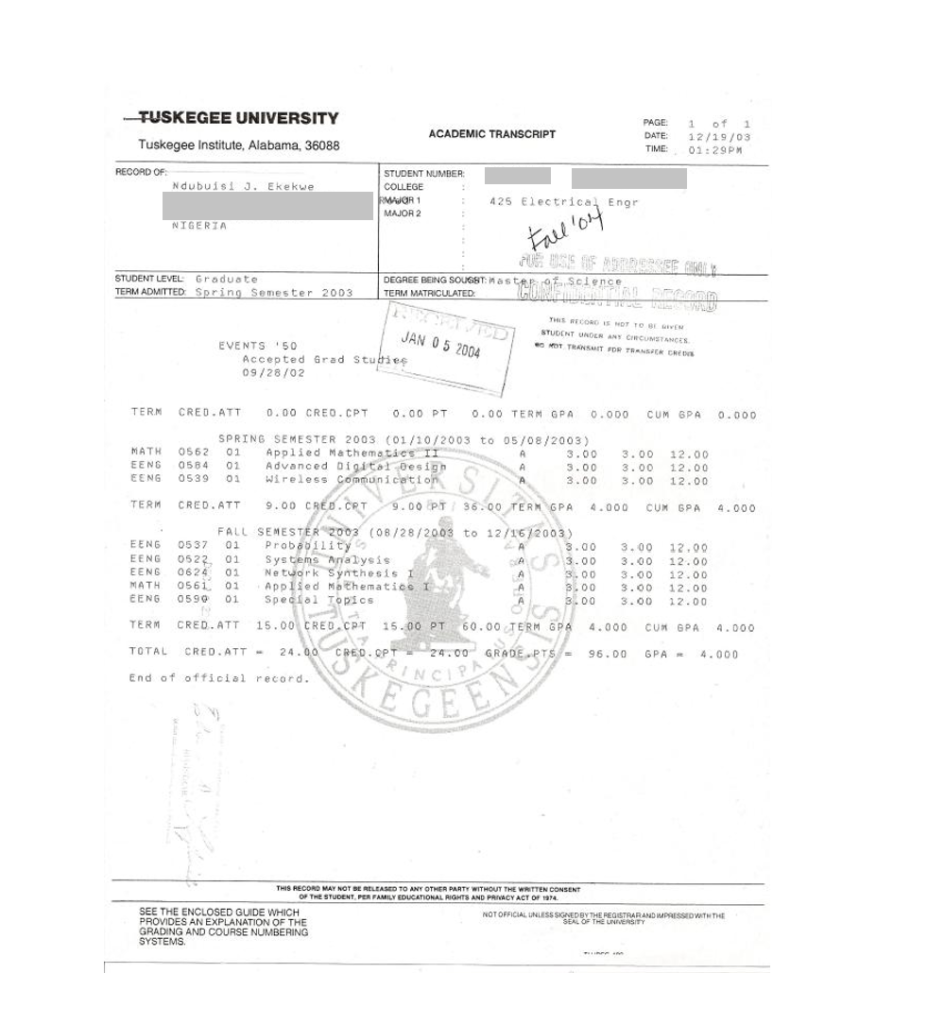
Good people, this is from a happy dad. I did not know that mere sharing of my academic transcript could inspire young people. I wish him more As in that home. Making As is not a big deal; my focus is always the processes towards the As. If you form great habits towards the journey to the As, it simply means the process has worked. The P-R-O-C-E-S-S to As is more important than the actual As. I make that point in case if the As do not come, life should not end. Aim high, develop good habits, and keep improving.

Ndubuisi, I have never met you but I am writing to thank you for inspiring my twins. My boys are smart and that makes it hard to challenge them to aim higher. But luckily, a friend who worked in Diamond Bank sent your article about your experience in the bank, and your first day in United States. In that article, you added some of your university transcripts: all As. I printed, laminated and gave them. The next day, coming back from work, they welcomed me with “aa a aa aaa”. I said what? They responded: “that will be how our grades will rhyme”. They have responded; both gave me all As this ended session. But I told them “Prof’s transcript was As all through the degree, not just a semester”. I want the song of aa aaa aaa in this home always. God bless you for Nigeria.

This is the piece he referred to.

My First Day in America and Kindness of Diamond Bank Lagos

The State of Power in Digital Economy

0

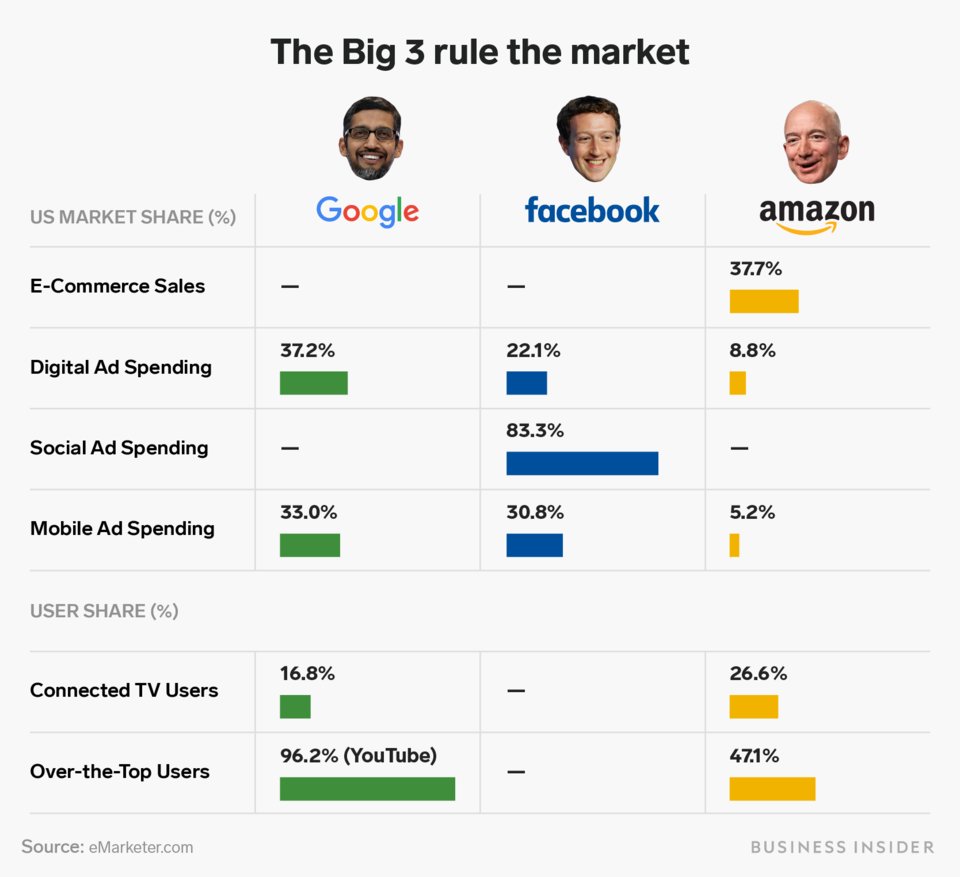
This is the state of power in United States digital economy:

  • 2 out of every 3 digital ad dollars in the US goes to Facebook,Google or Amazon, according to eMarketer data.

  • Google, Facebook, and Amazon are among the most valuable tech companies in the world. And as shown in this chart, based on data from eMarketer, the three companies utterly dominate certain segments of the online economy in the US.

  • Amazon is a growing power in digital advertising, but its real stronghold remains its online retail business, with 37.7% of all e-commerce sales in the US ringing up at the Amazon cash register.

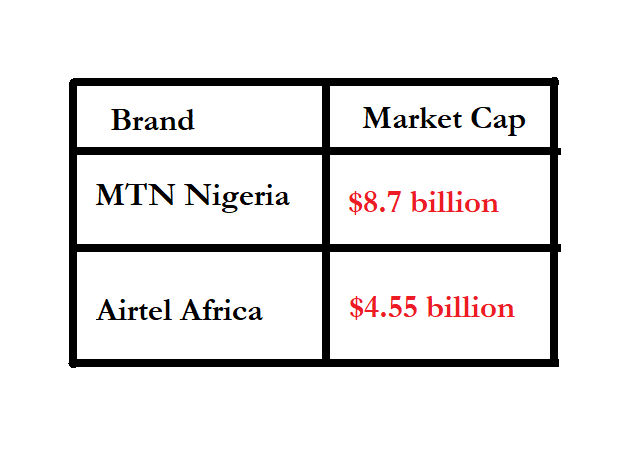
Market Cap: MTN Nigeria $8.7 Billion, Airtel Africa $4.55 Billion

0

Airtel Nigeria is projected to be listed in London and Lagos at upper market cap of $4.55 billion. That is a little lower than $5 billion that was reported few weeks ago. Interestingly, MTN Nigeria Plc alone is worth now $8.7 billion using official exchange rate.

The company said the price range values it between 3.01 billion pounds and 3.62 billion pounds at the price range.

Airtel Africa also said it intends to list its shares on the Nigerian Stock Exchange at the same time as the London listing.

The company said conditional dealings in its shares are expected to begin on or around June 28 and the final pricing will be announced the same day.

Seems MTN Nigeria Will Have A Larger Market Cap Than Airtel Africa

Facebook Libra Will Redesign Africa’s Commerce With Unified Payment

0

This was an old challenge I posited in the fintech and banking domain:

In this videocast, I discuss the need to build a truly pan-African digital remittance/transfer banking product which is agnostic of location or currency in Africa. None of the products we have today meets that standard. Largely, I envisage a situation where all you need to buy and sell across Africa is one bank account in just one African Union country. With that, you do not have to even think about the specific currency of that account as technology will seamlessly make it possible to access other African markets for payments, transfer etc. The banks or fintech companies must still comply with all regulations related to inter-national transfers, forex etc. The only difference is that customers will not see them as they will be hidden with technology.

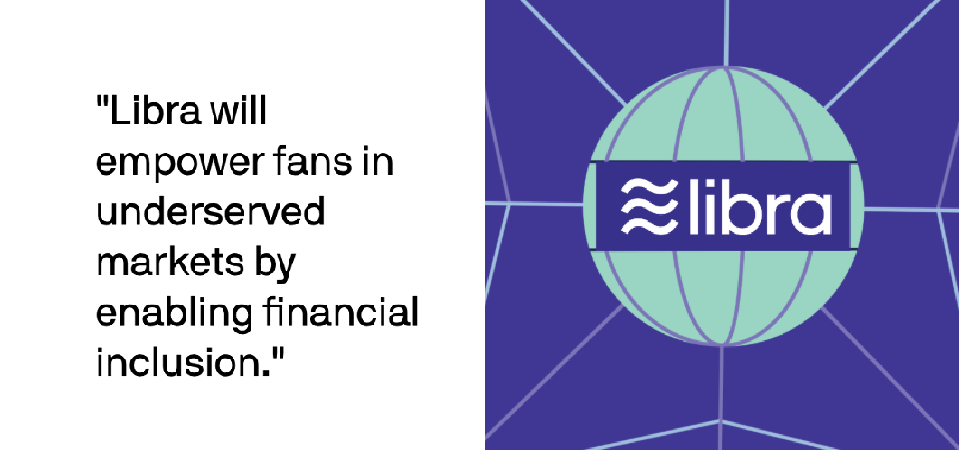
This week, I can write that Facebook Libra is getting close to making that a reality: “The mission for Libra is a simple global currency and financial infrastructure that empowers billions of people…Libra is designed to be a stable digital cryptocurrency that will be fully backed by a reserve of real assets — the Libra Reserve — and supported by a competitive network of exchanges buying and selling Libra”. That is fortunate and unfortunate at the same time: Facebook owns African payment while also helping to solve a major friction on intra-African trade and commerce. This is Facebook Libra, a blockchain-based cryptocurrency that will unify global payments. Through Libra, Facebook will have another company with at least a billion users and also create a new basis of competition for all fintech companies especially those in the developing world like Nigeria. Most remittance companies will struggle and disruption will be unbounded. Libra is the operating system of the new web! It is huge.

Facebook has finally revealed the details of its cryptocurrency, Libra, which will let you buy things or send money to people with nearly zero fees. You’ll pseudonymously buy or cash out your Libra online or at local exchange points like grocery stores, and spend it using interoperable third-party wallet apps or Facebook’s own Calibra wallet that will be built into WhatsApp, Messenger and its own app. Today Facebook released its white paper explaining Libra and its testnet for working out the kinks of its blockchain system before a public launch in the first half of 2020.

Facebook  won’t fully control Libra, but instead get just a single vote in its governance like other founding members of the Libra Association, including Visa, Uber and Andreessen Horowitz, which have invested at least $10 million each into the project’s operations. The association will promote the open-sourced Libra Blockchain and developer platform with its own Move programming language, plus sign up businesses to accept Libra for payment and even give customers discounts or rewards.

Facebook is launching a subsidiary company also called Calibra that handles its crypto dealings and protects users’ privacy by never mingling your Libra payments with your Facebook data so it can’t be used for ad targeting. Your real identity won’t be tied to your publicly visible transactions. But Facebook/Calibra and other founding members of the Libra Association will earn interest on the money users cash in that is held in reserve to keep the value of Libra stable.

And from the Whitepaper – “This is the goal for Libra: A stable currency built on a secure and stable open-source blockchain, backed by a reserve of real assets, and governed by an independent association. Our hope is to create more access to better, cheaper, and open financial services — no matter who you are, where you live, what you do, or how much you have.”.

The Facebook’s GlobalCoin

Comment on LinkedIn Feed

Comment #1

One of those problems with having single entity with so much power, it doesn’t really matter the euphemistic posturing out there, without Facebook’s access to unlimited data, this won’t be possible.

From the consumers viewpoints, everything looks great, but for entrepreneurs and economies of some countries, it could be chaos. Buying and selling occur when there are productive citizens, not a mere social media interactions.

Facebook formed an association, with American companies, while Africans are waiting to consume. The only thing I can consider an association is where at least a company from each country where Facebook is operational is a member of the association, so that in the sharing of the bounties, you are not completely cut off!

Just over four decades ago, about five corporations virtually ran the world, and we are essentially converging to the same scenario again. This world is rigged, and it’s becoming scary, because some countries don’t stand any chance of playing mainstream.

The same technologies we are celebrating today could be our greatest undoing, if we don’t apply brakes in some key places.

Sometimes those things we call frictions are necessary, because they help keep a lot more people busy!

Comment #2

If Facebook’s libra is allowed to go on, it will adversely affect the economies of emerging countries like Nigeria. Unlike other cryptos where no real value is attached, Libra is backed by USD asset. Here is how- For every libra purchased with USD, the dollar is transferred to the Libra councils account. This is invested in government short term securities, in other words, a vast amount of wealth will be informally transferred into the USA economy and will remain there until the owner decides to cash out to fiat cash. This isn’t good for emerging countries.

A User Comment under #2

Please note for clarification purpose, hashtagcryptocurrency is based on the following categories  1. payment/remitter 2. Exchange/ Asset 3. Utility Every hashtagcryptocurrency has where it is back with when value has been created depending on supply and demands. For specific used case, u can DM to gain more hashtagknowledge of how it works as a subject matter expert in that domain.  Please note that emerging countries like Nigeria will not be adversely affected as the hashtagCBN can be a node which validates transaction and receives a Network fee for that. This will optimize transparency in our financial system.

Comment #3

The way i see it, facebook Libra coin is not competing with other coins such as Bitcoin or Ethereum But it’s competition will be from the traditional Banking system backed by the Government.

The coin will definitely face stiff battle and regulatory challenges which i believe will definitely happen. The Government backed Banks will not fold their hands and allow a currency pegged to the fiat currency and shielded from volatility unlike other coins to take over their transactions.

Facebook privacy issues are a concern and how much power will he wield with such great data on his hand on people’s spending habit, knowing what they buy, who they are buying from and all the details. It’s quite scary to think about.

Unlike other coins, Libra is not decentralized so Mark Zuckerberg snooping continues.. The regulatory war has just been declared.