DD
MM
YYYY

PAGES

DD
MM
YYYY

spot_img

PAGES

Home Blog Page 6870

Truecaller Evolving into a Superapp; WhatsApp Competitor

0

Truecaller, a mobile app that lets you see who’s calling and block unwanted calls, adds voice call. It is working hard to become a superapp and a possible WhatsApp competitor. It has recently integrated payment: “Truecaller currently offers a one-stop integrated communication platform that hosts a range of key features including Caller ID, Intelligent dialer, Smart SMS inbox, Mobile Payments and Flash messaging.” With Libra unveiling by Facebook, Truecaller will have to evolve more if it wants to win Africa.

In line with its vision to be a complete communication app, Truecaller, has announced the launch of its voice call feature, ‘Truecaller Voice’ globally.

The in-app voice over internet protocol (VoIP) based feature will allow users to make free high quality (HD), low latency and quick to connect audio calls through WiFi or mobile data connectivity. The launch is the newest addition to the recent stream of updates, that is aimed to provide a full-fledged communication experience to Truecaller’s over 140 million daily active users globally. The feature has been already been rolled out in a phased manner to all Android users from 10th June 2019 onwards.

On a daily basis, Truecaller users are making more than 180 million phone calls through its dialer, whereas half of the calls are to users-to-users. The Truecaller Voice shortcut has been strategically integrated at relevant touchpoints in the app such as call logs, SMS Inbox, contact profile and after call screen. This enables users to seamlessly access the VOIP based call anywhere within the Truecaller app without switching to other applications. (press release)


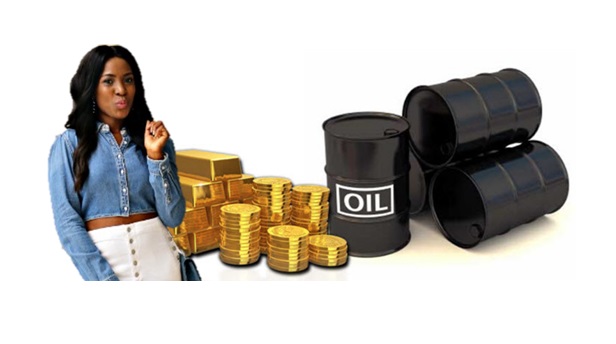
What does Linda Ikeji TV and Oil Money Have in Common?

4

By John Beecroft

A few days ago, I read in Forbes Africa about Linda Ikeji’s latest venture – Linda Ikeji TV (LITV), a subscription video on demand (SVOD) platform. Since the launch in June 2018, 80,000 subscribers paid for a one-month subscription of N1,000 per subscriber. And bam! that gives a total of eighty million naira (N80m) monthly if she manages to keep them faithful.

What about oil? Oil sells at about $60 per barrel. Now assuming a $20 profit per barrel, that’s only N7,200. What’s special about this? Well, pump two million barrels per day, and suddenly you have a daily profit of N14,400,000,000 (N14.4 billion for those having problems processing the figure). Do this 365 days in a row, and you have N5.3 trillion to run the Nigerian economy!

Are you getting my drift? The myriad real estate agents would have you believe that real estate is the new oil. That’s simply not true. Oil is small profits and high volumes. It’s about little products that can reach the masses.

There are two basic business models: You can either make large profits from a few sales or small profits from a lot of sales. For want of a better catch phrase, I call them BM1 and BM2. Let’s take a closer look at them.

Business Model 1 (BM1): Here, you make large profits from relatively few sales. Real estate, my own area of specialization, and automobiles for example fall into this category. We [Tetramanor] sell beautiful homes from N20m to N50m and typically make a profit of N3m to N8m per unit. However, due to the high price tag of the products, we can only sell a few units every year as the mass market simply cannot afford our products.

What about Brazilian hair for instance? Yes, you make large margins from each sale, but make no mistake, it’s BM1 you’re operating as your market is very limited – the number of slay queens that can afford N250k for common hair is just too small.

Business Model 2 (BM2): In this model, you sell low cost products to a very large market. Most of the richest people in Nigeria and the world at large operate this business model. Dangote has most of his money in cement. At N2,600 per 50kg bag of cement, he makes a paltry N640 per bag (from my calculations). Yet he was able to sell the equivalent of 470 million bags in 2018 to make N300 billion in profit (from sales) for the year! Incredible right? The same philosophy applies to his sugar business, pasta business and his new refinery. I doubt if he can get more than N20 per litre as profit. But when a nation of two hundred million people need your product, all you need is N1 profit per litre! Walmart, 50 cents here and 50 cents there, and voila, the richest family in the world. And the new Nigerian techstars? N50 per ride on this Okada and N10 per transaction on that app, and bam! we have a new generation of billionaires.

Let’s examine the differences between the business models in detail.

Target Market: For BM1 (low volumes, large profits), the target market are the elites for any specific category. For example, Mercedes Benz targets the elites for automobile buyers – perhaps those who earn above N30m per annum in Nigeria – while Brazilian Hair sellers target the elite of females – those who can spend N250k on hair without having neck pain. BM2 (high volumes, low profits) on the other hand targets the rest of the market not reached by BM1 e.g. the Hondas and Kias. In real estate, the Sujimoto’s operate BM1, while Adron Homes and co. who sell land at Ibeju Lekki operate BM2.

Volumes: For BM1, sale volumes are relatively low compared to the market at large. How many Nigerians really can afford N50m homes? If my company builds & sells about two homes a month, we would consider that a job well done. On the other hand, what population can afford to pay N1,000 monthly for LITV? Perhaps 199 million! And there’s your BM2 (large volumes).

Profit Margins: Profit margin refers to the percentage of the sale amount that’s left as profit. So if it costs me N15 to make a widget and I sell it for N20, my profit is N5 (N20-N15) and my profit margin is 25% (N5 / N20). Typically, I expect businesses operating BM2 to have smaller margins as they are very price sensitive than those operating BM1.

Profit Size: While BM1 has higher margins, the product price and profit size are also much higher. For instance, it’s easy for Sujimoto to make a profit of say N50m on a single duplex sale at Banana Island. On the other hand, Adron Homes operating BM2 and selling land at N1m might need to sell up to 100 or even 200 plots to get the same N50m.

Market Size and Competition: For BM1, because the customers are relatively few and elitist, the challenge is differentiating your product from that of the competition. As such, the war is being fought over quality and value. It’s all too easy to lose out completely in this market simply because the customers are so few. For those operating BM2 though, price is the differentiating factor. You’re selling a low-cost product to a lot of people who are very price sensitive. Competition is much fiercer in this market, but the potential rewards are also so much higher due to the almost unlimited size of the market.

Of course, you will find many businesses out there who toe the line between the two business models or who combine both models. Benefit of combining both models is that it allows you to make those large profits that come infrequently, with a constant stream of smaller inflows. Should there be a slowdown in sales of those big products, you would still be able to pay salaries using the smaller constant stream. My company for example builds & sells houses (BM1), but also rents out serviced apartments at very reasonable prices (BM2). A food seller can combine food sales (BM2) with event catering (BM1). Many other companies do the same successfully.

Finally, any business model you chose is perfectly okay. You just need to understand where you are, the limitations, and how you can take advantage of the opportunities therein. Personally though, I believe that if you want to be rich, BM1 is good. But if you’re looking for oil money, there’s no other way but BM2.

Back to Linda Ikeji; if she can scale to 200,000 subscribers monthly, that’s N200m per month. And should she be able to get to a million subscribers and maybe provide enough quality content to move the scale to N1,500 monthly, then bam! N1.5b in monthly receipts or N18b annually. Now, that’s black gold! I don’t know much about Linda Ikeji as a person nor can I be bothered. But as a business person, she has my respect and I’ll be glad to have a discussion with her over a glass of wine!

John Beecroft is the MD/CEO of Tetramanor

LinkedIn Comment on Feed

Comment #1: Good one there from John, it has always worked fine for any business that gets the models right. That’s why we always preach scalability, once that element is not there, your future is never assured.

I think Cowbell and its pricing regime actually forced all the big guys to have a rethink, else their struggles would have been unending.

But it does also appear that Apple scaled with its elitist model, they won in both volume and high cost; a very difficult thing to maintain for such a long time.

Of course if you sell car or homes, you need a second or third business, ordinary folks don’t buy these things; and you are likely to be accumulating debts…

Author’s Response: Thanks Francis. Your comment is particularly interesting because this article was born as I was cracking my brain on ways to scale our business. Apple indeed remains an enigma as they managed to achieve the impossible in an already crowded market. I won’t advise any other mortal to try that model – high volume, high profits – though. Simply too risky and in my opinion, not sustainable.

Comment #2: It’s really a lofty piece on business model classified into 2 categories based on the profit margins trajectories.

The BM1 consists luxurious or specialized products and services with very limited market size while the BM2 are products and services for mass market e.g sales of #Ferrari and #Bugatti with a possible profit of N50M(fifty million naira)per unit as against the sales of #Hyundai and #Kia with a profit margin of N1M. The market size for Hyundai is much more than that of Ferrari and Bugatti, but you will have to sell 50 units of the Hyundai to match the profit margin on the sales of Bugatti.

Moreso, the entrance bar in BM1 market is high only few players share the pie.
Whereas, the BM2 suffers high new entrants risk since the cost of entry is very low, many players share the pie in this space.

Meanwhile, I cannot really label the BM1 as the oil money as the BM2 markets has huge size (volumes though little profit margin ). There is as much money in the BM2 market just like in the BM1 market.

Thanks to Femi Beecroft for the write up and Prof. Ndubuisi Ekekwe for sharing it. Articulating this kind of thoughts ensures it’s conscious practical implementation, you cannot respond to or execute what you cannot remember.

Comment #3

Prof Ndubuisi Ekekwe, I don’t think Ms Ikeji’s business dealings are quite as simple as Femi Beecroft made it seem in that piece. She probably makes much more in endorsement income and spends a lot for content creation and workers’ wages.

However, the general principles he tried to illustrate with LITV are accurate and have been well noted. Every business model has its pros and cons, but the high-volume-low-margin model seems to be more attractive to people in general due to access to a much larger market and potentially lower startup costs.

However, many things need to work out well for both models to be successful, and that’s what’s more important in my opinion. While it’s very useful to understand your product, the frictions you want to tackle, your potential customer base, and the business model(s) you want to employ, understanding what makes either business model work and whether or not to employ a hybrid model is what separates the successful businesses from the not.

Timing, funding, decision making, and collaboration are important factors too. Unfortunately, I’m not a illustrator. It would’ve been a nice project to take on.

My Experience With ‘Subtle Racism’ In The UK

4

By Adaku Efuribe

I had an encounter with a lovely gentleman on a sunny afternoon;

I had just finished the half shift for the day and quickly went to the grocery store next door to get myself some cool crunchy salad as the weather was very hot and I wanted to stick to vegetables that  afternoon after I had a massive bowl of Icelandic low fat yourghort the previous day.

The UK hot weather is quite different form the Nigerian weather I must say,

Although I was born in the UK but having lived a great chunk of my life in Nigeria I can relate with the Nigerian hot weather. I can’t remember ever using sun screen lotion in Nigeria, but I never had a sun burn.

A few years ago when we had another incredibly hot summer month in the UK, I noticed I had sun burns and a bit of black patches on my body, that was when I heed to the advice of NHS choices to use sunscreen, A few Nigerian friends of mine who also grew up in Nigeria like me said they have been using sun screen as well whilst in the UK as the UK sun tends to be a little bit different and not so kind to their skin,

I can remember those days in Abuja ,Nigeria fresh from the university when I used to board commercial motor bikes also known as ‘ okada’  with the temperature around 45 degrees ,I could feel the hot air blowing across my face which made me feel so uncomfortable.

I had a Samsung AC split unit nano air technology in my flat which I bought with my first salary as a pre-reg pharmacist starting an independent adult life. I would always rush back home after work to put on my AC to catch a quick nap, we did have better electricity supply at that time in the Abuja and the prepaid meters were installed.

Back to 2018 on a ‘ very hot ‘afternoon in July in the UK as I approached the entrance to the very busy  grocery store, an elderly white man shouted at me —‘I bet you’re enjoying this hot weather aren’t you ’ I shouted back, yes of course I’m used to it!.

But was I really enjoying the hot weather- I don’t think so, my  response was out of impulse ,I don’t know why I responded the way I did  ,maybe I just wanted to sound nice.

A minute later as I was trying to make up my mind between a bowl of classic salad or Mediterranean salad, one of the staff at the grocery approached me and said he wants to apologise to me because of what the elderly man said to me earlier.

It was then I realised it must have been a racist remark, did he say it because of the colour of my skin, I asked? I think so the young man replied.

So he just assumed I was enjoying the very hot unpleasant weather just because I was black; I thought.

I have never said to anyone …hope you’re enjoying the weather when it’s -10 or 0 degrees, because I know no one enjoys that. Everyone covers up in long coats, hats, gloves etc. irrespective of their complexion or race.

For me I didn’t take the elderly man’s comment seriously, I have had a lot of things said to me in the past which I usually ignore.

Again in the same area about seven years ago, I was walking through a crowded town centre to pick up a quick lunch during my break. I wore a long braided hair style. I heard a young gentle man singing a Bob Marley song whilst invading my personal space, calling me ‘Rasta man’. I just smiled at him and walked past

Sometimes I believe people talk randomly in public to attract attention, perhaps they have not spoken to anyone all day and need a chat so talking to strangers loudly in public is the only way they can talk to someone.

I don’t usually take unpleasant remarks seriously; I just walk away because I feel people are usually rude and nasty because of their personal struggles.

I love Nigeria and I really miss the food and weather sometimes, one thing I cannot comprehend is the impunity and bad leadership going on there.

Sometimes I miss my boiled organic sweet yellow corn and local pear-ube, I also miss my okpa wawa, Rivers native soup and a host of other delicacies I’m used to.

I would love to live in a world devoid of racism, but is this possible?

More questions than answers!

‘I refuse to accept the view that mankind is so tragically bound to the starless midnight of racism and war that the bright daybreak of peace and brotherhood can never become a reality… I believe that unarmed truth and unconditional love will have the final word’. Martin Luther King, Jr.

U.S. Bans Chinese Supercomputing Firms

0
This Feb. 27, 2018, photo shows a quantum computer, encased in a refrigerator that keeps the temperature close to zero kelvin in the quantum computing lab at the IBM Thomas J. Watson Research Center in Yorktown Heights, N.Y. Describing the inner workings of a quantum computer isn’t easy, even for top scholars. That’s because the machines process information at the scale of elementary particles such as electrons and photons, where different laws of physics apply. (AP Photo/Seth Wenig)

U.S. hits Chinese Supercomputing big players, giving them Huawei treatment: ‘The Commerce Department on Friday took its broadest swipe yet at China’s supercomputing industry, imposing new export restrictions that effectively bar five major Chinese developers of next-generation, high-performance computing from obtaining U.S. technology”.

The Commerce Department blacklisted five more Chinese entities yesterday, all of which are involved in the production of supercomputers. By total number of units, China is the world leader in supercomputing, with 227 supercomputers compared to 109 in the U.S. – however the U.S. has the world’s two fastest units. Supercomputers can perform over a billion-billion computations a second and are used in weapon design and advanced encryption. Like much China tech, China’s supercomputers are built using U.S. components from suppliers like AMD, Advanced Micro, Intel and Nvidia. (Fortune)

Meanwhile, the ‘U.S. Chamber of Commerce has petitioned the Office of the U.S. Trade Representative to revoke tariffs imposed on Chinese imports over the past two years and warned the White House against implementing further levies. “Tariffs are hidden, regressive taxes that are being paid by U.S. businesses and consumers,” the Chamber said. Last week, 600 U.S. companies urged President Trump not to proceed with threats to submit another tranche of tariffs”‘, summarizes Fortune.

This is simply confusing: government is adding tariff while the companies it wants to offer competitive advantages to compete are saying “No, thanks”. The 2020 U.S. election will be interesting indeed.

Apple CEO, Tim Cook, has been spending time with Trump hoping to give it time to move some of its production out of China. That will be a redesign if Trump wins re-election. Yet, it is evident that Trump has changed many things in China. Take for instance, it is now possible for foreign companies to list in Chinese exchange. That has come as U.S. has pushed for China to open its market.

How To Make Nigeria’s Manufacturing Sector Globally Competitive

0

By Nnamdi Odumody

The manufacturing sector in Nigeria is faced with a whole lot of challenges which has affected its productivity and prevented it from being globally competitive. According to data  on Global Competitiveness of Emerging Economies from the World Economic Forum 2018 and Business Day Nigeria, Nigeria was ranked 10th at 47.5 percent with India first at 62 percent, followed by South Africa 60.8 percent, Brazil 59.5 percent, Algeria 53.8 percent, Kenya 53.7 percent, Egypt 53.6 percent, Ghana 51.3 percent and Rwanda 50.9 percent.

The Manufacturers CEO’s Confidence Index survey conducted by the Manufacturers Association of Nigeria in the first quarter of 2019 showed that CEO’s confidence in the economy was 51.3 points as the lending rate, foreign exchange rate, government capital implementation, multiple taxation, over regulation and difficulties in accessing raw materials, poor infrastructure and port congestion have prevented Nigerian industrialists to compete with their peers globally.

The recent refusal of President Buhari to sign the African Continental Free Trade Agreement (ACFTA), expected to create a single and the largest market in Africa, worth about $2 trillion, is to prevent Nigerian manufacturers from being at a disadvantage. The broad fear is that the country could become a dumping ground due to its large economic size, necessitating demand for products from other African countries which will be cheaper than those produced in Nigeria, even when it lacks competitiveness.

According to the National Bureau of Statistics, the manufacturing industry sectoral contribution to national GDP was 8.86 percent, unmoved since 2017. While Nigeria’s total non-oil export revenue in 2018 was $3.3 billion, Bangladesh earned $33 billion same period from its readymade garment industry.

The Following Solutions will make Nigerian Manufacturers Globally Competitive

Provision of a Single Digit Lending Rate and Easy Access to Funding: According to MAN data, lending rate to the manufacturing sector averaged 22.21 percent in 2018 and 22.84 percent in 2017. Compared to South Africa where the lending rate to customers is 10 percent, Kenya 9 percent, Zambia’s benchmark lending rate 9.75 percent and Ethiopia 7 percent, the Central Bank of Nigeria monetary policy rate is 13.5 percent while Nigerian banks lend between 20 to 30 percent. Clearly, it is obvious Nigerian manufacturers can’t compete with their African, and global peers, if a single-digit rate is not fixed for lending. The Development Bank of Nigeria and Bank of Industry should be recapitalized to enable them offer long term funding to manufacturers.

Tax Harmonization and Incentives: Multiple taxes affect the cost of production by Nigerian manufacturers today. The Federal Government and States Inland Revenue Services should harmonize all taxes and digitize tax collection to eliminate touts and offer industrialists tax waivers to encourage them to invest more in the real sector and grow the economy with job creation.

Nigerian made car (source: Innoson)

Curtailing Smuggling with Smart Technology: The Nigerian Customs and Immigration Services should invest in cutting edge technology like Artificial Intelligence, Blockchain, Cloud and Internet of Things and train its officers deployed at the nation’s borders to utilize them in preventing smugglers from Benin Republic, Togo, Niger, etc who smuggle products worth billions of naira, hurting the competitiveness of domestic products by local manufacturers.

Apapa Ports De-congestion and Ports Automation: The Nigerian Port Authority should decongest the Apapa and Tin Can Ports which contribute about 20 billion naira to the nation’s GDP daily as the gridlock has raised cost of production as a result of demurrages because of the delays in moving containers in and out of Apapa. A lot of manufacturers like NASCON, the salt manufacturing subsidiary of Dangote Group, are moving their operations out of Apapa due to the gridlock. Other ports in Warri, Calabar, and Port Harcourt should be dredged for manufacturers in the Eastern Region to utilize in importing raw materials and exporting their finished products. Also the Nigerian Customs Service should learn from Togo who just developed an ultramodern port and are deploying automation to make its operations efficient.

Provision of Stable Power Supply to Manufacturers: According to MAN, manufacturers in Nigeria spent N93.1 billion on alternative power sources in 2018. MAN should set up distributed decentralized renewable energy solutions to help manufacturers cut down costs on gas, diesel and other fossil fuels or power.

Embrace Design Thinking For Product Innovation: Nigerian manufacturers need to embrace design thinking to design the process which will lead to them developing world-class products that will meet and exceed the expectation of their customers, as this is the key to competing with global products in the world today.

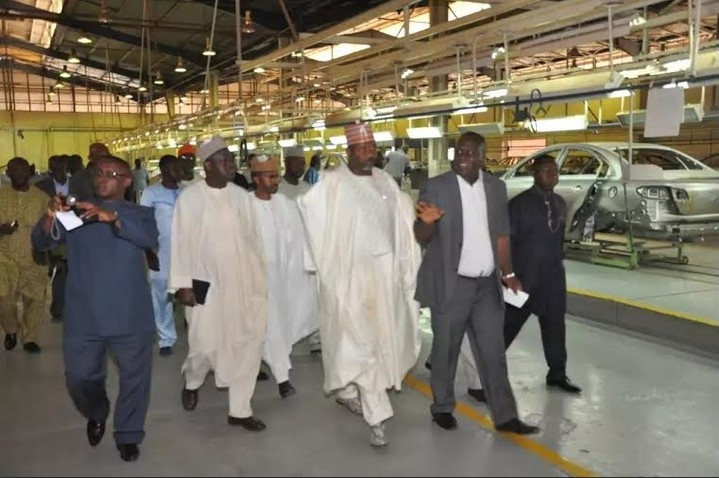
Tour of Manufacturing plant by Nigerian leaders

Local Patronage of Indigenous Products: The recently issued executive orders to boost local manufacturing capacity and competitiveness will not come to fruition if the Federal Government doesn’t take the lead in promoting MADE In Nigeria products.

Adoption of Technology For Manufacturing Efficiency: Nigerian manufacturers should learn and utilize advanced technologies like 3D Printing, Artificial Intelligence, Internet of Things, Blockchain and Robotics which are helping their counterparts in developed countries to engage in predictive maintenance, real time production floor analytics, curb plant floor waste and improve efficiency for profit maximization. Also, these technologies will help them to replace worn out parts in real time besides producing products cheaper and faster with 3D Printing.