DD
MM
YYYY

PAGES

DD
MM
YYYY

spot_img

PAGES

Home Blog Page 6871

Business Model Innovation for Agribusiness

1

By Nicholas Alifa

I have heard times without number that agriculture has the potential to boost the African economy.  I really do not agree with that school of thought. In Africa, agriculture precedes any other vocation. Apart from the fact that it is a cultural heritage passed down to us by our ancestors, agriculture is a major source of income, accounting for 65% of the total labour force and occupies 32% of the total GDP in Sub Sahara Africa according to African Development Bank.

If agriculture has the magical power to change the African economic narrative as we claim, it should have done that a long time ago.

The potential of African economy does not lie in agriculture but in agribusiness. It is business that grows the economy and that is exactly what is lacking or given little attention in the African agri-food sector. This truth has been discovered by the new generation of food and agricultural stakeholders in Africa and several attempts are being made by both the public and private sector players to change this narrative.

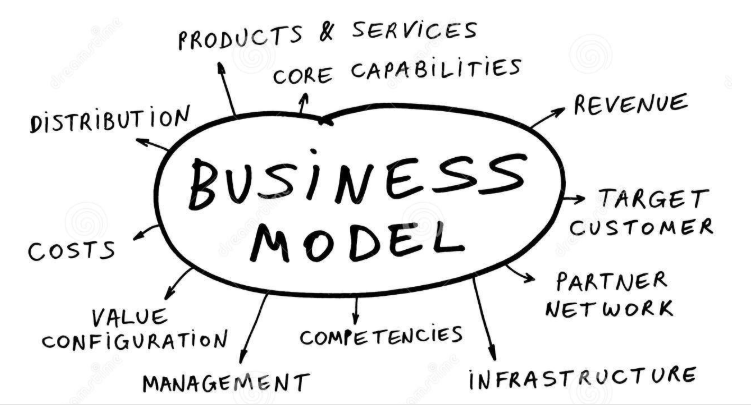
However, like any other business, the success of agribusinesses does not just lie in quality food and agricultural product or services but also in its business model. The business model in its simplest terms describes how an organization creates, delivers and captures values to its users. Many players in the Agri-food sector see themselves as just producers and suppliers rather than contractors, suppliers and product developers. As a result, they seem not to pay attention to building a scalable business model which is the bedrock of every successful business.

Business model (source: Forbes)

African agriculture entrepreneurs will have to deliver and capture values in innovative and cost-efficient ways to be able to meet the existing global challenges, emerging opportunities and changing consumer tastes. This is where Business Model Innovation (BMI) has its role.

According to Harvard Business Review, Business Model Innovation is “about delivering existing products that are produced by existing technologies to existing markets”.  It neither requires new technology nor the creation of a new market.  BMI in the agri-food sector has the potential to re-invent the African food systems and releases its potential of contributing significantly to the continent’s economic development. Furthermore, taking business model innovation seriously can set an agri-food company apart as it will position her to meet the constantly dynamic consumer demand and stand out of the competitors. Business Model Innovation often involves changes invisible to the outside world, thus it can bring advantages that are hard to copy.

Any food and agriculture business that must compete globally and grow sustainability need to have an excellent business model, and constantly re-invent the system through consistent business model innovation.


We are providing an opportunity to help businesses build a sustainable business model. Only 20 slots are available. You can contact us on +2348167303461 if you are interested.

George Weah Must Score Economic Goals for Liberia

0

Goalkeepers hated him. Defenders despised him as he made many look simple. His wizardry was unbounded. He was a legend in a land where you needed to be twice better to get half praise. George Weah was one of his generation’s finest footballers. He scored many goals – beautiful ones.

But King George has failed to score for Liberia recently. The football-turned-politician is the President of Liberia. His government has been accused of being clueless, political ineptitude and even corruption. In short, he has scored many own-goals – poverty and youth unemployment are up.

It would be an understatement to say that ordinary Liberians are disappointed with Weah’s performance. The footballing legend – who is the only African to ever win FIFA’s coveted World Player of the Year award, as well as the first-ever footballer to become a head of state – became President in January 2018 after campaigning to revive the economy, create jobs for the hundreds of thousands of young adults that make up his electoral base and, as he put it, to ensure that “public resources do not end up in the pockets of government officials”.

But rather than tackling the issues on which he and his Coalition for Democratic Change (CDC) were elected, critics charge, the government is going out of its way to maintain the status quo that prevailed under the previous government of Ellen Johnson Sirleaf, who also made history as Liberia and Africa’s first-ever female President. Incidentally, Sirleaf is a former World Bank functionary whose disastrous economic legacy after two Presidential terms belied her so-called technocratic pedigree.

It is getting to half-time in his Presidency. He needs a new strategy. King George must score economic goals, urgently. He must win this important game of his call: “Now that Mr. Weah has scored the most important goal of his life, the Liberian presidency, he has work to do. The Liberian people need to score their own collective goal: wellbeing and prosperity. It is left to Mr. Weah to build a winning team by strengthening the national offense and “defense” with a solid national economic team.”

LinkedIn Comment on Feed

You campaign in poetry and then – govern in prose.

Most times when politicians or new recruits into the world of politics reel out what they will do, when voted into power, the first thing that comes to my head is: do they even understand what they are saying? The same way most people read aloud, without making sense of what they are reading.

The problem is that when you build false hope, telling people things that have no relationship with reality, if they believe you, then you are likely to be haunted as long as you are in power. All your ineptitude and incompetence will become so visible such that even idiots can perceive them.

Whenever anyone seeking office tells you, I will do this and that, without following it up with the ‘how’, if you believe him/her, then you need help.

Why is it so difficult to tell the people the truth while campaigning and when in power? Because people don’t believe what is true, so deceit is the name of the game.

King George never had the intellectual rigour or excellence of the soul to be president, to believe otherwise means you never paid attention from the beginning of the whole melodrama.

Nigeria’s Big Challenge: Curbing Crude Oil Theft

0

By Ackilis Charles

Curbing crude oil theft ‘a war that must be won collectively to save our future’.

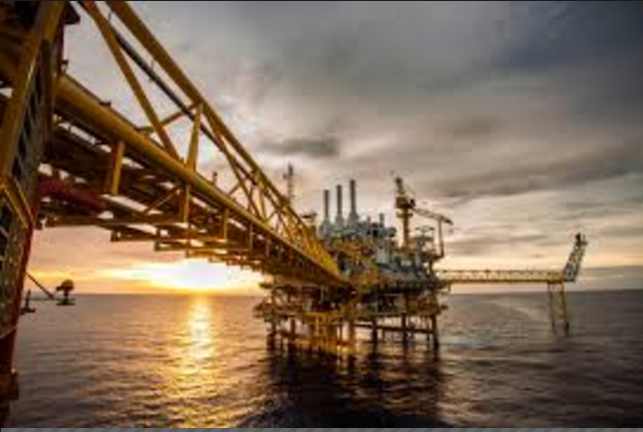
Nigeria is the sixth largest oil producing country in the world with a capacity of 2.5 million barrels per day (bpd) and potentially the largest petroleum sector in Africa.

The sector is plagued with complex but interwoven challenges spanning across insecurity, regulatory, political and socio-economic exigencies. Of all these, crude oil theft has been one arduous problem with its impact being felt across the length and breadth of the country and thus, should be made a national priority.

Crude oil theft is a global epidemic that has bedeviled a lot of oil producing countries and hence, an aspect of global terrorism not just native to Nigeria. Unfortunately for us over here, we seem to be worse hit, as according to data gotten from oilprice.com, Nigeria in 2014 was ranked ahead of Mexico, Iraq, Russia and Indonesia on an index of top five countries mostly plagued by oil theft.

Crude oil theft evolved into a cottage industry in the early 2000’s, creating huge socio-economic problems and with global oil price rising above $100 per barrel, the illicit albeit booming enterprise reached its climax between 2011 – 2014. In 2016, reports suggest about N3.8 trillion losses were recorded by the international oil corporations (IOC’s) and government due to crude oil theft, pipeline vandalism and sabotage.
Therefore, crude oil theft poses a significant threat to the socio-economic stability of communities, states, and countries in which the menace is prevalent. Hence, a commiserate advocacy campaign is needed to heighten the level of consciousness of the host indigenous communities where this illicit business is being carried out.

Poverty, high rate of unemployment, poor governance, wide spread corruption in the system, neglect by the government and some IOC on environmental safety and effects of resource extraction in oil bearing communities has been argued by some as the driving factors and rationale behind involvement in crude oil theft.

Pipeline saboteurs bold enough to speak to the camera see their actions as economically rational, politically necessary, morally defensible and socially productive. They describe illegal oil bunkering as an entrepreneurial, free market response to local economic dysfunction, socioeconomic pressures, chronic fuel and energy shortages in the region and government’s failure to deliver basic public services.

As much as some of these listed inadequacies might be true, resorting to hydrocarbon theft is equivalent to trying to solve a problem with a problem, which is unacceptable in any sane society as anarchy can never be a solution to injustice. Instead it begets other vices that could have negative effects on the country.

There are several categories of crude oil theft in existence. Three of the most common are as follows;

  • Small scale pipeline tapping/well head theft
  • Large scale illegal bunkering
  • Over lifting/under declaration at export terminals

While the three types are not mutually exclusive, they however do have different sources, actors, markets and revenue streams. Some findings have highlighted the complicity and increased cooperation between militant elements, state actors, oil companies in some of these categories of theft, as there have been little deterrence from enforcement agencies.

Crude oil theft albeit lucrative comes with immeasurable environment and social degradation, economic and security instability, health hazards, destruction of energy infrastructure resulting in huge resources being expended on repairs, investor apathy and hence low developmental prospects.

Statistics of the volume of crude lost to theft and its direct bearing on the communities and general polity has been difficult to access, as the sectors dealing is shrouded in secrecy and thus unavailability of synchronized data that could be deemed reliable. Nevertheless, anecdotal evidences were used to arrive at estimates of the impact and effect of this hydra headed national conundrum.

Assessment by Nigeria Natural Resource Center (NNRC) reported that losses due to crude theft and pipeline infractions as of the first quarter of 2108 averages at about 300,000 bpd with about 200,000 potentially stolen while the remainder is lost to shut-ins from pipeline damage, downtime and differed productions.

The impact of such losses is enormous and translates to severe revenue shortage for the federal government with estimate putting it at around N995.2 billion per annum. This estimate is greater than the combined allocations for health and education in the 2018 budget. Environmental damage, security cost and loss of investment as a consequence of crude theft was estimated at around $55 billion over the last decade.

Owing to the combination of negative downturn in global crude prices and low production output (majorly due to resource theft and vandalism), national debt levels did soar as the country had to borrow to finance budget deficit due to revenue shortfall against budget projections.

With limited education and refining expertise, refining operations by locals involved in oil bunkering do contribute to large scale environmental damage as this is done in the creeks with no proper channels for waste disposal, hence polluting the delta, burning down plants life and so on. In addition, products from their artisanal firewood refineries are deemed to be substandard by state authorities and occasionally destroyed.

In situations where stolen crude was not refined locally for communal consumption or sales, the proceeds from this blacklisted but thriving enterprise could be a key source of funding to militants and other armed groups who trade them for ammunitions, thus, threatening the security and political stability of those regions.

IOC’s over the years have fallen short of international best practices stipulated to ensure minimal environmental degradation. This has somewhat led to oil spillage and seepages destroying vast kilometers of lands, farms, polluting the waters and thus, killing off the source to feeding and livelihood of the indigenes of the host communities. Also, gas flaring which has been a tradition for most of these IOC’s has been found to have negative effect on the atmosphere.

Efforts to curb this epidemic and address it root cause(s) and not just the symptoms have in most cases been poorly conceived, unsustainable and inadequately implemented. At federal level, government response to crude theft have been usually reactionary instead of precautionary.

In addition, weak government institutions and lack of political will to call some of the ailing IOC’s to order was highlighted when a Dutch appeal court seated at the Hague ruled that Shell could be held liable for oil spills in Nigeria despite the firms claim that it was caused by sabotage.

Sequel to a media chat by New Nigeria Foundation (NNF), a non-governmental organisation (NGO) championing an advocacy program against crude oil theft, participants present unanimously agreed that the media, elites and influential state actors have a very important role to play in curbing oil theft, as this is a war that must be won collectively in order to secure our future.

Information is a powerful tool when properly harnessed. This should be used to attract the attention of stakeholders (government, oil corporations, middlemen in the oil and gas value chain and indigenes of oil bearing communities) to the devastating effect of this illicit albeit booming business down south and the need to not embark or continue in sabotaging the economy of the nation and also endangering their lives.

The media do play an important role in forming public opinion and thus should be used as an avenue to educate the youths, our mothers and the elderly against either engaging in oil bunkering or shielding the perpetrators because of communal sentiment or angst against the government. Also, locals should be educated on the impact and effects of crude theft on their health, environment and posterity, as it could take decades to clean up and reclaim vast kilometers of land or water made and still being made inhabitable.

Detailed investigation anchored by both public and private media bodies, NGO’s and other interested data mining corporations should be embarked on, as it could help bring to the fore, the scale and depth of crude theft/illegal bunkering in the petroleum upstream and downstream sectors.

Also, the media should write, report and expose corruption in the petroleum and maritime sectors as those charged with the obligation to police and guard against some of these illicit activities are somewhat complicit and supposedly aiding or abating these economic saboteurs for personal/communal gains.

The media should provide an alternative platform to the voiceless in host communities suffering environmental hazards plus other costs that comes with petroleum exploitative activities. Majority of local inhabitants live in penury despite the huge amount of resources being lifted from there and this they attribute to neglect by the authorities.

Well lettered countrymen, elites in the bracket of community, state and federal ambassadorial positions, veterans and elder statesmen should engage the government and bodies responsible for the welfare, safety and security of these host communities on the need to govern better, initiate people friendly policies, purge itself of corruption, adequately man and secure our waters and pipelines.

Government at the federal level should also engage in bilateral agreements with neighbouring countries where stolen crude sales could be made in order to block supply channels and make crude theft less lucrative for persistent criminal elements.

Charles Maduabueke, BSc in geology and mining, wrote from Lagos.

Understanding The Anchors To Great Success: Your brand, Your Integrity, Your Promise

0

By Adebola Alabi

A promise is a commitment to do or not do something. People of high integrity keep their promises. As a manufacturer, your promise is to deliver quality products on time within schedule in a cost-effective manner. As a service provider, your promise to your customer is to provide top notch services that will keep your customer engaged and happy. As an employee, your promise to your employer is to add value to the company and in return your employer commits to paying for your time at the end of each month.

As a father, when you promise to take your son to a school night game, he expects you to keep your commitments. Healthy relationships are built upon foundation of promises of loyalty, trustworthiness, and show of love by both couples. If you are a credit card user or if you have a loan with a bank, to maintain your integrity with your financial institution, you must keep your promise of paying your loans as at when due.

Every year politicians all over the world also make promises to their citizens, they pledge to create more jobs, build infrastructures, deliver access to great healthcare, and make life a little bit better for the people. The ones that kept their promises are often rewarded with another term in the office and they are held in high esteem in the society after their time of service. Companies that keep their promises of providing high quality products and excellent customer services are rewarded with loyal customers and more business opportunities. Parents that keep their promises are well respected and loved by their children. Borrowers that keep their promise get rewarded with high FICO score and lower interest rate when they go to bank to apply for loans. Relationships where husbands and wives keep to their commitment last longer with both couples living together happily.

Our world today is filled with many broken promises. Politicians no longer care to honor their oath of office, they look after their own interest rather than those of the citizens. Marriages are crashing just as soon as they get started, forever ever after is becoming a tale in a world that is less caring about the affairs of others. Employees are no longer loyal to their employers, they jump from one company to another, because they do not feel that their employers care about their future in the company. Companies will lower quality and customer satisfaction just to make extra profits. Broken promises also imply lack of trust among people in our society.  It is crucial to restore trust, integrity, and honor so that the interdependent relationship among people in the society can continue to thrive to the benefits of humans.

Change begins with you. Are you keeping all your promises and commitments? Are you a person of integrity? If not, here are some things you should know about keeping promises so that you can build your brand:

  1. Under promise, over deliver: Most people over promise and then under deliver. I believe it is better to under promise and over deliver, this is a better way to manage people’s expectations. Most of the time, in order to get what we want, we are tempted to oversell or exaggerate what we can do and we soon realize that we are not able to deliver on our promises when given the opportunity. Politicians will typically promise heaven on earth only to get to office and then realize that there are no enough resources to provide what they had promised. Job seekers will portray themselves as fountain of knowledge during interview and some will be a big disappointment to the employer after they hired the candidate. The right approach is to know your capacity, understand the requirement and make your promise based on the information.
  1. Step up and stretch: It is likely possible to find yourself in over your head. You told the interviewer you can do what you know that you have little knowledge about. You have promised your customer to deliver their products on a certain date, but your production line has been plagued by various quality issues. The electorates are waiting on the politician to deliver his momentous promises and nothing seems to be going in the right direction. It is time to step up and stretch. You should work harder, learn as fast as possible and grow beyond your previous limitations to match up your promises. That way, you will be able to restore trust and confidence in you.
  1. Fess up and take responsibility: You suddenly realized that you have over promised, the right thing to do is to own up and take responsibility. Go to that customer explain why he should expect delays. Go to your constituents and tell the reality of governing, show them that you are responsible, show them the progress that you are making, explain your challenges to them and let them know that you are ultimately responsible for delivering the promises.

Closing Thoughts

Your reputation is your brand. It is your duty and mission to guard and protect it jealously. One awesome way of ensuring that you protect your reputation is by making sure you keep your promises both in your personal and professional life. To make sure that you have a stellar reputation and brand, you must be a trustworthy person with high integrity, a person whose promises is his/her bond.

Nigeria’s 7GW Power Generation Capacity Challenge

0

By Ahmad ANIFOWOSE

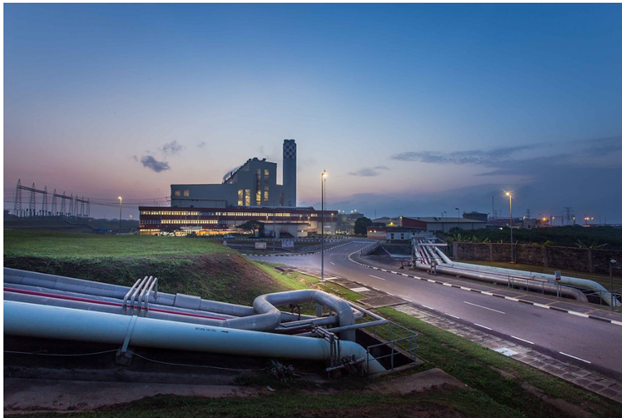
With over seven gigawatts (7GW) of current generation capacity, 26 power plants of which three of them are Hydro-electric namely; Kainji, Jebba and Shiroro, and the other 23 thermal (mainly gas), Nigeria has about 141 turbines that can generate over 12,340 MW and transmit about 7.2GW, and distribute over 5GW of power to her over 170 million people.

The one megawatts(1MW) for a thousand people rule of thumb for an industrial nation, if brought into perspective here, presents to the system operator and the eleven distribution companies very unappetizing menus, to choose between the rock, and a hard place as to where, and when to supply energy to consumers. As if the 7GW/170 million people ratio was not debilitating enough, the issues are further amplified by technical, commercial and collection problems.

Whether that West African country so named by Flora Lugard in 1914 today is an industrial nation is up for debate, but it is undebatable that we were on that path before, when Cocoa from Ondo and Cross-River dominated the international market, and Cocoa Industries in Ikeja was very much alive; when the textile companies countrywide were producing; and when the Naira-dollar rate was pretty much advantageous to us.

Clearly, 7GW cannot take us to those lofty heights we aim to attain, however, the Incremental, Steady, and Uninterrupted power strategy cannot be attained tomorrow even with the best of policies, minds and all the financial wherewithal on ground today.

This reality has further broken the hearts of many Nigerians perhaps because of our over-ambitious characteristic or our emergency approach to problems generally.

Very many people have wrongly likened the Electricity sector to Telecommunications, with lofty hopes that once “PHCN is privatized, then we should be able to freely choose between various Energy Suppliers” without thinking of the workability of such setting.

In some countries like the UK, US, Germany, Australia, etc., a Distribution Company and an Energy Supplier exists differently; one of them focuses on all the technicalities of distributing energy (Distribution Network Operator [DNO]) to customers and the other focuses on billing customers(Energy Supplier [ES]) who then pays the DNO some amount from the revenue from customers.

With this structure, there could be multiple Energy Suppliers using the assets of the DNO in that area, and the Energy Suppliers could come up with varying tariffs and other incentive, resulting in competition. Clearly, this is not the structure available here in Nigeria, and we are not alone as countries like France, South Korea, South Africa, and a host of others with in fact steady and considerably uninterrupted power utilize the same structure.

As much as we now have a government focused on steadily increasing generation (N701B payment assurance guarantee, 3,050MW Mambilla Hydro Electric plant, 700MW Zungeru Hydro Electric plant etc) and transmission (Ikot Ekpene Transmission Substation, various upgrades and maintenance in existing substations nationwide, etc.) capacity levels Megawatt by Megawatt, it is indeed necessary for us all to conserve the little energy available to us, for longevity and more equitable distribution. Also, the banks and other investment companies should shift their focus to this sector and realize that this goose is a golden one, a major linchpin of the Nigerian economy that would lay the golden eggs in the not too distant future.