DD
MM
YYYY

PAGES

DD
MM
YYYY

spot_img

PAGES

Home Blog Page 6876

Why Global Delivery and Logistics Startups like Glovo, Swvl are Coming to Nigeria

4

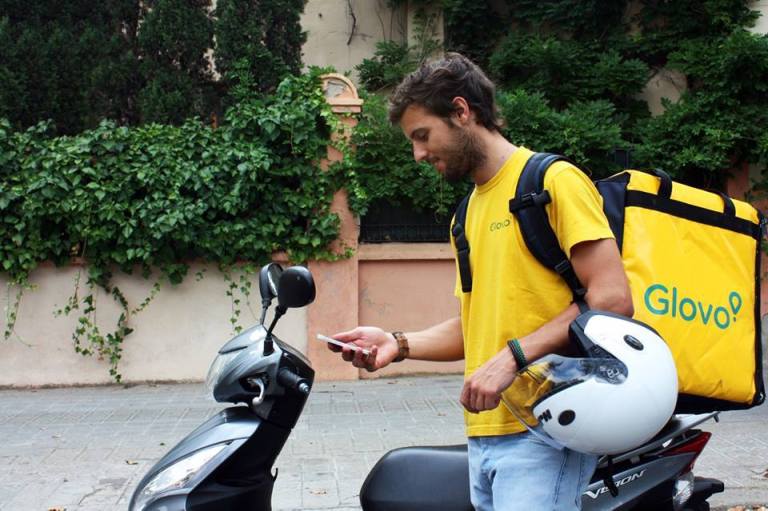
Glovo, a Spanish delivery startup, is expanding into Nigeria in few months, TC Daily notes. Glovo which has raised a total of $346 million with the last round of $169 million this April 2019 competes with Delivery Hero. As Glovo arrives, Gozem from Singapore is also coming even as many local players are getting ready. Simply, logistics is going to be the sector that will deliver the highest number of winners over the next few years in Nigeria; you can add fintech also. Yes, logistics is supply chain, and supply chain is commerce.

The firm has announced it’s setting up shop in Nigeria and Ghana in a few months after setting up successfully in Nairobi, Kenya. Like Glovo Kenya, food delivery will be Glovo Nigeria’s key product for its first few months of operation.

Nigeria is an interestingly important market for anyone who wants to conquer the continent. With a population of over 200m and counting, Nigeria is like a small India or China, or a mix of both. India and Nigeria have massive populations which are good for its labour force and customer base. Glovo needs Nigeria to succeed in Africa. Glovo is now the most downloaded food delivery app in Kenya and its once major competition Sendy, sees food delivery as a very small fraction of core B2B business.

For Nigeria to thrive in the ecommerce sector, logistics must advance. Entities like Glovo and Gozem will first do well before we can have serious penetration in the ecommerce sector. These companies understand that they will be connecting the pieces, and that is why Nigeria is very exciting in this space. Along with the local peers, they will emerge as the postal services.

From Uber Eats to equivalent of Bolt, we will see many elements of companies plugging into intra-city delivery and logistics, not just for ecommerce firms but any sector. Matatu is using keke (tricycle) to play the last-mile game. I expect Gokada, the motorcycle ride-hailing startup to have a division for logistics in coming months.

As Glovo arrives, Cairo-based transportation startup Swvl is also making Nigeria home.

Swvl will be launching in Lagos by mid-July with 50 buses initially, a Swvl representative confirmed, in a conversation with MENAbytes, without sharing further details.

Nigeria will be the third country for Swvl to launch its services after Egypt and Kenya. Some previous reports had also suggested that the Egyptian startup is looking to expand into Uganda but there was no confirmation. The startup last year had said that it plans to be in seven megacities by the end of 2019 including many in Southeast Asia but has apparently changed its plans to focus on Africa for now.

Founded in 2017 by Mostafa Kandil who was previously with Careem, Ahmed Sabbah and Mahmoud Nouh, Swvl that connects commuters with private buses, allowing them to reserve seats on these buses and pay the fare through company’s mobile app, is currently available in Cairo, Alexandria & Nairobi.

No matter the format or style, all of them are collectively pursuing two connected things: reduction of marginal cost for companies and simplification of transportation for citizens. Those are the main frictions in Nigeria where there is neither a functioning public postal service nor an efficient public transportation system.

They are coming, and they have a reason – Nigeria is the largest country on earth, by population, with the highest logistical marginal cost paralysis. Add human mobility, you will get the picture.

I am expanding my invisible growth-maker team to support local and international firms looking for growth under our Private Client Services: Startup Growth. This is the new Private Banking business of this era.

Nigeria is very exciting.  (LinkedIn Summary)
Remember to Apply to Ndubuisi Ekekwe’s “Private Client Services: Startup Growth” – Have 24/7 Access to me.

The $2.3 Billion Lagos Startup Ecosystem Gets Another Hub

0

By Nnamdi Odumody

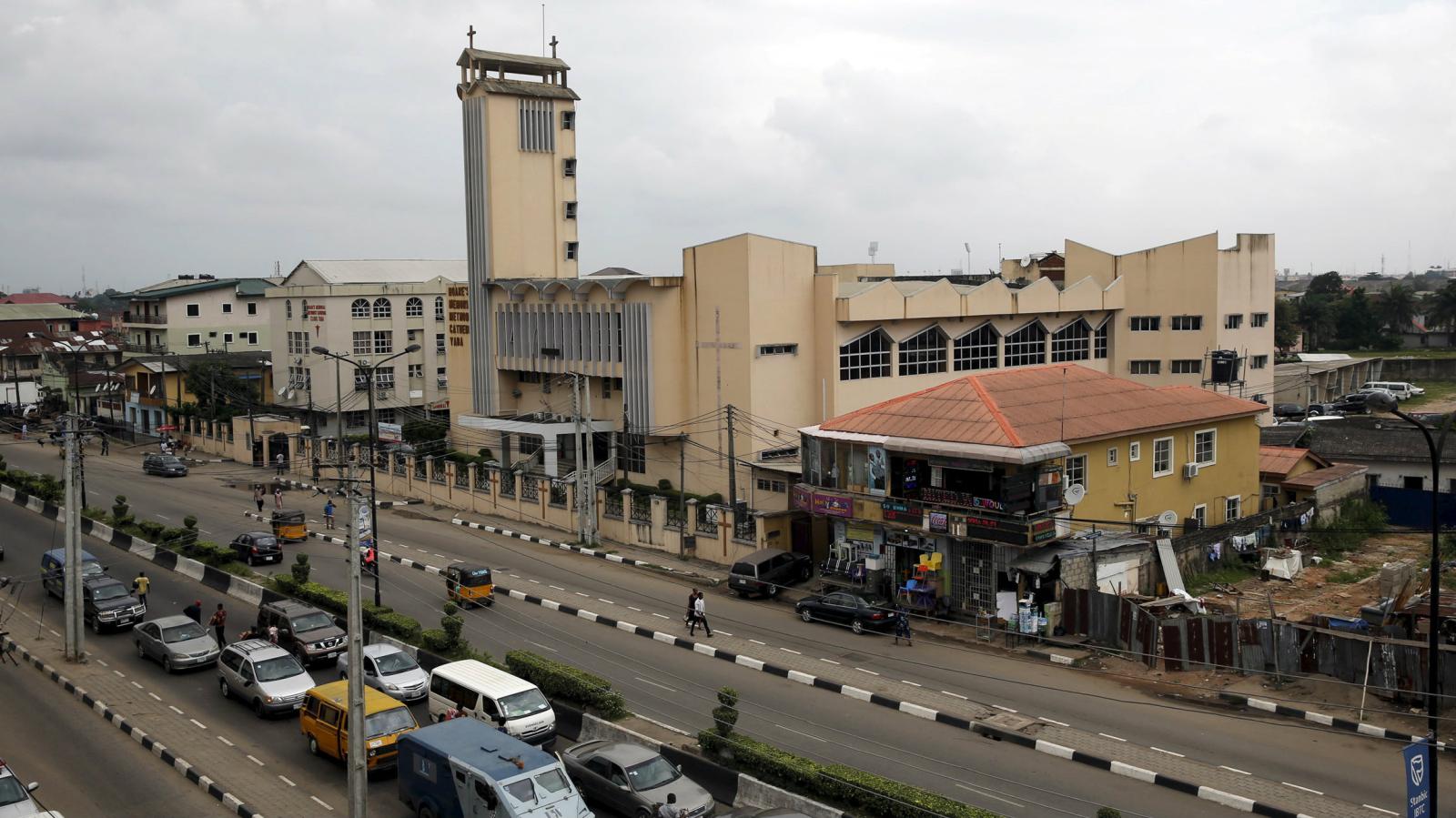
The Lagos Startup Ecosystem which was worth $2 billion in 2017 has been attracting considerable attention not just from the private sector but also from the state government. We estimate at least $2.3 billion value now. The Yaba technology corridor which kickstarted in 2012 with social innovation lab Co-Creation Hub witnessed an exponential growth due to broadband connectivity provided by MainOne, and talent from the University of Lagos, nearby attracting startup founders and talent development accelerators from other parts of Lagos, and beyond, to establish their bases there as the cost of operations is cheaper compared to where some of them were previously based.

For startups, Lagos, Africa’s largest city, appears to be a land of promise with its huge addressable population of over 20 million people and a tech ecosystem that’s bursting with energy and dynamism. In fact, the local startup ecosystem is valued at $2 billion, making it the most valuable on the continent, according to a new report from Startup Genome.

The executive governor of Lagos State Babajide Sanwo-Olu identified technology as one of his administration’s pillars for job creation and making Lagos a 21st century economy. According to him ’’Technology is the way to go, it is the way of the future and it is the way the entire universe is going to and everybody is using technology to develop everything we need. We believe from here, things around the T.H.E.M.E concept that has to do with the environment, education, transportation and health innovations would be developed’’

In view of this, Victor Afolabi, the founder and CEO of GDM Group launched Eko Innovation Hub to act as an incubator for innovative startups which will contribute to the GDP of the state. Located on Awolowo Rd, Ikoyi, the facility which was one of the campaign offices of the current Lagos State Governor will provide not just infrastructure like power, internet services, workspace but also legal, financial, technical, marketing and public relations support for each of the startups at the hub in order to help them focus on their core businesses. The support will be critical as most startups in Nigeria struggle due to lack of support.

Why Google is Asking Trump to allow Huawei To Keep Using Android

7

From Fortune Newsletter: Google is worried that Huawei will eat its cake and still have it: “Google wants to be exempted from the Trump administration’s ban on exports to Huawei, and it’s using national security interests (one of the justifications for the ban itself) as the basis for its argument. The logic goes thusly: stop Huawei being able to use Google’s version of Android, and Huawei will end up developing its own version of Android, which will be more easily hackable by the Chinese government among others.”

That makes sense: Android belongs to the open source software category and can be modified. After all, Google has been making the same case, after it allegedly violated Java APIs’ copyright in developing Android. Simply, Huawei will use Google’s argument against Oracle – the owner of Java – against it.

“We are disappointed that the Federal Circuit overturned the jury finding that Java is open and free for everyone. We will appeal to the Supreme Court to defend this principle against companies like Oracle, whose restrictive practices threaten to stifle the work of new generations of tech developers,” Google said in a statement sent to Android Police.

Winning the case is mostly important for Google from a precedent-setting standpoint, but losing would also carry a hefty charge; in the last trial Oracle claimed damages of almost $9 billion. Of course, considering Google’s revenues last quarter were just over $32 billion, the company’s certainly good for it — but losing several billion dollars is never ideal.

I have a name suggestion for Huawei version clone of Android: Trumpy  (yes,”trumpy” so that it can be trademarkable).

The Power of China on Gadgets

If U.S. pushes Huawei and by extension the broad Chinese phone makers out of Android, I predict that within 6 years, the operating system of choice in Android will be the flavour the Chinese device markets converge on. If they decide to use Trumpy operating system, as I proposed, Africa, Latin America and most parts of Asia will flip. Why? Affordability.

No one in Africa will buy the expensive Google Pixel or other phones from U.S. makers or European makers. The most affordable devices remain in the hands of Chinese brands like Oppo, Tecno and Huawei. So, if you push them to use another OS, Google’s Android will lose market share over time even in places the Huawei ban does not cover.

When it comes to emerging markets, cost matters. So far, Chinese phone makers dominate therein. That they use your software and pay the necessary fees should not be taken for granted. If Trump puts heat and they create an alternative one, by ripping Android apart, future phones in Africa will not be powered by Android. Sure, Samsung will continue to have offices in Africa but it has lost market share because of price. Simply, Samsung will not save Android.

I hope President Trump understands the risk ahead – Android can become simply an American and European product, losing relevance in emerging markets, for Trumpy operating system.

The End of Blackberry Messenger (BBM) is a Case Study of Creative Destruction

0

By Nnamdi Odumody

On Friday, May 31 2019, Blackberry Messenger (BBM), the chat messaging solution from Blackberry (formerly Research In Motion), was shut down, after 13 years of operation. BBM was a category-king in the chat messaging solution after disrupting Yahoo Messenger as customers focus shifted from the web internet to mobile. Its rival in mobile chat messaging was the Nokia Instant Messenger which ran on the defunct Symbian Operating System.

The decline of the Blackberry started two years ago after the release of the Blackberry Storm which is supposed to be Blackberry multimedia phone. Just two years ago, Blackberry and iPhone were the players seen to be fighting for number one, not android and iPhone. In late 2008, RIM released the Blackberry Storm (without wifi). It was this device that was supposed to be the iPhone killer. An Engadget review of the Storm notes that Verizon, Storm’s partner, was Apple’s first choice for the then soon-to-launch iPhone, “Verizon refused and Apple took its multi-billion dollar ball to AT&T. But software glitches and lackluster reviews like that from Engadget killed the Storm, people simple didn’t like the product, and a high return rate likely worried Verizon.

Owning a Blackberry mobile device which was a symbol of prestige in its era of dominance came with a customized PIN for access to communication. With unique features as BBM stickers which set the foundation for emojis on all social media chat platforms, Blackberry failed to pay attention to the ecosystem Apple and Google were creating, by making their mobile operating systems iOS and Android open to developers around the world to build applications.

As iOS and Android grew, other ecosystem evolved. WhatsApp was devastating to Blackberry, and that was compounded by the ban on BBM by governments in Asia and the Middle East due to the inability to access citizens’ data in the platform.

Blackberry would later adopt the Android operating system for its mobile devices and put its BBM as an application on the popular platforms but by then it was too late. The world will remember BBM as a case study of creative destruction at scale.

According to Schumpeter, the “gale of creative destruction” describes the “process of industrial mutation that incessantly revolutionizes the economic structure from within, incessantly destroying the old one, incessantly creating a new one”. In Marxian economic theory the concept refers more broadly to the linked processes of the accumulation and annihilation of wealth under capitalism.

LinkedIn Comment on Feed