DD
MM
YYYY

PAGES

DD
MM
YYYY

spot_img

PAGES

Home Blog Page 6896

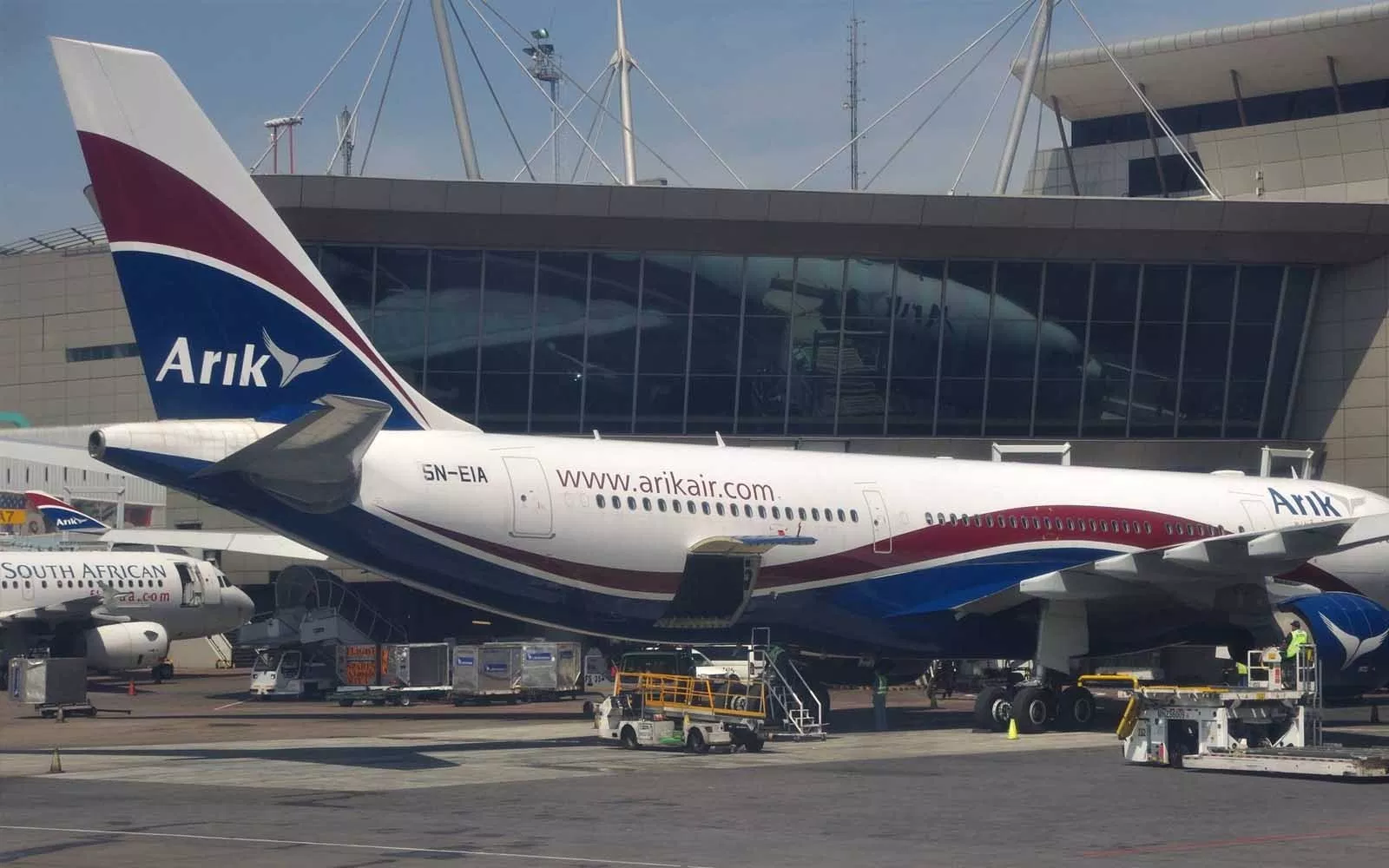
Now, What Next for Arik and Aero As Government Foreclosures on Merger for National Carrier

0

First, I am very happy that Nigeria has killed the idea of merging Arik and Aero Contractors to form a national carrier. I read with pains as industry players were demanding for the merger to seed a national carrier.  Sure, Arik and Aero are largely under the control of the federal government through AMCON, the debt buyer, and could be taken over finally. I have no opinion on what to do with Arik and Aero, but I have a clear one on what Nigeria should not do: forget the idea of a national carrier!

The Federal Government has foreclosed the possible merger of two of the country’s local airlines, Arik Air and Aero Contractors Limited, into a national carrier, says Minister of State for Aviation Mr Hadi Sirika.

Sirika, who is on a country tour of aviation sector projects initiated by the Buhari administration, said in Lagos that the large indebtedness of the two local airlines to creditors as well as pending litigation in courts had forced the government into foreclosing the merger option as suggested and demanded by industry stakeholders.

[…]

“The suggestion that Aero and Arik Airlines, which are under the control of AMCON, should be merged to form a national carrier is not tenable as the national carrier would get entangled with the huge indebtedness of the airlines and other encumbrances,” Sirika said.

If you check, we cannot manage waterboards well – and FAAN (Federal Aviation Authority of Nigeria) has been unable to fix leaking roofs in our airports effectively. To think it is an airline that we can manage at this time, I have a bridge to sell to you. Nigeria should use any money it has for national carrier to improve our airports so that private sector participants can come onboard.

Port Harcourt is unfortunate, Owerri airport is largely gone, and Enugu airport is terrible. In some few ones in the north, you will pray that cattle will not STOP the planes on the tarmacs. Visit Kano airport and you cannot believe that is all we have for the great center of commerce.

Simply, fixing and upgrading our airports are where we need governments right now – not a national carrier that will surely collapse within five years.

And finally, what will government do with Arik and Aero now? Take them over – you will have more debts to service from the national budget. Leave them as they are – they will largely bleed to death! Tough decisions.

LinkedIn Comment on Feed

The rate at which we produce comedians in the land, if half of them were to be thinking heads, we could lay claim to be one of the most efficient and upward nations in the world…

Almost 60 years after independence, it still feels like the colonialists left too early, because we have essentially failed to improve on what they left us with, even to maintain the very ones they left, we have consistently proven our inadequacies and how incapacitated we are.

We couldn’t manage government assets and businesses that are less cumbersome, they keep underperforming, and somehow our talking heads seriously believe that we can manage national carrier? It’s impossible for a country like Nigeria to run an airline profitably, we are simply not good enough in a business where profit margins are very small. Whatever that bewitched us must be very strong!

As for Arik and Aero, the solution to solving problem is not pouring more money into the problem, you could run out of money, while no improvement has been recorded. AMCON has more or less impoverished the Nigerian people, because most of what it buys are bad debts, with no chance of recovering any decent amount. We need to cut our losses by liquidating AMCON, it’s another business gone bad.

Soon Nigerians May Need Guarantors or Sureties to Get U.S. Visas For Overstaying in U.S.

0

Everyone knew it would be drastic changes for Nigerians who want visas to visit U.S. Yes, when one country (Nigeria) records 10% of people who overstay their visas, America would be expected to look deeper. When U.S. took off the Dropbox option, I knew that was the beginning.

Now, according to Nigeria’s foreign affairs minister, the options may even look more challenging – “Things like you have to have guarantor or surety and the like, all those things are what they are trying to apply to really address this issue.” Unfortunately, the problem is not asking for a guarantor, the deal is if that becomes the norm, the system would then be rigged for those that can provide credible guarantors – yes, rich people with fat bank accounts. The poor boy attending a conference or going to school on scholarship may experience lockout. But no one can blame U.S. for exploring ways to execute its immigration plan.

The minister said most of the unfavourable migrant decisions taken by some countries were triggered by the negative perceptions about few Nigerians who do not obey the rules of those countries.

“The issue of migration is a challenge and such a sensitive topic because the U.S. has just suspended the `Dropbox for visas renewals.

“And a lot of it is that they released statistics to show that 10 per cent of people who overstayed their visas globally are Nigerians.

“Those who do not obey the rule of other countries’ have more negative impact on those who obeyed,” the minister said.

[…]

“The issue of those who overstayed their visas is a real issue. We have engaged with the U.S government over it.

“We are just trying to work through them and they are looking at various alternative and solutions and to make less difficult for the genuine visitors and the like.

“Things like you have to have guarantor or surety and the like, all those things are what they are trying to apply to really address this issue,” he said.

Comment on LinkedIn Feed

  1. Trump Administration immigration is based on this premise that “Immigration is a privilege not a right”. Folks overstaying their visas are making the issue of non immigrant visa quite a complicated one. But again, one must also understand the reasons why people overstayed their visas. It’s no brainer when you come to sanner climate where things work and you can be somebody without knowing anyone. I completely understand both sides of the argument. The man or woman overstaying his or her visa is not looking at the strategic impact to the country of origin or US in this case but just want to survive. The onus is on the US to use every tool they know how to fix the problem. Unfortunately, the fall out will be bad. Fixing Nigeria or just moving Nigeria in a different direction from its current course might change the outlook of Nigeria when it comes to immigration.
  2. The Trump Nation is on a mission, many things will change around the world, within a decade perhaps. Unfortunately, the word – ‘genuine’ is relative, no one can truly figure out what is in another’s heart, there are too many barriers… Well, people are looking for better life, and where things are easier, so the struggle continues.

Mastering China’s Minimum Viable Quality (MVQ) Strategy

5

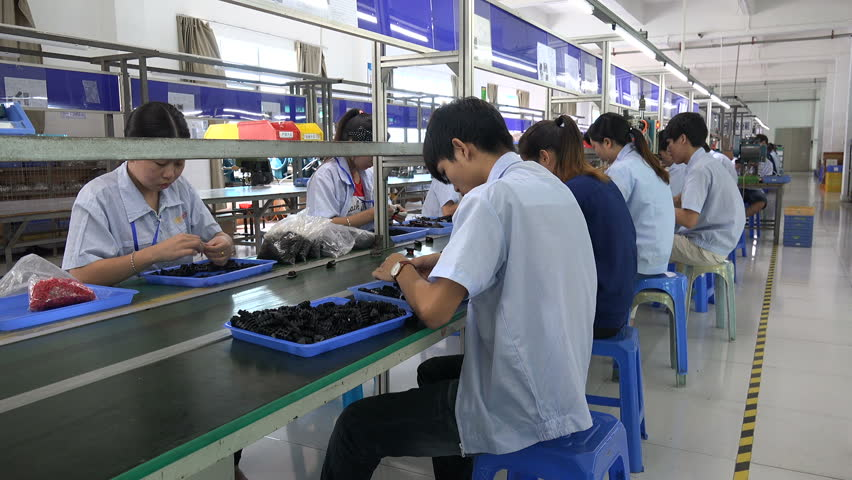
What is your Minimum Viable Quality (MVQ)? Yes, you have mastered the Minimum Viable Product (MVP) construct where the strategy is to make the least viable product or service to test a market value hypothesis. But if you visit Shenzhen China, you will quickly realize that the most catalytic thing is really the MVQ. Chinese manufacturers evidently understand that price cannot be uncorrelated with quality.

If you want a toy of $1, you will get it, but it may not last more than a day. But if you also want one for $20, that is available. By having that flexibility or range, they allow a mother to show love to a child even though the product may go bad within a day. The alternative is pricing that mother out of range with the possibility that the child may never have access to a toy.

As you build, be constantly thinking on MVQ. The MVQ is really (partly) the reason why China took over the world. Yes, while Western World would never sell unless it is exceedingly top-grade, China will give you something for the size of your purse. If you do not see that as a market penetration strategy, take another look today.

Read what I have written on Minimum Viable Quality (MVQ).

As I noted in the conversation, there is an illusion on quality. While quality is critical, it is very important that you do not lose focus by trying to build a business where quality has no correlation with cost. I am not sure that the latest Apple Mac Pro that goes for $5,000 is a desktop machine. Apple certainly does not expect that product to be sold to the (desktop) mass market, and specifically to the developing world. The new Mac Pro is a great machine with capabilities that exceed performance of some server systems. Yet, anyone that imports it to Lagos to resell will struggle. Sure, it has a great quality but the cost does not make sense.

The fact is this: any product quality that does not correlate with cost (or value derivable) makes no sense. I have designed accelerometers (motion inertial sensors) where my employer gave me diverging product specification targets: one version was for $0.60, another for $260. The one for $0.60 was made for toys while the $260 was engineered for use in pacemakers (heart monitoring systems). In the cheap one, it was a very crappy product that was built to last for weeks. But in the expensive one, knowing a human life depends on it, it was designed never to fail with many redundancies and checks.

Without the cost context you can think that the cheap one was a poor job. It is indeed not a great quality product but that was by design. That is what the market for toys wants because the kids rarely use them for days before they are discarded. It is a mass market product which has to be affordable to make sense. That does not mean that you cannot make very expensive toys only few can afford. But what is the purpose? Put a $260 XL in a toy which would be dumped within days?

The deal is this: the construct of quality has no meaning until the price of the product is put into considerations. I always ask entrepreneurs to build for the Minimum Viable Quality (MVQ) bounded by the product target price which market will respond. You can build rockets to fly around the world: that is an engineering possibility. But does that make a business sense if no one can afford it? Ask the makers of Concorde for answers.

I know that Eko Hotels is a great place in Lagos but the price is huge. I can get a cheaper hotel for half the price in Ikoyi. If I rate that cheaper hotel with the same standard of Eko Hotels in my mind, I have not done justice to the review system. Etisalat NG could have delivered the best service but only few afforded it while Glo produced a service, not necessarily great, but widely affordable. The markets responded and Glo got ahead, at least it survived, while the remnants of Etisalat NG will become extinct on Monday.

LinkedIn Comment on Feed

Comment #1

MVQ! Nice share Prof. Ndubuisi Ekekwe.

One way to also look at the MVQ strategy is that it helps incumbents starve off the forces of market disruption. If an incumbent doesn’t attract the low end of the market with those cheap toys, a new entrant, who can’t compete at the top end of the market, would.

And after the entrant monopolises that low end of the market, it would naturally scale up, and come up the ladder for more premium customers. Until it ultimately grows large enough to compete with, or even edge out the established company.

Spot on again sir. As always

Comment #2

On the surface, it makes a lot of business sense to pursue MVQ, but again – unethical practices will erode whatever good intent originally thought.

What happens when conscienceless people decide to put the very cheap device for toys in critical equipment, and then prop up the price? Herein lies the tricky part.

Many hypotheses look great for market penetration, only if we have decent humans across board, else it would be disastrous to allow some creatures to bring just anything to the market; the consumers are not likely to have some luck.

Of course the construct of MVQ works fine for developing countries, where several things still lack standardization, the case is different in top countries. Also when you are a known and respected brand, you are likely to avoid playing on the mud.

As long as price correlates quality, with ethics binding everything; we will all be fine!

At Fasmicro, We Do Electronics

0

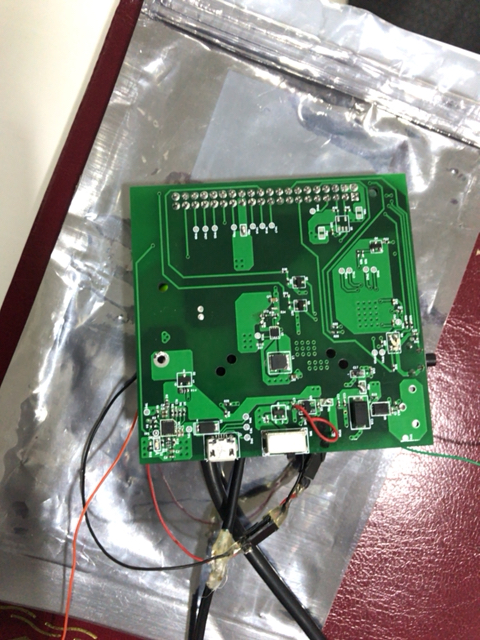
A new version of one of our enterprise imaging products passes bench testing. Inside this product is an OS engine running on a microprocessor, computing images, videos, algorithms and anything you can throw at it. Specially engineered for clients, it has evolved from the older versions. At Fasmicro, we are helping to preserve the Freedom many enjoy through technologies we supply across Africa.

In Africa, household consumption is expected to reach $2.5 trillion by 2030

0

In Africa, household consumption is expected to reach $2.5 trillion by 2030 with Nigeria, Egypt, and South Africa accounting for nearly half of that. This presents exciting opportunities for brands that want to grow in retail. But how do they approach this in an increasingly cluttered and competitive market?

Adding impetus for this need to expand is the fact that the continent is becoming the next big global manufacturing hub, mimicking China. Research from the Chinese Ministry of Commerce indicates that Africa’s population will reach two billion by 2050, representing the largest labour pool in the world. In 2017, privately-owned Chinese companies made more than 150 investments in the manufacturing sector on the continent, up from only two in 2000.

It is the fast-moving consumer goods segment in particular that is in high demand, offering brands the platform to strengthen their footprint, embrace new media, and be more innovative in how they use digital opportunities at retail touch points. Considering that low and middle-income buyers will collectively have a disposable income of almost $680 billion by 2020, there is considerable potential for brand positioning and awareness in retail environments.

But connecting to the modern African consumer from a retail perspective is no easy task. While online shopping is certainly a valuable channel and digital marketing a core component of strategy in 2019, many shoppers still want the physical experience of a retail store. There should certainly be a balance between the two environments, avoiding the temptation to spend too much on online tactical elements while foregoing the in-store point of sale opportunities that are arguably critical decision-making and exposure touchpoints.

For example, in South Africa with its 11 official languages, brands often forget the value of advertising in the vernacular or slang of its specific target market. If the digital landscape has shown organisations anything, it is in the value of specialising more and generalising less to create more meaningful moments. The same applies to in-store media. By being focused on tactical experiences, brands will foster improved customer loyalty at a time when this is notoriously difficult to do.

Political and economic uncertainty aside, consumers are likely to be in an even stronger financial position than in the past. Brands should therefore invest now in the ‘quiet time’ on technologies that aid better insight and positioning. For example, data-gathering or machine-learning (artificial intelligence) solutions that can assist in improved data analysis.

This, in turn, will result in better-targeted campaigns delivering customers a brand experience they want and need. Allowing brands to become more efficient in their online and offline approaches maximising marketing budgets for profits.

Ultimately, brands need to be open to harnessing new technologies and fresh insights to better position themselves in the dynamic retail environment. The world’s attention is starting to shift towards Africa. Now is the time to start capitalising on it.

By in-store advertising innovators Smart Media