DD
MM
YYYY

PAGES

DD
MM
YYYY

spot_img

PAGES

Home Blog Page 69

Top 3 Meme Coins Retail Investors Haven’t Stopped Buying

0

Even with the crypto market going up and down every day, investors (the retail crowd) are still pouring money into meme coins. They’re not just chasing hype anymore,  they’re looking for projects that have viral potential but also real features and a solid plan. One new name that keeps coming up is Little Pepe ($LILPEPE). It’s still in presale, but it has already raised over $27.6 million and sold more than 16.7 billion tokens. Many people believe it could surpass older meme coins like PEPE and Floki Inu because it combines fun with actual utility.

Little Pepe (LILPEPE): A Meme Coin Redefined

Little Pepe is trying to change how people see meme coins. It is currently in presale and is in stage 13; one token is worth $0.0022. The following stage (Stage 14) will be $0.0023, and the price continues to increase gradually with each subsequent stage. Thus, whales, big investors who hold a lot of tokens and have the power to influence the market, are buying, and the community is growing very fast; it is increasing by more than 60% month after month.  No one gets their tokens right at launch. There’s a 3-month waiting period, after which only 5% of the tokens unlock each month. This stops people from selling everything at once and crashing the price. It just received a 95% rating on its Certik security audit, that’s practically one of the highest scores you can find, which reassures people that the project is real and trustworthy.  Token holders have an option to stake their tokens and get some rewards; they will also be entitled to some other bonuses if they add ????????????????liquidity. That means the coin actually does something instead of just riding memes. Due to all this, many retail investors view Little Pepe as the new meme coin that could surge in 2025-2026.

Pepe Coin (PEPE): Volatility Meets Hype

PEPE remains very popular and currently ranks among the top on CoinMarketCap. As of November 28, 2025, it’s trading near $0.0000047. It’s extremely volatile, 14 of the last 30 days were up, but the price can swing 15-20% in a single month. It lives and dies by social media hype and big influencer posts. Some price predictions suggest it might dip slightly in December (down to $0.0000035–$0.0000037), while others anticipate it could average $0.000014 next year, with a possible high of $0.000024 if the market remains bullish. PEPE is great for quick trades, but it lacks significant real-world utility, so a lot of its value depends on the next viral moment.

Floki Inu (FLOKI): Beyond the Meme

Floki Inu (FLOKI) is currently trading at $0.000049. It started as a pure meme coin but has since developed its own DeFi products (FlokiFi), a game (Valhalla), and even educational content. It works on both Ethereum and Binance Smart Chain, which makes it easy to use. The chart is starting to look bullish again, and some analysts believe it can reach an average of $0.00015 in 2025, possibly even $0.00028 if everything goes well. Others are more careful and say $0.00009–$0.00010 is realistic. Floki has real projects behind it now, but because it’s already a few years old, the crazy 100x moves are probably behind it.

Why Little Pepe Looks Stronger Than the Other Two Right Now

When you put all three side by side:

  • PEPE = pure hype and big swings (good for traders, risky for holders)
  • Floki = solid projects, but already priced in a lot of growth
  • Little Pepe = still very early, huge presale numbers ($27.6M+ raised), clean audit, strong token lock-ups, and real staking rewards

For regular investors who want to get in early on the “next big meme coin” that actually has staying power, Little Pepe checks the most boxes right now. Whales are buying, the community is growing rapidly, and the team is focused on rewards and security, rather than just memes.

Conclusion

Retail money continues to flow into meme coins because the upside can be massive. PEPE and Floki Inu still have their fans and will likely stick around, but Little Pepe is the new project that has garnered massive early interest, smart token rules, and real utility. A lot of everyday investors are watching it closely, and many already believe it has the best shot at big, long-lasting growth through 2026.


For more information about Little Pepe (LILPEPE) visit the links below:

Website: https://littlepepe.com

Whitepaper: https://littlepepe.com/whitepaper.pdf

Telegram: https://t.me/littlepepetoken

Twitter/X: https://x.com/littlepepetoken

$777k Giveaway: https://littlepepe.com/777k-giveaway/

Veteran Crypto Investor Michael Terpin Predicts Bitcoin Could Bottom at $60,000 in Q4 2026

1
CREATOR: gd-jpeg v1.0 (using IJG JPEG v80), quality = 82

Bitcoin is ending the year on a fragile footing, with market watchers divided over its near-term direction. The crypto asset price enters 2026 stuck in the same buyer-seller fight that kept it muted through late 2025.

BTC price has remained largely flat over the past 30 days, slipping by roughly 0.6%, a sign that neither buyers nor sellers have gained clear control of the market. On a year-on-year basis, it remains down by about 7%, underscoring the broader weakness. The crypto asset currently trades at $88,298 at the time of writing this report.

Amidst BTC price fluctuations between the $80,000- $90,000 price zone, veteran crypto investor Michael Terpin has sparked fresh debate in the digital asset community with a bold forecast on Bitcoin’s next major market move.

According to Terpin, an early Bitcoin adopter, he noted that the world’s largest cryptocurrency could face further downside before finding a bottom around the $60,000 mark in the fourth quarter (Q4) of 2026, a timeline that challenges near-term bullish expectations and underscores the cyclical nature of the crypto market.

In his view, the real upside comes later, with possible targets between 250,000 and 350,000 in the 2028 to 2029 window. According to Bitwise analysts Matt Hougan and Ryan Rasmussen, Bitcoin may be on the cusp of breaking free from its long-standing four-year rhythm altogether.

In 2026, “Bitcoin will break the four-year cycle and set new all-time highs,” they argued, pointing to structural shifts that are reshaping the market. In their view, traditional cycle drivers, such as halving-induced supply shocks, interest-rate volatility, and highly leveraged speculative excess, carry less influence than they once did.

Others are cautiously optimistic. Hedy Wang says extreme fear often creates opportunity and believes disciplined buyers may be rewarded in 2026. Chris Kline argues the long-term case remains intact, especially as ETFs deepen institutional adoption.

Although Bitcoin (BTC) peaked almost exactly in line with its historical four-year cycle, the widely anticipated blow-off top failed to materialize. More importantly, Bitcoin’s gains did not spill over into the broader crypto market, leaving expectations of a full-scale altcoin season largely unmet.

As a result, 2026 has begun under a cloud of uncertainty. Investor sentiment is deeply negative, characterized by heightened caution and skepticism, even as the industry occupies an unprecedented position. For the first time in crypto’s 15-year history, institutions, corporations, and regulators appear to be moving largely in the same direction, creating conditions that favor broader adoption rather than active resistance.

There is also increasing evidence that Bitcoin’s market structure is evolving. Institutional capital, defined by longer investment horizons and stricter risk mandates, is playing a growing role in shaping price action and liquidity. In the process, these participants may be redefining crypto market behavior, gradually shifting influence away from traditional drivers such as miners, long-term holders, and large Bitcoin holders.

Bitcoin is now well into its fourth halving epoch, a phase that has historically aligned with the most aggressive stage of bull markets. In previous cycles, the cryptocurrency typically reached its peak around 12 to 18 months after a halving event, a pattern that has long informed investor expectations.

Outlook

Looking ahead, Bitcoin’s outlook for 2026 remains finely balanced between structural strength and cyclical uncertainty. In the near term, price action is likely to stay volatile and range-bound, as macroeconomic signals, regulatory developments, and shifting liquidity conditions continue to test investor conviction.

If bearish scenarios play out, a deeper correction toward historically significant support levels such as the $60,000 zone highlighted by Michael Terpin cannot be ruled out, particularly if risk appetite across global markets weakens.

Ultimately, Bitcoin’s trajectory may hinge on whether institutional capital continues to expand its footprint and whether macro conditions stabilize.

Nvidia Scrambles to Boost H200 Output as Chinese Tech Giants Line Up Massive Orders, Raising Fresh AI Supply and Policy Risks

0

Nvidia is moving urgently to ramp up production of its H200 artificial intelligence chips after Chinese technology companies placed orders exceeding 2 million units for delivery in 2026, far outstripping the U.S. chipmaker’s current inventory, according to people familiar with the matter.

The sources told Reuters Nvidia has approached Taiwan Semiconductor Manufacturing Co (TSMC) to expand production capacity, with manufacturing of additional H200 chips expected to begin in the second quarter of 2026. Nvidia currently holds about 700,000 H200 units in stock, leaving a significant shortfall relative to Chinese demand.

The scramble underscores both the intensity of China’s appetite for advanced AI hardware and the delicate balancing act Nvidia faces as it tries to serve Chinese customers while managing tight global supply chains and regulatory uncertainty.

The discussions between Nvidia and TSMC, as well as the scale of Chinese demand, had not previously been reported. The exact number of additional chips Nvidia intends to order remains unclear, but one source said the company has already asked TSMC to begin preparations for increased output.

The potential expansion comes at a sensitive moment for Nvidia, which is simultaneously ramping up production of its newer Blackwell architecture and preparing for its next-generation Rubin chips. The H200, based on Nvidia’s Hopper architecture and manufactured using TSMC’s 4-nanometre process, is a previous-generation product, but one that remains highly attractive to Chinese buyers due to performance gaps in the domestic ecosystem.

Chinese technology companies, particularly large internet firms, account for the bulk of the more than 2 million chips ordered for 2026, according to two sources. These companies see the H200 as a substantial upgrade over hardware currently available to them, especially after restrictions eliminated access to Nvidia’s H20, a downgraded chip previously designed for the Chinese market.

Of Nvidia’s existing 700,000-unit inventory, around 100,000 are GH200 Grace Hopper superchips, which combine Nvidia’s Grace CPU with its Hopper GPU, while the remainder are standalone H200 chips. Both variants are expected to be offered to Chinese customers.

Pricing discussions indicate Nvidia plans to sell the H200 to Chinese clients at around $27,000 per chip, though final prices may vary depending on order size and customer arrangements. An eight-chip H200 module is expected to cost about 1.5 million yuan, compared with roughly 1.2 million yuan for the now-unavailable H20 module.

Despite the higher price, Chinese firms reportedly view the H200 as good value, given that it delivers roughly six times the performance of the H20. The pricing is also estimated to be about 15% cheaper than grey-market alternatives, which currently sell for more than 1.75 million yuan per module.

ByteDance alone is expected to spend around 100 billion yuan on Nvidia chips in 2026, up from about 85 billion yuan in 2025, if Chinese authorities approve H200 imports, according to a report by the South China Morning Post.

However, regulatory uncertainty continues to hang over the entire plan. While U.S. President Donald Trump’s administration recently allowed exports of the H200 to China, subject to a 25% fee, Beijing has yet to formally approve shipments.

Chinese officials are still weighing whether allowing large-scale imports of advanced foreign AI chips could slow the development of the country’s domestic semiconductor industry. One proposal under consideration would require Chinese buyers to bundle each H200 purchase with a specified ratio of locally produced chips, a mechanism aimed at supporting domestic suppliers.

Nvidia acknowledged managing its supply chain actively but downplayed concerns that China-focused sales could disrupt availability elsewhere.

“Licensed sales of the H200 to authorised customers in China will have no impact on our ability to supply customers in the United States,” a company spokesperson said.

The spokesperson added that China remains a highly competitive market with rapidly advancing local chipmakers, arguing that blocking U.S. exports entirely would undermine American economic and national security interests while benefiting foreign competitors.

TSMC declined to comment, and China’s Ministry of Industry and Information Technology did not respond to requests for comment. The sources cited by Reuters requested anonymity because the talks are private.

If Nvidia proceeds with a significant production ramp-up, it could further tighten global AI chip supplies, especially as demand continues to surge across data centers, cloud providers, and AI developers worldwide. At the same time, the company’s deepening exposure to China leaves it vulnerable to policy shifts on both sides of the Pacific, reinforcing the geopolitical risks now embedded in the global semiconductor industry.

BYD’s Sales Suffers Decline In China, Pushing Tesla Rivalry to a New Phase as Overseas Push Masks Eroding Edge

0

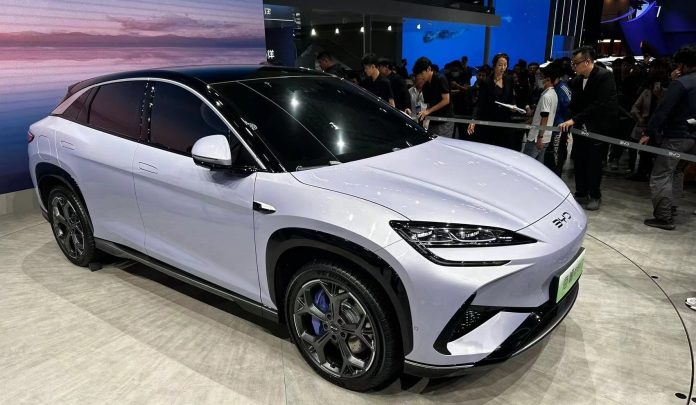
Sales growth at BYD slowed sharply in 2025, underlining mounting pressure on China’s largest electric vehicle maker as intensifying competition at home and signs of a fading technological edge begin to weigh on its dominance.

The sharp deceleration in sales is more than a China-only story. It marks a turning point with implications for the global electric vehicle market, where competition is intensifying, margins are thinning, and the long-simmering rivalry between BYD and Tesla is taking on a more complex, global character.

The Chinese automaker said full-year sales rose 7.73% to 4.6 million vehicles, its weakest growth in five years. December sales fell 18.3% year-on-year, extending a four-month slide and marking the steepest monthly drop in nearly two years. The slowdown followed BYD’s decision to cut its 2025 sales target by 16%, an acknowledgment that domestic demand had weakened sharply from mid-year amid fierce competition from Geely, Leapmotor, and other fast-moving rivals.

At home, the data point to a market that has entered a more mature and unforgiving phase. Price cuts, once a lever to rapidly expand market share, are now yielding diminishing returns. BYD’s decision in May to slash prices across more than 20 models triggered a selloff in Chinese auto stocks and prompted Great Wall Motor’s chairman to warn publicly that China’s auto industry was in an “unhealthy” state. That comment captured a broader concern: China’s EV market, the largest in the world, is becoming oversupplied, with too many players chasing slowing demand.

Chinese media outlet Southern Metropolis Daily reported that BYD chairman Wang Chuanfu told investors in December that the company’s domestic struggles reflected a weakening of its technological leadership. Wang said BYD would roll out major innovations in 2026, a signal that management believes the next phase of competition will hinge less on price and more on differentiated technology.

Over the past year, BYD has already pushed hard on features. It introduced advanced driver-assistance systems on vehicles priced below $10,000 and launched models boasting ultra-fast charging. However, rivals quickly matched or undercut those moves, eroding BYD’s advantage and forcing it into a margin-sapping price war. The pressure has been significant enough that BYD slowed production and delayed capacity expansion in mid-2025, according to Reuters, a notable shift for a company long defined by relentless scaling.

These dynamics matter globally because China has been the engine of EV growth worldwide. A cooling Chinese market increases the incentive for domestic champions like BYD to look outward, exporting both vehicles and competitive pressure to Europe, Southeast Asia, Latin America, and beyond.

That shift is already underway. BYD’s overseas sales surged 150.7% in 2025 to just over 1 million units, becoming the company’s main growth driver. Europe, in particular, has emerged as a key battleground. BYD’s competitively priced models have gained traction as consumers grapple with high inflation and rising interest rates, conditions that favor lower-cost EVs over premium offerings.

This is where the implications for Tesla become most pronounced. In 2025, BYD sold 2.26 million electric vehicles, positioning it to overtake Tesla in annual EV sales for the first time. Tesla was expected to deliver about 1.64 million vehicles, an 8.3% decline from the previous year. The crossover is symbolic, highlighting a shift in the center of gravity of the EV market toward manufacturers that can deliver scale at lower price points.

Tesla’s strategy, however, is diverging sharply from BYD’s. Elon Musk has deprioritized plans for a mass-market $25,000 EV, instead focusing Tesla’s future on artificial intelligence, full self-driving software, and robotaxis. Musk has said these technologies, rather than vehicle volume alone, will define the next era of automotive competition.

BYD, by contrast, remains firmly committed to volume, vertical integration, and aggressive pricing, backed by control over key parts of its supply chain, including batteries. That approach gives BYD resilience in a global market where affordability is becoming more important, particularly as governments scale back EV subsidies and consumers become more price-sensitive.

The rivalry is therefore no longer just about who sells more cars. It reflects two competing visions of the EV future. Tesla is betting that software, autonomy, and AI-driven services will justify higher prices and unlock new revenue streams. BYD is betting that scale, cost control, and steady incremental innovation will win over mass-market buyers across multiple regions.

But BYD’s domestic slowdown now introduces a note of caution into that strategy. Margin pressure at home could limit how aggressively it can price vehicles abroad without hurting profitability. At the same time, intensifying scrutiny in Europe and the United States over Chinese EV imports, including tariffs and trade investigations, could complicate its overseas expansion.

Still, BYD’s ability to offset weakness in China with explosive growth abroad underscores how competitive the global EV market has become. The rise of BYD as a credible global Tesla rival reinforces the reality that competition is no longer coming only from Silicon Valley or Detroit, but from Chinese manufacturers willing to fight on price, scale, and speed.

The EV industry is entering a more demanding phase as 2026 approaches. Growth is slowing in key markets, technology advantages are narrowing, and the battle is shifting from early adoption to mass-market sustainability. BYD’s stalling momentum at home and accelerating push abroad capture that transition — and set the stage for a more intense, globally consequential rivalry with Tesla.

ByteDance Prepares $14bn Nvidia Chip Splurge as AI Ambitions Collide With China–U.S. Tech Politics

0

ByteDance is preparing to spend about 100 billion yuan ($14 billion) on artificial intelligence chips from Nvidia in 2026, a sharp increase from roughly 85 billion yuan this year, according to people familiar with the matter who spoke to SCMP.

The proposed spending, which underscores both the scale of its AI ambitions and the strategic importance of access to U.S. chip technology, hinges on whether Nvidia is ultimately allowed to sell its H200 graphics processing units to Chinese customers, a decision that remains subject to regulatory approval in Beijing despite Washington recently easing restrictions on the chip.

The budget, sources cautioned, could still change depending on policy outcomes and market conditions.

The planned outlay forms part of ByteDance’s broader push to dramatically expand capital expenditure on artificial intelligence next year. The Beijing-based company, which is privately valued at about $500 billion, is preparing to lift total AI investment to as much as 160 billion yuan in 2026, according to a Financial Times report earlier this month.

At the heart of the strategy is ByteDance’s surging demand for computing power across its sprawling ecosystem, which includes TikTok and Douyin, its rapidly growing cloud business Volcano Engine, and its expanding suite of large language models.

Volcano Engine, ByteDance’s enterprise cloud arm, is set to become the exclusive AI cloud partner for China Central Television’s Spring Festival Gala, the most-watched television broadcast in the country. The partnership highlights how deeply embedded ByteDance’s infrastructure has become in high-profile national platforms, further intensifying its need for reliable, large-scale AI compute.

The company’s chatbot, Doubao, illustrates the pace of that growth. Doubao is now processing more than 50 trillion tokens per day this month, up from just 4 trillion tokens in December 2024. Tan Dai, president of Volcano Engine, recently said the platform has served more than 100 corporate clients, collectively processing over 1 trillion tokens to date.

Alongside its reliance on Nvidia, ByteDance is working to reduce long-term exposure to supply constraints and geopolitical risk by building internal semiconductor capabilities. Its in-house chip design unit, which employs around 1,000 staff, has made progress on a processor that matches the performance of Nvidia’s H20 chip — a China-tailored product — but at a lower cost, according to one of the sources.

The H20 was designed by Nvidia to comply with earlier U.S. export controls before being blocked, and its absence has accelerated efforts by Chinese firms to develop domestic alternatives. ByteDance is not alone in this push. Other Chinese technology groups are pursuing similar strategies to gain greater control over chip supply, pricing, and long-term planning.

Beyond processors, ByteDance has also been investing in memory technologies, including high-bandwidth memory, through a combination of internal research and equity stakes in specialized start-ups. These components are critical for training and running large AI models efficiently, and shortages can be as constraining as limited access to GPUs.

Internally, ByteDance’s chip arm works closely with Seed, the company’s frontier AI research team, highlighting how semiconductor design is becoming increasingly central to core AI development rather than a peripheral function.

Reflecting growing geopolitical sensitivity, ByteDance transferred its chip unit to a Singapore-incorporated subsidiary, Picoheart, in September. The move came amid intensifying China–U.S. tensions over technology. Some employees based in mainland China have been asked about relocating to Singapore, particularly those working on projects considered more sensitive, according to staff familiar with the discussions.

On the supply side, Nvidia is racing to capitalize on pent-up Chinese demand. The company hopes to ship its newly approved H200 chips to Chinese customers before the Lunar New Year holiday in mid-February, Reuters has reported. Interest from Chinese technology groups has been strong, though Beijing has yet to approve any purchases, leaving timelines uncertain.

The H200 is Nvidia’s second-most powerful AI chip and a significant step up from products currently available to many Chinese firms. That performance gap explains why companies like ByteDance are willing to allocate tens of billions of yuan to secure access, even as domestic chipmakers gain ground.

Beijing, for its part, is attempting to strike a careful balance. While authorities want to accelerate AI development to support economic growth and technological leadership, they are also keen to promote the adoption of domestic chips from companies such as Cambricon Technologies, Huawei’s Ascend unit, Moore Threads Technology, and MetaX Integrated Circuits.

Whether ByteDance ultimately gets the green light to deploy Nvidia’s H200 at scale will be a key test of how that balance is managed — and a signal of how far China is willing to lean on foreign technology as it races to build its AI future.