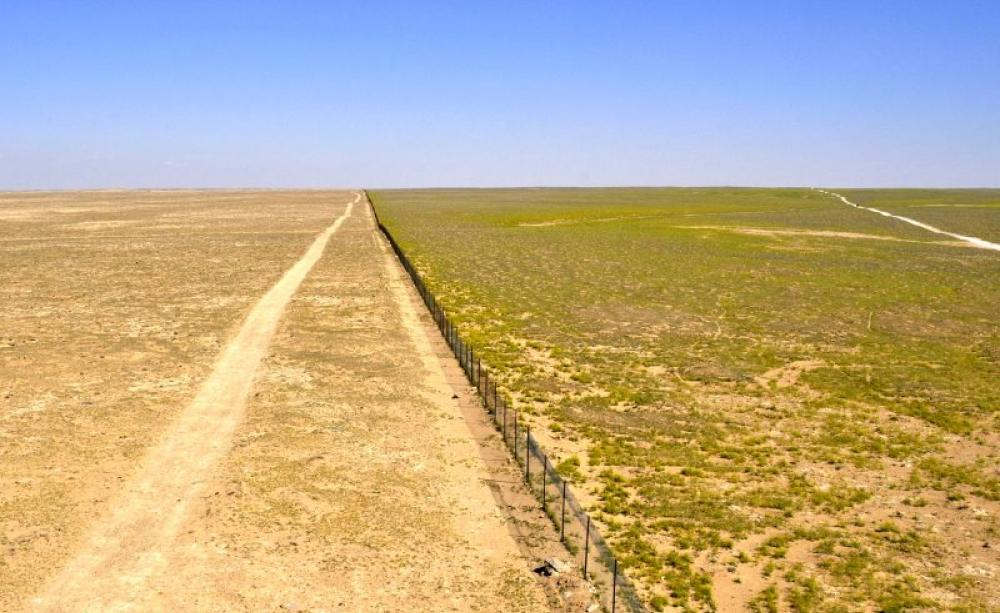
Desertification is a process by which the dry land ecosystem suffers continuous degradation by the removal of tree and plant cover as a result of human activity.
In Northern Nigeria, about 40 million people in eleven states are threatened with desertification as a result of poor land use, unsustainable cattle grazing practices, and the consumption pressures which are associated with a booming population.
According to Prof Emmanuel Oladipo, an environmental consultant, the direct cause of desertification and arid land degradation, is as a result of drastic reduction or destruction of the perennial plant cover, particularly trees and simplification of the vegetation structure. The soil surface not protected by permanent vegetation becomes subject to erosion by water and wind, crusting by raindrop splash and trampling by animals. Consequently, there are salinization by evaporation and water logging in topographic depression since water is no longer extracted by permanent vegetation.
Farmers in the North are adopting measures such as tree planting to provide shade and windbreaks using diesel powered irrigation pumps, and sowing beans, but these are not enough to tackle the enormous scale of the crisis.
Nigeria has an annual deforestation rate of about 3.5 percent. The economic cost of deforestation, drought and desertification, is 10.5 billion naira. A National Strategic Action Plan for desertification and deforestation was developed in 2011 but lack of political will has hampered its progress.
Solutions On the Way
Desert Control is a startup which utilizes cutting edge nanotechnology to transform deserts to arable land using their proprietary ‘’Liquid Nano Clay’’. Through a patented mixing process, Liquid Nano Clay combines clay and water, and is then spread on to sandy soil, enabling the soil to retain water, turning desert into fertile soil. This process which normally takes 15-20 years is done within 7 hours with the technology, reducing the water needed for irrigation by 65 percent, and then enabling more robust soil and higher yield.
They tested it in Al Ain, an emirate in the United Arab Emirates, which imports about 80 percent of its food consumption due to loss of arable land, as a result of desertification, recording a huge success rate.
A Nigerian company called Rewardn has a similar technology.
The Northern Nigeria Governors Forum should engage Rewardn and Desert Control to help them fight desertification in their region on a large scale with the innovations.
In Sahara Desert which is also facing the threat of desertification, Shimizu Construction Corporation has come up with a disruptive solution tagged “Desert Aqua Net Plan’’ which will irrigate the Sahara with a network of interconnected canals and sea water lakes. These 30km wide man made oases linked to the sea and each other, via long canals, will ameliorate and cool the scorching desert, provide a source of food and host resort like cities on artificial islands.
Nigeria should learn and explore partnerships with these entities to fight desertification in the northern part of the nation.
Many have written and asked me why I noted in my Platform speech that the Igbo apprenticeship system is the best business framework in the world. Certainly, I did not have time to explain many elements of my hypothesis on stage.
Simply, under the Igbo apprenticeship system, you attain easily an efficient economic equilibrium where inequality is severely mitigated. Everything the world is complaining about inequality and the rich getting richer, the Igbo apprenticeship system handles optimally.
See it this way, a man goes into a business sector, and wins market share. Then, one day, he decides voluntarily to give out market share and immediately creates competitors for himself. And as he does that, he includes huge obligations to ensure those competitors thrive. So, magically, a system evolves where everyone is just doing well with no distorted imbalance. No one is super-rich but everyone is just fine! And the players just like it that way because “onye aghara nwanne ya” [do not leave your brethren behind] is part of the culture!
The United Nations did confirm in its most recent report that Southeast Nigeria is the most balanced and economically stable part of Nigeria with the least hunger and economic stress on the citizens: “The report further highlights the existing gap in human security across the geo-political zones of the country; – the most human security secure geo-political zone is the South-East while the North-West and the North-East geopolitical zones..” The Igbo apprenticeship is the simple reason for that.
There is something that has worked in Nigeria. It is the Igbo apprenticeship system. It is the reason why the southeastern Nigeria is considered the region in Nigeria with the highest level of human wellbeing (not necessarily education attainment which is not exclusive) by the United Nations’ “Human Security and Human Development” report.
The report further highlights the existing gap in human security across the geo-political zones of the country; – the most human security secure geo-political zone is the South-East while the North-West and the North-East geopolitical zones are the least human security secured, with residents of the Federal Capital Territory being the worst in most realms of the Human Security Index. The North-East region of the country has been the most affected by the more than 5 yearlong military insurgency. It also remains among the least developed parts of the country.
What the world is expecting Amazon, Google and Facebook to do, under the Igbo apprenticeship system, business legends fund competitors and give out market share to build an economic system where everyone participates with no sole dominant player. I have not seen any better business framework in the world if the essence of capitalism is to improve the wellbeing of the citizens and the world through fixing frictions which exist in economies and markets.
Yes, I will prefer a community where everyone has enough to eat (like my Ovim village in Abia State) over one where few have excess with many severely poor. The American capitalism can make the latter happen, but Igbo apprenticeship framework ensures the former is maintained through empowering competitors – and by extension others, at scale.
That’s why anything that is not documented and properly archived is never appreciated. The West keep making us feel like lesser human beings, while many of the things their famed business schools are trying to figure out, we have resolved them with ease here; only that our storytelling skills are more or less abysmal.
What you see play out in the southeastern Nigeria is more ‘balanced capitalism’, far from socialism, because it still rewards those who put in the greatest efforts. The framework has worked magically well, without any super or suffocating legislation guiding its mechanisms. Something to teach others who do not know what to with the super rich, other than entertaining socialism, whose end result certainly leaves everyone poorer.
Amazon, Google or Apple aren’t slowing down anytime soon, neither is it a wise choice to dismantle them, just to ‘level’ the playing field. Now it’s a question of figuring out how these behemoths can cede some market share, without being forced to do so. And if the West wants to figure that out, now they have to come to us, we have a workable framework, which we are willing to share, with some good dollars in return…
As always, wisdom is not taught in the universities.
Comment #2
While I acknowledge the merits of the system, there are some issues to think about.
If businesses keep losing market share through this system, it’s hard to build big business brands that can take advantage of scale and scope economies. This is because market share and operations keep getting fragmented as each new apprentice becomes an “Oga”. Now that’s not quite an efficient system if we agree that cost savings from scale and scope economies are efficiency-enhancing.
The other issue is the link to inequality. It’s not readily the case that the apprenticeship system reduces inequality. Otherwise we could also simply say that education simply eradicates inequality by making everyone capable of earning the returns of education. What’s well known, however, is that inequality largely stems from accumulated wealth which goes on to earn the owner more and more return. Therefore settling an apprentice with, say, 0.01% of one’s wealth will probably help the recipient start a life not solve inequality.
My Response to #2 Comment
Your last sentence makes my point even though you pivoted. If you set anyone with Bill Gates 0.01%, I think he/she will be fine. And if that person sets another, that improves. The key point is that the VENTURE CAPITAL ecosystem which the Igbo apprenticeship system enables drives more people to accumulate capabilities and wealth. You may not notice – Igbo apprenticeship system is a VC fund! As I noted, UN has data that SE does better on human wellbeing and security, I do believe it is this VC that ensures that people have opportunities over just begging.
On building big firms, you have a point. That is where I ask for reform. I do think there is a way out – think of makers of Peak Milk (Friesland Campinas). The company is owned by thousands of dairy farmers. Igbo traders can band together and own a conglomerate which they feed into. Yes, they can build bigger firms. There are ways to deal with that which I have no space to explain here.
The same apprenticeship and market system has ended up undermining improvements in quality and capability. Why do you think it’s very easy for a custom officer or agbero to mess a business owner up here? It’s because most of them lack the capacity to assert their rights, so it becomes convenient to ‘settle’ and move on.
To modernise this framework, I will propose super ownership framework, where every small trader must choose one of the big holding names to trade under. This way, you no longer see one Obi or Kunle importing one container, rather you now have Vector Conglomerate importing thousands of containers, within this conglomerate, the small guys are doing their thing, without molestation. The Vector Conglomerate has billions of naira for legal battle, in case any idiot or authority impedes its operations.
It’s a high level cooperatives, with massive capability to do big things. Now it will be easier to control fake products, pay single tax or duties to the government, and everyone will be happy.
Implement same for truck ownership, then we won’t have any truck without a known label on our roads. It will now be easier to bill the big owners on any reckless driving or negligence.
A picture shows a You Tube logo on December 4, 2012 during LeWeb Paris 2012 in Saint-Denis near Paris. Le Web is Europe's largest tech conference, bringing together the entrepreneurs, leaders and influencers who shape the future of the internet. AFP PHOTO ERIC PIERMONT (Photo credit should read ERIC PIERMONT/AFP/Getty Images)
Netflix needs subscriptions because it does not have prior advertising infrastructure. YouTube does not need to follow it to subscription. YouTube has a business built on adverts and the inventory is assured through the Google world; simply, it needs to stay on ad-supported business. That has been my thesis because YouTube with the population of a continent, and regular supply of ad inventory, it can thrive on adverts without subscriptions. So the news that YouTube is moving towards an ad-supported model for its Originals is in order. Over time, YouTube will outperform any subscription-driven model in its ecosystem.
YouTube Chief Business Officer Robert Kyncl reaffirmed the company’s plans to take its Originals out from behind the paywall, making them free and ad-supported.
Kyncl was speaking at YouTube’s annual Brandcast event, where the Google-owned company lays out its plans for advertisers (with lots of razzle-dazzle provided by musicians and YouTube stars). Since last fall, YouTube has acknowledged that it’s moving toward an ad-supported model for its Originals, and tonight, Kyncl said that all original programming moving forward will have an ad-supported window
YouTube was built on aggregation – that has worked excellently and should stay that way. The addition of Originals should not change that fundamental construct.
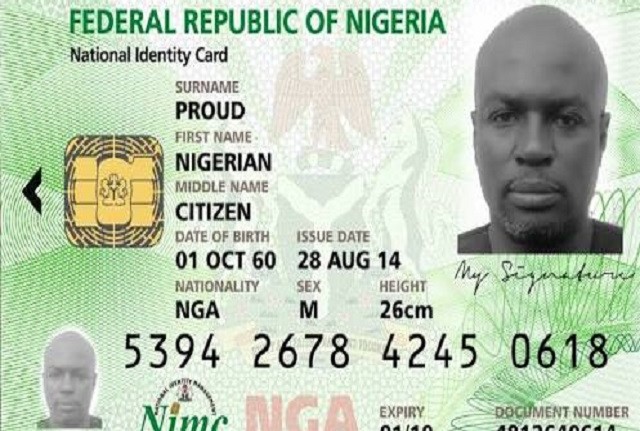
The National ID project in Nigeria has many issues. I just hope one day, in this century, it can be celebrated for being ready and optimal. A Nigerian technology firm, Chams Plc, has written the federal government to persuade MasterCard to pay $100 million compensation to a consortium, Chams Consortium Ltd, for losses over the national identity card project. That money is largely for breach of contract.
A letter signed by Chams Consortium Ltd chairman, Mr. Demola Aladekomo, and addressed to Vice President of Nigeria, Yemi Osinbajo, had alleged that Chams Plc, the majority shareholder in Chams Consortium Ltd (CCL) which include Nextzon Ltd, brought Mastercard as one of its technical partners on the national ID project. The consortium had won the contract. But after bringing in Mastercard, the global payment giant went behind and hijacked the project. Part of the letter reads…
On 18 November 2012, CCL also entered into a Customer Business Agreement (CBA) with MasterCard setting out obligations of both parties. The CBA contained several clauses including non-disclosure and non-compete clauses.
Chams exposed the entire architecture to MasterCard while working jointly to integrate MasterCard’s payment functionalities into the architecture of the National ID project. In the course of these developments, MasterCard received confidential information from Chams as contemplated under the CBA.
CCL also formally introduced MasterCard to NIMC as its technical partner. Prior to this introduction, MasterCard and NIMC had no business relationship but each had existing relationships with CCL. CCL granted MasterCard access to NIMC as a signed-on partner under the concession agreement. Thereafter, MasterCard started having secret meetings with NIMC without informing, inviting, involving or updating Chams who brought them into the scene as partners.
As a product of these meetings, MasterCard eventually entered into an agreement with NIMC to the exclusion of Chams Consortium, Chams Plc and Nextzon. This agreement was a direct breach of MasterCard’s CBA obligation not to compete with CCL or use any information disclosed under the CBA for purposes other than the CBA’s implementation.
To our surprise and disappointment, MasterCard went on to collude with our client, National Identity Management Commission (NIMC), to frustrate the concession won by Chams.
Within two years, CCL under the leadership of Chams Plc invested huge financial resources setting up all the infrastructure needed to implement a successful National ID project for 100 million Nigerians. These facilities include 6,000 enrolment stations in six ChamsCities and all local government areas all over Nigeria which employed and created jobs for more than 800 Nigerians.
This investment was eventually wasted and frustrated by MasterCard maliciously” he said, adding that CCL also “established the largest card personalization centre in the world then located in our Abuja office capable of delivering 1.75 million cards a day. With this plant, it would have taken us less than 100 days to deliver ID cards to 100 million Nigerians.
“It is noteworthy that this same plant was visited by the National Council of State led by then General M. Buhari, two past Presidents of Nigeria, 29 Governors (including Asiwaju Tinubu, Peter Obi and Goodluck Jonathan, amongst others). This plant was also frustrated by MasterCard. “The largest data centres in Nigeria by 2009 with identity and payment switching facility designed to manage 100m Nigerian Identities and their financial transactions. The IBM and HP data centres were in four locations in Nigeria employing more than 300 Nigerians. Again, these data centres were frustrated by the malpractices of MasterCard.
“Central Bank of Nigeria granted the Chams group various licenses for prepaid card issuance, switching, mobile banking, Independent ATM deployment, POS deployment etc. purposely for the National ID project. These licences were all frustrated and wasted by Mastercard and the then NIMC DG” Aladekomo added. Urging the vice president to intervene, Aladekomo said efforts to resolve the matter has failed as “MasterCard always responded with the indifference of a huge multinational that believes it cannot be sued by a small local Nigerian company. MasterCard arrogantly told us that with their South African, Singaporean and American lawyers, they can outlast us, resource-wise, in courts.”
According to him, following failed attempts to reason with MasterCard, CCL instructed its Nigerian lawyers, Olaniwun Ajayi LP and UK lawyers, Allen & Overy LLP in June 2013 to take legal action against MasterCard and seek redress on its behalf against the clear breach of confidence and infidelity exhibited by MasterCard against Chams Plc. and CCL. “Because of MasterCard’s deep pockets and threats to outspend us in UK courts, we were persuaded to explore amicable settlement of our case against MasterCard. Our Lawyers sent preliminary letters to MasterCard in that regard. Based on the above, we held a meeting with the then-Director General of NIMC, Chris Onyemenam, a concerned CBN Director, Walter Ahrey and the representative of MasterCard, Daniel Monehin in September 2013 at Hilton Abuja
. “DG NIMC, Chris Onyemenam at that meeting asserted and confronted Daniel Monehin that MasterCard failed to disclose to NIMC the existence of the MasterCard/Chams Agreements. Chris specifically asked Daniel Monehin and MasterCard to go resolve the betrayal issues with Chams, accusing MasterCard of subverting Nigeria and Chams”, he said.
The CCL chairman, said “In show of remorse following Onyemenam’s accusation of MasterCard, an onerous draft Technical Support Agreement (TSA) was sent by Daniel Monehin of MasterCard to Chams Plc. for execution in December 2013 offering a paltry sum of $500,000.00 against the more than $100m CCL had invested on the National ID project.
An aggrieved Aladekomo further stated that the terms of the draft TSA were entirely one-sided in favour of MasterCard, designed to preserve MasterCard’s acquired monopoly of the National ID project and reflective of the disregard some international corporations exhibit towards indigenous companies.
“We expected that MasterCard would have approached us to discuss and negotiate an amicable settlement that reintegrates CCL into the National ID project and compensates for lost earnings. MasterCard chose not to do this but instead decided to railroad us into signing the TSA. Influenced by its apparent profits from its unlawful dealings with NIMC, MasterCard has rebuffed our attempts to amend the TSA,” he stated.
Efforts to reach Omokehinde Adebanjo-Omojuyide, Vice President & Area Business Head for West Africa,Mastercard were not successful as calls, text and WhatsApp messages to her mobile line could not be replied as at the time of going to press.