DD
MM
YYYY

PAGES

DD
MM
YYYY

spot_img

PAGES

Home Blog Page 695

Flex Finance Is Tekedia Capital Startup of the Month, Aug 2025, for Revolutionizing Business Finances in Africa

0

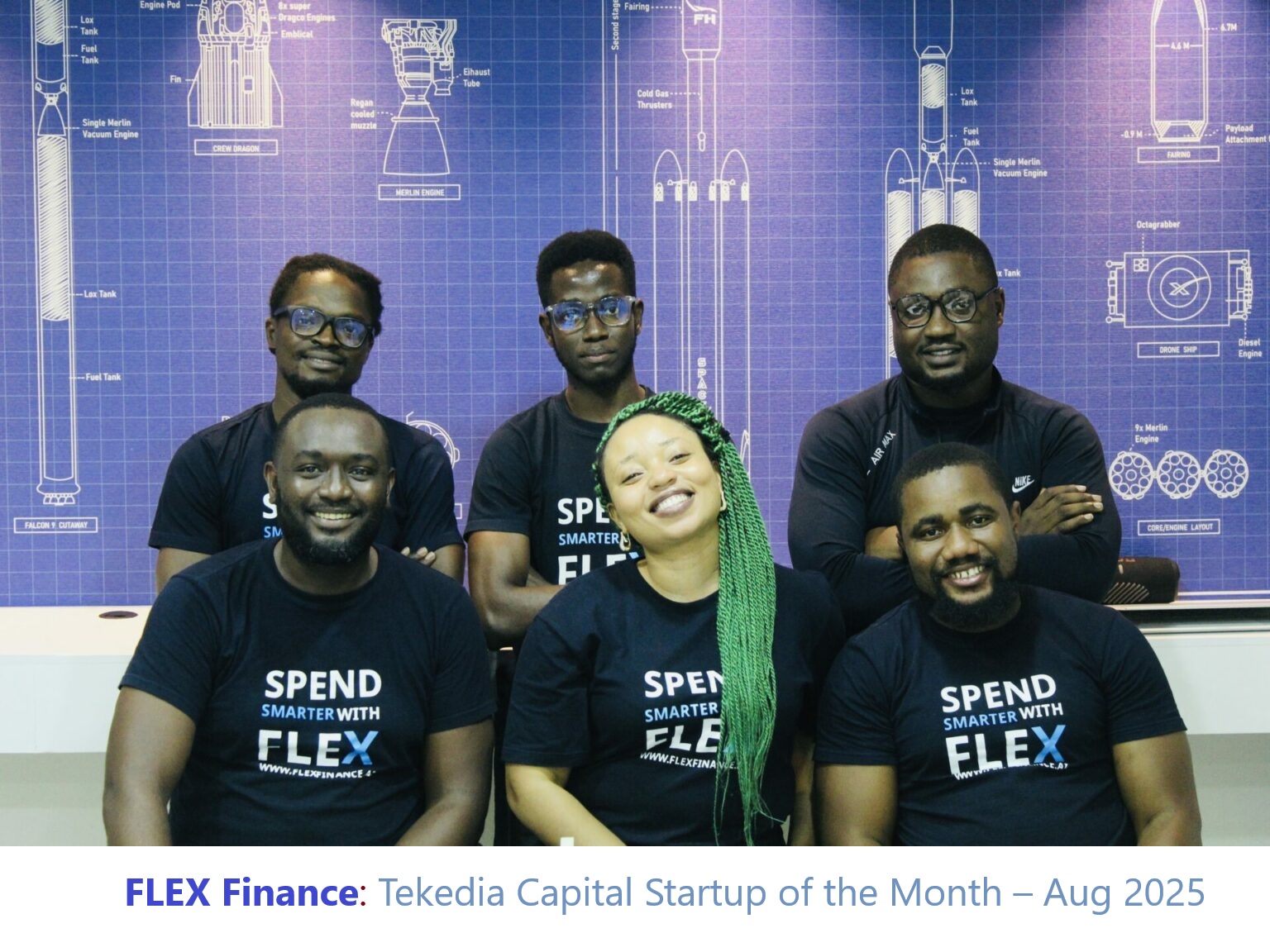
Flex Finance is revolutionizing business finances in Africa, and has just raised a significant amount of capital, one of the largest in this business sector in Nigeria. Tekedia Capital congratulates the team led by Yemi Olulana. They will announce the fundraise later.

For their executional excellence which qualified them before foreign investors to raise this growth capital, Tekedia Capital recognizes Flex Finance as “Tekedia Capital Startup of the Month – Aug 2025” in our portfolio of companies. Well done Flex Team; win more markets as expansion begins.


In many emerging markets, particularly across Africa, the management of business finances remains a significant challenge. The reliance on manual, fragmented processes for tasks such as expense tracking, vendor payments, and budget control often leads to inefficiencies, errors, and a lack of real-time financial visibility.

Flex Finance, a Nigerian-based fintech startup, has emerged as a crucial player in addressing this issue. By providing a comprehensive, all-in-one spend management platform, the company is empowering businesses across the continent to digitize their financial operations, enhance control, and ultimately, drive growth.

Flex Finance’s core value proposition lies in its ability to centralize and automate a company’s non-payroll spending. The platform moves beyond the traditional, time-consuming methods of manual data entry and paper-based approvals. Through its suite of digital tools, Flex Finance enables businesses to create and manage expense accounts, track all transactions in real-time, and automate approval workflows.

This not only significantly reduces the time and resources spent on administrative tasks but also provides finance teams and business owners with instant, accurate insights into their cash flow. The ability to issue virtual and physical corporate cards with predetermined spending limits is a particularly valuable feature, as it allows for greater control and transparency over employee and departmental expenses.

The company’s mission is particularly relevant within the African context, where the business-to-business spending market is projected to reach trillions of dollars. As the African economy digitizes, companies need financial solutions that can keep pace with their growth. Flex Finance provides this by offering a platform that is not only secure—with bank-grade security and regulated partnerships—but also scalable.

By catering to formal SMEs, startups, and mid-level enterprises, Flex Finance positions itself as a partner in their digital transformation journey. The platform’s ability to help businesses uncover hidden costs and make informed decisions on budget allocation demonstrates its role as a strategic tool for profitability and sustainability.

In conclusion, Flex Finance is a compelling example of how targeted fintech solutions can address specific regional challenges. By digitizing and streamlining the complexities of spend management, the company is providing African businesses with the tools they need to operate more efficiently and effectively.

Flex Finance is more than just a financial tool; it’s a catalyst for business maturity, allowing entrepreneurs to shift their focus from the tedious and error-prone process of managing finances to the strategic work of scaling their operations and contributing to the continent’s economic development.

Flex Finance is a Tekedia Capital portfolio company.

CEO Alex Karp Slams Higher Education in Tech, Says At Palantir, “Degree Doesn’t Matter”

0

Palantir CEO Alex Karp may hold three degrees—including a doctorate—but he’s had enough of what he sees as the outdated prestige of higher education.

During the AI firm’s earnings call on Monday, the billionaire took a direct shot at elite universities like Harvard and Yale, saying a diploma no longer carries much weight once you’re through the doors at Palantir.

“This is by far the best credential in tech,” Karp declared. “If you come to Palantir, your career is set.”

The comments come at a time when many in Gen Z are grappling with mounting student debt, a tough job market, and the growing realization that the high cost of a degree doesn’t always translate into career success. A growing number of young people are openly questioning whether pursuing higher education was worth the sacrifice—and some corporate leaders are siding with them.

Michael Bush, CEO of Great Place to Work, previously told Fortune that top employers aren’t “even talking about degrees” anymore.

“They’re talking about skills,” Bush said—a sentiment Karp seems to share wholeheartedly.

“If you did not go to school, or you went to a school that’s not that great, or you went to Harvard or Princeton or Yale—once you come to Palantir, you’re a Palantirian. No one cares about the other stuff,” Karp told investors. He added that the company is building a new type of credential “separate from class or background.”

Palantir’s recent performance is giving weight to Karp’s confidence. The AI analytics company pulled in a record $1 billion in revenue last quarter—a 48% year-over-year surge. Its stock has skyrocketed nearly 600% over the past year, adding $12 billion to its market cap in a single day and pushing its overall valuation to roughly $430 billion.

The company’s success, Karp insists, is not due to poaching talent from the Ivy League, but by fostering a culture of high achievement without the obsession over academic pedigree. Chief technology officer Shyam Sankar, who recently became a billionaire thanks to Palantir’s soaring stock, echoed this view.

“We are able to attract and retain and motivate people who actually want to bend the arc of history here, work on the problems that drive outcomes,” Sankar said.

An alternative to traditional universities

Palantir’s stance against conventional higher education isn’t just rhetoric. Karp and cofounders Peter Thiel and Joe Lonsdale have publicly supported the University of Austin—a controversial, privately funded four-year school built around the principles of free speech and an “anti-woke” philosophy.

The company has also created its own pipeline for young talent. Earlier this year, Palantir launched the Meritocracy Fellowship—a four-month paid internship for high school graduates who may be reconsidering college. While applicants must demonstrate “merit and academic excellence,” the entry bar is extremely high: at least a 1460 SAT score or a 33 ACT, both above the 98th percentile.

The fellowship was explicitly designed as a rebuke to what Palantir calls “opaque admissions standards” at many U.S. universities, which it says have replaced meritocracy with “subjective and shallow criteria” and turned campuses into “breeding grounds for extremism and chaos.”

Successful fellows are interviewed for full-time roles, with the recruitment pitch reading: “Skip the debt. Skip the indoctrination. Get the Palantir Degree.”

The AI paradox: Hiring to replace?

But there’s a twist: Karp openly admits that the same young talent Palantir hires today could eventually build the AI systems that make them redundant. Speaking to CNBC this week, he revealed that the company plans to reduce its headcount by around 500 employees while continuing to grow revenue.

“We’re planning to grow our revenue … while decreasing our number of people,” Karp said. “This is a crazy, efficient revolution. The goal is to get 10x revenue and have 3,600 people. We have now 4,100.”

That raises the question of whether Palantir’s anti-university pitch is truly about giving more people a shot—or simply about finding bright, ambitious young workers to help accelerate the company’s AI-driven efficiency drive, even if it ultimately means fewer jobs.

Karp’s remarks feed into a broader corporate trend: the devaluation of academic credentials in favor of demonstrable skills, adaptability, and performance. Major companies from Google to IBM have scrapped degree requirements for many roles, reflecting a shift in hiring priorities that could redefine the career paths of future generations.

But critics note that while bypassing college might spare young workers crushing debt, it could also funnel them into industries where technological change—especially the rise of AI—makes job security uncertain. In Palantir’s case, the same innovation that has driven its meteoric rise could leave even the best “Palantirians” vulnerable to automation.

Economists, Goldman Sachs Stand By Call That Consumers Will Bear The Brunt Of Tariffs, Despite Backlash From Trump

0

Goldman Sachs is facing heavy political fire from Washington for warning that consumers will feel a sharper bite from tariffs in the months ahead — but the investment bank has stood by its analysis.

Many other economists agree that the biggest inflationary impact from President Donald Trump’s tariff policies has yet to hit.

The situation became intense on Tuesday, following the consumer price index (CPI) report, which looked benign on the surface, with inflation rising less than some feared. But economists say the calm is temporary. With pre-tariff inventories running down, effective tariff rates now near 18%, compared with around 3% at the start of the year, and companies increasingly unwilling to absorb costs, the burden is expected to fall more directly on consumers through the rest of 2025.

“Tariffs could subtract 1% from GDP and add 1-1.5% to inflation, some of which has already occurred,” said Michael Feroli, chief U.S. economist at JPMorgan Chase. “There is considerable uncertainty around the degree of pass-through to consumer prices, given that this year’s tariff increases are well larger than anything in the post-war U.S. experience.”

Trump lashed out at Goldman Sachs on Tuesday after its economists projected heavier inflation ahead. In a Truth Social post, he suggested CEO David Solomon either fire the economist behind the research or resign himself. But Goldman’s chief U.S. economist, David Mericle, defended the forecast in a CNBC interview Wednesday, saying the firm is “undeterred” and stands by its analysis.

“If the most recent tariffs follow the same pattern as the earliest ones this year, by the fall we estimate consumers will bear about two-thirds of the cost,” Mericle said.

While no one is predicting runaway inflation, the consensus sees monthly CPI gains in the 0.3% to 0.5% range, enough to push the Fed’s preferred core inflation measure into the low- to mid-3% range. UBS senior economist Brian Rose said the downward trend in core inflation “has been broken” as tariffs filter into retail prices, though he expects slower shelter inflation and resistance from cash-strapped consumers to blunt the full effect.

“It appears that the downward trend in core inflation has been broken as tariffs start to feed through into retail prices,” Rose wrote. “We expect inflation to continue on a gradual upward trend as businesses pass along their higher costs, but slowing shelter inflation and push-back from increasingly stretched consumers should help offset some of the tariff impact.”

Pantheon Macroeconomics forecasts core inflation reaching 3.5% by year-end, noting that “only about a quarter” of the uplift has filtered through so far.

“Only about a quarter of that uplift has filtered through to consumers so far, so we see a strong chance core goods prices will rise at a faster pace over coming months,” the firm said.

BNP Paribas warns that price pressures could spill into services, an area the Fed watches closely for signs of “stickiness.” The Cleveland Fed’s sticky-price CPI — which tracks items like rent, dining out, and household furnishings — is already at its highest three-month annualized rate since May 2024, at 3.8%.

JPMorgan projects tariffs will shave just under 1% from GDP, with consumer spending — two-thirds of U.S. economic activity — taking the largest hit. The Blue Chip Economic Indicators survey for August pegs second-half growth at 0.85%, slightly better than July’s forecast as some pessimism eases, but still sluggish.

Risks are set to intensify later this month when the Aug. 29 expiration of “de minimis” tariff exemptions will subject goods under $800 to new duties, likely hitting retail products hard.

Despite the inflation outlook, most forecasters believe the Federal Reserve will still move toward rate cuts later this year, citing a weakening labor market and the view that tariff-driven price pressures will be temporary. But PNC chief economist Gus Faucher cautioned that “core PCE inflation is set to move even further above the Fed’s target in the months ahead,” which could make policymakers more hesitant.

For now, Wall Street’s message is that the inflation bite from tariffs may be delayed, but it’s coming — and, in the words of Goldman’s Mericle, “consumers should be ready for it.”

Trump Administration in Talks to Take Stake in Intel Amid Push for Domestic Chip Production

0

Intel’s shares surged 7% on Thursday following a Bloomberg report that the Trump administration is in discussions with the chipmaker over a potential U.S. government stake in the company.

The move, according to sources familiar with the talks, is part of President Donald Trump’s broader push to bring more chip production and high-tech manufacturing back to U.S. soil, a goal he has repeatedly championed since taking office.

Intel remains the only U.S.-based company with the capability to manufacture the world’s most advanced chips domestically, even though competitors like Taiwan Semiconductor Manufacturing Company (TSMC) and South Korea’s Samsung Electronics operate factories in the United States. The proposed government stake would help finance new factories Intel is building in Ohio, a project seen as critical to strengthening America’s semiconductor supply chain.

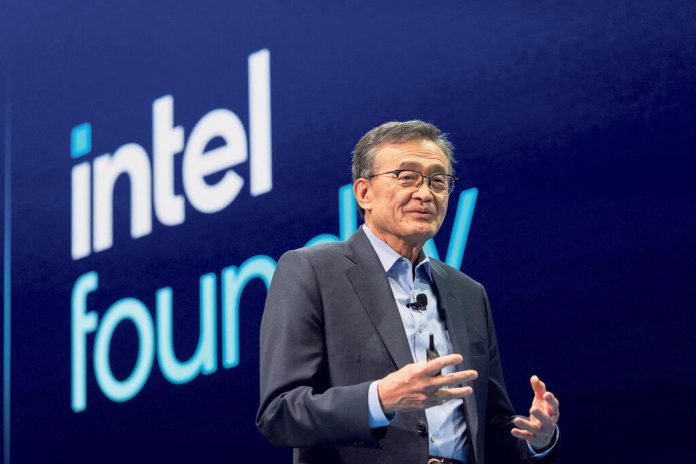
The discussions come just days after a dramatic shift in Trump’s relationship with Intel CEO Lip-Bu Tan. Earlier this week, Tan visited the White House, a meeting that raised eyebrows given that earlier, Trump had publicly called for Tan’s resignation over alleged ties to China. At the time, Intel defended its chief executive, stating Tan was “deeply committed to advancing U.S. national and economic security interests.” Now, Trump appears to have reversed course, not only meeting with Tan but also praising his leadership in what the administration describes as a “shared mission” to secure America’s tech future.

“We look forward to continuing our work with the Trump Administration to advance these shared priorities, but we are not going to comment on rumors or speculation,” an Intel spokesperson said in response to the latest reports.

Tan took the helm at Intel earlier this year amid significant challenges for the company. Once a dominant force in the global semiconductor market, Intel has in recent years struggled to gain ground in artificial intelligence chips, a sector where rivals like Nvidia have surged ahead. At the same time, Intel has poured billions into its foundry business, hoping to attract clients to use its manufacturing capacity. But the effort has yet to secure a major customer — a milestone many analysts see as crucial to restoring the company’s competitive edge.

In July, Tan announced that Intel would cancel planned manufacturing sites in Germany and Poland, while slowing construction in Ohio due to cost pressures and strategic reassessments. Spending across the company has been placed under tight review.

The talks with Intel are the latest in a series of high-profile interventions by the Trump administration into strategic industries. Just last week, the government announced it would take a 15% cut of certain Nvidia and Advanced Micro Devices chip sales to China, citing national security concerns. The Pentagon also bought a $400 million equity stake in rare-earth miner MP Materials and took a “golden share” in U.S. Steel as part of a deal approving its acquisition by Japan’s Nippon Steel.

For Intel, the renewed support from Washington could mark a turning point after a turbulent 2024, when the company saw its stock plummet by 60% — its worst year on record. While the stock is now up 19% this year, the path ahead remains challenging, with global competition intensifying and the race for chip leadership growing more political by the day.

TradeGrid To Run A Business Workshop in Aba for Petrol Station Operators

0

Energy powers cities, and Aba is growing. Nigeria’s leading downstream energy startup is expanding operations to the Enyimba City and the broad Southeast and Southsouth Nigeria. If you are in the downstream petrol sector business with filling stations and similar assets, we are inviting you to a workshop as follows:

  • Date: Tues. August 19th
  • Address: El Dorado Event center Aba Owerri road, Aba
  • Time: 10:00am

At TradeGrid, we finance downstream energy trading of PPM/AGO in Nigeria, Kenya and beyond, and anchor the distribution at scale. With TradeGrid Traderscard, you get flexible payment. And with TradeGrid Plus, you will take the generators in your station to the museum because our team will help you run on solar. Last quarter, we achieved a 1,456% YoY quarter growth, making it one of the fastest growing startups in Africa.

The workshop is 100% free and with TradeGrid, you can focus on selling to your retail customers while our team handles the buying and distribution. Invite your friends, partners, associates, etc, and come to learn how to build a 21st century energy (diesel, petrol, gas) business.

Go here and register free

Ndubuisi Ekekwe

Board Member, TradeGrid USA

TradeGrid is a Tekedia Capital portfolio company