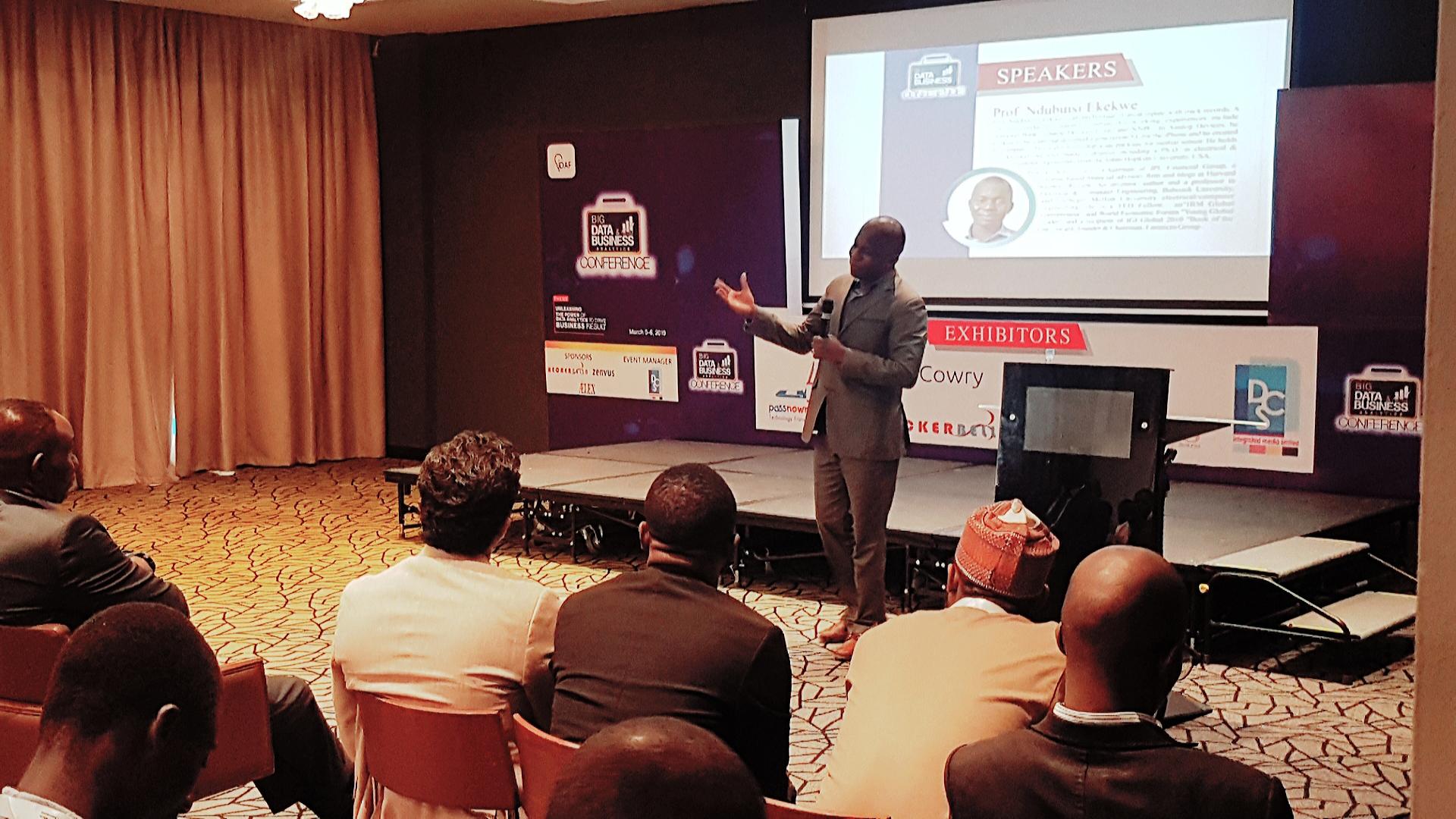
Yesterday, at Radisson Blu, delivering my talk – Abundance in the Data of Nations.
From feedback, it was well received. I am expecting to post the video once the organizers make same available. Like Hamlet answered Lord Polonius “Words, Words, Words”, in Hamlet, by William Shakespeare, at this moment, it is “Data, Data, Data”. But take it further – can you refine the data?
I take you to the “The Rime of the Ancient Mariner” by Samuel Taylor Coleridge when he muttered “Water, water everywhere, / Nor any drop to drink”. It is not just about the availability of data, but making sure that it is useful.
Like Chinua Achebe would write “An adult does not sit and watch while the she-goat suffers the pain of childbirth tied to a post”, great people, the future is Abundance if we take action.
“Data, Data, Data”, the newest buzzword in town, but knowing what to do with it or how to use it, or even the willingness to reference it, is a different thing altogether.
We still struggle with counting numbers accurately here, but always in love with making bogus claims about our size and potentials; we also need to see the DATA that supports them. It’s a good place to start.
Our planning is always poor, the execution – even poorer. But we are equally legendary in creating abundance and scarcity within a shortest possible time, another anomaly that needs to be addressed!
If we have mastered how to spend or waste money, we need to equally master how to measure impact and progress, to be able to ascertain what works and what needs to be discarded.
If our data collection, harnessing and application becomes anything like our crude oil, then we are readying for another disaster. We need to do better this time.
There is a promise in this nation, and that promise is coming from the young people. Across states and industrial sectors, I am meeting young people doing amazing things in technology. They have visions and are clearly unbounded by our structural paralysis, doing their things, to rise with the rest of their peers around the globe.
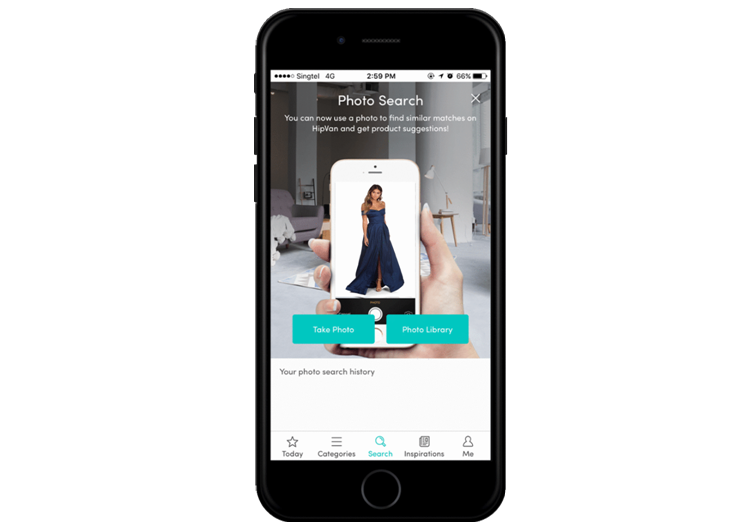
Meet Vtion.ai, a Nigerian startup that develops AI powered visual search technology for fashion brands, art, ecommerce platforms and offline retailers. This young company is making visual search accessible to e-commerce sites across Africa. They have done, for African fashion, what big ICT utilities like Google and Microsoft are doing for largely Western fashion.
Yes the Aso Oke, Babariga, “the Senator”, Uwe Agu and all those African traditions that make Africa tick can come into fusion with technology. Simply, fashion AI understands Aso Oke, and that is amazing.
Their technology can be integrated with retail websites or mobile apps within 24 hours and lets shoppers upload photos saved on their mobile phones, screenshots from Instagram, to find similar products for sale. This is based on the same technology with which the team behind it was named as part of the winners of AWS AI Hackathon 2018.
For the competition, the team built a project that allowed users search for similar African attires with photos. They also added a feature where you could like and dislike pictures and the platform would display more outfits similar to what users liked and less of what was disliked. The project indexed thousands of images, 3,500 user in one month and about 17,000 likes and dislikes altogether.
Connecting with the team, Emmanuel Adigun, Vtion.ai co-founder and designer, notes that once it indexes a retailer’s product feed, Visual Search can be added to a site’s search bar via it’s JavaScript SDK in a single line of HTML. Customers pay a monthly access fee based on the number of product matches likely to be used. This does better when compared with other visual search tools which can take weeks or months to implement. They have elevated the level of competition by simplifying the process even as they make it easier for Africa digital retail ecosystems to have the technology to deepen the sector.
This is artificial intelligence in action. Vtion.ai’s visual search platform strives to ensure a seamless/plug-n-play model for its target customers, including smaller retailers that sell to millenials and teenagers. Emmanuel reiterates that the goal of Vtion.ai is to help every retailer leverage the power of visual search to drive customer engagement. With firms like vTion, our technological trajectory is very promising.
Vtion.ai recently integrated with a top bridal outfit in Nigeria, Hadassah Bridals. This allows soon-to-be brides to search for wedding gowns and accessories with photos of gowns they have seen before, and see results of similar gowns from Hadassah Bridals catalog.
Now, you can experience this technology which Emmanuel and his team have unveiled for the world. Visit vTion Demo and follow the instructions. The team is also working on a Telegram chat bot where users can also try out the technology by sending images to its chat bot, Vtion Sense.
Very brilliant young people, holding the banner for Nigeria and Africa, in this emerging AI era.
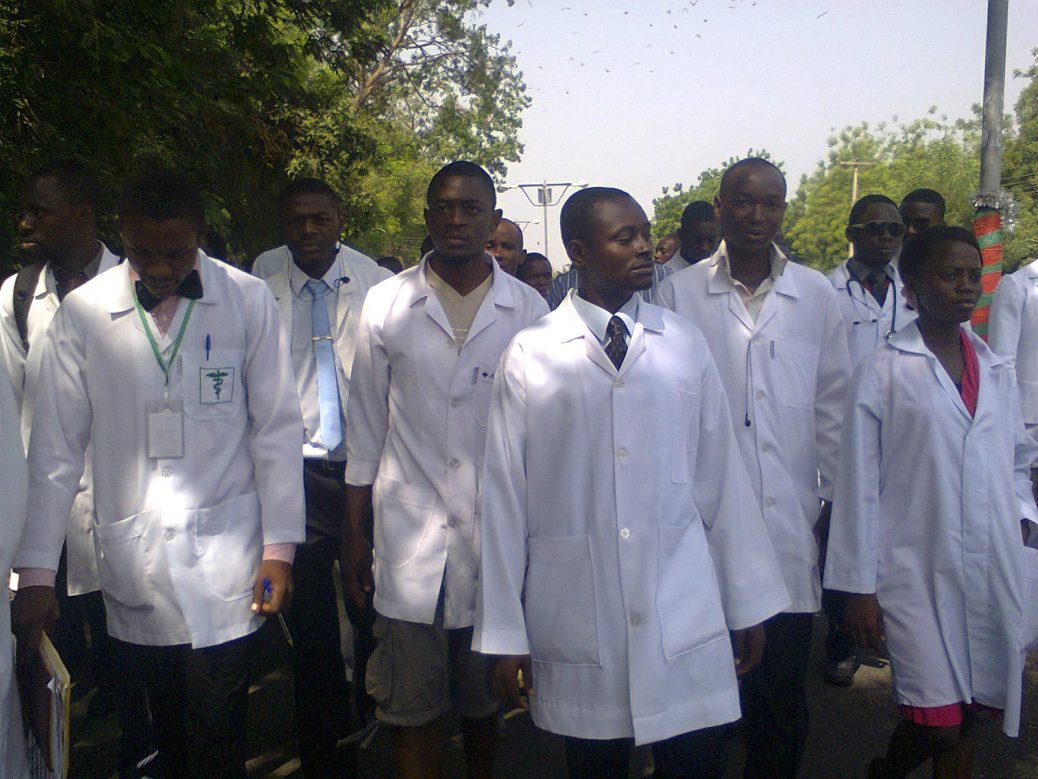
On March 14, 2019 about 6,244 Nigerian medical doctors will write UK PLAB 1 exam. That exam is the first step on the journey to emigrate to United Kingdom. Though data is not maintained by Nigeria (UK certainly has the numbers), Nigeria has about 5,000 medical doctors working in UK. In South Africa, we have also more than 5,000 medical doctors working there. Australia has its share, and Canada is enjoying a boom!
If you look at it from another angle, Nigeria is simply subsidizing UK healthcare system (and others) since medical education in Nigeria is heavily subsidized by government. I estimate that it costs Nigerian government $100,000 to train a medical doctor in Nigeria, through subsidizes, and as soon as the doctors are trained, the nation loses them to UK and Canada.
This emigration is not happening as a result of over-capacity in supply – it is largely an economic immigration. Government has since neglected doctors. In Abia State, some doctors have not been paid for months. Under that challenging working environment, these extremely brilliant people leave the nation for better opportunities.
Our government must set up a task force to ensure the conditions of service of our doctors improve. A healthy nation is a wealthy one. We cannot afford to lose these doctors as the impacts are huge: many rural clinics and general hospitals in remote local governments have closed because of lack of doctors. This fight affects every Nigerian.
Comment #1. Maybe the only workable solution is for Nigerian government to make deals with the countries the doctors are emigrating to, by having part of their salaries repatriated; since it’s illegal to stop people from emigrating. The cost of education here is too cheap, but it’s very easy to argue that the sector is in ‘comatose’ or ‘nothing to write home about’, yet its products are good enough to work in developed nations; what a super irony!
The argument of better remuneration may no longer hold water, because if we really want to be sincere, the current remuneration is not justified by the productivity outputs in most of the government owned hospitals. We see these things, and there are cabals in every sector in Nigeria.
The government will never have enough money to meet all demands, so in order not to keep losing in all fronts, it’s either the cost of education is appropriately priced, or the beneficiaries that emigrated must make a mandatory repatriation of part their earnings in any country they are; so that the government will continue to train others to join them as well. Almost all the citizens of Nigeria are helping in finishing Nigeria off, and yet we keep pointing fingers at the ‘leaders’. Everyone is culpable here!
Comment #2. So this is the irony of the Nigerian working class, and particularly southern Nigerians. While Indian doctors are moving into Nigeria for opportunities, Nigerian doctors are looking elsewhere in UK, Australia and Canada. By the way it’s not like the productivity of these Nigerian doctors are that awesome or humanly. Good riddance….
Until Nigerians learn that Nation building is neither one man’s job (Government) nor another person’s responsibility, but a commitment to progress by all stakeholders, this emigration paranoia will see no end.Hopefully from a population of 200 million Nigerians UK, Canada, US accommodate 100 million or may 180 million Nigerians. Then it will hold water that indeed, emigration is a substitute for Nation building.
Again this brings to the front burner, the question of superiority of the white man’s sapient and whether indeed blacks or Africans really do matter.
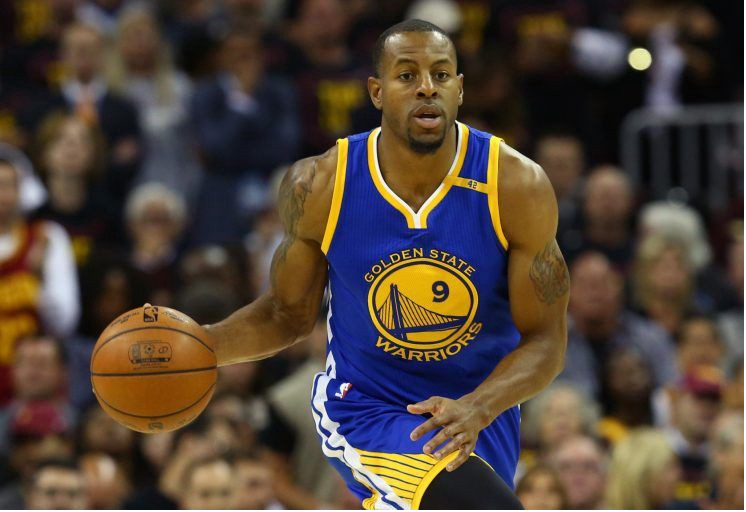
It is very evident that Jumia will like to list in U.S. as early as possible. How? It has brought Andre Iguodala into its Board. Andre plays for Golden State Warriors, an NBA team. I do think with Andre, Jumia will lift its brand in U.S. as it pushes for the journey to IPO, possibly in U.S. I do not think it makes sense to list Jumia in Germany since Rocket Internet, a part-owner of Jumia, is also trading in Germany.
Andre has a Nigerian root; his father is a Nigerian. He has invested in more than 40 technology companies. I do believe he might have invested in Jumia.
The Jumia Press Statement below.
Andre Iguodala, a member of the three-time reigning NBA champion, Golden State Warriors, has joined the Board of Directors of Jumia, the leading e-commerce platform in Africa. As Jumia’s ambassador charged with promoting business development and technology in Africa, Iguodala will bring his network in the technology industry, interest in Africa and vast experience as an athlete on one of the most successful teams in NBA basketball history.
“Because of my Nigerian heritage, Jumia’s use of technology to deliver innovative online services to consumers and improve the quality of everyday life in Africa is very important to me,” says Andre Iguodala. “I’m thrilled to be a part of this unique enterprise that is shaping the future of digital Africa”
In addition to his numerous basketball achievements, Iguodala is widely recognized for his interest and knowledge in technology and e-commerce. He has invested in over 40 companies through F9 Strategies, including GOAT, Zoom, HIMS, Lime, Walker & Co., Thrive Global, AllBirds, Casper, STANCE and Carta, to name a few. Iguodala has also partnered with Bloomberg to create the annual Players Technology Summit, which convenes top executives and leaders in the technology, venture capital and sports communities.
Noting the influence and appeal that the NBA star brings to the board, Jumia Co-Founders Sacha Poignonnec and Jeremy Hodara said: “Andre is a role model to many of us, and we are very proud to have him join Jumia and help us drive the company forward. We appreciate his commitment and passion for the tech industry and for Africa, and we can’t wait to collaborate and accelerate our impact on the continent. Finally, having Andre join our board sends the world the message that Africa has successful companies and great entrepreneurs, and that athletes can play a key role in contributing to their success.”
The Northern Eastern Savannah region of Nigeria is a region which spans 30.8 percent of Nigeria’s landmass, with Chad Republic to the East, Niger Republic to the North and shares boundaries with Jigawa, Kano and Kaduna States to its NorthWest, and Plateau and Benue States to its SouthWest. With 15.3 percent of Nigeria’s total population, it has a density of 96 people per square kilometer compared to the national average of 219 people per square kilometer which has made it the most sparsely populated region in the country. Its life expectancy is 46 years which is the least in the country and GDP per capita of 171,000 naira is also the least in the country.
These factors coupled with a shrinking Lake Chad has forced herdsmen who depend on it for survival of their cattle to migrate down to other regions, and the Boko Haram menace which has plagued the region, for over 10 years, has compounded its woes, making it to contribute less to national productivity as investors will not invest in a place where insecurity is the order of the day.
But in this troubled zone, Gombe State under the visionary leadership of Dr Ibrahim Hassan Dankwambo, a former Accountant General of the Federation, has been transformed to the beautiful bride of the region despite receiving the second least federal allocation of all the states.
Gombe on Nigerian map (source: Wikipedia)
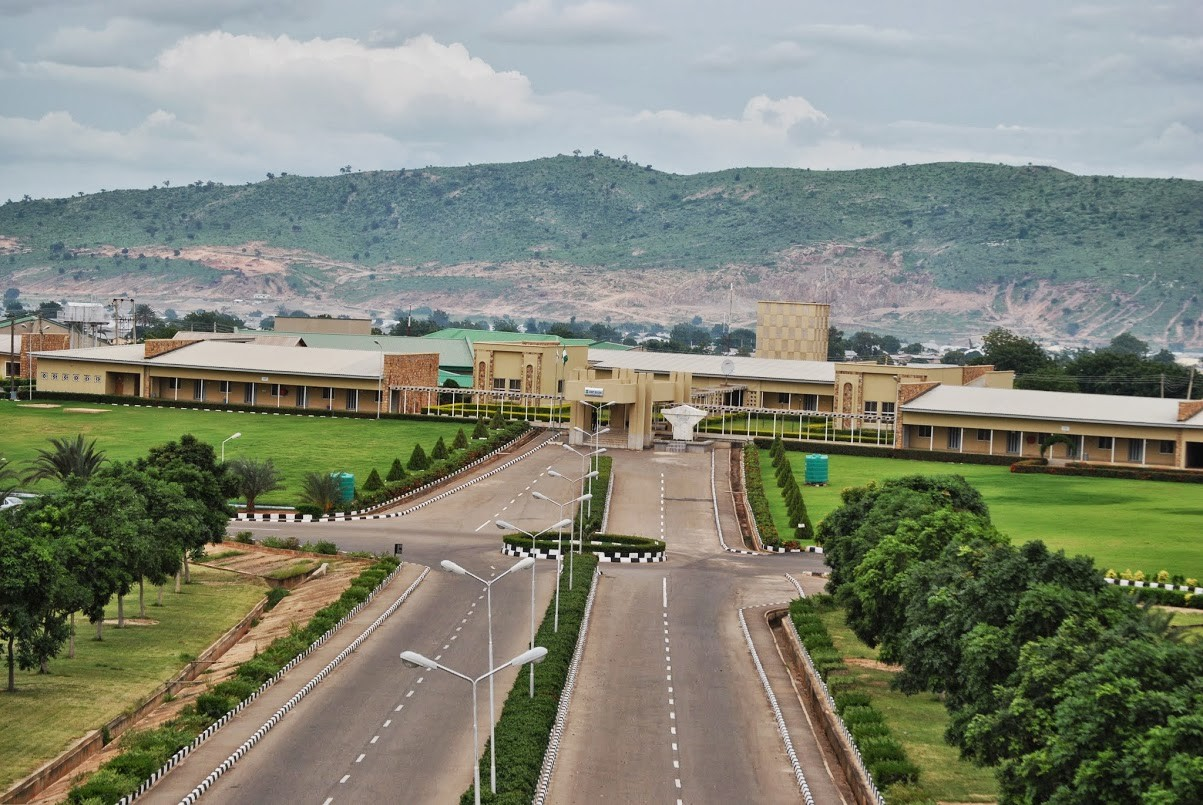
On resumption of office on May 29 2011, he declared Education as one of his cardinal objectives. He constructed over 502 classrooms across the state and recruited over 1,000 degree and NCE graduates into the state’s educations sector and then trained over 5,000 teachers to increase their productivity. To boost access to tertiary education for the citizens of his state, he established Gombe State University of Science and Technology (Kumo), College of Education (Billiri), Gombe State Polytechnic Bajoja which will provide manpower to the Lafarge Cement owned Ashaka Cement manufacturing company, and College of Legal and Islamic Studies Nafada. These institutions are equipped with modern facilities such as e-libraries, e-learning centres, ICT Centres, laboratories, expansive and conducive classes, etc. Also 25 indigenes of the state were sponsored by him to India and the United Kingdom for Maritime Studies.
In Healthcare he upgraded the Urban Maternity in Idi to a Children and Women Hospital, completed a newly constructed Dialysis Centre within the Gombe Specialist Hospital, constructed College of Nursing and Midwifery at Dukku, Snake Bite Treatment and Research Centre, Kaltungo to tackle the prevalent scourge of snake bites in his state, and other parts of the region. Patients from Cameroon even come down to Gombe to receive treatment at the centre.
To make his state a destination for Meetings, Incentives, Conferences and Exhibitions, he constructed a 3,500 capacity Gombe International Conference Centre. This conference centre is currently ranked among the top three in the country with state of the art facilities and a parking space for 2,000 vehicles at a go to make your event memorable. Also, he built a state of the art tankers parking bay to prevent accidents caused by indiscriminate parking of petroleum trucks which Lagos can learn from. Lagos continues to experience paralyses petroleum tankers perpetuated on its roads especially in Apapa axis and environs.
To tackle the scourge of youth restiveness which was prevalent in his state with the Kalare Boys, he established Talba Youths Reorientation and Rehabilitation Programme which saw over 1200 of them being turned to become useful citizens in the society. Also repentant Boko Haram members are de-radicalized and trained in different skills in Gombe. Over 3200 youths have been trained by his administration in six different professions at the four skills acquisition centres located across the state. A total of 330 supervisors were trained at the Citizenship and Leadership Training Centre in Jos, and over 1500 youths were recruited to serve as traffic, environmental and security marshals in Gombe.
In Social Security he empowered 1500 poorest of the poor through the Conditional Cash Transfer and also for the physically challenged beggars in the state with cash, and making sure they send their dependants who assist them to school.
To also boost Job creation in his state, he established in conjunction with private investors, the first tricycle assembly plant in Nigeria while Gombe has been earmarked as one of states that will have a Special Economic Zone for the North Eastern Region due to its peaceful environment as part of the Federal Government’s plan to diversify the economy through industrialization.
The crisis-ridden states of Northern Nigeria and some in the South should learn from the Jewel Of The Savannah why peace is the foundation for sustainable development.