DD
MM
YYYY

PAGES

DD
MM
YYYY

spot_img

PAGES

Home Blog Page 6955

GTBank’s Innoson Motors Paralysis

0

When the CEO of one of the finest banking institutions in Nigeria starts writing politicians, directly, congratulating them, for winning elections, you will agree that everything is not normal. That Innoson Motors will take over GTBank is fake news (sure, Daily Post reported it). But what is not fake news is that GTBank is losing a battle with street fighters. It is better for GTBank to fight Toyota than fight Innoson Motors because even EFCC has no solution on these rugged Nigerian businessmen. Last time I checked, the judge threw out a case against Innoson Motors because its Chairman refused to attend the hearing, and EFCC has been unable to bring him to court. Simply, EFCC gave up and now GTBank thinks it has a chance!

Innoson Nigeria Limited, Nigeria’s indigenous vehicle production company, has instituted a move to take over Guaranteed Trust Bank, GTB, following a ruling by the Supreme Court over the bank’s N8.7 billion indebtedness to the company.

The company’s chairman, Chief Dr Innocent Chukwuma, made the move through a “Writ of FiFa taken over Guaranty Trust Bank PLC for and on half of Innoson Nigeria Ltd” as a result of the Bank’s indebtedness to Innoson Nigeria Ltd.

In a landmark decision on February 27th 2019, the Supreme Court had dismissed GTB’s appeal marked SC. 694/2014- against the judgment of Court of Appeal, Ibadan Division.

Innoson Nigeria Limited, Nigeria’s indigenous vehicle production company, has instituted a move to take over Guaranteed Trust Bank, GTB, following a ruling by the Supreme Court over the bank’s N8.7 billion indebtedness to the company.

GTBank – settle Innoson Motors and move on. You are not helping your brand on this street fight. Premium Times has some contents on this also [pardon my excessive copying]..

On Friday, Innoson claimed its Chairman, Innocent Chukwuma, has been mandated to “take over” GTB after the supreme court dismissed GTB’s appeal against the judgement of the appeal court in Ibadan.

“The Chairman of Innoson Group, Chief Dr. Innocent Chukwuma, OFR has through a Writ of FiFa taken over Guaranty Trust Bank PLC for and on behalf of Innoson Nigeria Ltd as a result of the bank’s indebtedness to Innoson Nigeria Ltd,” the statement said.

“In a landmark decision on February 27th 2019, the Supreme Court of Nigeria dismissed GTB’s appeal — SC. 694/2014 — against the judgment of Court of Appeal, Ibadan Division.

“The Court of Appeal, Ibadan division had in its decision of 6th February 2014 dismissed GTB’s appeal against the Federal High Court, Ibadan Division.

“Thus, the Court of Appeal affirmed the judgment of the Federal High Court, Ibadan Division which ordered GTB by way of Garnishee order absolute — to pay N2.4billion to Innoson with a 22% interest, per annum, on the judgment sum until the final liquidation of the judgment debt. Rather than obey the judgment of the Court of Appeal, GTB approached the Supreme Court to challenge the Court of Appeal’s decision,” the auto firm said.

The company in its statement said a ruling delivered by Supreme Court Justice Olabode Rhodes-Vivour dismissed GTB’s appeal and thus affirmed the concurrent judgment of both the Court of Appeal and the Federal High Court, Ibadan Division.

The ruling, it said, ordered GTB by to pay N2.4 billion to Innoson with a 22 per cent interest, per annum, on the judgment until the final liquidation of the judgment.

“The Judgment debt of N2.4bn has an accrued interest as at today of about N6,717,909,849.96 which results to about N8.8 billion,” the statement said.

“Based on the Supreme Court’s decision of 27th February 2019 the counsel to Innoson, Prof McCarthy Mbadugha ESQ, had approached the Federal High Court, Awka Division for leave to enforce the judgment having obtained certificates of Judgment from the Ibadan Division of the Federal High Court.”

Mr Chukwuma, the founder of Innoson Motors, dragged GTBank to court in 2011, alleging arbitrary charges levelled against him and a string of bank accounts he held at the bank. But GTBank later counter-sued, saying it was Mr Chukwuma who allegedly falsified bank and shipping documents to obtain tax waivers from the Nigerian government.

The bank subsequently referred the matter to the Economic and Financial Crimes Commission (EFCC). The anti-graft office filed criminal charges against Mr Chukwuma at a Lagos court. Last month, he was declared wanted for failing to appear for arraignment in the matter, which is still proceeding separately from the N14 billion arbitrary charges lawsuit currently at appellate levels.

Mr Chukwuma denied the allegations of doctoring shipping documents, saying the matter had previously been investigated by the EFCC and the police both of whom cleared him of any wrongdoing.

He accused GTBank of using law enforcement agencies to hound him and cripple his business, a claim the bank also denied.

Efforts to get GTB’s reaction to the latest development were unsuccessful as of Friday evening.
The Amazing Adebayo Alonge’s RxAll Vision to Eliminate Fake Drugs in Nigeria

0

By Nnamdi Odumody

Around one, in every eight essential medicines, in lower income countries, may be of low quality or an outright fake. Substandard and fake drugs, don’t just fail to treat disease, they can prolong illness, heighten the risk of treatment failure, poisoning, and severe drug interactions. The implication is monumental risk to life. Also, fake drugs can contribute to antimicrobial resistance, posing a threat to the effectiveness of future treatments.

A near death experience, after consumption of fake drug 15 years ago in Ibadan, prompted Adebayo Alonge to embark on a mission, aimed at preventing loss of lives, due to fake drugs. Deaths attributed to fake drugs are common experiences in Nigeria and other developing countries. Adebayo, on his mission, studied Pharmacy at the University of Ibadan, emerging the best graduating student. Over the years, he has gathered experiences in business, developing projects worth over $180 million in consulting, pharmaceuticals and technology startups before founding RxAll with Amy Kao and Wei Liu in 2016. The technical capability and business exposure will certainly cushion him to build a category-king business in this domain. Nigeria cannot wait!

Our platform uses a proprietary molecular sensor device with a cloud-based IP-protected AI algorithm and database of spectral signatures of drugs- both prescription and recreational- to carry out non-destructive drug authentication.

We work with drug regulators and other stakeholders to reduce branded drug counterfeiting and ensure that patients receive high quality authenticated drugs. Pharma manufacturers increase sales and patients have better access to high quality drugs.

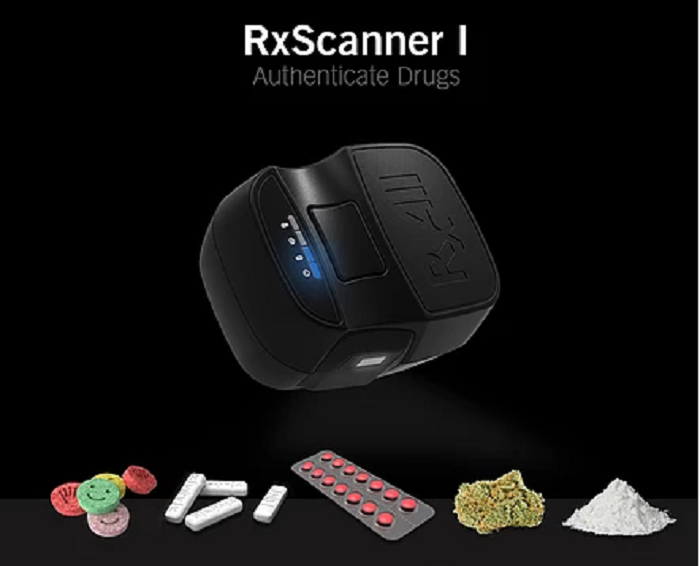
RxAll is a hyper spectral platform which leverages artificial intelligence and blockchain technology for drug quality authentication and tracking. It uses a proprietary molecular sensor device (RxScanner, the world’s first drug authenticator), with a cloud based IP protected AI algorithm and database of spectral signatures of drugs, both prescription and recreational, to carry out non-destructive drug authentication.

They work with drug regulators and other stakeholders to reduce branded drug counterfeiting and ensure that patients receive high quality authenticated drugs. The platform enables patients to buy high quality drugs from trusted offline-pharmacies, who use their AI-enabled inventory software, to ensure availability. Also, they pool the procurement of their network pharmacies, enabling patients to get the lowest prices. This makes patients save time by ensuring they don’t leave the confines of their homes to get high quality non-counterfeit products. Also, ‘’telepharmacare’’ is available on demand.

RxAll RxScanner1

It offers an alternative sales channel for pharmacies that need an omnichannel sales strategy. The RxAll AI-inventory software is provided free of charge.

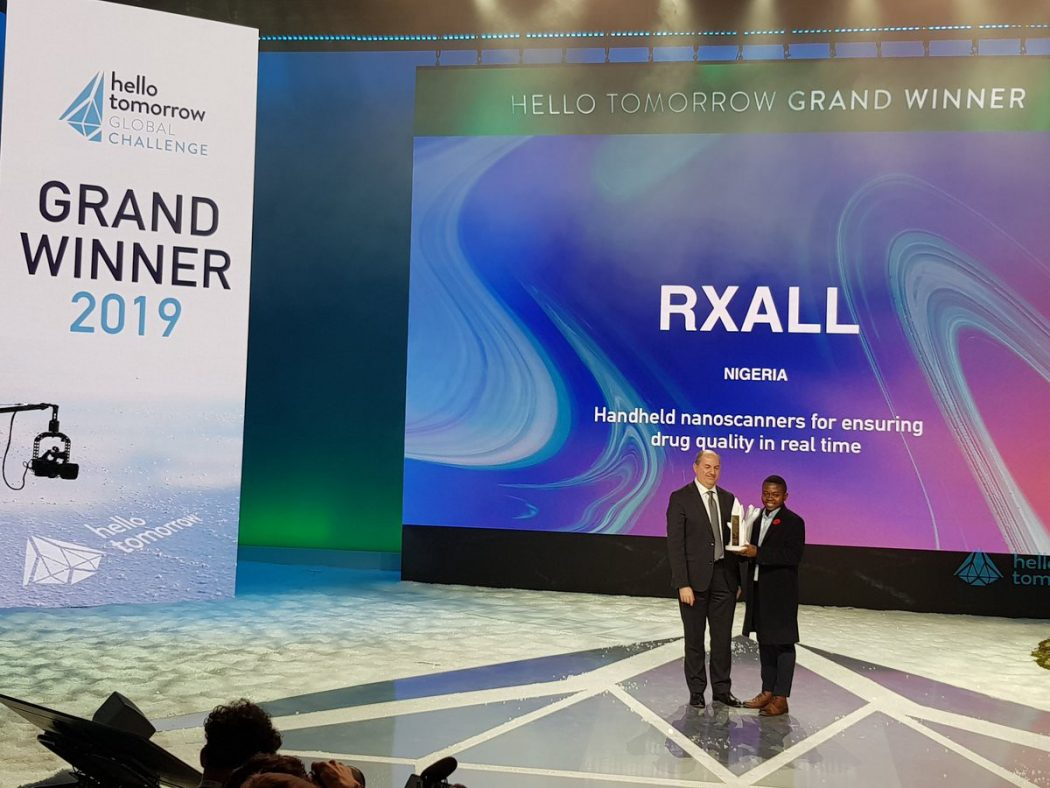
RxAll won the 2019 Hello Tomorrow Prize of 100,000 euros for Best Early Stage Startup beating 4500 contenders from 119 nations. Hello Tomorrow is a world’s deep Tech Conference for scientists, technologists and their enablers. They are currently operational in Canada, China, Myanmar, Kenya, Uganda, Ghana and Nigeria.

Nigeria Should Copy Abu Dhabi’s HUB71 Innovation Initiative

0

By Nnamdi Odumody

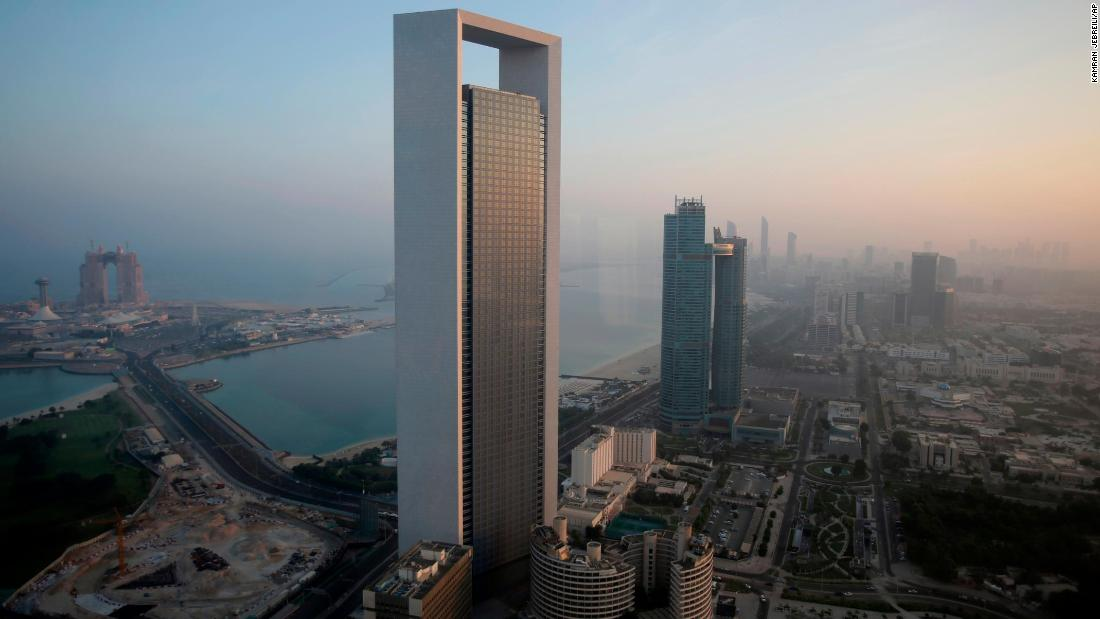
The Emirate of Abu Dhabi has launched ‘’Hub71’’, a 520 million AE Dirham ($142million) initiative by His Highness Sheikh Khalid Bin Mohammed Bin Zayed Al Nahyan, a member of the Abu Dhabi Executive Council and Chairman of the Executive Committee. Also, a 535 million AE Dirham ($146million) fund will invest in technology businesses established in Hub71, bringing the total government investment in the Abu Dhabi tech sector to 1 billion AE Dirham.

Hub 71 was established by the Abu Dhabi government to transform it from its hydrocarbon economic dependent status to a destination of technology innovation, in collaboration with global technology giants like Microsoft and IBM. It is a key initiative of Ghadan 21, the government economic accelerator programme in line with the UAE Vision 2021.

’’Innovation, research, science and technology will form the pillars of a knowledge based, highly productive and competitive economy driven by entrepreneurs in a business friendly environment where public and private sector form effective partnerships. We want all Emiratis to make a valuable contribution to their nation’s growth by building their knowledge and applying their talent with innovation and drive’’ outlined by Sheikh Mohammed Bin Rashid Al Maktoum, Prime Minister of the UAE and Emir of Dubai.

The plan is to make the United Arab Emirates, the most innovative Arab country, with an estimated investment of 14 billion AE Dirhams in Innovation, 7 billion of which is allocated for Research and Development, to become an innovation-driven economic power like the Asian Tigers, Switzerland, Sweden, Denmark, and Germany.

From April 28th 2019, the 535 million AE Dirham fund will co-invest with VCs in Hub71-based tech startups through a government matching scheme, as well as, invest in first-time fund managers to support their establishments and growth in the Emirate.  Hub 71 will also offer fully subsidized housing, office space and health insurance for seed stage tech companies, while 50 percent subsidy packages will be available for more established tech ventures.

The three pillars which will ensure the success of Abu Dhabi’s tech ecosystem – capital, business enablers and strategic partnerships – will come together in a triple helix courtesy of Hub71. Its partners include Mubadala Investment Company, Microsoft and Softbank Vision Fund, and will work with the Abu Dhabi Global Market on the initiative.

Abu Dhabi currently offers a two-year startup license for $700 which includes visa for up to four employees and has no office space requirements. In Africa, with the exception of Rwanda and Mauritius, there are no state-led initiatives to boost technology innovation in their economies with incentives to attract entrepreneurial talent from across the globe.

Nigeria, an oil rich country like the UAE, has lessons to learn in economic diversification through investment in creating an innovation ecosystem. A roadmap had already been shared by Tekedia on possible way forward.

To create such enablers in Nigeria, I propose the following specifically for the VC sector:

  • Government should offer new VC (venture capital) firms in Nigeria a ten year tax incentive on profits if they have asset base of at least $50 million and will deploy the capital in Nigerian startups within 10 years.

  • Offer new VC firms in Nigeria the opportunity to repatriate 100% of profit within ten years. That will help the country to attract foreign investors to make Nigeria home.

  • If we have this type of incentive, we will see many VC funds making Nigeria home to explore opportunities in Nigeria and continental Africa. That influx of capital will have many multiples of benefits to our economy, our people, and the Nigerian technology space. Most especially our tech firms will stay home.

    Yes, we have a tax problem but the VC industry is not going to fix that for us since it is not one of the areas where we have been unable to appropriately collect taxes. There is no tax avoidance in the sector because none exists at the moment in the VC sector. The goal of this incentive is to explore how to deepen our capabilities to ensure that future companies are created in Nigeria. Our Vice President has been working on improving the business ecosystem in Nigeria; making it easier for startups to receive capital would go a long way. A new tax regime for investors, especially at the early stages, would be strategic for the nation.


Fixing Nigeria’s Lackluster Venture Capital Funding

African Startups Raised $1.163 Billion in 2018; Nigerian Startups – 167% YoY Funding Growth

0

Partech Africa has released its yearly startups funding report for Africa. African startups broke record book in 2018 – 146 of them raised US$1.163 billion in equity funding over 164 rounds. That is a 108% year-on-year growth in funding when compared with 2017 numbers. From the report, Nigerian startups attracted US$306 Million (+167% YoY) in funding over 26 deals (+53% YoY) with a total of 12 startups raising 13 rounds equal to or higher than US$5 Million.

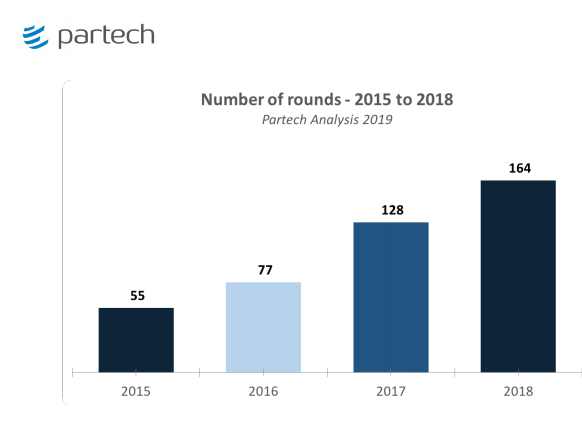
In 2018, 146 African start-ups raised a total of US$1.163 Billion in equity through 164 rounds, this is a +108% growth YoY, compared to +33% in 2016 and +53% in 2017. This represents x4.2 growth multiple over the last 36 months.

[…]

The three countries received 78% of the total funding with Egypt close behind, an exact repeat of last year. Kenya took the lead attracting US$ 348 Million (+136% YoY) in funding over 44 deals (+76% YoY), Nigeria has attracted US$ 306 Million (+167% YoY) in funding over 26 deals (+53% YoY) and South Africa slowed down compared to Kenya and Nigeria, with US$ 250 Million (+49% YoY) in funding over 37 deals (-12% YoY).
In the rest of Africa, there were 19 countries with at least one equity tech deal above US$ 200K this year, compared to 13 countries in 2017. So, it is clear that the rest of the continent is actually growing as fast as the top 3 markets and now attracts decent attention. It’s important to note though that Egypt takes the lead here with 19 deals, nearly catching up with South Africa in activity.  Regarding French-speaking Africa, Senegal confirms itself as the leading hub with US$ 22 Million raised in 4 deals.

As typical, the data collation remains challenging – this number is different from what Weetracker published for 2018. Weetracker had reported that $726 million was invested in African startups. Sure, everything depends on metrics used by the tracking companies.

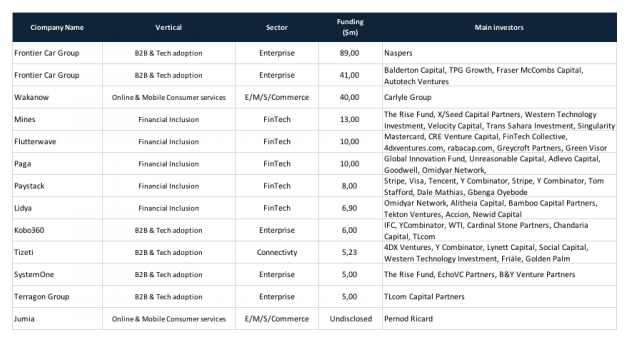
Nigerian firms in the report


Full Press Statement

Partech Africa publishes its annual report on the financing of African Startups and the numbers confirm the attractiveness of African entrepreneurs and their ability to transform the continent into a global powerhouse.
Cyril Collon and Tidjane Dème, General Partners from the Partech Africa Fund, published today their annual report on African tech start-ups and the numbers confirm their enthusiasm for the continent: US$1.163 billion was raised in equity funding in 2018, i.e. a 108% YoY growth.
The report, which is the third the team have produced, is based on the same methodology as the previous years: it covers equity deals in tech and digital spaces, and funding rounds higher than US$200K and lower than US$100 Million. Deals covered are both disclosed and undisclosed and the report only includes African start-ups i.e. companies with their primary market in Africa itself (i.e. in terms of operations and revenues).
The numbers show the growing attractiveness of Africa
In 2018, 146 African start-ups raised a total of US$1.163 Billion in equity through 164 rounds, this is a +108% growth YoY, compared to +33% in 2016 and +53% in 2017. This represents x4.2 growth multiple over the last 36 months.
It’s quite simply astonishing. When we started our journey to create the Partech Africa Fund in 2015, we had anticipated the $1 Billion mark to be broken by 2020. We are now already 2 years ahead of our projections”, says Cyril Collon.
The Partech Africa report tracks a total of 164 rounds raised by 146 start-ups compared to 128 rounds from 124 start-ups last year, a +28% growth YoY. What is interesting is that the number of Series A & B stage start-ups attracting funding are massively accelerating with 70 rounds (+46% YoY), and that the number of large venture growth deals have increased as well, with 14 rounds (+100% YoY), totaling US$ 602 Million (+120% YoY). Regarding investors, PE investors and major corporate players are now joining the game earlier, investing early & growth stage tickets in African tech start-ups.
Kenya, Nigeria and South Africa still leading the race!
The three countries received 78% of the total funding with Egypt close behind, an exact repeat of last year. Kenya took the lead attracting US$ 348 Million (+136% YoY) in funding over 44 deals (+76% YoY), Nigeria has attracted US$ 306 Million (+167% YoY) in funding over 26 deals (+53% YoY) and South Africa slowed down compared to Kenya and Nigeria, with US$ 250 Million (+49% YoY) in funding over 37 deals (-12% YoY).
In the rest of Africa, there were 19 countries with at least one equity tech deal above US$ 200K this year, compared to 13 countries in 2017. So, it is clear that the rest of the continent is actually growing as fast as the top 3 markets and now attracts decent attention. It’s important to note though that Egypt takes the lead here with 19 deals, nearly catching up with South Africa in activity.  Regarding French-speaking Africa, Senegal confirms itself as the leading hub with US$ 22 Million raised in 4 deals.
Sector breakdown: outstanding rise of Enterprise/B2B platforms
Driven by Fintech, financial inclusion remains the main investment sector in the continent, attracting 50% of the total funding.   However, Cyril Collon and Tidjane Dème witness a shift in the second most popular sector with 30.4% of funding (vs 13% in 2017) now being invested in B2B & Tech adoption, while Consumer Services account for 19.6% (vs 42% in 2017).  “B2B models are naturally attractive for entrepreneurs. At a time where monetization is at the heart of the challenges, enterprise clients can pay and enable to present unit economics that can converge more quickly than B2C models. Of course, this is reassuring the investors”, explains Tidjane Dème.
You can download the full report here.


Alibaba Jack Ma’s Africa Netpreneur $1 Million Prize Opens Applications

0

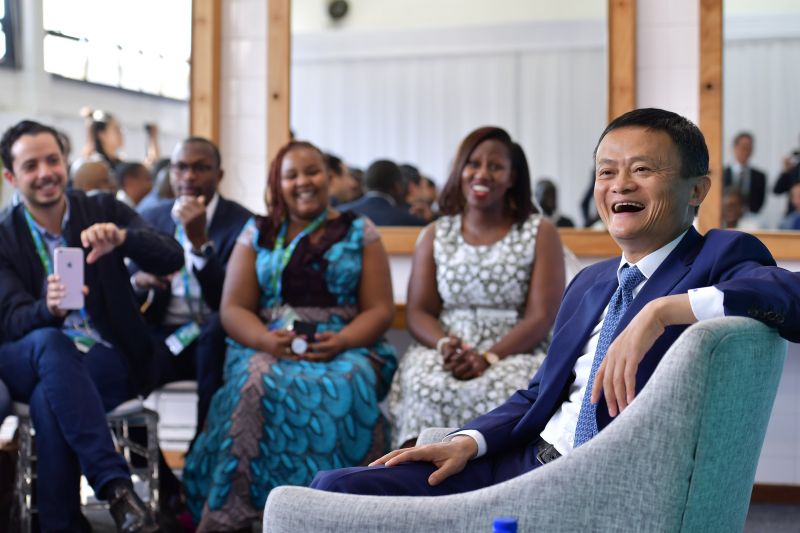
The Africa Netpreneur Prize Initiative is Jack Ma’s flagship entrepreneur program in Africa led by the Jack Ma Foundation. Jack Ma is the founder of Alibaba – the Chinese ecommerce company.

The Prize will host a grand finale pitch competition in Africa where ten finalists from across the continent will compete for a share of US$1 million in total grant prize money. The mission of the Prize is to identify and spotlight African entrepreneur heroes and their stories to inspire the continent and beyond.

Apply here  before June 30.