The internet as we know it has become such a pervasive part of our lives that most of us can’t imagine a world without it. Whether you’re browsing websites, conducting business or communicating with friends and family half a world away, the internet has made so many things possible that just a generation ago would have been considered unimaginable.
Yet there are so many things about the internet that many of us don’t know. Here are ten exciting facts about the internet that may surprise you.
1. There are close to 2 billion websites on the internet today
As of December 2018, there are more than 1.94 billion websites online and between 4 and 5 million blog posts being published on the internet daily, providing plenty of content for the billions of internet users online today.
2. Out of the close to 7.7 billion people on earth today, more than 4.1 billion are online
The number of internet users has been growing exponentially since the internet exploded in popularity. Around 40% of the global population is now connected to the internet, up from 1% in 1995.
3. Most internet users are from China
China accounts for close to 20% of internet users, with more than 802 million people online in China right now. In fact, the number of Chinese internet users is more than the combined total populations of the U.S., Mexico, Japan and Russia. Internet use is so prevalent in Chinese culture that China has even opened addiction camps to treat the growing rate of individuals addicted to being online.
4. The world’s first website is still online and will turn 28 this year
The world’s first website became publicly available online on August 6, 1991 and is still accessible to this day. Published by British physicist, CERN researcher and inventor of the World Wide Web Tim Berners-Lee, info.cern.ch is a very basic HTML site written with only a few lines of code. It was originally used to facilitate the transfer of information between researchers and students from different universities.
5. Without an Internet Service Provider you wouldn’t be able to get online
Having an ISP, or Internet Service Provider, is what allows you to connect to all the people and content you find online. Think of your ISP as a piece of the pipeline that carries internet traffic all over the world. Although different websites are hosted on different ISP’s, they all communicate with each other and allow for the transfer of data between them. By paying a fee to your ISP, you’re purchasing a piece of that pipeline and an online address, allowing you to send and receive files from other connected devices.
6. More than 250 billion emails are sent out every day
The staggering number of online correspondence sent out daily is growing too. Back in 2010, only about 247 billion daily emails were sent. What’s worse is that more than 80% of these emails are spam!
7. There’s a lot of money to be made online
It’s estimated that there will be more than $3.45 trillion spent on online sales this year as people spend an average of 5 hours each week shopping on the internet. E-commerce is expected to continue its massive growth, becoming the largest global retail channel by 2021 with a forecasted $4.88 trillion market size.
8. About 80% of all online content is NSFW
People have always taken pleasure in viewing the naked female form and the advent of the internet has made it even easier to create, share and enjoy erotica. Statistics show that 12% of all websites and one third of all downloads are NSFW. In fact, before images were even a thing on the internet, people traded ASCII porn online made from only 95 printable text characters.
9. More than 90,000 sites are hacked daily
Cybercriminals use highly advanced computer software to scan for websites with exploitable vulnerabilities that can be hacked easily. Most of these sites (about 83%) use the WordPress platform.
10. The very first YouTube video is called “Me at the zoo”
It was uploaded on April 23, 2005 and features Jawed Karim, one of the site’s founders, exploring San Diego Zoo. YouTube has grown considerably since then, with more than 70 hours of new content uploaded to the video-sharing platform every minute.
MultiChoice, the brand behind DStv, GOtv, etc, is being unbundled from the Naspers empire, for listing on the Johannesburg Stock Exchange. Naspers is the largest company in Africa by market capitalization.
According to www.iol.co.za, yesterday, Naspers has evolved in recent years into two distinct business lines, which are a high growth global Internet business with international focus and African video entertainment business.
Naspers noted that given their divergent paths, there was no longer a strategic rationale for keeping both business lines together and there are no synergies between them.
The unbundling and listing will result in Naspers’ shareholders holding a direct interest in MultiChoice rather than holding that interest through Naspers.
Meanwhile, in its pre-listing presentation, MultiChoice highlighted how it is the leading entertainment platform in Africa.
[…]
Netflix is a massive threat to DStv, and the South African company has said many times that the streaming service is biting into its Premium subscriber base.
While DStv subscribers in Africa have increased in recent years, its Premium package has lost subscribers. This has been attributed to its high prices and competition from Netflix.
Largely, the company is dividing its operations into two: the high growth global internet business and the Africa-focused entertainment business. Typically (but not always – eBay spurn out PayPal, a better business), when you break companies like that, you keep the high growth in-house and strategically kick the underperformer out. That is what Naspers has done here: the global internet business which includes Tencent investment stays under Naspers while the one we have come to know the company in Africa (yes, the MultiChoice) leaves. With that structure, investors can see value which Naspers is creating in the global internet business where it is clearly killing it.
As Guardian noted in the quote above, the threat of Netflix is real, and to a large extent Naspers has given up. Yes, it does not want to fight because it cannot necessarily do much. In a piece in Harvard Business Review, I explained this dilemma (sure – MultiChoice is not a baby in this game). Simply, there is a global march to online streaming and cable and satellite TV providers are imperiled. Yes, they cannot do much because the world is going to converge on the web for entertainment. Naspers understood that and that is why MultiChoice with DStv and GOtv has to leave home, fast.
But the report also marks the final public disclosure we needed to assess the state of cord cutting at the end of 2018. Altice revealed a net loss of 15,000 cable TV customers in the fourth quarter. We already knew that Charter lost 36,000, Comcast shed 29,000, and Verizon 46,000 for the same period. AT&T lost 391,000 for both cable and satellite TV and satellite-only provider Dish Network shrank by 334,000. Net net, that’s 851,000 fewer paying customers for pay TV.
It looks like the legions of cord cutters set a new record for the quarter and are up significantly from a year ago, when one research firm calculated almost 500,000 departed, at the time a historic high.
And there’s more bad news for the industry. Unlike last year, the number of people signing up for cable-like bundles of channels over the Internet also may be shrinking now. Most of the services, such as Sony’s Playstation Vue TV and Google’s YouTube TV, don’t disclose their subscriber numbers regularly, if at all. But AT&T does, and it revealed a net loss of 267,000 DirecTV Now subscribers in the quarter. Dish, which also discloses for its Sling TV service, increased by just 47,000, about one-quarter the gain of a year earlier. Most of the Internet cable packages raised prices by $5 or more a month during the year, cutting into their appeal to cord cutters—most of whom, after all, are motivated by trying to save money. (Fortune Newsletters)
Sure – those numbers are U.S. numbers. Yet, the trend is global. It is just a matter of time for Africa to catch up at scale and that will happen as broadband becomes cheaper. My prediction has been that by 2022, we will have parity in that domain.
For Naspers, it wants to clean house fast to avoid deterioration of financial ratios on its high growth international internet business by this largely post-peak unit called MultiChoice.
There’s a popular line in product lines management, “when it’s not working, cut it off.” No one derives joy in losing money with reckless abandon, while growth trajectory looks gloomy.
There will always be admirers for Cable TV, but to keep pace with what goes on in the online version of the business, you have to invest heavily, more than your internet competitors, and yet there’s no guarantee for profits. A quandary of some sort.
Naspers doesn’t want its global internet business to be tainted by the conundrum going on in the cable tv space, so a separation became a good move. Maybe it would be a reverse of what GE did with its financial arm, and then became more ‘troubled’ afterwards, leading to countless restructuring and transformation undertakings.
By the time broadcasting rights for sports is dominated by streaming platforms, then we know that the paradigm shift has become palpable, at the moment, movie watchers are having their day.
Each movement brings with it a sizable loss of jobs, streaming platforms cannot have the kind of workforce DStv commands here, including technicians that install the dishes. May our innovations never increase hunger in the land!
I sent this response to a community member who was inspired by the piece on Time. The person plans to leave social media because apparently the individual thinks he/she is spending too much time therein.
The biggest victory in life is victory over your time. If you master your time, you will win your future. Greatness has been achieved not because of special talent but rather via total dedication, perseverance and commitment through mastering of time. A man who cannot manage his seconds will wander through the boundless of time.
My Response (edited for public): Greetings. Social media is not overly bad if you use it productively. It is the largest marketing channel in our time. I am always here (LinkedIn, one hour per day) because this is my CNN, NTA, etc for my companies. The key question is this: is that social media adding value to you or your career? I have no Facebook, Twitter, etc accounts because they offer no value to me. But I spend time on LinkedIn because it expands my business missions. So, the answer is not necessarily leaving social media just for leaving. The key is making sure you find value in new technologies because in this world, social media will run commerce and industry.
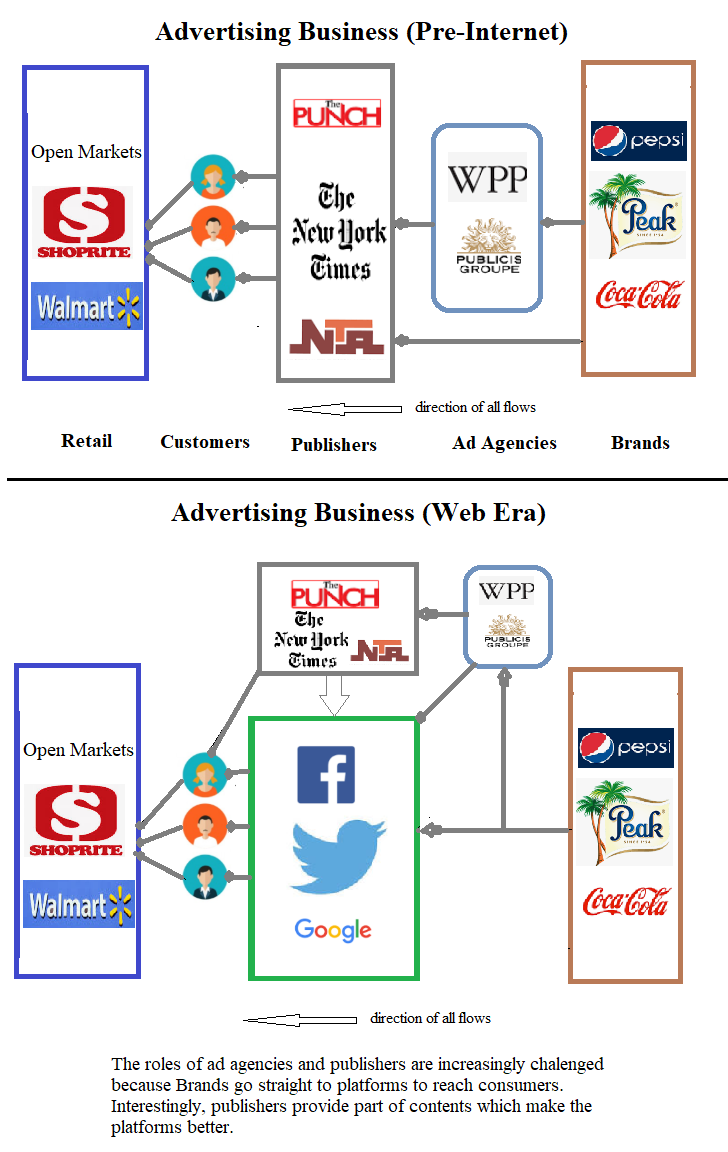
That is it people: why will I send money to Guardian and NTA for adverts, when if I post something here, real professionals comment, and share. Everyone needs to build his or her Webinality especially if you are in consumer business. It is better to be speaking to people that want to listen than shouting on radio when no one cares. Social media is not bad – what is bad is when you have no personal social media strategy on what it can get for you.
There is a global disintermediation which social media is enabling: you must find a mechanism to find a space if you run a business and want your message out. Yes, some Nigerian women live on social media to market stylist hair designs to Nigerians in diasporas. If you think they are always wasting time on Instagram and Facebook without knowing those are their offices, you do not understand the new world.
The social media platform is actually most functional office for many players in the services industry, commerce and their constituents. The physical offices are largely there to maintain the obsolete idea that a business must have a physical address, but the reality is that no deals have been struck in many of those offices, many come via social media.
The nature of work has changed drastically, you do not measure people’s seriousness or productivity level by when they wake up early in the morning to join traffic queues, or how rough their palms are. People run companies that generate millions from their homes, some work more than ten hours daily. Just have your working tools wherever you are, you don’t need to wear suit and tie in order to prove that you are working.
The social media platform offers so much, but you must also learn to be a player, not just a mere spectator. If you leave social media, where do you go then? The people you plan to meet physically may be chatting and exchanging documents, while you talk to them. Just have a strategy, marketing does not mean you must be running an advert; you can be doing so without even knowing
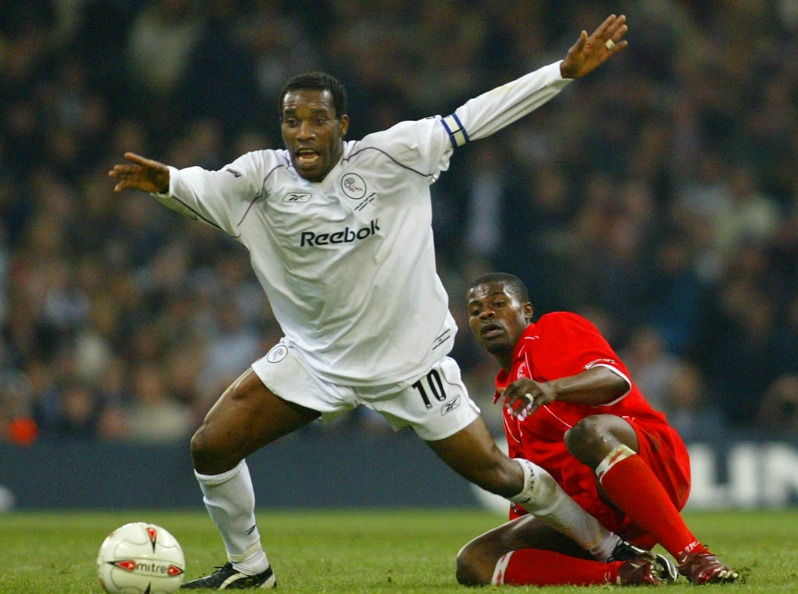
Jay Jay Okocha is in trouble: a judge has ordered his arrest for non-payment of taxes to Lagos state government [technically for not submitting documents for government to know how much he will pay on taxes!]. With no standard football pitch in any major Nigerian prison, it will be a nightmare for Austin Okocha. The taxman is awake in Nigeria as that is the only productive unit in government – the revenue is growing at double digit.
A Lagos Division of the Lagos State High Court in Igbosere has issued a bench warrant for the arrest of former Super Eagles star, Austin Okocha, over tax evasion charges.
Mr Okocha – or Jay Jay Okocha as he is popularly known – has repeatedly failed to appear before the court to answer why he allegedly failed to pay his income taxes.
Adedayo Akintoye, the judge, issued the warrant for the arrest of the former Eagles captain on January 29 and thereafter adjourned until February 19.
However, on February 19, the prosecution had not effected the arrest forcing the judge to, again, adjourn till April 15 and ordering that the warrant be executed by then.
The football star is facing a three-count charge instituted by the Lagos State Ministry of Justice bordering on failure to furnish his income returns and nonpayment of tax.
Yet, as government does its work, many things are changing. It follows those popular Chinua Achebe words: “Eneke the bird says that since men have learnt to shoot without missing, he has learnt to fly without perching.” Simply, some companies are restructuring, moving headquarters to Mauritius.
Today, nearly all the investing companies in Nigeria (venture capital firms, private equity firms), have moved headquarters to Mauritius. Yes, they are no more Nigerian companies even though 100% of their operations are done in Nigeria.
Tax. Tax. Tax – I said the three-letter word, three times! Jay Jay needs not dribble here: he should allow Nigeria to score.