DD
MM
YYYY

PAGES

DD
MM
YYYY

spot_img

PAGES

Home Blog Page 6965

Flip the Exodus, Nigerian Diasporas’ Big $25 Billion Remittance in 2018

3
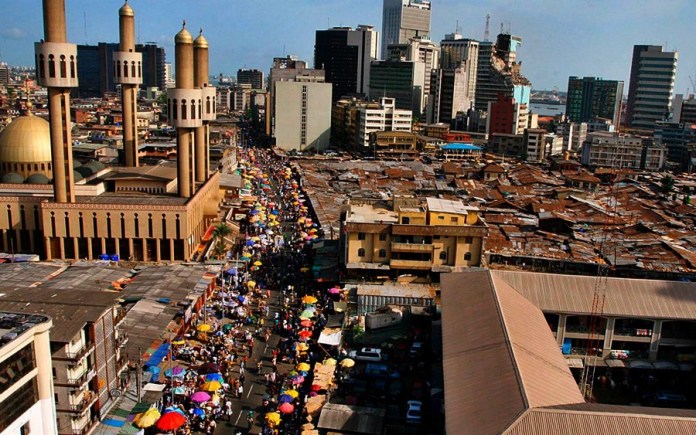
Lagos Island (source: Guardian)

I wrote about the exodus of Nigerians to Canada. Today, I am writing on HUGE remittance into Nigeria, from Americas, Europe and Asia. PwC estimates that Nigerians in diasporas remitted back to their mother/fatherlands a whopping $25 billion in 2018. Hello, that is just about the 2019 Nigerian budget! Go figure.

It is a serious issue and one I do not have the moral fiber to discuss since I also resigned a job and left for America many years ago. Yet, because commenting is free, I will go ahead.  There is a big exodus happening in Nigeria right now, and the destination is Canada. When I say exodus, I mean real type like the one described in the recorded Exodus. Lol.

And while the FDI has been yo-yo (not up, not down), remittance increased 14% from 2017 numbers. As always, in global trade and commerce, equilibrium points will keep changing. Yes, as the doctors, engineers, etc leave the shores of Nigeria, and do better in their new domains, they are at many levels building the nation. Any business that is growing at double digit (here 14%) cannot be written away. Sure, we still have to deal with the exodus because a doctor in my village cannot be quantified on remittance dollars because doctors do scientific miracles.

Nigerians in Diaspora sent an estimated $25 billion in remittance to the country in 2018, representing 6.1% of the nation’s Gross Domestic Product, a PricewaterhouseCoopers Economic Outlook Report disclosed.

Nigeria’s migrant remittance inflow was also 7 times larger than the net official development assistance (foreign aid) received in 2017 of $3.359 billion, while the figure translates to 83% of the Federal Government budget in 2018 and 11 times the Foreign Direct Investment flows in the same period.

I did note here that besides the exodus, Nigeria can WIN – it is partly winning.

So, any illusion that more salaries to workers either in the private or public sector will stop the tide is nothing but trivializing an important matter. Yet, if managed properly, emigration is not all bad: Nigerian diasporas are helping to fund new companies, bringing new capabilities and business networks back home. We need to find an equilibrium point for the competitiveness of our nation.

LinkedIn Comment on Feed

The devil is always in the details. The billions of dollars being mentioned largely go to family upkeep: feeding, hospital bills, school fees, real estate, etc. It is not the money to build road infrastructures, railways, airports, schools, hospitals, energy sector, etc; so the quagmire continues…

If you have two large corporations with minimum of 10000 skilled workforce each, with the supporting SMEs that feed into that, the country and its people will certainly feel the impact; more than billions of dollars sent to families via remittances. Herein lies the problem, to build a great nation requires deep thinking and lots of sacrifices; it was never meant to be straightforward with seemingly easy escape routes.

In the meantime, the beneficiaries of the remittances must remain afloat, while men and women get to work in figuring out how to transform Nigeria.
Nigerians’ Big Exodus To Canada

The OyaPay Dilemma – Big Lessons for All

0

Very bad news for the fledgling Nigerian fintech sector: OyaPay has closed doors. But this one is very painful because the young CEO is arguably one of the emerging leaders in the sector in Nigeria. I have followed Abdulhamid Hassan, CEO of OyaPay, since he left France to jumpstart OyaPay in Nigeria. In my monthly report to our portfolio companies, I have mentioned him as an emerging leader in the fintech space in Africa.

And he has shown great brilliance, product vision and capacity to fix real frictions. OyaPay makes it possible for meatspace (yes, offline) firms to accept forward payments with or without any mobile device like phone. His focus on what happens outside the web is a huge call: more than 98% of the $301 billion consumer flows in Nigeria happens in cash, notes MasterCard.

He took capital from his uncle and built his product. Now, he wanted to scale, and to make that happen, he wanted to raise venture funds. Unfortunately, his uncle does not want any form of “dilution” in his investment, Techpoint reports. He tried to resolve that but failed. Now, he has shut down the firm and has joined its former competitor, Paystack, as product manager.

“When I moved back to Nigeria from France in January 2018, I had a goal in mind to not raise external capital until we’d attained market fit and by so doing not hustling to get investor money. Instead, it would be on a neutral ground where we all (OyaPay and participating investors) need each other,” explains Hassan.

As Hassan reveals, he had earlier taken a small seed round from a senior family member (an uncle) and at the point of product market fit where the need for investors kicked in, the said family member pushed back on the idea of diluting his investment.

“For months we couldn’t resolve it, I became frustrated and decided to call it quits,” he says.

Very unfortunate that no one could convince the uncle on why owning 100% of 0 is 0 while say owning 10% of “something” returns a number! With the firm dead, that percentage is now worth $0. This is a huge lesson for everyone, not just the OyaPay players.

Linked Comment on Feed

Question: This is really very painful, knowing that this could have avoided from the onset. Please Sir, advise on how to largely avoid this especially for young entrepreneurs like myself. I look forward to your response.

My Response: Have a lawyer as you draft that FIRST Term Sheet. The problem is that we sign anything that comes for that first funds not remembering that a company life will be built on it. It is possible he signed many powers to the uncle preventing dilution in all ways since it is evident he could not get around it. Yet, I have no uncle that can give me money. But if I was in his shoes, a family meeting could be called to discuss this. The decision is extreme to come from France, start a promising firm and shut it down this way. He could have even sold his own shares forgetting the uncle, hoping that sacrifice can change things. Remember, uncle was fair to have even funded this! This is a loss-loss and not a model way.

Amazon Goes Cash for Delivery in Africa With Western Union

0

You may not like it but Africa is still ruled by cash. Yes, according to a report by MasterCard and the Fletcher School, “of the $301 billion of funds flows from consumers to businesses in Nigeria, 98 percent is still based on cash.” That is a huge number: 98%. For great companies, you work towards that digital future but you must also plan to participate in the one currently available today.

According to MasterCard and The Fletcher School, “of the $301 billion of funds flows from consumers to businesses in Nigeria, 98 percent is still based on cash.” Fintech will not merely have to move those $295 billion-worth cash transactions online/digital; it must create new value in the process. MPESA did not just digitize payment in Kenya; it added value upon the payment layer. For the whole of Africa, we should be hitting excess of additional $150 billion on economic growth by 2022. That is why investors are pumping money into African fintech startups: lots of money to be made.

Amazon has the memo: the ecommerce pioneer has unveiled Amazon PayCode which enables shoppers in Africa to pay with cash via local Western Union retail agents. Simply, you like that shoe on Amazon.com but no international debit card, simply visit your WUMT agent and pay Amazon for it with cash. Amazon then ships.

The e-commerce giant has rolled out a service that will allow customers to purchase goods and then pay for them at a local Western Union retail agent. During checkout, a special QR code will be generated that will be used to verify the customer’s identity and matched to the order confirmation for payment. Dubbed Amazon PayCode, the cross-border payment option has been launched in Kenya in Africa, along with nine other countries in Asia and Latin America.

Amazon certainly made that call after looking at the slow pace of digital payment evolution in Africa. As I explained to a U.S. executive yesterday, the total offline (consumer) lending done in Nigeria is many multiples bigger than what the digital startups are doing. Yes, the money is still offline and if you want to play in the game, you must get offline immediately. Amazon has taken the message to its shoppers: now, not having a debit card should not be a problem. This is simply Cash for Delivery executed with a brand everyone knows; Amazon will win more shoppers across Africa as it ramps up this.

As everyone knows, the last battle will be Africa. Google is competing, Alibaba is coming and Amazon does not want to miss the game. When you add that WhatsApp is evolving as a payment ecosystem, you get the picture. Our indigenous players like Paystack, Flutterwave, etc must get ready to battle.

The Seattle-headquartered company could also be following in the footsteps of  global tech giants who have all looked to Africa to deepen their presence and increase their revenue. Besides pioneering a project to deliver internet to remote areas, Google last year integrated Kenya’s M-Pesa mobile money service as a form of payment in its store. Chinese e-commerce giant Alibaba has also been keen on Africa and recently launched deals with the Rwandan government to boost e-commerce, trade, and tourism.

$295 Billion Reasons Why Investors Like Nigerian Fintech Startups

Uganda Sees Monetary Illusion with Social Media Tax, Huge Total Revenue Drop

0
Ugandan leader

Uganda introduced social media tax on WhatsApp, Facebook, Instagram, etc to make more money from its citizens. It also bumped up tax on mobile money transfer. Unfortunately, it is not looking good: total revenue has dropped as citizens have decided to forget social media and mobile money to avoid more taxes. So, cash is back: “In the three months following the introduction of the levy in July 2018, there was a noted decline in the number of internet users, total revenues collected, as well as mobile money transactions”. That is from the regulator!

In the three months following the introduction of the levy in July 2018, there was a noted decline in the number of internet users, total revenues collected, as well as mobile money transactions. In a series of tweets, the Uganda Communications Commission noted internet subscription declined by more than 2.5 million users, while the sum of taxpayers from over-the-top (OTT) media services decreased by more than 1.2 million users. The value of mobile money transactions also fell by 4.5 trillion Ugandan shillings ($1.2 million).

“The decline in the amount of business could partly be explained by the introduction of mobile money tax,” the regulator said.

Uganda is one of the countries where citizens pay taxes to use Facebook, WhatsApp and other 58 social media related websites. Government had taken the action to “curb gossip” [read criticisms] in the nation. Of course, the offline gossip continues. Telcos deduct the tax based on usage by users. As the social media tax was introduced, government increased mobile money tax by 5%.

Of course, telcos simply increased prices across board on products to compensate for the additional taxes on products they were required to report. That is typical: you do not expect telcos to pay those taxes; they shift them to users. The result is clear: across all metrics, Uganda is going backwards on digital evolution. In short, the financial inclusion via mobile money is now imperiled as more citizens have moved to cash.
Kenya, Zambia and Zimbabwe which recently joined the social media party will likely arrive at the same conclusion.

A moving continent indeed where tax is seen as the solution to all paralyses! Hope this makes it clear that citizens are not stupid; more greed can deliver lesser tax revenues. In Physics, they have optical illusion; in Africa, we have monetary illusion.

The irony here was the government agency publishing the numbers on Twitter. Of course the regulator might have been exempted from tax. So, to read your government report, you will need to pay tax to visit Twitter – the government can use Twitter but citizens cannot it use freely!

The Amazon’s $0 U.S. Federal Tax on $11.2B Profit, Conglomerate Tax In Action

0
Amazon Advert

Amazon shows the power in conglomerates and good-evil that comes with that power: $0 Conglomerate Tax on $11.2 billion profit. Yes, my small U.S. company will pay more taxes than Amazon as the U.S. ecommerce pioneer has a federal tax bill of $0. This is a company with a market cap of $800 billion but it is going through the American tax season with no cheque to send the taxman. In short, its tax rate is actually -1% if you consider that Amazon has $129 million 2018 federal income tax rebate. But Amazon is not atypical: from GE to Dangote Group to Carlos Slim’s empire, nations and the citizens pay “taxes” to conglomerates.

Those wondering how many zeros Amazon, which is valued at nearly $800 billion, has to pay in federal taxes might be surprised to learn that its check to the IRS will read exactly $0.00.

According to a report published by the Institute on Taxation and Economic (ITEP) policy Wednesday, the e-tail/retail/tech/entertainment/everything giant won’t have to pay a cent in federal taxes for the second year in a row.

This tax-free break comes even though Amazon almost doubled its U.S. profits from $5.6 billion to $11.2 billion between 2017 and 2018.

To top it off, Amazon actually reported a $129 million 2018 federal income tax rebate—making its tax rate -1%.

Amazon’s low (to non-existent) tax rate has been chided by politicians ranging from Senator Bernie Sanders to President Donald Trump.

In this piece, I explained that conglomerates tax nations because they fix critical market FRICTIONS. Yes, Conglomerate Tax is a global thing. U.S. government may waive taxes for GE but will not listen to Facebook because GE is a conglomerate. They are treated differently because they technically build nations. Government may have the money but may also need a special plastic for a new warplane. There are few companies that can deliver such products. So, a government may engage a company like GE to research and develop the plastic. The company can ask for concessions to take that risk. Those concessions are taxes to nations since the nations must still buy the plastics if the conglomerate succeeds.

For Amazon, cities want it and because they do, Amazon an extract tax benefits. Just like that, everyone is paying for Amazon not to pay taxes because the tax waivers or rebates are coming from taxes paid by ordinary people and companies. So, next time you see them talking about Dangote Group, laugh. The problem on Dangote Group special benefits in Nigeria is not the company but the fact that Nigeria has only Dangote Group. In America where they have legions of them, it is a new normal in modern capitalism. In these companies, you find entities which have accumulated capabilities to fix frictions at the upstream level.

Dangote Conglomerate Taxes

LinkedIn Comment on Feed

  1. Corporations’ accounting profits may differ from their taxable profits due to capital allowance deductions and loss reliefs charged against their profits, often those deductibles are higher than the depreciations recognised in their financial statements. Nevertheless large corporations are notorious for implementing tax avoidance mechanisms including the use of tax havens. Some are even accused of investing as much money on tax avoidance schemes as on technological innovation and mostly with the complicity of accountants and lawyers who find loopholes in tax regimes. Whilst these corporations as legal persons pride themselves with corporate citizenship, they fail to adhere to a fundamental tenet of citizenship. The dead weight loss resulting from this syndrome is the ever increasing gap between the rich and the poor as the greater populace continue to grapple with the negative externalities of these corporations despite their seemingly positive net contribution to society.
  2. Way beyond what ordinary folk can understand, so once a politician or an activist wipes up the sentiments, you see how the reactions go. You hear robbery, cheating, favouritism; in reality, it doesn’t work like that. When you need something desperately, obviously you are willing to cut any kind of deal, but when the other party begins to enjoy its dividends, envy and greed usually show up. If you need jobs and infrastructural development, you can forgo taxes, your citizens get the jobs, city and education institutions around benefit too. The problem starts when you want all the taxes, at same time you want jobs and development; the world was never configured to be that perfect!