DD
MM
YYYY

PAGES

DD
MM
YYYY

spot_img

PAGES

Home Blog Page 6968

Meet Me With Vice President Prof Osinbajo As I Keynote BDA Business Analytics Conference Next Month, Lagos

1

The organizers of the Big Data and Business Analytics Conference which comes up in Lagos next month (March 5-6) just informed me that they have discounted the registration amount till Feb 26th. I had passed the notes many shared here for support to make the program. In this event, I will deliver the keynote while our Vice President, Prof Yemi Osinbajo, will deliver the Opening Message.

Zenvus, my AI agtech subsidiary, is one of the lead program sponsors. I will bring Zenvus on stage to show how we are using electronics and AI to improve farm productivity in markets and territories.

Please notice the event is now two days to accommodate the shift in Nigeria’s general elections.

THEME:     Big Data, Analytics and African Development
VENUE:     Radisson Blu Hotel, Ikeja-Lagos, Nigeria
DATE:       March 5th – 6th, 2019

Register here 

Join me with Vice President Osinbajo as I Keynote Big Data Conference, Lagos March 2019

3 G’s of Focus: Guide, Government and God

0

By Temitope Akintola

This topic forms an integral part of a bigger picture in a three-part episode that aims at raising creative points and discussions on religion, economic transformation, taxation and policy.
The 3 G’s of focus in this write-up are:
  1. Guide (provided by parents, environment, foster homes, relatives etc);
  2. Government (Federal, state, local);
  3. God (Supreme being, controls everything).

1st G: Guide

Nigeria as been time and times described as a country of either the very rich or the poor, no middle class. One can argue that a growing middle class is now springing up as the country sets its sight on industrialization and economic diversification thereby given rise to more jobs (white and blue collar) and a fast growing entrepreneurial culture. Another school of thought would ask you to go see the names of the people breaking through in this new entrepreneurial wind and getting the big IT jobs; all these names are too familiar, their parents, uncles, relatives were/are kind of influential. You could go to Corporate Affairs Commission (CAC) to see the tonnes of companies created a day, get the addresses and then go to the location to see how many are really functional and you would be dumbfounded with the result.

2nd G: Government

The duties of the government can be summarized as the formation of human capabilities and the creation and maintenance of an environment that enables all the individuals of a society to flourish on their own and to contribute to nation-building. One can reasonably *argue* with prove that this description of the duty of the government does not hold in Nigeria. With no electricity to run businesses, how do you say that an environment for business to flourish has been created? With nepotism, tribalism and godfatherism being the order of the day, how can you say that all individuals benefit from our government? If at the end of a well worked interview in any ministry in Nigeria, you are asked to write the name of whom you know on your sheet, interviews are no longer made public for all to apply and outcome is foreknown before the interview process.  With all these foundations laid, it could be inferred that the same people that the 1st G failed would likely be failed by the 2nd G. So what if, who then do they look up to? Simply the 3rd G.

3rd G: God

The ever faithful, ever-sure, immaculate, all providing God becomes our next focus, we turn to him for a miracle, for provision, for help when other G’s have failed us. I heard someone praying to God for good leaders and she doesn’t have a PVC, people pray to God for good roads as if God works in a construction company or He’s the local government chairman, we now pray to God for what’s supposed to be the function of the  first two G’s and after a while of praying with no change, we ask if God exists in Nigeria. I know how picky you are when this subject is discussed, I am equally picky and thus, I leave you to expound on the 3rd G yourself.

All Together

To build a nation, it is very important that an integrated system evolves on Guide, Government and God. The fact is this, these elements are enablers and critical for the functioning of any national ecosystem. Failures of nations happen at home (Guide) and when the Guide fails, it is always hard for Government to thrive because the system from Guide sustains the Government. Similarly, unless Guide and Government are in equilibrium, the distortion of the third G can happen.

Case Study of Prepaid Services at Scale in Ancestral Africa

0

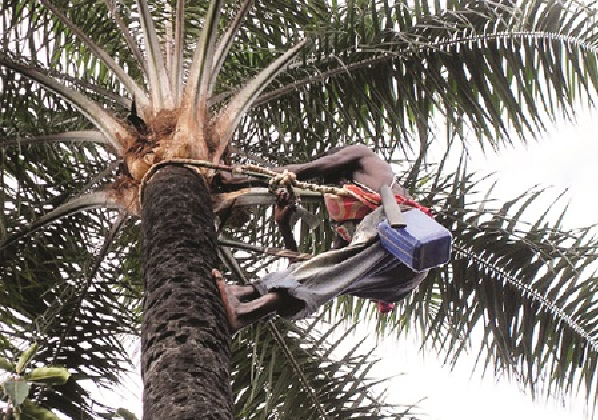
I am decoupling another piece to bring a key lesson out: Africa had used prepaid services for centuries at scale. A good example is on the village palm wine tapper.

Wine tapping is one of the riskiest jobs in ancestral Africa: they always fall down from the palm trees. Because of that near-certainty that accidents will always happen to palm wine tappers, tradition has it that a tapper will pre-pay his kinsmen for the inconveniences and lost wages of entering bushes looking for him in future should an accident occur (his wife has reported that he did not return home as expected).

So, every minor or major week (in Igbo culture Nigeria, a minor week is four days but a major one is 8 days, rotating Eke, Orie, Afo and Nkwo), all the wine tapped by the wine tapper will be brought to the village square where kinsmen will consume it for free [four days make a week in Igbo and those four days rotate the market days. Some communities have major markets every 8 days and minor every four days]. Yes, on that day, everyone drinks for free, knowing that you are drinking for a potential loss of wage if something happens to this wine tapper in future.

So, next time you read “innovation on prepaid….”, laugh. We did that centuries ago as I explained.

The Ant-Testing Safety Protocol During African Libations


The Ant-Testing Safety Protocol During African Libations

0

It is a mystery – why would elders always pour palm wine on the ground before they drink? Yes, in most African cultures, when elders gather, they always “waste” a portion of wine, making some incantations which include asking dead men to protect them! Of course the ancestors do not wake up and drink the palm wine. But “wasting” that palm wine is extremely important for safety.

As a boy who grew up in the village before they shipped me to the city for university educated, I observed one key thing: when the wine is poured on the ground, some elders check if ants congregate towards the wine. If ants do come towards the “wasted” wine, it means the wine is not poisoned and safe for drinking. But if the wine is poured but ants do not come around, run away – wine is not safe for drinking.

Also, there is another layer of safety: once the ants have validated that the wine is safe, elders will ask for the man who actually brought the wine to drink first. They will fill a cup and give him first to drink. Once he sips and drinks, the party opens. Practically, wine is safe for the community to consume.

Today, where most houses have been cement-floored, notice that men with solid understanding of tradition will never pour libations on cement floor, they always walk out where they can get sand. The key reason is thus: cement floor does not permit the ant-testing protocol unlike sand with bountiful ants.

You see, I grew up in the Scripture Union while in secondary school and I do not drink alcohol (purely on personal decision), but it was easy to use observation to connect the dots in cultures and indigenous knowledge. That is why I laugh when I see people poor libations with Star, Gulder, Budlight etc when technically the packaging has reduced the possibility of poisoning, and African ants are not consumers of chemicalized beers!. Traditionally, on safety frameworks, there is no reason for that. But most imitate without knowing the basis of the pouring. Yes, you can pray with your foreign beer without a need to waste a portion!

On the ancestral safety protocol, asking the messenger to take the first cup of wine, opens another interesting thing: the man that taps the wine (i.e. the wine tapper) who rarely makes the meetings (he is always busy tapping) where his wine is served is never in the equation. Elders never see him as a risk with any possibility of poisoning his brethren because largely most palm wine tappers die early deaths. It is one of the riskiest jobs in ancestral Africa: they always fall down from the palm trees. Because of that near-certainty that accidents will always happen to palm wine tappers, tradition has it that a tapper will pre-pay his kinsmen for the inconveniences and lost wages of entering bushes looking for him in future should an accident occur (his wife has reported that he did not return home as expected).

So, every minor or major week (in Igbo culture Nigeria, a minor week is four days but a major one is 8 days, rotating Eke, Orie, Afo and Nkwo), all the wine tapped by the wine tapper will be brought to the village square where kinsmen will consume it for free [four days make a week in Igbo and those four days rotate the market days. Some communities have major markets every 8 days and minor every four days]. Yes, on that day, everyone drinks for free, knowing that you are drinking for a potential loss of wage if something happens to this wine tapper in future.

Yet, despite the fact that the wine has been tapped by the wine tapper, other people bring the wine to the square. Those people that bring the wine must taste first before any party begins.

Simply, as you go deeper into indigenous knowledge, you will understand how even when there were no modern HSE (health, safety and environment) standards, people that lived therein survived, building safety frameworks in many things they did.

Saving That Kingdom

LinkedIn Comment on Feed

  1. Wisdom is not taught in any university, but it dwarfs every other knowledge one acquires.

There was no NAFDAC then, and palm wines are never sealed, so the elders worked out mechanisms to guarantee safety, and to sustain the practice, they had to invite the “gods”, so it remained for ages.

Our problem started when everything was demonized, and we became “born agains”, even without seeking knowledge to understand the deeper meanings of all the “fetish” things our forefathers did. What is not debatable now is that we have more funny creatures than back then, as truth has become a premium.

When we complete our 360° rigmarole, we simply go back to the basics and then relaunch our heritage to the world.

2. Mr. Oguaju, you continue to impress me with your deep understanding of some of the things which must be in place before we can move forward.

Right now, we are neither birds of the air nor creatures of the ground, we hurriedly discarded our indigenous ways and attempted to switch to the imported ways of our colonial masters. We have landed in a ditch in between with sad results.

We must make our way back to our roots, and after a careful appraisal pick what we need from the treasures left by our forebears, we can then pick what adds value from the foreigners, this is what the Asians did and the results are there for all to see.

We can cherry pick education, science, hygiene etc without jettisoning our religion and culture.

Why Nigeria Is Largely Exempting Foreign Firms from Data Protection Regulation

0
Emerging technologies like AI would have transformation impacts on Law (source: law.com)

Tekedia author, Ademola Adeyoju, has written the most comprehensive review of the recent Nigeria Data Protection Regulation (DPR) released by NITDA (Nigeria Information Technology Development Agency).  I think his works will be of interest to any entity or person working in the broad digital economy. Make time to read the review; he has spared us the legalistic boring stuffs for we non-learned citizens in the law. For me, this is the main part (the emphasis is from me):

The DPR covers transactions intended for the processing of personal data and to actual processing of personal data and person(s) residing in Nigeria or residing outside Nigeria but of Nigerian descent. But unlike the exceptional EU’s General Data Protection Regulation (the “GDPR”), for instance, it appears that the DPR does not apply to persons and entities outside Nigeria that collect, store, or process data of persons in Nigeria. 

Simply, do not expect Nigeria to challenge Google, Facebook and Amazon on what they do with our data. The strategy makes sense because there is an asymmetric power dimension here: unlike EU which Google desperately needs its market (and will do all to comply with GDPR), if we make life hard for Google, it will shut down the Nigerian server. So, by technically exempting them, focusing on local firms, it shows Nigeria is still emerging, at global arenas, when it comes to shaping standards and policies on technology and other areas.

I asked Barrister to help break this regulation; he just did that. I thank him for assisting the community.

Nigeria Data Protection Regulation: A Quick Review