DD
MM
YYYY

PAGES

DD
MM
YYYY

spot_img

PAGES

Home Blog Page 7

Japan Bets $2.3 Trillion on AI, Chips, and Space as Takaichi Unveils a 2040 Industrial Strategy

0

Japan is preparing one of its most ambitious industrial policy initiatives in decades, with plans to mobilize roughly 370 trillion yen ($2.3 trillion) in combined public and private investment by 2040 across strategically important sectors ranging from artificial intelligence and semiconductors to space technology and economic security infrastructure.

According to a report by the Nikkei, the initiative forms a central pillar of Prime Minister Sanae Takaichi’s new growth strategy and could be unveiled as early as next week. The plan is expected to direct resources into 17 strategic industries that Tokyo views as critical to maintaining economic competitiveness, technological leadership, and national security in an increasingly fragmented global economy.

The scale of the proposed investment underscores how dramatically the global industrial landscape has changed since the pandemic, the U.S.-China technology rivalry, and the recent surge in artificial intelligence investment. Governments around the world are now intervening in sectors once left largely to market forces, viewing advanced technologies as strategic assets rather than purely commercial industries.

For Japan, the initiative represents a significant shift from decades of sluggish investment growth and reflects concerns that the country risks falling behind the United States and China in technologies expected to drive future economic expansion.

The planned investment push appears designed to replicate, on a larger scale, the success of recent government-backed efforts to rebuild Japan’s semiconductor industry.

In recent years, Tokyo has committed billions of dollars in subsidies to attract chip manufacturing and secure supply chains. Projects involving Taiwan Semiconductor Manufacturing Company, domestic chip ventures, and next-generation semiconductor initiatives have become central to Japan’s industrial strategy.

The new framework would expand that approach beyond semiconductors into a broader set of sectors, including:

  • Artificial intelligence
  • Advanced semiconductors
  • Space development
  • Quantum technologies
  • Cybersecurity
  • Defense-related technologies
  • Advanced manufacturing
  • Energy security infrastructure

The emphasis on AI is notable given the escalating global race to build computing infrastructure, data centers, and next-generation AI models.

A key feature of the strategy is its focus on economic security. Japanese policymakers increasingly see technological capabilities as national security assets, especially after disruptions caused by the pandemic, geopolitical tensions in East Asia, and growing competition between Washington and Beijing.

Tokyo has become more concerned about supply-chain vulnerabilities in critical materials, semiconductors, and advanced technologies.

The investment program is therefore likely to serve dual objectives: stimulating economic growth while reducing dependence on foreign suppliers in strategically sensitive sectors.

The approach mirrors policies being pursued elsewhere.

The United States has deployed hundreds of billions of dollars through legislation such as the CHIPS and Science Act and the Inflation Reduction Act, while China continues to invest heavily in domestic technology development through state-backed programs.

Japan appears determined not to be left behind.

Using Public Money to Unlock Private Capital

One of the most significant aspects of the proposal is that government funding is intended to act as a catalyst rather than the primary source of investment. The objective is to use state spending, subsidies, and financial guarantees to encourage substantially larger commitments from private companies.

This reflects a growing belief among policymakers that government support can help reduce investment risks in sectors where returns may take years to materialize but where strategic benefits are considered essential. The model has already proven effective in attracting major technology investments into Japan’s semiconductor sector. If successful, the strategy could help channel capital into industries that might otherwise struggle to secure sufficient long-term financing.

According to the report, the government is also considering establishing a multi-year budget framework to provide predictable funding for strategic projects. Such a framework would mark an important departure from annual budget cycles, which often create uncertainty for large-scale infrastructure and technology investments.

Long-term funding visibility is especially important in sectors such as AI, semiconductor fabrication, and space exploration, where projects frequently require investment commitments stretching over a decade or more.

The government is reportedly examining the use of bridging bonds to support some of these initiatives. Bridging bonds are designed to meet temporary financing needs while being linked to specific mechanisms for eventual repayment. For Tokyo, this approach could provide flexibility to increase investment without appearing to abandon fiscal discipline.

Balancing Growth Ambitions and Fiscal Reality

Japan already carries the highest public debt burden among major advanced economies, with debt exceeding 250% of gross domestic product. As a result, any substantial increase in government spending inevitably raises questions about fiscal sustainability.

The use of bridging bonds suggests policymakers are attempting to reconcile two competing priorities:

  • First, the need to invest aggressively in future growth sectors.
  • Second, the need to reassure investors that Japan remains committed to responsible fiscal management.

That balancing act has become even more important following the recent shift by the Bank of Japan toward monetary policy normalization. Rising interest rates could gradually increase the government’s borrowing costs after years of ultra-loose monetary conditions.

The timing of the initiative is closely linked to the global AI boom. Governments and corporations are racing to secure access to advanced computing infrastructure, semiconductor capacity, and AI talent.

The United States currently dominates much of the frontier AI ecosystem, while China is investing heavily to reduce technological dependence on foreign suppliers.

Japan’s strategy suggests policymakers see an opportunity to leverage the country’s strengths in manufacturing, robotics, precision engineering, and materials science to carve out a larger role in the AI value chain. Rather than competing directly with U.S. AI model developers, Japan could focus on supplying critical technologies, components, and infrastructure that underpin the global AI economy.


Epic Games Introduces Unified Digital Identity in Unreal Engine 6

0

Epic Games has announced that Unreal Engine 6 will introduce a new cross-game identity system allowing Fortnite players to carry their skins into other games built on the same engine. The move signals a deeper shift toward interoperable digital assets and a more unified ecosystem across developer-created worlds.

By extending cosmetic ownership beyond a single title, the company is positioning Unreal Engine 6 as a foundation for persistent player identity across multiple experiences. At the center of this proposal is the idea of cross-title cosmetic portability, a feature that would allow Fortnite skins and other purchased items to function as verified assets in compatible Unreal Engine 6 games.

Developers would be able to opt in to a shared asset protocol, ensuring that cosmetics retain their identity while adapting to the visual rules of each game. This could significantly reduce friction for players who invest heavily in in-game customization, while also opening new monetization pathways for studios participating in the ecosystem.

The announcement also highlights Epic’s broader ambition to turn Unreal Engine 6 into more than a development toolkit, evolving it into a platform layer for digital economies.

By standardizing identity and cosmetic interoperability, Epic Games could encourage a network effect where more studios build within the same shared framework. This raises complex questions around intellectual property, asset governance, and cross-game balance, particularly if competitive titles allow external cosmetics that could affect gameplay clarity or competitive integrity.

Industry analysts suggest that if successful, Unreal Engine 6’s portability system could reshape how digital goods are valued across gaming ecosystems. Instead of being locked to a single title, skins and cosmetic items may function more like transferable digital credentials, strengthening the concept of player-owned identity.

This would align with broader trends in interoperable virtual worlds and could accelerate the convergence of gaming, social platforms, and digital commerce. Yet adoption will depend heavily on developer participation and the technical safeguards Epic implements to prevent abuse or fragmentation of the ecosystem.

Unreal Engine 6’s vision of cross-game skin portability represents a strategic attempt to redefine ownership in interactive entertainment. If widely adopted, it could establish a new standard where cosmetic identity persists across virtual environments, giving players a continuous sense of presence across multiple games.

The success of this model will depend on balancing openness with control, ensuring that creative freedom for developers is not undermined by uniform asset constraints. It also depends on community acceptance, as players and studios must agree on how digital identity should function in shared technical ecosystems.

Whether this becomes a foundational shift or a niche experiment will hinge on execution, incentives, and the willingness of the broader industry to embrace a more interconnected future for game development.

This additional layer of interoperability could also influence secondary markets, modding communities, and the way publishers structure long-term live service strategies across multiple franchises. It may also prompt regulatory scrutiny as digital ownership becomes more fluid, particularly in jurisdictions concerned with consumer rights and platform monopolies.

Developers could gain new incentives to collaborate across ecosystems, potentially reducing fragmentation in the gaming landscape while increasing dependency on shared infrastructure standards. Unreal Engine 6 could mark a turning point in how digital identity is defined and carried across interactive entertainment platforms while reshaping expectations for ownership, continuity, and player agency in virtual ecosystems long-term design evolution.

The Strategic Cost of Europe’s Dependence on American Technology Companies

0
European Commission

Europe has long been recognized as a global leader in manufacturing, scientific research, and regulatory innovation. Yet beneath its economic strength lies a significant vulnerability: the continent’s heavy reliance on foreign digital infrastructure.

Current estimates suggest that Europe depends on foreign, primarily American, architecture for approximately 80% of its overall digital infrastructure. This dependence spans cloud computing, semiconductor design, operating systems, software platforms, artificial intelligence frameworks, and internet services.

As digital technologies become increasingly central to economic growth and national security, Europe’s reliance on external providers has emerged as a major strategic concern.

The roots of this dependency can be traced back to the rapid rise of American technology giants over the past three decades. Companies such as Microsoft, AWS Amazon, and established dominant positions in key digital markets before Europe developed comparable alternatives.

Today, many European governments, businesses, and institutions rely on American cloud infrastructure to store data, run applications, and support digital services. Most smartphones, computers, and enterprise systems used across Europe depend on operating systems and software ecosystems developed outside the continent.

This reliance creates several challenges. First, it raises concerns about digital sovereignty. When critical infrastructure is controlled by foreign companies, European nations have limited influence over the technologies that power their economies.

Decisions regarding pricing, security standards, service availability, and technological development are often made outside Europe. In times of geopolitical tension or economic disputes, such dependence could expose the continent to vulnerabilities beyond its direct control.

Second, dependence on foreign digital architecture has economic implications. European companies contribute billions of euros annually to overseas technology providers through software subscriptions, cloud services, and digital infrastructure contracts.

While these services provide efficiency and innovation, a substantial share of the economic value generated by Europe’s digital transformation flows abroad.

This dynamic can limit the growth of domestic technology champions and reduce Europe’s ability to compete globally in strategic industries. The challenge is particularly evident in artificial intelligence. Most leading AI models, computing platforms, and development frameworks originate from the United States.

European organizations often rely on foreign AI tools, cloud infrastructure, and specialized hardware to build and deploy advanced applications. As AI becomes a foundational technology across industries, Europe’s dependence could deepen unless local alternatives emerge at scale.

Recognizing these risks, European policymakers have launched initiatives aimed at strengthening technological independence. Investments in semiconductor manufacturing, sovereign cloud projects, quantum computing, and AI research have increased significantly.

Programs supported by the European Union seek to foster homegrown innovation and reduce reliance on external providers. The continent is also leveraging its regulatory influence through measures that promote data protection, digital competition, and transparency in technology markets.

Achieving greater digital autonomy will not be easy. Building competitive alternatives to established global platforms requires enormous capital investment, technical expertise, and long-term commitment. American technology firms benefit from decades of innovation, vast financial resources, and extensive global networks.

Europe must therefore balance the desire for sovereignty with the practical advantages that international technology partnerships provide.

Europe’s dependence on foreign digital infrastructure highlights a broader question about technological power in the twenty-first century. Digital systems are no longer merely tools for communication and commerce; they are strategic assets that shape economic competitiveness, security, and geopolitical influence.

If Europe wishes to secure its position in the digital age, reducing reliance on foreign architecture while fostering domestic innovation will remain one of its most important priorities.

Hidden Foundations of AI: GPUs, Nuclear Energy, and Infrastructure Powering Modern Data Centers

0

The rapid rise of artificial intelligence has captivated the world, with breakthroughs in generative AI, autonomous systems, and advanced machine learning transforming industries at an unprecedented pace.

While most discussions focus on software innovations and intelligent algorithms, the reality is that AI depends on a vast and complex physical infrastructure. Behind every chatbot response, image generation request, or AI-powered recommendation lies an enormous network of Nvidia GPUs, massive power generation systems, and sophisticated cooling technologies.

These components form the hidden foundation of the modern AI economy. At the center of this technological revolution are graphics processing units (GPUs), particularly those designed by NVIDIA. Originally developed for rendering video game graphics, GPUs have become the preferred hardware for training and running AI models because of their ability to perform thousands of calculations simultaneously.

Modern AI systems require immense computational power to process trillions of data points, and GPUs provide the parallel processing capabilities necessary to handle these workloads efficiently. The demand for AI computing has fueled a global race for advanced GPU infrastructure.

Technology companies, cloud providers, and research institutions are spending billions of dollars to acquire the latest AI accelerators.

Large-scale AI training clusters can contain tens of thousands of GPUs working together, consuming vast amounts of electricity while performing complex calculations around the clock. As AI models continue to grow in size and sophistication, the appetite for computing power shows little sign of slowing.

GPUs alone are not enough. The unprecedented energy requirements of AI data centers have created a growing challenge for power generation. A single hyperscale data center can consume as much electricity as a small city, and future AI facilities are expected to require even greater amounts of energy.

This has sparked renewed interest in nuclear power as a reliable source of carbon-free electricity. Unlike solar and wind energy, which depend on weather conditions, nuclear power plants provide continuous baseload power twenty-four hours a day. This reliability makes them particularly attractive for AI infrastructure operators who cannot afford interruptions in computing workloads.

As a result, technology companies and energy providers are increasingly exploring partnerships that connect advanced data centers directly to existing or newly constructed nuclear facilities. Some experts even envision specialized nuclear power plants designed specifically to support large-scale AI operations.

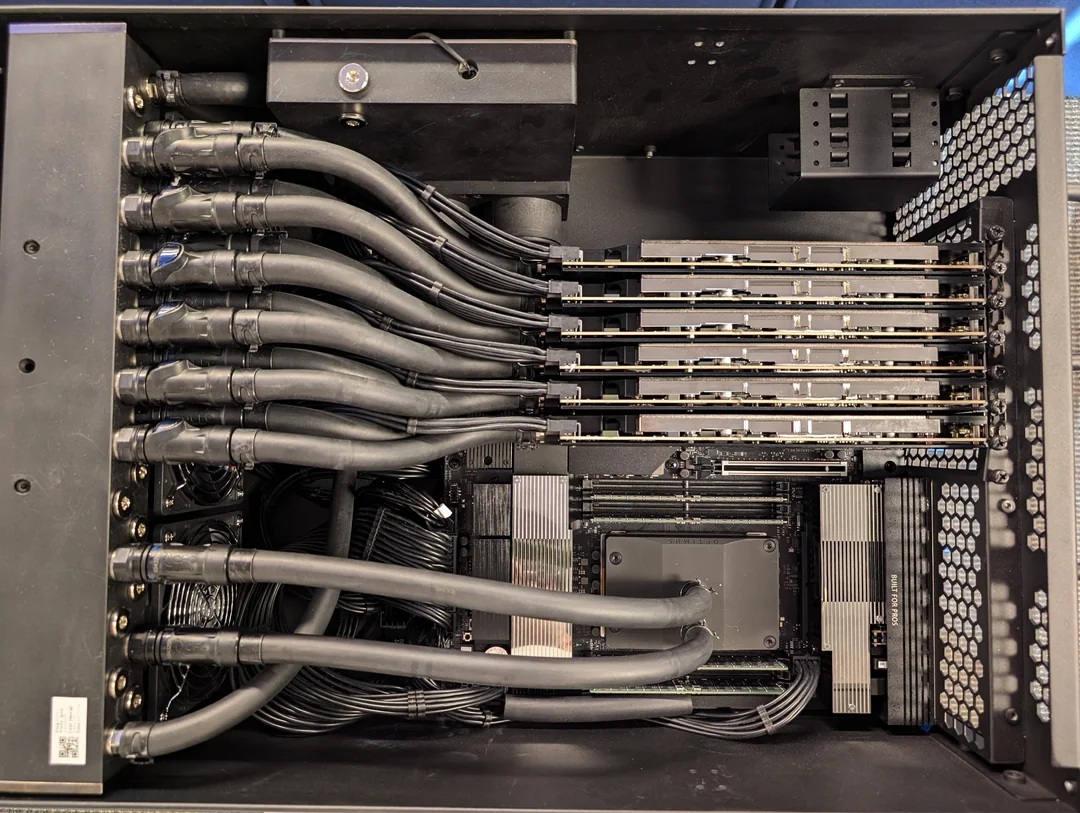
Beyond power generation, cooling has emerged as another critical challenge. AI servers generate enormous amounts of heat due to the intense computational activity occurring within densely packed GPU clusters.

Traditional air-cooling systems are often insufficient for the latest generation of AI hardware. Consequently, data center operators are investing heavily in liquid cooling technologies that circulate water or specialized fluids through server racks to remove heat more effectively.

These cooling systems require substantial water resources, particularly in regions where temperatures are high. Some modern data centers consume millions of gallons of water annually to maintain optimal operating conditions. This growing demand has raised concerns about sustainability, especially in areas already facing water scarcity.

In response, companies are developing more efficient cooling techniques, including closed-loop systems that recycle water and advanced immersion cooling methods that reduce overall consumption. The future of artificial intelligence will depend not only on smarter algorithms but also on the ability to build and maintain the infrastructure that supports them.

Nvidia GPUs provide the computational engine, nuclear power offers a potential solution to escalating energy demands, and advanced cooling systems ensure that hardware can operate safely and efficiently. Together, these elements represent the often-overlooked backbone of the AI revolution.

As artificial intelligence becomes increasingly integrated into society, understanding the physical resources required to sustain it is essential. The next era of technological progress will be shaped not just by software innovation but by the infrastructure capable of powering, cooling, and sustaining the digital intelligence of the future.

Nigeria’s Capital Market Masterclass Begins, Registration Continues

0

As part of building the business case for establishing Contisx Securities Exchange, we conducted extensive studies and focus group engagements across different demographics in Nigeria. One finding stood out clearly: many Nigerian students and graduates have limited awareness of the opportunities available within the capital market ecosystem. While banking remains relatively well understood, the capital market industry is still largely unfamiliar to many young people.

As we probed deeper, we discovered that only a small number of students could explain the roles of brokers, dealers, custodians, registrars, exchanges, market makers, issuing houses, and other capital market operators. In contrast, most participants had a basic understanding of what bankers do. The implication was clear: there is a significant knowledge gap regarding the institutions that mobilize capital, facilitate investment, and support economic growth.

The conclusion from our research was straightforward: we must work to deepen the knowledge component in the sector. To help address this gap, Tekedia Institute has developed an 8-week Nigeria Capital Market Masterclass designed to provide a comprehensive understanding of the industry, its institutions, products, career opportunities, and economic significance.

This initiative will be followed by the launch of the Contisx Academic and Research Network (CARN) as soon as we begin operations in Sept, alongside the establishment of Capital Market Labs in selected universities. These schools will be tasked to educate their communities, including citizens and potentials issuers about the promises in the capital market.

Our goal is simple: to build a new generation of market participants, researchers, innovators, and professionals who understand the mechanics of capital formation and can contribute meaningfully to the advancement of Nigeria’s capital market.

The Masterclass has 14 modules, and I am happy to note that Modules 1 and 2 are up. The courseware from our faculty is a masterpiece of knowledge for the masterclass! If the capital market is the largest component of Nigeria’s GDP, we must be equipped to play in it. Happy that Tekedia Institute is supporting here.