DD
MM
YYYY

PAGES

DD
MM
YYYY

spot_img

PAGES

Home Blog Page 7

Anthropic to Pay SpaceX Approximately $1.25B monthly Through 2029

0

In a striking development that underscores how capital-intensive the AI industry has become, reports indicate that Anthropic is set to pay SpaceX approximately $1.25 billion per month through 2029 for computing and infrastructure-related services, while simultaneously projecting that the June quarter could mark its first period of operating profitability.

The numbers are staggering. A commitment of $1.25 billion monthly translates into roughly $15 billion annually, placing Anthropic among the most aggressive infrastructure spenders in the technology sector. The arrangement illustrates a broader transformation underway in artificial intelligence: the era where AI companies competed primarily on research talent has evolved into a competition centered on access to energy, data centers, networking systems, and high-performance compute capacity.

Anthropic, best known for its Claude family of AI models, has emerged as one of the strongest challengers to OpenAI and other frontier model developers. Backed by major technology firms including Amazon and Google, the company has rapidly expanded its enterprise footprint. Its models are increasingly being integrated into software development tools, research platforms, enterprise workflows, and AI agents designed to automate complex tasks.

Yet building frontier AI systems requires enormous computational resources. Training advanced large language models demands thousands of GPUs running continuously for weeks or months. Inference, the process of serving AI responses to millions of users in real time, creates another layer of ongoing operational costs. As models become larger and more capable, infrastructure expenses scale almost exponentially.

This is where SpaceX enters the equation. While SpaceX is globally recognized for rockets, satellites, and space exploration, its rapidly expanding infrastructure ecosystem — particularly through Starlink and large-scale networking capabilities — positions it as a unique partner in the emerging AI economy. The convergence between AI and aerospace infrastructure may seem unconventional at first glance, but both industries are fundamentally driven by extreme-scale engineering, energy optimization, and distributed computing systems.

The deal also reflects how AI firms are increasingly behaving like industrial companies rather than traditional software startups. Historically, software businesses were attractive because they scaled with relatively low marginal costs. Frontier AI changes that equation entirely. These companies now require massive capital expenditures similar to utilities, telecommunications providers, or semiconductor manufacturers.

Despite these enormous spending commitments, Anthropic’s expectation that the June quarter could become its first operating profitable quarter signals how rapidly AI monetization is accelerating. Enterprise demand for generative AI services continues to rise as corporations integrate AI into customer support, coding, analytics, cybersecurity, and workflow automation. Subscription revenues, API usage fees, and enterprise licensing agreements are beginning to offset the extraordinary infrastructure costs associated with developing advanced models.

The announcement also reinforces a broader narrative shaping global markets: AI infrastructure has become one of the defining economic themes of this decade. Companies controlling compute, networking, semiconductors, and energy distribution are increasingly positioned at the center of technological power. The relationship between Anthropic and SpaceX highlights how interconnected these sectors are becoming.

The significance of this development extends beyond a single contract. It demonstrates that the future of artificial intelligence will not be won solely by the smartest models, but by the organizations capable of sustaining the immense infrastructure required to power them at planetary scale.


Gold Prices Hold Near Recent Lows as Rising Yields and Stronger Dollar Counter Geopolitical Safe-Haven Demand

0

Gold prices edged lower on Thursday, remaining under pressure from elevated U.S. Treasury yields and a firmer dollar, even as diplomatic developments around the U.S.-Iran conflict provided some support and limited the downside.

Spot gold fell 0.3% to $4,528.03 per ounce by 0611 GMT. The metal had rebounded more than 1% on Wednesday after sliding to its lowest level since March 30 at $4,479.54. U.S. gold futures for June delivery declined 0.1% to $4,528.90.

“Inflation expectation, rising yields, and stronger dollar are the headwinds keeping gold prices under pressure. And these factors will continue to remain in place until we get clarity on how long the conflict is going to persist,” said ANZ analyst Soni Kumari.

Since the Iran war erupted in late February, gold has lost more than 14%, reflecting the market’s shift in focus from geopolitical risk to the monetary policy implications of sustained higher energy prices.

Yields Resume Upward March After Brief Pause

U.S. Treasury yields climbed again on Thursday after a short-lived pullback. The benchmark 10-year note yield rose more than 3 basis points to 4.6014%, while the 30-year bond yield advanced over 1 basis point to 5.1334%. The policy-sensitive 2-year yield increased more than 3 basis points to 4.0746%.

This renewed selling pressure followed the release of the Federal Reserve’s April meeting minutes, which showed that a majority of policymakers believe “some policy firming would likely become appropriate” if inflation remains persistently above the 2% target. Markets are now pricing in a roughly 39% probability of a 25 basis-point rate hike by December, according to CME Group’s FedWatch tool.

Higher yields raise the opportunity cost of holding non-yielding assets like gold. Kelvin Wong, senior market analyst at OANDA, highlighted the technical picture.

“The overall trend of 10-year U.S. Treasury yield, since the start of early March, is still in a medium-term uptrend phase. Hence, gold bulls may not be so aggressive in beating up prices at this juncture,” he said.

He sees near-term resistance at $4,645 and support at $4,456.

Oil and Geopolitics Provide Mixed Signals

Oil prices edged higher on Thursday amid continued uncertainty in the Middle East. U.S. West Texas Intermediate futures rose 1.4% to $99.61 per barrel, while Brent crude gained 1.3% to $106.42.On the diplomatic front, President Donald Trump said he had paused planned military action after receiving a peace proposal from Tehran, stating there was a “very good chance” of reaching a deal to limit Iran’s nuclear program.

While this eased some immediate safe-haven buying in gold, analysts caution that any resolution is unlikely to bring energy prices back to pre-war levels quickly.

The current environment presents a classic headwind for gold: geopolitical risk is supportive, but the resulting inflation fears are driving real yields higher and strengthening the dollar — both negative for the metal. This dynamic has dominated price action since the conflict began, overriding gold’s traditional safe-haven status in the short term.

Investors are also awaiting key U.S. housing data later on Thursday, including April housing starts and building permits. Consensus forecasts point to 1.41 million starts (down from 1.502 million in March) and 1.39 million permits (up from 1.363 million).

Outlook for Gold

Gold’s performance remains heavily tied to the interplay between Middle East developments and U.S. monetary policy expectations. A swift diplomatic breakthrough could ease energy prices and reduce inflation fears, potentially allowing yields to stabilize and opening the door for a gold recovery.

Conversely, prolonged conflict or hotter-than-expected inflation data would likely keep pressure on bullion.

For now, the metal appears range-bound with a mild downside bias. Longer-term investors continue to see gold as an important portfolio diversifier amid elevated geopolitical risks, fiscal deficits, and uncertainty around central bank policy paths. However, near-term traders are likely to remain cautious until clearer signals emerge from both the Fed and the Middle East.

Rapid Expansion of Stablecoin and Possibility of Tighter Monetary Policy in the United States

0

The global financial system is moving through two powerful transitions at the same time: the rapid expansion of stablecoin infrastructure and the renewed possibility of tighter monetary policy in the United States.

Those two themes collided this week as payment giant MoneyGram announced a partnership with Tempo to expand stablecoin-based payment infrastructure, while minutes from the U.S. Federal Reserve revealed that a majority of policymakers believe additional interest rate hikes may still be necessary to contain inflation.

Together, these developments highlight the increasingly complex relationship between traditional finance, digital assets, and global macroeconomic policy. On one side, companies are racing to modernize payments using blockchain rails and dollar-backed stablecoins. On the other, central banks remain focused on inflation risks and the possibility that restrictive monetary policy may need to remain in place longer than markets expected.

The partnership between MoneyGram and Tempo reflects a growing institutional belief that stablecoins are becoming a permanent part of the global payments landscape. Stablecoins such as USDT and USDC have evolved far beyond speculative crypto trading instruments. They are increasingly being used for remittances, cross-border commerce, treasury settlement, and financial access in regions where local currencies remain volatile or banking systems are inefficient.

MoneyGram has already spent several years experimenting with blockchain-powered settlement systems. By expanding its relationship with Tempo, the company appears to be deepening its commitment to faster and cheaper global transactions powered by stablecoin infrastructure.

This is especially important in emerging markets across Africa, Latin America, and Southeast Asia, where users often rely on dollar-backed digital assets to preserve purchasing power and move money internationally. Traditional remittance systems can take days to settle and frequently impose high fees on users sending relatively small amounts of money. Stablecoin rails dramatically reduce those frictions by enabling near-instant settlement at significantly lower cost.

For migrant workers and businesses operating across borders, the implications are substantial. The partnership also reinforces the idea that fintech firms increasingly view blockchain infrastructure not as a speculative niche, but as a practical backend for financial services. The Federal Reserve minutes introduced a very different message to markets.

According to the minutes, many Fed officials remain concerned that inflationary pressures could persist longer than anticipated. As a result, a majority of members suggested that further rate hikes may still be required if economic data does not improve sufficiently.

That revelation unsettled investors who had increasingly hoped the rate hiking cycle was nearing an end. Higher interest rates generally tighten financial conditions, reduce liquidity, and place pressure on risk assets such as technology stocks and cryptocurrencies. They also strengthen the U.S. dollar, which can create additional stress for emerging markets and highly leveraged sectors of the economy.

Yet there is an interesting paradox emerging. Even as the Fed maintains a cautious stance, stablecoin adoption continues accelerating. In fact, periods of monetary uncertainty often increase demand for dollar-backed digital assets internationally. In countries experiencing inflation, currency weakness, or capital restrictions, stablecoins function as a digital extension of the U.S. dollar system.

This dynamic illustrates how crypto infrastructure is increasingly intersecting with global macroeconomics. Stablecoins are no longer operating outside the financial system; they are becoming integrated into it. Partnerships like MoneyGram and Tempo demonstrate that financial institutions are preparing for a future where blockchain-based settlement coexists with traditional banking networks.

Even as central banks continue navigating inflation risks and monetary tightening. The architecture of global finance is evolving rapidly. While the Federal Reserve debates the future path of interest rates, private companies are simultaneously building the next generation of payment infrastructure around stable, programmable digital dollars.

Verus Ethereum Bridge Exploited for over $11M As Cashdrop Event is Scheduled for May 22

0

The decentralized finance sector is once again confronting heightened security concerns following the reported exploitation of the Verus Ethereum bridge, which resulted in losses exceeding eleven million dollars. The incident adds to a growing list of cross chain vulnerabilities that have continued to challenge the integrity of interoperability protocols.

At the same time, PRJX, a decentralized exchange operating within the HyperEVM ecosystem, has announced a forthcoming initiative called Cashdrop scheduled for May 22. The juxtaposition of a major bridge exploit and a planned liquidity event underscores the dual narrative shaping current onchain markets, where innovation and risk often evolve in parallel.

Market participants are now reassessing both security assumptions and incentive structures across emerging decentralized trading environments. According to initial reports, the exploit targeting the Verus Ethereum bridge appears to have leveraged weaknesses in cross chain verification logic, allowing unauthorized extraction of liquidity from pooled assets.

While full forensic details remain under review, early analyses suggest that the attacker may have exploited inconsistencies in message validation between the two networks. Such bridge exploits have historically been among the most damaging incidents in decentralized finance due to the large value locked in interoperability contracts. The incident has reignited debate over whether current bridging architectures adequately mitigate trust assumptions or whether more constrained models such as light client verification and modular security layers are required.

Developers and auditors are expected to publish post mortem findings in the coming days as affected protocols attempt to restore user confidence and stabilize liquidity flows across connected ecosystems. In parallel to the security incident, PRJX DEX has outlined plans for a Cashdrop event scheduled for May 22 within the HyperEVM ecosystem.

The initiative is expected to function as a liquidity incentive mechanism aimed at increasing trading activity and rewarding early participants in the protocol. While details remain limited, such events typically involve token distributions, fee rebates, or structured airdrop style rewards designed to bootstrap market depth. Within the broader HyperEVM environment, Cashdrop may serve as a strategic signal of continued ecosystem expansion despite broader market volatility.

Analysts note that incentive driven liquidity programs can play a significant role in sustaining decentralized exchange competitiveness, particularly in emerging Layer 2 and modular execution environments where user acquisition remains highly contested.

Taken together, the exploit and the announcement reflect the evolving tension between rapid experimentation and systemic risk in decentralized finance. Cross chain infrastructure continues to expand composability and capital efficiency across ecosystems such as Ethereum and emerging execution layers like HyperEVM. On the other hand, each additional integration surface increases the potential attack vectors available to adversaries.

For investors and developers alike, the incident reinforces the importance of rigorous auditing, formal verification, and conservative bridge design. Meanwhile, liquidity incentive programs like Cashdrop highlight the ongoing competition among decentralized exchanges to attract users and deepen order books.

As the sector matures, the balance between growth incentives and security hardening will likely define which protocols achieve long term resilience and which remain exposed to recurring structural vulnerabilities and evolving adversarial threat landscapes across interconnected networks globally

VanEck and Fantasy Top Reflect A Broader Inflection Point in How Traditional Finance

The recent developments around VanEck and Fantasy Top reflect a broader inflection point in how traditional finance, branded intellectual property, and crypto-native gaming are converging—and, in some cases, abruptly decoupling. On one side, VanEck is expanding its experimentation into interactive digital experiences with the launch of a waitlist for its new trading card game.

On the other, Fantasy Top has announced the end of its operations, signaling a sharp contraction in one of the more visible “SocialFi gaming” experiments of the past cycle. VanEck’s decision to open a waitlist for a trading card game is notable not simply as a marketing initiative, but as a continuation of a strategic shift among legacy financial institutions toward gamified engagement layers.

Trading card games—long a staple of collectible culture through franchises like Pokémon and Magic: The Gathering—have increasingly been reinterpreted through digital mechanics, loyalty systems, and tokenized ownership frameworks.

In VanEck’s case, the move can be interpreted as an attempt to translate financial literacy and brand affinity into interactive formats that are native to younger, digitally fluent audiences. This approach reflects a broader institutional recognition that attention is becoming a primary asset class. Rather than relying solely on passive product distribution—ETFs, funds, or research—financial brands are increasingly exploring engagement ecosystems where users interact, compete, and learn within branded environments.

A waitlist mechanism further reinforces scarcity dynamics, a familiar behavioral lever in both fintech onboarding funnels and gaming launches. While details of the game remain limited, the signaling is clear: VanEck is experimenting with experiential finance as much as it is with product innovation.

The shutdown of Fantasy Top marks a sobering moment for the web3 gaming sector. Fantasy Top emerged during a period when social trading games promised to merge influencer markets, prediction mechanics, and collectible card dynamics into a unified onchain experience. Users effectively built decks based on crypto influencers, competing based on social performance metrics rather than traditional gameplay mechanics.

The model was ambitious, attempting to monetize attention directly while embedding financial incentives into game loops. However, Fantasy Top’s closure underscores persistent structural challenges in web3 gaming: retention decay, speculative user behavior outweighing sustained gameplay engagement, and the difficulty of balancing token incentives with long-term product sustainability.

Many projects in this category have struggled to transition from initial speculative onboarding phases into durable, content-rich ecosystems. Without strong gameplay depth or evolving narrative systems, user participation often collapses once incentive emissions slow or market interest shifts. Taken together, these two developments highlight a divergence in strategy between traditional finance entering gamified ecosystems and native crypto gaming projects grappling with sustainability.

VanEck’s entry suggests that established institutions are still willing to experiment with gamification, but likely with longer time horizons and stronger capital buffers. Fantasy Top’s exit, meanwhile, reflects the harsh filtering mechanism of the market, where experimental designs must quickly evolve into sustainable engagement models or face shutdown.

The broader implication is not that gamified finance is failing, but that its center of gravity is shifting. Institutional entrants may increasingly define the next phase of interactive financial products, while early crypto-native experiments serve as prototypes—useful, influential, but not always enduring.

Trump Weighs AI Cybersecurity Order as Mythos and GPT-5.5 Intensify Washington’s Fight Over AI Oversight

0
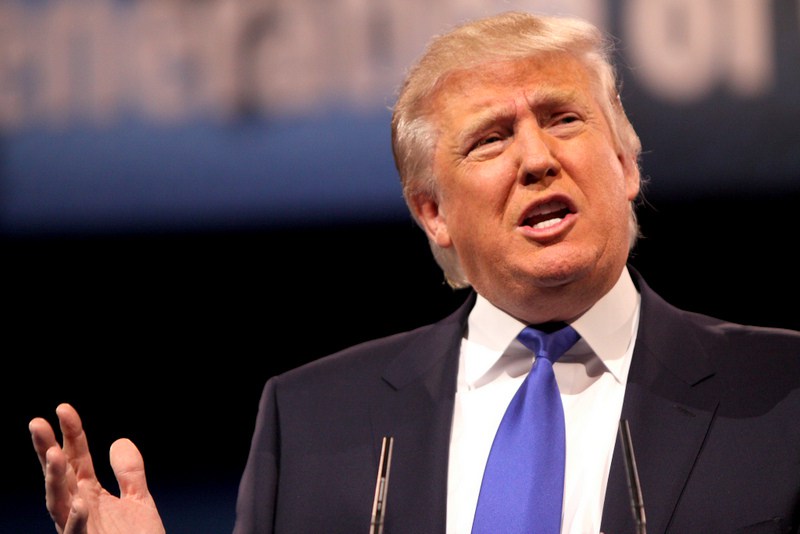
Trump

U.S. President Donald Trump is preparing an executive order that could reshape how advanced artificial intelligence models are released in the United States, as mounting concerns over cybersecurity risks split his political allies and intensify pressure on the rapidly expanding AI industry.

According to sources familiar with the matter cited by Reuters, Trump could sign the order as soon as Thursday. The White House has also been working to bring top AI executives to Washington for a signing ceremony, underscoring the growing political and strategic importance of artificial intelligence in Trump’s second term.

The proposed order would establish a voluntary framework under which AI developers would engage with the federal government before publicly releasing highly capable models.

Under the framework being discussed, companies would be asked to provide their models to the U.S. government 90 days before public launch and grant early access to operators of critical infrastructure, such as banks and other major institutions.

The plan reflects a delicate balancing act inside Trump’s political coalition between populist conservatives demanding tougher oversight of frontier AI systems and technology-aligned advisers warning against heavy-handed regulation that could slow American innovation. The debate has intensified sharply following the emergence of increasingly powerful AI systems, including Anthropic’s Mythos cybersecurity model and OpenAI’s GPT-5.5-Cyber.

Those systems have raised fears within Washington that advanced AI could dramatically increase the sophistication and scale of cyberattacks, especially against financial institutions, utilities, and government systems. The proposed framework appears designed as a compromise between factions within Trump’s orbit.

Prominent MAGA figures, including former Trump strategist Steve Bannon and conservative activist Amy Kremer, have been urging the White House to impose stronger safeguards, including mandatory federal testing of advanced AI models before deployment. At the same time, influential technology supporters around Trump, including venture capitalist Marc Andreessen and former White House AI adviser David Sacks, have resisted mandatory oversight measures, arguing they could undermine U.S. competitiveness in the global AI race.

Sacks stepped down earlier this year from his role as Trump’s lead AI official and now co-chairs the president’s technology advisory committee. So far, Trump’s broader AI agenda has largely aligned with Silicon Valley’s preference for limited regulation and rapid deployment, particularly as the administration frames AI leadership as a national security and economic priority in competition with China.

But the rapid advancement of frontier AI models is increasingly complicating that approach.

Mythos, introduced by Anthropic in April, became a flashpoint because of its unusually advanced cybersecurity capabilities. Experts warned the system could potentially identify software vulnerabilities and assist in developing sophisticated exploit strategies at a level not previously seen from publicly known AI models. That triggered growing calls among some conservatives for federal intervention.

Republicans have traditionally opposed new regulatory structures, but parts of the populist right are now arguing that AI represents an exceptional national security risk requiring government oversight. A letter sent to the White House last week by populist conservatives urged Trump to require government approval before “potentially dangerous” AI systems can be deployed publicly.

Kremer said supporting such regulation conflicted with her usual political philosophy but argued AI required different treatment.

“You can’t count on these people that are leading these AI companies to put our interests at heart and do what’s right to protect the American people,” Kremer said.

The executive order under discussion would stop short of imposing mandatory approval requirements, instead preserving voluntary cooperation between the government and AI firms. That approach would likely be more acceptable to the technology sector, which has become increasingly influential within Trump’s political coalition.

Executives from major technology companies, including Meta CEO Mark Zuckerberg, Amazon founder Jeff Bezos, Google CEO Sundar Pichai, and OpenAI CEO Sam Altman, have emerged as some of Trump’s highest-profile corporate supporters during his second term.

The administration’s internal discussions have reportedly involved White House Chief of Staff Susie Wiles, White House science adviser Michael Kratsios, deputy chief of staff Walker Barrett, and National Cyber Director Sean Cairncross.

The National Security Agency has also participated in broader administration discussions surrounding advanced AI risks and cybersecurity preparedness. Lawmakers have increasingly pushed the administration to establish mechanisms capable of monitoring what they describe as “sudden frontier AI capability jumps,” reflecting fears that AI systems could advance unpredictably.

Former U.S. Representative Brad Carson, who now helps lead a super PAC network backed in part by Anthropic supporters, said recent developments exposed the scale of potential vulnerabilities.

“The past couple months have served as a massive wake-up call for the kinds of vulnerabilities that AI can create,” Carson said.

Still, opponents of stronger intervention argue that slowing American AI deployment could backfire strategically.

Neil Chilson, head of AI policy at the Abundance Institute, said delaying model releases would not prevent foreign adversaries from eventually developing comparable systems.

“We need to make sure we’re deploying it and getting the most out of it, including by hardening our defenses,” Chilson said.