

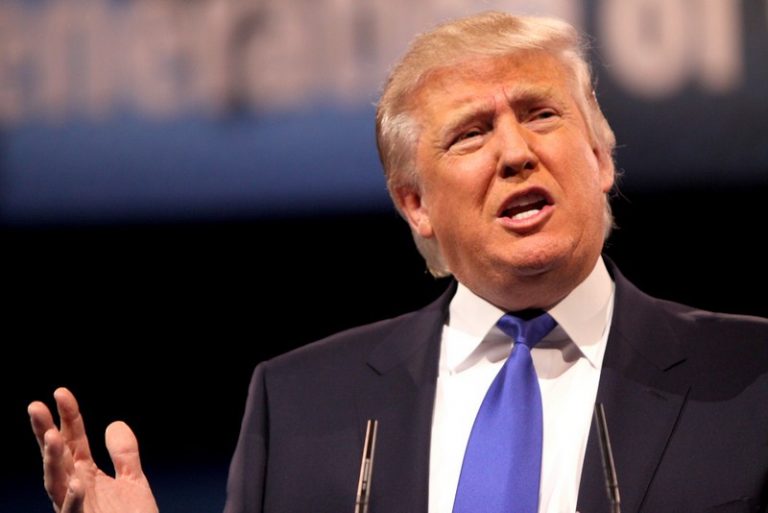
U.S. President Donald Trump is preparing an executive order that could reshape how advanced artificial intelligence models are released in the United States, as mounting concerns over cybersecurity risks split his political allies and intensify pressure on the rapidly expanding AI industry.
According to sources familiar with the matter cited by Reuters, Trump could sign the order as soon as Thursday. The White House has also been working to bring top AI executives to Washington for a signing ceremony, underscoring the growing political and strategic importance of artificial intelligence in Trump’s second term.
The proposed order would establish a voluntary framework under which AI developers would engage with the federal government before publicly releasing highly capable models.
Register for the next Tekedia Mini-MBA.
Register for Tekedia AI in Business Masterclass.
Join Tekedia Capital Syndicate and co-invest in great global startups.
Under the framework being discussed, companies would be asked to provide their models to the U.S. government 90 days before public launch and grant early access to operators of critical infrastructure, such as banks and other major institutions.
The plan reflects a delicate balancing act inside Trump’s political coalition between populist conservatives demanding tougher oversight of frontier AI systems and technology-aligned advisers warning against heavy-handed regulation that could slow American innovation. The debate has intensified sharply following the emergence of increasingly powerful AI systems, including Anthropic’s Mythos cybersecurity model and OpenAI’s GPT-5.5-Cyber.
Those systems have raised fears within Washington that advanced AI could dramatically increase the sophistication and scale of cyberattacks, especially against financial institutions, utilities, and government systems. The proposed framework appears designed as a compromise between factions within Trump’s orbit.

Prominent MAGA figures, including former Trump strategist Steve Bannon and conservative activist Amy Kremer, have been urging the White House to impose stronger safeguards, including mandatory federal testing of advanced AI models before deployment. At the same time, influential technology supporters around Trump, including venture capitalist Marc Andreessen and former White House AI adviser David Sacks, have resisted mandatory oversight measures, arguing they could undermine U.S. competitiveness in the global AI race.
Sacks stepped down earlier this year from his role as Trump’s lead AI official and now co-chairs the president’s technology advisory committee. So far, Trump’s broader AI agenda has largely aligned with Silicon Valley’s preference for limited regulation and rapid deployment, particularly as the administration frames AI leadership as a national security and economic priority in competition with China.
But the rapid advancement of frontier AI models is increasingly complicating that approach.

Mythos, introduced by Anthropic in April, became a flashpoint because of its unusually advanced cybersecurity capabilities. Experts warned the system could potentially identify software vulnerabilities and assist in developing sophisticated exploit strategies at a level not previously seen from publicly known AI models. That triggered growing calls among some conservatives for federal intervention.
Republicans have traditionally opposed new regulatory structures, but parts of the populist right are now arguing that AI represents an exceptional national security risk requiring government oversight. A letter sent to the White House last week by populist conservatives urged Trump to require government approval before “potentially dangerous” AI systems can be deployed publicly.
Kremer said supporting such regulation conflicted with her usual political philosophy but argued AI required different treatment.
“You can’t count on these people that are leading these AI companies to put our interests at heart and do what’s right to protect the American people,” Kremer said.
The executive order under discussion would stop short of imposing mandatory approval requirements, instead preserving voluntary cooperation between the government and AI firms. That approach would likely be more acceptable to the technology sector, which has become increasingly influential within Trump’s political coalition.
Executives from major technology companies, including Meta CEO Mark Zuckerberg, Amazon founder Jeff Bezos, Google CEO Sundar Pichai, and OpenAI CEO Sam Altman, have emerged as some of Trump’s highest-profile corporate supporters during his second term.
The administration’s internal discussions have reportedly involved White House Chief of Staff Susie Wiles, White House science adviser Michael Kratsios, deputy chief of staff Walker Barrett, and National Cyber Director Sean Cairncross.
The National Security Agency has also participated in broader administration discussions surrounding advanced AI risks and cybersecurity preparedness. Lawmakers have increasingly pushed the administration to establish mechanisms capable of monitoring what they describe as “sudden frontier AI capability jumps,” reflecting fears that AI systems could advance unpredictably.
Former U.S. Representative Brad Carson, who now helps lead a super PAC network backed in part by Anthropic supporters, said recent developments exposed the scale of potential vulnerabilities.
“The past couple months have served as a massive wake-up call for the kinds of vulnerabilities that AI can create,” Carson said.
Still, opponents of stronger intervention argue that slowing American AI deployment could backfire strategically.
Neil Chilson, head of AI policy at the Abundance Institute, said delaying model releases would not prevent foreign adversaries from eventually developing comparable systems.
“We need to make sure we’re deploying it and getting the most out of it, including by hardening our defenses,” Chilson said.