DD
MM
YYYY

PAGES

DD
MM
YYYY

spot_img

PAGES

Home Blog Page 7

TCS Subsidiary to Invest $7.4 Billion in 1 GW AI Data Center Campus in India

0

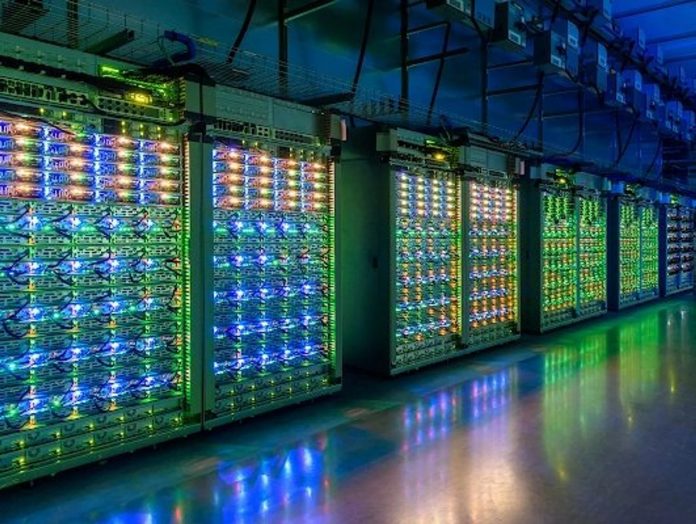
A subsidiary of Tata Consultancy Services and its partners will invest up to 700 billion rupees ($7.41 billion) to develop a 1-gigawatt artificial intelligence data center campus in India’s Telangana state, as the country accelerates investment in computing infrastructure to support the rapid growth of AI.

TCS subsidiary HyperVault has secured 264 acres in Hyderabad for the project, which will be developed in phases, the company said on Saturday.

The campus will be designed to serve AI companies and hyperscalers, with infrastructure capable of supporting high-density graphics processing unit deployments for AI training and inference. At full buildout, HyperVault expects the facility to rank among India’s largest AI infrastructure campuses.

TCS Chief Executive K. Krithivasan said Hyderabad provides the scale, talent pool and technology ecosystem required to serve customers globally.

The investment adds to a growing wave of capital flowing into India’s data center industry as technology companies seek greater access to computing capacity for generative AI, machine learning and other data-intensive applications.

AI training requires large clusters of high-performance GPUs, while inference, the process of running trained models to generate responses and predictions, is creating another major source of demand for data center capacity. Facilities built specifically for these workloads require substantially greater power and cooling capabilities than conventional enterprise data centers.

The 1 GW target places the HyperVault project within the emerging class of hyperscale AI infrastructure developments, where access to electricity, land, fiber connectivity and specialized technical talent can determine how quickly operators can bring computing capacity online.

Hyderabad has become an important technology hub for India, hosting major IT companies, global technology operations and engineering talent. The location could give HyperVault access to an established technology ecosystem while positioning the campus to serve both Indian and international AI customers.

The project also shows that India’s AI ambitions are increasingly shifting from software development toward the physical infrastructure needed to run increasingly sophisticated models. India has sought to expand its domestic AI capabilities while attracting investment from global technology companies. Large-scale computing capacity is becoming increasingly necessary as AI developers compete for GPUs and data center space.

For TCS, the investment underlines a move further into infrastructure supporting AI, alongside its traditional role as one of the world’s largest IT services companies.

The announcement comes days after TCS agreed to acquire Porsche AG’s automotive and consulting unit MHP, expanding its capabilities in automotive technology and consulting.

The combination of the MHP acquisition and the HyperVault investment points to a broader strategy by TCS to capture more of the value created by AI and digital transformation, spanning consulting and industry-specific technology services as well as the infrastructure required to support AI workloads.

The scale of the HyperVault project also gives TCS exposure to a rapidly expanding segment of the global technology market. As AI companies and hyperscalers increase spending on computing infrastructure, ownership and operation of specialized data centers can provide a direct foothold in an industry largely seen as strategically important to the AI economy.

The phased development approach, however, means the full 1 GW capacity will depend on the project’s execution, financing, power availability and demand from prospective customers. If completed as planned, the Hyderabad campus would strengthen Telangana’s position in India’s data center and AI infrastructure ecosystem while giving TCS and its partners a significant presence in the capital-intensive infrastructure layer of the global AI boom.

Jefferies-Backed Fund Faces Nearly $500 Million Exposure to Radiant World

0

A fund managed by a unit of U.S. investment bank Jefferies Financial Group has nearly $500 million of exposure to iron ore trader Radiant World, its founder, and a related entity, according to the Financial Times, highlighting the potentially significant financial risks facing lenders and counterparties to the commodities trading company.

The fund, LAM Trade Finance Group II, secured a freezing order in a London court against Radiant World, founder Pinkesh Nahar and Sapphire Minmetals, a company that was previously part of Radiant World, Reuters reported earlier this week, citing a person familiar with the matter.

The Financial Times reported on Saturday that the freezing order covered as much as $499 million, citing people familiar with the proceedings. The figure would represent a substantially larger exposure than the roughly $300 million previously reported in connection with Jefferies’ trade-finance activities involving Radiant World.

Jefferies holds a minority stake in the entity managing LAM Trade Finance Group II.

The size of the court order underscores the potential scale of losses that could emerge if financing provided against Radiant World’s commodity transactions cannot be recovered. Freezing orders are generally intended to prevent defendants from disposing of or moving assets while a legal dispute is being resolved, rather than constituting a final determination of liability.

Jefferies has previously disclosed trade-finance-related exposure of about $300 million to Radiant World through its Point Bonita fund. The bank has not disclosed that the entire amount is necessarily at risk of loss, and the precise relationship between the different exposures and the newly reported court action was not immediately clear.

The development adds another layer of scrutiny to Radiant World, which has faced concerns over the validity of invoices submitted to banks in connection with its trading activities. Radiant World has strongly denied the allegations. The concerns have nevertheless prompted some counterparties and lenders to suspend, restrict or otherwise reassess their dealings with the company, according to previous reporting.

The dispute weighs heavily on trade-finance providers because commodity financing often relies on invoices, shipping documents, warehouse receipts, purchase orders and other records to establish that underlying transactions and goods exist. If documentation supporting financing is found to be inaccurate or invalid, lenders can face losses even when the underlying commodities themselves have considerable value.

The Radiant World case also puts attention on the risks faced by investment funds and banks that provide financing to commodity traders rather than simply investing in publicly traded securities. Trade finance can generate attractive returns because transactions are typically backed by commercial activity, but lenders can become exposed to substantial losses when there are questions about counterparties, documentation, collateral, or the movement of goods.

Jefferies has already faced heightened scrutiny over its private-credit and trade-finance exposures. Point Bonita attracted attention last year after Jefferies disclosed that it had hundreds of millions of dollars of exposure to bankrupt auto-parts supplier First Brands Group.

The combination of the Radiant World dispute and the First Brands exposure indicates a broader risk for financial institutions expanding into private credit and specialized financing: loans that appear to be supported by receivables or commercial transactions can carry considerably greater risk when the quality of the underlying assets and documentation is difficult to independently verify.

For Jefferies, the immediate issue is whether the assets frozen by the London court can ultimately support repayment of the fund’s claims. The nearly $500 million figure reported by the FT also means investors and counterparties are likely to focus more closely on how the bank values its exposure, what collateral it holds and whether additional provisions or losses could emerge as the legal proceedings develop.

The court action does not by itself establish that Radiant World or its executives engaged in wrongdoing. Those allegations remain disputed, and the ultimate financial impact on Jefferies and the fund will depend on the outcome of the legal proceedings and the recoverability of the assets involved.

Walmart Takes Aim at DoorDash and Uber Eats With Dunkin’ Delivery Expansion

0

Walmart is moving deeper into the restaurant-delivery business, preparing to deliver Dunkin’ coffee, doughnuts, and other menu items alongside groceries and household products in a move that could put the retail giant into more direct competition with DoorDash and Uber Eats.

The nation’s largest retailer said this week that it will initially deliver Dunkin’ products from restaurants located inside Walmart stores before expanding the service over the next year to most of Dunkin’s roughly 10,000 U.S. locations, including restaurants operating entirely outside Walmart stores.

The expansion marks a notable shift in Walmart’s business approach. Delivering food from restaurants located inside its own stores allows the retailer to add restaurant items to existing shopping trips, but sending drivers to standalone Dunkin’ locations moves Walmart into the core territory long dominated by dedicated food-delivery platforms.

Walmart said the initiative is part of Walmart Restaurant Delivery, a new service launched with Subway as its first restaurant partner.

“We see this as a way to continue adding value and convenience for customers within a shopping experience they already know and trust,” a Walmart spokesperson told CNBC. “By pairing restaurant delivery with Walmart’s vast assortment, we can create a delivery experience that gives customers more of what they want in one place.”

That combination is central to Walmart’s competitive proposition.

A customer ordering an iced coffee or maple doughnut could potentially add groceries, toiletries, household supplies, and other merchandise to the same Walmart order. Rather than competing solely for the restaurant-delivery fee, Walmart can use restaurant orders to increase the size and frequency of its broader e-commerce transactions.

Hongseok Jang, an assistant professor of management science at Tulane University who studies online delivery, was quoted by CNBC as saying that Walmart’s large customer base, extensive store network, and established logistics infrastructure could make it a formidable competitor in the market.

“To me it seems that Walmart is testing its own delivery system to see if they can handle it, and if it is successful there will be a big competition between Walmart and Uber Eats and DoorDash,” Jang said.

Walmart itself signaled that it sees a larger opportunity, describing the retailer as a “rapidly emerging contender in the restaurant delivery business.”

The distinction between the first and second phases of the strategy has drawn a lot of attention.

When a Subway or Dunkin’ restaurant operates inside a Walmart store, a Spark driver may already be at the location collecting a grocery order. Adding a sandwich, coffee, or doughnut to that delivery can therefore involve relatively little additional logistics.

Mike Danford, co-owner and chief strategy officer at Adverio, an e-commerce marketing agency, said that model is fundamentally different from sending drivers to restaurants located elsewhere.

“Delivering from a restaurant inside your own building isn’t restaurant-only delivery. It’s simply adding one more item to shopping carts off your own shelf, and the Spark driver was already there staging a grocery order,” Danford said, referring to Walmart’s Spark Driver platform.

The economics become considerably more challenging once Walmart begins dispatching drivers specifically to standalone restaurants.

But “phase two,” Danford said, “is another story.”

“Once you leave your own building, the attachment breaks, and you’re essentially running pure delivery economics against DoorDash and Uber Eats, who have already occupied that ground,” he said.

That creates the central test for Walmart: whether its enormous retail infrastructure can give it an advantage even when it is operating in a market where competitors have spent years optimizing restaurant delivery.

DoorDash and Uber Eats have built dense networks of restaurants, drivers, and customers, allowing them to spread delivery costs across large numbers of orders. Their platforms are also specifically designed around restaurant discovery, menu selection, promotions, driver dispatch, and delivery tracking.

Walmart has a different advantage.

Its stores already function as local distribution hubs, while its Spark Driver network gives the company an established pool of independent contractors. Millions of customers also already use Walmart’s digital ecosystem for groceries and general merchandise. That means Walmart does not necessarily need to persuade consumers to download another restaurant-delivery app or establish a new relationship with a restaurant. It can insert restaurant delivery into a shopping platform that customers already use.

The potential economic benefit is needed because last-mile delivery is one of the most expensive parts of e-commerce. A standalone restaurant order can be difficult to make profitable if the delivery fee is insufficient to cover driver compensation and other costs.

Combining restaurant orders with larger Walmart baskets could change that equation. For example, a driver delivering a Dunkin’ order could potentially deliver groceries, household goods, or other merchandise on the same route. Higher order values and greater delivery density could reduce the effective cost of each individual delivery.

The strategy also gives Walmart another way to increase the frequency with which customers interact with its platform.

A consumer may not need Walmart every day for a large grocery order. But coffee, breakfast, or an afternoon snack can create much more frequent purchasing occasions. If those smaller restaurant orders bring customers into Walmart’s digital ecosystem more often, the company can potentially generate additional grocery and general-merchandise sales.

The approach makes restaurant delivery strategically different from simply selling another category of products. It could become a customer-acquisition and retention tool for Walmart’s broader e-commerce business.

The expansion nevertheless comes with major risks.

Walmart will have to manage restaurant-specific delivery economics, including pickup times, food quality, order accuracy, and delivery distances. Restaurant orders are also more time-sensitive than many general merchandise deliveries. A delayed package may be inconvenient, but a delayed coffee or hot meal can make the product substantially less appealing.

The company will also be entering a market where consumers already have established habits.

DoorDash and Uber Eats have large restaurant selections and sophisticated recommendation systems, while restaurants themselves have years of experience using those platforms to acquire customers. Walmart will need to offer consumers and restaurant partners a compelling reason to shift part of that activity to its platform.

Its greatest potential advantage may therefore be the combination of restaurant delivery with everything else Walmart sells.

A customer who orders only a doughnut from a dedicated delivery platform generates one transaction. A customer who orders the same doughnut through Walmart could potentially add milk, cereal, cleaning products, diapers, or other household necessities.

That creates a fundamentally different business model.

Walmart can compete for restaurant-delivery customers while simultaneously trying to increase the value of each broader shopping relationship.

The move also fits Walmart’s wider evolution from a traditional retailer into a large-scale digital commerce and logistics company. Its physical stores can function not only as places where customers shop but also as fulfillment and delivery infrastructure.

The Dunkin’ expansion will test whether that infrastructure can be extended beyond Walmart’s own four walls. If the model works, the implications could extend well beyond coffee and doughnuts. Walmart could potentially use its Restaurant Delivery platform to assemble a broad network of national and local restaurant partners, turning its retail app into a more comprehensive alternative to dedicated food-delivery marketplaces.

For DoorDash and Uber Eats, that would introduce a competitor with an unusual advantage: Walmart does not need restaurant delivery to be its entire business. It can use groceries, household merchandise, advertising, membership programs and other retail services to support the economics of the same customer relationship.

The strategy could make Walmart’s entry more consequential than a conventional food-delivery startup entering the market.

The immediate test, however, is expected to come when Walmart begins sending Spark drivers beyond its own store network. At that point, the company will have to demonstrate that its existing logistics advantages can overcome the additional cost and complexity of restaurant-only deliveries.

The first phase tests whether Walmart can add food to existing deliveries. The second will determine whether the retail giant can compete head-on with companies whose entire businesses were built around getting restaurant food from one location to another.

Solana Real-World Assets Near $4 Billion as Network Activity Explodes

0

Solana’s record activity in July offers one of the clearest indications yet that blockchain adoption is expanding beyond speculative trading and into broader financial infrastructure.

The network processed approximately 4.2 billion transactions during the month, while the value of tokenized real-world assets (RWAs) approached $4 billion.

The figures point to a growing relationship between high-volume blockchain activity and the digitization of traditional financial assets.

The 4.2 billion transactions represent a remarkable level of network utilization. While transaction counts do not necessarily translate directly into economic value.

Sustained activity demonstrates that Solana is being used at significant scale. Its high throughput and relatively low transaction costs have positioned the blockchain as a major contender for applications requiring frequent on-chain interactions.

The rise of tokenized RWAs adds another important dimension to this growth. Tokenization involves representing traditional assets such as government securities, funds, credit instruments, real estate, or commodities as blockchain-based tokens.

By bringing these assets on-chain, issuers can potentially make them easier to transfer, settle, program and integrate with decentralized applications. Approaching $4 billion in tokenized assets on Solana therefore represents more than another milestone for the network.

It suggests that blockchain infrastructure is increasingly being considered for financial markets that have historically depended on centralized intermediaries.

If this trend continues, blockchains could eventually become an important layer for issuing, trading and settling financial instruments around the clock.

Solana’s architecture is particularly relevant to this development. Tokenized financial products require infrastructure capable of processing large numbers of transactions without imposing excessive costs on users.

Traditional financial markets also increasingly demand faster settlement and greater interoperability. A blockchain capable of handling substantial transaction volumes can potentially provide the foundation for these requirements.

The July figures highlight an important shift in the narrative surrounding blockchain networks. Earlier cycles were dominated by discussions about decentralized finance, non-fungible tokens and speculative tokens.

Although those sectors remain significant, the growing RWA market introduces a more institutional use case. Financial institutions can use blockchain technology without necessarily requiring customers to interact directly with cryptocurrencies.

This could become particularly important as regulatory frameworks around digital assets mature. Clearer rules for tokenized securities, stablecoins and blockchain-based financial products could encourage banks, asset managers and fintech companies to experiment more aggressively with on-chain infrastructure.

Transaction volume alone should not be interpreted as proof that Solana has already become a dominant financial settlement network.

Activity can be generated by automated systems, decentralized applications and other forms of blockchain usage that do not necessarily represent large economic transfers.

The quality, durability and economic significance of transactions remain just as important as their raw number. The combination of billions of transactions and nearly $4 billion in tokenized real-world assets is difficult to ignore.

It demonstrates that Solana is developing an ecosystem where high-frequency blockchain activity and tokenized financial products can coexist. The broader implication is significant.

If traditional assets continue moving onto public blockchains, networks such as Solana could evolve from cryptocurrency infrastructure into global financial infrastructure. July’s numbers suggest that this transformation is already underway, with transaction activity and tokenized assets growing together.

The next stage will depend on whether this momentum can translate into deeper institutional participation, sustainable liquidity and real-world economic activity. If it does, Solana’s July performance may eventually be remembered not simply as a record month, but as another step toward an increasingly tokenized financial system.

Google Avoids a Breakup, but Antitrust Pressure Is Reshaping Big Tech

0

Google has once again avoided the most extreme outcome in its long-running antitrust battles: a forced breakup of its business. The decision represents an important victory for the technology giant, but it is far from a complete escape.

Instead of dismantling Google’s empire, regulators are imposing restrictions designed to limit how the company uses its enormous market power. The message is increasingly clear: Google can remain large, but it cannot operate as though its dominance gives it unlimited freedom.

At the heart of the dispute is the question of how a company with Google’s scale should compete in digital markets.

Google controls critical parts of the online ecosystem, from search and advertising to browsers, mobile operating systems and distribution platforms. Its services reinforce one another, creating an ecosystem that can be extremely difficult for competitors to challenge.

Regulators have argued that some of these advantages were strengthened through agreements and business practices that disadvantaged rivals. A breakup would have represented a dramatic restructuring of the technology industry.

Separating Google’s search, advertising, Android or other major operations could have changed the competitive landscape overnight. It could also have created uncertainty for consumers, advertisers, developers and businesses that depend on Google’s infrastructure.

By avoiding that outcome, Google retains the fundamental architecture of its business. However, the restrictions imposed on the company could still have significant consequences. Regulators are increasingly focused on preventing Google from using its dominant position in one market to reinforce its position in another.

That could mean greater limits on exclusive arrangements, data advantages, distribution practices and commercial relationships that make it harder for competitors to gain traction.

The significance extends beyond Google itself. The case reflects a broader shift in global technology regulation.

Governments in the United States and elsewhere are becoming less willing to accept the argument that successful technology companies should be largely left alone because consumers benefit from their products.

Regulators are now examining whether convenience and innovation can coexist with market structures that potentially suppress competition. For Google’s competitors, the restrictions could create new opportunities.

Smaller search engines, advertising platforms, artificial-intelligence companies and other digital services may gain greater access to users or distribution channels. Even modest changes to Google’s business practices could have outsized effects because of the company’s reach across the internet.

The rise of artificial intelligence makes the issue even more important. Google is competing aggressively in AI through products and infrastructure that connect to its existing ecosystem.

If regulators believe Google can use its dominance in search, cloud computing, advertising or mobile technology to gain an unfair advantage in AI, antitrust scrutiny could intensify.

The rules established today may therefore influence competition in one of the most important technological markets of the next decade. For Google, the challenge is no longer simply defending itself against a breakup.

It must adapt to a regulatory environment in which being dominant comes with greater responsibilities. The company will have to demonstrate that its platforms remain open enough for competitors to compete and that its commercial practices do not unnecessarily lock users and businesses into its ecosystem.

Avoiding a breakup is a major relief for Google, but it should not be mistaken for a clean victory. The era in which Big Tech could expand with minimal regulatory interference is fading. Google remains enormously powerful, yet regulators have established a new principle.

Market dominance does not guarantee unrestricted freedom. The company gets to keep its empire. Now it has to learn how to use that power under tighter rules.