DD
MM
YYYY

PAGES

DD
MM
YYYY

spot_img

PAGES

Home Blog Page 700

Why More Australians Are Turning to SMSFs to Manage Their Superannuation

0

In recent years, Self-Managed Superannuation Funds (SMSFs) have gained significant popularity among Australians looking to take greater control over their retirement savings. This shift is largely due to the desire for personalized investment strategies, increased transparency, and the potential for greater returns. With the Australian superannuation landscape evolving, individuals are increasingly recognizing the advantages offered by SMSFs. This article explores the reasons behind this trend, offering insights into how SMSFs work and what makes them an attractive option for many.

Understanding the Basics

Self-managed superannuation Funds are distinct from traditional super funds due to their self-management aspect. Unlike industry or retail funds, where a superannuation provider manages the investments, SMSFs are controlled by their members. Each member acts as a trustee, allowing them to choose and manage their investments, which can include real estate, shares, and other assets. This direct control empowers individuals, enabling them to tailor their superannuation strategy to align with their financial goals and risk profiles.

SMSFs are known for their tax advantages. Earnings within the fund are taxed at a concessional rate, and there are opportunities for tax-free withdrawals during retirement. As more Australians learn about the potential benefits, many are considering getting started with SMSFs in Sydney to leverage these advantages. Managing an SMSF comes with strict compliance obligations, making it important for members to stay informed and seek professional guidance when needed.

SMSFs are legally required to be audited each year. A registered SMSF auditor reviews the fund’s financial statements and provides an opinion on whether the fund complies with superannuation law. While formal audits are completed after year-end, obtaining guidance from a specialist SMSF auditor during the year can help trustees maintain proper documentation, avoid compliance issues and ensure annual SMSF audits run efficiently.

The Appeal of Personalization

One of the primary reasons individuals choose SMSFs is the level of personalization they offer. Traditional super funds often impose a one-size-fits-all approach where the investment strategy may not align with an individual’s risk tolerance or financial aspirations. SMSFs allow members to create a tailored investment portfolio that reflects their interests and expertise. Whether one prefers investing in property, equities, or bonds, SMSFs provide the flexibility to make these choices.

This personalization helps individuals feel more invested in their financial future and encourages active engagement with their retirement planning. The ability to modify investment strategies in response to market changes is another attractive aspect for many Australians.

Cost-Effectiveness of SMSFs

The cost of managing superannuation has risen over the years, prompting many to explore more economical options. While starting an SMSF may involve initial setup and compliance costs, studies suggest that they become more cost-effective as fund balances increase. For larger super balances, SMSFs can provide significant savings compared to traditional funds, which often charge fixed fees regardless of fund size.

SMSFs minimize management fees associated with retail funds. This reduction in costs, combined with the potential for higher returns, makes SMSFs an appealing choice for many investors keen on optimizing their retirement savings.

Greater Investment Control

Investment control is another key factor driving the SMSF trend. As trustees, individuals have the authority to decide where their money is invested, making it easier to pivot towards assets they believe will yield the best returns. With access to a wide range of investment options, SMSF members can diversify their portfolios more effectively. This diversification can be crucial in mitigating risk and enhancing long-term gains.

Individuals can invest in direct property, business real property, Australian shares, international assets, and even collectibles. This variety allows members to pursue investment strategies that suit their market outlook and financial goals, which may not be possible through other superannuation funds.

The Importance of Education and Resources

A crucial component of successfully managing an SMSF is having access to the necessary education and resources. Understanding the legal obligations, compliance requirements, and tax implications can be daunting for those new to the concept. Many accounting firms and financial advisors offer specialized services tailored to SMSFs.

These resources assist individuals in making informed investment decisions and ensuring compliance with regulatory frameworks. Continuous education improves fund management and boosts confidence among trustees as they navigate their investment landscape. Knowing when and where to seek help can be a game-changer for many aspiring SMSF members.

The Role of Technology in SMSFs

Technology has played a pivotal role in enhancing the efficiency and ease of managing an SMSF. Various digital platforms offer tools that simplify record-keeping, reporting, and compliance functions. These advancements allow trustees to monitor their investments in real-time and generate financial statements with ease.

Online resources facilitate better tracking of market trends, providing valuable insights that inform investment decisions. With the increasing reliance on technology, managing an SMSF has become more accessible, making it attractive for many Australians looking to take control of their financial futures.

As more Australians look to secure their financial futures, SMSFs continue to gain momentum in the superannuation landscape. With their unique blend of control, customization, and potential for cost savings, they represent a compelling option for those wanting to take charge of their retirement planning.


OpenAI Set for $6bn Stock Sale at $500bn Valuation

0

OpenAI is reportedly in the market again, seeking to raise funds through stock that will see its valuation hit new level, according to Bloomberg.

At a potential $500 billion valuation, OpenAI would not only extend its lead as the most highly valued AI startup in history but also surpass the market capitalizations of many long-established public tech firms.

According to people familiar with the talks, OpenAI is preparing a secondary stock sale worth about $6 billion, with current and former employees selling shares to major investors including SoftBank, Dragoneer Investment Group, and Thrive Capital. Thrive is expected to lead the round, though discussions remain ongoing and terms could still change.

The planned sale underscores how rapidly OpenAI’s value has soared in just two years. When ChatGPT launched in November 2022, it quickly became the fastest-growing consumer application in history, drawing hundreds of millions of users and triggering a global race to build generative AI tools. That surge in adoption and enterprise demand catapulted OpenAI from a niche research lab to a multibillion-dollar powerhouse almost overnight.

By March 2025, OpenAI closed a record-setting $40 billion funding round at a $300 billion valuation — the largest capital raise ever by a private technology company. Earlier this month, it followed up with another $8.3 billion injection tied to that same round. Now, with the $6 billion secondary offering under discussion, its valuation would climb to around $500 billion, cementing its dominance in a sector where even rivals like Anthropic, Cohere, and Stability AI trail far behind in valuation and market recognition.

The company’s rise has also left it valued higher than many publicly traded technology players. A $500 billion figure would put OpenAI above legacy giants like Intel, IBM, and SAP, and not far from the trillion-dollar club occupied by Apple, Microsoft, and Nvidia. Analysts say this level of valuation makes OpenAI the single most influential private company in the AI era, giving it an outsized role in shaping how artificial intelligence is developed and deployed globally.

The surge in investor interest coincides with the rollout of OpenAI’s newest model, GPT-5, described as smarter, faster, and more versatile than its predecessors, particularly across writing, coding, and healthcare applications. The launch has drawn significant attention, though it has also sparked some frustration among users upset over losing access to older models like GPT-4o. CEO Sam Altman publicly acknowledged that the company had “underestimated how much some of the things that people like in GPT-4o matter to them, even if GPT-5 performs better in most ways.”

OpenAI has leaned heavily on secondary sales like this one to provide liquidity for employees and early backers without pursuing an IPO. The approach allows the company to keep scaling privately while giving institutional investors, such as SoftBank and Thrive, opportunities to increase their stakes.

For SoftBank’s Masayoshi Son, the deal represents another bold bet on AI after years of uneven performance in its Vision Fund portfolio. Thrive, already one of OpenAI’s largest supporters, has played a central role in past financing rounds, while Dragoneer continues to build its exposure to high-growth AI infrastructure.

Business leaders and investors describe the planned stock sale as a watershed moment in the artificial intelligence sector, one that highlights both the company’s unmatched growth trajectory and Wall Street’s unshaken belief in the future of generative AI.

If completed, the $6 billion sale would not only solidify OpenAI’s commanding valuation lead over other AI startups but also reinforce the view that the company is setting the pace for the entire industry.

Ajua Acquires Rate My Service to Create Africa’s Largest Customer Experience Platform

0

Ajua, Africa’s leading Customer Experience (CX) platform, has announced the strategic acquisition of Rate My Service (RMS), a pioneering Kenyan Customer and Employee Experience platform.

The move significantly strengthens Ajua’s expertise, reinforces its local relevance, and accelerates its mission to become the continent’s most comprehensive Experience Management platform.

The acquisition brings together two of Africa’s most prominent CX providers. RMS’s innovative feedback solutions and deep market insight combine with Ajua’s extensive reach and advanced technology. The result is a powerful, integrated platform designed to deliver more impactful and tailored CX strategies for businesses across the continent.

“This acquisition is a game-changer for the African CX landscape,” said Nyasha Mutsekwa, Ajua’s CEO. “Welcoming RMS into the Ajua family not only deepens our local expertise but also expands our reach. It’s a major step toward building Africa’s most robust CX platform—empowering businesses to understand and serve their customers with unmatched precision.”

Ajua is already well-regarded for its widespread presence across Africa and the Caribbean, offering end-to-end CX solutions that enable organizations to collect, analyze, and act on customer feedback.

In May 2025, the platform announced a strategic partnership with Amazon Web Services (AWS). This partnership marked a significant milestone in Ajua’s mission to scale world-class, insight-driven customer experiences across Africa and beyond.

As part of this collaboration, Ajua is now officially listed on the AWS Marketplace, becoming the first African CX platform to achieve this distinction. This listing provides global businesses with seamless access to Ajua’s suite of real-time customer experience solutions, enabling them to listen, learn, and act on customer feedback faster and with greater accuracy.

The platforms also offer direct integration with Google and Meta products, including WhatsApp, ensuring seamless and accessible customer interaction channels. The strategic partnership with Meta enhances the platform’s commitment to delivering hyper-local, real-time CX solutions by leveraging platforms already embedded in everyday consumer behavior.

On the other hand, Rate My Service (RMS), a customer feedback platform founded in 2017, is designed to help businesses collect, analyze, and act on customer and employee feedback to improve service quality and online reputation. Its primary focus is automating the measurement and monitoring of customer, employee, and brand experiences across various touchpoints, making it a valuable tool for businesses aiming to enhance customer satisfaction and drive growth.

The platform simplifies gathering feedback through tools like QR code widgets, email signatures, and integrations with platforms like Google and Meta (including WhatsApp). This allows businesses to collect real-time feedback from customers and employees.

Also, it monitors and manages reviews across platforms like Google My Business, Yelp, and Trustpilot, helping businesses boost 5-star reviews and address negative feedback privately.

By incorporating RMS’s specialized solutions, Ajua will enhance its ability to provide a holistic, highly localized, and sector-diverse CX offering. This acquisition underscores Ajua’s commitment to driving innovation and setting new benchmarks for customer-centric growth in Africa.

Notably, Ajua brings payment integrations and a broader client network, while RMS adds sophisticated feedback tools, enhancing the combined platform’s ability to offer holistic, localized CX solutions.

As Kenya’s CX sector is projected to grow at an 11.2% compound annual rate through 2031, driven by demand for real-time analytics and mobile-first engagement. The merger positions Ajua-RMS to compete against local rivals like Africa’s Talking and Emalify, as well as global players like Zendesk and Zoho.

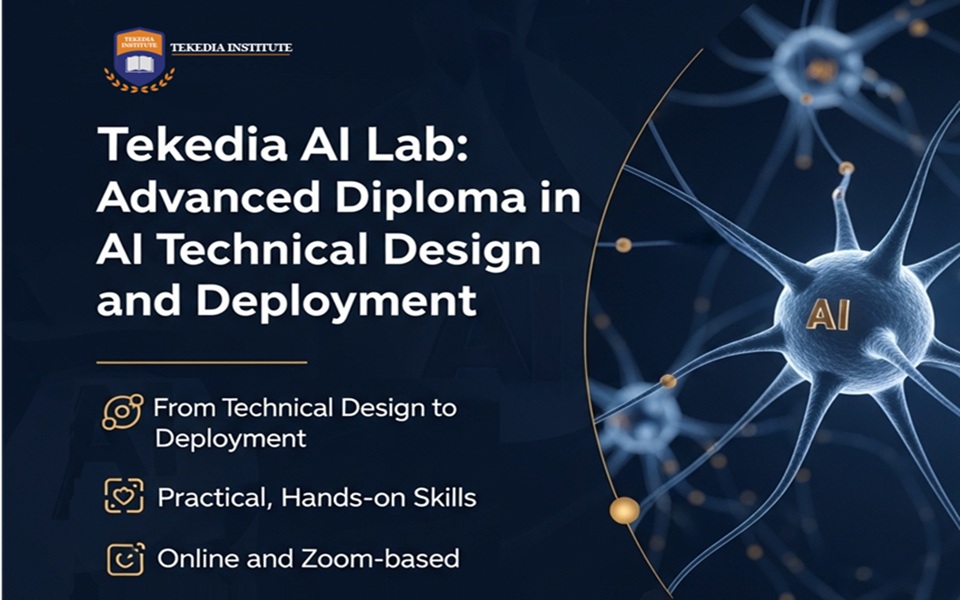
Level Up Your Skills: Register for Tekedia AI Lab Technical Program

0

Are you ready to move beyond the theory of AI and dive into practical application? The Tekedia AI Lab: From Technical Design to Deployment is a new academic program designed to give you the hands-on skills you need to build and deploy real-world AI systems and agents.

This program, coordinated by Ndubuisi Ekekwe, is not a coding course. Instead, it’s a specialized, applied program focused on connecting and building code-based, open-model powered AI agents. Whether you’re a seasoned professional or a curious learner with at least a secondary school education, no prior coding or programming experience is required.

What You Will Learn:

  • Practical, Hands-on Skills: This course is all about tangible implementation. You’ll learn a code-based, cost-effective approach using open-source foundation and large language models (LLMs) to eliminate model-related costs.
  • AI System Development: Gain the knowledge to design, develop, and deploy your own AI systems and agents.
  • Deployment Expertise: Focus on creating functional, deployable AI systems that you can use in your career or personal projects.

Course Details:

  • Format: The program is entirely online and Zoom-based.
  • Duration: The course runs over four Saturdays in October 2025 (Oct 4, 11, 18, and 25), with each session lasting three hours.
  • Outcome: Upon completion, you will receive an Advanced Diploma in AI Technical Design and Deployment from Tekedia Institute.

As a bonus, participants will get access to the Tekedia AI in Business Masterclass, which covers the theory, management, and business of AI.

Ready to take the next step in your professional development? Learn More & Register Here

Paxos Reapplied for a National Trust Bank Charter in the United States

0

Paxos Trust Company, known for issuing stablecoins like PayPal’s PYUSD and Pax Dollar (USDP). Paxos has reapplied for a national trust bank charter in August 2025, aiming to convert its existing New York Department of Financial Services (NYDFS) limited-purpose trust charter into a federal one under OCC oversight.

Paxos Trust Company issues several USD-backed stablecoins, each designed for specific use cases, with a focus on regulatory compliance and transparency. A U.S. dollar-backed stablecoin issued by Paxos Trust Company, regulated by the New York State Department of Financial Services (NYDFS).

It’s fully backed by cash and cash equivalents, redeemable 1:1 for USD, and available on multiple blockchains for near-instant global settlements and low-cost transactions. USDP is used for payments, trading, and integration with exchanges, wallets, and dApps.

Paxos first applied for this charter in December 2020 and received preliminary conditional approval in April 2021. However, the application expired on March 31, 2023, as Paxos failed to meet the OCC’s 18-month deadline to establish the bank. The national trust bank charter would allow Paxos to:

Manage and hold customer assets nationwide. Settle payments faster under federal oversight. Enhance credibility with institutional clients due to stricter federal regulations. Operate uniformly across all U.S. states, moving beyond state-specific NYDFS regulation.

The application follows the passage of the GENIUS Act, signed into law by President Trump in 2025, which establishes the first federal framework for stablecoin issuers. This law requires stablecoins to be backed 1:1 by reserves (e.g., U.S. dollars, Treasuries) and mandates monthly public reports on these reserves.

A national trust bank charter does not permit Paxos to accept cash deposits or issue loans, unlike traditional banks. Instead, it focuses on custody services and asset management, aligning with Paxos’ blockchain and stablecoin infrastructure. Paxos joins other crypto firms like Circle (issuer of USDC) and Ripple (behind XRP and Ripple USD) in seeking national trust bank charters.

Currently, Anchorage Digital is the only U.S.-based digital asset company with an active national trust bank charter. Paxos has operated under NYDFS supervision since 2015, becoming the first blockchain firm to obtain a limited-purpose trust charter. It launched the first regulated stablecoin (Paxos Standard, PAX) in 2018. However, Paxos faced regulatory challenges, including:

A 2023 NYDFS order to stop issuing Binance USD due to compliance issues. A $48.5 million settlement with NYDFS in August 2025 for anti-money laundering deficiencies during its Binance partnership ($26.5 million fine, $22 million for compliance upgrades). OCC supervision ensures higher transparency, periodic audits, and stringent capital requirements.

Federal status strengthens Paxos’ credibility with international regulators (e.g., FIN-FSA in Estonia, MAS in Singapore, FSRA in Abu Dhabi), facilitating cross-border cooperation. Paxos maintains reserves at 102% of issued stablecoin value, ensuring 1:1 redemption and investor protection, which will be further reinforced under OCC rules.

The charter aligns with the growing stablecoin market (valued at $170 billion, projected to reach $3 trillion by 2030) and enhances Paxos’ ability to offer regulated blockchain solutions. The OCC will thoroughly review Paxos’ financial health, management, and compliance systems, especially given its recent $48.5 million settlement.

The Independent Community Bankers of America has raised concerns about granting bank-like privileges to crypto firms without adequate safeguards. The expiration of Paxos’ 2021 conditional approval and regulatory issues with Binance may complicate the current application process.

Paxos’ application is under review by the OCC. Paxos anticipates a smooth transition for customers, with uninterrupted services and assets fully backed by reserves.