DD
MM
YYYY

PAGES

DD
MM
YYYY

spot_img

PAGES

Home Blog Page 7001

The Elon Musk Letter to Tesla Employees

1
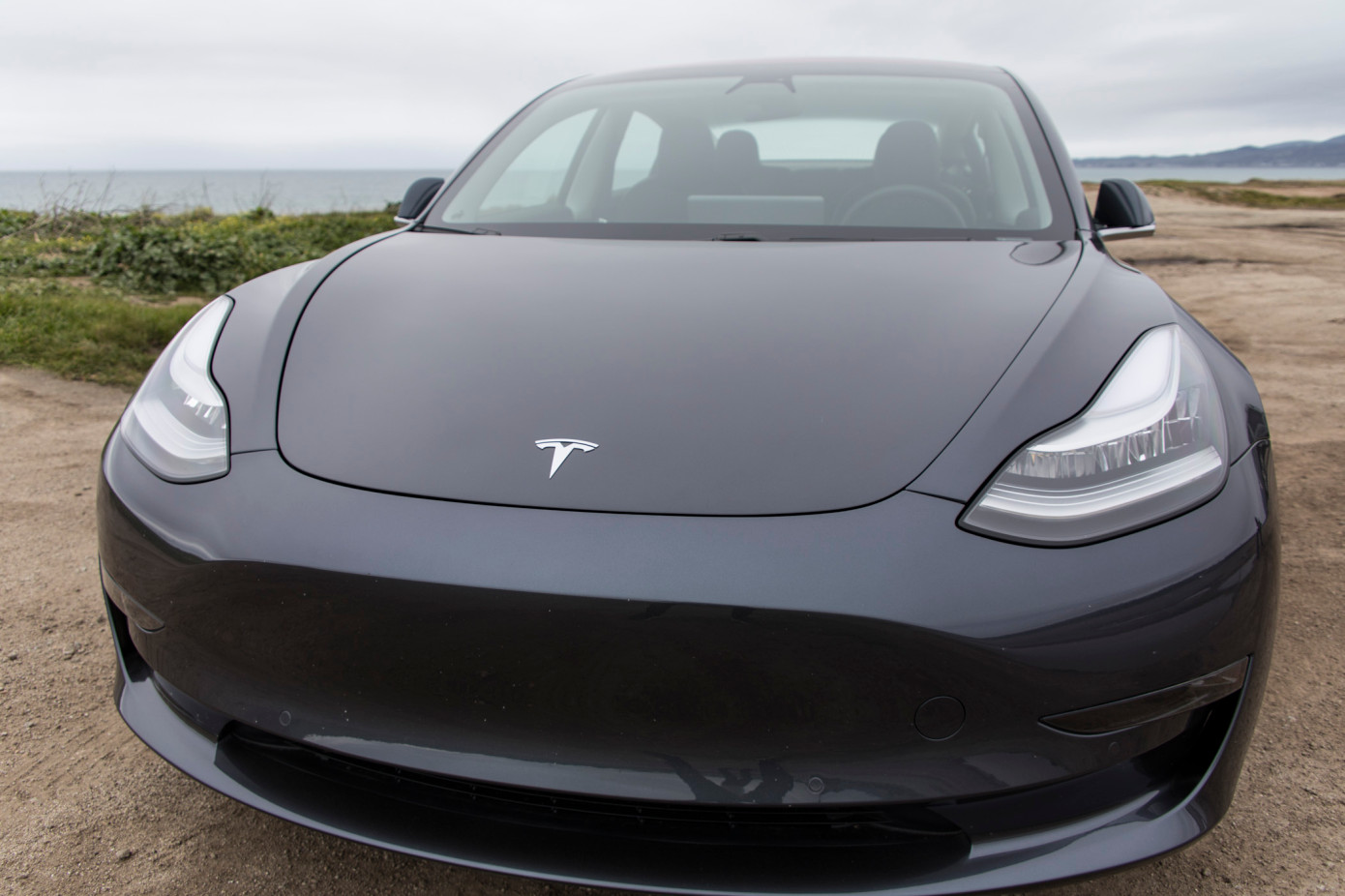
Tesla electric car

Elon Musk, CEO of Tesla, cut 7% of Tesla workforce today. He sent an email to employees and I have captured the key elements below (full email after bump). If you read this email, you will understand the intensity in startups and companies working to dramatically change the world. For the leaders and most times the followers, there are no vacation moments. Practically, Elon sees the workers as numbers, reminding them that there are companies where they could get “better work-life balance”. Yes, you are free to join Disney and ride waterflows for bliss, but if you stay, expect nothing but high intensity.  He went further to remind “those remaining” that even though Tesla will reduce manpower by 7%, Tesla must still improve production rate. You cannot miss his use of the phrase “advance our mission” because this is a Call. Entrepreneurial capitalism comes at a cost to people at the frontline. Do not miss why these transformers are unique!

Summary

“There are many companies that can offer a better work-life balance, because they are larger and more mature or in industries that are not so voraciously competitive….but succeeding in our mission is essential to ensure that the future is good, so we must do everything we can to advance the cause…As a result of the above, we unfortunately have no choice but to reduce full-time employee headcount by approximately 7% …. Tesla will need to make these cuts while increasing the Model 3 production rate and making many manufacturing engineering improvements in the coming months…To those departing, thank you for everything you have done to advance our mission…For those remaining…” Elon Musk


Company Update

This morning, the following email was sent to all Tesla employees:

As we all experienced first-hand, last year was the most challenging in Tesla’s history. However, thanks to your efforts, 2018 was also the most successful year in Tesla’s history: we delivered almost as many cars as we did in all of 2017 in the last quarter alone and nearly as many cars last year as we did in all the prior years of Tesla’s existence combined! Model 3 also became the best-selling premium vehicle of 2018 in the US. This is truly remarkable and something that few thought possible just a short time ago.

Looking ahead at our mission of accelerating the advent of sustainable transport and energy, which is important for all life on Earth, we face an extremely difficult challenge: making our cars, batteries and solar products cost-competitive with fossil fuels. While we have made great progress, our products are still too expensive for most people. Tesla has only been producing cars for about a decade and we’re up against massive, entrenched competitors. The net effect is that Tesla must work much harder than other manufacturers to survive while building affordable, sustainable products.

In Q3 last year, we were able to make a 4% profit. While small by most standards, I would still consider this our first meaningful profit in the 15 years since we created Tesla. However, that was in part the result of preferentially selling higher priced Model 3 variants in North America. In Q4, preliminary, unaudited results indicate that we again made a GAAP profit, but less than Q3. This quarter, as with Q3, shipment of higher priced Model 3 variants (this time to Europe and Asia) will hopefully allow us, with great difficulty, effort and some luck, to target a tiny profit.

However, starting around May, we will need to deliver at least the mid-range Model 3 variant in all markets, as we need to reach more customers who can afford our vehicles. Moreover, we need to continue making progress towards lower priced variants of Model 3. Right now, our most affordable offering is the mid-range (264 mile) Model 3 with premium sound and interior at $44k. The need for a lower priced variants of Model 3 becomes even greater on July 1, when the US tax credit again drops in half, making our car $1,875 more expensive, and again at the end of the year when it goes away entirely.

Sorry for all these numbers, but I want to make sure that you know all the facts and figures and understand that the road ahead is very difficult. This is not new for us – we have always faced significant challenges – but it is the reality we face. There are many companies that can offer a better work-life balance, because they are larger and more mature or in industries that are not so voraciously competitive. Attempting to build affordable clean energy products at scale necessarily requires extreme effort and relentless creativity, but succeeding in our mission is essential to ensure that the future is good, so we must do everything we can to advance the cause.

As a result of the above, we unfortunately have no choice but to reduce full-time employee headcount by approximately 7% (we grew by 30% last year, which is more than we can support) and retain only the most critical temps and contractors. Tesla will need to make these cuts while increasing the Model 3 production rate and making many manufacturing engineering improvements in the coming months. Higher volume and manufacturing design improvements are crucial for Tesla to achieve the economies of scale required to manufacture the standard range (220 mile), standard interior Model 3 at $35k and still be a viable company. There isn’t any other way.

To those departing, thank you for everything you have done to advance our mission. I am deeply grateful for your contributions to Tesla. We would not be where we are today without you.

For those remaining, although there are many challenges ahead, I believe we have the most exciting product roadmap of any consumer product company in the world. Full self-driving, Model Y, Semi, Truck and Roadster on the vehicle side and Powerwall/pack and Solar Roof on the energy side are only the start.

I am honored to work alongside you.

Thanks for everything,
Elon


COMMENT ON LINKEDIN FEED

  1. Apparently, all”them seem to have the same opinion of the concept of “work-life balance”: Musk(Tesla),Jeff!(Amazon),even Alabbar(Emaar,UAE)- @diff.times,I’ve heard them stress this same interpretation of the concept with respect to their organizations. Now, I’m tempted to agree with them. So, if you wanna sign up with large-scale, visionary, & driven start-ups, you already beforehand know what it takes: it’s no tea party!
  2. The Madness in a Vision,that makes seemingly bad actions ultimately turn out for good,thats the defining characteristic of all Elons companies. It says,the accomplishment of the vision is as important as your commitment to work for us. Cant wait for their next hiring spree to commence. And you would still see the rush to be part of the vision.
  3. Pretty hard decision but a necessary one. I love his hashtagdrive. I can almost hear him say ‘Get your head in the game, this is our target and can’t settle for less! If you’re looking for easy or children’s stuff…not here’. And the assurance ‘for those still here, the future is bright, it is worth the sacrifice!’.
Working with 30 Million People as Nigeria’s Total Addressable Market Size

0

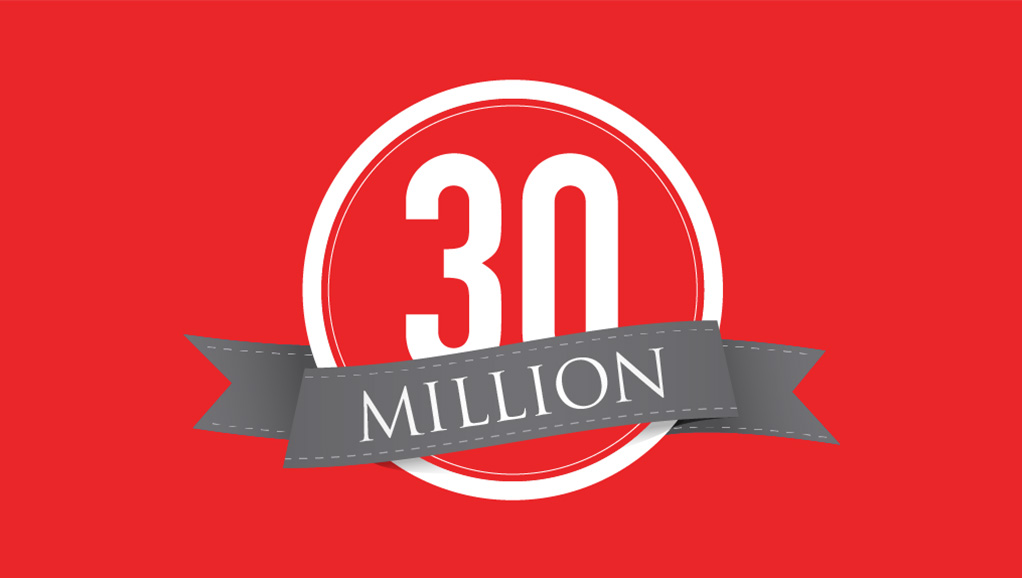
The total effective addressable market in Nigeria, according to my model, is 30 million people. I have an extensive analysis to support that number here. Largely, if you are in the consumer market space, work with 30 million people over the 200 million people number for most product categories. Of course, food goes for 200 million people because all man must eat but “non essentials” like electronics should be pegged at 30 million as the total addressable market. Yes, my model posits that only 30 million Nigerians have decent disposable income to care about the next non-essentials to worry about.

In most of my analyses when it comes to people that actually have money to spend or pay for (technology) solutions in Nigeria, I use 30 million people. Yes, despite 198 million human population, the effective addressable market in Nigeria is less than 30 million people.

Lack of understanding of this possible total addressable market is partly the reason many entities are struggling in our digital sector: they model huge consumer base only to experience shocks during execution. Quartz captures that sentiment in a quote credited to the CEO of Gloo.ng, an online supermarket, which recently re-strategized out of ecommerce: ‘Sticking with the e-commerce model, Olusanya tells Quartz, was “going to be a big challenge” down the line given the reality of a small addressable middle class market and continued logistical issues’.

But Konga’s struggles didn’t happen in isolation as more players in the e-commerce and online marketplace space have faltered over the past 18 months. OLX, a popular classifieds platform backed by Naspers—Africa’s most valuable company, Efritin, an e-commerce platform for used goods, DealDey, an online discounts platform and Careers24, an online jobs marketplace also backed by Naspers, have either scaled back operations significantly or shut down entirely.

Indeed, this week, Olumide Olusanya, CEO of PayMente, parent company of Gloo.ng, an online supermarket, announced the company has pivoted away from e-commerce. Olusanya says the move is down to a lack of long-term faith in the e-commerce model after running Gloo.ng for six years. Sticking with the e-commerce model, Olusanya tells Quartz, was “going to be a big challenge” down the line given the reality of a small addressable middle class market and continued logistical issues. The point about market size is linked to Nigeria’s wider economic struggles over the past three years.

When it comes to business models, do not import things without considering if you have the numbers, locally, to make them work. You would not be wrong, for assuming that for most product classes, you have only 30 million to sell to. Simply, build for 30 million people in Nigeria across many sectors!

Samsung Should Launch Bixby Finance via Samsung Pay in Africa

0

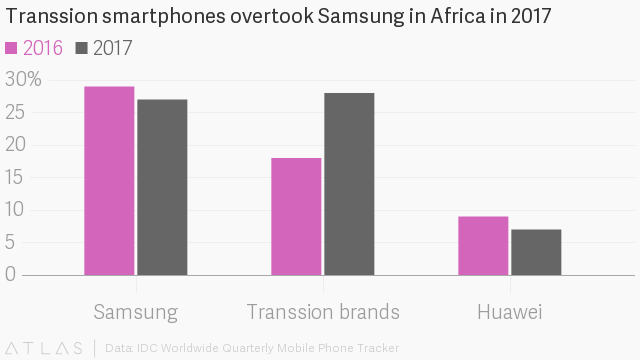
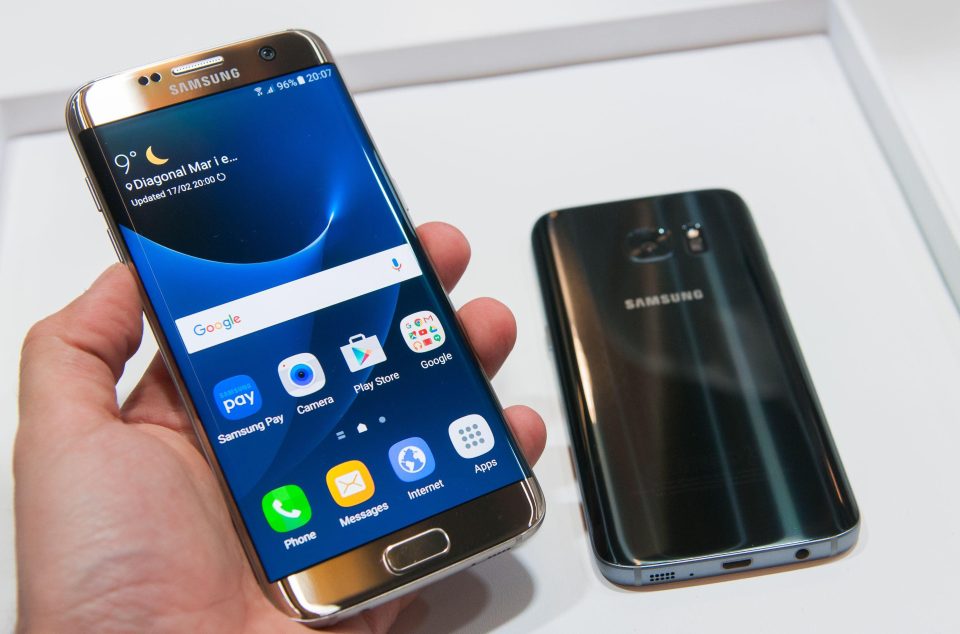
Samsung is having a real challenge in Africa as Tecno has overtaken it as the leading smartphone brand in the continent. Yet, Samsung has one solid technology it can deploy to provide it a good competitive positioning: Bixby, the voice assistant technology.

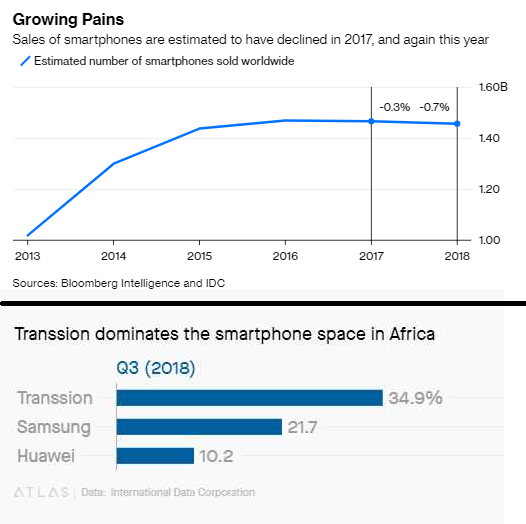
In 2018, Samsung is expected to lose up to 6% (from 27%) of market share in Africa. Transsion will hit 35% (from 28%), and is projected to hit excess of 50% by 2021 because it delivers many things at once: affordable pricing, regional marketing, good product and innovation in local necessities like multi-SIM cards.

Tecno inspires me on how to build and run a hardware business in Africa: fashionista pricing does not work! This is one company you must study; it has proven that Africans do not care on brands when pricing makes no sense

As I have noted, Africans have enjoyed voice communication for ages, and bringing Bixby at scale and biased for our language flavors, will give the company an opportunity to win markets and territories in the continent. But in this case, Bixby will not just be for communication but as a vehicle to stimulate financial inclusion, trade and commerce where it becomes an operating system for banks to make loans, traders to transact businesses, consumer payment, etc, via voice.

What Walmart, Google, Microsoft and Amazon are all doing is setting up the stage for the next battle in computing: voice operating system. Anyone that builds the best will triumph.  Think of Google Search supremacy over Microsoft Bing and Yahoo Search, and how Google has come to dominate search. The voice business will not just be for London and New York, the developing world has massive opportunities in the voice space since that is where the highest level of illiteracy exists at the moment. Computing delivered through voice will be more appealing there over the present text-based format. For entrepreneurs with capacity to do voice, this will be highly rewarding in places like Africa.

To do that, Samsung has to partner with local microfinance institutions, banks, and startups, offering the technology through its smartphones and supporting everything with initial $1 billion to seed Bixby Finance Africa. If it does that, it will become a dominant platform, far ahead of Tecno, as many will move into the ecosystem to enjoy business via voice in the continent. Samsung Pay, exclusively available on Samsung phones, should power this Bixby Finance.

But where it focuses on competing purely on hardware, I am not sure Samsung has any chance because Tecno does that simply better as its manufacturing is more local and it seems to have better local insights on the smartphone business. Tecno has accumulated a lot of capabilities in Africa and cannot be overtaken by making pure hardware.

Atiku Goes to America; Atiku Pledges To Privatize NNPC

0

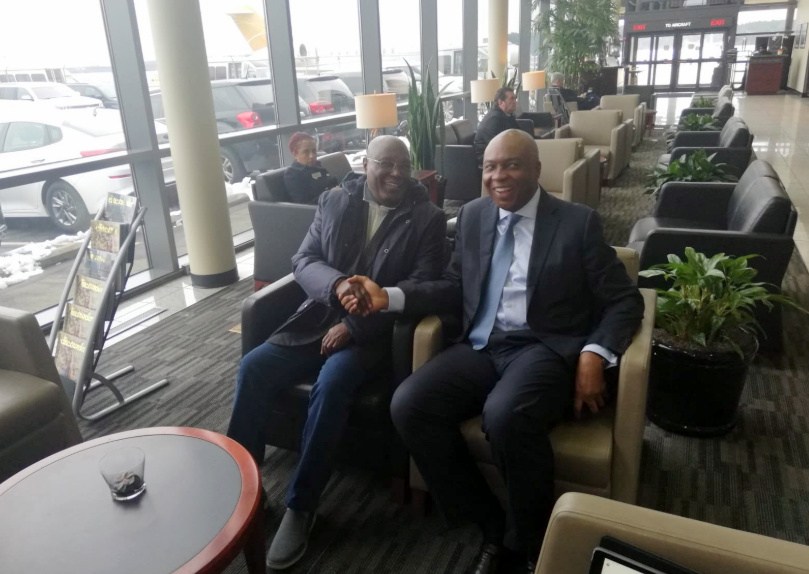
PDP Presidential election flagbearer, Atiku Abubakar, has made it into America and can now claim to have completed a critical requirement to become a Nigerian president! Yes, to rule Nigeria, you must have been qualified by visiting America to enjoy McDonald’s. Welcome Mr. Abubakar to America, may the force of decency, honor, value and service be with you.

Now to the main news: Atiku has promised to create NNPC Plc. Yes, Atiku would privatize NNPC, the nation’s oil corporation, if he has the opportunity to become the president of Nigeria: “I am committed to privatising NNPC…“Even if they are going to kill me, I’ll do it.”

The presidential candidate of the Peoples Democratic Party (PDP), Atiku Abubakar, on Wednesday reiterated his plan to privatise the Nigerian National Petroleum Corporation (NNPC) if elected on February 16.

Mr Abubakar also promised to double the size of the Nigerian economy.

Reuters reported Wednesday that Mr Abubakar, a businessman who served as vice president to former president Olusegun Obasanjo between 1999 and 2007, said he would double the size of Nigeria’s economy to $900 billion by 2025.

The former vice president said this at a meeting with business leaders in Lagos.

“I am committed to privatising NNPC,” Mr Abubakar was quoted as saying. “Even if they are going to kill me, I’ll do it.”

That statement aligns with a 2017 article where I noted that Nigeria could raise about $350 billion for privatizing NNPC but warned that it would not happen! Yes, ” A listed NNPC will be massively (globally) oversubscribed and will drive huge capital accumulation in Nigeria. It will be a moment of glory. But yet, more money has never improved Nigeria. So “selling” NNPC to the market may not change anything in the long-term”.

NNPC is not Transcorp which killed the dreams of many investors when it tanked in the Nigerian Stock Exchange. Transcorp, unlike NNPC, did not have any asset when it started. It was a business people invested based on promises and expectations. But NNPC has one of the best assets in continental Africa. NNPC is Nigeria and it generates products which are exported around the world. It is a rainmaker, generating more than 80% of Nigeria’s foreign exchange. A listed NNPC will be massively (globally) oversubscribed and will drive huge capital accumulation in Nigeria. It will be a moment of glory. But yet, more money has never improved Nigeria. So “selling” NNPC to the market may not change anything in the long-term. That is the most unfortunate thing about Nigeria, and the reason why NNPC Staff, the Labour Union and students will say “HELL NO, DO NOT DO IT”.

Alibaba’s Ant Financial Will Likely Acquire Interswitch for Verve

0

I have been tracking acquisitions by Ant Financial, an affiliate company of Alibaba Group. The Chinese company which is already bigger than Goldman Sachs is on spending spree, buying the world. London-based FT reported , few weeks ago, that it was in talks to buy WorldFirst, the UK-based international payments group, for about $700 million. The U.S. government had blocked its love-songs to MoneyGram, rejecting the proposed acquisition.

Ant Financial Services Group, formerly known as Alipay, is an affiliate company of the Chinese Alibaba Group. Ant Financial is the highest valued fintech company in the world, and the world’s most valuable unicorn company, with a valuation of US$150 billion

Interestingly, since that minor slowdown from U.S., Ant Financial has moved on, picking other properties. In the spirit of the game, I predict that Ant Financial will likely acquire Interswitch in Nigeria this year. Flutterwave and Paystack do not have the assets which Ant Financial needs to compete in the West African market against Visa and MasterCard.

Interswitch Verve offered a new dawn on Nigeria’s possibility in the digital age

Interswitch Verve is a solid product and can be scaled all over Africa; Interswitch missed the opportunity as I explained in the monopoly hangover piece. No other sub-Saharan African company has that type of product. So, it is natural that Ant Financial will come for it. Another company to watch is WorldRemit which does remittance; Ant Financial may also decide to pick it if the WorldFirst deal fails.

Of course, everything will depend on the valuation. Interswitch investors will surely like to exit with all the delays on rumored IPOs not materializing. So, if the Chinese come, they can dance to the tone. It would certainly be the best dance move since payment will, at the end, be a game of scale up or die.

LinkedIn Comment on Feed

The Interswitch Electronic Funds Transfer application supports major networks including UnionPay, a Chinese corporation. You see, there is already a relationship with China.

Also, with its investments in Uganda, Tanzania, Kenya, and other African countries, coupled with their physical infrastructure (11,000 ATM machines) on the ground, Interswitch has made itself the giant of fintech in Nigeria and Africa at large.

Applying your theory, they can be seen as a category king in their domain. As they gradually spread their web across Africa, they have become an appetizing and sumptuous meal that can attract and satisfy the appetite of bigger giants like Alibaba with money to spend.

In a nutshell, if you acquire the owner of Verve, you automatically control over 70% of card users in Nigeria which is more than 18 million ready-made customers.