DD
MM
YYYY

PAGES

DD
MM
YYYY

spot_img

PAGES

Home Blog Page 7026

[Giveaway] MacX MediaTrans is Ultimate iTunes Alternative for iPhone Data Transfer with Mac

0

I got a new Mac two weeks ago, and that created a new challenge for me: how to transfer many contents which I have on my iPhone and iPad into the new Mac. This is necessary because moving photos, videos, music and other files from the mobile devices to Mac helps to clear storage space. I checked online on how I could do this effectively at the least possible time. Thank goodness, I found a solution: MacX MediaTrans.

MacX MediaTrans is an iPhone manager for Mac. It does this better than iTunes I must note. Yes, the product interface makes the whole process seamless. In the past, I had used iTunes but after using MacXTrans, I can report the following benefits and why you should try it – it is simply better than anything in the market today.
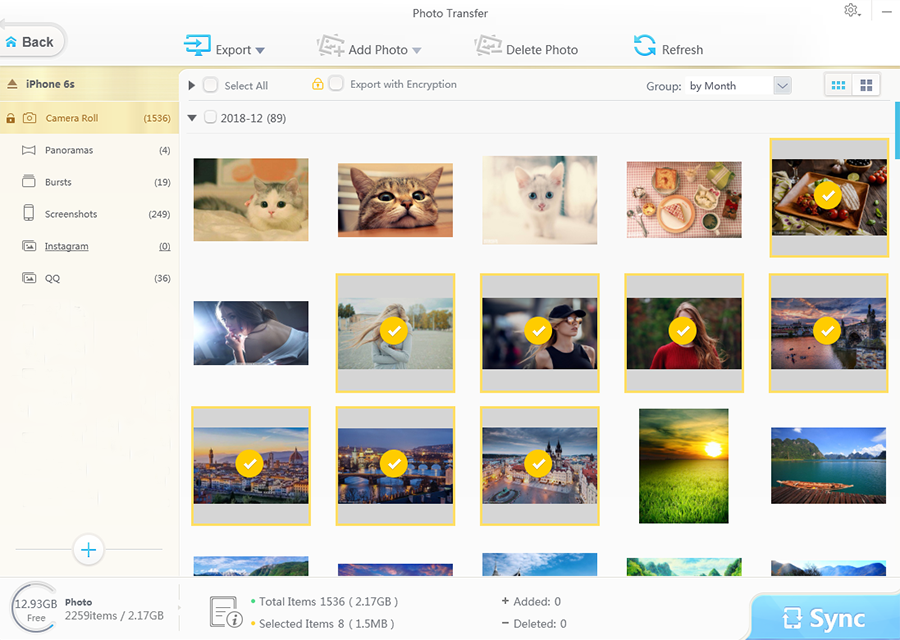
MacX MediaTrans delivers fast file transfer speed and it is also easy to use. It makes it possible to sync contents bi-directionally, from iOS devices and Mac and that implies you can move contents from your iPhone to Mac and vice versa. One thing I found very useful was the selectivity which enables the capacity to select only the files you want to transfer without having to transfer all files. By having that feature, MacX MediaTrans delivers faster speed and that means saving of time. It also ensures that you preserve space by having only the things you want moved.
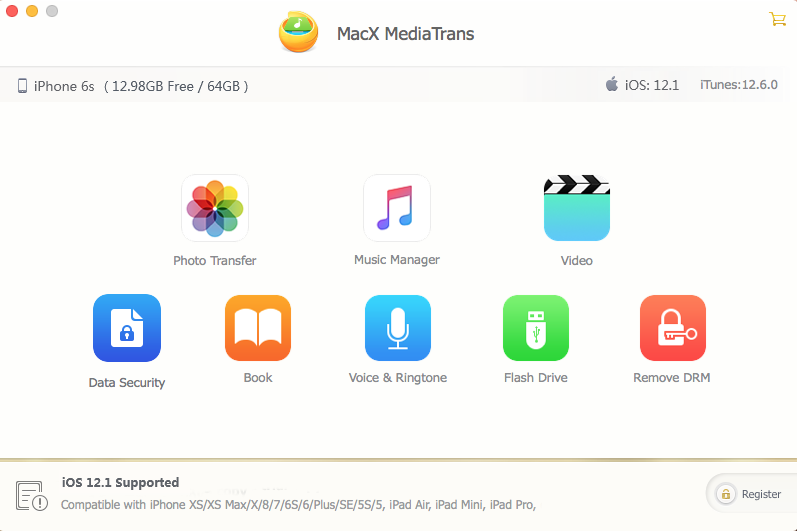
More so, ove the time I have used this product, I have not experienced any error as it fixes iTunes errors effectively. It is a delightful piece of engineering which supports transfer of videos in MKV, FLV, AVI, WMV and more besides the regular ones accepted by iTunes. As you do this, you would experience elite auto compression technology with capabilities to auto compress large 4K, HD video files to save iPhone space, and auto convert video format for iOS. There is nothing comparable in the market today to what you get from these features.

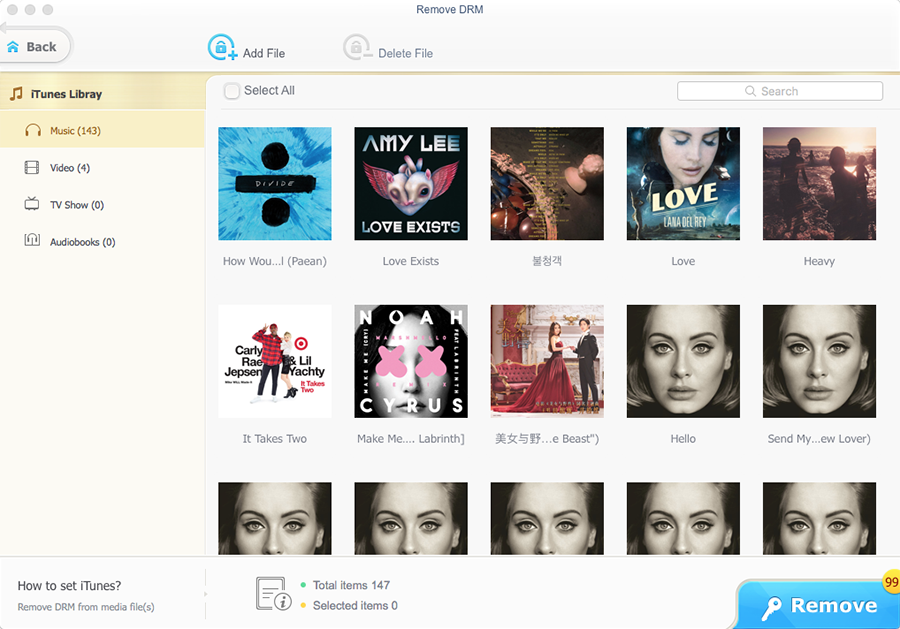
Across all nexus, MacX MediaTrans delivers quality even when you are transferring non-iTunes music files. Yet, none could be as useful as the ability to turn your iPhone as a USB to save Word, to Excel, PDF, dmg, apps, ibook, etc, securely. That is how impressive this solution is and you need to test it.
All Together

With these benefits, I certainly think that you would like to explore MacX MediaTrans as you plan your backup strategy for many iOS mobile devices. Interestingly, there is a giveaway by the product creators at the moment. Yes, this Christmas giveaway will give you a license key of MacX MediaTrans for free, and you can use the solution to experience the magic of great engineering. You need to hurry as the offer lasts till Jan 10, 2019. Get it today and say goodbye to space woes, data loss, lengthy syncing, and other iTunes errors or restrictions.

Breakdown of Proposed 2019 Nigeria Budget by President Buhari

0

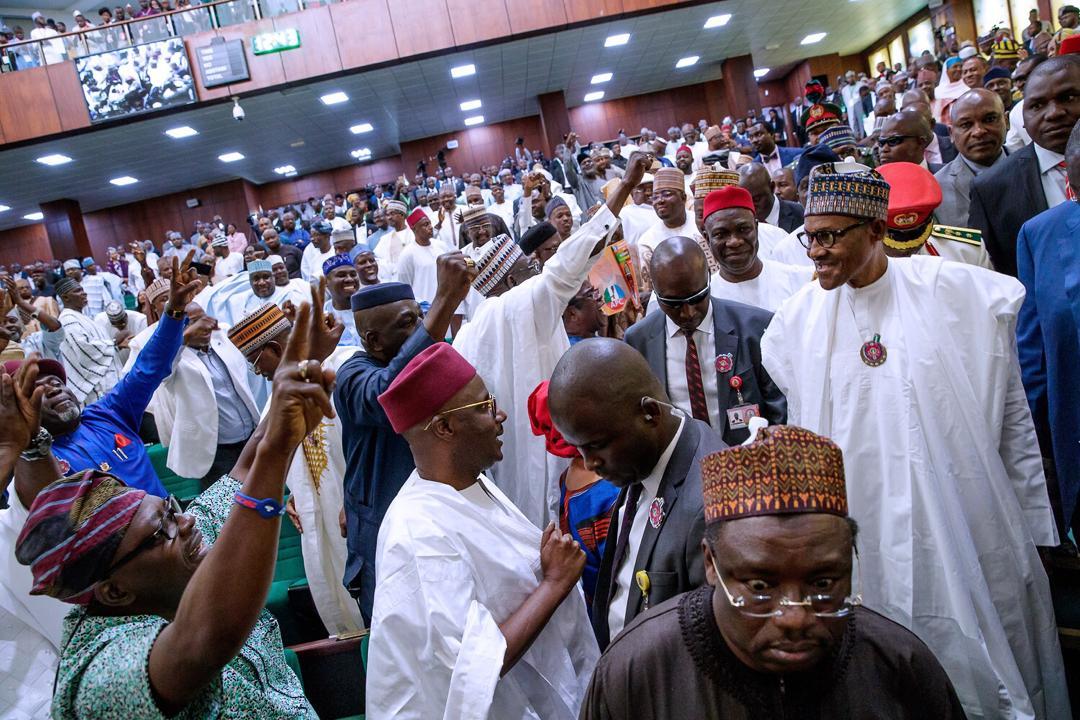
Forget the rowdy session in the National Assembly today, here is the breakdown of the proposed N8.83 trillion ($25 billion or $29 billion depending on your choice of exchange rate) Nigeria national budget for 2019.

  • President Muhammadu Buhari proposed a budget of N8.83 trillion for 2019.
  • A quarter of the sum (N2.14 trillion) will be used for debt servicing
  • Capital expenditure is expected to gulp N2.031 trillion
  • Proposed recurrent expenditure is N4.04 trillion
  • Statutory transfer is N492.36 billion
  • Sinking fund is N120 billion
  • Capital expenditure is N2.031 trillion
  • The budget was prepared on the assumption of $60 per barrel with crude oil production of 2.3 million barrels per day
  • The exchange rate is assumed at N305 to $1
  •  A real GDP growth of 3.01% and inflation rate of 9.98%t were assumed.


You can download the full budget presentation here (pdf)

Nigerian Budget Presentation 2019

Source: Deloitte Nigeria

Deloitte Summary: The 2019 Budget which flows from the 2019-2021 Medium-Term Expenditure Framework (MTEF) showed projected aggregate expenditure of N8.83 trillion, expected revenue of N6.97 trillion and a deficit of N1.86 trillion. The planned expenditure for 2019 is lower than the approved 2018 Appropriation Act figure of N9.12 trillion by 3% but higher than the estimate of N8.6 trillion contained in the President’s initial submission to the National Assembly. The expected revenue of N6.97 trillion for 2019 is also lower than the approved 2018 budget of N7.17 trillion by 3% but higher than N6.6 trillion contained in the Appropriation Bill initially submitted by the President.

Nigeria’s Weakest Link Could Cause Economic Dislocation in 2019

2

Let me tell you – the biggest risk in Nigeria as we enter 2019 is not the national election. People, if oil price continues to go south, Nigeria could see massive dislocation where even public sector workers may go months without salaries. Our 2019 national budget was anchored on $60. Today, oil is $46.

President Muhammadu Buhari has presented an N8.8trn budget for 2019.

According to the president, who gave the figure Wednesday during the 2019 budget presentation before a joint session of the National Assembly, the amount is higher than the N8.6 initially proposed.

The budget is predicated on $60 per barrel of oil benchmark at 2.3m litres per day, a GDP growth rate of 3.01 percent and inflation rate of 9.98 percent.

According to President Buhari, NNPC has been directed to take all measures to achieve the targeted 2.3m oil output per day.

But get the problem: the oil gods, legends who used to predict oil movements, are incapable now because oil is now produced from many channels, beyond OPEC, for them to model price points. Yes, unlike in the past where knowing the production volume of few countries and putting all into global GDP growth, manufacturing indices, etc, you can say oil will be $AB price. Today, some men in Oklahoma are pumping oil and no oil can track them. So, like how Internet works on digital distribution, the entry points have been unbounded, tripping markets. Supply glut is here and managing it is moving away from the powers of OPEC.

The bear market in oil keeps getting worse as worries about global growth and a supply glut ratchet higher.

US oil prices plummeted 7% on Tuesday to settle at $46.24 a barrel. It was crude’s weakest close since August 2017.

The deepening downturn in the oil patch is yet more evidence of investors fleeing risky assets as they brace for an economic slowdown. The same growth jitters that are rocking Wall Street — the Dow and S&P 500 are on track for their worst December since 1931 — are infecting commodities. Small-cap stocks plunged into a bear market on Monday.

Few days ago, the DG of the Budget Office challenged government institutions to re-double efforts on revenue collections in Nigeria. They need that because if Nigeria cannot improve revenue collection, next rainy season would be challenging.

It is a fearful trajectory – I am worried. I hope Mr. President and his teams are watching because his 2019 budget is already off by 20% and we are not even in 2019 yet. That “emergency” declared by the DG of Budget Office and Mr. President’s admission that the economy is in “bad shape” are reasons why everyone must put the country first. We need to deal with our over dependence on oil – that nation’s weakest link – in this generation. But we need to survive rainy season of 2019, hoping that shale gas entrepreneurs would have distractions.

Nigerian Telecom Sector Needs Re-invention as IHS Takes Action on 9Mobile, Swift and Smile

0

You may not have noticed it – our telecom sector is going through serious paralysis. The players are seeing multiple-whammy from OTT (over the top services like WhatsApp and Skype), satellite players and the ICT utilities. WhatsApp has eaten their margins bare, and yet the dislocation and associated disintermediation are still at infancy.

Over The Top (OTT) solutions like WhatsApp have been a concern to telecommunication companies like MTN, Glo and Airtel. But while these companies are looking at OTT, a huge challenge may be coming from Facebook and Microsoft. Microsoft has been building capabilities on TV whitespaces.

Yes, I expect the penetration of WhatsApp to remain unbounded until SMS usage fades. Some people in Nigeria are already receiving broadband services from satellite providers who are operating in their own worlds, unconstrained by any rule which NCC – our telecom regulator – has put in place. Then, you have the ambitions of Google Stations which technically means “free internet”. Microsoft is testing TV whitepapers to use the “free frequency” In TV airwave to pipe data. Add the startups which are giving users free Internet for watching adverts, you will see why the telcos are stressed!

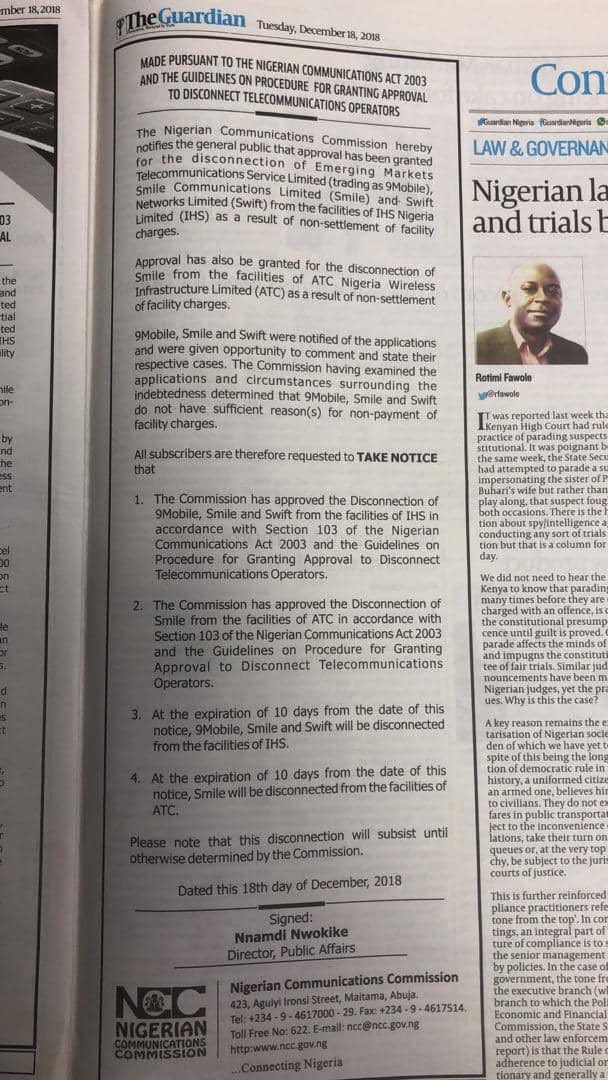
When you look at these trajectories, the long-term view of the telecom sector is one where more resources would be needed for infrastructural investments even as revenue per user will continue to do down. I do not see how growth can happen without a total re-invention of the business model. Just look at this cut (see below) from the Guardian; 9Mobile, Smile and Swift Networks may see service challenges as IHS takes action because of non-settlement of facility charges.

We will continue to see all kinds of business models in the sector, the one which I expect to happen in order to save the industry is contract-based billing where once a subscriber has paid for the month, it would be irrelevant what that user does online. Yes, you can live on WhatsApp for the month but I have collected my N5,000 for the month as a telco. Today, someone can pay N500 and use that on WhatsApp for the month. The implication is that telecom companies are powering huge services even when they are not making money on them. They need to find a novel business model to fix that revenue – service dislocation.

As I look at NITDA (National Information Technology Development Agencybudget and numbers, it is evident that our telecom companies are not making money. More than 99% of them are not profitable. They are required by law to pay 1% of their profits to NITDA but largely all are not sending money to NITDA. Simply, they have no money to wire to NITDA because they are not making money in Nigeria.

Case Study I: NITDA gets 1% of all profits from Telcos. MTN has been the most reliable to NITDA as it makes profit. But MTN declared loss last year owing to the huge fine it paid. Others like Etisalat (9Mobile), Glo, and Airtel rarely pay or pay very little, because they rarely make much. For NITDA, in the short-term, it has to look for other ways to fund its activities. Had Airtel, ET and Glo made money, NITDA would be fine. Sure, customers enjoyed their Skype and WhatsApp, but the government agency gets its zero revenue.

All Together

We should not take it for granted that 5G would come to Nigeria as it happens in other parts of Africa. If the telcos are not making money today, no one will give them money to fund 5G deployments. If 9Mobile, Swift Networks and Smile are seeing challenges that are preventing them from paying facility charges, you would agree with me that the paralysis is deeper than anyone had imagined.

Yet, the telcos have data from the registration of SIM Cards and ideally can fix the challenges. All they need is to transform the data into a system to unlock new revenues in the sector. The prepaid or pay-as-you-go business model does not make sense anymore especially in a world where ICT utilities like WhatsApp and Skype are encroaching into new territories. You need to secure your flanks!