DD
MM
YYYY

PAGES

DD
MM
YYYY

spot_img

PAGES

Home Blog Page 7031

Regulating Smartphones in Nigeria

0

By Olayinka Oduwole

On a recent visit to Nigeria, I purchased an affordable smart phone from the popular ‘Computer Village’, in Ikeja, Lagos. As affordability has often been highlighted as one of the barriers hindering the adoption of smartphones and newer generation services in developing countries, it therefore comes as a welcome development to find out that there is a wide range of affordable smartphones targeted at the Nigeria mass market.  The smart phone adoption in Sub Saharan Africa has been predicted to be around 35%.

Within the Nigeria smart phone market, there has been a proliferation of affordable phones from manufacturers like Tecno, Itel, Infinix, Samsung, Nokia, Huawei etc. This has also encouraged more indigenous companies like Imose to enter into the smart phone race. This is very encouraging as competition would only translate into a positive experience for consumers.

However, as I began to use the smart phone, I realized that the mobile phone produces heating after usage for a while. Besides heating, I was equally concerned about the electromagnetic radiation emitted by the mobile phone. This concern is borne out of the fact I have been privileged to investigate electromagnetic radiation exposure to users using mobile communication devices and network.

There is a common misconception among users’ that electromagnetic radiation from mobile station (e.g. mast, antenna) is more dangerous than that from mobile phone. This has always been an issue among users resident within developing as well as developed countries. Users tend to associate huge risks (like radiation) with visible antennas whilst associating low risks with antennas perceived as invisible (like the ones embedded in their mobile phones). This was confirmed from the findings of a European survey. Such survey could also be conducted in Nigeria and other developing countries but I doubt if the findings will be any different, considering the public outcry from residents whose homes are close to installed base stations. This is not to discard any such outcry but I think it should be thoroughly investigated through the collection of scientific data.

According to the World Health Organization (WHO), it has been concluded that electromagnetic radiation is possibly carcinogenic and there are currently studies investigating the long term effect of electromagnetic radiation on human health. The radiation mainly affects the head (or body) of the user. And an increase in temperature is one of the best ways for accessing the health and biological effect of electromagnetic radiation. It is for this reason that the use of ear piece has been recommended for heavy smart phone users’ as a way of mitigating electromagnetic radiation exposure. There are of course, other smart technology solutions that can help mitigate the radiation exposure.

Most Nigerians use cellphones

In more advanced markets, mobile phones are subject to strict regulatory requirements like measuring and testing that the Specific Absorption Rate (SAR) is below the regulatory limit before allowing such phones within the market. Whilst I am happy about the decline in the price of smartphones due to the wide availability from the different manufacturers within the Nigerian Market, I think it is equally important that these phones are subject to strict regulations which would no doubt protect consumers from the hazardous effects of smart phone usage. This would also help to ensure that Nigeria, alongside other developing countries, are not perceived as a dumping ground for dangerous phones.

I therefore would first like to congratulate the bodies in charge of regulating mobile communication services like the Nigeria Communication Commission (www.ncc.gov.ng) for the adoption of policies encouraging the widespread adoption of smartphones as well as facilitating an enabling environment for indigenous companies to compete within this space. This has no doubt led to the decline in the prices of these devices. Most importantly, I would also like to implore these bodies to look into regulating smart phones made available within the Nigeria market, as a matter of urgency.

Two Reasons Wall Street is Backing Out of Cryptocurrencies

0
Bitcoin depiction

The winter has months to go but Wall Street is already ending it, for crypto. Yes, Wall Street is backing out of cryptocurrencies after the Q1 2018 effervescence of interest.

Wall Street is quietly moving out of the crypto market, Bloomberg reports. While the market has continued to be battered by news of fraud and imminent regulatory crackdowns, there was a time when it seemed like Wall Street had started to warm up to the rise of crypto assets.

[…]

According to the report, there are two reasons for the quiet withdrawal of Wall Street in the market; the downturn in the market and a lack of a regulatory framework on cryptocurrencies. The first reason is relatively simple. 2018 has been a wild ride for the crypto market, with about $700 billion being wiped off. Crypto-based firms are feeling the brunt of this bear market, with news of retrenchments, companies folding up and manufacturers of mining rigs losing profits by the day.  On regulation, it is believed that the continued lack of a specific regulatory framework on cryptocurrencies has continued to deter big names in the financial industry from taking the plunge into the sector.

No Father Christmas Gifts for Markets, Where are Nigerian Stocks Heading?

0

Markets are not having the best Father Christmas gifts. United States market gloom over the partial government shutdown—the Dow Jones saw its worst week since 2008, with the selloff deepening on Monday—sent Japan’s Nikkei into bear territory on Tuesday, while China’s markets also closed lower, Quartz summarizes. In Nigeria, the trajectory has not been promising. Some U.S. indices had recorded the worst Christmas eve trading day in history.

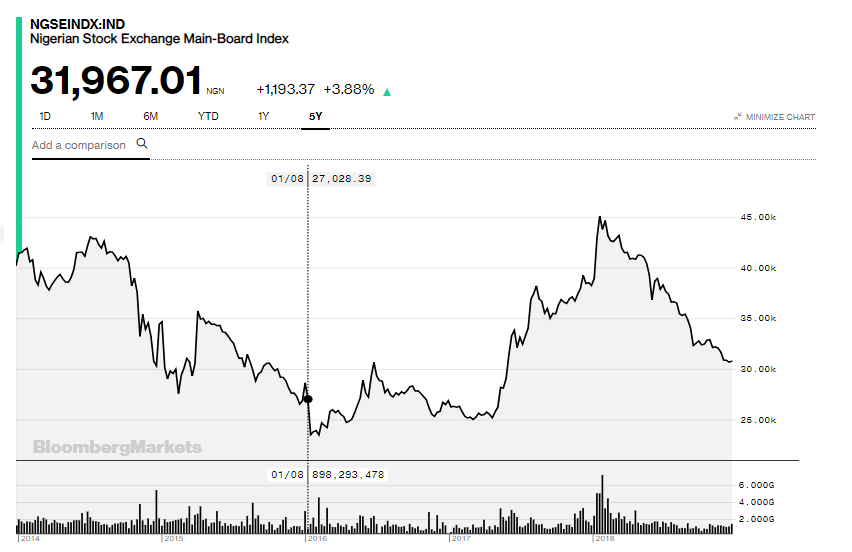
In Nigeria, the Nigeria Stock Market NSE reached an all time high of 45,092.83 in January of 2018 and a record low of 19,785.03 in December of 2011. Today, we are at 31,967.01.

The harmattan is here; what do you expect from Nigerian stocks as the global markets bleed? If you have stocks in the market, now is the time to develop a strategy.


Amazon Advertising Business, Challenging Google and Facebook Duopoly

0

Amazon has another double play – advertising on its one oasis’s ecommerce. We had formulated the one oasis strategy (PDF) on Amazon with AWS(Amazon Web Services) which was initially built  to improve the ecommerce business before it became a money maker itself. Today, Amazon is growing a serious advertising business which will become a Fortune 500 company soon if it were a separate company.

Amazon’s advertising business is a brewing industry force, and ad buyers and competing retailers and platforms are only starting to come to terms with its weight in the industry.

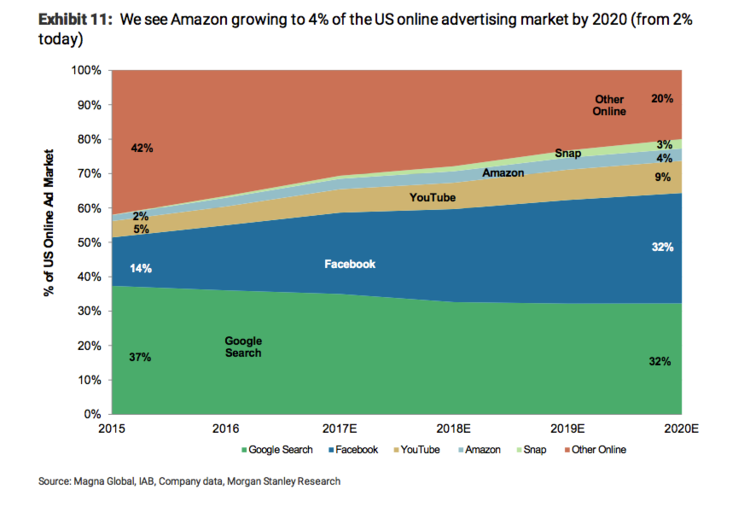
Now worth $2.5 billion as of Amazon’s third-quarter earnings in October, an increase of 123 percent, Amazon advertising’s growth has turned the company into a soon-to-be rival of the duopoly, Google and Facebook. According to eMarketer, advertisers are forecasted to spend $4.6 billion on Amazon’s platform this year, which would give it 7 percent of market share. That’s a sliver compared to the market share of Google, at 37 percent, and Facebook, at 20 percent, but Amazon’s business is growing at a much faster rate. In the third quarter of 2018, brands’ ad spend on Amazon increased by 250 percent over the third quarter of 2017.

Source: Business Insider

There is a reason Amazon ad business is doing well: Amazon advertising delivers better results than Google’s. If Amazon begins to automate that process at scale, it could pose a huge challenge to Google. When you search on Amazon.com, you are actually in the process of spending money. Google delivers traffics to websites of merchants; Amazon is delivering revenue in dollars to them. That is why this is exciting for this company, and investors like the Amazon Advertising vision.

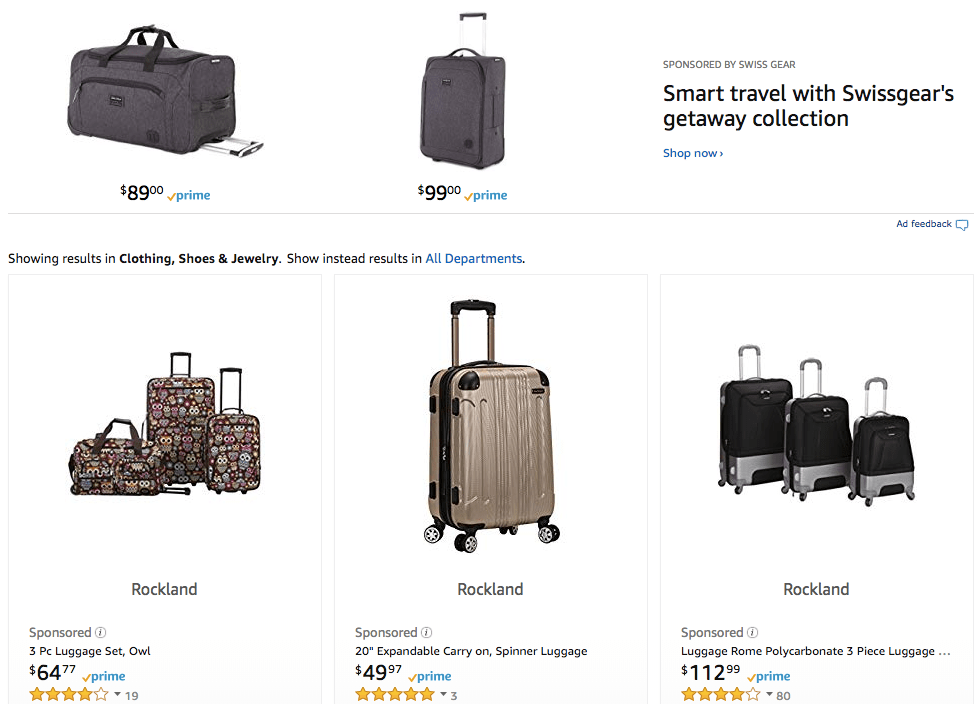
Amazon sponsored ads (source: digiday)


All Together

Amazon is building a solid business using the one oasis strategy. This business will challenge the duopoly which currently exists between Google and Facebook. The advertising business, just as Amazon Web Services, is improving the ecommerce with the pay and play model: the more money you spend on advertising, as a merchant, the more you sell as your wares will appear on searches at the top. The Amazon search was originally created to make the ecommerce business better. Now, it is earning revenue because it has become an advertising business. Simply, this is the typical one oasis strategy playbook.

CBN and MTN Reach Truce on Alleged $8.13 Billion Illegal Repatriation (Full Statement)

0

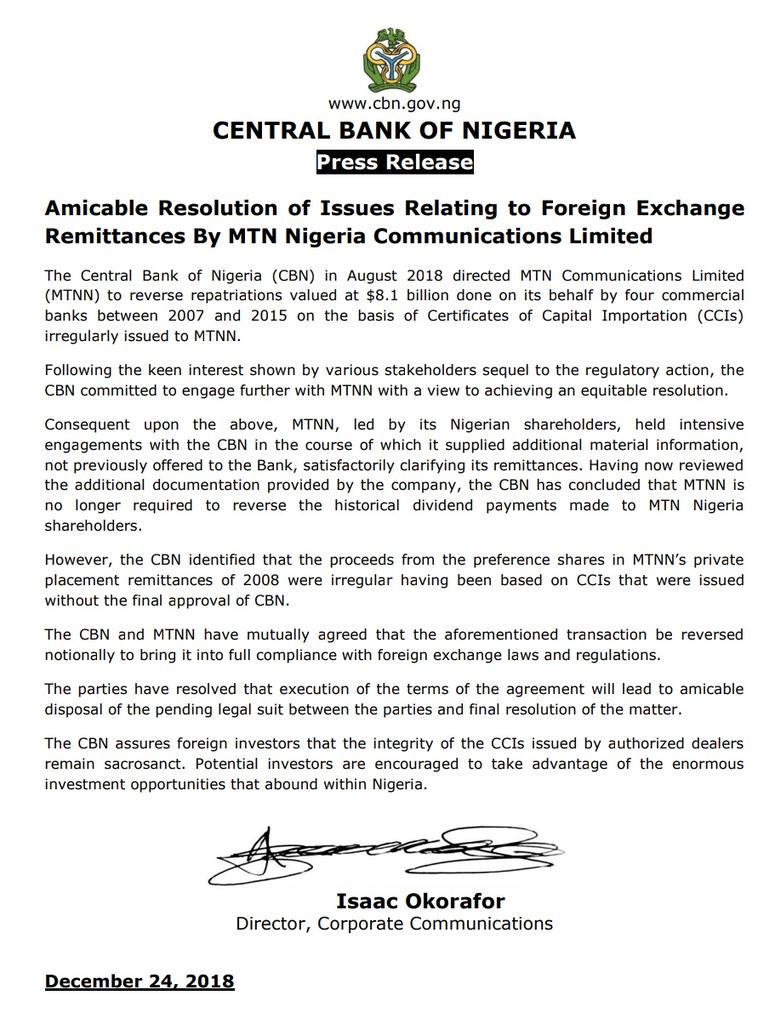
The Central Bank of Nigeria has reached a truce with MTN on the alleged illegal repatriation of funds from Nigeria.

But MTN is a clear winner here. CBN looks like a baby lost in a mall writing that MTN “supplied additional material, not previously offered to the Bank, satisfactorily clarifying its remittances.” Come on – a big shame they did not do this privately.

I hope MTN does not sue CBN for triggering unnecessary confusion which severely affected its market value. We keep saying: Automate everything in Nigeria so that everything would be transparently visible to all. This will prevent new documents emerging from behind!

The Central Bank of Nigeria (CBN) on Wednesday wielded the big stick on mobile telecom firm, MTN Nigeria Communications Limited, and four commercial banks for alleged financial infractions.

The CBN’s spokesperson, Isaac Okorafor, in a statement sent to PREMIUM TIMES on Wednesday said the apex bank wrote to MTN Nigeria demanding a refund of about $8.13 billion (about N2.5trillion at N306.15 to $) allegedly repatriated illegally out of Nigeria.

Mr Okorafor said the affected banks, including Standard Chartered Bank, Stanbic-IBTC, Citibank and Diamond Bank, would refund various amounts totaling N5.87 billion.

Standard Chartered was asked to refund N2.5 billion; Stanbic IBTC (N1.9 billion); Citibank (N1.3 billion and Diamond Bank (N250 million).

The letter below…