DD
MM
YYYY

PAGES

DD
MM
YYYY

spot_img

PAGES

Home Blog Page 704

As Remittix Nears $20M, Analysts Say It Could Compete With Chainlink Post-Listing

0

Remittix (RTX) has emerged as one of the best crypto presale 2025 contenders, rapidly approaching its $20 million funding milestone. With over $19.5 million raised and over 600 million tokens sold, now priced at $0.0944, market analysts believe its upcoming centralized exchange reveal could elevate it to the level of established altcoins like Chainlink. Unlike speculative projects, Remittix is focused on crypto with real utility, bridging blockchain and traditional finance through advanced payment solutions.

Remittix Is Leading the Pack as the Best Presale of 2025

Remittix’s strategy targets the PayFi sector, enabling seamless crypto-to-bank transfers across 30+ countries. The Beta Web3 Wallet launching in Q3 2025 supports 40+ cryptocurrencies and 30+ fiat currencies, real-time FX conversion, and low gas fee transactions, making it a next big altcoin 2025 candidate.

Key highlights driving adoption:

  • Over $19.5M secured with strong global participation
  • Instant cross-border payouts to verified bank accounts
  • Deflationary tokenomics for long-term growth potential
  • Wallet with multi-chain and fiat integration launching soon
  • First CEX listing announcement coming at the $20M mark

This multi-functional wallet means freelancers in Asia can get paid in USDT, convert to local currency instantly, and withdraw directly to their bank, bypassing expensive remittance services. Such use cases are why analysts rank RTX among the best DeFi projects of 2025.

Chainlink’s Market Role and How Remittix Could Compete

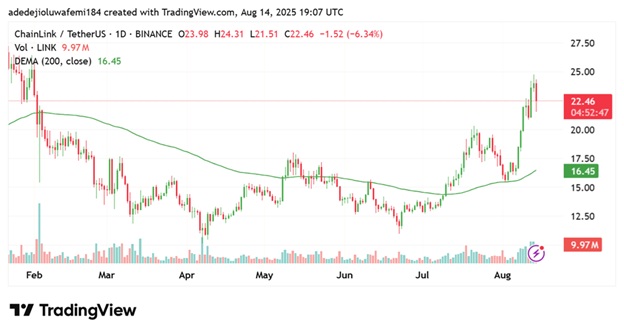
Chainlink dominates the oracle service niche in DeFi, enabling secure off-chain data feeds. However, it doesn’t address direct payment processing or real-world settlement. Remittix, by contrast, operates as a cross-chain DeFi project with an end-user focus, targeting remittances, business payouts, and merchant adoption.
Source: TradingView

Industry commentators highlight that while LINK’s infrastructure is critical for smart contracts, RTX’s infrastructure is critical for everyday transactions. This positions Remittix as a practical, crypto-solving, real-world problem-solving solution that could compete for market share post-listing.

Why Investors Are Calling Remittix the #1 Presale This Year

From major crypto outlets to independent analysts, consensus points to Remittix having the right mix of tech readiness, community backing, and utility. Its upcoming exchange listing is expected to unlock liquidity, attract new investors, and increase trading volume rapidly.

Discover the future of PayFi with Remittix by checking out their presale here:

Website: https://remittix.io/

Socials: https://linktr.ee/remittix

$250K Giveaway: https://gleam.io/competitions/nz84L-250000-remittix-giveaway
Happy Independence Day India?: Unveiling Woxsen University’s Success Story

0

How time flies…

In my 2015 conference paper, “Are Indian MBA Schools Global and Market Oriented?,” co-authored with a Professor of Indian descent, and presented at the prestigious Academy of International Business (AIB-MENA) conference in Dubai, we raised concerns about the internationalization of Indian business schools (B-Schools) calling for strategic partnerships and development of job-ready graduates.

Looking Back

My co-authored 2015 viewpoint paper assessed the place of Indian B-Schools, and especially the MBA, within the context of the global economy. The study highlighted the trend in MBA provision in India with a view to exploring how MBA graduates may be better equipped, and positioned, to take up managerial opportunities provided by the influx of Multinational Corporations (MNCs) into this emerging market. Overall, the study observes and reports that the demand-side seems to outweigh the supply-side on a range of areas – from the lack of qualified instructors, through the poor teaching practices and quality assurance mechanisms. The study surmised on the need for B-Schools in India to forge strategic partnerships, international networking arrangements and ultimately international accreditation.

Fast forward to 2025

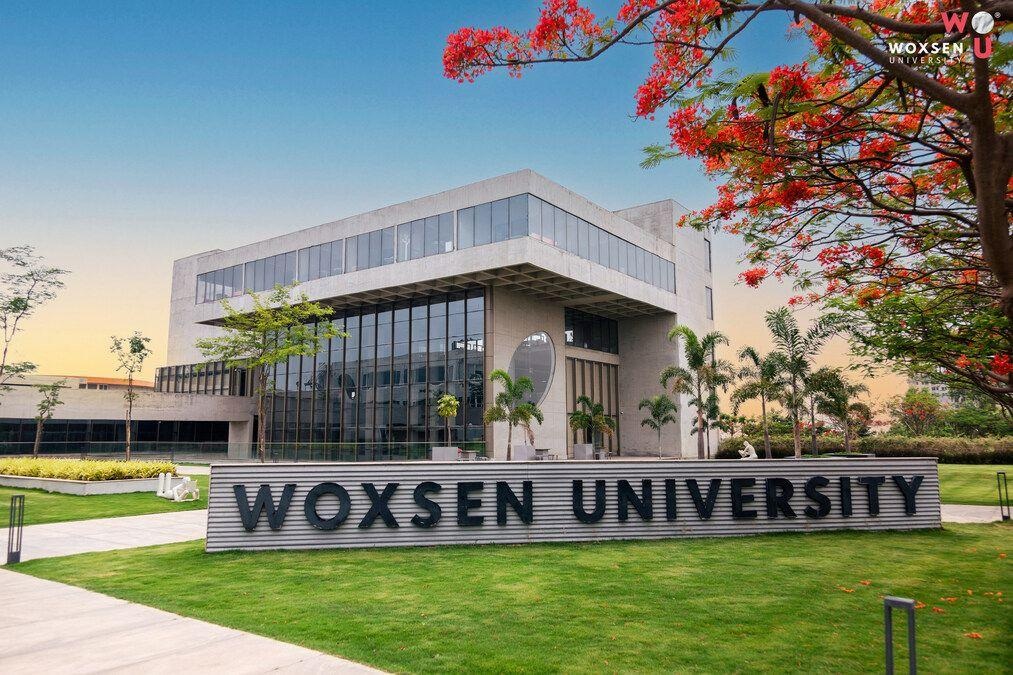
A decade later, the likes of Woxsen University Hyderabad have demonstrated how this should, and can be done with its multicultural faculty and strategic partnerships with global Higher education institutions and corporates.

A recent article in BW Education 2025 entitled “Woxsen University Unveils New Model To Boost Learning & Employability”, says it best – with some emphasis on the private university’s Polaris project.

Project Polaris in a Multipolar World of HE

Under Polaris, academic courses have been redesigned to incorporate live industry projects that address contemporary challenges across areas such as sustainability, technology, and social impact. Students engage with these projects as part of their coursework, applying theoretical knowledge to practical situations.

Let’s hear it from Senior Leadership

Raul V. Rodriguez, Vice President of Woxsen University, stated, “Polaris signifies a fundamental shift in the approach to educational value creation. Rather than asking, ‘How much can we spend to improve outcomes?’, the question becomes, ‘How can learning be reimagined to deliver significantly better results using existing resources?’ The solution lies not in costly technology or expanded facilities, but in the strategic coordination of human potential.”

What’s more?

The Polaris model has drawn international attention from universities and policymakers seeking cost-effective strategies for institutional transformation. Woxsen University plans to share insights from the initiative through academic publications, collaborative forums, and policy discussions, contributing to the wider debate on sustainable educational reform.

Accreditation Bodies Insight

The Association to Advance Collegiate Schools of Business (AACSB) is a global non-profit organization that provides accreditation to business and accounting programs at the college and university levels worldwide.

In an insight report by AACSB, “What’s the Future of Business Education in India?” a plethora of issues were raised, accruing from a virtual roundtable hosted by the AACSB, representatives of Indian business schools considered the future of management education and the role of accrediting bodies. Participants agreed that, to solve today’s business problems, managers must have the multidisciplinary skills they can only gain from exposure to the sciences, the arts, and the humanities.

Looking back at the question we posed a decade ago, “Are Indian MBA Schools Global and Market Oriented?” The answer is a resounding yes they can!

Happy 79th Independence Day, India (15 August 2025).


Nigerian Startups, Learn from Kenyan Firms Which Are Merging

0

A few days ago, I wrote here that Nigeria’s blue-chip companies are experiencing asymmetrical profits even as small and medium scale companies continue to struggle.  We have seen BUA Foods, BUA Cement, Presco, Okomu Oil, and MTN Nigeria hit new profit records in a market many startups struggle to attract growth capital. My suggestion: instead of shutting down your startup, find ways to merge.

Yes, we need to figure out how to combine resources until the growth foreign VC investors return to Nigeria. Right now, those investors are not here as everyone is still under the waters after the recalibration of the Naira which reduced all revenue by at least 3x.

In other words, if you made N1.5 billion in Jan 2023 and recorded that as $3m, and an investor used 10X revenue multiples for a valuation of $30m, today, that revenue will give you a mere $10m since N1.5 billion is now $1m. Under that construct, most of the growth VCs have lost money, on paper, and it will take time for startups to grow to compensate for that currency loss.  Think of years for that to happen, and the very reason large VCs have not been active in Nigeria.

So, what do we do? We need to combine resources. And I am extending my call by quoting TechCabal today: “Ajua, a Kenya-based customer experience (CX) startup, has merged with Rate My Service (RMS), a local firm that develops tools for businesses to track and improve customer and staff interactions. … The deal highlights a rising trend among Kenyan tech companies to consolidate capacities and expand regionally amid growing competition from local and international customer experience platforms.”

Simply, do not shut down, find ways to merge. Not everyone must be a CEO!

Anchorage Digital To Provide Custody Services for Hyperliquid’s native HYPE token

0

Anchorage Digital, a federally chartered crypto bank, has announced it will provide custody services for Hyperliquid’s native HYPE token, ensuring institutional-grade security for assets on HyperEVM. Hyperliquid, a decentralized futures exchange, has surpassed $6 billion in assets under management (AUM), as reported by Wu Blockchain on X, citing Dune Analytics data.

Anchorage Digital, as the only U.S. federally chartered crypto bank, brings institutional-grade security through features like biometric authentication, offline private key storage, and multi-party computation (MPC). This reduces risks like hacks or key mismanagement, making HYPE more appealing to institutional investors who prioritize regulatory compliance and security.

Anchorage’s compliance with U.S. federal regulations and Singapore’s Monetary Authority standards signals to institutions that HYPE is a viable asset for portfolios, potentially increasing institutional capital inflows. This is critical as institutions often require custodians to meet stringent regulatory standards before engaging with a token.

Anchorage’s support extends beyond HYPE to include new ERC-20 tokens on HyperEVM, such as kHYPE. This creates a trusted pathway for institutional participation in Hyperliquid’s ecosystem, encouraging developers to launch projects with confidence that custody solutions are in place.

By providing custody, Anchorage enables institutions to hold and trade HYPE securely, potentially boosting liquidity on Hyperliquid’s decentralized exchange. Higher liquidity can stabilize HYPE’s price and attract more traders, as seen with Hyperliquid’s $760M DEX volume.

The partnership with a reputable custodian like Anchorage signals Hyperliquid’s maturity, potentially reducing volatility driven by retail speculation and fostering long-term price stability. Posts on X highlight HYPE’s strong fundamentals, such as its $1B annualized assistance fund purchases, which could be amplified by institutional backing.

Anchorage’s custody support for HyperEVM assets could drive the creation and adoption of new tokens, increasing Hyperliquid’s total value locked (TVL), currently at $1.99B, and further solidifying its position as a leading DeFi platform.

Anchorage’s platform, including its Porto wallet, supports HYPE staking, trading, and interactions with Hyperliquid’s HyperCore. This allows institutions to engage in spot and perpetuals trading without needing complex integrations, lowering barriers to entry.

Anchorage’s ability to custody both digital assets and fiat (via FDIC-insured sub-custodians) simplifies operations for institutions, enabling seamless deposits and withdrawals. This could accelerate HYPE’s integration into traditional finance workflows.

While Anchorage’s compliance strengthens HYPE’s legitimacy, evolving cryptocurrency regulations could pose challenges. Stricter rules on custody or DeFi platforms might increase compliance costs or limit Hyperliquid’s operational flexibility, potentially affecting HYPE’s long-term viability.

Anchorage’s involvement bridges DeFi and traditional finance, aligning Hyperliquid with the growing trend of institutional adoption seen in partnerships like BlackRock’s with Anchorage for its BUIDL fund and crypto ETFs. This could position Hyperliquid as a preferred platform for institutional DeFi, competing with chains like Sui and Avalanche, which have similar TVL but lower DEX volume.

By supporting HYPE and future HyperEVM tokens, Anchorage creates a scalable custody framework that could attract developers to build on Hyperliquid. This could lead to an influx of new DeFi protocols, increasing AUM beyond the current $6B and enhancing Hyperliquid’s competitive edge.

The availability of custody for kHYPE (Kinetiq’s liquid staking token) suggests Anchorage’s commitment to Hyperliquid’s ecosystem, potentially driving innovation in areas like staking and tokenized assets.

As custody becomes a standard expectation, Hyperliquid must maintain its edge through performance (e.g., low-latency trading) and innovation to differentiate from competitors like Coinbase Custody or Fireblocks. However, regulatory uncertainties and custody risks remain challenges that could influence market dynamics.

By leveraging Anchorage’s secure and compliant infrastructure, Hyperliquid is well-positioned to navigate these challenges and lead the institutionalization of DeFi, potentially reshaping the tides of decentralized finance toward greater mainstream adoption.

Nedbank Acquires Fintech Startup iKhokha to Boost SME Banking Innovation

0

Nedbank group, one of South Africa’s financial services giants, has acquired Durban-based fintech startup iKhokha in an all-cash deal for approximately R1.65 billion.

The acquisition will see iKhokha become a wholly owned subsidiary of Nedbank, but will retain its brand identity and current leadership team. The agreement also includes a comprehensive management lock-in to ensure continuity and alignment with long-term growth objectives.

Notably, the acquisition represents a successful exit for iKhokha’s long-standing investors, which include Apid Partners, Crossfin Holdings, and the International Finance Corporation. These investors have been instrumental in supporting the company’s growth and innovation since its early days.

Commenting on the acquisition iKhokha wrote via a LinkedIn post,

“We are excited to share that we are joining forces with Nedbank. This gives us a great platform to further strengthen our SME offering in SA and scale into other African markets”.

CEO and co-founder Matt Putman described the acquisition as a proud moment for the team, noting that joining forces with Nedbank will accelerate product innovation, scale impact, and enable expansion into other African markets. The deal signals strong investor confidence in South African fintech, potentially attracting more investment to the sector. It also highlights the viability of fintech exits, as seen with investors like Apis Partners and the IFC.

Founded in 2012, by Matt Putman, Ramsay Dalt, and Clive Putman, iKhokha is a fintech company that develops digital tools to help entrepreneurs start, run, and grow their businesses. The company provides digital payment solutions and business tools for small and medium-sized enterprises (SMEs), including mobile point-of-sale (mPOS) devices, a payments app, and services like inventory management, invoicing, and analytics.

It processes over R20 billion ($1.1 billion) annually in digital payments and has disbursed more than R3 billion ($169.7 million) in working capital to SMEs. iKhokha’s mission is to empower entrepreneurs by making financial services accessible and affordable, driving financial inclusion in South Africa’s SME sector.

Nedbank’s leadership sees the acquisition as a key step in its strategy to deepen SME market support. Ciko Thomas, Group Managing Executive for Personal and Private Banking, highlighted the synergy between iKhokha’s technology and Nedbank’s banking expertise, promising “best-in-class tools” for small business clients.

He said,

“This acquisition is a natural evolution of our existing relationship with iKhokha and we are incredibly excited to welcome iKhokha to our Nedbank family. The acquisition is a pivotal moment in our strategy to empower the SME market. By combining their innovative technology with our deep banking experience, we will provide small business clients with the best-in-class tools they need to thrive.”

Also, Group Chief Executive Jason Quinn added that the move aligns with Nedbank’s vision for digital transformation in the SME sector and will open doors for growth and financial inclusion both in South Africa and beyond.

As a wholly-owned subsidiary, iKhokha will gain access to Nedbank’s financial resources, infrastructure, and client network. This would accelerate product development, improve service offerings, and support potential expansion into other African markets. Also, Nedbank’s pan-African presence will enable iKhokha to expand beyond South Africa, tapping into new markets and increasing its R20 billion ($1.1 billion) annual payment processing volume.

Overall, the impact of the acquisition will strengthen iKhokha’s ability to serve SMEs while enhancing Nedbank’s digital capabilities.