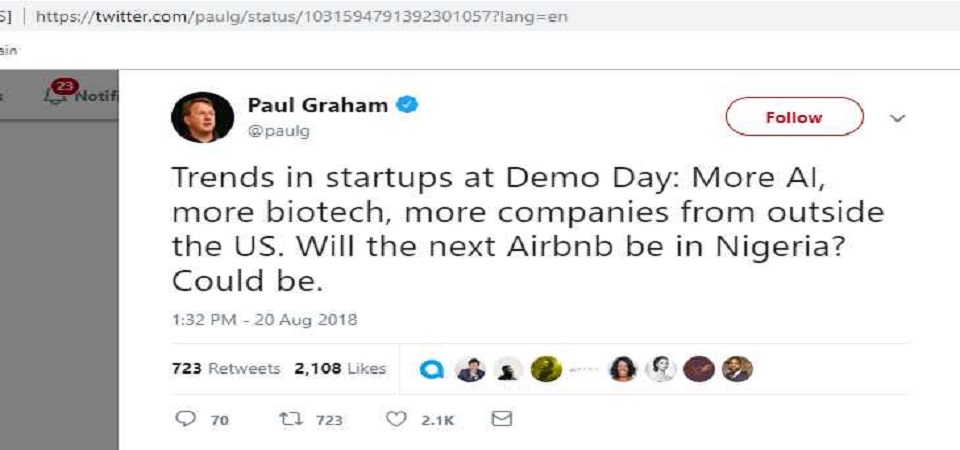
I wrote a piece on Paul Graham’s bold prediction on the Nigerian startup scene. Many responded on LinkedIn and noted largely that Nigeria must have electricity, great schools, etc before we could witness what Mr. Graham was predicting. I am not saying that we do not need those enabling environments. Yet, if you check human history, great private companies have typically preceded the strengthening of public institutions. Why? Governments use the taxes and fees on companies to build public institutions! In other words, you cannot expect good roads, great schools, etc if there are no companies with capacities to pay taxes to make such possible. The thinking that one has to wait, for everything to be perfect, before investing or building in Nigeria, is decoupled from how nations have developed.
While I believe in the potentials of Africa, especially Nigeria, I would caution against the celebration of hype as reality and hope as achievement. Especially when all the factors that perpetuated the creation, scale and success of Airbnb are absent in Nigeria. In four years, the only new $millionaires will be from Africa’s political class, unless some serious institutions for delivering good governance, politics, free market economy and civil interactions magically appear and become effectively implemented before 2022. Since there are no indications of such positive change happening overnight in Africa and or Nigeria, given that such processes take decades, I simply wouldn’t be banking on such $millionaire party. That’s not how Rome was built.
It’s all about a media hype, the reality on ground is that Africa still lies in the dark and Nigeria especially is backward in terms of ordinary electricity that is the source of innovation
So, if you expect Nigeria to be perfect with good infrastructure, top-grade schools, etc before you can invest or do anything in Nigeria, you would be out of luck. Vodafone had the same mindset when Nigeria wanted it desperately for mobile telephony. We continue to appreciate MTN for believing in Nigeria.
Across human histories, from UK to America, companies rise before nations can build strong institutions. In other words, if you expect Nigeria to have the best public institutions before great companies, you would keep waiting. Typically, what happens is that nations have great companies, and then use the taxes paid by those companies to build better public institutions.
My thesis is that Nigeria cannot have solid public institutions, from great schools to good public institutions, until Nigeria has created category-leading private companies that would provide resources to build those institutions. This was well discussed in one of my books which received IGI Global Book of the Year award.
Prof Ndubuisi Ekekwe’s book received the prestigious IGI Global “Book of the Year” Award in 2010
Yet, the private companies need good public institutions to thrive. But there is no record that that public institutions must exist first. America was partially built on the wealth created by Rockefeller, Carnegie, Mellon, etc who generated enormous wealth for the commonwealth, and using the money the American government set up institutions. Yes, the tax from Standard Oil was used to build institutions to regulate the oil industry. Without the money from Standard Oil, government would not have the resourceful to do the needful in bringing competition in the American energy sector, by breaking the firm into pieces with incarnations of Exxon, Chevron, etc.
Standard Oil Co. Inc. was an American oil producing, transporting, refining, and marketing company. Established in 1870 by John D. Rockefeller and Henry Flagler as a corporation in Ohio, it was the largest oil refinery in the world of its time.
[…]
In 1911 The original Standard Oil Company corporate entity continues in existence and was the operating entity for Sohio; the Standard Oil Company was transformed into entities such as ESSO (phonetic spelling of SO), now Exxon; and SOcal, now Chevron
Nigeria Needs GREAT Private Companies First
That is what will happen – we cannot expect a poor public sector to do magic. It is only when the private sector has generated enormous wealth would we see governments begin to evolve in ways we want them. Interestingly, the private sector cannot exclusively wait for those public institutions to be in existence before they can move to fix the market frictions.
I hope things improve from the public sector. Yes, I do wish we can move faster in many things. But I am not the type that believes that things can only happen after government has fixed many things. Government needs money to do those things and having great companies can make them happen.
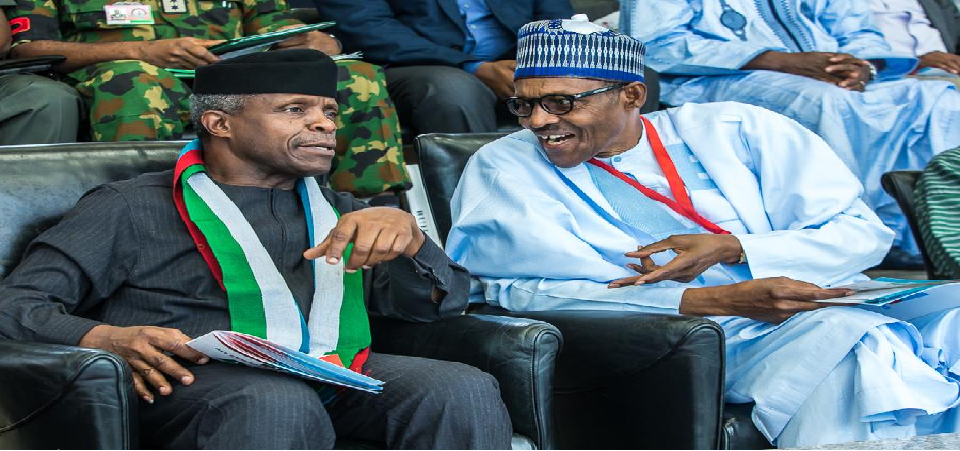
President and Vice President of Nigeria
All Together
The structures of many government institutions are designed in ways that unless the private sector does well, the government institutions will not do well. From National Information Technology Development Agency (NITDA) to Industrial Training Fund (ITF), government has structured everything that unless the private sector does well, these institutions would not have resources to thrive.
That is what is happening across all government agencies and institutions – they are largely waiting for resources from the private sector to build them. The oil revenue is asymmetric, largely uncorrelated to the growth of the local economic organically, and offers nothing sustainable. You take the oil money to Umuahia, Sokoto, Osogbo etc and once it is finished, nothing happens. But if you have companies in those cities that could bring a quarter of the allocations coming from oil money via taxes, the local economies will be better over long-term.
In summary, if you just wait for Nigeria to be perfect before investing or starting a business, you would run out of time. Nigeria is really waiting for the private sector to fund whatever it wants in Nigerian public institutions. That has been the ways the world has developed – public institutions are funded by private companies. Most private companies would be pioneers in some categories and sectors. Before them, government had nothing to regulate those areas. But as they begin to operate, they would provide funding which government would then use to regulate, develop and improve them.
Practically, we have no aerospace tourism sector in Nigeria. But if we have 5 private companies in that sector, in weeks, government will establish an agency to support it. Interestingly, as those companies expand, they would fund the institution needed to keep them going by providing better standards and regulations to ensure they are nurtured. But where you want that aerospace tourism agency to emerge before the private sector, you may keep waiting for decades.
5G has often been pitched as a race among countries to attain technological superiority and global dominance. Even though, this view may not necessarily be true, indications point to a competitive atmosphere across the globe, in the deployment of 5G technology, which arguably show that some sort of race is definitely on. As we approach 2019, we should begin to witness several launches, releases, validation and tests and anticipate spectrum debates leading up to World Radio Congress (WRC) 2019. In different parts of the world, operators are starting to launch 5G with specific use cases relevant to their domestic market. In this piece, I summarize the early attractive use cases for 5G within different parts of the world and conclude with some recommendations for the continent of Africa.
In the US, it is anticipated that 5G will be used to deliver Gigabits of data throughput and serve as a last mile technology for fixed broadband connectivity. 5G based fixed wireless would therefore serve as an alternative to fixed broadband connectivity due to its advantages such as lower cost and higher speed. Verizon plans to launch its 5G Home Service in four cities within the US on the 1st October 2018. As part of offers to attract consumers, Verizon has also stated that its 5G Home subscribers will be able to purchase 5G mobile devices as soon as they become available.
The US has the highest number of tech-savvy mobile consumers and would therefore see an early adoption of 5G in consumer applications like immersive television, AR/VR devices for gaming, entertainment services with advanced video capabilities, sports coverage broadcasting offering 360-degree view etc. This shows that the US Market is definitely going hard for the consumers. As the markets mature and cross industry alliances are formed, we should see 5G being used in the US for enterprise applications like connected cars, smart cities etc.
5G in automotive
China, unlike the US, seems much focused on the enterprise market for 5G, from the start. China is home to some of the largest car manufacturers in the world and is therefore taking a leading role in converging the automotive sector with the ICT industry with diverse applications in connected cars, autonomous vehicles etc. This has also been supported by the policies of the Chinese Government, with its ‘Made in China 2025’ ambitious plan to make China a leader within this space. China, also boasts as home to some of the world’s biggest factories and is looking to deploy 5G in smart manufacturing applications for the realization of Industry 4.0 as well as provide an increased connectivity for UAVs etc.
In comparison with the US and China, Europe definitely seems to be lagging behind in terms of adoption and deployment. Focus on 4G, market fragmentation, business models for 5G, lack of commitment, complicated regulation etc. among the 28 countries are some of the factors hindering the adoption of 5G in Europe. One good thing here is that Europe can learn from the mistakes of the other countries leading the 5G race.
Surprisingly, it has also been reported that the Middle East and North Africa (MENA) region will be an early adopter of 5G due to the growing demand for broadband, rising subscriber usage and smartphone usage, Government support etc. In fact, Etisalat has indicated that it will launch a 5G network in the UAE in 2020. Anticipated use cases for 5G include AR/VR services, immersive television, remote monitoring of oil wells, smart agriculture initiatives etc.
Africa is definitely watching the 5G race cautiously as most operators are currently deploying their 4G networks. Subscribers still rely on the 2G network, hence it seems out of place to mention 5G in Africa. Smart phone adoption within the continent is around 35% and affordability seems one of the biggest barriers hindering the adoption of 3G and 4G. The widespread adoption of smart phones like Tecno within the continent is already helping to reduce some of these barriers. However, these barriers can further be lowered by increasing the manufacturing of smart phones locally and accelerating the release of new spectrum. The current rise of Mobile Virtual Network Operators (MVNO) within the continent should also trigger a reduction in telecom services. As reported this week, South African banks are now becoming MVNOs, in their own right. This would no doubt act as a game changer for the continent, especially regarding the deployment and investment for 5G.
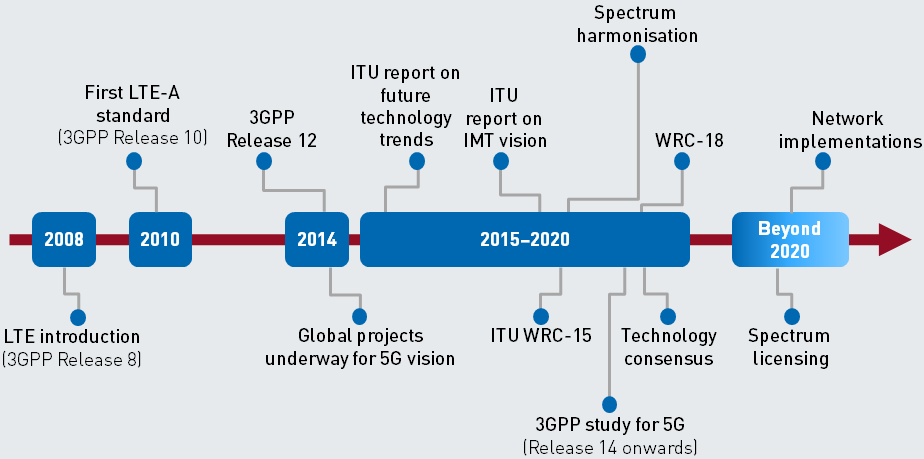
Timeline towards 5G [Source: Analysys Mason, 2014]Even though 5G requires huge investment, it is important to note that there is potential for revenue generation from verticals like smart agriculture and health care applications (as demonstrated by Prof. Ndubuisi Ekekwe who is leading a digital revolution in the agricultural space and deploying AI in health care via Medcera) and this would no doubt help telcos justify their investment. The first trial of 5G within the continent was however announced by Ericsson and MTN in South Africa.
One thing that is common here – Countries that have been favored as early adopters all seem to enjoy support from their Government, even though 5G seems to be disrupting the telecom industry. The favorable policies no doubt translate into an enabling environment for operators and investors looking to deploy 5G.
Furthermore, this piece shows that early 5G use cases vary across the different regions of the globe from fixed wireless in the US, enterprise applications in China to remote monitoring of oil wells in MENA. For those within developing countries who question whether 5G would be of any use, I think the key lies in finding local applications within the verticals which present the greatest market opportunities in Africa. For instance, infrastructural deficit may hinder the deployment of 5G for smart cities application but there is a growing market for 5G in smart agriculture, health care initiatives, fintech etc. in Africa.
Besides, it’s anticipated that 4G would most likely act as a pillar for 5G. And 4G and 5G networks will likely co-exist before a transition to standalone 5G network occurs. Hence, it is crucial that telcos continue to invest in both fibre infrastructure and their 4G networks for a successful 5G deployment. This shows that telcos who are currently deploying and enhancing their 4G network in Africa are definitely on the right path.
It is the most fascinating company in Nigeria today. Paul Graham put out this tweet on the day something BIG happened. When I met the company founders, my response was “People, this is magical”. Let me say it, by 2022, Nigeria will not be the same. A unicorn will be a small thing because this company will generate at least a billion dollars in revenue. There is nothing in our nation, to my knowledge, that comes close to this startup [I track startups in Nigeria very well]. It is the finest startup in our nation and the numbers it is turning out are unprecedented.
Paul Graham is an English born computer scientist, entrepreneur, venture capitalist, author, and essayist. He is best known for his work on Lisp, his former startup Viaweb, co-founding the influential startup accelerator and seed capital firm Y Combinator, his blog, and Hacker News.
Fellow citizens, mark this day: by 2022, there would be a big party in the Nigerian startup world. Something huge is happening in Nigeria. I had predicted that 2022, but what would happen may be beyond anything I had imagined.
Airbnb, an accommodation marketplace pioneer, is a deca-corn with at least $38 billion in valuation.
Power generation and supply is one of the key indicator of economic prosperity for a country, Nigeria is the biggest economy in Africa, with a GDP valued at $376.284bn (2017). However, its power sector is performing below the level of its peer countries. Over half of the population (55%) has no access to grid-connected electricity and those who are connected to the grid suffer extensive power outages.
To improve the power sector, the Nigerian government has undertaken long-term structural reforms (which started in 2005 but gained momentum in 2010) focused on privatizing legacy power assets and instituting regulatory reform. However, these reforms have proved insufficient and more must be done to address the challenges in the sector, which include sub- optimal utilization of generation plants (partly due to insufficient gas molecule availability), inadequate transmission infrastructure and high distribution losses (with related liquidity and viability issues).
Nigeria has 12,522 Mega Watt of installed capacity, but due to maintenance, gas, water and transmission constraints, an average of only 3,879MW of capacity is operational (January to 15 August, 2015). The majority (85%) of installed capacity is fuelled by gas. Availability of gas molecules is low due to insufficient production, economic disincentives, inadequate infrastructure and frequent vandalism.
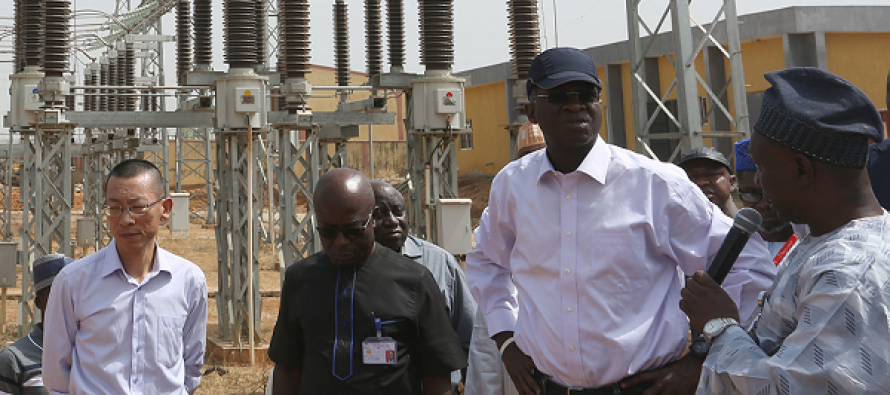
Mr B. Fashola (on glasses and cap) is Nigeria’s energy minister
The country’s transmission system has the capacity to transmit ~5,300MW but is disrupted by system collapses and frequent forced outages. Currently, transmission capacity is higher than operational generation capacity, but transmission will rapidly become a constraint due to increasing operational capacity. Although Nigeria’s distribution companies suffer significant losses, with ~46% of energy lost due through technical, commercial and collection issues.
By the year 2020, it is Nigeria’s aim to generate an excess of 40,000MW with an energy mix that constitutes 69% thermal, 17% hydro, 10% coal, and about 4% renewable energy.
Only 25% of potential energy reaches the end-user, structural inefficiencies in power generation caused the under-utilization of Nigeria’s generation capacity
Self-power generation costs >2x more than grid-based power, Nigerians get a significant portion of their electricity from private generators at a higher cost (NGN 62 – 94/kWh) than grid-based (NGN 26 – 38/kWh) power.
4-5x Increase in electricity consumption required to match peer countries with similar GDP per capita
Today, close to 95 million Nigerians are without access to electricity, they are made to face extensive power outages nationwide. Lagos State in its own have always prioritized the power sector with good plan and programs, most of this plan and execution is done through the Lagos State Electricity Board which seeks to establish in-state electric power stations, generate, transmit and, distribute electricity to areas not covered by the national grid system within Lagos and also facilitate Independent Power Projects and Public Lightings and more.
In July 2017, Lagos State Government set a target for power generation through her Lago State Embedded Power Programme, towards generating 3,000 megawatts electricity for the State within the next three to five years.
Energy represent a critical path in facility management and built environment capital expenditure globally, it is part of a reason while some have classified energy as a cost centre. Facility managers are facing increasing operational cost pressures and, as a result, everyone is looking to energy efficiency improvements as a methods to tackle this, although things have gone beyond using a simple energy-monitoring solution to achieve sufficient or in achieving significant cuts in consumption, now stakeholders are trying to unlock different models and arrangement or strategic power purchase methods that are becoming available to real estate key actors.
This report highlights different power channel and consumption pattern within Ikoyi, Lekki and Victoria Island.
Review
This is a snapshot of selected serviced/premium estates where there is a dedicated power generating plant that provide electricity to residents. The rate residents of these neighborhood pay for electricity is usually higher than the usual PHCN rates, these estates pay extra to the DISCOs to be placed on a special tariff structure whereby 80% supply is guaranteed at rate ranging between N55 – N85 per kilowatt hour is paid, compared to the regular N24-48/per kilowatt hour.
Lekki upper and upper-middle class community, central businesses district and its environs have long taken diesel generators/diesel plants as her main source of energy, when PHCN goes off these residential estates and corporate infrastructures switches to their diesel generator seamlessly. These are number of estates with dedicated diesel power plants/generator, Independent Power Plant IPP/PPA Power Purchase Agreement and reliable electricity.
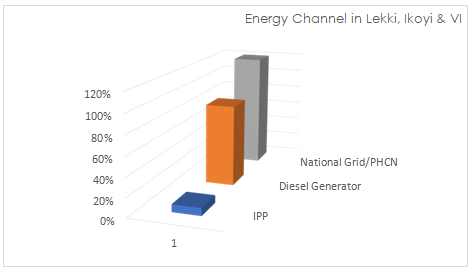
A number of residentials and corporate real estate that are located in Ikoyi, Lekki and Victoria Island use Diesel Generator/Plant or in very few case IPP as the main source of energy daily and have since made the National Grid/PHCN an alternative channel. This is due to the long poor supply of power by PHCN and unstable current. Over 75% of these premium and standard residential estates have access to power between 20 and 24hours daily, mostly guaranteed by diesel generators and supplemented by PHCN supply while some others are placed on special DISCO’s tariff in other to enjoy at least 12hours supply of power which comes at an average of N45-75/Kilowatt hour, much higher than the normal tariff of N24-48/Kilowatt hour.
Few residential estates have also implemented PPA/IPP for as their sole source of energy like French Colony, and there are those residential and corporate real estate infrastructures too that only run on diesel generators. There are a few housing estates along the Lekki Epe Express Way that are yet to connect to the national grid, so they make use of diesel generators.
The most used power channel is the diesel generator followed by the national grid/PHCN while the IPP/PPA for private use unlike the ones built and connected to the national grid across the country, are yet to be tapped fully.
Independent Power Plant IPP is arguably the most efficient and dependable channel in this axis, although it’s yet to be fully tapped or understood by various stakeholders and key actors in the real estate and built environment industry at large. Thus the need for more information and understanding of the PPA/IPP to enable it take it position in the boardroom (private and public sector) as an Off Grid energy solution for premium real estate that demands the best energy practices and delivery in Nigeria today.
Figure 1 Energy Channel Access
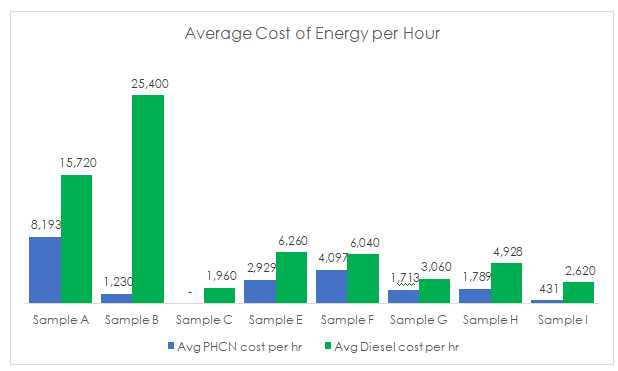
Figure 2 Ikoyi Residential Building Sample Q1 2018.
Average energy cost index above show that sample site like Sample C, Sample B, Sample I, Sample H located at Ikoyi West, Ikoyi South West have lower PHCN supply hours under the period in review as compared with their diesel consumption. Thus, areas with a lower PHCN indicate lower supply of power by EkoDisco to this location as compared with Sample F in the quarter under-review.
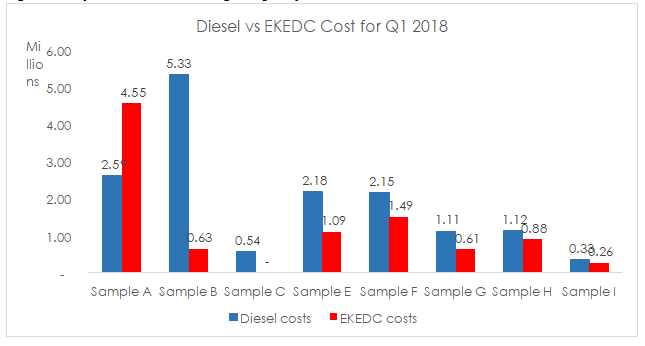
Figure 3 Ikoyi Residential Building Sample Q1 2018
The above chart represents the cost difference across sample sites, Sample B and Sample A have the highest accrued Diesel cost respectively, Sample A has the highest EKEDC cost and Sample C has the lowest energy consumption cost overall with N334,050.00 & N255,079.65 for Diesel and EKEDC respectively. Average energy cost across all the site under-review is for this quarter is ? 1,008,490.80.
The two figures above revealed residential buildings within the Ikoyi environment receive a good share of EKEDC energy supply as compared with Victoria Island and Lekki during same period, because on the average residents in Victoria and Lekki have reported an epileptic (power supply comes once in 3 days, and last between 7-8 hours) in the same period. The chat reflects Energy cost makes a large chunk of Facility overhead quarterly thus, emphasizing the need for efficient energy management methodologies and channels. Today’s energy challenges are leading the stakeholders to study and consider the PPA by
Independent Power Plant providers in the market, although PPA unit cost is higher than other options. PPA unit cost between N100 – 140/kilowatt hour but it is a performance-based option that can serve as a sole source of energy within a large built environment.
Power and Real Estate
Distinction between a premium/standard real estate from the general type of estate is that in the former there are high level of household appliances that runs on power from lighting and heating to the kitchen appliances and other premium household utilities. From the comfort of having air conditioning system running, to the pumps running your water treatment plant and swimming pool, lift, sewage system pumps – all run on power. The role of power in running the facilities of a premium estate is vital.
For the people who live in these estates or work in such a high-class corporate office, they need to have those things functioning properly, a stable power is required to drive them. For residents of premium apartments, the comfort and reliability of services is crucial – it is more important than the cost. While cost of providing comfort and reliability of services must be reasonable and justify the value provided, thus the need for continued search for answers for more efficient and performance-based options in the market. Novel IPP/PPA and alternative (energy) model that assures stability and cost-effective energy supply are emerging and it’s taking a part of facilities management discussions at boardroom and operational meetings across the various sector of the economy.
1004 Estate
Comprising over 1004 flats, maisonettes and studio apartments in the Victoria Island district, 1004 Estate is arguably the largest single luxury high rise estate in Sub-Saharan Africa at the moment. The estate is not connected to the PHCN grid but has a central power plant which serves the entire estate or residents’ power 24/7, the least sold energy units is N5000. On average residents or landlords between N40,000 to N60,000 units in a month, as this energy serves all residents appliances including cooking/kitchen equipment, the estate doesn’t allow cooking gas LPG liquified Petroleum Gas or other alternative cooking energy source other than the ones fixed already. PHCN power supply to Victoria Island had historically been poor, so it’s made a lot of economic and efficient sense to have a PPA structure within this environment to eliminate any energy constraints faced by most built environment in Victoria Island axis.
PPA Key Actors
87% of the entire Lagos power market is served by PHCH DISCO’s (namely IKEDC & EKEDC), although their service is has been some levels improving after the sector was privatized in 2013 with new owners bringing in 24/7 customer service, routine and equipped support teams, and gradually improving in generation capacity, e.g Egbin Power Plant Lagos, Ikorodu was acquired at 1320MW capacity by her present owner and has been improved to 1,750MW, although gap remains wide from expected capacity the gradual deregulation of the power industry is birthing room for Independent Power Plant projects across the country a number of this Plants like Azure Edo IPP, Sagamu IPP, Akute IPP, Trans-Amadi IPP, Aba IPP though most of these IPP are connected to the national grid, there are a number of Off-grid IPP that serves estate and business districts running and some in the pipeline. Viathan Engineering and a number of other key actors like Clarks Energy and Proton Energy are driving IPP as better, efficient and stable energy channel.
A PPA case in an Upper-Middle Housing Estate
Estate Model: a group acquired land area, sold in unit to different Individual Landlords and property buyers that developed this with different infrastructure size, scope and taste.
A residential housing estate Landlord Association and an Independent Power Plant provider had initiated a Power Purchase Agreement/IPP agreement, after a long effort of educating stakeholders and review of PPA benefit in the short and long-term. The Service Level Agreement includes a caveat that stipulated the least number of residents/landlords that must key in before project take-off fully, Diesel Power Plant, N100 per kilowatt hour, 24/7 Power Supply, Zero PHCN integration and The Independent Power Plant planned and presented a case to initial do a Pilot phase before fully kick starting the said project, this provider was given the go-ahead with a Pilot Phase of the work. Pilot phase of this PPA was set and running for 3month with zero PHCN, 24/7 power supply and maintenance of equipment with plans to increase the capacity. Its then appeared to the IPP provider that most of this residential estate are not willing to fulfil their obligations (pay for their monthly energy consumption unit), the firm then change payment model with an electronic units’ vouchers- which allows a consumer do “pay as u use”, nevertheless the project failed to take-off fully due to large overhead incurred from inefficient number of paying residents and huge number of residents that never key into the projects.
Better approach to a residential estate IPP:
IPP Project of any type should start with answering the question (1. Of household income? 2. Willingness & Ability to Pay? Energy consumption pattern?) of prospective target and environment, in-other to make a sound decision between go go or no no upfront (project -investment intelligence & business case).
IPP proposition would gain more buy-in amidst the upper household class, at most an environment that has a mixture of the upper upper and upper middle, because this social class better understand the value and appreciate uninterrupted power supply 24/7 and are more than willing to pay for a stabled and efficient power supply.
IPP projects established as part of the initial design of a highbrow residential built environment and positioned as sole source of energy that is paid for monthly or quarterly or yearly as the case may be or charged as part of the service for resident or Landlord would gain traction and sustainability.
IPP model that is built for an already established Highbrow estate with a central shared service management strong enough to implement zero PHCN model (and also fix an agreed fee with all stakeholders on unit charge for energy, where a bundle payment for all Facility Management service is made directly central shared service before allotment to different service-sub department)
London-based Financial Times ran a piece on precision farming last week. Zenvus, our agtech subsidiary, and yours truly were mentioned in the piece. FT had spoken with me few weeks ago as part of a major report sponsored by Rabobank on global agriculture.
Zenvus, a start-up based in Owerri, the capital of the Nigerian state of Imo, collects and analyses vast amounts of soil data across Nigeria, offering tailored advice to farmers on what, when and how to plant. Its digital services allow smallholders to view real-time crop prices, raise capital and crowdfund on their computers and smart devices.
“This will have a tangible effect on poverty in Africa because most households and families are going to see higher incomes,” says Ndubuisi Ekekwe, the company’s founder.
You need FT subscription for other parts of the piece.